Chokecherry — health benefits and uses
A key Plains Indigenous food, pounded and dried into pemmican and sauces.
The Short Answer
Chokecherries are tart wild fruits high in fiber and Vitamin K, best used in syrups and jellies. While the pulp is nutritious, the pits must be removed or cooked out as they contain cyanogenic glycosides which are toxic if ingested raw.
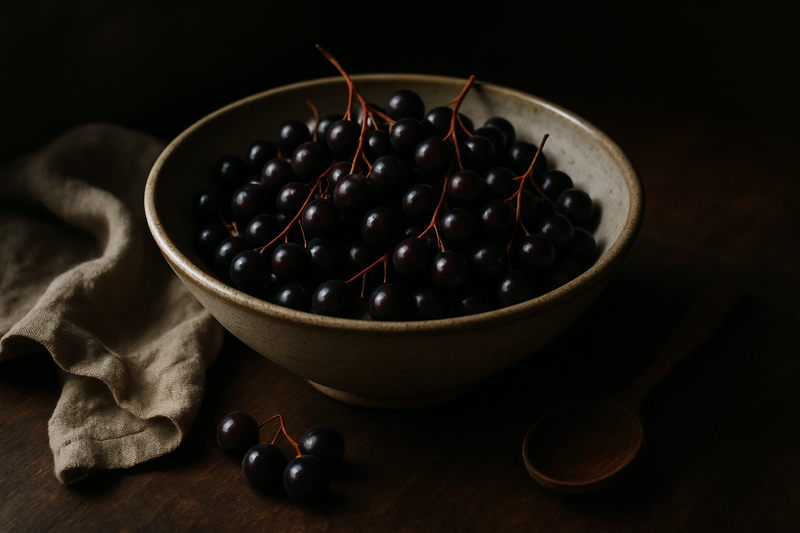
Chokecherry · Photograph
Discover chokecherry health benefits and safety: how the tart wild fruit's anthocyanins, fiber, and vitamins support heart health and digestion, why the pits are dangerous, and how to safely cook chokecherries into syrup, jelly, and traditional wojapi.
Key Nutrients
% Daily Value based on 2,000 cal diet
Key active compounds in chokecherry
- Anthocyanins (especially cyanidin-3-glucoside): The water-soluble flavonoid pigments that give ripe chokecherries their dark purple-black color. These are potent antioxidants in laboratory studies and are linked to cardiometabolic benefits in human trials using other dark berries.
- Flavonoids and phenolic acids: A broader family of polyphenolic plant chemicals that contribute to total antioxidant capacity and may have anti-inflammatory, antimicrobial, and gastroprotective (stomach-protecting) actions in laboratory models.
- Dietary fiber: Both soluble (forms a gel in the gut, slows glucose absorption) and insoluble (adds bulk to stool, speeds transit) fiber are present in meaningful quantities.
- Vitamin K: A fat-soluble vitamin essential for blood clotting and bone health, present at levels high enough to matter for people on anticoagulant medications.
- Cyanogenic glycosides (amygdalin, prunasin): Plant defense compounds concentrated in the pits, leaves, bark, and stems — not in the ripe fruit pulp. These can hydrolyze (break down) to release hydrogen cyanide. They are a safety concern, not a nutritional benefit, and are discussed fully in the cautions section below.
Common pairings for chokecherry
1. Chokecherry syrup + plain oatmeal or porridge The syrup's tartness cuts through the blandness of cooked oats beautifully, and adding it after cooking preserves more of the heat-sensitive anthocyanins. The combination also delivers complementary fibers from both the oats (beta-glucan) and the fruit pulp.
2. Chokecherry wojapi + lean protein (bison, venison, or tofu steaks) The tart, fruit-forward sauce acts like a balsamic reduction, balancing rich umami flavors. This pairing is nutritionally well-rounded: protein from the main and polyphenols plus fiber from the wojapi.
3. Chokecherry jelly + whole-grain sourdough with nut butter Jelly on nut butter toast is a classic for good reason. Choose a low-sugar jelly to keep the glycemic load reasonable, and the fat from the nut butter actually aids absorption of fat-soluble vitamin K from the chokecherry.
Prep and pairing ideas
Basic chokecherry syrup (low-sugar version)
- Rinse 2 cups of fresh or thawed chokecherries. Place them whole (pits still in) in a saucepan with 1 cup of water.
- Simmer over medium-low heat for 15–20 minutes, stirring occasionally, until berries burst and pulp separates from pits.
- Press through a fine-mesh sieve or food mill, discarding all pits and skins.
- Return strained juice to the pan. Add 2–4 tablespoons of honey or maple syrup to taste.
- Reduce gently until syrup coats a spoon. Store refrigerated for up to 2 weeks or freeze in small jars.
Simple wojapi Follow the steps above but stop before the heavy reduction, keeping it a thick sauce consistency. Thicken with 1 teaspoon of arrowroot or corn flour dissolved in cold water if desired. Serve warm over oatmeal, whole-grain pancakes, or alongside savory dishes.
Chokecherry fruit leather Press cooked, strained pulp onto a lined dehydrator tray and dry at 135°F (57°C) for 6–8 hours. Adds a concentrated, chewy, fiber-rich snack — but note that calories and sugars are more concentrated per gram than in the fresh pulp.
Bottom line
Chokecherry is a genuinely nutritious wild fruit with a long, rich culinary history in North American Indigenous cooking. Its strongest evidence-backed selling point is its remarkable fiber content — nearly two-thirds of a day's requirement in a half-cup serving — and its dense anthocyanin profile, which mirrors that of berries known to support heart and metabolic health. Direct human trials are lacking, so health claims should be held lightly.
The single most important thing to know is the safety rule: always use de-pitted, cooked pulp. The pits, leaves, and stems carry genuine toxicity risk. With that handled correctly, chokecherry syrup, jelly, and wojapi are among the most flavorful and nutritionally meaningful ways to bring a wild, whole food into a plant-forward kitchen.
Not medical advice. Consult a qualified healthcare provider before making significant dietary changes, especially if you take medications or have a chronic health condition.
How Chokecherry Compares
| Compared with | What's different |
|---|---|
| Chokecherry vs. Black Cherry | Chokecherries are significantly more tart and astringent, requiring cooking and sweetener. |
| Chokecherry vs. Wild Black Cherry | Chokecherries grow in drooping clusters (racemes) rather than small clusters or pairs. |
| Chokecherry vs. Elderberry | Chokecherries have a distinct puckering tartness and contain much higher fiber per serving. |
Health Benefits
Things to Know
Pits, leaves, and stems are toxic.: Always remove pits before or after cooking. Never blend whole chokecherries with seeds intact. Children and pets should not chew on raw chokecherry twigs, leaves, or pits.
Warfarin and other vitamin K–sensitive anticoagulants: Chokecherry pulp is a meaningful source of vitamin K. Sudden large increases or decreases in intake can shift INR (a blood-clotting measure) in people on warfarin. Keep intake consistent and inform your prescribing clinician.
Stone fruit allergies: If you have a known allergy to cherries, peaches, or apricots, you may experience cross-reactivity with chokecherry. Introduce small amounts cautiously.
Pregnancy and breastfeeding: Moderate culinary use of cooked, de-pitted fruit is generally considered acceptable. Avoid bark or leaf preparations entirely during pregnancy due to absent safety data and potential cyanide exposure.
Liver or kidney impairment: Individuals with reduced liver or kidney function may have a diminished ability to detoxify cyanide if accidentally exposed to pit contents. Extra care with preparation is warranted.
Hypoglycemic medications: High-fiber, anthocyanin-rich foods can have a modest additive blood-sugar-lowering effect. If you take insulin or oral diabetes medications, monitor your response when significantly increasing chokecherry intake.
Added sugar in processed forms: Syrups and jellies often contain substantial added sugar. If blood sugar, weight, or dental health is a concern, opt for low-sugar preparations or use the whole pulp directly.
Start low with fiber: If you are not used to high-fiber foods, adding a large serving of chokecherry pulp quickly can cause bloating and gas. Start with a tablespoon or two and increase gradually.

Prep Ideas
- — Rinse 2 cups of fresh or thawed chokecherries. Place them whole (pits still in) in a saucepan with 1 cup of water.
- — Simmer over medium-low heat for 15–20 minutes, stirring occasionally, until berries burst and pulp separates from pits.
- — Press through a fine-mesh sieve or food mill, discarding all pits and skins.
- — Return strained juice to the pan. Add 2–4 tablespoons of honey or maple syrup to taste.
- — Reduce gently until syrup coats a spoon. Store refrigerated for up to 2 weeks or freeze in small jars.
Glossary
Shop This Ingredient
Stock your pantry with quality chokecherry.
Buy on AmazonAs an Amazon Associate, Plantopedia earns from qualifying purchases. This costs you nothing extra and helps us keep the encyclopedia free.
Frequently Asked Questions
Because direct human clinical trials on chokecherry fruit are limited, the evidence below is graded carefully. Where we say "research suggests," the data comes from studies on anthocyanin-rich berries generally (such as black chokeberry, Aronia melanocarpa) rather than chokecherry itself. Think of those findings as biologically plausible, not established fact for this specific fruit. Heart and circulation Chokecherry's anthocyanins — particularly cyanidin-3-glucoside — are among the most studied plant pigments for cardiovascular health. In vitro (test tube) work shows they scavenge free radicals and reduce oxidation of LDL cholesterol (the "bad" cholesterol that becomes damaging when oxidized). Human trials using black chokeberry, a closely related dark-fruited shrub, have reported modest improvements in blood pressure, LDL oxidation, and other cardiometabolic risk markers. Whether chokecherry delivers the same effects in people has not been tested directly. The potential is there; the clinical proof specific to chokecherry is not yet. Digestive health and microbiome This is where the evidence is most straightforward. A half-cup of cooked chokecherry pulp provides roughly 19 g of dietary fiber — a substantial contribution toward the 25–38 g daily recommended for adults. High-fiber diets are consistently linked in human research to improved bowel regularity, larger and softer stools, reduced constipation risk, and a healthier gut microbiome (the community of bacteria living in your digestive tract). Chokecherry can meaningfully add to your fiber intake, especially in the form of low-sugar cooked preparations. Note that most of this fiber benefit applies to the whole cooked pulp, not to strained syrup or commercially made jelly with minimal pulp. Blood sugar and metabolism Dietary fiber slows gastric emptying (the rate at which food leaves the stomach), which blunts the spike in blood sugar that follows a meal — a postprandial glucose spike. Anthocyanins from dark berries have also shown modest improvements in insulin sensitivity (how well cells respond to the hormone that lowers blood sugar) in some human studies. For chokecherry specifically, both mechanisms are theoretically at play. However, this benefit can be easily canceled out by added sugars in syrups and jellies. Low-sugar preparations, or using the pulp directly, are the better choice if blood sugar management is a goal. Inflammation and recovery Laboratory studies using chokecherry extracts have shown antioxidant and anti-inflammatory activity, including inhibition of inflammatory mediators like COX-2 and IL-1β (proteins that promote inflammation in the body). These are cell-model findings, not human clinical outcomes, so they tell us about biological mechanisms rather than real-world benefit. Human data on reducing inflammatory markers come from trials of other anthocyanin-rich fruits, which suggest modest reductions in oxidative stress with consistent intake. Chokecherry has not been tested directly in this context.
The wild-food forager or home preserver Already comfortable with seasonal harvesting and safe food preparation practices. Wants a high-fiber, antioxidant-rich native fruit that can replace commercial berry products. Values the cultural and ecological dimension of eating regionally foraged foods. Benefits from chokecherry's robust flavor as a natural substitute for commercial grape or cherry products. The high-fiber diet seeker Aiming to hit 25–38 g of dietary fiber daily without relying solely on beans and whole grains. Looking for fruit-based fiber sources that also deliver micronutrients. Would benefit most from using unsweetened cooked chokecherry pulp or low-sugar wojapi rather than heavily sweetened commercial jelly. Should note that one serving can contribute nearly two-thirds of a daily fiber goal — worth factoring into total intake to avoid GI discomfort when first increasing fiber.
This is the most important question on this page. The short answer: yes, cooked de-pitted fruit pulp is safe for most people; the pits, leaves, stems, and bark are not safe to eat or chew. Here is exactly what is happening chemically: Chokecherry seeds, leaves, and bark contain cyanogenic glycosides — specifically amygdalin and prunasin. When these compounds are hydrolyzed (broken down) by enzymes released during chewing, crushing, wilting, or digestion, they release hydrogen cyanide. Hydrogen cyanide interferes with cellular respiration — the process by which cells use oxygen to make energy. Livestock deaths from chokecherry poisoning are documented, and high-dose exposure is dangerous to humans too. The ripe fruit pulp itself contains much lower concentrations of these compounds, and cooking further reduces them. This is why traditional preparation always involves simmering whole fruits, then straining through a sieve or food mill to leave pits and skins behind. Never blend or process whole chokecherries with the pits intact, as this crushes the seeds and releases cyanogenic compounds into the juice.
Fresh or frozen whole fruit (pitted before use) Ripe chokecherries are usually frozen or processed soon after harvest in late summer. The whole berries can be simmered gently — the pits stay intact during gentle boiling — and then strained out before the pulp is used. This is the safest approach for home cooks. Cooked pulp, syrup, and jelly The gold standard for safe home use. Simmer whole berries in water until soft (about 15–20 minutes), then press through a food mill or jelly bag to separate pulp from pits and skins. The strained juice can be reduced with a small amount of sweetener into syrup or set with pectin into jelly. For maximum fiber benefit, use the whole strained pulp rather than just the liquid. Traditional wojapi Wojapi is a thick berry sauce from Lakota and other Plains Indigenous culinary traditions, made by simmering de-pitted chokecherry pulp with a small amount of sweetener (traditionally honey or maple syrup, sometimes thickened with corn flour). It is served over frybread, meats, or as a standalone condiment. Wojapi retains more of the whole-fruit fiber than a thin syrup does. Juice and fruit sauce Pressed or cooked juice from de-pitted fruit works well as a beverage base or savory sauce. No clinical trial has established a specific daily dose for health benefits. Bark tea or tinctures — use with caution Bark preparations have a long history in Indigenous traditional medicine for cough and sore throat. However, the bark contains higher concentrations of cyanogenic glycosides than the fruit, and modern therapeutic dosing is not standardized. If you are interested in bark-based preparations, consult a qualified herbalist or integrative health provider before using them.
There is no established clinical dose for chokecherry because it has not been tested in formal human trials as a supplement or therapeutic food. What we can say: For general culinary use: ½ to 1 cup (75–150 g) of pitted, cooked chokecherry fruit in syrup, sauce, or wojapi form as part of a mixed meal is consistent with traditional and home-kitchen use. Extension nutrition guides use ½ cup as their reference serving. For fiber contribution alone: Even a 2–4 tablespoon serving of whole pulp can add meaningful fiber to a meal. You do not need a full cup to benefit. Do not extrapolate supplement doses from other berry trials. Studies on black chokeberry or anthocyanin supplements typically use 100–300 mL of juice or 100–200 g of fresh berries daily, but these doses are not validated for chokecherry. If using chokecherry as part of an everyday diet, consistency matters more than dose. A few tablespoons of low-sugar syrup or wojapi daily, or a weekly batch of jelly on whole-grain bread, is a practical, enjoyable, and safe approach for most healthy adults. Start with small amounts if you have not eaten chokecherry before — both to test tolerance and to allow your digestive system to adjust to the high fiber content.
Quick Answers
Common questions, answered in a line.
You can eat chokecherry safely by using only the de-pitted, cooked pulp of the ripe fruit. The pits, leaves, bark, and stems contain cyanogenic glycosides that can release hydrogen cyanide, making it essential to strain them out during preparation.
Chokecherries are an excellent source of dietary fiber, providing nearly two-thirds of the daily requirement in just a half-cup serving. They contain both soluble fiber, which slows glucose absorption, and insoluble fiber, which supports healthy digestion and stool bulk.
Chokecherry contains vitamin K, which is a fat-soluble nutrient essential for maintaining bone health and supporting proper blood clotting. Because of its vitamin K content, individuals on anticoagulant medications like warfarin should maintain a consistent intake.
You can make chokecherry syrup by simmering fresh or thawed berries in water for 15–20 minutes until they burst, then pressing them through a fine-mesh sieve to remove the pits. The resulting juice can be sweetened with honey or maple syrup and reduced until thick.
Wojapi is a traditional Indigenous sauce made by simmering chokecherries until the pulp separates from the pits, then straining it into a thick consistency. It is often served as a tart, fruit-forward accompaniment to proteins like bison and venison or over porridge.
If you are taking blood-sugar-lowering medications or insulin, you should monitor your response to chokecherry as its fiber and anthocyanins may have an additive effect on blood sugar. Additionally, the fruit's vitamin K levels can interfere with anticoagulant drugs like warfarin.
Chokecherry pairs well with bland foods like oatmeal or porridge, where its tartness adds flavor, and with rich proteins like bison, venison, or tofu. It is also commonly used in jelly or fruit leather, often paired with healthy fats like nut butter to aid vitamin absorption.
For Readers in the USA
Local context — sourcing, seasonality, and regional notes.
Chokecherries grow across almost the entire United States, from the Pacific Northwest to the Northeast and throughout the Great Plains. They are particularly abundant in USDA Hardiness Zones 2 through 7, often found along fence rows, forest edges, and riverbanks in rural areas.
You will rarely find fresh chokecherries at major grocery chains like Kroger or Safeway; instead, look for value-added products like jams and syrups at specialty gift shops, farmers markets, or through Indigenous-owned businesses. Many enthusiasts in states like Montana, North Dakota, and Utah prefer to forage for them in late summer.
The USDA recognizes chokecherries as a culturally significant traditional food, and when sold commercially, they must meet standard FDA labeling requirements for processed fruit products. While "organic" chokecherries are rare in stores, wild-harvested versions are naturally grown without synthetic pesticides, though they lack the official USDA Organic seal.
While "chokecherry" is the standard name across the US, you may hear them referred to as "wild black cherry" in parts of the East or "bird cherry" in the Midwest. They are deeply rooted in the culinary traditions of Northern Plains Tribes, where they remain a staple ingredient for winter staples and ceremonial dishes.
AI Clinical Review
- Emphasizes the key safety point: cyanogenic glycosides are concentrated in pits/leaves/stems, while cooked, de‑pitted fruit pulp is the edible form.
- Highlights chokecherry’s plausible benefits based on its nutrient profile—especially high fiber and anthocyanins (purple plant pigments with antioxidant activity)—and appropriately distinguishes this from proven clinical outcomes.
- Explains practical, safer preparations (gentle simmering, then straining) and notes that whole pulp retains more fiber than clear syrup or jelly.
- Clarifies the common chokecherry vs. chokeberry (Aronia) confusion, an important distinction since most human data come from Aronia, not Prunus virginiana.
- There are few, if any, direct human clinical trials on chokecherry fruit itself; most health inferences are extrapolated from other dark berries and mechanistic studies.
- The bioavailability and stability of chokecherry anthocyanins across home methods (e.g., reduction to syrup, dehydration to fruit leather) are not well characterized.
- Reported nutrient values—especially the very high fiber estimate—can vary by ripeness, cultivar/subspecies, and how much pulp is retained after straining; real‑world servings may deliver less than lab/extension figures.
- Form matters: whole, cooked, de‑pitted pulp offers fiber; strained syrups/jellies are lower in fiber and may add sugars that can offset metabolic benefits.
- Reasonable culinary use is 1/2–1 cup cooked, de‑pitted pulp within a meal; starting with a few tablespoons and increasing gradually can reduce GI discomfort from a sudden fiber jump.
- Safety first: never crush or blend whole berries with pits; keep raw pits, leaves, and twigs away from children and pets.
- Check with a clinician if you: take warfarin or other vitamin K–sensitive anticoagulants (keep intake consistent); use insulin/oral diabetes meds (fiber/anthocyanins may modestly lower post‑meal glucose); are pregnant/breastfeeding (avoid bark/leaf preparations); have stone‑fruit allergies; or have significant liver/kidney impairment.
The pits, leaves, and stems contain cyanogenic compounds; only cooked, pitted pulp is used.
References
- USDA FoodData Central — nutrient data for cherries and related fruits (fdc.nal.usda.gov)
- University of Alaska Fairbanks Cooperative Extension — Chokecherries nutrition and preparation guide (uaf.edu)
- New Mexico State University Extension — Chokecherry: identifying, harvesting, syrup and jelly preparation (pubs.nmsu.edu)
- USDA NRCS — Wild Cherries safety and plant profile (nrcs.usda.gov)
- USDA NRCS — Chokecherry Plant Guide (nrcs.usda.gov)
- SARE Project — Chokecherry fact sheet (agricultural and nutritional overview) (projects.sare.org)
- PMC review — Black Chokeberry (Aronia melanocarpa): potential benefits and clinical evidence (human trial review, used to contextualize anthocyanin research) (pmc.ncbi.nlm.nih.gov)
- PMC review — Aronia melanocarpa anthocyanins and health effects (systematic review) (pmc.ncbi.nlm.nih.gov)
- Nature Precedings — Total anthocyanin content and anticancer activity of berry anthocyanins (in vitro and review) (nature.com)
- USDA MyPlate — Fruits food group guidelines (myplate.gov)
Know Your Numbers
Eating healthy is a start. Now get to know your biomarkers.
Food changes bloodwork — inflammation, lipids, blood sugar and nutrient status all respond to what you eat. 59 markers from $59.
- Results in 7–10 days at 2,000+ Quest sites
- Licensed provider reviews every result
- One flat price, no membership, HSA/FSA eligible
Educational information only, not medical advice. Panels are ordered and reviewed through our licensed partner; Plantopedia may earn a commission.