Nectarine — health benefits and uses
Fiber + phytonutrients; use as a whole-food sweet, snack, or smoothie base
The Short Answer
Nectarines are smooth-skinned stone fruits that provide 2.2 grams of fiber and nearly 10% of your daily Vitamin C in a 63-calorie serving. They are genetically identical to peaches except for one recessive gene that removes the fuzzy skin.

Nectarine · Photograph
Nectarines (Prunus persica var. nucipersica) are smooth-skinned stone fruits that belong to the same species as the peach — differing mainly in one gene that removes the fuzzy outer coat. They arrive at peak ripeness from late spring through early autumn and deliver a satisfying combination of natural sweetness, juicy texture, fiber, and a broad range of vitamins, minerals, and antioxidants in roughly 63 calories per medium fruit.
Key Nutrients
% Daily Value based on 2,000 cal diet
Key active compounds (phytochemicals)
- Polyphenols (phenolic compounds): A large family of antioxidant plant compounds concentrated especially in the skin and flesh of nectarines. They help neutralize free radicals (unstable molecules that can damage cells) and have been studied in lab and animal models for roles in heart and metabolic health. Human evidence is based on polyphenol-rich diets overall, not nectarines specifically.
- Carotenoids (including lutein and zeaxanthin): The yellow-orange pigments that give nectarines part of their color. They function as antioxidants and accumulate in the retina (the light-sensitive layer at the back of the eye), where they may help protect eye health as part of a carotenoid-rich diet.
- Vitamin C (ascorbic acid): Both a micronutrient and an antioxidant. It supports collagen (the structural protein in skin and connective tissue) and helps the body absorb non-heme iron — the type of iron found in plant foods — when eaten in the same meal.
Common pairings: 3 ways to use nectarines in plant-based meals
1. Nectarines + oats + ground flaxseed Sliced fresh or thawed frozen nectarine added to morning oats with a tablespoon of ground flaxseed creates a high-fiber, polyphenol-rich breakfast. The vitamin C in the nectarine helps boost absorption of iron naturally present in oats — a practical benefit for plant-based eaters who rely on non-heme iron sources.
2. Nectarines + leafy greens + toasted walnuts Nectarine wedges in a salad with arugula or spinach and a handful of walnuts delivers fiber, carotenoids, and heart-friendly fats in one bowl. The slight tartness of arugula balances the nectarine's sweetness, and the fat from walnuts supports absorption of fat-soluble carotenoids.
3. Grilled nectarines + legumes + fresh herbs Halved nectarines grilled for 3–4 minutes develop a caramelized sweetness that pairs naturally with lentils, chickpeas, or black beans. Fresh mint, basil, or cilantro complete the dish. This combination adds potassium from both the fruit and the legumes and makes a satisfying warm-weather main or side.
Prep and pairing ideas
- Ripe raw: Bite into a ripe nectarine as-is for the highest vitamin C content and easiest fiber benefit.
- Sliced into yogurt or overnight oats: Adds fiber, color, and natural sweetness without added sugar.
- Blended into smoothies: Combine frozen nectarine slices with spinach, banana, and plant-based milk for a quick micronutrient boost.
- Grilled: Halve, pit, and grill for 3–4 minutes per side. Pairs well with arugula, balsamic glaze, and walnuts.
- Simple salsa: Dice nectarines
How Nectarine Compares
| Compared with | What's different |
|---|---|
| Nectarine vs. Peach | Nectarines have smooth, glossy skin and a firmer texture compared to the fuzzy skin and softer flesh of peaches. |
| Nectarine vs. Plum | Nectarines are firmer and less tart than plums, which often have thinner skin and higher acidity. |
| Nectarine vs. Apricot | Apricots are smaller and contain significantly more Vitamin A but less water content than juicy nectarines. |
Health Benefits
Things to Know
Pit safety: The hard nectarine pit is a choking hazard and the kernel inside contains naturally occurring cyanogenic compounds (compounds that can release small amounts of cyanide). Do not eat the kernel; always remove the pit before serving to children.
Stone fruit allergy / oral allergy syndrome: People allergic to peaches or other Rosaceae family fruits may react to nectarines. Oral allergy syndrome causes itching or mild swelling in the mouth shortly after eating raw stone fruit — usually in people with grass or tree pollen allergies. Cooked nectarines often cause less reaction. If you experience symptoms, seek guidance from an allergist.
IBS and FODMAP sensitivity: Stone fruits, including nectarines, contain fermentable carbohydrates (FODMAPs) that can trigger gas, bloating, or loose stools in people with irritable bowel syndrome (IBS) or very sensitive digestion. Tolerance varies widely — some people do fine with half a nectarine; others need to avoid them during flare-ups.
Kidney disease: Nectarines provide a moderate amount of potassium (~285 mg per medium fruit). People on a medically supervised potassium restriction should count nectarines as part of their total daily potassium intake and discuss portion sizes with their nephrology dietitian.
Diabetes and carbohydrate counting: One medium nectarine contributes roughly 15 g of carbohydrate. Include this in your overall carbohydrate budget, especially if eating juice, dried, or canned-in-syrup forms.
Medications: No well-documented nectarine-specific drug interactions exist. However, if you are on potassium-sparing diuretics, ACE inhibitors, or ARBs (common blood pressure medications) and are managing potassium intake medically, discuss total dietary potassium from all fruit sources with your doctor.
Pregnancy: Fresh whole nectarines are a safe, nutrient-dense choice during pregnancy as part of a varied diet. Wash thoroughly before eating.
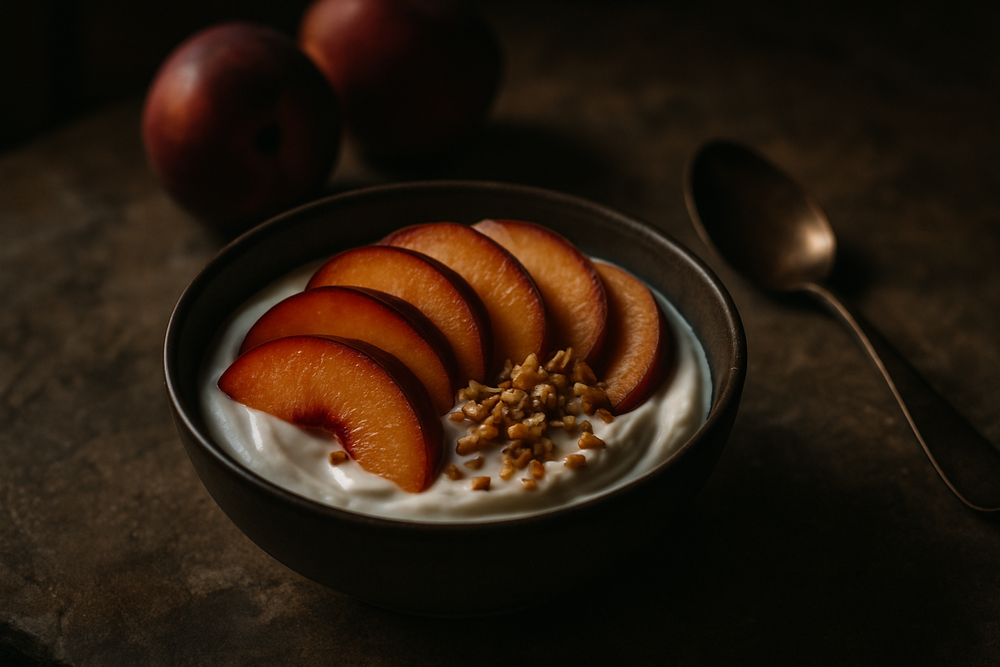
Prep Ideas
- — Ripe raw: Bite into a ripe nectarine as-is for the highest vitamin C content and easiest fiber benefit.
- — Sliced into yogurt or overnight oats: Adds fiber, color, and natural sweetness without added sugar.
- — Blended into smoothies: Combine frozen nectarine slices with spinach, banana, and plant-based milk for a quick micronutrient boost.
- — Grilled: Halve, pit, and grill for 3–4 minutes per side. Pairs well with arugula, balsamic glaze, and walnuts.
- — Simple salsa: Dice nectarines
Shop This Ingredient
Stock your pantry with quality nectarine.
Buy on AmazonAs an Amazon Associate, Plantopedia earns from qualifying purchases. This costs you nothing extra and helps us keep the encyclopedia free.
Frequently Asked Questions
The research on nectarines specifically is still limited — most human evidence comes from broader studies on fruit-rich and high-fiber diets. Where nectarine-specific data exists, it is noted clearly below. Heart and circulation Nectarines are naturally free of cholesterol and sodium and contribute potassium, fiber, and antioxidant polyphenols — nutrients consistently linked to cardiovascular support in observational human research. Potassium helps relax blood vessel walls and counteracts some of the blood-pressure-raising effects of sodium in the diet. Large epidemiological studies (studies that track large populations over time) repeatedly find that people who eat more whole fruits have lower rates of cardiovascular disease, though nectarines have not been isolated as the cause in any single trial. Replacing higher-calorie, high-sodium snacks with a whole nectarine is a practical, low-friction way to improve the overall dietary pattern that supports heart health. Digestive health and microbiome A medium nectarine supplies about 2.4 g of dietary fiber — a mix of soluble fiber (which slows digestion and feeds beneficial gut bacteria) and insoluble fiber (which adds bulk to stool and supports regularity). Human evidence strongly and consistently links higher total fruit and fiber intake with reduced constipation and better gut microbiome diversity. No clinical trials have specifically tested nectarines alone on digestive outcomes, but the mechanism is straightforward and the fiber contribution is real. Eating the skin when tolerated boosts both fiber and polyphenol content. Blood sugar and metabolism At roughly 63 kcal and 2.4 g of fiber per medium fruit, nectarines compare favorably with processed sweets as a snack option. The fiber slows the absorption of the natural sugars, resulting in a more gradual rise in blood glucose compared with juice or refined sugar products. Human cohort studies generally find that whole-fruit consumption is not associated with increased type 2 diabetes risk — and may be mildly protective — but nectarines have not been tested as a standalone blood sugar intervention. For people with diabetes or insulin resistance, whole fresh or frozen nectarines are a better choice than juice, syrup-packed canned fruit, or dried nectarines, all of which deliver more concentrated sugar with less fiber. Inflammation and recovery Nectarines provide vitamin C, copper, and a range of polyphenols and carotenoids that contribute to limiting oxidative stress (cellular damage caused by free radicals) when consumed as part of a plant-rich diet. Chronic oxidative stress is one driver of low-grade inflammation, which is implicated in many long-term health conditions. One experimental study found that a diet supplemented with 4% nectarine extract reduced oxidative damage and improved survival in female fruit flies (Drosophila melanogaster). This is interesting preliminary science, but insect findings cannot be directly applied to humans. No clinical trials have measured inflammation markers in people after nectarine consumption specifically. Satiety and weight management Because nectarines are relatively low in calories and energy density (calories per gram) while providing fiber and water, they can contribute to feelings of fullness when they replace more calorie-dense, low-fiber snacks. This mechanism — energy displacement — is supported by strong evidence in dietary research. Nectarines have not been tested as a standalone weight-loss intervention, but they fit the established pattern of foods associated with healthy weight management.
Choosing the right form of nectarine is the simplest lever for maximizing the nutritional payoff. Fresh whole nectarines The gold standard. Eating fresh nectarines with the skin on (after washing) preserves the full fiber and polyphenol profile. Look for fruit that gives slightly under gentle pressure near the stem — overly firm nectarines are not yet ripe; soft and mushy ones are past peak. A ripe nectarine should smell fragrant. Frozen nectarine slices Nutritionally very close to fresh — freezing preserves most vitamins and fiber. Ideal for smoothies, oatmeal, or off-season use. Label tip: check for added sugars. Ingredient list should read "nectarines" — nothing else. Canned nectarines Some vitamins and minerals are retained, but heat processing reduces vitamin C and the texture softens. Label tip: choose "packed in water" or "packed in fruit juice" and avoid "heavy syrup," which adds significant sugar with no nutritional benefit. Dried nectarines A concentrated source of calories and natural sugars, with some retained fiber and minerals. A standard portion is much smaller (about 1/4 cup) than fresh. Best enjoyed in moderation, especially if you are monitoring blood sugar or total calorie intake. Nectarine juice or purée Most of the fiber is removed. Blood sugar rises faster with juice than with whole fruit. Best used sparingly, not as a direct replacement for whole fruit.
Quick Answers
Common questions, answered in a line.
Nectarines are essentially smooth-skinned peaches, differing by only a single gene that removes the fuzzy outer coat. Both belong to the same species, Prunus persica, and offer a similar sweet flavor and juicy texture.
One medium nectarine contains approximately 63 calories and provides about 15 grams of carbohydrates. This stone fruit is a low-calorie source of fiber, vitamins, and minerals that can be integrated into a balanced carbohydrate budget.
Nectarines are rich in carotenoids like lutein and zeaxanthin, pigments that accumulate in the retina and protect eye health. These antioxidants work alongside vitamin C and polyphenols to neutralize free radicals that can damage cells.
Eating nectarines alongside plant-based iron sources, such as oats or leafy greens, improves the absorption of non-heme iron. This is due to the fruit's vitamin C content, which helps the body process the iron found in plant foods more efficiently.
Nectarines contain fermentable carbohydrates known as FODMAPs, which may cause gas, bloating, or loose stools in people with IBS. While tolerance varies, individuals with sensitive digestion may need to limit portions or avoid the fruit during flare-ups.
You should never eat the kernel inside a nectarine pit because it contains naturally occurring compounds that can release cyanide. The hard outer pit also presents a significant choking hazard and should always be removed before serving the fruit to children.
A medium nectarine provides approximately 285 mg of potassium, which is a moderate amount. People on medically supervised potassium restrictions, such as those with kidney disease or taking certain blood pressure medications, should track nectarine intake as part of their daily total.
For Readers in the USA
Local context — sourcing, seasonality, and regional notes.
Most nectarines in the U.S. are grown in California, which accounts for over 90% of commercial production, followed by states like Washington, New Jersey, and Georgia. Local harvest typically runs from May through September, with peak availability occurring in July and August.
Nectarines are widely available at major U.S. grocery chains like Kroger, Whole Foods, and Safeway, as well as at local farmers markets during the summer months. You can typically find organic options labeled with the USDA Organic seal, which ensures the fruit was grown without synthetic pesticides.
In the U.S., you will primarily find two categories: yellow-flesh nectarines, which offer a classic tangy-sweet balance, and white-flesh nectarines, which are known for being lower in acid and tasting intensely sweet. Specific popular varieties include the "Honey Kist" and the "Arctic Star."
AI Clinical Review
- Strong emphasis on whole fruit over juice for fiber, satiety, and steadier blood sugar aligns with robust human nutrition evidence.
- The nutrition snapshot (calories, fiber, potassium, vitamin C, copper, niacin) reflects standard USDA data and is a useful guide to portions (about one medium fruit ≈ one cup).
- Cardiometabolic framing is appropriate: replacing high‑sodium, ultra‑processed snacks with a nectarine can help lower overall dietary sodium and energy density.
- Practical comparisons among fresh, frozen, canned, dried, and juice forms correctly note that freezing preserves most nutrients and that syrup‑packed or juiced forms concentrate sugars and reduce fiber.
- Most health claims are extrapolated from research on total fruit, fiber, and polyphenol intake; nectarine‑specific human trials are limited.
- Eye‑health benefits from lutein/zeaxanthin are plausible in mixed‑diet studies, but nectarines contain modest amounts, so their independent effect is uncertain.
- Microbiome and glycemic benefits are supported by whole‑fruit/fiber data generally; individual responses can vary by ripeness, portion size, and overall meal composition.
- Antioxidant/anti‑inflammatory effects cited from lab or animal models (e.g., fruit flies) should be viewed as preliminary until confirmed in people.
- Portion and carbs: one medium nectarine provides about 15 g carbohydrate and ~2.4 g fiber—helpful for most, but people using carb counting for diabetes should include it in their meal plan and favor whole/frozen over juice.
- FODMAPs: stone fruits can trigger gas/bloating in IBS; consider a small test portion when symptoms are quiet and avoid during flares if sensitive.
- Allergies: oral allergy syndrome to stone fruits can cause mouth itching/swelling; cooked fruit is often better tolerated—seek personalized advice if reactions occur.
- Potassium and medications: those with chronic kidney disease or taking ACE inhibitors/ARBs or potassium‑sparing diuretics should factor nectarine potassium into daily totals and discuss targets with their clinician.
Frame as food education, not disease treatment.
References
- PubMed — Chemical and nutritional evaluation of major genotypes of nectarine (Prunus persica var nectarina) grown in North-Western Himalayas (pubmed.ncbi.nlm.nih.gov)
- USDA FoodData Central — USDA FoodData Central (fdc.nal.usda.gov)
- Wikipedia — Peach (en.wikipedia.org)
Know Your Numbers
Eating healthy is a start. Now get to know your biomarkers.
Food changes bloodwork — inflammation, lipids, blood sugar and nutrient status all respond to what you eat. 59 markers from $59.
- Results in 7–10 days at 2,000+ Quest sites
- Licensed provider reviews every result
- One flat price, no membership, HSA/FSA eligible
Educational information only, not medical advice. Panels are ordered and reviewed through our licensed partner; Plantopedia may earn a commission.