Persimmon — health benefits and uses
Fiber + phytonutrients; use as a whole-food sweet, snack, or smoothie base
The Short Answer
Persimmons are high-fiber fruits providing 6 grams of fiber and 55% of the Daily Value for Vitamin A in a single fruit. You can eat the firm Fuyu variety raw like an apple, while the Hachiya variety must be fully ripened to a custard-like texture before

Persimmon · Photograph
Persimmons are sweet, vibrantly orange fruits that ripen in autumn and early winter. The most widely eaten species is Diospyros kaki, sometimes called Japanese persimmon or kaki, though North America also has a native variety (Diospyros virginiana). Whether you pick up the flat, firm Fuyu or the elongated, custard-soft Hachiya at the market, you are getting a genuinely nutrient-dense whole fruit that fits naturally into a plant-forward way of eating.
Key Nutrients
% Daily Value based on 2,000 cal diet
Key active compounds (phytochemicals)
Phytochemicals are naturally occurring plant chemicals that go beyond basic nutrition. They are not classified as essential nutrients, but they interact with body systems in ways researchers continue to study.
- Proanthocyanidins — Condensed tannins (a type of polyphenol) with strong antioxidant activity. The most studied of persimmon's bioactives; linked in early research to potential cholesterol-lowering and cardioprotective effects.
- Tannins — Astringent polyphenols most concentrated in unripe fruit. They give unripe persimmons their mouth-puckering quality. In moderation, tannins contribute to overall antioxidant capacity.
- Flavonoids — A broad family of plant compounds, including catechins, linked to vascular health and oxidative stress reduction.
- Carotenoids (beta-carotene, beta-cryptoxanthin, lutein, zeaxanthin) — The pigments that give persimmons their deep orange colour. Some convert to vitamin A in the body (provitamin A); others, like lutein and zeaxanthin, concentrate in the eyes.
- Phenolic acids — Plant-derived aromatic acids (such as gallic acid and caffeic acid) that contribute to total antioxidant capacity and have been studied in persimmon extracts.
Prep and pairing ideas
Persimmon is one of those fruits that rewards a little creativity but also works perfectly plain.
3 practical pairings:
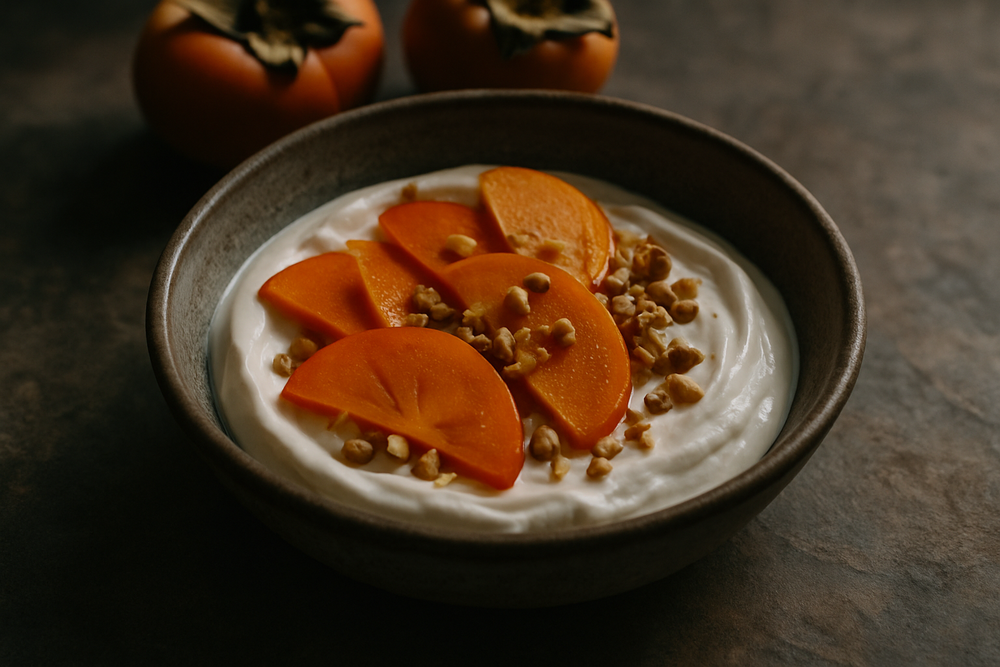
- Persimmon + Greek yogurt + walnuts The fruit's sweetness balances yogurt's tang while walnuts add omega-3
How Persimmon Compares
| Compared with | What's different |
|---|---|
| Persimmon vs. Hachiya Persimmon | Fuyu persimmons are firm and eaten like apples, while Hachiyas must be jelly-soft to avoid astringency. |
| Persimmon vs. Apple | Persimmons have double the fiber and significantly more Vitamin A and C than apples. |
Health Benefits
Things to Know
High natural sugar content: One medium persimmon = ~31 g carbs, ~12–13 g sugars. Count it as a full fruit/carbohydrate serving.
Diabetes and insulin resistance: Persimmon can fit a balanced meal plan but is not a low-glycaemic food. Pair with protein or fat to moderate the glucose response.
Unripe astringent varieties: Eating large amounts of unripe Hachiya can cause digestive discomfort and, in rare cases with pre-existing gut conditions, bezoar formation. Always eat fully ripe fruit.
Kidney disease (CKD) on potassium restriction: Persimmons contain potassium. If you are following a low-potassium diet for kidney disease, discuss portion size with your dietitian.
Allergies: Allergic reactions to persimmon are uncommon but possible. Symptoms may include itching, hives, runny nose, or upset stomach. If you have known fruit or latex allergies, introduce persimmon cautiously.
Young children (under ~2 years): Some sources advise caution with introducing persimmon in infancy due to potential allergenicity and high tannin content. Introduce in small amounts after early childhood.
Medication interactions (leaf extracts/supplements, not whole fruit):
Antihypertensive drugs: Persimmon leaf extracts have shown blood-pressure-lowering effects in early studies; combining concentrated preparations with antihypertensive medications could theoretically amplify the effect.
Anticoagulants/antiplatelets: Persimmon leaf compounds have shown platelet-inhibiting activity in experimental models; speak to your doctor before combining leaf supplements with blood-thinning medications.
Glucose-lowering medications: Whole fruit can raise blood glucose due to its carbohydrate load; adjust carbohydrate counting accordingly.
Pregnancy: Persimmon as a food is generally considered safe during pregnancy. Leaf teas and concentrated extracts are less well studied; avoid in pregnancy unless advised otherwise by a healthcare provider.
Prep Ideas
- — Persimmon + Greek yogurt + walnuts The fruit's sweetness balances yogurt's tang while walnuts add omega-3
Shop This Ingredient
Stock your pantry with quality persimmon.
Buy on AmazonAs an Amazon Associate, Plantopedia earns from qualifying purchases. This costs you nothing extra and helps us keep the encyclopedia free.
Frequently Asked Questions
Research on persimmon spans everything from cell studies to small human trials. The evidence is strongest where it overlaps with well-established science on fiber and carotenoids, and more preliminary where it relies on isolated extracts or animal models. Here is what the evidence actually shows, area by area. Heart and circulation Persimmons are low in calories, free of saturated fat, and supply roughly 6 g of fiber per fruit. Soluble fiber — a component of persimmon's fiber profile — can help reduce LDL ("bad") cholesterol by binding to bile acids in the gut, reducing their reabsorption. The American Heart Association highlights persimmons as a heart-supportive fruit for this reason. A scientific review published in Food Research International (PMC4817420) examined phytochemicals from persimmon fruit, leaves, and derived products. It found that persimmon fiber-enriched foods and leaf preparations showed hypocholesterolemic (cholesterol-lowering) and anti-atherosclerotic effects in small human and animal studies, including reductions in total and LDL cholesterol and improvements in some cardiovascular risk markers. Most of the detailed human data, however, came from functional food products like high-fiber baked goods rather than plain fresh fruit — so the precise benefit of eating a whole persimmon daily on cholesterol is not yet fully quantified. The bottom line: as part of a diet low in saturated fat and high in plants, persimmons are a reasonable heart-supportive choice. Digestive health and persimmon fiber for constipation This is one of the most straightforward benefit areas. At 6 g of dietary fiber per medium fruit, persimmon is a standout among commonly eaten fruits (for reference, a medium apple provides about 4–5 g). Decades of consistent human research show that higher dietary fiber intake improves bowel regularity, stool bulk, and transit time. There are no large randomised trials on persimmon specifically for constipation, but the mechanism is simple: more fiber → softer, bulkier stools → easier transit. Important caveat: Eating very large amounts of unripe, highly astringent persimmons (particularly Hachiya before it is fully ripe) has been linked in case reports to the formation of gastric bezoars — hardened masses in the stomach. This is rare and typically involves excessive consumption combined with a pre-existing digestive condition such as prior stomach surgery or poor gastric motility. Eating ripe fruit in normal serving sizes carries no meaningful risk for the general population. Blood sugar and metabolism Persimmon is relatively high in natural sugars (31 g carbohydrates per medium fruit), which is a fair consideration for anyone monitoring blood glucose. At the same time, its 6 g of fiber and polyphenols — particularly proanthocyanidins — may slow glucose absorption compared to a refined-sugar snack. The same scientific review noted hypoglycemic (blood-sugar-lowering) effects from persimmon components in experimental models, and described persimmon leaves as potentially beneficial in the context of diabetes and its complications. However, most of this data comes from animal studies or isolated compound research, not from robust human clinical trials using whole fruit. Persimmon can fit into a diabetes-friendly meal plan when counted as a carbohydrate serving and paired with protein and fat — but it should not be framed as a treatment for blood sugar problems. Inflammation and antioxidant defence Persimmon provides a layered antioxidant package: vitamin C, vitamin E, multiple carotenoids, and several classes of polyphenols. Antioxidants help neutralise reactive oxygen species (ROS) — unstable molecules that, in excess, can damage cells and contribute to chronic inflammation. Research on persimmon extracts in cell and animal models suggests they can reduce oxidative damage markers. Vitamin C alone has shown in human studies that it can lower certain inflammatory markers when dietary intake is consistently high. That said, there is not yet strong human clinical evidence that eating whole persimmon fruit specifically lowers inflammatory biomarkers (measurable signals of inflammation in the blood, like CRP). The honest framing: persimmon contributes to a broader anti-inflammatory dietary pattern — particularly in a fruit-and-vegetable-rich diet. Vision and skin health Persimmon's carotenoid content — especially beta-carotene (provitamin A), lutein, and zeaxanthin — makes it a practical food for supporting eye and skin health. Lutein and zeaxanthin concentrate in the macula of the eye and are consistently linked in population studies to lower risk of age-related macular degeneration (AMD). Provitamin A carotenoids support night vision and healthy skin cell turnover. One persimmon covers roughly 55% of the daily vitamin A target, making it one of the more efficient fruit sources of this nutrient.
Fresh whole fruit (Fuyu or Hachiya) The gold standard for nutrient preservation. Fuyu can be eaten firm like an apple — great sliced into salads, oatmeal, or eaten out of hand. Hachiya must be fully ripe (nearly translucent and jelly-soft) before eating; biting into an unripe one is an experience you will not repeat. Fresh whole fruit retains all the fiber, most of the vitamin C, and the full complement of phytochemicals. Dried persimmon A concentrated source of sugar, fiber, and minerals — but with notable vitamin C loss from the drying process. Great as an occasional snack or stirred into porridge, but watch portions: a small piece of dried persimmon has considerably more calories and sugar per gram than fresh. Persimmon pulp or puree Used in baking (breads, muffins, cookies, puddings) and smoothies. Retains most of the fiber if the whole flesh is used. The gentle heat of baking does reduce some heat-sensitive vitamins, but the overall nutritional profile stays solid. Persimmon leaf tea and extracts Persimmon leaves have been studied for effects on blood pressure, oxidative stress, blood sugar, and cholesterol — mostly in animal and preliminary human research. Leaf preparations are not the same as eating the fruit; they are concentrated sources of specific compounds and come with more uncertainty around dose and safety. If you are taking cardiovascular or blood-sugar medications, discuss leaf preparations with your doctor before trying them.
Quick Answers
Common questions, answered in a line.
The two main types of persimmons are the flat, firm Fuyu and the elongated, custard-soft Hachiya. While both are sweet and vibrantly orange, Hachiya varieties are astringent and must be eaten when fully ripe to avoid a mouth-puckering quality caused by tannins.
Persimmons contain proanthocyanidins, tannins, flavonoids, carotenoids, and phenolic acids. These naturally occurring phytochemicals are linked to antioxidant activity, heart health, and the reduction of oxidative stress.
Persimmons are not considered a low-glycemic food because a medium fruit contains approximately 31 grams of carbohydrates and 12–13 grams of sugar. To moderate the glucose response, it is recommended to pair the fruit with protein or fat.
Persimmons are high in the carotenoids lutein and zeaxanthin, which are plant pigments known to concentrate in the eyes. These compounds are studied for their role in supporting eye health and providing antioxidant protection.
You should avoid eating large amounts of unripe astringent persimmons, like the Hachiya, as they can cause digestive discomfort. In rare cases involving pre-existing gut conditions, the high tannin content in unripe fruit can lead to bezoar formation.
People with chronic kidney disease (CKD) who are on a potassium-restricted diet should consult a dietitian before eating persimmons. The fruit naturally contains potassium, which may need to be managed through specific portion sizes.
While the whole fruit is generally safe, you should consult a doctor before using persimmon leaf extracts if you take blood pressure, blood-thinning, or diabetes medications. Leaf compounds may amplify the effects of antihypertensive and anticoagulant drugs in experimental models.
For Readers in the USA
Local context — sourcing, seasonality, and regional notes.
The peak season for American-grown persimmons typically runs from September through December, with California-grown varieties flooding grocery stores in late autumn. While native American persimmons ripen in early fall, the more common Fuyu and Hachiya crops are harvested through the end of the year and are a staple of U.S. holiday markets.
Most U.S. grocery shoppers can find persimmons at major retailers like Whole Foods, Trader Joe's, and Costco during the fall, or at farmers markets in USDA Hardiness Zones 4 through 9. During the winter months, specialty grocers and Asian supermarkets (such as H-Mart) frequently carry a wider variety of imported and domestic cultivars.
Native American persimmons (Diospyros virginiana) are smaller, rounder, and much more astringent than the larger, commercial Japanese varieties found in U.S. supermarkets. These wild fruits are native to the Eastern United States and are prized by foragers for making traditional American puddings and breads once they have fully softened after the first frost.
California produces nearly all of the commercial persimmons in the United States, followed by smaller commercial harvests in Florida and Texas. The Central Valley of California provides the ideal Mediterranean climate for the Fuyu and Hachiya varieties that dominate the domestic market.
AI Clinical Review
- Accurate nutrition snapshot: a medium persimmon provides ~6 g fiber plus provitamin A carotenoids and vitamin C—nutrients linked to heart, gut, eye, and skin health.
- Helpful clarification of varieties (Fuyu vs Hachiya) and the role of tannins in astringency and ripeness.
- Balanced framing: positions persimmon as a nutritious fruit within a plant-forward pattern rather than a “superfood,” and distinguishes whole fruit from leaf teas/extracts.
- Practical guidance on forms (fresh, dried, purée) and how to use persimmons in everyday meals.
- Cardiovascular benefits beyond those expected from fiber-rich fruit are suggested in small studies and with fiber‑enriched/leaf products; robust trials on whole persimmon and hard outcomes (e.g., LDL change magnitude) are limited.
- Hypoglycemic and anti‑inflammatory effects largely come from animal, cell, or extract studies; consistent reductions in human biomarkers (e.g., CRP, A1C) from eating the fruit are not firmly established.
- Eye‑health claims rely on carotenoids (lutein/zeaxanthin) known to support macular health, but data directly tying persimmon intake to lower AMD risk are observational or indirect.
- Portion matters: one medium fruit ≈ 30–32 g carbohydrate (about two “carb choices”); people with diabetes can include it by counting the carbs and pairing with protein/fat.
- Ripeness is safety-critical for astringent types (Hachiya). Large amounts of unripe fruit have been linked—rarely—to gastric bezoars; extra caution if you have gastroparesis or prior stomach surgery.
- Persimmons provide meaningful potassium; those on potassium‑restricted diets (e.g., some with chronic kidney disease) should review portion sizes with a clinician or dietitian.
- Leaf teas/extracts are not the same as the fruit and may interact with antihypertensives, anticoagulants, or glucose‑lowering drugs; avoid concentrated supplements in pregnancy unless advised by your clinician. Allergies are uncommon but possible, especially with known latex‑fruit cross‑reactivity.
Frame as food education, not disease treatment.
References
- PMC, National Library of Medicine — Persimmon (Diospyros kaki) fruit: hidden phytochemicals and health claims (pmc.ncbi.nlm.nih.gov)
- PubMed — In Vitro and In Vivo Digestion of Persimmon and Derived Products: A Review (pubmed.ncbi.nlm.nih.gov)
- PMC, National Library of Medicine — Potential Nutrition and Health Claims in Deastringed Persimmon Fruits (Diospyros kaki L.), Variety 'Rojo Brillante', PDO 'Ribera del Xúquer' (pmc.ncbi.nlm.nih.gov)
- PubMed — Nutritional and mineral composition of persimmon fruits (Diospyros kaki L.) from Central and Southern Italy (pubmed.ncbi.nlm.nih.gov)
- PMC, National Library of Medicine — Persimmon Leaves: Nutritional, Pharmaceutical, and Industrial Potential-A Review (pmc.ncbi.nlm.nih.gov)
- PubMed — Anti-inflammatory Effects of Persimmon (Diospyros kaki L.) in Experimental Rodent Rheumatoid Arthritis (pubmed.ncbi.nlm.nih.gov)
Know Your Numbers
Eating healthy is a start. Now get to know your biomarkers.
Food changes bloodwork — inflammation, lipids, blood sugar and nutrient status all respond to what you eat. 59 markers from $59.
- Results in 7–10 days at 2,000+ Quest sites
- Licensed provider reviews every result
- One flat price, no membership, HSA/FSA eligible
Educational information only, not medical advice. Panels are ordered and reviewed through our licensed partner; Plantopedia may earn a commission.