Iron-Rich Plant Foods for Low Energy
Low iron intake or low iron stores can contribute to fatigue, and a small group of plant foods, mainly legumes, pumpkin seeds, tofu, and dark leafy greens, are meaningfully rich in iron. But iron is only one of several causes of low energy, plant (non-heme) iron is absorbed less efficiently than...
Direct answer
Low iron intake or low iron stores can contribute to fatigue, and a small group of plant foods, mainly legumes, pumpkin seeds, tofu, and dark leafy greens, are meaningfully rich in iron. But iron is only one of several causes of low energy, plant (non-heme) iron is absorbed less efficiently than iron from meat, and no single food restores energy on its own. If fatigue is persistent or you suspect anemia, food changes should accompany, not replace, a conversation with a clinician and, often, blood work.
Key takeaways
- Legumes, pumpkin seeds, tofu, quinoa, and leafy greens are among the richest plant sources of iron, providing roughly 3 to 7 mg per typical serving.
- Non-heme iron from plants is absorbed less efficiently than heme iron from meat, so pairing with vitamin C and separating from coffee or tea helps.
- Iron-rich foods work best as part of a varied, consistent eating pattern, not as an occasional add-on.
- Fatigue has many causes besides low iron, so persistent tiredness deserves a medical evaluation, including bloodwork, rather than food alone.
- People who menstruate heavily, are pregnant, or eat no animal products at all generally need more dietary iron and should discuss testing with a clinician.
How these foods were chosen
This list favors whole plant foods with a documented, meaningful iron content per typical serving, cross-checked against USDA and NIH nutrition data rather than marketing claims. Foods were also chosen for practical usability (affordable, easy to prepare, and reasonable to eat regularly) and because they typically bring other nutrients that support energy metabolism, such as folate, zinc, or protein, alongside the iron itself. Foods with iron that is poorly absorbed relative to their listed content, or that are unrealistic to eat in meaningful quantity, were deprioritized in favor of ones people can actually build meals around.
The food list, and why each earns its place
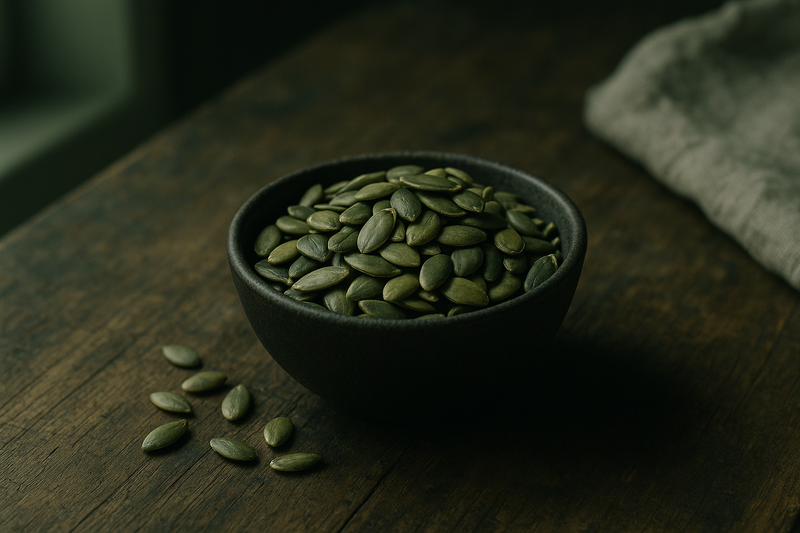
Lentils. Cooked lentils provide roughly 6 to 7 mg of iron per cup, among the highest of any plant food, alongside fiber and plant protein that make meals more satiating. See /food/lentils. Chickpeas and other beans. A cup of cooked chickpeas or white beans provides around 3 to 5 mg of iron. Their versatility (soups, stews, roasted snacks, blended dips) makes them easy to eat often. See /food/chickpeas. Tofu. A half-cup serving of firm tofu supplies approximately 3 mg of iron along with a complete plant protein, making it a useful anchor for stir-fries and bowls. See /food/tofu. Pumpkin seeds. About a one-ounce (30 g) serving delivers roughly 4 to 5 mg of iron, plus magnesium and zinc, and works well as a topping for salads or oatmeal. See /food/pumpkin-seeds. Quinoa. A cooked cup provides around 2.8 mg of iron and, unlike most grains, is a complete protein, which is useful if you are building meals without animal foods. See /food/quinoa. Spinach and other dark leafy greens. Spinach is iron-dense by weight, though a portion of its iron is bound by oxalates that reduce how much your body actually absorbs, so treat it as a contributor rather than your main source. Swiss chard and other greens contribute similarly. See /food/spinach. Fortified cereals and oats. Many breakfast cereals and some oat products are fortified with iron, and can meaningfully add to daily intake, especially useful for people who struggle to eat enough legumes. See /food/oats. Dried apricots and other dried fruit. In smaller amounts, dried apricots and raisins add iron along with potassium, useful as a snack layered onto an already iron-conscious pattern. See /food/dried-apricots.
How to actually use them
Absorption matters as much as the iron numbers on a label. Non-heme iron from plants is absorbed at roughly 2 to 20 percent efficiency, compared with about 25 percent for heme iron from meat, according to background summarized by the NIH Office of Dietary Supplements. A few practical habits improve that:
- Pair iron-rich foods with vitamin C. Adding citrus, bell peppers, or tomatoes to a lentil or bean dish can meaningfully increase how much iron you absorb from that meal.
- Separate coffee and tea from meals. Polyphenols in coffee and tea inhibit non-heme iron absorption, so having them an hour or so before or after an iron-rich meal, rather than with it, helps.
- Cook in cast iron when practical. Acidic foods cooked in cast-iron cookware can pick up a small amount of additional iron.
- Soak or sprout legumes and grains where possible. This can reduce phytates, compounds that otherwise bind iron and reduce absorption.
- Do not rely on calcium supplements at the same meal. Calcium can compete with iron for absorption, so it is reasonable to take a calcium supplement at a different time of day if you take one.
Why the overall pattern matters more than any single food
No single "iron food," however impressive its number per serving, will meaningfully change energy levels in isolation. What matters more is a consistent pattern: iron-containing plant foods eaten regularly, combined thoughtfully with vitamin C sources, and set within an overall diet that also supplies adequate calories, protein, B12 (which is not reliably found in plant foods and often needs a supplement or fortified food on a fully plant-based diet), and other nutrients involved in energy metabolism. A single iron-rich salad on an otherwise erratic diet is unlikely to move the needle the way a repeated, sustainable pattern can.
Who should adapt or be cautious
Iron needs vary by life stage, and some groups need to pay closer attention. Vegetarians and vegans need close to double the standard iron recommendation because plant (non-heme) iron is absorbed less efficiently, per the NIH Office of Dietary Supplements consumer fact sheet on iron. People who menstruate, especially with heavy periods, pregnant people, and those with gastrointestinal conditions that affect absorption (such as celiac disease or inflammatory bowel disease) are also at higher risk of low iron. Conversely, people with hemochromatosis or other iron-overload conditions should not increase iron intake without medical guidance, since excess iron can be harmful. Iron supplements are a separate decision from food and should be started only after testing confirms a deficiency and a clinician recommends a specific product and amount; do not begin iron supplementation on your own based on fatigue alone.
When to seek care
Iron-rich foods are a reasonable, low-risk addition to your diet, but they are not a substitute for medical evaluation when fatigue could reflect a more significant problem. Talk with a clinician, and ask about bloodwork, if you notice any of the following:
- Fatigue that is severe, worsening, or persists for more than a few weeks despite reasonable sleep and diet.
- Pale skin, shortness of breath with ordinary activity, dizziness, or a rapid or irregular heartbeat, which can signal anemia.
- Heavy menstrual bleeding, blood in the stool or urine, or unexplained weight loss, which can point to a cause of iron loss that needs its own diagnosis and treatment.
- Cold hands and feet, brittle nails, or unusual cravings to chew ice or non-food items, which can also accompany iron deficiency.
- Fainting, chest pain, or confusion, which need prompt medical attention.
These symptoms have several possible causes besides low iron, so only a clinician, usually with bloodwork, can tell you what is actually going on.
Bottom line
A handful of plant foods, led by legumes, tofu, pumpkin seeds, quinoa, and leafy greens, offer a real and useful source of dietary iron, and simple pairing habits like adding vitamin C can improve how much of that iron your body actually uses. But diet is only one lever. If fatigue is significant, ongoing, or comes with other symptoms such as pale skin, dizziness, or shortness of breath, ask a clinician for bloodwork rather than assuming food alone will resolve it.
Frequently asked questions
Can eating more spinach cure my fatigue?
Not by itself. Spinach contains iron but also oxalates that limit absorption, and fatigue has many causes besides iron. If you suspect iron deficiency, ask a clinician about a blood test rather than relying on any single food.
How much iron do I actually need per day?
Requirements vary by age, sex, and pregnancy status, and vegetarians and vegans need roughly double the standard recommendation. The NIH Office of Dietary Supplements publishes age- and sex-specific targets, and a clinician or registered dietitian can help you interpret them for your situation.
Is plant iron as good as iron from meat?
Non-heme iron from plants is generally absorbed less efficiently than heme iron from meat, but pairing plant iron sources with vitamin C and spacing them from coffee or tea narrows that gap meaningfully over a full day of eating.
Should I take an iron supplement instead of relying on food?
Only after testing shows you are actually deficient. Iron supplements can cause side effects and, in people without a true deficiency or with certain genetic conditions, too much iron can be harmful, so supplementation should be guided by a clinician, not started on your own.
Will these foods work faster than waiting to see a doctor?
No. Dietary changes take weeks to months to meaningfully shift iron stores, and they do not address other possible causes of fatigue. If your energy problem is significant, see a clinician for an evaluation while you also improve your diet.
Sources and evidence
- Iron, Consumer fact sheet, NIH Office of Dietary Supplements
- Iron, Health Professional fact sheet, NIH Office of Dietary Supplements
- Food sources of iron, Dietary Guidelines for Americans, USDA/HHS
- Iron deficiency anemia, symptoms and causes, Mayo Clinic
- Iron deficiency without anaemia is a potential cause of fatigue, PubMed
- Dietary Iron, StatPearls, NCBI Bookshelf
- Effect of oral iron supplementation on fatigue in iron-deficient blood donors (IronWoMan RCT secondary analysis), PMC
Know Your Numbers
Eating healthy is a start. Now get to know your biomarkers.
Food changes bloodwork — inflammation, lipids, blood sugar and nutrient status all respond to what you eat. 59 markers from $59.
- Results in 7–10 days at 2,000+ Quest sites
- Licensed provider reviews every result
- One flat price, no membership, HSA/FSA eligible
Educational information only, not medical advice. Panels are ordered and reviewed through our licensed partner; Plantopedia may earn a commission.