Magnesium-Rich Plant Foods for Sleep
The plant foods that deliver the most magnesium per realistic serving, plus a sober read of what magnesium trials actually show for sleep.
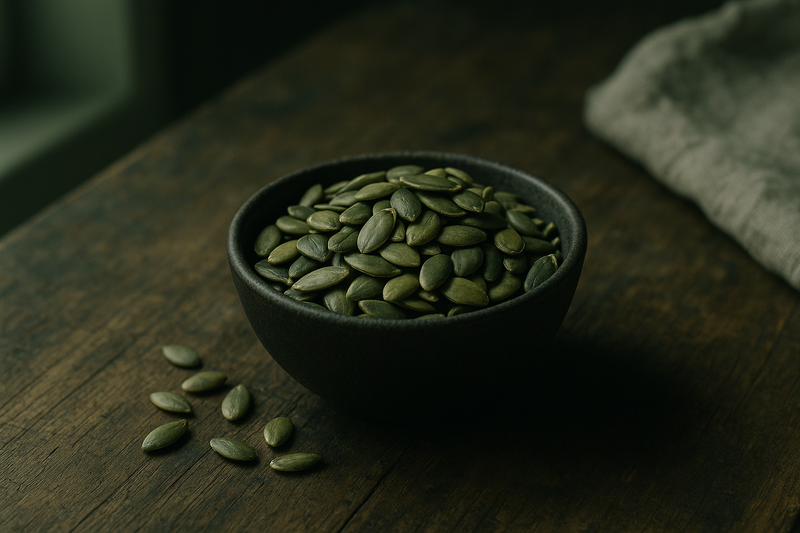
Pumpkin seeds, chia seeds, almonds, cooked spinach, black beans, cashews and oats are the most practical plant sources of magnesium, and magnesium is one of the few nutrients with direct randomized trial evidence relating to sleep. That evidence is modest. Trials show small improvements in insomnia severity scores and in how long it takes to fall asleep, not a fix for poor sleep. A food-first approach is sensible because meeting the requirement through whole foods also brings fiber, potassium and protein.
Key takeaways
- The recommended dietary allowance for magnesium is roughly 400 to 420 mg per day for adult men and 310 to 320 mg per day for adult women, and green leafy vegetables, legumes, nuts, seeds and whole grains are the main food sources.
- Randomized trials of magnesium supplements in adults with poor sleep have found small effects, for example a statistically significant but small reduction in insomnia severity with magnesium bisglycinate at 250 mg elemental magnesium per day.
- A meta-analysis in older adults with insomnia reported that magnesium reduced time to fall asleep by roughly 17 minutes versus placebo, from a small evidence base.
- Those trials used supplements, so applying them to dietary magnesium is a reasonable inference rather than a demonstrated result.
- Magnesium will not overcome untreated sleep apnea, an irregular schedule, late caffeine or alcohol, and it is not a substitute for evaluating persistent insomnia.
How these foods were chosen
The list is ordered by magnesium delivered per portion a person would realistically eat, using USDA food composition data rather than per 100 g figures, which flatter seeds and spices that nobody eats by the cup.
Second criterion: whether the food fits into an evening or late-afternoon eating pattern without disrupting sleep in other ways. Magnesium-dense foods that come packaged with a large caffeine or added-sugar load were treated with more caution.
Third: bioavailability context. Magnesium absorption from food is generally good, and the fiber that accompanies magnesium in plants is not a meaningful barrier for most people. Highly refined foods lose magnesium during processing, which is one reason intakes below the recommendation are common in diets built on refined grains.
Excluded: fortified products where the magnesium is added rather than intrinsic, and supplement forms, which are discussed separately below.
The food list, and why each earns its place
Pumpkin seeds. The densest common plant source. An ounce of roasted kernels supplies on the order of 150 mg of magnesium, close to half the daily requirement for many adults, in a portion that fits in a small handful. They are also a useful source of zinc and iron. See /food/pumpkin-seeds.
Chia seeds. Around 110 mg per ounce, with a high soluble fiber content that makes them convenient in overnight oats or yogurt. Because they gel, they are easy to eat in a small volume. See /food/chia-seeds.
Cooked spinach. A cup of cooked spinach carries roughly 150 mg of magnesium, because cooking collapses the volume dramatically. Raw spinach in a salad supplies far less per serving simply because you eat less of it. See /food/spinach.
Almonds. About 80 mg per ounce, alongside vitamin E and monounsaturated fat. Almond butter counts, though portion creep is easy. See /food/almonds.
Black beans and other legumes. A cup of cooked black beans supplies a substantial share of daily magnesium along with roughly 15 g of fiber and 15 g of protein. Legumes are the cheapest entry on this list per milligram of magnesium. See /food/black-beans.
Cashews. Slightly lower than almonds per ounce but useful because they blend into sauces and dressings, which is a low-effort way to add magnesium to meals you already make. See /food/cashews.
Oats. Modest per serving compared with seeds, but oats are eaten in large, regular portions, and rolled or steel-cut oats retain the bran where much of the magnesium sits. See /food/oats.
A note on foods often marketed for sleep that are not magnesium sources. Tart cherry juice has been studied for its melatonin content, and a 2025 systematic review of seven interventional studies found that three reported improvements in sleep duration, efficiency or onset time, with three also showing higher melatonin levels. That is a small and mixed body of evidence. See /food/tart-cherry.
How to actually use them
- Set a base, not an evening ritual. Magnesium status reflects weeks of intake, not what you ate at 9 pm. Spread these foods across the day.
- Two habits do most of the work: a seed and nut mix (pumpkin seeds, almonds, chia) added to breakfast, and legumes at one meal a day.
- Cook spinach rather than eating it raw when magnesium is the goal, since the cooked volume per serving is far higher.
- Use intact grains where you already use refined ones. Oats for breakfast, barley in soup, brown rice or farro at dinner.
- If you want a food that plausibly supports sleep timing rather than magnesium status, a small evening portion of tart cherry or kiwi is low risk, with the caveat that the trials behind both are small.
- Track for two weeks with a rough food log if you suspect a shortfall, then reassess. Guessing at magnesium intake is unreliable in both directions.
Why the overall pattern matters more than any single food
Magnesium is not a sedative. It is a cofactor in hundreds of enzyme systems, and its plausible link to sleep runs through nervous system regulation rather than direct sedation. The trials reflect that. Effect sizes in the magnesium bisglycinate work were small (Cohen's d around 0.2), most of the change appeared within the first two weeks, and reviewers have described the overall interventional evidence as inconsistent and underpowered, with only a few hundred participants across the relevant trials combined.
The more useful framing is that a magnesium-adequate diet is a diet high in seeds, nuts, legumes, leafy greens and intact whole grains. That pattern is associated with better cardiometabolic health independent of sleep, and it displaces the refined foods that made magnesium intake low in the first place. Sleep, meanwhile, responds most strongly to behavioral factors: a consistent wake time, morning light, limiting caffeine after early afternoon, limiting alcohol (which fragments sleep in the second half of the night), and treating conditions like sleep apnea.
In other words, eat for magnesium because the foods are worth eating. Treat any sleep improvement as a possible bonus rather than the reason.
Who should adapt or be cautious
- People with kidney disease. Impaired kidney function reduces magnesium excretion and raises the risk of accumulation. Magnesium intake, especially from supplements, should be managed by your clinical team.
- Anyone considering supplements. The tolerable upper intake level of 350 mg per day applies to supplemental magnesium, not to magnesium from food. Magnesium oxide and citrate commonly cause loose stools. Discuss supplements with a pharmacist or clinician rather than stacking them.
- People on certain medications. Magnesium can interfere with absorption of some antibiotics (including tetracyclines and quinolones) and bisphosphonates, and some medicines affect magnesium levels. Spacing and timing matter. Do not change prescribed medication on your own.
- People with IBS or sensitive digestion. Legumes, seeds and high-fiber grains can trigger bloating. Increase gradually and in small portions.
- People with nut allergies. Use seeds (pumpkin, chia, sunflower) and legumes as the primary sources instead.
- When to seek care. Insomnia lasting more than three months, loud snoring with witnessed breathing pauses, gasping awakenings, severe daytime sleepiness, falling asleep while driving, or new sleep problems alongside mood changes all warrant medical evaluation. Sleep apnea and depression are common, treatable, and not addressed by diet.
Bottom line
Pumpkin seeds, chia, spinach, almonds, black beans, cashews and oats will move your magnesium intake more than any supplement marketing will. The sleep evidence for magnesium is real but small, drawn from supplement trials with modest effect sizes and limited sample sizes. Build the food pattern because it is good food, keep expectations proportionate, and address the behavioral and medical drivers of poor sleep alongside it.
Frequently asked questions
How much magnesium do I actually need? The RDA is about 400 to 420 mg per day for adult men and 310 to 320 mg per day for adult women, with higher amounts during pregnancy. Food sources do not carry an upper limit, because healthy kidneys excrete the excess. The 350 mg upper limit applies only to supplemental magnesium.
Does magnesium help you fall asleep faster? A meta-analysis in older adults with insomnia reported a reduction in time to fall asleep of roughly 17 minutes compared with placebo, and a 2025 randomized trial of magnesium bisglycinate found a small but significant improvement in insomnia severity over four weeks. These are meaningful to some people and negligible to others. Reviewers consistently note that the trials are small and inconsistent.
Is food magnesium as good as a supplement for sleep? Nobody has run the head-to-head trial, so this is unresolved. Trials used supplements at defined doses, which is easier to standardize. Food gives you magnesium plus fiber, potassium and polyphenols, and carries essentially no risk of excess in people with normal kidney function.
Should I eat these foods right before bed? There is no evidence that timing magnesium intake close to bedtime matters. Magnesium status reflects habitual intake. A large, heavy meal shortly before bed can worsen reflux and sleep quality, so a light snack is preferable to a big evening portion.
What about magnesium glycinate versus other forms? Forms that dissolve well, including citrate, lactate, chloride and glycinate (bisglycinate), tend to be better absorbed than magnesium oxide. The recent sleep trials used bisglycinate and L-threonate. None of this makes a supplement necessary if your diet already meets the requirement.
Sources and evidence
- NIH Office of Dietary Supplements, magnesium fact sheet for health professionals
- NIH Office of Dietary Supplements, magnesium fact sheet for consumers
- USDA magnesium content of selected foods, tabulated by NIH ODS
- USDA National Agricultural Library, magnesium in foods reference table
- Magnesium bisglycinate in healthy adults reporting poor sleep, randomized placebo-controlled trial
- Magnesium L-threonate and sleep quality, randomized double-blind placebo-controlled trial
- Tart cherry and sleep quality, systematic review
- Herbal and natural supplements for improving sleep, literature review
- USDA FoodData Central, food composition database
Know Your Numbers
Eating healthy is a start. Now get to know your biomarkers.
Food changes bloodwork — inflammation, lipids, blood sugar and nutrient status all respond to what you eat. 59 markers from $59.
- Results in 7–10 days at 2,000+ Quest sites
- Licensed provider reviews every result
- One flat price, no membership, HSA/FSA eligible
Educational information only, not medical advice. Panels are ordered and reviewed through our licensed partner; Plantopedia may earn a commission.