Zinc-Rich Plant Foods
Where zinc actually comes from on a plant-based plate, why absorption is the harder problem than intake, and what zinc does and does not do for immunity.
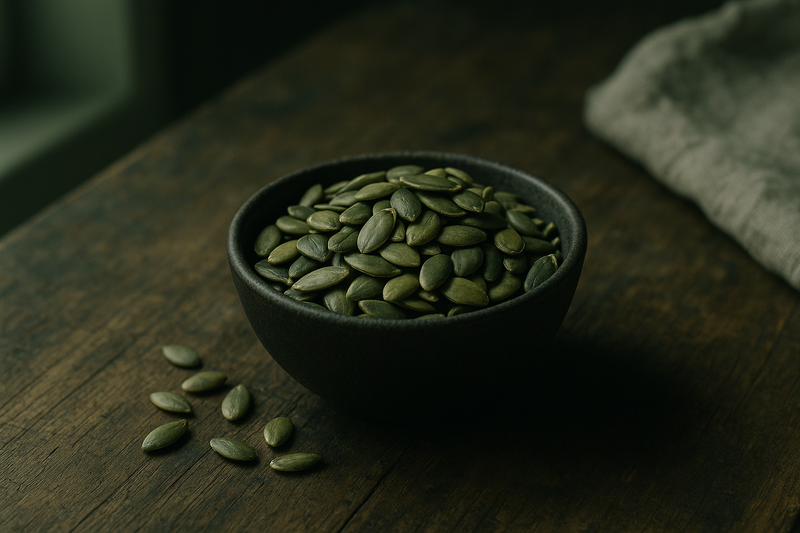
The most useful plant sources of zinc are pumpkin seeds, hemp seeds, cashews, lentils, chickpeas, black beans, tofu and tempeh, oats and quinoa. Zinc is required for normal immune cell development and function, so a shortfall matters. The harder problem on a plant-based plate is not intake but absorption: phytates in seeds, grains and legumes bind zinc, which is why the NIH notes that vegetarians may need as much as 50 percent more zinc than the standard recommendation.
Key takeaways
- The zinc RDA is 11 mg per day for adult men and 8 mg per day for adult women, with higher amounts in pregnancy and lactation.
- Because phytate reduces zinc absorption, people eating vegetarian or vegan diets may require up to 50 percent more than the RDA.
- Soaking, sprouting, fermenting and using leavened rather than unleavened bread all reduce phytate and improve zinc availability.
- Zinc supports normal immune function, but taking more than you need does not boost immunity in people who are already replete, and high-dose supplements can cause copper deficiency.
- The tolerable upper intake level for adults is 40 mg per day from all sources, which is easy to exceed with supplements and essentially impossible to reach from food.
How these foods were chosen
First criterion: zinc content per portion people actually eat, using USDA composition data rather than per 100 g values that make seeds look implausibly dominant.
Second: absorption, not just content. A food high in zinc and very high in phytate delivers less than the label suggests. Foods that are commonly soaked, sprouted, fermented or leavened were favored, because those processes measurably reduce phytate.
Third: role in a real diet. Legumes, seeds and whole grains already anchor most plant-based eating patterns, which means improving zinc status usually requires adjusting what you already do rather than adding something new.
Excluded: zinc supplements as a first-line strategy, and foods where the zinc is added through fortification only. Fortified breakfast cereals are worth knowing about, because the added zinc is not bound to phytate in the same way, but they are a manufactured solution rather than a whole-food one.
The food list, and why each earns its place
Pumpkin seeds. The strongest plant source per realistic portion, around 2.7 mg in a quarter cup, which is roughly a quarter to a third of a day's requirement. They also supply magnesium and iron, and they are easy to add to almost anything. See /food/pumpkin-seeds.
Hemp seeds. Roughly 1.8 mg per two tablespoons, with complete protein and a favorable fat profile. Hemp seeds require no preparation and have lower phytate than most whole seeds, which is a practical advantage. See /food/hemp-seeds.
Cashews. Around 1.9 mg per quarter cup. Useful because cashews blend into sauces, which is a low-effort route to zinc in meals you already cook. See /food/cashews.
Lentils. About 1.3 mg per half cup cooked, plus fiber, folate and iron. Lentils cook without soaking, which lowers the barrier to eating them frequently, though a brief soak still helps with phytate. See /food/lentils.
Chickpeas. Similar zinc per half cup cooked. If you soak dried chickpeas overnight, or sprout them for a day, you improve mineral availability. Canned chickpeas are fine and still contribute. See /food/chickpeas.
Tofu and tempeh. Tempeh has a specific advantage: fermentation reduces phytate, so zinc from tempeh is generally better absorbed than zinc from unfermented soy. Both are versatile protein anchors. See /food/tempeh.
Oats. Around 0.9 mg per three quarters of a cup cooked. Modest per serving, but people eat oats often and in decent quantity, which makes them a reliable background contributor. Overnight soaking is an easy improvement. See /food/oats.
Quinoa and other whole grains. Quinoa contributes zinc alongside complete protein. Rinsing removes saponins; soaking helps with phytate. See /food/quinoa.
How to actually use them
The preparation techniques matter as much as the shopping list.
- Soak dried beans, grains and seeds for several hours before cooking, and discard the soaking water. NIH guidance specifically recommends this for people relying on plant sources.
- Let soaked legumes and seeds sit until they begin to sprout where practical. Sprouting further reduces phytate.
- Choose leavened breads and sourdough over flatbreads made without leavening, since yeast and sourdough fermentation break down phytate.
- Eat tempeh, miso and other fermented soy foods regularly if you eat soy.
- Spread zinc across meals rather than concentrating it. Absorption is more efficient at moderate single doses.
- Do not take iron or calcium supplements at the same time as zinc-rich meals, since these minerals compete for absorption. Space them out.
- A quarter cup of pumpkin seeds daily, plus legumes at one meal, plus whole grains, gets most adults into a reasonable range.
Why the overall pattern matters more than any single food
Zinc is a good example of why single-nutrient thinking misleads. The mineral does not act alone, and the diet that supplies it also supplies competing and cooperating factors. Phytate reduces absorption. Adequate protein improves it. Very high supplemental iron or calcium can interfere. Long-term high-dose zinc supplementation induces copper deficiency, which can cause anemia and neurological problems, so more is not simply better.
The immune angle deserves the same discipline. Zinc is genuinely required for the development and function of neutrophils, natural killer cells and lymphocytes, and deficiency impairs immune responses. That is different from the claim that extra zinc strengthens immunity in someone whose intake is already adequate. Correcting a deficiency helps. Adding more on top of sufficiency has not been shown to produce a further benefit, and the evidence for zinc lozenges shortening colds remains mixed and dependent on formulation and dose.
A better frame: immune function rests on a whole dietary pattern plus sleep, activity, vaccination and not smoking. In a 2025 systematic review of chronic dietary intervention trials, fruit and vegetable interventions were the most likely food group to shift inflammatory cytokines favorably. Zinc adequacy is one component of that broader picture, not a lever you pull in isolation.
Who should adapt or be cautious
- Vegetarians and vegans. Aim higher than the standard RDA, potentially up to 50 percent more, and lean on soaking, sprouting and fermenting rather than simply eating more phytate-rich food.
- Pregnant and lactating people. Requirements rise. Discuss intake with your prenatal care provider rather than self-prescribing supplements.
- People with gastrointestinal disease or after bariatric surgery. Crohn's disease, short bowel syndrome, chronic diarrhea and malabsorptive surgery all reduce zinc absorption and increase risk of deficiency. This warrants clinical monitoring.
- Older adults. Intake is often lower and absorption less efficient, and some common medications affect zinc status.
- Anyone taking supplements. Keep total intake below the 40 mg per day upper limit unless a clinician has directed otherwise. High doses can cause nausea, copper deficiency and interference with certain antibiotics and with penicillamine. Intranasal zinc products have been linked to lasting loss of smell and should be avoided.
- When to seek care. Persistent diarrhea, poor wound healing, unexplained hair loss, recurring infections, loss of taste or smell, or unexplained weight loss should be evaluated by a clinician. Zinc deficiency is diagnosed clinically and with laboratory context, not by symptom checklists, and these symptoms have many other causes that need ruling out.
Bottom line
Plant diets can meet zinc needs, but they require attention to two things at once: choosing dense sources like pumpkin seeds, hemp seeds, cashews, lentils, chickpeas and tempeh, and using preparation methods that reduce phytate. Aim above the standard RDA if you eat mostly plants, spread intake across meals, and stay well under the 40 mg upper limit. Zinc adequacy supports normal immune function. Extra zinc beyond adequacy does not buy extra immunity, and at high doses it causes its own problems.
Frequently asked questions
How much zinc do I need on a plant-based diet? The RDA is 11 mg per day for adult men and 8 mg for adult women. NIH notes that because of phytate, vegetarians may require as much as 50 percent more, which puts a practical target closer to 16 mg and 12 mg respectively. Preparation methods that reduce phytate narrow that gap.
Does soaking beans really make a difference? Yes, and it is the change with the best return on effort. Soaking beans, grains and seeds for several hours before cooking, then discarding the soaking water, reduces phytate and improves zinc bioavailability. Letting them sit until sprouts form goes further. Fermentation, as in tempeh, miso and sourdough, works by the same principle.
Should I take a zinc supplement? Only with a reason. If your diet is consistently low, if you have a condition affecting absorption, or if a clinician has identified a deficiency, a supplement may be appropriate. Routine high-dose zinc is not benign: sustained intake above the 40 mg per day upper limit can cause copper deficiency and interact with several medicines.
Do zinc lozenges shorten colds? The evidence is inconsistent. Results vary by zinc salt, dose, and how soon after symptom onset treatment begins, and trials have produced conflicting findings. Lozenges commonly cause nausea and a bad taste. Intranasal zinc should be avoided because of reports of lasting loss of smell.
Can I get too much zinc from food alone? Essentially no. Reaching 40 mg per day from plant foods is not realistic, and healthy bodies regulate absorption. The upper limit concern applies to supplements, fortified products consumed in large amounts, and zinc-containing denture creams, not to a bowl of lentils.
Sources and evidence
- NIH Office of Dietary Supplements, zinc fact sheet for health professionals
- NIH Office of Dietary Supplements, zinc fact sheet for consumers
- Institute of Medicine, Dietary Reference Intakes chapter on zinc, NCBI Bookshelf
- Linus Pauling Institute Micronutrient Information Center, zinc
- USDA FoodData Central, food composition database
- Systematic review of chronic dietary intervention trials and inflammatory cytokines, Nutrients 2025
- Comparison of zinc content across nuts and seeds, food composition tool
Know Your Numbers
Eating healthy is a start. Now get to know your biomarkers.
Food changes bloodwork — inflammation, lipids, blood sugar and nutrient status all respond to what you eat. 59 markers from $59.
- Results in 7–10 days at 2,000+ Quest sites
- Licensed provider reviews every result
- One flat price, no membership, HSA/FSA eligible
Educational information only, not medical advice. Panels are ordered and reviewed through our licensed partner; Plantopedia may earn a commission.