Açaí Berry — health benefits and uses
Fiber + phytonutrients; use as a whole-food sweet, snack, or smoothie base
The Short Answer
Açaí berries are nutrient-dense fruits from the Amazon, providing 5g of healthy fats and 3g of fiber per 100g serving while remaining low in sugar. They are uniquely high in anthocyanins and plant sterols, supporting heart health and reducing oxidative stress.

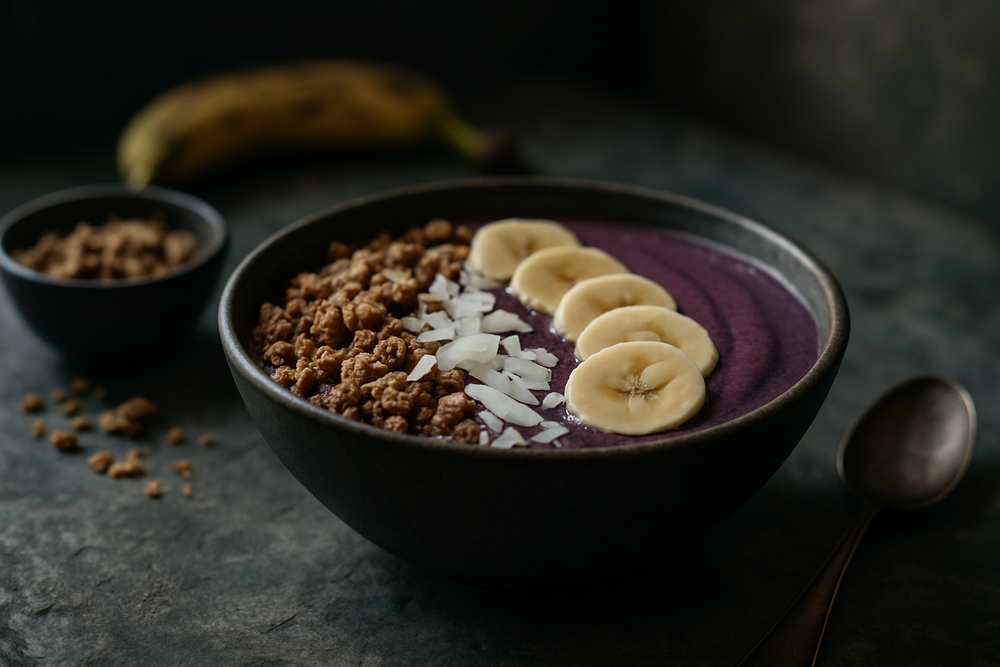
Açaí Berry · Photograph
Açaí (pronounced ah-sah-EE) is a small, deep-purple berry harvested from the Amazonian palm tree Euterpe oleracea. Native to the floodplain forests of Brazil and surrounding regions, it has been a dietary staple in the Amazon for centuries and has become a popular smoothie and bowl ingredient around the world over the past two decades.
Key Nutrients
% Daily Value based on 2,000 cal diet
Key active compounds (phytochemicals) in açaí
Phytochemicals are naturally occurring compounds in plants that have biological activity in the body. Açaí is exceptionally rich in several categories:
- Anthocyanins — Water-soluble pigments in the flavonoid (a subclass of polyphenol) family that give açaí its signature deep purple color. They act as powerful antioxidants and may support heart and brain health by reducing oxidative damage and modulating (influencing) inflammatory pathways.
- Proanthocyanidins (condensed tannins) — Polymeric (chain-like) flavonoids found in the skin and pulp. These show strong antioxidant and anti-inflammatory activity in lab and animal studies and may contribute to vascular (blood vessel) protection.
- Phenolic acids — Including ferulic, protocatechuic, and vanillic acids. These add additional antioxidant capacity and may influence cell-protective signaling pathways.
- Plant sterols (phytosterols) — Cholesterol-like compounds naturally found in plant foods. They can help reduce the intestinal absorption of dietary cholesterol when eaten regularly as part of a plant-rich diet.
- Unsaturated fatty acids — Particularly oleic acid (also dominant in olive oil) and linoleic acid. Açaí has an unusually high proportion of healthy fats for a fruit, supporting cell membrane integrity and potentially contributing to a favorable lipid profile when they replace saturated fats.
- Additional flavonoids — Various flavones and flavonols that work synergistically with anthocyanins to build açaí's overall antioxidant and anti-inflammatory profile.
How Açaí Berry Compares
| Compared with | What's different |
|---|---|
| Açaí Berry vs. Blueberries | Higher in healthy fats and lower in sugar, whereas blueberries have more natural sugar. |
| Açaí Berry vs. Acerola Cherries | Contain significantly more vitamin C and a more tart, acidic flavor profile. |
Health Benefits
Things to Know
Added sugar in commercial products: — Many açaí products contain significant added sugars. Always check ingredient labels; "unsweetened" on the front panel should mean no added sweeteners.
MRI scans: — Açaí's deep pigments can affect MRI imaging results of the gastrointestinal tract. If you are scheduled for any abdominal or GI imaging, let your clinical team know you eat açaí regularly.
Chagas disease risk: — Unpasteurized or raw açaí juice in regions where Chagas disease (caused by the parasite Trypanosoma cruzi) is endemic has been associated with contamination risk. Travelers to affected areas should
Shop This Ingredient
Stock your pantry with quality açaí berry.
Buy on AmazonAs an Amazon Associate, Plantopedia earns from qualifying purchases. This costs you nothing extra and helps us keep the encyclopedia free.
Frequently Asked Questions
Here is what the current human evidence actually supports, broken down by body system. Evidence levels range from emerging (early, mostly preclinical or small human studies) to moderate (multiple human trials or a meta-analysis, though still not definitive). Heart and circulation Evidence level: Moderate (for oxidative stress and inflammation markers); Limited (for standard cholesterol measures) Açaí is rich in anthocyanins, unsaturated fats, fiber, and plant sterols — all linked to cardiometabolic (heart and metabolic) health in broader nutrition research. A 2020 clinical trial in 69 adults with overweight and dyslipidemia (abnormal blood fat levels) found that 200 g per day of açaí pulp for 60 days, combined with a calorie-restricted diet, significantly reduced markers of oxidative stress and improved inflammatory status compared with baseline. However, a 2025 meta-analysis of human studies reported that açaí may modestly reduce total lipid concentrations but did not significantly change LDL-C (often called "bad" cholesterol), HDL-C ("good" cholesterol), total cholesterol, or triglycerides (blood fats). This means açaí should be viewed as an antioxidant- and fiber-rich fruit choice that can support overall cardiovascular health through multiple pathways — not as a cholesterol-lowering therapy on its own. Practical note: sweetened açaí bowls and juices can be high in added sugars, which may counteract cardiometabolic benefits. Toppings and labels matter. Digestive health and microbiome Evidence level: Emerging Açaí pulp provides roughly 4 g of fiber per 100 g serving, which is high for a fruit and can support bowel regularity and contribute to total daily fiber intake (the general recommendation for adults is 25–38 g per day). Preclinical (lab and animal) work suggests gastroprotective (gut-lining-protecting) and gut microbiota-modulating effects from açaí's polyphenols, and dietary fiber broadly supports a diverse gut microbiome (the community of bacteria living in your digestive tract). Direct human trials focused specifically on digestion or the gut microbiome with açaí are limited. Most digestive benefits are reasonably inferred from its fiber and polyphenol content rather than directly proven in large human studies. Pairing unsweetened açaí with oats, chia seeds, and other whole fruits is a practical way to build a genuinely high-fiber meal. Blood sugar and metabolism Evidence level: Emerging Unsweetened açaí pulp is one of the lowest-sugar fruits available — around 1 g of sugar per 100 g — while providing 4 g of fiber and 6 g of healthy fats, both of which slow the rate at which glucose (blood sugar) enters the bloodstream. Reviews note promising antidiabetic effects in animal and cellular models, but a 2025 review concluded that açaí has limited demonstrated impact on glucose metabolism in people with metabolic syndrome based on current human evidence. For blood sugar management, unsweetened açaí is best framed as a smart, lower-sugar, higher-fiber berry option that fits well into balanced meals — not a glucose-lowering intervention. Be cautious of commercial açaí bowls and juices, which frequently contain added sugars that can significantly raise blood glucose. Inflammation and recovery Evidence level: Moderate Açaí's concentration of anthocyanins, proanthocyanidins, and phenolic acids gives it one of the highest measured antioxidant capacities of commonly eaten fruits. Clinical trials reviewed in a 2022 paper indicate that açaí pulp and juice can reduce measurable markers of oxidative stress (such as TBARS and 8-isoprostane) and inflammatory mediators (such as certain cytokines — chemical messengers involved in immune responses) in humans, particularly in those with metabolic disturbances. Small human studies also show favorable changes in oxidative and inflammatory markers after açaí intake during physical exertion, suggesting a potential role in exercise recovery, though this research is preliminary. As part of a diet rich in fruits, vegetables, whole grains, and legumes, açaí can contribute meaningfully to reducing chronic low-grade inflammation — the slow-burning, low-level immune activation linked to many long-term health conditions. Hormones and metabolic balance Evidence level: Emerging Direct human research on açaí and specific hormones (sex hormones, thyroid hormones, stress hormones) is very limited. Some preclinical studies suggest potential endocrine-modulating (hormone-system-influencing) effects via its polyphenols and anti-inflammatory actions, but these have not been confirmed in robust human trials. Any hormonal benefits remain speculative and extrapolated from broader improvements in oxidative stress, inflammation, and metabolic risk factors. For individuals concerned about hormonal health, açaí can be included as one nutrient-dense fruit in a whole-food, plant-based pattern alongside appropriate clinical care.
The form you choose can affect how much you get out of açaí nutritionally. Here is a practical breakdown: Unsweetened frozen açaí pulp — The closest to what most human clinical studies have used. It preserves fiber, healthy fats, and polyphenols well. Look for single-ingredient packs labeled "unsweetened" with no added juice or sweetener. This is the best default choice for smoothies and bowls. Freeze-dried açaí powder — Retains many polyphenols and antioxidants; convenient to stir into oatmeal, plant-based yogurt, or smoothies. Because water is removed, the fiber and antioxidants are more concentrated by weight, so portions will differ from pulp. Human trials predominantly used whole pulp, so exact equivalences are approximate. Prepared açaí bowls and smoothies (café/retail) — Convenient but often made with sweetened purees, added juice, and calorie-dense toppings. A single café açaí bowl can contain 50–80 g of sugar. For health-focused use, build your own at home with unsweetened pulp, whole fruits, and moderate toppings like nuts, seeds, and a drizzle of nut butter. Açaí juice or juice blends — Typically contain little fiber, variable actual açaí content, and often added sweeteners. Whole pulp or powder is generally preferred in a whole-food approach. Capsules or concentrated extracts — Very limited human safety and efficacy data in these forms. For food-first positioning, unsweetened pulp and powder are the better choice over high-dose multi-ingredient supplements. Bottom line on form: Unsweetened frozen pulp or a high-quality freeze-dried powder with no additives are the two most reliable, evidence-aligned options for everyday use.
Quick Answers
Common questions, answered in a line.
Acai berries are deep-purple fruits harvested from the Euterpe oleracea palm tree, which is native to the Amazonian floodplain forests of Brazil. While they have been a regional dietary staple for centuries, they are now popular globally as an ingredient in smoothies and bowls.
Acai contains anthocyanins, proanthocyanidins, phenolic acids, plant sterols, and healthy unsaturated fatty acids like oleic and linoleic acid. These phytochemicals provide potent antioxidant and anti-inflammatory properties that may support heart and brain health.
Yes, acai contains plant sterols (phytosterols) that can help lower the intestinal absorption of dietary cholesterol. Additionally, the fruit is rich in healthy unsaturated fats that may support a favorable lipid profile when they replace saturated fats in your diet.
Acai contains deep pigments that can interfere with MRI imaging results of the gastrointestinal tract. If you have a scheduled abdominal or GI scan, you should inform your clinical team if you consume acai regularly.
When buying acai, you should check labels for added sugars and prioritize products labeled "unsweetened." Many commercial açaí products contain significant amounts of added sweeteners that can impact the overall health profile of the food.
In regions where Chagas disease is endemic, there is a risk of parasite contamination in raw or unpasteurized acai juice. Travelers to these areas should be cautious of the Trypanosoma cruzi parasite, which has been associated with contaminated acai products.
For Readers in the USA
Local context — sourcing, seasonality, and regional notes.
In the United States, you can typically find frozen açaí packets and powders at major retailers like Costco, Whole Foods Market, and Trader Joe's. Specialty health food stores and local smoothie chains also carry these products year-round as convenient bases for açaí bowls.
While you cannot easily grow açaí palms in most of the U.S. due to their tropical requirements, they are occasionally cultivated in the southernmost parts of Florida and Hawaii. For most Americans, the fruit is exclusively available in processed frozen or powdered forms imported from Brazil.
The USDA Organic seal on açaí products ensures the berries were grown without synthetic fertilizers or pesticides, which is a common priority for health-conscious U.S. consumers. Look for this label on frozen purees to avoid the added sugars frequently found in conventional blends.
Açaí "bowls" have become a popular American breakfast and post-workout meal, typically consisting of a thick frozen açaí blend topped with granola, fresh bananas, and honey. This cultural trend started in coastal regions like Southern California and Hawaii before spreading nationwide.
AI Clinical Review
- Accurately frames açaí as a nutrient-dense fruit that is unusually low in sugar while providing fiber and predominantly unsaturated fats.
- Summarizes human research appropriately: small trials and reviews suggest improvements in oxidative stress and inflammatory markers, with limited effects on standard lipids and glucose measures.
- Clearly distinguishes product forms and favors unsweetened frozen pulp or quality freeze‑dried powder over sweetened bowls, juices, and supplements.
- Offers realistic, non‑curative positioning—helpful as part of a varied, plant‑forward eating pattern rather than a stand‑alone fix.
- Cardiometabolic outcomes (LDL/HDL cholesterol, triglycerides, insulin sensitivity) show mixed or minimal changes in human studies; sample sizes, doses, and durations vary.
- Digestive and microbiome benefits are plausible from fiber and polyphenols but remain under‑studied in targeted human trials.
- Exercise recovery and hormone‑related effects are preliminary and based largely on small studies or preclinical work.
- Bioactive content can vary by cultivar and processing; dose–response and long‑term safety data for concentrated extracts are limited.
- Typical research amounts use unsweetened pulp at roughly 100–200 g per day for several weeks; for everyday use, a 100 g unsweetened pack is a practical serving. Powders are more concentrated—start with small amounts (for example, 1–2 teaspoons) and adjust to taste and tolerance.
- Watch added sugars and energy density in commercial bowls and smoothies; toppings and sweetened purées can offset potential benefits.
- Routine food use appears safe for most adults. Those who are pregnant or breastfeeding, taking multiple medications, or considering capsules/extracts should check with a clinician due to limited data on concentrated forms.
- If you have upcoming abdominal/GI MRI studies, let the imaging team know you consume açaí regularly, as pigments can affect certain images.
- Travelers in areas where Chagas disease is endemic should avoid unpasteurized/raw açaí juices; commercially pasteurized products are preferred.
- Individuals managing iron deficiency may wish to separate iron supplements from polyphenol‑rich foods (including açaí) by a couple of hours to optimize absorption.
Frame as food education, not disease treatment.
References
- PubMed — What is the açaí berry and are there health benefits? (pubmed.ncbi.nlm.nih.gov)
- PMC, National Library of Medicine — Acai Berry (Euterpe sp.) Extracts Are Neuroprotective against L-Glutamate-Induced Toxicity by Limiting Mitochondrial Dysfunction and Cellular Redox Stress (pmc.ncbi.nlm.nih.gov)
- NIH National Center for Complementary and Integrative Health — Acai (nccih.nih.gov)
- PubMed — Açaí (Euterpe oleracea Mart.) in Health and Disease: A Critical Review (pubmed.ncbi.nlm.nih.gov)
- PubMed — Biological activities of açaí (Euterpe oleracea Mart.) and juçara (Euterpe edulis Mart.) intake in humans: an integrative review of clinical trials (pubmed.ncbi.nlm.nih.gov)
- NIH National Center for Complementary and Integrative Health — Dietary supplements marketed for weight loss bodybuilding and sexual enhancement science (nccih.nih.gov)
- NIH National Center for Complementary and Integrative Health — How safe is this product or practice (nccih.nih.gov)
- USDA FoodData Central — USDA FoodData Central (fdc.nal.usda.gov)
Know Your Numbers
Eating healthy is a start. Now get to know your biomarkers.
Food changes bloodwork — inflammation, lipids, blood sugar and nutrient status all respond to what you eat. 59 markers from $59.
- Results in 7–10 days at 2,000+ Quest sites
- Licensed provider reviews every result
- One flat price, no membership, HSA/FSA eligible
Educational information only, not medical advice. Panels are ordered and reviewed through our licensed partner; Plantopedia may earn a commission.