Elderberry — health benefits and uses
Fiber + phytonutrients; use as a whole-food sweet, snack, or smoothie base
The Short Answer
Elderberries must be cooked before consumption to neutralize cyanogenic glycosides, but once prepared, they offer 10.2g of fiber and 52mg of Vitamin C per cup.
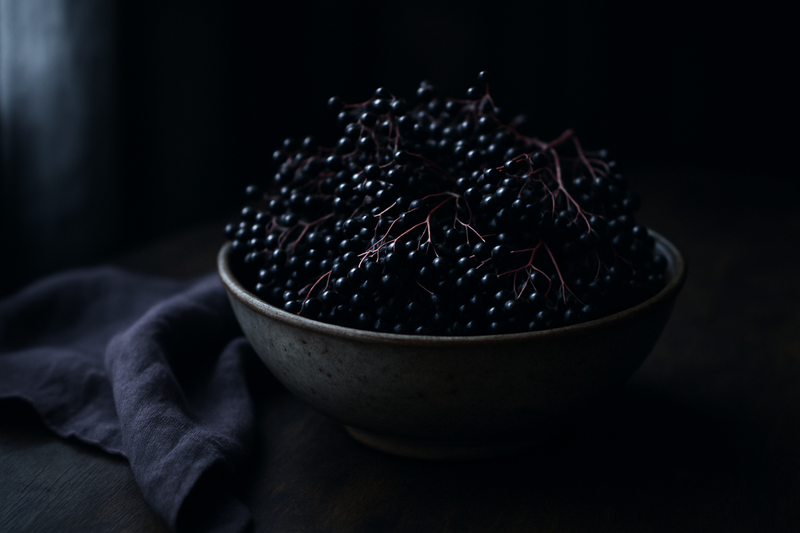
Elderberry · Photograph
Elderberry is one of those ingredients that straddles the line between everyday kitchen fruit and wellness staple. Small, deep-purple, and intensely flavored, elderberries come from Sambucus nigra, a flowering shrub native to Europe and widely cultivated across North America. They have been used in folk medicine for centuries and are now among the most popular botanical supplements in the world — but their story as a whole food is just as interesting as their reputation in a bottle.
Key Nutrients
% Daily Value based on 2,000 cal diet
Key active compounds
Understanding what is inside an elderberry helps explain why researchers are interested in it. Here are the main plant chemicals to know:
- Anthocyanins (cyanidin-3-glucoside, cyanidin-3-sambubioside): Water-soluble red-to-purple pigments belonging to the flavonoid family of polyphenols. These are elderberry's headline compounds — potent antioxidants that may support vascular health, modulate immune responses, and contribute to the observed effects on respiratory symptoms.
- Flavonols (quercetin, kaempferol, isorhamnetin): A subgroup of flavonoids concentrated especially highly in elderberries. They offer antioxidant and potential anti-inflammatory effects and may influence how immune cells signal each other.
- Phenolic acids (chlorogenic acid, caffeic acid derivatives): A class of polyphenols with hydroxylated aromatic ring structures found across fruits and vegetables. They contribute to overall antioxidant capacity and may affect glucose metabolism and vascular function.
- Proanthocyanidins and tannins: Larger, polymer-like flavonoids responsible for some of elderberry's astringent taste. They add to antioxidant and possible antimicrobial properties and may interact with gut bacteria, though human data are limited.
- Cyanogenic glycosides (in raw berries and non-fruit plant parts): These are not a health benefit — they are the reason elderberries must be fully ripe and thoroughly cooked before eating. Cooking degrades these compounds and makes the berries safe. Raw berries, leaves, stems, bark, and seeds all contain higher concentrations and should not be consumed.
How Elderberry Compares
| Compared with | What's different |
|---|---|
| Elderberry vs. Blueberry | Much smaller and more tart; must be cooked to neutralize toxins, unlike blueberries which are eaten raw. |
| Elderberry vs. Blackcurrant | Both are high in anthocyanins, but elderberries grow in clusters on shrubs and have a more savory, floral profile. |
Health Benefits
Things to Know
Raw berries are not safe.: Always fully cook ripe elderberries before eating. Discard leaves, stems, bark, seeds, and roots entirely.
Pregnant individuals: Most experts advise avoiding elderberry supplements during pregnancy due to insufficient safety data. Cooked elderberries as food carry a lower risk but should still be discussed with your provider.
Breastfeeding individuals: Lack of research on transfer into breast milk means supplements are generally not recommended. Discuss food-amount use with your provider.
Infants and young children: Sensitive

Shop This Ingredient
Stock your pantry with quality elderberry.
Buy on AmazonAs an Amazon Associate, Plantopedia earns from qualifying purchases. This costs you nothing extra and helps us keep the encyclopedia free.
Frequently Asked Questions
Here is what the current research suggests — organized by body system, with honest notes on evidence strength. Heart and circulation Elderberries are naturally low in fat and provide potassium and fiber, both of which are associated with cardiovascular benefits in high-fruit, high-fiber dietary patterns. Their anthocyanins and flavonols have shown promising effects on vascular function, blood lipid profiles, and oxidative stress in laboratory and animal studies. Some limited human data suggest possible improvements in cardiovascular risk markers, but these studies are small and short-term, and most cardiometabolic benefits currently attributed to elderberry are extrapolated from research on anthocyanin-rich berries in general rather than from robust elderberry-specific clinical trials. No major organization currently endorses elderberry for lowering blood pressure, cholesterol, or preventing heart disease. Think of it as a polyphenol-rich berry that fits well within a heart-healthy plant-based pattern — not as a cardiovascular treatment. Evidence: emerging. Digestive health and microbiome With roughly 10 grams of fiber per cup, elderberries are among the higher-fiber fruits available. Dietary fiber is one of the most consistently evidence-backed tools for supporting bowel regularity, feeding beneficial gut bacteria, and reducing constipation risk. Elderberries also contain sorbitol, a natural sugar alcohol with mild laxative properties, which historically contributed to their folk-medicine use for sluggish digestion. Controlled human trials looking specifically at elderberry and digestive outcomes are lacking, but the general evidence for fiber-rich fruit in gut health is well established. Note that the same fiber and sorbitol, if consumed in large amounts, can cause gas, bloating, or loose stools in sensitive individuals — especially when you are new to high-fiber foods. Evidence: indirect (general fiber evidence is strong; elderberry-specific gut data is limited). Blood sugar and metabolism This is an active research area with mostly early-stage findings. Anthocyanins and other polyphenols in elderberries may influence glucose uptake, insulin secretion, and how the body handles carbohydrates. Some small human studies and acute meal tests have shown modest improvements in glycemic markers with elderberry extracts. More compelling data come from animal and cell studies, where elderberry extracts improved insulin secretion and reduced hyperglycemia. No major clinical guidelines recommend elderberry for diabetes management, and it is worth noting that many elderberry syrups and gummies contain significant added sugar, which can undermine any potential glycemic benefit. If you use elderberries in their whole, cooked form as part of a fiber-rich meal, the blood sugar impact is likely favorable — but this reflects the general benefit of fiber and polyphenols, not a proven elderberry-specific effect. Evidence: emerging. Inflammation and recovery Elderberries have one of the highest antioxidant capacities of commonly eaten berries — reportedly up to ten times that of some other fruits according to Ohio State University Wexner Medical Center. Their anthocyanins and flavonols have demonstrated anti-inflammatory activity in laboratory settings, including reduced production of pro-inflammatory cytokines (chemical messengers that drive inflammation). Some small human trials using elderberry extracts have reported improvements in antioxidant status. However, this data is mostly secondary to cold-and-flu studies, and isolating a consistent anti-inflammatory effect across populations and conditions remains difficult. There was concern during the COVID-19 pandemic that elderberry might overstimulate the immune system via a "cytokine storm," but a 2021 review cited by Harvard Health found no clinical evidence that elderberry supplements cause harmful immune overstimulation in humans. For now, elderberry is best understood as a high-antioxidant berry that fits within an overall anti-inflammatory dietary pattern. Evidence: emerging. Immune support and upper respiratory health This is where the most human evidence for elderberry exists, and it relates specifically to standardized black elderberry extracts and syrups — not casual food intake. Several randomized, placebo-controlled trials in adults with influenza or upper respiratory tract infections (URTIs) have found shorter illness duration and reduced symptom severity compared with placebo, typically by about two to four days. A 2019 meta-analysis of randomized clinical trials concluded that elderberry supplements may shorten the duration of colds and flu by roughly two days and lessen symptom severity — though included studies were small and often did not compare elderberry to standard treatments. A separate trial in air travelers taking an elderberry extract showed fewer and milder colds versus placebo. Organizations like Harvard Health and the National Center for Complementary and Integrative Health (NCCIH) consider the evidence encouraging but not yet sufficient to make strong recommendations, and they emphasize that elderberry should not replace vaccines, antivirals, or guideline-based medical care. Benefits appear most likely when elderberry is started within 24 to 48 hours of symptom onset. Evidence: moderate (for standardized extracts); limited (for whole-food amounts).
The answer depends on your goal. For everyday nutrition and fiber: Cooked whole elderberries — fresh or frozen — are the gold standard. They deliver the full package of fiber, vitamin C, potassium, and polyphenols with minimal processing. Dried elderberries used in teas or slow-cooked dishes are another good option, though vitamin C may be partly lost during drying and prolonged heat. For short-term cold and flu support: Standardized elderberry syrups and extracts are what clinical trials have actually used. These deliver consistent, measurable amounts of anthocyanins. Look for products that list an anthocyanin content or use a standardized extract. For convenience: Capsules and tablets provide quantified doses without added sugar and without the fiber of whole berries. Gummies and lozenges are convenient but often high in added sugars — better treated as occasional functional confections than daily staples. For culinary use: Jams, jellies, and elderberry juice can add flavor and some polyphenols to meals, but typically contain significant added sugar and less intact fiber than whole berries. Buying guide: what to look for Whole or frozen berries: Choose deep-purple, fully ripe berries. Avoid green, unripe, or mixed batches that include stems or leaves. Frozen elderberries are an excellent year-round option and should still be cooked before eating. Dried elderberries: Check that the product specifies "black elderberry" (Sambucus nigra) and contains only the dried berries — no leaves, bark, or stems. Use them in hot preparations rather than raw snacking. Syrups: Look for a standardized black elderberry extract as the primary ingredient, not elderberry "flavoring" or elderberry "powder" at the bottom of a long ingredient list. Check the added sugar content — values vary enormously between brands, from under 3 grams to over 12 grams per serving. Capsules and extracts: Third-party tested products (NSF, USP, or Informed Sport seals) offer the best assurance of what is actually in the product. Look for listed anthocyanin content in milligrams per dose. Avoid: Products that include other plant parts of the elder shrub (leaves, bark, root, stems) — these parts are not safe to consume.
Quick Answers
Common questions, answered in a line.
Elderberries must be fully cooked to degrade cyanogenic glycosides, which are toxic compounds found in the raw fruit. The berries should also be fully ripe, and you must discard all leaves, stems, bark, and seeds before consumption to ensure safety.
Elderberries are rich in anthocyanins, which are potent antioxidant pigments that may support vascular health and modulate immune responses. They also contain high concentrations of flavonols like quercetin, along with phenolic acids and tannins that contribute to their anti-inflammatory properties.
Raw elderberries, as well as the plant's leaves, stems, bark, seeds, and roots, contain cyanogenic glycosides and should not be consumed. These parts of the Sambucus nigra shrub carry higher concentrations of these compounds and are considered unsafe for ingestion.
Most experts advise against using elderberry supplements während pregnancy or breastfeeding due to a lack of sufficient safety data. While cooked elderberries used in food carry a lower risk, you should always discuss their use with a healthcare provider first.
The anthocyanins and flavonols found in elderberries are studied for their ability to modulate immune cell signaling and support respiratory health. These pigments and polyphenols are the primary reasons elderberry is popular for immune-support and managing respiratory symptoms.
Elderberries contain proanthocyanidins and tannins, which are larger flavonoids responsible for the fruit's distinctively astringent flavor. These compounds also contribute to the berry's antioxidant capacity and potential antimicrobial properties.
For Readers in the USA
Local context — sourcing, seasonality, and regional notes.
American elderberries (Sambucus canadensis) are native to the eastern and central United States, typically ripening from late July through September. You can find them growing wild along roadsides and forest edges, but they are increasingly cultivated by small-scale farmers in states like Missouri and Oregon.
In the US, elderberries are rarely sold as fresh produce in standard supermarkets; instead, look for them at local farmers markets or as dried berries and frozen purees in health food stores like Whole Foods Market or Sprouts. Many Americans also purchase elderberry in the form of US-made syrups, gummies, and tinctures found in the supplement aisle of major retailers like CVS, Walgreens, or Target.
Commercial elderberry products sold in the United States are regulated by the FDA as dietary supplements or foods, meaning they must follow specific labeling and manufacturing standards, but they are not approved to treat or prevent diseases. If you are buying products labeled 'USDA Organic,' they must be produced without prohibited synthetic fertilizers or pesticides, ensuring a higher level of environmental oversight during cultivation.
AI Clinical Review
- Clearly distinguishes whole cooked elderberries (for fiber and micronutrients) from standardized extracts used in cold/flu studies.
- Accurately emphasizes anthocyanins and related flavonoids as the primary bioactive compounds and the likely drivers of observed effects.
- Notes that evidence for upper‑respiratory symptom relief comes mainly from small randomized trials of standardized black elderberry extracts, with benefits most likely when started within 24–48 hours.
- Appropriately cautions that raw or undercooked berries and non‑fruit plant parts can be unsafe due to cyanogenic glycosides.
- Cardiometabolic claims (blood pressure, cholesterol, glycemic control) remain preliminary; few well‑powered, long‑duration human trials isolate elderberry itself from other diet factors.
- Anti‑inflammatory and antioxidant findings are largely from lab and short‑term studies; high “antioxidant capacity” in a test tube does not guarantee clinical benefit.
- Gut microbiome and digestive effects are plausible given fiber and polyphenols, but elderberry‑specific human data are limited.
- Cold/flu research varies by product, dose, and outcome measures, making it hard to generalize across all syrups, gummies, or capsules.
- Safety/form: Always use fully cooked ripe berries; avoid leaves, stems, bark, and raw preparations. Choose standardized, third‑party‑tested supplements if you’re aiming for research‑like dosing; many syrups and gummies contain considerable added sugar.
- Use pattern: Trials of extracts typically involve short‑term use (days to a couple of weeks) initiated soon after symptom onset; elderberry should not replace vaccines, antivirals, or guideline‑based care.
- Who should check with a clinician first: People who are pregnant or breastfeeding; children (especially under 12 months if a syrup contains honey); individuals with autoimmune conditions or on immunosuppressive therapy; and those managing blood sugar given the sugars in some products.
- Tolerance: The high fiber and natural sorbitol can cause gas or loose stools in some people—introduce food amounts gradually and hydrate well.
Frame as food education, not disease treatment.
References
- NIH National Center for Complementary and Integrative Health — Elderberry (nccih.nih.gov)
- PubMed — Elderberry (pubmed.ncbi.nlm.nih.gov)
- USDA FoodData Central — USDA FoodData Central (fdc.nal.usda.gov)
- NIH Office of Dietary Supplements — ImmuneFunction HealthProfessional (ods.od.nih.gov)
- NIH Office of Dietary Supplements — ImmuneFunction Consumer (ods.od.nih.gov)
- NIH National Center for Complementary and Integrative Health — The common cold and complementary health approaches science (nccih.nih.gov)
- PubMed — USDA's FoodData Central: what is it and why is it needed today? (pubmed.ncbi.nlm.nih.gov)
- NIH National Center for Complementary and Integrative Health — How safe is this product or practice (nccih.nih.gov)
Know Your Numbers
Eating healthy is a start. Now get to know your biomarkers.
Food changes bloodwork — inflammation, lipids, blood sugar and nutrient status all respond to what you eat. 59 markers from $59.
- Results in 7–10 days at 2,000+ Quest sites
- Licensed provider reviews every result
- One flat price, no membership, HSA/FSA eligible
Educational information only, not medical advice. Panels are ordered and reviewed through our licensed partner; Plantopedia may earn a commission.