Blood Orange — health benefits and uses
Mediterranean tradition prized its deep-red anthocyanin-rich flesh.
The Short Answer
Blood oranges provide 95 mg of vitamin C per serving and are unique among citrus for their high concentration of anthocyanins, the antioxidants responsible for their deep red color.
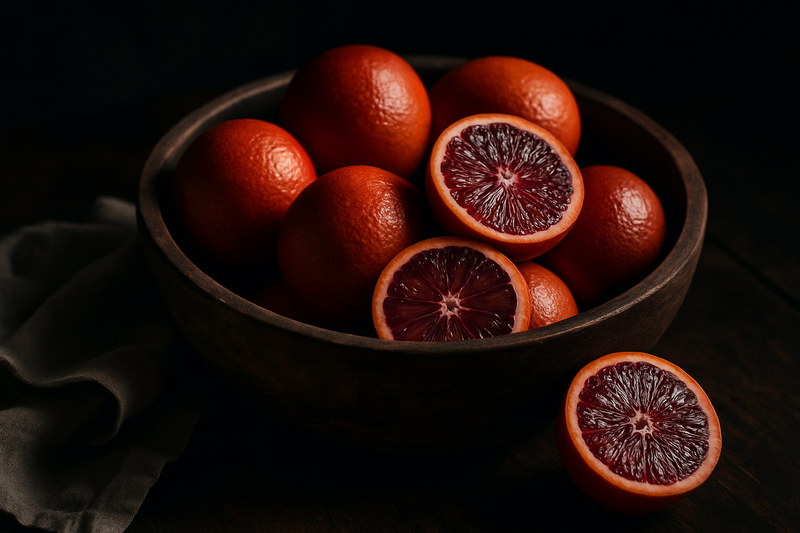
Blood Orange · Photograph
Discover blood orange health benefits and nutrition facts, from vitamin C and anthocyanins to heart and digestive support. Learn how to use blood oranges in salads, vinaigrettes, and sorbets — plus what the research actually says.
Key Nutrients
% Daily Value based on 2,000 cal diet
Key active compounds
- Anthocyanins (e.g., cyanidin-3-glucoside) — Water-soluble pigments responsible for the red color. They scavenge free radicals (unstable molecules that can damage cells), chelate (bind) pro-oxidant metals, and may downregulate inflammatory signaling.
- Flavanones (hesperidin, narirutin) — Citrus-specific flavonoids in the juice and peel. Associated with vascular protection and modest lipid-lowering effects in broader citrus research.
- Hydroxycinnamic acids (ferulic acid, caffeic acid derivatives) — Phenolic acids that act as antioxidants and may help modulate oxidative stress at the cellular level.
- Carotenoids (beta-carotene) — Fat-soluble pigments serving as precursors to vitamin A, complementing the water-soluble antioxidants.
- Vitamin C (ascorbic acid) — A well-established water-soluble antioxidant supporting immune function and collagen production.
- Dietary fiber (pectin-rich) — Supports stool regularity and gut health; slows sugar absorption compared with juice.
Prep and pairing ideas
Blood oranges' slightly tart, berry-tinged flavor makes them unusually versatile.
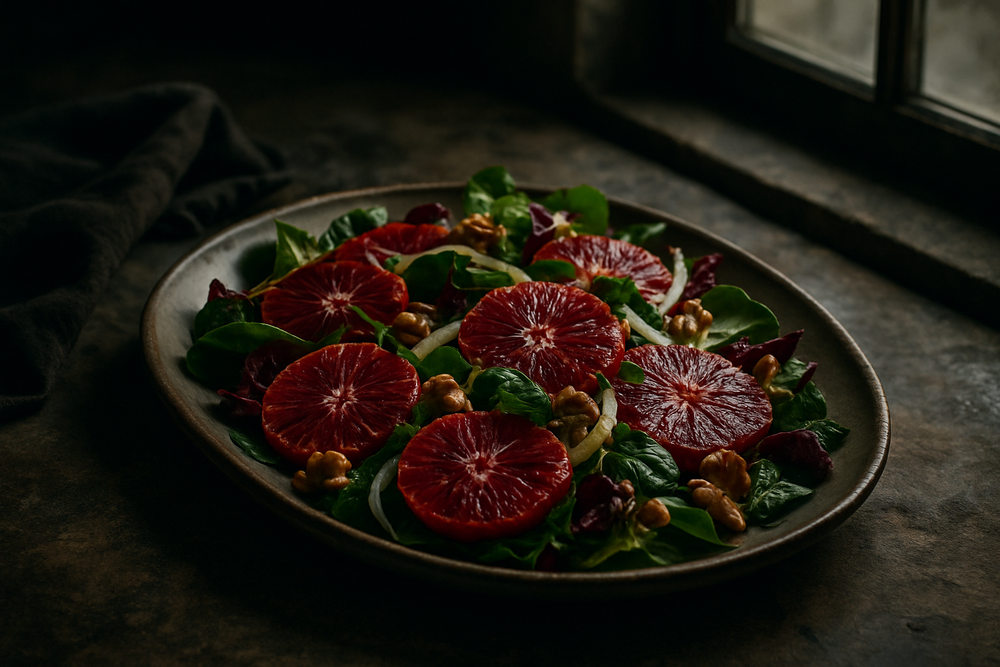
1. Blood orange and fennel salad Thinly slice fennel and layer with blood orange segments. The anise note of fennel lifts the citrus, and drizzling with a simple olive oil and white wine vinegar dressing creates a bright, anti-inflammatory-friendly side. Sprinkle toasted walnuts for extra omega-3s.
2. Blood orange vinaigrette Whisk 3 tablespoons of freshly squeezed blood orange juice with 1 tablespoon apple cider vinegar, 2 tablespoons extra-virgin olive oil, a small pinch of sea salt, and a half-teaspoon of Dijon mustard. Use over arugula, roasted beets, or grain bowls. The acidity keeps the color vivid and the dressing stable for two days in the fridge.
3. Blood orange sorbet Blend blood orange juice, a little lemon juice, and a small amount of honey or agave (optional). Freeze in a shallow dish, forking through every 30 minutes for 2–3 hours. Far less sugar than commercial sorbet; a neat way to serve the fruit's antioxidants at a dinner party.
Why these pairings work nutritionally: Olive oil provides healthy fats that help absorb fat-soluble carotenoids from the orange. Fennel and arugula add prebiotic fiber and bitter phytonutrients that complement blood orange's sweet-acid profile.
Bottom line
Blood oranges are a nutritionally rich whole food with a genuinely distinctive phytochemical profile — high vitamin C, meaningful dietary fiber, and anthocyanins that set them apart from most other citrus fruits. Human research suggests the juice may modestly support cardiovascular and metabolic markers, but effects are not dramatic or consistent across all trials, and whole fruit almost always outperforms juice on practical health metrics. For most people, the best strategy is simply to eat blood orange segments regularly — in salads, sorbets, vinaigrettes, or straight from the peel — as part of a varied, plant-forward diet.
Looking to build a diet plan around colorful, functional whole foods like blood oranges? Explore our goals section for guidance tailored to specific health aims.
How Blood Orange Compares
| Compared with | What's different |
|---|---|
| Blood Orange vs. Navel Orange | Contains red anthocyanin pigments and a tart, berry-like flavor profile. |
| Blood Orange vs. Clementine | Significantly smaller with a sweeter, less acidic taste and thinner skin. |
| Blood Orange vs. Grapefruit | Larger with a bitter-pith flavor and higher acidity, lacks the red pigmentation. |
Health Benefits
Things to Know
Acidity and GERD: Blood oranges are naturally acidic. If you have chronic acid reflux or a sensitive stomach, large quantities of juice — especially on an empty stomach — may worsen symptoms. Eating segments with food is generally better tolerated.
Dental enamel: Frequent sipping of acidic juice can contribute to enamel erosion over time. Drink juice with meals, use a straw if you drink it often, and rinse with water afterwards. Don't brush immediately after acidic foods.
Blood sugar management: Whole fruit is preferable to juice for people monitoring blood sugar. If you have diabetes or insulin resistance, count blood orange juice portions as part of your daily carbohydrate intake and discuss with your care team.
Kidney disease: If you are on a potassium-restricted diet or have advanced kidney disease, discuss total fruit intake with your healthcare provider.
Citrus allergy / oral allergy syndrome: People who react to other citrus fruits may react to blood oranges similarly.
Medication interactions: Blood oranges are sweet oranges and do not carry the same drug interaction risk as grapefruit. However, if you take medications for blood pressure, blood sugar, or other conditions where food-drug timing matters, mention significant changes in citrus intake to your clinician. Large volumes of juice may interact with mucosal-irritating medications like NSAIDs (e.g., ibuprofen).
Pregnancy: Blood oranges are safe to eat during pregnancy as part of a balanced diet. Vitamin C needs increase slightly in pregnancy; whole fruit is a good source. Avoid unpasteurized juice.
Glossary
Shop This Ingredient
Stock your pantry with quality blood orange.
Buy on AmazonAs an Amazon Associate, Plantopedia earns from qualifying purchases. This costs you nothing extra and helps us keep the encyclopedia free.
Frequently Asked Questions
Heart and circulation Several small clinical trials have used red-fleshed sweet orange juice as their test food. In one 12-week study in adults at risk for metabolic syndrome (a cluster of conditions — raised blood pressure, high blood sugar, excess waist fat, and abnormal cholesterol — that together increase heart disease risk), daily juice consumption was linked to reductions in LDL cholesterol (often called "bad" cholesterol), C-reactive protein (CRP, a marker of systemic inflammation), and systolic blood pressure, alongside a rise in serum antioxidant capacity. However, a 4-week randomized controlled trial that provided 50 mg per day of anthocyanins from blood orange juice found no significant differences in LDL cholesterol, vascular function, or glycemic markers compared with standard orange juice. This suggests that any edge blood oranges have over regular oranges for heart health may be modest or require longer exposure to show up clearly. Bottom line here: Blood orange juice may help support cardiovascular risk markers, but whole fruit is likely more beneficial than juice (more fiber, less free sugar), and the heart evidence is not strong enough to treat blood orange as a therapeutic intervention. Digestive health and microbiome One medium blood orange provides about 3 grams of dietary fiber, predominantly pectin (a soluble fiber that forms a gel in the gut, slowing digestion and feeding beneficial bacteria). General evidence for fruit-derived fiber consistently shows improvements in bowel regularity and softer stools. Blood oranges contribute to this fiber pool similarly to other citrus fruits, and their water content and organic acids may mildly stimulate gastric secretions. Note: The acidity that makes blood oranges taste bright and complex can irritate the gut lining in people with GERD (gastroesophageal reflux disease — chronic acid reflux). Eating segments with a meal, rather than drinking juice on an empty stomach, can help. Blood sugar and metabolism In normal-weight volunteers, red-fleshed sweet orange juice reduced insulin resistance (a state where cells respond less efficiently to insulin, the hormone that manages blood sugar) over several weeks. Mechanistic research on anthocyanins suggests they may improve insulin signaling and reduce oxidative damage in tissues involved in glucose regulation. Yet, the same 4-week RCT mentioned above found no meaningful impact on glycemic biomarkers from blood orange juice. Evidence is mixed, and people concerned about blood sugar should favor whole fruit over juice for the fiber benefit and note that even blood orange juice delivers a meaningful amount of free sugars per glass. Inflammation and recovery CRP reductions and rises in serum antioxidant capacity have appeared in blood-orange-juice trials. Broader anthocyanin research describes free-radical scavenging, metal chelation, and downregulation of pro-inflammatory markers. Blood orange anthocyanins have also been reported to reduce low-grade inflammatory responses after fatty meals in exploratory work. These findings are biologically plausible and interesting, but most blood-orange-specific human trials are small and short-term. Including blood oranges as part of an overall diet rich in varied fruits and vegetables is a more reliable anti-inflammatory strategy than relying on blood orange juice alone. Immune support and vitamin C One medium blood orange can exceed your daily recommended intake of vitamin C in a single serving (roughly 95 mg against an RDA of 65–90 mg for most adults). Vitamin C's role in immune function — supporting the production and activity of white blood cells, maintaining skin barrier integrity, and acting as an antioxidant in immune cells — is one of the strongest and most consistent stories in nutrition science. Blood oranges are among the most efficient whole-food vehicles for hitting your daily vitamin C target.
Whole fruit wins on almost every metric, especially if blood sugar, gut health, or calorie management is a concern: Whole segments preserve all the fiber (which slows sugar absorption and feeds gut bacteria), require chewing (which activates satiety signals), and deliver vitamin C and anthocyanins in a food matrix that likely improves bioavailability. Fresh juice (120–250 mL) concentrates vitamin C and anthocyanins but removes most fiber and delivers sugar that absorbs quickly. Clinical trials have used 250 mL daily servings over weeks; at that volume you get measurable antioxidant effects but also a meaningful sugar load. Concentrated juice or nectar may offer higher anthocyanin doses per volume but often contains added sugars and lacks the whole-fruit fiber matrix. Evidence for these forms is largely extrapolated from fresh juice studies. Standardized blood orange extract (supplement) providing 12.5–50 mg anthocyanins per day has been used in research. Long-term safety data are still developing; always follow clinician guidance before adding supplements. Culinary preparations — sorbets, dressings, salad toppings — are excellent ways to increase fruit intake and dietary variety. Anthocyanins are relatively stable in mildly acidic environments, but prolonged high heat can degrade vitamin C and some polyphenols, so raw or gently cooked uses are best.
People looking for an easy vitamin C upgrade Already eating a fair amount of fruit but relying mainly on apples and bananas Want an immune-support food that doesn't require a supplement Enjoy bold flavor variety in salads, snacks, and breakfasts People curious about heart-healthy eating patterns Following a Mediterranean or WFPB (whole food, plant-based) eating pattern Looking for colorful, flavonoid-rich fruits to rotate in alongside berries Interested in foods with some clinical data on blood pressure and cholesterol markers (with realistic expectations about effect size)
Typical dietary range: 1 medium whole blood orange per day is a practical, nutritionally meaningful amount — providing 95 mg vitamin C, 3 g fiber, and an estimated 9–55 mg of anthocyanins depending on variety and ripeness. Juice: 120–250 mL (about half to one cup) per day is the range used in most clinical trials. Stay at the lower end if you are watching sugar intake; 250 mL of blood orange juice delivers roughly 20–22 g of sugar with much less fiber than the whole fruit. Start low if you are not used to citrus: A single orange daily, eaten with a meal, is a sensible starting point. If you have no GI issues after a week, you can add more or experiment with small amounts of juice. No established upper limit for whole blood orange exists; the main practical constraints are calorie budget, sugar content (especially for juice), and GI tolerance. Eating two or three whole blood oranges on some days is unlikely to be a problem for most healthy adults.
Quick Answers
Common questions, answered in a line.
Blood oranges contain anthocyanins, flavanones like hesperidin, hydroxycinnamic acids, carotenoids, and vitamin C. These compounds work together to scavenge free radicals, bind pro-oxidant metals, and may help downregulate inflammatory signaling in the body.
Yes, blood oranges are heart-healthy because they contain flavanones and anthocyanins associated with vascular protection and modest lipid-lowering effects. Research suggests that blood orange juice may also modestly support cardiovascular and metabolic markers.
Blood oranges are safe for pregnancy and provide vitamin C, which is an essential nutrient that sees increased demand during this time. To ensure safety, it is recommended to consume the whole fruit and avoid unpasteurized juices.
Blood oranges get their distinct red color from water-soluble pigments called anthocyanins, specifically cyanidin-3-glucoside. These pigments act as powerful antioxidants that help protect cells from damage caused by unstable molecules.
Blood oranges support digestion because they are rich in pectin, a type of dietary fiber that promotes stool regularity and gut health. Eating the whole fruit rather than just the juice ensures you receive this fiber, which also helps slow sugar absorption.
Unlike grapefruit, blood oranges do not carry the same high risk for drug interactions. However, large amounts of juice may interact with medications like NSAIDs (e.g., ibuprofen), and you should consult a doctor if you are on blood pressure or blood sugar medication.
To protect your teeth from the natural acidity of blood oranges, you should drink juice with meals, use a straw, and rinse your mouth with water afterward. It is also advised not to brush your teeth immediately after consuming acidic foods to prevent enamel erosion.
For Readers in the USA
Local context — sourcing, seasonality, and regional notes.
In the United States, blood oranges are primarily grown in California and Florida, with the peak domestic season running from December through May. While varieties like Moro and Sanguinelli thrive in the Mediterranean-like climate of the West Coast, you can find them in most U.S. supermarkets during these winter and spring months.
You can typically buy blood oranges at major U.S. grocery chains like Whole Foods, Trader Joe’s, and Safeway, as well as at local farmers markets in citrus-producing states. Many specialty retailers and high-end grocers stock them as a seasonal delicacy when they are in peak production during the winter.
The most common blood orange varieties found in the U.S. are the Moro, which has the deepest red flesh, and the Tarocco, which is prized for being the sweetest and easiest to peel. You may also encounter the Sanguinelli variety, which is typically smaller and has a tart, berry-like flavor profile preferred for marmalades.
Look for the USDA Organic seal if you plan to use blood orange zest in recipes, as this ensures the fruit was grown without synthetic pesticides or fertilizers. The FDA recommends washing all citrus under running water before slicing to prevent transferring surface bacteria to the interior flesh.
AI Clinical Review
- Clearly explains what makes blood oranges distinctive: anthocyanins (red-purple pigments with antioxidant activity) that most other oranges lack, alongside high vitamin C and fiber.
- Accurately frames the human research as modest and mixed: small trials show improvements in LDL, CRP, and systolic BP with juice, while other RCTs show no advantage over standard orange juice.
- Emphasizes that whole fruit is generally preferable to juice for fiber, satiety, and glycemic control—good, practical guidance.
- Provides realistic, food-based ways to use blood oranges and notes that heat can degrade vitamin C while mild acidity helps preserve color.
- Cardiometabolic effects: current studies are short and small, often using surrogate markers (e.g., CRP, LDL) rather than hard outcomes; durability and magnitude of benefit remain uncertain.
- Glycemic control and insulin sensitivity findings are inconsistent, especially for juice; more data using whole fruit and longer follow-up are needed.
- Microbiome benefits are plausible via pectin and polyphenols, but blood-orange–specific human data are limited.
- Anthocyanin dose–response and bioavailability vary by cultivar, ripeness, storage, and individual metabolism; the clinically meaningful “dose” is not well defined.
- Sensible amounts: 1 medium fruit daily is a practical target. If choosing juice, 120–250 mL (about 4–8 oz) has been used in studies; lean lower if managing carbohydrates. Vitamin C RDA is ~75 mg for women and 90 mg for men (higher for smokers), which a single fruit typically meets.
- Safety: acidity may aggravate GERD and can contribute to enamel erosion—take with meals, avoid frequent sipping, and wait ~30 minutes before brushing.
- Populations needing extra guidance: people with diabetes/prediabetes (count juice as carbohydrates), those with advanced kidney disease or on potassium restriction, and anyone with citrus allergy or oral-allergy symptoms. Pregnancy: whole fruit is fine; avoid unpasteurized juice.
- Drug interactions: blood oranges are sweet oranges (not grapefruit) and are unlikely to affect drug metabolism, but if you’re on medications for blood pressure, blood sugar, or anticoagulation, discuss notable changes in juice intake with your clinician.
Acidic; generally safe in normal food amounts.
References
- USDA FoodData Central — blood orange, raw (fdc.nal.usda.gov) — standard nutrition reference for calorie, fiber, and micronutrient values
- MyPlate — Fruits guidance, USDA (myplate.gov) — US dietary guidelines on fruit intake and health
- Red-fleshed sweet orange juice and metabolic syndrome risk factors — PubMed clinical trial (pubmed.ncbi.nlm.nih.gov) — 12-week human trial showing reductions in LDL, CRP, and blood pressure
- 4-week blood orange juice vs standard orange juice RCT — British Journal of Nutrition (cambridge.org) — randomized controlled trial; no significant LDL or glycemic advantage over regular juice at 50 mg anthocyanins/day
- Distribution, antioxidant capacity, bioavailability, and health effects of anthocyanins — PMC review (pmc.ncbi.nlm.nih.gov) — comprehensive review including blood orange anthocyanin data and cardiometabolic effects
- Dietary effects of anthocyanins in human health — PMC review (pmc.ncbi.nlm.nih.gov) — review of anthocyanin mechanisms and human health outcomes
- Bioactive compounds in blood oranges: levels and intake — PubMed (pubmed.ncbi.nlm.nih.gov) — estimated anthocyanin and vitamin C intakes from blood orange consumption in a population
- Effect of daily orange juice consumption on insulin sensitivity and metabolic syndrome indices — Proceedings of the Nutrition Society (cambridge.org) — human trial on orange juice and insulin resistance
- WebMD — Health benefits of blood oranges (webmd.com) — consumer health overview with safety notes on acidity and sugar content
Know Your Numbers
Eating healthy is a start. Now get to know your biomarkers.
Food changes bloodwork — inflammation, lipids, blood sugar and nutrient status all respond to what you eat. 59 markers from $59.
- Results in 7–10 days at 2,000+ Quest sites
- Licensed provider reviews every result
- One flat price, no membership, HSA/FSA eligible
Educational information only, not medical advice. Panels are ordered and reviewed through our licensed partner; Plantopedia may earn a commission.