Broccoli Rabe (Rapini) — health benefits and uses
An Italian bitter green traditionally paired with beans to aid digestion.
The Short Answer
Broccoli rabe is a nutrient-dense cruciferous vegetable that provides 224 mcg of vitamin K and 108 mg of calcium per serving to support bone health. Its bitter flavor is best managed by blanching the greens before sautéing them with garlic and olive oil.
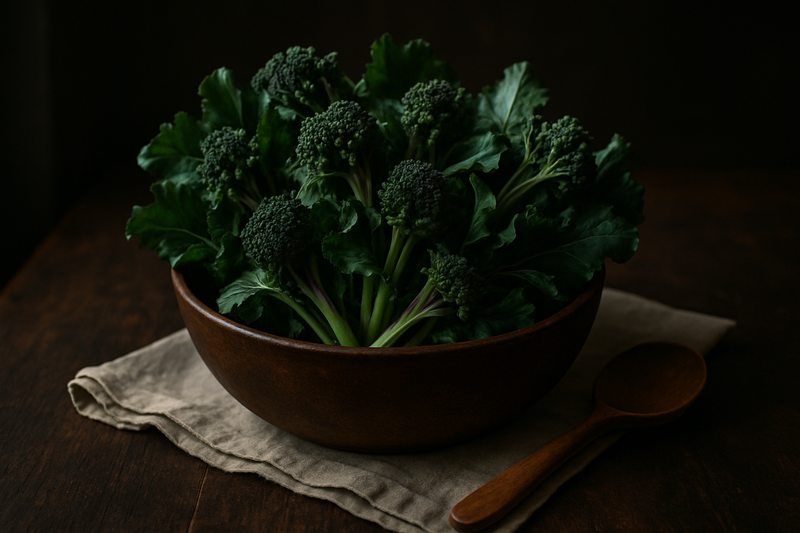
Broccoli Rabe (Rapini) · Photograph
Discover the top broccoli rabe health benefits, from bone support and digestion to heart health and detox. Get nutrition facts, safe prep tips, and simple garlic-and-chili cooking ideas for this bitter Italian green.
Key Nutrients
% Daily Value based on 2,000 cal diet
Key active compounds in broccoli rabe
These are the phytochemicals (natural plant chemicals) that researchers believe drive many of rapini's potential health effects.
- Glucosinolates — Sulfur-containing compounds found throughout the brassica family. When you chop or chew rapini, an enzyme called myrosinase converts glucosinolates into isothiocyanates (bioactive molecules studied for anti-inflammatory and cell-protective effects) and indole-3-carbinol (a compound that may influence how the body processes estrogen and supports liver detoxification pathways).
- Beta-carotene — An orange pigment that acts as a precursor to vitamin A and an antioxidant. The green of rapini masks it, but the concentration is significant.
- Lutein — A carotenoid that accumulates in the retina and is associated with eye health and protection against age-related macular degeneration (damage to the center of the retina).
- Vitamin C — A water-soluble antioxidant that also helps your body absorb the non-heme iron (the type of iron found in plants) present in rapini.
- Folate (vitamin B9) — Involved in DNA synthesis, methylation (a chemical process that affects gene activity), and red blood cell production.
- Vitamin K1 (phylloquinone) — The dominant form of vitamin K in leafy greens, essential for normal blood clotting and bone mineralization (the process by which minerals are deposited into bone tissue).
Prep and pairing ideas
The classic preparation exists for good reason: it works.
Blanch-then-sauté (the Italian method): Bring a large pot of salted water to a boil. Drop in the whole trimmed bunch for 2–3 minutes. Drain and squeeze out excess water. Heat olive oil in a wide pan over medium heat, add sliced garlic and a pinch of dried chili flakes, cook 30 seconds until fragrant, then add the blanched rapini and toss for 2–3 minutes. Finish with a squeeze of lemon. This method is how to cook broccoli rabe with garlic and chili in a way that keeps the dish flavorful without overwhelming bitterness.
Three practical pairings:
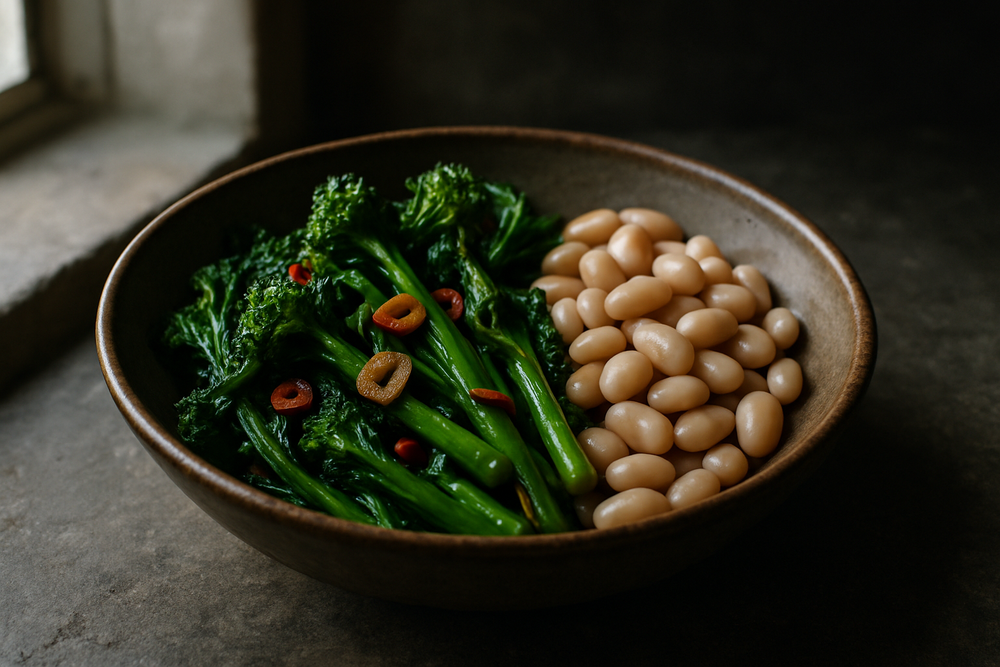
- Rapini + white beans: Cannellini beans provide complementary protein and additional soluble fiber, and their creamy texture balances rapini's bitterness. Together they create a complete, Mediterranean-style meal.
- Rapini + lemon and olive oil: Acid from the lemon brightens the dish and helps your body absorb the non-heme iron in the greens. The fat from olive oil helps you absorb fat-soluble vitamins K, A, and E.
- Rapini + whole grain pasta: A classic southern Italian combination. The pasta provides filling complex carbohydrates; the rapini provides the micronutrient density. Add a little pasta water to the pan to create a light, silky sauce.
Bottom line
Broccoli rabe is a nutrient-dense, very low-calorie leafy brassica that delivers an impressive mix of vitamin K, vitamin C, folate, calcium, iron, and fiber in a small serving. It fits naturally into Mediterranean and whole-food plant-based eating patterns, and the broader cruciferous vegetable research gives good biological reasons to include it regularly — for bone health, digestive regularity, cardiovascular support, and the body's natural detoxification processes.
Most of the evidence is extrapolated from studies on brassicas as a group rather than rapini specifically, so keep expectations calibrated: this is a powerfully nutritious food, not a supplement or medicine. Blanch it, sauté it with garlic and chili, pair it with legumes or pasta, and eat it a few times a week as part of a varied vegetable-rich diet. That is the honest, evidence-aligned case for rapini.
Looking to build a full diet around foods like broccoli rabe? Explore ingredient goals and health priorities at Plantopedia /goals.
How Broccoli Rabe (Rapini) Compares
| Compared with | What's different |
|---|---|
| Broccoli Rabe (Rapini) vs. Broccolini | Tender stems with large florets and a sweet, mild flavor compared to rabe's pungent bitterness. |
| Broccoli Rabe (Rapini) vs. Collard Greens | Smooth, wide leaves without the edible buds or flower clusters found on broccoli rabe. |
| Broccoli Rabe (Rapini) vs. Arugula | Small, mustard-like leaves with a peppery bite, typically eaten raw rather than blanched. |
Health Benefits
Things to Know
Warfarin (blood thinners) interaction: Broccoli rabe is very high in vitamin K, which is involved in blood clotting. If you take a vitamin K-antagonist anticoagulant like warfarin (Coumadin), do not suddenly increase or decrease your intake of rapini. Aim for consistent portion sizes week to week, and discuss this with your prescriber or pharmacist. Vitamin K does not make warfarin unsafe — inconsistency does.
Kidney disease: If you have advanced chronic kidney disease and follow a potassium-restricted diet, account for rapini's potassium content (~196 mg per 100 g raw) in your daily tracking.
Thyroid concerns: Extremely large amounts of raw cruciferous vegetables may interfere with iodine uptake in people with pre-existing iodine deficiency. Typical cooked culinary portions of rapini are considered safe. Blanching further reduces the relevant compounds.
IBS and low-FODMAP diets: Rapini is a high-fiber brassica. If you have irritable bowel syndrome or are in an inflammatory bowel disease flare, introduce it gradually to avoid gas and bloating.
Pregnancy: Folate is important during pregnancy, and rapini is a good dietary source. However, folate from food does not replace the folic acid supplement recommended before and during early pregnancy. Vitamin K intake from food is also normal and safe during pregnancy at culinary amounts.
Infants and young toddlers: The fibrous stalks and small size of the stems pose a choking risk. Cook until very soft and cut finely if serving to young children.
Prep Ideas
- — **Rapini + white beans:** Cannellini beans provide complementary protein and additional soluble fiber, and their creamy texture balances rapini's bitterness. Together they create a complete, Mediterranean-style meal.
- — **Rapini + lemon and olive oil:** Acid from the lemon brightens the dish and helps your body absorb the non-heme iron in the greens. The fat from olive oil helps you absorb fat-soluble vitamins K, A, and E.
- — **Rapini + whole grain pasta:** A classic southern Italian combination. The pasta provides filling complex carbohydrates; the rapini provides the micronutrient density. Add a little pasta water to the pan to create a light, silky sauce.
Shop This Ingredient
Stock your pantry with quality broccoli rabe (rapini).
Buy on AmazonAs an Amazon Associate, Plantopedia earns from qualifying purchases. This costs you nothing extra and helps us keep the encyclopedia free.
Frequently Asked Questions
Most of the human evidence for rapini specifically comes from observational studies that group it with other cruciferous and dark leafy green vegetables, rather than from trials using broccoli rabe alone. Where the evidence comes from broader brassica research, that is clearly noted below. Heart and circulation Rapini contributes three nutrients — potassium, fiber, and vitamin C — that have well-documented roles in cardiovascular health. Potassium helps counterbalance sodium and supports healthy blood pressure; fiber can modestly lower LDL (low-density lipoprotein, often called "bad" cholesterol); and antioxidant vitamins help protect blood vessel walls from oxidative stress (damage caused by unstable molecules called free radicals). Large observational studies consistently link higher cruciferous and dark leafy green vegetable intake with lower rates of cardiovascular disease, though it is difficult to isolate rapini's contribution from the overall diet. Digestive health and microbiome A cooked serving of roughly 1 cup (about 85 g) provides approximately 2.3 g of dietary fiber. Larger cooked portions (around 230 g) can contribute 6 g or more. That fiber supports bowel regularity, provides bulk to stool, and acts as a prebiotic — meaning it feeds the beneficial bacteria (your gut microbiome) that live in your large intestine. Human trials on vegetable fiber consistently show benefits for mild constipation and stool consistency. As with any high-fiber food, increasing intake gradually is wise if your digestive system is not used to it. Blood sugar and metabolism Broccoli rabe is an exceptionally low-glycemic food — very few net carbohydrates (total carbs minus fiber) reach the bloodstream quickly. High-fiber, non-starchy vegetables are consistently associated in both observational and interventional studies with better post-meal blood glucose (blood sugar after eating) and improved insulin sensitivity (how effectively your cells respond to insulin). While rapini has not been the specific test food in diabetes trials, its profile aligns well with dietary patterns recommended for blood sugar management. Inflammation and recovery The glucosinolates in rapini break down into isothiocyanates, which have shown anti-inflammatory and cytoprotective (cell-protecting) activity in cell and animal studies. Human trials on broccoli and broccoli sprouts have reported modest reductions in inflammatory biomarkers (measurable signals of inflammation in the blood). Whether broccoli rabe produces equivalent effects in humans at culinary doses is biologically plausible but not yet directly confirmed. The vitamin C and beta-carotene it provides also contribute to the body's general antioxidant defenses. Bone health This is arguably the strongest case for rapini. At 224 mcg of vitamin K per 100 g, a single serving exceeds the standard daily adequate intake for most adults. Vitamin K is essential for activating proteins (including osteocalcin) that incorporate calcium into bone. Human studies — mostly using supplements or overall dietary patterns — have shown associations between higher vitamin K intake and improved bone mineral density (a measure of how strong and dense your bones are) and lower fracture risk in older adults. Rapini also delivers calcium and phosphorus directly, adding to its bone-supportive profile. Research on whether broccoli rabe benefits for bone health hold up in isolation is still emerging, but the nutritional logic is solid. Detox and liver support Rapini contains folate, glucosinolates, and fiber, all of which play roles in the body's natural detoxification processes. Glucosinolate-derived indoles (including indole-3-carbinol) have been shown in human studies to upregulate phase II detoxification enzymes in the liver — essentially helping your liver neutralize and eliminate certain harmful compounds more efficiently. These effects are real but modest, and occur as part of a consistently plant-rich diet rather than as a dramatic "cleanse." Think of regular rapini intake as supporting your liver's background maintenance work, not as a reset button.
Older adults focused on bone density Vitamin K activates the bone-building proteins that deposit calcium into bone matrix. The calcium content adds directly to daily bone mineral needs. Regular dark leafy green intake (of which rapini is a prime example) is consistently associated with lower fracture risk in observational data on older populations. People eating a Mediterranean or plant-forward diet Rapini is a cornerstone of southern Italian cooking and fits naturally into olive-oil-based, vegetable-heavy meal patterns. Its intense flavor means a small portion adds character to a dish, keeping meals satisfying on fewer calories. The combination of fiber, folate, and antioxidants supports the cardiovascular and gut health goals central to Mediterranean dietary patterns.
Buying guide: fresh, frozen, and beyond Fresh rapini is the gold standard for flavor and maximum vitamin C and folate. Look for bunches with dark green leaves that are not yellowing, firm stalks without sliminess, and small tight buds — not fully opened flowers. Avoid bunches where the buds have started to turn yellow, as this signals over-maturity and more pronounced bitterness. Store unwashed in a loosely sealed bag in the crisper drawer and use within 3–5 days. Frozen broccoli rabe is typically blanched before freezing, which means it has already had its bitterness partially reduced. It retains most of its vitamin K, calcium, iron, and fiber, with only modest losses in vitamin C. Convenient for weeknight meals; go straight from freezer to a hot pan with a splash of water. Canned or jarred broccoli rabe in oil is available in Italian specialty stores. Sodium can be high; rinse before using. Vitamin C and folate will be lower than fresh, but it is still a reasonable pantry option. Label tip: For fresh, check that the only ingredient is rapini. For frozen, avoid brands with added salt or sauces. For jarred, check the sodium per serving.
There is no official recommended dose for broccoli rabe specifically, and no established upper limit for food intake. General guidance from large dietary studies suggests the following practical framework: A starting point: One serving (roughly 85–100 g cooked, or about 1 cup) two to three times per week is a reasonable goal that aligns with recommendations to eat a variety of dark green vegetables. A more ambitious target: Some observational studies on cruciferous vegetables and chronic disease risk have associated greater benefit with five or more servings of brassicas per week across different types. Start low if needed: If you are new to bitter greens or high-fiber vegetables, begin with half a cup of cooked rapini once or twice a week and increase gradually over 2–3 weeks to let your digestive system adapt. Warfarin users: Focus on consistency of intake rather than a specific quantity. Choose a serving size you can maintain every week and discuss it with your healthcare provider. General principle: More variety across different vegetables is more important than maximizing any single one. Think of rapini as a regular rotation item, not a daily therapeutic dose.
Quick Answers
Common questions, answered in a line.
Broccoli rabe contains vitamin K1 for bone mineralization, vitamin C for iron absorption, and folate for DNA synthesis. It also provides glucosinolates, which convert into bioactive molecules like isothiocyanates and indole-3-carbinol to support liver detox and cell protection.
To reduce bitterness, use the Italian blanch-then-sauté method by boiling the greens for 2–3 minutes before sautéing with garlic and oil. Finishing the dish with a squeeze of lemon juice also helps brighten the flavor and balance the natural bitterness of the stalks.
If you take warfarin or other vitamin K-antagonist blood thinners, you must maintain a consistent intake of broccoli rabe rather than making sudden changes. Because rapini is very high in vitamin K, which aids clotting, large fluctuations can interfere with your medication's effectiveness.
Broccoli rabe is generally safe for the thyroid in typical cooked portions, though extremely large raw amounts may interfere with iodine uptake in those with a deficiency. The article notes that blanching the vegetable further reduces the compounds associated with these concerns.
Broccoli rabe supports digestive regularity as a high-fiber brassica and provides indole-3-carbinol, a compound that aids the body's natural liver detoxification pathways. Its sulfur-containing glucosinolates are also studied for their anti-inflammatory and cell-protective effects.
To safely serve broccoli rabe to infants and toddlers, cook the greens until they are very soft and cut them into fine pieces. The fibrous stalks and small stems can pose a choking risk for young children if not properly prepared.
Pairing broccoli rabe with healthy fats like olive oil helps your body absorb fat-soluble vitamins K, A, and E found in the greens. Additionally, adding lemon juice provides vitamin C, which significantly improves the absorption of the plant-based (non-heme) iron in the vegetable.
For Readers in the USA
Local context — sourcing, seasonality, and regional notes.
In the United States, broccoli rabe is in peak season during the cooler months, typically from late fall through early spring (October to April). While it is grown year-round in temperate areas like California and Arizona, winter and spring yields offer the best flavor and less intense bitterness.
You can find broccoli rabe at major US grocery chains like Whole Foods, Trader Joe's, and Safeway, as well as at local farmers markets in the Northeast and West Coast. It is frequently located in the refrigerated produce section near other bitter greens like kale, radicchio, or collard greens.
Look for the USDA Organic seal to ensure your broccoli rabe was grown without synthetic pesticides or fertilizers, as cruciferous greens are sometimes treated for pests. Regardless of the label, the FDA recommends washing all leafy greens thoroughly under cold running water to remove surface soil and bacteria.
While often called broccoli rabe or rapini, you may also see it labeled as Italian broccoli, broccoletti, or cime di rapa in specialty Italian-American markets. In the US, it is distinct from Chinese broccoli (gailan) or broccolini, which are sweeter and have different stem textures.
AI Clinical Review
- Accurately presents rapini as a nutrient-dense leafy brassica, notably high in vitamin K with meaningful vitamin C, folate, calcium, iron, and fiber for very few calories (in line with USDA data).
- Sets appropriate expectations by noting that many benefits are inferred from broader cruciferous-vegetable research rather than rapini-specific clinical trials.
- Offers practical cooking advice (brief blanch, then sauté) that reduces bitterness while largely preserving minerals and fat‑soluble vitamins and acknowledging water‑soluble vitamin losses.
- Clearly flags key safety issues, especially the need for consistent intake for people on warfarin.
- Direct human trials testing rapini itself for outcomes like bone density, inflammation markers, or cardiovascular events are limited; effect sizes at typical culinary intakes remain uncertain.
- “Detox” claims hinge on phase II enzyme induction shown mainly with other brassicas or concentrated preparations; effects are real but modest and preparation‑dependent.
- Microbiome benefits are primarily attributable to dietary fiber in vegetables generally; rapini-specific prebiotic effects haven’t been isolated.
- Conversion of glucosinolates to isothiocyanates varies with plant variety, storage, chopping, and cooking time, so the yield of bioactives in home cooking can differ widely.
- Sensible intake: about 1 cup cooked (85–100 g) a few times per week fits most healthy eating patterns; increase gradually if you’re not used to high‑fiber greens.
- Anticoagulation: if you take warfarin (or other vitamin K–antagonists), keep portions steady week to week and coordinate any change with your clinician or anticoagulation service.
- Thyroid and iodine: very large amounts of raw crucifers can reduce iodine uptake in those who are iodine‑deficient; typical cooked portions are safe, and blanching/cooking lowers these compounds.
- Digestive and kidney considerations: people with IBS may need a slow titration; those with advanced kidney disease should consider the potassium load. For infants/toddlers, serve very soft and finely chopped to reduce choking risk.
Blanch to tame bitterness; very safe.
References
- USDA FoodData Central — Broccoli Rabe nutrient data (fdc.nal.usda.gov)
- MyPlate.gov — Vegetable group guidance and serving recommendations (myplate.gov)
- WebMD — What Are the Health Benefits of Broccoli Rabe? (webmd.com)
- HealthifyMe — Health Benefits of Broccoli Rabe: Nutrition profile and benefit overview (healthifyme.com)
- University of Illinois Extension — Broccoli Rabe Is Versatile and Highly Nutritious (extension.illinois.edu)
- Andy Boy — Broccoli Rabe Nutritional Benefits (educational PDF) (andyboy.com)
- TriHealth — Broccoli Rabe: A Green Goddess (trihealth.com)
- Baldor Food — 10 Fun Facts About Broccoli Rabe (baldorfood.com)
- Wikipedia — Rapini: botanical classification and nutrient overview (en.wikipedia.org)
- Yahoo News / consumer health — One green vegetable that may reduce risk of cancer and diabetes (cruciferous vegetable research overview) (uk.news.yahoo.com)
Know Your Numbers
Eating healthy is a start. Now get to know your biomarkers.
Food changes bloodwork — inflammation, lipids, blood sugar and nutrient status all respond to what you eat. 59 markers from $59.
- Results in 7–10 days at 2,000+ Quest sites
- Licensed provider reviews every result
- One flat price, no membership, HSA/FSA eligible
Educational information only, not medical advice. Panels are ordered and reviewed through our licensed partner; Plantopedia may earn a commission.