Broccolini — health benefits and uses
Blends broccoli and gai lan’s traditional digestive benefits.
The Short Answer
Broccolini is a nutrient-dense hybrid vegetable providing 93 mg of vitamin C and 101 mcg of vitamin K per serving. It is best prepared by steaming for 3–5 minutes to preserve its heat-sensitive antioxidants and sulforaphane content.
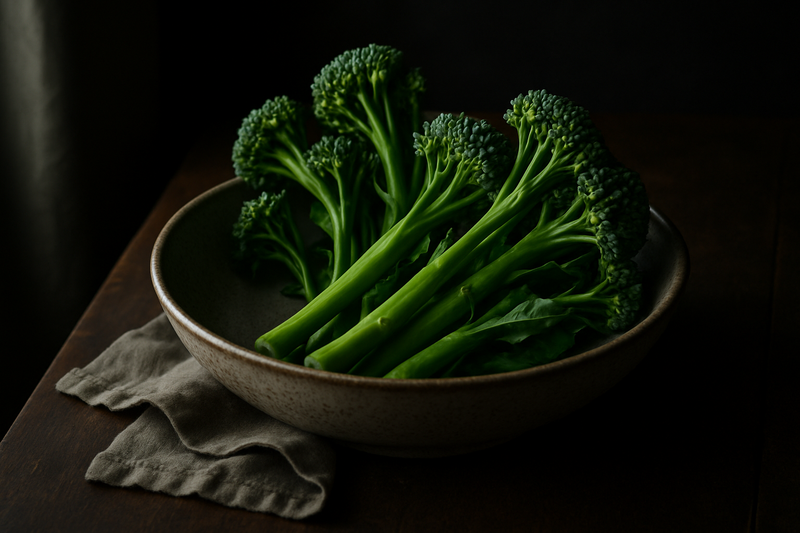
Broccolini · Photograph
Discover broccolini health benefits and nutrition facts, from fiber and vitamin C to folate and sulforaphane. Learn how to steam, grill, or stir-fry broccolini for a tender, nutrient-packed side — plus who should take caution and how much to eat per day.
Key Nutrients
% Daily Value based on 2,000 cal diet
Key active compounds in broccolini
- Sulforaphane — An isothiocyanate (a sulfur-containing plant chemical) formed when you chop or chew broccolini, converting a stored compound called glucoraphanin. It's one of the most studied phytochemicals in cruciferous vegetables, with early-stage research exploring its antioxidant and detoxification roles.
- Glucosinolates — The sulfur-containing parent compounds that give crucifers their characteristic bite and convert into sulforaphane, indoles, and other bioactive molecules during digestion.
- Lutein — A yellow carotenoid (plant pigment) concentrated in the macula of the eye. Observational studies associate higher lutein intake with better visual function over time.
- Beta-carotene — An orange-red carotenoid that your body can convert into vitamin A. It also functions as an antioxidant (a compound that neutralizes unstable molecules called free radicals that can damage cells).
- Polyphenols — A broad family of plant compounds with antioxidant properties that may also influence gut bacteria and vascular function. Broccolini contains measurable total polyphenols.
How to cook broccolini to keep its nutrients
Cooking method affects how much vitamin C and other heat-sensitive compounds survive to your plate. Here's what the evidence generally supports:
- Steaming (best for nutrient retention): Steam over boiling water for 3–5 minutes until stems are just pierce-tender. This is the best way to steam broccolini until tender while preserving vitamin C and delicate phytonutrients. Finish with a squeeze of lemon and a pinch of salt.
- Grilling or roasting: Toss with a small amount of olive oil and grill or roast at high heat for 5–8 minutes. The slight charring adds flavor without significantly compromising the overall nutrient load, especially for fat-soluble nutrients like vitamin K and carotenoids.
- Stir-frying: Quick stir-frying over high heat for 3–4 minutes keeps stems crisp-tender and works beautifully with garlic, ginger, or soy-based sauces. A practical method for weeknight WFPB (whole food, plant-based) meals.
- Blanching or brief boiling: Plunge into boiling water for 90 seconds, then transfer to cold water. Useful before adding to salads or grain bowls. Prolonged boiling leaches water-soluble vitamin C and some B vitamins into the cooking water.
- Raw: Sliced raw broccolini preserves all heat-sensitive nutrients, including vitamin C. It can be harder to digest for some people, so listen to your body.
Practical tip: Chopping or lightly crushing broccolini before cooking activates the enzyme that converts glucosinolates into sulforaphane. Let it rest 5–10 minutes after cutting before applying heat for potentially better conversion.
Prep and pairing ideas
Broccolini is one of the most versatile quick-cooking vegetables in a plant-forward kitchen.
3 practical pairings and why they work:
- Broccolini + lemon + garlic (steamed or roasted): The acid from lemon juice brightens broccolini's mild bitterness and may also enhance your absorption of its plant-based (non-heme) iron by converting it to a more absorbable form. Garlic adds flavor without calories. A classic for good reason.
- Broccolini + sesame + ginger (stir-fried): Sesame oil provides fat-soluble vitamin K and carotenoids a carrier for better absorption — fat-soluble nutrients absorb better with a small amount of dietary fat. Ginger adds anti-inflammatory polyphenols of its own, making this pairing particularly complementary in a WFPB bowl.
- Broccolini + white beans or chickpeas (warm salad or grain bowl): Combining broccolini with legumes adds plant protein and additional fiber, turning a side dish into a balanced meal component. The vitamin C in broccolini also helps the body absorb iron from the legumes more efficiently — a useful pairing for anyone following a plant-based diet.
Bottom line
Broccolini is a genuinely nutritious, low-calorie cruciferous vegetable that earns its place as a regular fixture on a plant-forward plate. Its standout nutrients — vitamin C, vitamin K, folate, and carotenoids — are backed by solid human evidence for their roles in immune function, blood health, bone health, and eye health. Its fiber content supports digestion and blood sugar balance in line with well-established dietary science. And its sulforaphane and glucosinolate content connects it to an active and promising area of research on plant compounds and cellular health.
It won't single-handedly transform your health, and it doesn't need to. Broccolini works best as part of a varied, whole-food diet — steamed, grilled, or stir-fried and paired with the foods you already enjoy. Consistent, modest servings several times a week is the practical, evidence-aligned approach.
If you take warfarin or have a digestive condition, check in with your healthcare provider before significantly changing how much you eat. For everyone else, the main barrier is usually just cooking it — and with stems this tender, that's a low bar to clear.
How Broccolini Compares
| Compared with | What's different |
|---|---|
| Broccolini vs. Broccoli | Broccolini has longer, thinner stalks and smaller florets with a milder, sweeter flavor profile. |
| Broccolini vs. Chinese Broccoli (Gai Lan) | Broccolini is a hybrid of broccoli and Chinese broccoli, which has much larger, flatter leaves. |
| Broccolini vs. Broccoli Rabe (Rapini) | Broccolini stems are tender and sweet, whereas broccoli rabe is significantly more bitter. |
Health Benefits
Things to Know
Vitamin K and blood thinners: Broccolini is high in vitamin K, which plays a direct role in blood clotting. If you take warfarin or another vitamin K-dependent anticoagulant, the goal is consistent vitamin K intake — not elimination of high-K foods. Sudden large increases or decreases in how much broccolini (or other leafy greens) you eat can affect how your medication works. Talk to your prescriber or pharmacist before making significant changes.
Digestive sensitivity: Cruciferous vegetables are naturally higher in certain fermentable fibers (sometimes called FODMAPs — fermentable oligosaccharides, disaccharides, monosaccharides, and polyols). If you have irritable bowel syndrome (IBS), inflammatory bowel disease (IBD), or a generally sensitive gut, a sudden large increase in broccolini intake may cause gas, bloating, or discomfort. Start with smaller portions and cooked rather than raw.
Thyroid considerations: Very large, consistent intakes of raw cruciferous vegetables have been theoretically linked to goitrogenic effects (meaning they could interfere with thyroid hormone production) in people with existing significant thyroid disease. Typical culinary serving sizes of broccolini — especially when cooked — are unlikely to pose a concern for most people. If you have a thyroid condition, check with your doctor.
Brassica allergy: If you have a known allergy to broccoli, cabbage, or other Brassica family vegetables, broccolini is in the same family and may trigger a similar reaction.
Pregnancy: Broccolini's folate content supports healthy cell division and is particularly valuable before and during early pregnancy, when folate needs are highest. It is a safe and nourishing food choice during pregnancy in normal culinary amounts.
Medication absorption: Significant increases in dietary fiber can theoretically influence the absorption timing of some medications. If you're rapidly adding large amounts of high-fiber vegetables to your diet, mention it to your clinician.
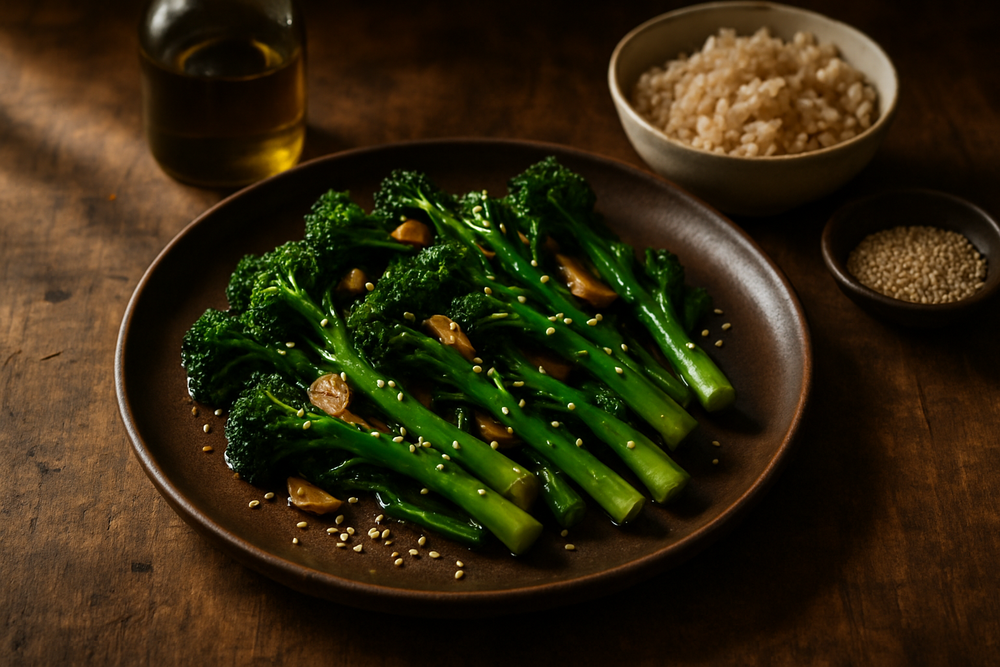
Prep Ideas
- — **Broccolini + lemon + garlic (steamed or roasted):** The acid from lemon juice brightens broccolini's mild bitterness and may also enhance your absorption of its plant-based (non-heme) iron by converting it to a more absorbable form. Garlic adds flavor without calories. A classic for good reason.
- — **Broccolini + sesame + ginger (stir-fried):** Sesame oil provides fat-soluble vitamin K and carotenoids a carrier for better absorption — fat-soluble nutrients absorb better with a small amount of dietary fat. Ginger adds anti-inflammatory polyphenols of its own, making this pairing particularly complementary in a WFPB bowl.
- — **Broccolini + white beans or chickpeas (warm salad or grain bowl):** Combining broccolini with legumes adds plant protein and additional fiber, turning a side dish into a balanced meal component. The vitamin C in broccolini also helps the body absorb iron from the legumes more efficiently — a useful pairing for anyone following a plant-based diet.
Glossary
Shop This Ingredient
Stock your pantry with quality broccolini.
Buy on AmazonAs an Amazon Associate, Plantopedia earns from qualifying purchases. This costs you nothing extra and helps us keep the encyclopedia free.
Frequently Asked Questions
It's important to note upfront: most evidence discussed below comes from research on cruciferous vegetables broadly, or on individual nutrients found in broccolini. There are no large clinical trials studying broccolini specifically. The benefits described here are reasonable inferences from that body of evidence — not proven claims. Heart and circulation Broccolini fits neatly into the kind of dietary pattern — high in vegetables, low in sodium, rich in fiber and potassium — that large observational studies consistently link to lower cardiovascular risk. Its potassium content can support healthy blood pressure regulation as part of an overall varied diet. Its fiber contributes to the fiber intake that research associates with improved LDL cholesterol (the type often called "bad" cholesterol) over time. Evidence here is moderate and based largely on the broader science of high-vegetable diets. Digestive health and microbiome This is one of the stronger areas of evidence. Dietary fiber — of which broccolini is a concentrated source at roughly 5 g per 100 g — has well-established roles in human digestion. Human studies consistently show that higher fiber intakes support regular bowel movements, reduce the risk of constipation, and help feed a diverse gut microbiota (the community of bacteria and other microorganisms that live in your digestive tract). Eating broccolini regularly as part of a high-fiber diet may contribute meaningfully to these benefits. Blood sugar and metabolism Broccolini has a very low glycemic index (GI) — a measure of how quickly a food raises blood sugar — estimated around 15 on a scale where 100 equals pure glucose. Its fiber content also slows the absorption of carbohydrates at a meal. Human studies on low-GI, high-fiber dietary patterns show improved post-meal blood sugar responses compared with high-GI diets, and lower long-term type 2 diabetes risk in large population studies. Broccolini fits this profile well, though there are no broccolini-specific intervention trials in people managing diabetes. Inflammation and recovery Broccolini contains several compounds — vitamin C, carotenoids, polyphenols, and sulforaphane — that show antioxidant and anti-inflammatory activity in laboratory and animal studies. Small human trials using broccoli sprouts or concentrated broccoli extracts have shown some changes in oxidative stress markers and inflammatory signals, but results are early and not yet consistent enough to draw firm conclusions. Eating broccolini as part of a varied plant-rich diet likely contributes to an overall anti-inflammatory dietary pattern, even if broccolini alone hasn't been the subject of large trials.
People trying to increase vegetable variety without extra prep time Broccolini's thin stems cook in 3–5 minutes and require no peeling. Its mild, slightly sweet flavor is often better received than stronger-tasting crucifers like Brussels sprouts. It can replace or complement broccoli in most recipes without adjusting cooking methods significantly. People focused on digestive regularity or blood sugar management At 5 g of fiber per 100 g, broccolini delivers fiber efficiently for its calorie load. The low glycemic index makes it a smart swap for higher-carbohydrate side dishes. Steaming until just tender (rather than raw) can make it easier to digest for those with sensitive stomachs.
There is no established specific daily recommended dose for broccolini. Guidance from public health bodies like MyPlate and the Dietary Guidelines for Americans recommends adults aim for 2.5–3 cups of vegetables per day total, with a variety that includes dark green and cruciferous vegetables multiple times per week. In practical terms, 1–2 cups of cooked broccolini (roughly 75–150 g) several times per week is a reasonable, well-tolerated target for most adults. If you're new to cruciferous vegetables or have a sensitive digestive system, start with a smaller portion — half a cup — and build up gradually over a few weeks to allow your gut microbiota time to adapt. There is no strong evidence that eating more broccolini than this offers additional benefit, and very large amounts of any single food can crowd out dietary variety, which matters as much as any individual ingredient.
Quick Answers
Common questions, answered in a line.
Steaming is the best way to cook broccolini for nutrient retention because it preserves heat-sensitive vitamin C and delicate phytonutrients. For the best results, steam the vegetable over boiling water for 3–5 minutes until the stems are just pierce-tender.
To maximize sulforaphane, chop or lightly crush broccolini and let it rest for 5–10 minutes before applying heat. This resting period allows the plant's enzymes to convert glucoraphanin into sulforaphane, an antioxidant compound, more effectively.
You can eat broccolini raw to preserve all heat-sensitive nutrients like vitamin C, though it may be harder to digest for some individuals. If you have a sensitive gut, the article recommends starting with smaller portions or choosing cooked versions to prevent discomfort.
Pairing broccolini with lemon juice or other acids can enhance the absorption of its plant-based iron by converting it into a more absorbable form. Additionally, adding healthy fats like sesame or olive oil helps the body better absorb fat-soluble nutrients like vitamin K and carotenoids.
If you take blood thinners like warfarin, you should maintain a consistent intake of broccolini because its high vitamin K content plays a direct role in blood clotting. Sudden large increases or decreases in consumption can affect how your medication works.
Broccolini contains sulforaphane and glucosinolates, sulfur-containing plant chemicals that are studied for their roles in antioxidant activity and detoxification. It also provides carotenoids like lutein for eye health and beta-carotene, which the body can convert into vitamin A.
Broccolini is a safe and nourishing food choice during pregnancy in normal culinary amounts because its folate content supports healthy cell division. This B vitamin is particularly valuable during early pregnancy when folate needs are at their highest.
For Readers in the USA
Local context — sourcing, seasonality, and regional notes.
In the United States, most broccolini is grown year-round in California and Arizona, though it is at its peak flavor during the cooler spring and fall months. While it is widely available in grocery stores regardless of the season, shoppers in the Pacific Northwest and East Coast may see higher prices during the winter.
Broccolini is available at most major American grocery chains, including Trader Joe’s, Whole Foods Market, Kroger, and Safeway, typically found near the bunch broccoli. You can also find it under the brand name "Aspiration" or "Baby Broccoli," and it is a common staple at year-round farmers markets in USDA zones 8 through 10.
Broccolini is a natural hybrid developed in 1993 by the Sakata Seed Company, crossing traditional broccoli with Chinese broccoli (Gai Lan). In the US, the name "Broccolini" is a registered trademark of Mann Packing Company, which is why you may see it labeled as "baby broccoli" or "sweet baby broccoli" by other domestic producers.
Look for the USDA Organic seal on broccolini packaging to ensure it was grown without prohibited synthetic fertilizers or pesticides. While the Environmental Working Group (EWG) does not rank broccolini individually, traditional broccoli is frequently listed on the "Clean Fifteen," suggesting it typically has lower pesticide residues than other produce.
AI Clinical Review
- Clearly explains what broccolini is (a broccoli × Chinese broccoli hybrid) and situates it within the cruciferous family.
- Accurately emphasizes nutrient density, highlighting vitamin C, vitamin K, folate, carotenoids, and fiber, and links these to well-established roles in immune, bone, blood, and digestive health.
- Provides practical, evidence-aligned cooking guidance (steaming or quick stir-frying) and the tip to chop and briefly rest to support sulforaphane formation.
- Sensibly frames benefits as part of overall dietary patterns and calls out consistency of vitamin K intake for people on warfarin rather than avoidance.
- Most health claims are extrapolated from studies on cruciferous vegetables or broccoli/sprouts; there are few broccolini-specific human trials linking intake to clinical outcomes.
- Sulforaphane research is promising, but human data on hard outcomes (e.g., disease risk reduction) and optimal culinary dosing remain limited; bioavailability varies with preparation and individual gut enzymes.
- The stated nutrient amounts (including fiber) are reasonable but can vary by source, harvest conditions, and cooking; treat them as ranges. Reported low glycemic index is plausible for non‑starchy vegetables, but GI is seldom formally tested and meal context strongly affects blood glucose.
- Microbiome benefits are consistent with higher-fiber eating overall; specific changes attributable to broccolini alone have not been firmly established.
- Practical intake: 1/2–2 cups cooked per sitting, several times per week, fits within general guidance to vary vegetable types; increase gradually if you’re prone to gas or bloating.
- Medications: If you take warfarin, keep vitamin K intake steady and coordinate with your prescriber; separating certain medications from high‑fiber meals may be advisable—ask your clinician or pharmacist.
- Digestive conditions: Crucifers contain FODMAPs; people with IBS/IBD often tolerate smaller, cooked portions better than large raw servings—adjust based on your symptoms.
- Other cautions: Those with known Brassica allergies should avoid; typical culinary amounts are considered safe in pregnancy and contribute folate—rinse well before eating. People with significant thyroid disease who consume very large amounts of raw crucifers should discuss with their clinician, especially if iodine intake is low.
Frame as food education, not disease treatment.
References
- USDA FoodData Central — Broccolini nutrient data (fdc.nal.usda.gov)
- MyPlate — Vegetable group guidance and daily vegetable recommendations (myplate.gov)
- Healthline — Broccolini nutrition, benefits, and cooking methods (healthline.com)
- Nutrition-and-you — Broccolini phytochemical and micronutrient overview (nutrition-and-you.com)
- Smart Nutrient Guide — Broccolini detailed nutrition table (smartnutrientguide.com)
- Perfection Fresh — Broccolini health benefits information sheet (perfection.com.au)
- USA Today — Broccolini vitamins and minerals health feature (usatoday.com)
- NIH NCCIH — Cruciferous vegetables and cancer prevention overview (cancer.gov)
- University of Rochester Medical Center — Vitamin K fact sheet for patients (urmc.rochester.edu)
- Veggies Made Easy — Broccolini foodservice nutrition panel (veggiesmadeeasy.com)
Know Your Numbers
Eating healthy is a start. Now get to know your biomarkers.
Food changes bloodwork — inflammation, lipids, blood sugar and nutrient status all respond to what you eat. 59 markers from $59.
- Results in 7–10 days at 2,000+ Quest sites
- Licensed provider reviews every result
- One flat price, no membership, HSA/FSA eligible
Educational information only, not medical advice. Panels are ordered and reviewed through our licensed partner; Plantopedia may earn a commission.