Cardoon — health benefits and uses
A Mediterranean bitter valued traditionally for liver and digestive support.
The Short Answer
Cardoon is a nutrient-dense vegetable related to the artichoke, prized for its stalks which contain 400 mg of potassium and 68 mcg of folate per cup. It is rich in cynarin and inulin, compounds known to support liver health and digestive function.

Cardoon · Photograph
Discover cardoon health benefits backed by research — from digestive support and liver health to heart health and blood sugar balance. Learn how to cook cardoon stalks, what the science says, and who should take caution with this artichoke relative.
Key Nutrients
% Daily Value based on 2,000 cal diet
Key active compounds in cardoon stalks
These are the main plant chemicals that researchers believe drive cardoon's health effects. Note that concentrations are higher in leaves and in standardized extracts than in cooked stalks, but the same compounds are present in culinary portions.
- Chlorogenic acids (caffeoylquinic acids): A group of phenolic compounds abundant in Cynara species. They act as antioxidants (meaning they neutralize harmful free radicals in cells) and are linked to hepatoprotective (liver-protecting), cholesterol-lowering, and blood sugar–moderating effects in both lab and clinical research.
- Cynarin (1,3-dicaffeoylquinic acid): A specific chlorogenic acid derivative that is essentially the signature compound of the Cynara genus. It stimulates bile flow (a choleretic effect), supports fat digestion, and contributes to cardoon's bitter taste.
- Luteolin and luteolin glycosides: Flavone compounds with well-documented antioxidant and anti-inflammatory activity. Glycosides are simply luteolin molecules attached to a sugar group, which affects how they are absorbed.
- Apigenin and apigenin glycosides: Related flavones with antioxidant and potentially anti-inflammatory properties, present in smaller amounts.
- Inulin-type fructans: Chains of fructose molecules that act as soluble dietary fiber and prebiotics — meaning they feed beneficial gut bacteria rather than being digested by you directly.
- Sesquiterpene lactones (e.g., cynaropicrin): Bitter terpenoid (terpene-based) compounds that stimulate digestion and show anti-inflammatory activity in laboratory studies.
Prep and pairing ideas
Cardoon needs a little prep work, but the result is genuinely worth it.
Basic prep:
- Cut stalks to 10–15 cm lengths and drop them into acidulated water (cold water with a squeeze of lemon) immediately — cardoon oxidizes and browns quickly, like artichoke hearts.
- Blanch in boiling salted water for 8–12 minutes to soften the bitterness and tenderize the flesh.
- Using a peeler or paring knife, remove the tough outer strings (these run along the ridges, like celery strings but more pronounced).
Three practical pairings:
- Cardoon + anchovies + garlic (Bagna Cauda): The classic Piedmontese dip. The umami depth of anchovies and the fat in olive oil balance cardoon's bitterness perfectly, while the warmth opens up the vegetable's subtle sweetness.
- Cardoon + chickpeas + tomato (braise): A hearty, whole-food meal. The chickpeas provide protein and starchy bulk; the tomato's acidity lifts the bitterness; the long braise turns the cardoon silky. Add smoked paprika for depth.
- Cardoon + lemon + Parmigiano (gratin): After blanching, layer cardoon in a baking dish with a light béchamel, grated Parmigiano, and lemon zest. The dairy fat and citrus transform the bitter notes into something nutty and savory.
Bottom line
Cardoon is one of those vegetables that deserves far more attention than it gets outside the Mediterranean. It's low in calories, rich in fiber, and loaded with polyphenols — particularly chlorogenic acids, cynarin, and luteolin — that have shown real biological activity in both laboratory research and human clinical trials. The strongest evidence relates to liver health, lipid management, blood sugar, and digestive support, though most of this comes from concentrated extracts rather than culinary portions.
As a whole food, cardoon fits naturally into a plant-forward, heart-healthy, gut-friendly eating pattern. The prep takes a little practice, but once you've blanched and braised your first batch, it becomes intuitive. Think of it as a slightly more committed version of celery — with considerably more to offer.
For specific health conditions, especially fatty liver, high cholesterol, or metabolic syndrome, the evidence for Cynara cardunculus–based supplements is genuinely interesting and worth discussing with a healthcare provider.
How Cardoon Compares
| Compared with | What's different |
|---|---|
| Cardoon vs. Artichoke | Grown for edible flower buds rather than stalks; has a meatier, sweeter heart. |
| Cardoon vs. Celery | Sweeter flavor and crunchy texture; lacks cardoon's bitter compounds and artichoke flavor. |
Health Benefits
Things to Know
Gallstones or bile duct obstruction: Cardoon and Cynara extracts stimulate bile flow. If you have a blocked bile duct or active gallstones causing symptoms, this choleretic effect could worsen biliary colic (severe pain from bile duct spasms). Speak to your doctor first.
Asteraceae allergy: Cardoon is in the same plant family as ragweed, chamomile, and daisies. If you have confirmed allergies to these plants, you may also react to cardoon — both as a food and as a supplement.
Cholesterol-lowering medications (statins, fibrates, ezetimibe): Cynara extracts can amplify cholesterol-lowering effects. Combining them with medications may require monitoring of lipid levels and liver enzymes.
Diabetes medications: Chlorogenic acid–rich Cynara products can modestly lower blood sugar and improve insulin sensitivity. This can be beneficial, but if you're on metformin, sulfonylureas, insulin, or similar medications, the combined effect could lower blood sugar too far. Tell your prescriber.
Anticoagulants (e.g., warfarin): Cardoon contains vitamin K, which affects how blood clots. Keep your intake consistent rather than dramatically changing how much you eat — sudden large increases can interfere with warfarin dosing.
Pregnancy and breastfeeding: There are no robust safety studies of concentrated Cynara extracts in pregnancy or while breastfeeding. Culinary amounts are unlikely to be a concern, but supplements should be avoided without medical advice.
Advanced liver disease (cirrhosis): Clinical trials on Cynara supplements included patients with simple fatty liver, not advanced liver disease. If you have cirrhosis or another serious liver condition, don't self-supplement — work with your hepatologist.
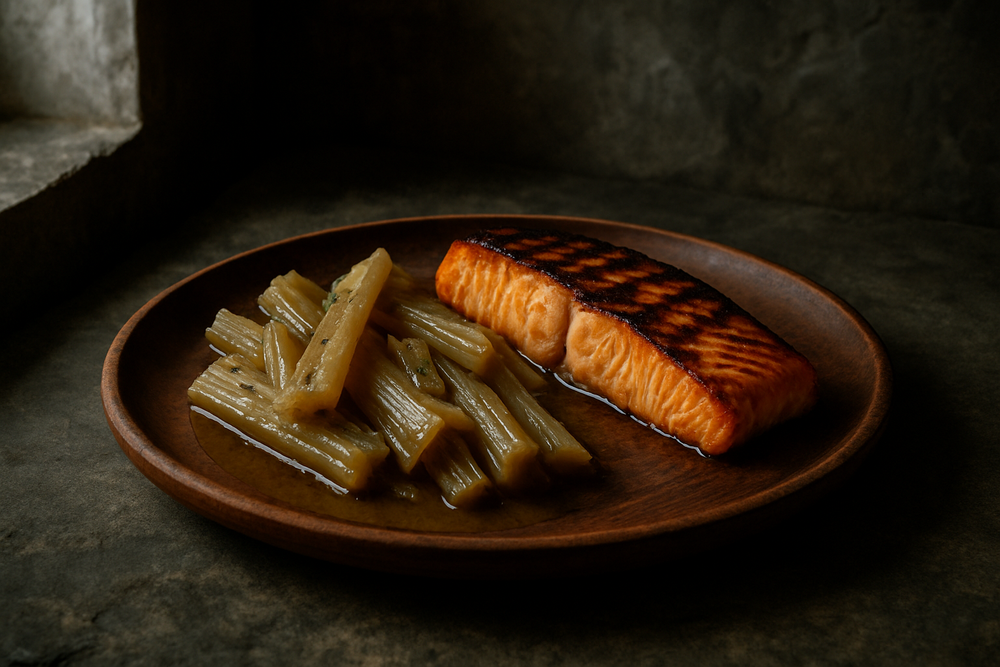
Prep Ideas
- — Cut stalks to 10–15 cm lengths and drop them into acidulated water (cold water with a squeeze of lemon) immediately — cardoon oxidizes and browns quickly, like artichoke hearts.
- — Blanch in boiling salted water for 8–12 minutes to soften the bitterness and tenderize the flesh.
- — Using a peeler or paring knife, remove the tough outer strings (these run along the ridges, like celery strings but more pronounced).
- — Cardoon + anchovies + garlic (Bagna Cauda): The classic Piedmontese dip. The umami depth of anchovies and the fat in olive oil balance cardoon's bitterness perfectly, while the warmth opens up the vegetable's subtle sweetness.
- — Cardoon + chickpeas + tomato (braise): A hearty, whole-food meal. The chickpeas provide protein and starchy bulk; the tomato's acidity lifts the bitterness; the long braise turns the cardoon silky. Add smoked paprika for depth.
- — Cardoon + lemon + Parmigiano (gratin): After blanching, layer cardoon in a baking dish with a light béchamel, grated Parmigiano, and lemon zest. The dairy fat and citrus transform the bitter notes into something nutty and savory.
Glossary
Shop This Ingredient
Stock your pantry with quality cardoon.
Buy on AmazonAs an Amazon Associate, Plantopedia earns from qualifying purchases. This costs you nothing extra and helps us keep the encyclopedia free.
Frequently Asked Questions
Heart health and cholesterol This is the area with the most clinical evidence. Multiple randomized controlled trials (studies where participants are randomly assigned to treatment or placebo groups) and at least two meta-analyses (pooled statistical analyses of multiple studies) of Cynara-based supplements show meaningful reductions in total cholesterol, LDL cholesterol (often called "bad" cholesterol), and triglycerides (blood fats) in people with high cholesterol or metabolic syndrome compared with placebo. One double-blind, placebo-controlled trial — the gold standard study design — tested a nutraceutical combining bergamot polyphenols and wild Cynara cardunculus extract (300 mg per day for 12 weeks) in 102 patients with liver steatosis (fatty liver). Participants showed significant improvements in blood lipid profiles and metabolic markers. A separate study using a Cynara-containing supplement (Altilix) for six months in pre-obese subjects found improvements in endothelial function (the health of blood vessel linings) and reductions in carotid intima-media thickness (a measure of artery wall thickening that indicates cardiovascular risk). Important caveat: This evidence is for concentrated, standardized extracts — not for eating a bowl of braised cardoon. Culinary portions deliver the same compounds but at much lower doses. Cardoon as part of a Mediterranean-style diet can absolutely support heart health broadly, but don't expect a single serving to move your cholesterol numbers. Digestive health and the microbiome Cardoon has deep traditional roots as a digestive aid, and modern science is catching up. The European Medicines Agency's herbal monograph for Cynara folium (artichoke/cardoon leaf) recognizes it as a traditional herbal product for dyspeptic complaints — the medical term for indigestion, bloating, and upper abdominal discomfort. Cynarin and the sesquiterpene lactones in cardoon stimulate bile production and flow, which helps the body break down fats and supports motility (movement of food through the digestive tract). In the gut, cardoon's inulin-type fructans act as prebiotics, feeding beneficial bacteria like Bifidobacterium and Lactobacillus strains. Laboratory studies on raw and sous-vide–cooked red cardoon stalks confirmed that cardoon polyphenols survive simulated digestion and can dampen inflammatory signaling in intestinal cell models. As a fibrous vegetable, cardoon also contributes to stool bulk and bowel regularity — a straightforward mechanical benefit that doesn't require any clinical trials to understand. Blood sugar and metabolism Several trials and systematic reviews of artichoke leaf extract supplementation report modest improvements in fasting blood glucose (blood sugar after not eating) and insulin resistance (when cells stop responding well to insulin) in people with metabolic syndrome or type 2 diabetes. The Altilix study post-hoc analysis found that a chlorogenic acid– and luteolin-rich Cynara nutraceutical significantly reduced HbA1c (a 3-month average blood sugar marker), fasting glucose, and HOMA-IR (a standard calculation used to measure insulin resistance) over six months compared with placebo. The mechanism appears to be chlorogenic acids and luteolin slowing glucose absorption in the gut and improving insulin signaling in cells. These effects are real, but modest — think of them as adjunctive support alongside a healthy diet and prescribed medications, not a replacement. No controlled trials have tested whole cardoon stalk consumption specifically for blood sugar outcomes, so the translation from extract studies to your dinner plate is not yet proven. Liver health and detox support This is emerging as one of the most compelling areas for Cynara cardunculus specifically. In the Bergacyn/BC trial, patients with non-alcoholic fatty liver disease (NAFLD) — a condition where excess fat builds up in liver cells — who took the Cynara-bergamot nutraceutical for 12 weeks showed significant reductions in liver fat content measured by a CAP score (a non-invasive ultrasound-based test). Liver enzymes (markers of liver cell stress) also improved, and benefits were greater in participants over 50. The traditional concept of "detox" as a dramatic cleanse is not supported by science — your liver does that job continuously on its own. What cardoon and Cynara extracts appear to do is support the liver's normal function: stimulating bile flow, reducing oxidative stress on liver cells, and potentially helping reduce fat accumulation in people already affected by fatty liver. This is hepatoprotective support, not a "detox." Inflammation and antioxidant activity Laboratory studies on cardoon stalk extracts consistently show antioxidant activity and the ability to reduce inflammatory signaling — including NF-κB activation (a molecular pathway that ramps up inflammation in cells) and cytokine production (signaling proteins that amplify immune responses). These effects are seen in gut cell models exposed to digested cardoon fractions, suggesting the compounds remain biologically active after cooking and digestion. Human evidence for systemic anti-inflammatory effects from eating cardoon is indirect — it comes from improvements in liver enzymes and vascular markers in supplement trials, not from direct measurement of inflammatory markers in people eating the vegetable. This is an area where the science is promising but not yet settled.
Fresh whole stalks (the whole-food choice) This is the purest form and the one that aligns with a whole-food, plant-based approach. You get fiber, polyphenols, inulin, vitamins, and minerals in their natural matrix, plus the satisfaction of cooking something genuinely unusual. Fresh cardoon season typically runs from late autumn through winter in Mediterranean climates; it can sometimes be found at Italian specialty grocers or farmers markets. Standardized Cynara cardunculus extracts and supplements Nutraceuticals (supplement products containing concentrated plant extracts) provide a much higher dose of chlorogenic acids and luteolin than any culinary portion — this is why clinical trials use them rather than asking participants to eat large amounts of cardoon. If you have a specific health goal like liver support or cholesterol management, a standardized extract supervised by a healthcare provider may be appropriate. Look for products standardized to caffeoylquinic acid or cynarin content. Traditional herbal preparations Infusions or decoctions (teas or simmered preparations) made from dried Cynara leaf are a traditional form, recognized in European herbal monographs for digestive support. They are milder than standardized extracts and have a long history of use in European herbal medicine.
There is no established recommended dose for eating cardoon as a vegetable — it hasn't been studied in clinical trials in that form. Here is what existing evidence and tradition suggest: As a whole food: Traditional Mediterranean diets incorporate roughly 50–150 g of cooked cardoon stalks per serving, eaten several times a week during the winter season. Starting with 1–2 servings per week is a reasonable, low-risk approach to see how your digestion responds to a new high-fiber vegetable. As a supplement (standardized extract): Clinical trials have used doses around 300 mg per day of combined extract products for 12 weeks to 6 months, always under study conditions. Artichoke leaf extracts for cholesterol or digestion typically range from a few hundred to a couple of thousand milligrams of standardized extract per day, divided across doses. Do not self-prescribe supplement doses — the right amount depends on your specific health context, and a qualified integrative medicine or herbal medicine practitioner can guide you. Starting low: As with any high-fiber food new to your diet, introduce cardoon gradually. Going from zero fiber to a large portion of cardoon, chickpeas, and whole grains in one meal is a reliable way to experience gas and bloating. Start with a modest portion, chew well, and drink enough water.
The heart-health–focused eater Already following a Mediterranean or plant-rich diet and looking to add variety with purpose Modestly elevated LDL cholesterol or triglycerides (and not relying on cardoon as a replacement for prescribed therapy) Interested in a genuine whole food that delivers polyphenols alongside fiber and micronutrients The digestively cautious eater Prone to bloating, sluggish digestion, or mild indigestion after fatty meals Looking for natural bitters to support bile flow and digestive motility Comfortable with a vegetable that requires a bit of prep but rewards the effort
Quick Answers
Common questions, answered in a line.
Cardoon contains several active plant chemicals, including chlorogenic acids, cynarin, luteolin, apigenin, inulin-type fructans, and sesquiterpene lactones like cynaropicrin. These compounds provide antioxidant, anti-inflammatory, and liver-protecting properties.
Cardoon supports liver health through compounds like chlorogenic acids and cynarin, which protect liver cells and stimulate bile flow to aid fat digestion. Research suggests these extracts may be particularly useful for managing fatty liver and metabolic syndrome.
You should prepare cardoon by cutting the stalks into lengths, dropping them in lemon water to prevent browning, and removing the tough outer strings with a peeler. Most recipes then require blanching the stalks in boiling salted water for 8 to 12 minutes to soften them.
People with gallstones or bile duct obstructions should avoid cardoon or consult a doctor, as it stimulates bile flow which can cause severe pain. You should also be cautious if you have allergies to the Asteraceae family, which includes ragweed and daisies.
Cardoon can interact with cholesterol-lowering statins, diabetes medications, and anticoagulants like warfarin due to its vitamin K content and blood sugar-lowering effects. Always consult a healthcare provider before combining concentrated extracts with prescription drugs.
Cardoon is a gut-friendly food because it contains inulin-type fructans, which act as prebiotic soluble fiber to feed beneficial gut bacteria. Additionally, its bitter sesquiterpene lactones help stimulate the digestive process.
Cardoon tastes best when paired with savory ingredients like anchovies and garlic in a Bagna Cauda dip, or braised with chickpeas and tomato. It also works well in a gratin with lemon, Parmigiano cheese, and béchamel sauce to balance its natural bitterness.
For Readers in the USA
Local context — sourcing, seasonality, and regional notes.
In the United States, cardoons are primarily grown in California's central coast and are typically in season from late fall through early spring. While rare in standard supermarkets, you can often find them at farmers markets in November and December or at specialty grocers like Whole Foods and Eataly.
Cardoon is often labeled as "Texas Celery" or "Artichoke Thistle" in various regions, and it is a staple in Italian-American communities, particularly during Christmas Eve’s Feast of the Seven Fishes. You may also see it sold under the Italian name 'Cardi' in ethnic markets across the Northeast and Midwest.
Cardoon is regulated by the FDA as a conventional vegetable, and while there is no specific USDA organic standard just for cardoon, it must meet National Organic Program (NOP) requirements to carry the organic seal. Most commercially available cardoon in the US comes from small-scale organic farms rather than large industrial producers.
AI Clinical Review
- Clearly distinguishes between evidence from standardized Cynara cardunculus/artichoke leaf extracts and the more modest, food-level exposure from eating cardoon stalks.
- Accurately highlights polyphenols (chlorogenic acids/cynarin, luteolin) and inulin-type fibers as likely drivers of effects on lipids, liver metrics, glycemic control, and digestion.
- Appropriately frames benefits as supportive (adjunctive) rather than curative, with strongest data in lipid management and fatty liver from supplement trials.
- Offers practical cooking guidance (acidulated water, blanching, removing strings) that improves palatability without making unrealistic health claims.
- There are few to no randomized trials testing whole cooked cardoon stalks for clinical outcomes; dose–response from culinary portions is unknown.
- Several cited studies use multi-ingredient products (e.g., bergamot plus cardoon), have modest sample sizes, or short durations—making it hard to isolate cardoon’s independent, long-term effects.
- Polyphenol content and bioavailability vary by plant part, cultivar, and cooking method; real-world intake may be far below amounts used in extracts.
- Anti-inflammatory and microbiome findings rely largely on laboratory models; translation to symptom relief or hard health outcomes remains to be confirmed.
- Hepatobiliary conditions: cardoon/Cynara extracts are choleretic (stimulate bile flow). People with symptomatic gallstones, bile duct obstruction, or advanced liver disease should seek medical advice before using supplements.
- Potential drug interactions: Cynara extracts can add to cholesterol- and glucose-lowering therapies; vitamin K in foods can affect warfarin—keep intake consistent and have labs monitored if relevant.
- Allergy: cardoon is in the Asteraceae family; those with ragweed/chamomile/daisy allergies may react.
- Digestive tolerance: inulin-type fibers can cause gas/bloating—start with small, well-cooked portions (especially if you have IBS or are new to higher-fiber foods).
Remove tough strings and bitter outer parts; blanch to reduce bitterness.
References
- USDA FoodData Central — vegetable nutrition data (fdc.nal.usda.gov)
- PMC8915173 — Review: Bioactive compounds from cardoon in metabolic disorders (pmc.ncbi.nlm.nih.gov)
- PMC7431622 — Double-blind RCT: Bergamot and wild cardoon extract for liver steatosis (Bergacyn trial) (pmc.ncbi.nlm.nih.gov)
- PubMed 36678333 — Altilix study post-hoc analysis: Cynara/chlorogenic acid nutraceutical improves metabolic and vascular parameters in pre-obese subjects (pubmed.ncbi.nlm.nih.gov)
- ScienceDirect S1756464620301614 — Review: Cynara cardunculus phytochemistry and nutraceutical use (sciencedirect.com)
- ScienceDirect S1876382017302457 — RCT: Artichoke leaf extract for lipids and CETP in metabolic syndrome (sciencedirect.com)
- ACS JAFC 1c03014 — Red cardoon stalk polyphenol bioaccessibility, anti-inflammatory activity, and prebiotic effects (in vitro/ex vivo study) (pubs.acs.org)
- European Medicines Agency — Cynarae folium final assessment report (herbal monograph) (fitoterapia.net)
- ISRCTN12833814 — Bergacyn/BC trial registration record (isrctn.com)
- MyPlate.gov — USDA vegetable guidance (myplate.gov)
Know Your Numbers
Eating healthy is a start. Now get to know your biomarkers.
Food changes bloodwork — inflammation, lipids, blood sugar and nutrient status all respond to what you eat. 59 markers from $59.
- Results in 7–10 days at 2,000+ Quest sites
- Licensed provider reviews every result
- One flat price, no membership, HSA/FSA eligible
Educational information only, not medical advice. Panels are ordered and reviewed through our licensed partner; Plantopedia may earn a commission.