Chlorella — health benefits and uses
Used in modern detox tradition for its binding, cleansing properties.
The Short Answer
Chlorella is a nutrient-dense green algae containing 6g of protein and 50% of the daily value for iron per serving. It is primarily used to support antioxidant defense, heart health, and blood sugar regulation.

Chlorella · Photograph
Discover chlorella powder benefits and side effects in one clear, evidence-aligned guide. Learn how this cracked-cell green algae supports heart health, blood sugar, antioxidant defence, and immune function — plus safe daily doses, buying tips, and who should use caution.
Key Nutrients
% Daily Value based on 2,000 cal diet
Key active compounds in chlorella
- Chlorophyll — The green pigment responsible for photosynthesis. In chlorella, it acts as an antioxidant, may support detoxification pathways in the body, and is linked to improved wound healing in small studies.
- Carotenoids (lutein, beta-carotene) — Fat-soluble pigments with antioxidant and provitamin A activity. They help neutralise free radicals (unstable molecules that damage cells) and support eye and cardiovascular health.
- Tocopherols (vitamin E compounds) — A family of fat-soluble antioxidants that protect cell membranes from oxidative damage, complementing chlorella's overall anti-inflammatory profile.
- Bioactive polysaccharides and dietary fibre — Complex carbohydrates in chlorella's cell wall that may feed beneficial gut bacteria (a process called prebiotic action) and support immune signalling.
- Bioactive peptides and essential amino acids — Short protein fragments that may influence blood pressure regulation, lipid metabolism, and insulin sensitivity, contributing to the cardiometabolic effects seen in trials.
Prep and pairing ideas
Chlorella powder has a strong, grassy, ocean-like flavour that surprises first-timers. These pairings are chosen to complement or balance that flavour.
Chlorella + frozen mango + coconut water: The natural sweetness and acidity of mango cuts through chlorella's intensity. Coconut water adds electrolytes and makes the texture lighter. A practical starting point for anyone new to the taste.
Chlorella + banana + almond butter: Banana's sweetness masks the algae bitterness, while almond butter's fat helps absorb chlorella's fat-soluble carotenoids and vitamin E — a pairing that improves both palatability and nutrition.
Chlorella + lemon juice + cold water: A simple "green shot" approach. Lemon juice's vitamin C may further enhance iron absorption from chlorella and brightens the flavour considerably. Keep the dose to 1 to 2 g to start.
Practical tips:
- Whisk powder thoroughly into liquid before drinking — it does not dissolve fully and settles quickly.
- Start with half a teaspoon (about 1 to 2 g) and work up over two to three weeks.
- Avoid mixing into hot liquids, which can degrade some heat-sensitive vitamins.
- Store the powder in an airtight container away from light and heat.
Bottom line
Chlorella is a genuinely nutrient-dense whole-food supplement with real human evidence behind several of its proposed benefits — particularly for modest improvements in cholesterol, blood pressure, fasting blood glucose, and antioxidant status. The chlorella antioxidant and immune support angle is backed by multiple small trials. Its detox claims are more speculative (the word "detox" is used loosely in marketing; what the evidence supports is that chlorella may support the body's own antioxidant and detoxification pathways, not that it acts as a specific medical detoxifier).
The practical bottom line: if you are eating a whole-food, mostly plant-based diet and want to add a concentrated source of protein, chlorophyll, and key micronutrients — especially if you are interested in supporting heart and metabolic health — cracked-cell chlorella powder is one of the better-evidenced options available. Start low, buy third-party tested product, and keep expectations calibrated to what the science actually shows.
If you're exploring functional foods for specific health goals, browse the Plantopedia goals library for ingredient combinations matched to outcomes like heart health, energy, and immune support.
How Chlorella Compares
| Compared with | What's different |
|---|---|
| Chlorella vs. Spirulina | Chlorella has a harder cell wall and contains significantly more chlorophyll and iron. |
| Chlorella vs. Wheatgrass | Wheatgrass is a land-based grass with a sweeter taste, whereas chlorella is a freshwater algae. |
Health Benefits
Things to Know
Start low, go slow.: The most common side effect is mild digestive upset — gas, bloating, or loose stools — especially in the first week. Beginning at 1 to 2 g/day and increasing gradually over two to three weeks helps most people adapt.
Chlorella may lower blood pressure and blood sugar.: If you already take antihypertensive (blood pressure) or antidiabetic (blood sugar) medications, adding chlorella without medical supervision could cause additive effects that drive these values too low.
Lipid-lowering medications: Chlorella can modestly reduce LDL and total cholesterol. Combining it with statins or bile acid sequestrants (cholesterol-lowering drugs) without telling your doctor is inadvisable.
Iron caution: Chlorella is rich in iron. People with hereditary haemochromatosis (a condition where the body stores too much iron) should check with a doctor before regular use.
Immunomodulatory effects: Small trials have shown chlorella influences immune function. People on immunosuppressive drugs (e.g., after organ transplantation) should seek medical advice before use.
Pregnancy and breastfeeding: General food-level use has not shown specific harms, but dedicated safety data are limited. Consult your midwife or doctor.
Algae allergy: If you are allergic to seaweed or other algae, there is a cross-reactivity risk.
Kidney or liver disease: Chlorella's mineral and protein load may not be appropriate for people with chronic kidney disease or significant liver impairment.
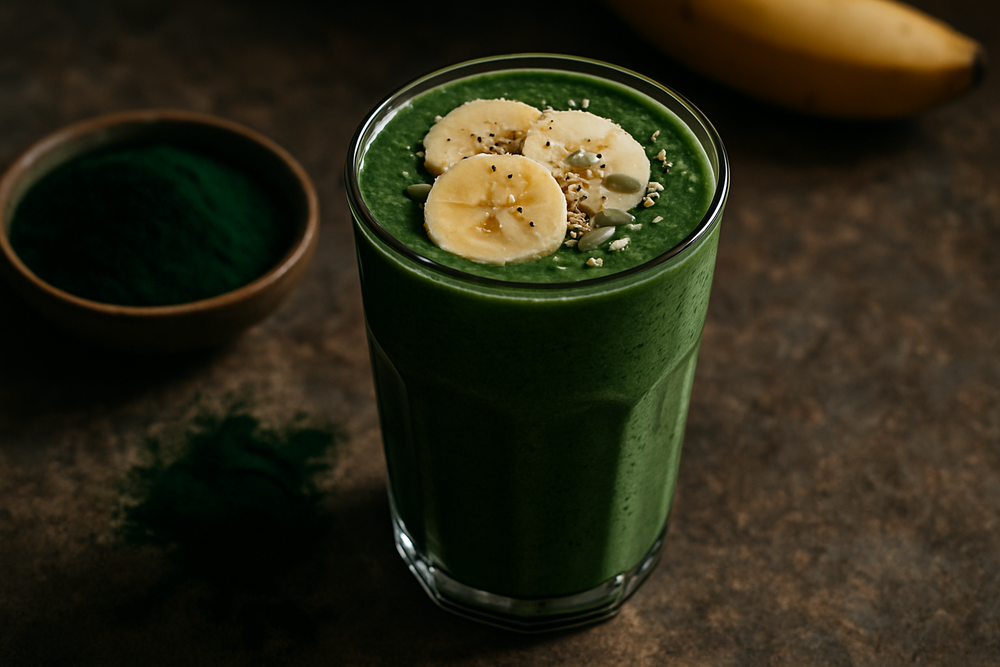
Prep Ideas
- — Whisk powder thoroughly into liquid before drinking — it does not dissolve fully and settles quickly.
- — Start with half a teaspoon (about 1 to 2 g) and work up over two to three weeks.
- — Avoid mixing into hot liquids, which can degrade some heat-sensitive vitamins.
- — Store the powder in an airtight container away from light and heat.
Shop This Ingredient
Stock your pantry with quality chlorella.
Buy on AmazonAs an Amazon Associate, Plantopedia earns from qualifying purchases. This costs you nothing extra and helps us keep the encyclopedia free.
Frequently Asked Questions
Research into chlorella's health effects spans several areas. Here is what the human evidence currently supports, broken down by system. Heart and circulation Several randomised controlled trials (studies where participants are randomly assigned to chlorella or a placebo, which is the gold standard for testing cause and effect) and a 2017 meta-analysis (a pooled statistical analysis of multiple trials) found that 4 to 12 weeks of chlorella supplementation — typically 3 to 6 grams per day — produced small-to-moderate reductions in total cholesterol, LDL cholesterol (often called "bad" cholesterol), and both systolic and diastolic blood pressure in adults with mild cardiovascular risk factors. These effects are modest, and the trials are relatively short. Chlorella is not a replacement for proven interventions like diet change, exercise, or medication — but the evidence suggests it may be a useful adjunct for chlorella for cholesterol and blood pressure management. Digestive health and microbiome Chlorella's fibre and polysaccharides may support gut microbiota diversity — the mix of bacteria living in your digestive system, which influences everything from immunity to mood. Small clinical studies have reported symptom relief and improved quality of life in people with ulcerative colitis (an inflammatory bowel condition) after chlorella supplementation. These findings are preliminary, and the studies are small, but they align with the mechanistic rationale around chlorella's prebiotic-type fibre and anti-inflammatory compounds. Blood sugar and metabolism Meta-analytic data and individual trials in adults with dyslipidaemia (abnormal blood fat levels), metabolic syndrome, or overweight report small but consistent reductions in fasting blood glucose and improvements in insulin sensitivity after several weeks of chlorella use. A 2026 clinical trial in people with overweight or obesity also reported improvements in markers of oxidative stress alongside better metabolic parameters. Chlorella for blood sugar and metabolism looks promising, but heterogeneity between trials means the effect size and reliability are still being mapped. Inflammation and recovery A six-week human study found that chlorella preserved plasma antioxidant nutrient status and enhanced the activity of antioxidant enzymes inside red blood cells. This is meaningful: antioxidant enzymes are the body's built-in defence system against cellular damage from free radicals. Mechanistic work also suggests chlorella may reduce macrophage infiltration into visceral fat (a process that drives low-grade inflammation) and lower hepatic (liver) fat deposition, though large clinical trials confirming hard outcomes are still needed.
Cracked-cell (broken cell wall) chlorella is the preferred form for most people. Chlorella's tough outer cell wall is made of indigestible cellulose, which humans cannot break down efficiently. Mechanical processing that cracks or breaks the cell wall dramatically improves digestibility and the bioavailability (how much your body can actually absorb and use) of proteins, vitamins, and chlorophyll. Intact-cell chlorella is also more likely to cause gastrointestinal side effects. Powder vs. tablets: Both can deliver effective amounts, and most clinical trials have used tablets or capsules at standardised doses (often 300 to 500 mg per capsule). Powder is more flexible for mixing into drinks. Neither has a clear evidence advantage — the key is getting the total daily dose right, not the format. Extracts: Some products concentrate specific compounds (chlorophyll, carotenoids). These are not as well-studied in human trials as whole dried chlorella. Most evidence is from whole-food chlorella powder or pressed tablets. Buying guide tips: Look for "cracked cell wall" or "broken cell wall" on the label. Choose brands that publish third-party testing certificates (e.g., NSF, Informed Sport, or equivalent), because microalgae can accumulate heavy metals from contaminated water sources. Organic certification is a useful additional quality signal. Check whether the product states its species (Chlorella vulgaris or Chlorella pyrenoidosa are the most studied).
Most human clinical trials used between 1.8 and 8 grams per day, with the majority of cardiometabolic benefits observed at around 3 to 6 g/day over 4 to 12 weeks. Some practitioner guidance allows up to 10 g/day short term. A practical approach: Week 1: 1 to 2 g/day (roughly a small pinch of powder or 3 to 4 tablets at 300–500 mg each) Weeks 2–3: Increase to 3 g/day if you are tolerating it well Maintenance: 3 to 6 g/day for most adults aiming at general health support There is no established upper safe limit with strong evidence behind it, but most research has not gone beyond 10 g/day. If you are using chlorella specifically to support a health condition, work with a healthcare provider to calibrate the dose to your situation. Is chlorella safe to take daily? Clinical trials lasting up to 12 weeks show a good safety record for daily use, with mild digestive symptoms being the main concern. Data on use beyond 12 weeks are limited, so periodic breaks or check-ins with a healthcare provider are a reasonable precaution.
Quick Answers
Common questions, answered in a line.
Chlorella contains a range of active compounds including chlorophyll, carotenoids like lutein and beta-carotene, tocopherols (vitamin E), bioactive polysaccharides, and essential amino acids. These components contribute to its antioxidant, anti-inflammatory, and immune-supporting properties.
Chlorella can be mixed with mango and coconut water, or blended with banana and almond butter to mask its grassy, ocean-like flavor. The fats in almond butter specifically help the body absorb chlorella's fat-soluble nutrients like vitamin E and carotenoids.
Chlorella may cause mild digestive upset, including gas, bloating, or loose stools, particularly during the first week of use. To minimize these effects, it is recommended to start with a low dose of 1 to 2 grams and increase gradually over two to three weeks.
You should consult a doctor before taking chlorella if you are on blood pressure or blood sugar medications, cholesterol-lowering statins, or immunosuppressive drugs. It is also advised for those with iron-storage conditions or algae allergies to seek medical guidance due to potential interactions.
Chlorella powder should be whisked thoroughly into liquids as it does not dissolve fully and settles quickly. To preserve its nutritional integrity, avoid mixing the powder into hot liquids, which can degrade heat-sensitive vitamins.
Chlorella supports heart health by contributing to modest improvements in cholesterol levels and blood pressure regulation. Bioactive peptides and pigments like carotenoids in the algae help neutralize free radicals and support cardiovascular function.
While marketed for detox, evidence suggests chlorella supports the body's own natural antioxidant and detoxification pathways rather than acting as a medical detoxifier. Its high chlorophyll content is linked to these internal support mechanisms and improved wound healing.
For Readers in the USA
Local context — sourcing, seasonality, and regional notes.
In the United States, chlorella is most commonly sold as a dietary supplement in health food stores like Whole Foods Market and Sprouts, or through major online retailers. You can typically find it in the "Green Superfoods" section in both powder and tablet forms.
The FDA regulates chlorella as a food or dietary supplement rather than a drug, meaning they do not approve it for safety or effectiveness before it hits the market. To ensure quality, US consumers should look for brands with "Third-Party Tested" or "USP Verified" seals on the label.
While chlorella is native to East Asia, some commercial production occurs in the US within controlled aquatic environments in sunny regions like California and Hawaii. These domestic facilities use closed-system photobioreactors to prevent environmental contamination and ensure year-round harvests.
To carry the USDA Organic seal, chlorella must be grown without synthetic fertilizers or irradiated sludge and meet strict US federal standards for water purity. Choosing USDA Organic chlorella helps ensure the algae was not exposed to prohibited chemical pesticides during the cultivation process.
AI Clinical Review
- Accurately describes chlorella as a nutrient-dense whole-food supplement; the high protein content and notable chlorophyll, iron, and carotenoid levels are consistent with published analyses.
- Summarizes human trial data fairly: small-to-moderate improvements in LDL/total cholesterol, blood pressure, and fasting glucose over several weeks, especially in adults with metabolic risk, at doses commonly around 3–6 g/day.
- Notes antioxidant effects supported by a six-week human study and frames chlorella as an adjunct to—not a replacement for—standard cardiometabolic care.
- Explains why cracked/broken cell wall products are preferable (better digestibility and nutrient availability) and offers practical titration to reduce GI side effects.
- Vitamin B12 content and bioavailability vary by species and product; some preparations contain inactive analogs, so chlorella should not be relied on as a sole B12 source without verified labeling and monitoring.
- “Detox” and heavy-metal removal claims are largely mechanistic or animal-based; robust human chelation data are lacking, so expectations should remain modest.
- Gut microbiome and ulcerative colitis findings are from small, early trials; larger, longer RCTs are needed to confirm symptom and quality-of-life benefits.
- Long-term safety and durability of cardiometabolic effects beyond roughly 12–16 weeks, and impacts on hard outcomes (e.g., events, diabetes remission), remain uncertain.
- Typical studied intakes: begin at 1–2 g/day and increase as tolerated toward 3–6 g/day for 4–12 weeks; cracked-cell products are generally better tolerated. Powder and tablets are equivalent if total daily dose is matched.
- Potential interactions: chlorella may further lower blood pressure and glucose; coordinate with antihypertensive and antidiabetic medications. Its vitamin K content can affect warfarin dosing. Additive lipid-lowering with statins/bile acid sequestrants is possible—inform your clinician.
- Use caution or seek medical advice if you have iron overload (hemochromatosis), chronic kidney or liver disease, are immunosuppressed, pregnant, or breastfeeding; allergy to algae/seaweeds warrants vigilance.
- Quality matters: choose third-party tested products (for heavy metals and microbes) with species identification; consider organic certification. Store away from heat and light to protect sensitive nutrients.
Start with small amounts; may cause digestive upset initially.
References
- USDA FoodData Central — chlorella and microalgae nutrient data (fdc.nal.usda.gov)
- Potential of Chlorella as a Dietary Supplement to Promote Health (PMC review) (pmc.ncbi.nlm.nih.gov)
- Clinical trials of Chlorella pyrenoidosa in fibromyalgia, hypertension, and ulcerative colitis (PubMed review) (pubmed.ncbi.nlm.nih.gov)
- Chlorella drink in healthy subjects — randomised, double-blind crossover trial (Journal of Food Biochemistry) (onlinelibrary.wiley.com)
- Effect of chlorella on cardiovascular risk factors — randomised controlled trial (PubMed) (pubmed.ncbi.nlm.nih.gov)
- Chlorella supplementation and cardiovascular risk factors — meta-analysis of RCTs (ScienceDirect) (sciencedirect.com)
- Chlorella supplementation improves adiposity, metabolic parameters, and oxidative stress — clinical trial 2026 (PMC) (pmc.ncbi.nlm.nih.gov)
- Six-week chlorella supplementation improves antioxidant status in humans (PubMed) (pubmed.ncbi.nlm.nih.gov)
- Chlorella vulgaris as a multifunctional dietary supplement for metabolic disorders (PubMed review) (pubmed.ncbi.nlm.nih.gov)
- Chlorella: an overview of functional food properties, safety, and metabolic effects (ScienceDirect Topics) (sciencedirect.com)
Know Your Numbers
Eating healthy is a start. Now get to know your biomarkers.
Food changes bloodwork — inflammation, lipids, blood sugar and nutrient status all respond to what you eat. 59 markers from $59.
- Results in 7–10 days at 2,000+ Quest sites
- Licensed provider reviews every result
- One flat price, no membership, HSA/FSA eligible
Educational information only, not medical advice. Panels are ordered and reviewed through our licensed partner; Plantopedia may earn a commission.