French Green Lentils — health benefits and uses
Protein + fiber leverage; batch-cook, meal-prep, and satiety angle
The Short Answer
French green lentils are prized for their firm texture and peppery flavor, containing 9g of protein and 8g of fiber per half-cup serving. Unlike standard lentils, they stay intact after cooking, making them the best choice for salads and meal prep.
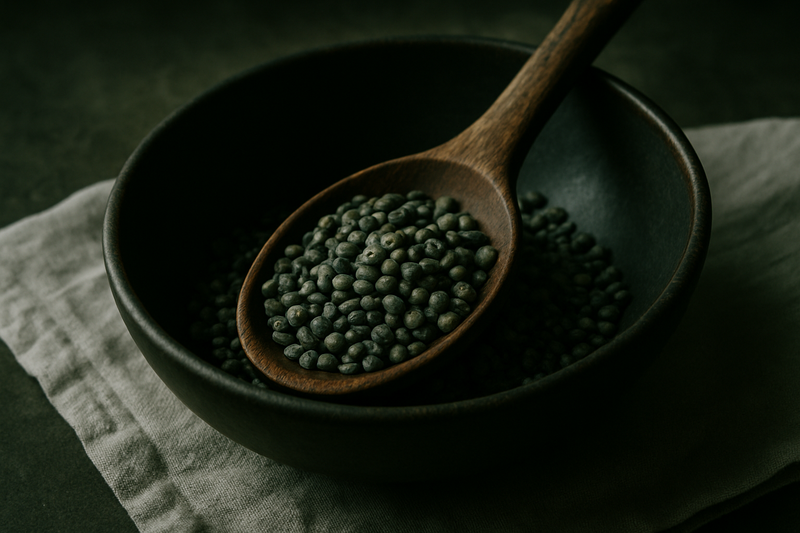
French Green Lentils · Photograph
French green lentils — sometimes called Puy-style lentils, after the famous Lens culinaris variety grown in the volcanic soils of Le Puy, France — are a small, firm, speckled legume that punches well above its weight in both nutrition and kitchen versatility. Where standard green or brown lentils go soft and creamy when cooked, French green lentils stay pleasingly intact, making them the go-to choice for hearty salads, grain bowls, and batch-cook containers that still look (and taste) good three days later.
Key Nutrients
% Daily Value based on 2,000 cal diet
Key active compounds (phytochemicals)
Beyond basic macronutrients, French green lentils contain a range of bioactive plant compounds that researchers believe contribute to their health effects:
- Polyphenols — A broad class of plant compounds with antioxidant and cell-signalling activity. Lentils are among the richest legume sources of polyphenols, which help protect cells from oxidative damage (the cellular "rusting" process linked to chronic disease).
- Procyanidins — A flavonoid subgroup (a type of polyphenol found in colourful plant foods) with demonstrated antioxidant and anti-inflammatory capacity in laboratory studies.
- Flavanols — Another flavonoid type; may support blood vessel function and help modulate inflammatory pathways.
- Tannins — Polyphenolic compounds that give lentils a slightly earthy taste. They contribute antioxidant activity but can mildly reduce mineral absorption; soaking and thorough cooking lower tannin content.
- Saponins — Bioactive legume compounds that may help modulate cholesterol metabolism and exhibit immune-related effects in experimental research.
- Resistant starch — A form of starch that resists digestion in the small intestine and acts like fiber in the colon, lowering the glycemic response (the rise in blood sugar after eating) and feeding beneficial gut bacteria.
- Prebiotic oligosaccharides — Short carbohydrate chains that are not fully broken down by human digestion, instead serving as food for beneficial gut microbes. Lentils provide roughly 12–14 g per 100 g of these prebiotic carbohydrates.
Who benefits most
1. The busy meal-prepper looking to boost plant protein
- Cooks in 20–35 minutes without soaking, holds shape in the fridge for 4–5 days
- Protein-to-calorie ratio rivals many animal proteins for a fraction of the cost
- Works cold in salads or reheated in soups and grain bowls — no re-cooking needed
2. The person managing blood sugar or weight
- Low glycemic index helps smooth post-meal glucose spikes
- High fiber and protein increase satiety (the feeling of fullness), helping reduce overall calorie intake naturally
- Can directly swap out white rice or refined pasta as the "carb base" in a meal
How French Green Lentils Compares
| Compared with | What's different |
|---|---|
| French Green Lentils vs. Brown Lentils | Softer texture that breaks down during cooking, ideal for thickening soups and dahls. |
| French Green Lentils vs. French Green Lentils | Smaller, firmer, and peppery; they hold their shape perfectly in salads and grain bowls. |
| French Green Lentils vs. Red Lentils | Hull-less and very soft; they disintegrate quickly into a smooth puree or thick soup. |
Health Benefits
Things to Know
IBS or FODMAP sensitivity: — Lentils are high in fermentable oligosaccharides (a type of carbohydrate that can cause gas in sensitive guts). Small, well-cooked portions and starting gradually is key. Some people with IBS tolerate canned, rinsed lentils better than home-cooked.
Inflammatory bowel disease (IBD) during a flare: — High-fiber foods may temporarily worsen symptoms; check with your GI team before increasing intake.
Chronic kidney disease: — Lentils provide meaningful potassium and phosphorus; people on potassium- or phosphorus-restricted diets need to monitor portion sizes carefully.
Low-fiber medical diets: — After certain gut surgeries, a doctor may advise low-fiber eating; follow that guidance before adding lentils.
Legume allergy: — Rare but real; avoid entirely and consult an allergist.
New to plant-heavy eating: — Increase servings slowly over 2–4 weeks and drink adequate water.
High-fiber timing: — Fiber can slightly slow the absorption of some oral medications. As a general precaution, take any medication at least 1 hour before a high-fiber meal.
Potassium-raising medications: — ACE inhibitors, ARBs, and potassium-sparing diuretics all raise blood potassium. Large frequent portions of lentils could contribute to high potassium levels, especially with reduced kidney function. Discuss with your prescriber.
Thyroid medication (levothyroxine): — High-fiber foods may reduce absorption; space medication away from lentil-heavy meals by at least 60 minutes, or as your pharmacist advises.
Iron chelation therapy or iron overload: — Discuss overall dietary iron intake, including plant-source iron from lentils, with your clinician.

Shop This Ingredient
Stock your pantry with quality french green lentils.
Buy on AmazonAs an Amazon Associate, Plantopedia earns from qualifying purchases. This costs you nothing extra and helps us keep the encyclopedia free.
Frequently Asked Questions
Most of the direct human evidence covers lentils and pulses broadly, not French green lentils in isolation. Because French green lentils share an almost identical nutrient and phytochemical profile with other whole green lentils, researchers expect comparable effects. Heart and circulation Evidence level: moderate Regular lentil consumption is associated with lower LDL cholesterol (often called "bad" cholesterol), better blood pressure readings, and a meaningfully reduced risk of cardiovascular disease in both observational studies (studies that follow people's diets over time) and some clinical trials. The likely mechanisms are: Soluble fiber — The gel-forming type of fiber binds to cholesterol compounds in the gut and helps carry them out of the body, reducing circulating LDL. Potassium and magnesium — Both minerals help relax blood vessels and support healthier blood pressure. Displacing saturated fat — Swapping a portion of red meat or processed meat for lentils in meals reduces saturated fat intake, which is a major lever for cardiovascular risk. Benefits appear most clearly when lentils are eaten several times per week as a replacement for higher-risk foods, not just stacked on top of an unchanged diet. Digestive health and gut microbiome Evidence level: strong for fiber effects; emerging for microbiome effects Half a cup of cooked French green lentils provides around 8 g of dietary fiber — roughly a third of most people's daily target in a single serving. This fiber: Adds bulk to stool and supports regular bowel movements Reduces the risk of constipation Provides resistant starch and prebiotic oligosaccharides that feed beneficial gut bacteria (the community of microbes living in your large intestine) Research indicates that a well-fed gut microbiome supports gut barrier function (the lining that keeps bacteria where they belong) and may reduce the risk of some gut-related conditions. The evidence here is more mechanistic and emerging than definitive for specific disease outcomes. Important digestive note: This same fiber richness can cause gas, bloating, and discomfort — especially when you ramp up too quickly. See the prep section below for strategies. Blood sugar and metabolism Evidence level: moderate French green lentils are a low-glycemic index food — meaning they cause a slower, gentler rise in blood sugar compared with foods like white bread or white rice. Three mechanisms work together: Fiber slows the rate at which food moves through your gut, smoothing out the sugar curve. Resistant starch bypasses the small intestine largely undigested, reducing the amount of glucose entering the bloodstream. Protein further slows gastric emptying (the rate your stomach empties into the intestine) and reduces the insulin spike after meals. Reviews of lentil and pulse studies report improved glycaemic control and lower type 2 diabetes risk with regular consumption, particularly when lentils replace refined carbohydrates rather than simply being added to an already high-starch diet. Inflammation and recovery Evidence level: emerging Lentil polyphenols — particularly procyanidins and flavanols — have shown antioxidant and anti-inflammatory activity in lab and animal studies. A 2023 review in Frontiers in Nutrition described how lentil compounds can inhibit inflammation-related enzymes and reduce oxidative stress. At the dietary-pattern level, people who eat more legumes consistently show lower levels of inflammatory biomarkers. However, there are relatively few human clinical trials specifically measuring inflammation after a lentil intervention, so this area is still building its evidence base. Hormones, folate, and reproductive health Evidence level: established for folate; emerging for broader hormonal effects Lentils are one of the most folate-dense foods available. Adequate folate before and during early pregnancy is one of nutrition's clearest established links: it significantly reduces the risk of neural tube defects (serious birth defects of the brain and spine). Beyond pregnancy, lentils contribute to better blood sugar and insulin management, which indirectly supports healthier metabolic hormone profiles. Direct hormone-modulating effects of lentils in humans have not been firmly established.
The short answer: whole and properly cooked is where the evidence is strongest and the glycemic benefits are greatest. | Form | Practical notes | |---|---| | Dry whole lentils (cooked) | Best-studied form; lowest glycemic response; rinse well, check for stones, simmer 20–40 min | | Canned lentils | Pre-cooked and convenient; rinse to reduce sodium; nutritionally very similar to home-cooked | | Sprouted lentils | Can increase some nutrient bioavailability; lightly cook after sprouting for safety | | Lentil flour / lentil pasta | Boosts fiber and protein vs. refined-wheat versions, but glycemic response is slightly higher than whole cooked lentils | Whole, cooked French green lentils consistently deliver the lowest glycemic index and the fullest fiber benefit. Canned (rinsed, low-sodium) is a perfectly valid everyday shortcut.
Quick Answers
Common questions, answered in a line.
French green lentils are unique because they stay firm and intact when cooked, unlike standard lentils that become soft or creamy. This durable texture makes them ideal for meal prepping, grain bowls, and salads where you want the legume to hold its shape.
French green lentils help manage blood sugar because they have a low glycemic index and contain resistant starch that slows the post-meal glucose response. Their high fiber and protein content further support metabolic health by increasing satiety and preventing energy spikes.
For people with IBS, French green lentils should be eaten in small, well-cooked portions because they are high in fermentable oligosaccharides that may cause gas. Some individuals find that using canned, rinsed lentils is easier on their digestion than home-cooked varieties.
French green lentils are rich in polyphenols, procyanidins, flavanols, and tannins, which provide significant antioxidant and anti-inflammatory activity. These compounds help protect cells from oxidative damage, often referred to as cellular "rusting."
It is generally recommended to wait at least one hour after taking medication before eating a high-fiber meal like French green lentils. The high fiber content can slightly slow the absorption of oral drugs, including thyroid medications like levothyroxine.
French green lentils act as a prebiotic by providing roughly 12–14 g of oligosaccharides per 100 g, which serve as food for beneficial gut microbes. These lentils also contain resistant starch that reaches the colon undigested to support a healthy microbiome.
For Readers in the USA
Local context — sourcing, seasonality, and regional notes.
In the U.S., you can find French green lentils at national grocers like Whole Foods, Trader Joe’s, and Kroger, often under the 'Puy' or 'French Style' label. They are widely available in the bulk bins of health food stores or packaged by brands like Bob’s Red Mill and Goya.
While the original variety is from France, the Pacific Northwest—specifically the Palouse region of Washington and Idaho—is the primary producer of French-style green lentils in the U.S. These domestic crops provide a sustainable, locally grown alternative to imported European varieties.
Look for the USDA Organic seal and the Non-GMO Project Verified badge to ensure your lentils meet strict U.S. federal standards for pesticide-free farming. Buying organic ensures the lentils were grown without synthetic fertilizers, which is a common priority for American health-conscious shoppers.
American chefs and home cooks typically use French green lentils in hearty salads, as a base for roasted salmon, or in 'lentil loaf' recipes during traditional holiday meals. Their ability to hold shape makes them a preferred plant-based protein in U.S. bistro-style cooking and modern meal-prep culture.
AI Clinical Review
- Strong, accurate emphasis on lentils as a high-fiber, high-folate, plant‑protein food with useful iron and potassium.
- Correctly explains non‑heme (plant) iron and how pairing with vitamin C improves absorption while tea/coffee can reduce it.
- Appropriately frames most health outcomes as coming from pulses/lentils broadly and highlights the benefit when they replace refined carbs or higher‑saturated‑fat foods.
- Practical cooking and form guidance (whole vs. canned vs. flour/pasta) aligns with evidence on glycemic response and convenience.
- Variety‑specific claims: French green (Puy‑style) lentils are nutritionally similar to other whole lentils; there’s little head‑to‑head human research showing unique health effects by variety.
- Anti‑inflammatory and vascular benefits from polyphenols (e.g., procyanidins, flavanols) are biologically plausible but rely largely on lab/animal data; human trials are fewer and mixed on magnitude of effect.
- Microbiome changes with lentil intake are promising, but links to specific clinical outcomes (e.g., risk reduction for particular diseases) remain preliminary.
- Weight‑management benefits are mostly via higher satiety and displacement of calorie‑dense foods; long‑term weight‑loss trials specifically using lentils are limited.
- Portion and ramp‑up: many adults do well with 1/2–1 cup cooked per serving, a few times per week; increase gradually and hydrate to reduce gas/bloating.
- Form and safety: canned lentils are nutritionally similar and often easier on sensitive guts when well‑rinsed; always cook lentils thoroughly—raw or undercooked legumes contain lectins/enzymes that can cause GI upset. If sprouting, lightly cook before eating.
- Medications/conditions: those on ACE inhibitors/ARBs or potassium‑sparing diuretics, and people with chronic kidney disease, should monitor potassium and phosphorus and review portions with their clinician. Take levothyroxine and certain other meds away from high‑fiber meals to avoid absorption issues.
- Special diets: during IBS flares or low‑FODMAP phases, smaller portions (especially canned, well‑rinsed) are usually better tolerated; in IBD flares or immediately after GI surgery, follow your care team’s fiber guidance.
Mention soaking/cooking tolerance tips where relevant; avoid raw legume prep errors.
References
- PMC, National Library of Medicine — Health-promoting benefits of lentils: Anti-inflammatory and anti-microbial effects (pmc.ncbi.nlm.nih.gov)
- PMC, National Library of Medicine — Polyphenol-Rich Lentils and Their Health Promoting Effects (pmc.ncbi.nlm.nih.gov)
- PMC, National Library of Medicine — Polyphenols, Saponins and Phytosterols in Lentils and Their Health Benefits: An Overview (pmc.ncbi.nlm.nih.gov)
- PubMed — Effect of green lentils on colonic function, nitrogen balance, and serum lipids in healthy human subjects (pubmed.ncbi.nlm.nih.gov)
- USDA FoodData Central — USDA FoodData Central (fdc.nal.usda.gov)
- PubMed — Twelve Weeks of Daily Lentil Consumption Improves Fasting Cholesterol and Postprandial Glucose and Inflammatory Responses-A Randomized Clinical Trial (pubmed.ncbi.nlm.nih.gov)
- PubMed — Nutritional Composition and Bioactive Content of Legumes: Characterization of Pulses Frequently Consumed in France and Effect of the Cooking Method (pubmed.ncbi.nlm.nih.gov)
Know Your Numbers
Eating healthy is a start. Now get to know your biomarkers.
Food changes bloodwork — inflammation, lipids, blood sugar and nutrient status all respond to what you eat. 59 markers from $59.
- Results in 7–10 days at 2,000+ Quest sites
- Licensed provider reviews every result
- One flat price, no membership, HSA/FSA eligible
Educational information only, not medical advice. Panels are ordered and reviewed through our licensed partner; Plantopedia may earn a commission.