Great Northern Beans — health benefits and uses
Protein + fiber leverage; batch-cook, meal-prep, and satiety angle
The Short Answer
Great Northern beans are medium-sized white legumes known for a mild, nutty flavor and a firm texture that holds its shape in soups and stews. They provide 15g of protein and 12g of fiber per cooked cup, along with significant amounts of folate and iron.
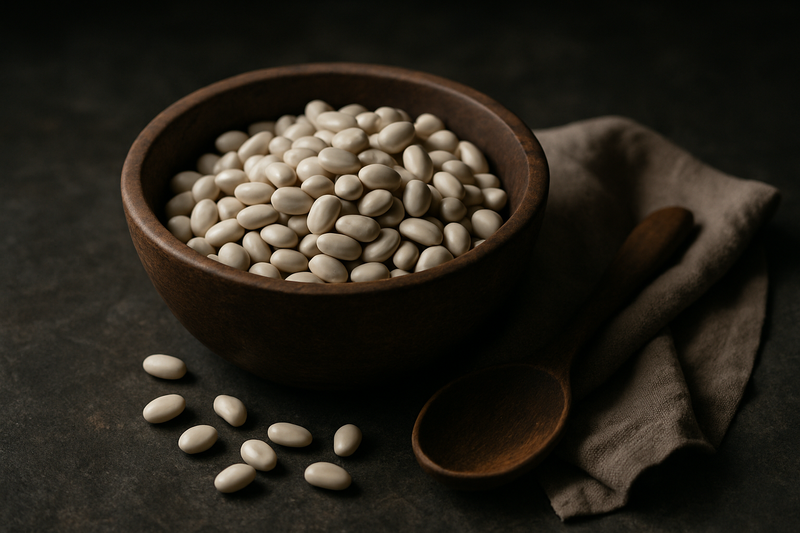
Great Northern Beans · Photograph
Great Northern beans (Phaseolus vulgaris) are a medium-sized white bean with a mild, slightly nutty flavour and a firm texture that holds up beautifully in soups, stews, salads, and grain bowls. They belong to the same species as black beans, kidney beans, and navy beans, but their neutral taste and creamy interior make them one of the most versatile legumes in the kitchen.
Key Nutrients
% Daily Value based on 2,000 cal diet
Key active compounds in Great Northern beans
Great Northern beans contain several biologically active plant compounds beyond their macronutrients:
- Polyphenols — A broad class of antioxidant plant compounds; Great Northern beans are considered a best-source food for polyphenols. They may help reduce oxidative stress (cellular damage from unstable molecules) and support healthy blood vessels.
- Resistant starch — Starch that bypasses digestion in the small intestine and is fermented by bacteria in the large intestine, acting similarly to soluble fibre. It promotes production of short-chain fatty acids, particularly butyrate, which support gut lining health and may improve insulin sensitivity (how well cells respond to insulin).
- Oligosaccharides (a type of FODMAP) — Short-chain carbohydrates that feed beneficial gut bacteria (a prebiotic effect) but can also cause gas and bloating, especially in people not used to high-fibre diets or those with irritable bowel syndrome (IBS).
- Phytates (phytic acid) — A natural compound in beans that can mildly reduce the absorption of some minerals. Soaking and cooking significantly lowers phytate levels, and phytates also have antioxidant and potentially protective properties.
- Lectins — Proteins naturally present in raw beans that can cause nausea and vomiting if beans are eaten raw or undercooked. Proper boiling deactivates lectins completely; this is a safety reason — not a reason to avoid cooked beans.
Prep and pairing ideas
Great Northern beans are one of the easier beans to work with because their mild flavour complements almost any cuisine. Here are three practical pairings that make the most of their nutritional profile:
1. Great Northern beans + leafy greens + lemon juice Wilted spinach or kale with white beans and a squeeze of lemon is a classic combination for a reason. The vitamin C in lemon enhances absorption of the non-haem iron in the beans, and the greens add folate and calcium, making this pairing genuinely nutrient-synergistic.
**2. Great Northern beans + whole grains (brown rice, quinoa, or
How Great Northern Beans Compares
| Compared with | What's different |
|---|---|
| Great Northern Beans vs. Navy Beans | Smaller, creamier, and cook down faster; better for thickening soups than holding shape. |
| Great Northern Beans vs. Cannellini Beans (White Kidney) | Much larger with a thicker skin and buttery texture; better for salads and side dishes. |
Health Benefits
Things to Know
Never eat raw or undercooked beans.: Raw Great Northern beans contain high lectin levels that can cause nausea, vomiting, and abdominal cramps. Boiling thoroughly deactivates lectins completely.
Slow cookers alone (without a prior boil) may not reach temperatures high enough to reliably deactivate lectins in dried beans. Always boil first for at least 10 minutes.
Canned beans are pre-cooked and safe to eat straight from the can after draining and rinsing.
IBS or low-FODMAP diet: Great Northern beans are not a low-FODMAP food in standard servings. Small portions of canned, drained, and rinsed beans may be better tolerated. Get personalised guidance from a dietitian if you are in a strict low-FODMAP elimination phase.
Chronic digestive conditions (SIBO, active inflammatory bowel disease): A slow, graduated introduction with medical or dietetic supervision is advisable.
Advanced kidney disease: Great Northern beans are a meaningful source of potassium and phosphorus. People on potassium or phosphorus restrictions should discuss portion sizes with their nephrologist or renal dietitian.
Bean or legume allergy: If you have a known allergy to other Phaseolus beans (e.g., kidney beans), seek allergy evaluation before adding Great Northern beans.
Pregnancy: Great Northern beans are an excellent source of folate, which is critical in early pregnancy for neural tube development. They can be a valuable dietary source, but do not rely on food folate alone — prenatal supplements are still recommended.
Insulin or sulfonylureas (blood-sugar-lowering drugs): Adding high-fibre, low-glycaemic beans regularly may improve insulin sensitivity and lower blood glucose. Monitor your levels more closely and talk to your clinician about whether medication adjustments are needed.
General oral medications: Very high fibre intake can slightly affect the absorption rate of some drugs. As a precaution, consider separating medications with a narrow therapeutic window from large bean-heavy meals by 1–2 hours.
Antihypertensive medications: The potassium and low sodium in unsalted beans can support blood pressure — generally a benefit, but people with kidney impairment should be mindful of overall potassium intake.

Shop This Ingredient
Stock your pantry with quality great northern beans.
Buy on AmazonAs an Amazon Associate, Plantopedia earns from qualifying purchases. This costs you nothing extra and helps us keep the encyclopedia free.
Frequently Asked Questions
Most of the human clinical research on beans looks at legumes as a category rather than Great Northern beans in isolation. Because Great Northern beans share essentially the same nutrient and phytochemical profile as other white beans and mixed bean studies, the findings are reasonably applicable. Heart health and circulation Randomised controlled trials (the gold standard of nutrition research) in adults with elevated cholesterol show that adding roughly half a cup to two cups of cooked beans per day for four to eight weeks can lower LDL cholesterol (often called "bad" cholesterol) and total cholesterol, and modestly improve other markers of cardiometabolic health. The leading mechanisms are viscous (soluble) fibre — which binds bile acids and helps remove cholesterol from the body — along with resistant starch, polyphenols, and the displacement of saturated-fat-containing foods. Large observational studies consistently find that higher legume intake is associated with lower rates of coronary heart disease and cardiovascular mortality. Harvard's Nutrition Source classifies beans as a core food in both Mediterranean and DASH-style eating patterns, both of which are strongly supported for heart health. Great Northern beans are interchangeable with other beans in these patterns. For Great Northern beans specifically: one cup provides about 15 g protein, less than 1 g total fat, no saturated fat, and meaningful potassium and magnesium — a nutrient combination that aligns closely with cardiometabolic dietary recommendations. Digestive health and microbiome support With roughly 13 g of dietary fibre per cup, Great Northern beans provide nearly half of a typical adult's daily fibre target in a single serving. Fibre from beans comes in both soluble and insoluble forms, and the resistant starch adds a third type of fermentable substrate for gut bacteria. Human studies on high-fibre diets and beans show improvements in stool bulk and frequency, as well as greater gut microbiome diversity and higher production of short-chain fatty acids (SCFAs) like butyrate, which nourish the cells lining the colon and have anti-inflammatory properties. The flip side: the same fermentable oligosaccharides that feed beneficial gut bacteria can produce gas and bloating, particularly in people with IBS or low baseline fibre intake. See the prep section below for practical strategies. Blood sugar and metabolic health Great Northern beans have a relatively low glycaemic impact — meaning the carbohydrates they contain are digested and absorbed slowly, producing a gentler rise in blood glucose compared with refined grains or sugary foods. This is due to their combination of fibre, protein, and resistant starch. Human trials on pulses (beans, lentils, chickpeas) show that replacing refined carbohydrates with half to two cups of cooked legumes per day can improve post-meal glucose and insulin responses and modestly reduce HbA1c (a two-to-three month average of blood sugar levels) in people with type 2 diabetes or insulin resistance. In practice, the biggest blood-sugar benefit comes from using Great Northern beans in place of refined starches — swapping white rice or pasta for a bean-based stew, adding beans to a grain bowl, or replacing some of the meat in chilli with beans. Inflammation and recovery Evidence here is earlier-stage. Observational research links legume-rich diets to lower levels of CRP (C-reactive protein), a common blood marker of chronic inflammation. Great Northern beans' polyphenols, prebiotic fibre, and resistant starch may reduce inflammation partly by improving gut barrier function and promoting production of anti-inflammatory SCFAs. Human feeding trials specifically targeting Great Northern beans are limited, and any benefit is likely part of an overall whole-food eating pattern rather than beans acting in isolation.
Dried (soaked and cooked at home) The most economical option and gives you full control over sodium. Requires planning ahead but batch-cooks well for meal prep. How to cook dried Great Northern beans safely: Rinse beans and remove any stones or shrivelled beans. Soak in fresh cold water for 4–8 hours (or overnight). Discard the soaking water — this step removes oligosaccharides and lowers lectin levels. Cover with fresh water, bring to a vigorous boil for at least 10 minutes (important for deactivating lectins), then reduce heat and simmer until very soft, usually 60–90 minutes. Do not cook dried beans in a slow cooker without boiling first, as the lower temperature may not reliably deactivate lectins. Canned (drained and rinsed) The most convenient option and nutritionally very close to home-cooked dried beans. Draining and rinsing removes up to 40% of the sodium and washes away some fermentable carbohydrates. Choose low-sodium or no-salt-added varieties when possible, especially if you are managing blood pressure. Pureed or mashed Blending cooked Great Northern beans into soups, dips, or pasta sauces is a practical way to increase protein and fibre invisibly. The smooth texture is also easier for some people to tolerate if large whole beans cause digestive discomfort. In mixed dishes Great Northern beans hold their shape well in slow-cooked dishes. Their neutral flavour makes them ideal for absorbing spices, herbs, and aromatics — they are as comfortable in Italian-style white bean soup as they are in a smoky chilli or a herb-dressed grain salad.
Quick Answers
Common questions, answered in a line.
Great Northern beans are a medium-sized white legume known for their mild, nutty flavor and firm texture that holds up well during cooking. They belong to the Phaseolus vulgaris species, sharing the same origin as kidney, black, and navy beans.
Great Northern beans are considered a best-source food for polyphenols, which are antioxidant compounds that may reduce oxidative stress. These beans also contain resistant starch and oligosaccharides that act as prebiotics to support a healthy gut microbiome.
You must never eat Great Northern beans raw because they contain high levels of lectins, which can cause nausea, vomiting, and abdominal cramps. Boiling the beans thoroughly for at least 10 minutes completely deactivates these proteins, making them safe to eat.
Yes, Great Northern beans are an excellent source of folate, a nutrient critical for neural tube development during early pregnancy. While they are a valuable dietary source of folate, they should supplement rather than replace recommended prenatal vitamins.
Great Northern beans contain resistant starch, which may improve insulin sensitivity and help cells respond better to insulin. Because they are high-fiber and low-glycemic, individuals on blood-sugar-lowering medications should monitor their levels closely when eating them regularly.
Individuals with advanced kidney disease or those on potassium and phosphorus restrictions should consult a renal dietitian before consuming Great Northern beans. These beans are a meaningful source of both minerals, which may need to be limited depending on kidney function.
To maximize nutrition, pair Great Northern beans with vitamin C sources like lemon juice to enhance the absorption of non-haem iron. Combining them with leafy greens or whole grains also creates a nutrient-synergistic meal that provides folate, calcium, and fiber.
For Readers in the USA
Local context — sourcing, seasonality, and regional notes.
Great Northern beans are primarily grown in the Midwestern and Western United States, with Nebraska, North Dakota, and Colorado serving as the nation's top producers. These regions provide the dry, cool climate necessary for the beans to mature and dry in the field before being harvested in late summer or early autumn.
You can find Great Northern beans year-round at major US retailers like Walmart, Kroger, and Whole Foods, typically located in the dry bean or canned vegetable aisles. Regional grocery chains like Publix and H-E-B also stock them, often under private-label brands or national labels like Goya and Bush's.
Great Northern beans are a staple of American "White Chili" and historical "Senate Bean Soup," a dish served daily in the United States Senate dining room since the early 20th century. Their ability to hold their shape during long simmering makes them a preferred choice for slow-cooker recipes across the American South and Midwest.
Look for the USDA Organic seal on bean packaging to ensure the crop was grown without synthetic pesticides or fertilizers in accordance with federal standards. While Great Northern beans are not a high-risk crop for GMOs, many health-conscious US consumers opt for organic certified bags to ensure non-GMO status and environmental sustainability.
AI Clinical Review
- Accurately highlights beans as core foods in heart‑healthy patterns (e.g., Mediterranean, DASH) and explains why: high fibre, plant protein, low saturated fat, and beneficial phytochemicals.
- Summarizes evidence that regular legume intake (about ½–2 cups cooked daily in studies) can lower LDL cholesterol and improve post‑meal blood sugar when used in place of refined carbs.
- Provides realistic nutrition numbers per cup (protein, fibre, key minerals) and practical cooking guidance, including why boiling deactivates lectins.
- Sensibly addresses digestive tolerance (FODMAPs/oligosaccharides) and offers strategies such as soaking, rinsing, and using canned beans to improve tolerance.
- Most clinical trials evaluate “pulses/legumes” broadly, not Great Northern beans specifically; benefits are inferred from similar nutrient profiles.
- Anti‑inflammatory and polyphenol‑related claims are promising but rely largely on observational data and mechanistic pathways; high‑quality human trials targeting these endpoints are limited.
- Glycaemic impact and resistant starch content vary with preparation method, degree of cooking, and cooling/reheating—so individual responses can differ.
- Magnitude of cholesterol and HbA1c changes depends on baseline diet, total amount consumed, and what beans displace in the meal pattern.
- Typical effective intakes in studies are around ½–1 cup cooked most days; if you’re new to beans, start with ¼–½ cup and increase gradually to minimize gas/bloating.
- Safety: never eat raw/undercooked beans; boil dried beans vigorously for ≥10 minutes before simmering. Slow cookers alone aren’t reliable for dried beans. Canned beans are pre‑cooked; rinsing reduces sodium and some FODMAPs.
- Check with a clinician if you have IBS on a strict low‑FODMAP phase, advanced kidney disease (potassium/phosphorus), a history of legume allergy, or if you use insulin/sulfonylureas (glucose may improve and meds might need review).
- Very high‑fibre meals can modestly affect absorption timing of certain oral drugs; separating sensitive medications from bean‑heavy meals by 1–2 hours is a reasonable precaution.
Mention soaking/cooking tolerance tips where relevant; avoid raw legume prep errors.
References
- PubMed — Great Northern Beans (Phaseolus vulgaris L.) Lower Cholesterol in Hamsters Fed a High-Saturated-Fat Diet (pubmed.ncbi.nlm.nih.gov)
- NCBI, National Library of Medicine — Health Benefits of Plant-Based Nutrition: Focus on Beans in Cardiometabolic Diseases (ncbi.nlm.nih.gov)
- PubMed — Antioxidant and Anti-Inflammatory Capacities of Three Dry Bean Varieties after Cooking and In Vitro Gastrointestinal Digestion (pubmed.ncbi.nlm.nih.gov)
- University of Rochester Medical Center — Content - Health Encyclopedia - URochester Medicine (urmc.rochester.edu)
- USDA FoodData Central — USDA FoodData Central (fdc.nal.usda.gov)
- University of Rochester Medical Center — Content - Health Encyclopedia - URochester Medicine (urmc.rochester.edu)
Know Your Numbers
Eating healthy is a start. Now get to know your biomarkers.
Food changes bloodwork — inflammation, lipids, blood sugar and nutrient status all respond to what you eat. 59 markers from $59.
- Results in 7–10 days at 2,000+ Quest sites
- Licensed provider reviews every result
- One flat price, no membership, HSA/FSA eligible
Educational information only, not medical advice. Panels are ordered and reviewed through our licensed partner; Plantopedia may earn a commission.