Green Banana — health benefits and uses
A staple cooking banana across the Caribbean, Africa, and South India.
The Short Answer
Green bananas are a potent source of resistant starch (RS2), a prebiotic fiber that feeds beneficial gut bacteria and helps stabilize blood sugar. Unlike ripe bananas, they have a low glycemic index and are typically eaten boiled or used as a gluten-free
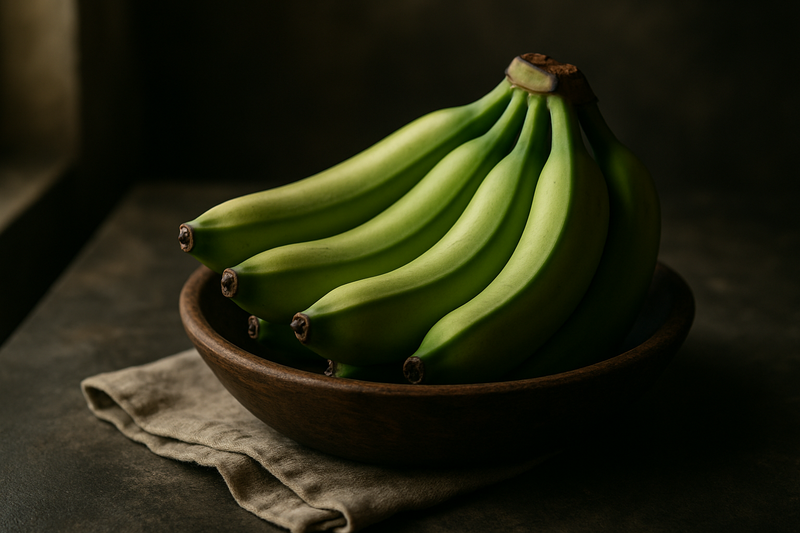
Green Banana · Photograph
Discover the science-backed green banana benefits for gut health, including resistant starch as a prebiotic, blood sugar support, and how to use boiled green banana or green banana flour in a whole food plant-based diet. Includes safety tips, dose guidance, and evidence sources.
Key Nutrients
% Daily Value based on 2,000 cal diet
Key active compounds in green banana
- Resistant starch type 2 (RS2): The dominant functional compound in unripe bananas. RS2 consists of tightly packed starch granules that resist the digestive enzymes of the small intestine. Unripe banana flesh contains roughly 5–7 g of RS2 per 100 g; green banana flour can contain 15–20 g RS2 per 100 g depending on processing.
- Non-starch polysaccharides (dietary fiber): Cell-wall fibers including pectin that slow digestion, soften stool, and contribute additional prebiotic substrate for gut bacteria.
- Polyphenols: Antioxidant plant compounds found in small amounts in banana flesh and peel; less studied than the starch fraction but may contribute to anti-inflammatory effects.
- Potassium: An electrolyte mineral that supports blood pressure regulation and muscle function.
- Vitamin B6 (pyridoxine): Supports amino acid metabolism, neurotransmitter production, and immune function — bananas across ripeness stages are one of the better whole-food sources.
- Vitamin C: An antioxidant vitamin; some is present in green bananas but is partly reduced by boiling.
Prep and pairing ideas
Who benefits most from green bananas?
The gut-health optimizer
- Eats a mostly plant-based diet but wants to diversify their prebiotic sources beyond oats and legumes
- May have noticed irregular digestion, occasional bloating, or simply wants to support microbiome diversity
- Benefits from adding 1–2 tablespoons of green banana flour to smoothies or oatmeal several times per week, or including boiled green banana as a savory side dish 2–3 times per week
The blood-sugar-conscious eater
- Managing prediabetes or type 2 diabetes with diet and lifestyle, or simply wanting steadier energy throughout the day
- Looking for low-glycemic starchy foods that satisfy without spiking blood sugar
- Benefits most from replacing higher-glycemic starchy sides (white rice, white bread) with boiled or mashed green banana, and potentially using green banana flour in place of refined flour in baking
3 practical pairings
- Boiled green banana + olive oil and garlic: A Caribbean classic. The fat in olive oil slows digestion further, extending the blood sugar-moderating effect. Garlic adds additional prebiotic inulin (a fermentable fiber), doubling down on gut benefits.
- Green banana flour + oat porridge: Stir 1 tablespoon of green banana flour into cooked oatmeal. Oats provide beta-glucan (another prebiotic fiber), and the combination feeds a broader range of gut microbes than either food alone.
- Boiled green banana + beans and leafy greens: A balanced plate of resistant starch, plant protein, and micronutrients. The resistant starch from green banana slows the digestion of the whole meal, providing longer-lasting satiety and a gentler glucose curve.
Bottom line
Green banana is a genuinely useful ingredient for people interested in supporting gut health, moderating blood sugar, and diversifying their plant-based starch sources. The science is clearest for its resistant starch content and the downstream effects on gut bacteria, digestive symptoms, and glycemic control — with human trial evidence backing meaningful benefits at achievable flour doses.
The key practical points: cook it before eating (boiling or using flour is ideal), start with modest amounts and increase gradually, and don't expect overnight changes — gut microbiome adaptation is a weeks-to-months process. If you have diabetes and take glucose-lowering medication, flag this with your healthcare team before adding regular green banana flour to your routine.
For a whole food plant-based approach, boiled green banana as a savory side or green banana flour as a partial flour substitute is a low-risk, evidence-supported addition to a varied diet — not a magic bullet, but a genuinely smart swap.
Looking for more ways to support gut health through food? Explore our plant-based gut health guide.
How Green Banana Compares
| Compared with | What's different |
|---|---|
| Green Banana vs. Yellow Banana | Higher in sugar and lower in resistant starch; eaten raw rather than cooked. |
| Green Banana vs. Plantain | Larger and starchier; remains firm when cooked while green bananas soften more. |
Health Benefits
Things to Know
Always cook green bananas first.: Raw, very unripe banana is dense and starchy and can cause significant digestive discomfort, particularly in large amounts.
Start low, go slow with flour.: Beginning with 1 tablespoon (roughly 10 g) of green banana flour and increasing gradually gives your gut microbiome time to adapt. Jumping straight to high doses commonly causes bloating, gas, or loose stools.
IBS and SIBO caution: People with irritable bowel syndrome (IBS) or small intestinal bacterial overgrowth (SIBO) may experience worsened gas and bloating from high-RS2 foods. Introduce carefully and monitor symptoms.
Diabetes and blood sugar medications: Resistant starch from green banana flour can meaningfully lower post-meal blood glucose. If you take insulin, sulfonylureas, or GLP-1 agonist medications, adding significant amounts of green banana flour may increase the risk of hypoglycemia (blood sugar dropping too low). Discuss with your doctor before using as a supplement.
Kidney disease and potassium: If you have chronic kidney disease (CKD) or have been told to limit potassium, account for the potassium in green bananas — even though a small boiled serving contributes only ~173 mg, regular large portions or flour use adds up.
Potassium-sparing diuretics and ACE inhibitors: These medications can raise blood potassium levels. High habitual banana intake warrants monitoring in people at risk of hyperkalemia (dangerously high blood potassium).
Latex-fruit allergy: People with latex allergy may have cross-reactive sensitivity to bananas (and related foods). Avoid green bananas and derived products if you have a known banana or latex-fruit allergy.
Pregnancy: Boiled green banana is a traditional food and is generally considered safe in normal culinary amounts. High-dose flour supplementation is unstudied in pregnancy; stick to food-first use.
Children with diarrhea: Green banana-based therapeutic diets for persistent diarrhea in children exist as clinical protocols — use only under medical supervision, not as a home remedy without guidance.
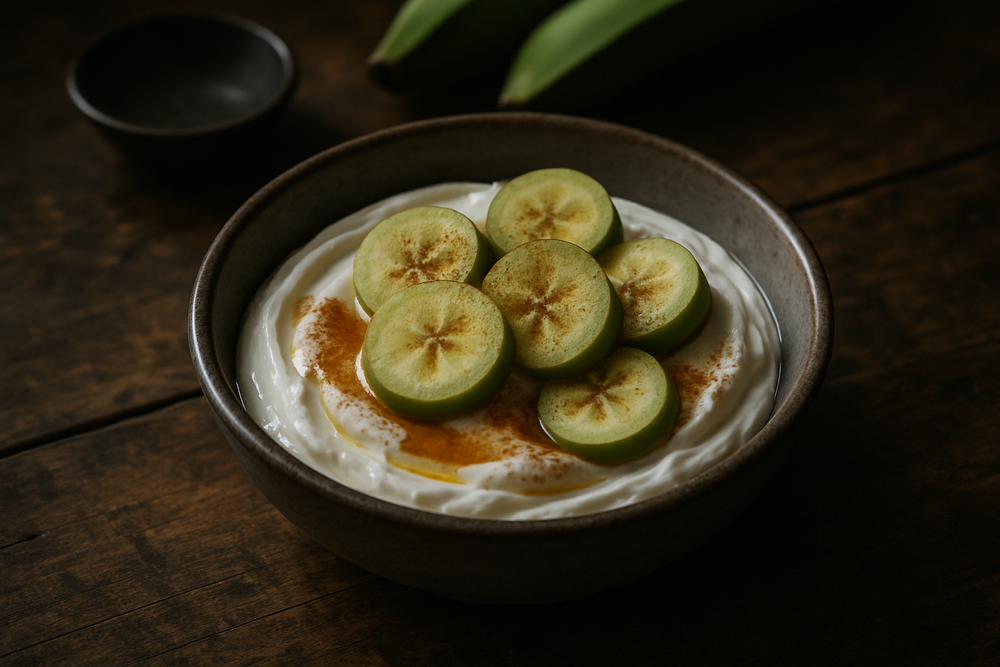
Prep Ideas
- — Eats a mostly plant-based diet but wants to diversify their prebiotic sources beyond oats and legumes
- — May have noticed irregular digestion, occasional bloating, or simply wants to support microbiome diversity
- — Benefits from adding 1–2 tablespoons of green banana flour to smoothies or oatmeal several times per week, or including boiled green banana as a savory side dish 2–3 times per week
- — Managing prediabetes or type 2 diabetes with diet and lifestyle, or simply wanting steadier energy throughout the day
- — Looking for low-glycemic starchy foods that satisfy without spiking blood sugar
- — Benefits most from replacing higher-glycemic starchy sides (white rice, white bread) with boiled or mashed green banana, and potentially using green banana flour in place of refined flour in baking
- — Boiled green banana + olive oil and garlic: A Caribbean classic. The fat in olive oil slows digestion further, extending the blood sugar-moderating effect. Garlic adds additional prebiotic inulin (a fermentable fiber), doubling down on gut benefits.
- — Green banana flour + oat porridge: Stir 1 tablespoon of green banana flour into cooked oatmeal. Oats provide beta-glucan (another prebiotic fiber), and the combination feeds a broader range of gut microbes than either food alone.
- — Boiled green banana + beans and leafy greens: A balanced plate of resistant starch, plant protein, and micronutrients. The resistant starch from green banana slows the digestion of the whole meal, providing longer-lasting satiety and a gentler glucose curve.
Glossary
Shop This Ingredient
Stock your pantry with quality green banana.
Buy on AmazonAs an Amazon Associate, Plantopedia earns from qualifying purchases. This costs you nothing extra and helps us keep the encyclopedia free.
Frequently Asked Questions
Digestive health and the gut microbiome This is where the evidence is strongest. Resistant starch from green banana behaves functionally like soluble fiber: it travels to the colon and becomes fuel for beneficial bacteria such as Bifidobacterium and Lactobacillus species. Their fermentation of RS2 produces butyrate — a short-chain fatty acid that is the preferred energy source of the cells lining your colon — along with acetate and propionate, which influence fat metabolism and appetite hormones. In an ileostomy study (a trial using participants who have a surgically created opening in the small intestine, allowing researchers to directly measure what food exits before reaching the colon), 30 g/day of raw green banana flour significantly increased in vitro butyrate and acetate production compared with control diets. A separate randomized clinical trial using a resistant starch blend containing green banana flour found that around 5 g/day of resistant starch meaningfully improved gastrointestinal symptoms in adults, with higher doses (up to 15 g/day) reducing diarrhea scores and even improving sleep disturbance. Protocols are also underway evaluating green banana-based diets for persistent diarrhea management. The takeaway: the prebiotic resistant starch in green bananas is one of the more well-studied mechanisms in this category, and the digestive benefits appear at doses achievable through regular use of green banana flour or biomass. Blood sugar and metabolism Green bananas have a low glycemic index — typically reported between 30 and 51, depending on ripeness and preparation — which means they produce a slower, more gradual rise in blood glucose compared with a ripe banana or white bread. The resistant starch is largely responsible: because RS2 isn't broken down in the small intestine, less glucose enters the bloodstream at once. A randomized controlled trial involving 113 adults with prediabetes or diabetes found that supplementing with 4.5 g/day of resistant starch from green banana flour for six months — alongside dietary guidance — produced statistically significant improvements in fasting glucose and HbA1c (a blood marker reflecting average blood sugar over approximately three months) compared with diet guidance alone. A smaller study in 17 adults with type 2 diabetes using native banana starch reported lower fasting blood sugar, reduced post-meal spikes, and greater feelings of fullness. Evidence is promising, but most trials use flour or isolated starch, not standard culinary portions of boiled green banana, so it is worth being realistic about how much impact a single serving of boiled green banana will have versus a structured supplementation protocol. Heart and circulation The cardiovascular data from green banana research comes primarily from the same six-month randomized controlled trial mentioned above. Participants taking green banana resistant starch showed meaningful reductions in diastolic blood pressure (the lower number in a blood pressure reading), body weight, BMI (body mass index — a ratio of weight to height), and waist and hip circumference versus diet alone. These are meaningful markers for cardiovascular risk. The likely mechanisms are: improved insulin sensitivity, the blood-pressure-supporting effect of resistant starch fermentation products, and modest potassium contribution — though green banana contains less potassium per serving than a ripe banana (about 173 mg versus 422 mg per medium ripe banana). Evidence here is early and based on supplementation, not typical dietary consumption, so claims should be interpreted accordingly. Inflammation and recovery Anti-inflammatory effects from green banana are largely inferred rather than directly measured. When gut bacteria ferment resistant starch, they produce butyrate, which has well-documented roles in reducing intestinal inflammation and supporting the integrity of the gut lining (sometimes called "gut barrier function"). The ileostomy trial demonstrated increased butyrate production from green banana flour fermentation. The metabolic trial also found improvements in body weight and blood sugar — both of which, when improved, tend to reduce chronic low-grade inflammation — though inflammatory markers like CRP (C-reactive protein, a blood test for inflammation) were not the primary focus. This area is best described as mechanistically plausible and supported by indirect evidence; more human studies measuring inflammatory biomarkers directly are needed. Appetite, satiety, and body composition Resistant starch appears to influence appetite-regulating hormones — particularly GLP-1 (glucagon-like peptide-1) and PYY (peptide YY), which signal fullness to the brain — and may slow gastric emptying (the rate at which food moves from the stomach to the small intestine). In the six-month trial, participants using green banana resistant starch gained lean mass and lost fat mass alongside weight reduction, suggesting a favorable shift in body composition beyond weight loss alone. A study in healthy volunteers also found that green banana flour RS2 influenced hunger and satiety ratings.
Boiled green banana (whole or mashed) The most accessible form. Peel the banana (careful — the starchy sap can stain), boil in salted water for 15–20 minutes until just tender, and eat whole, sliced, or mashed. Boiling softens the resistant starch matrix slightly but preserves a meaningful amount of RS2 and fiber. This is the easiest culinary entry point, particularly in Caribbean, Latin American, and West African cuisines where boiled green banana is a staple side dish. Green banana flour Dried, milled unripe banana — the form used in most clinical trials. It provides more resistant starch per gram than whole boiled banana and is flavorless enough to blend into smoothies, oatmeal, sauces, pancake batters, or WFPB baked goods. Start with 1–2 tablespoons and increase slowly to avoid digestive discomfort. Green banana biomass (cooked purée) A blended, cooked preparation of unripe banana with no additives, sometimes used in Brazilian-style cooking. It can be stirred into soups, stews, or pasta sauces without affecting flavor significantly. Currently under study for effects on gut health and body weight. Resistant starch blends containing green banana flour Composite supplements combining green banana flour with other resistant starch sources like potato starch and apple fiber. These have been used in trials providing 5–15 g/day of total resistant starch. Less of a whole-food approach, but useful for people who need a structured higher dose under guidance.
There is no single officially recommended dose of resistant starch for gut health. Here is what human trials have used: 4.5 g/day of RS2 from green banana flour (roughly 20–30 g of flour) for six months in adults with prediabetes or diabetes — the amount used in the main metabolic health trial. This is a relatively modest dose achievable by adding 2–3 tablespoons of green banana flour to food daily. 30 g/day of raw green banana flour in the ileostomy digestive research — a higher dose used to study effects on fermentation and nutrient excretion, not typically a culinary amount. 5–15 g/day of total resistant starch from a blend including green banana flour in the gastrointestinal symptom trial over six weeks. For culinary use, whole boiled green banana provides roughly 5–7 g of resistant starch per 100 g of raw unripe flesh — somewhat less than flour because boiling modifies starch structure. Practical starting guidance: If using boiled green banana: one small to medium boiled green banana 3–4 times per week is a reasonable culinary starting point. If using green banana flour: begin with 1 tablespoon (about 10 g) mixed into food or drinks, increase gradually to 2–3 tablespoons per day if well tolerated. Allow 2–4 weeks before expecting noticeable gut changes; microbiome adaptation takes time. Higher doses are not always better — some individuals experience more gas and bloating at doses above 15–20 g of flour without gradual adaptation.
Quick Answers
Common questions, answered in a line.
Green bananas are high in resistant starch type 2 (RS2), a prebiotic fiber that feeds beneficial gut bacteria and resists digestion in the small intestine. This process supports microbiome diversity, softens stool, and can help improve irregular digestion or bloating.
Green bananas help maintain steady energy and lower post-meal blood sugar because they contain resistant starch, which has a low glycemic index. Replacing refined flours or white rice with green banana or its flour can help manage glucose levels and improve satiety.
You should always cook green bananas, either by boiling the whole fruit or using green banana flour in cooking and baking. Raw unripe bananas are very dense and difficult to digest, which may cause significant stomach discomfort if eaten without preparation.
To avoid gas and bloating, start with just one tablespoon (about 10 grams) of green banana flour per day and increase the amount gradually. This gives your gut microbiome necessary time to adapt to the high concentration of resistant starch.
Green bananas are a good source of potassium for heart and muscle health, as well as Vitamin B6, which supports the immune system and metabolism. They also contain Vitamin C and antioxidant polyphenols that may provide anti-inflammatory benefits.
People with latex-fruit allergies, chronic kidney disease, or those taking blood sugar medications like insulin should use caution with green bananas. The high potassium and blood-sugar-lowering effects of resistant starch may require medical supervision in these cases.
For Readers in the USA
Local context — sourcing, seasonality, and regional notes.
You can find green bananas year-round at most major US grocery chains like Kroger, Walmart, and Publix, as well as specialty Caribbean or Latino markets. While they are often just unripe Cavendish bananas found in the standard produce aisle, many stores also stock specific "cooking bananas" or green plantains in the tropical fruits section.
In the U.S., green bananas are most culturally prominent in Puerto Rican and Caribbean-American communities, where they are often referred to as "guineos verdes." They are a staple in dishes like "guineos en escabeche," a savory pickled green banana salad popular at American tropical-themed gatherings and family celebrations.
Look for "Certified Organic" green banana flour and USDA-certified organic bananas to ensure the fruit was grown without synthetic pesticides or fertilizers. Major health food retailers like Whole Foods Market and Sprouts Farmers Market frequently carry domestic and imported organic brands that meet these federal standards.
Because most green bananas sold in the U.S. are imported from tropical climates like Ecuador, Guatemala, and Costa Rica, they are available in American grocery stores during all four seasons. There is no specific U.S. harvest season to wait for, making them a consistent source of resistant starch throughout the year.
AI Clinical Review
- Clearly explains that unripe (green) bananas are rich in resistant starch (RS2), which functions like a prebiotic and is fermented to short‑chain fatty acids (especially butyrate) that support gut lining health.
- Accurately notes that ripening converts starch to sugars, raising glycemic index; green bananas generally have a lower glycemic impact than ripe ones.
- Appropriately highlights that most measurable metabolic benefits in studies come from green banana flour/isolated starch at defined doses rather than small culinary portions.
- Provides practical, food‑first options (boiled banana, flour, biomass) and flags the “start low, go slow” approach to limit GI discomfort.
- The degree of benefit from typical boiled green‑banana servings is uncertain; many trials use higher supplemental doses, and RS content varies by cultivar, ripeness, drying temperature, and storage.
- Cardiometabolic outcomes beyond glucose (e.g., weight, blood pressure, body composition) are suggestive but come from small or limited trials and need replication over longer periods.
- GI symptom improvements come from heterogeneous interventions (flour alone vs blends) and often rely on surrogate markers; durable microbiome changes and clinical endpoints remain to be clarified.
- Reported glycemic index ranges for bananas vary widely across studies and preparations; individual post‑meal responses can differ.
- Dose: Trials commonly use about 20–30 g/day of green banana flour (≈2–3 Tbsp), providing roughly 4.5–7 g resistant starch; increase gradually and allow 2–4 weeks for adaptation to minimize gas/bloating.
- Form and preparation matter: RS2 is heat‑sensitive—prolonged high heat lowers it—while cooling cooked starch can form RS3; using flour in cool foods or after cooking has cooled helps preserve resistant starch.
- Safety/medications: People with diabetes on insulin or sulfonylureas, those with IBS/SIBO, chronic kidney disease, or on ACE inhibitors/ARBs or potassium‑sparing diuretics, and anyone with latex–fruit allergy should check with a clinician before higher‑dose use.
- Special populations: In pregnancy and for children (e.g., diarrhea protocols), stick to culinary amounts unless advised by a qualified healthcare professional.
Must be cooked when green; raw green banana is starchy and hard to digest.
References
- USDA FoodData Central — nutrient profile for boiled green banana and raw banana (fdc.nal.usda.gov)
- Randomized controlled trial: green banana resistant starch (4.5 g/day) for 6 months in prediabetes/diabetes — reduced diastolic BP, BMI, fasting glucose, and HbA1c (casi.org)
- Ileostomy trial: 30 g/day raw green banana flour increases butyrate and acetate production and small-bowel iron excretion (pubmed.ncbi.nlm.nih.gov)
- Randomized clinical trial: resistant starch blend including green banana flour (5–15 g RS/day) improves GI symptoms and reduces diarrhea scores (frontiersin.org)
- Clinical trial registry: Effect of green banana resistant starch on insulin sensitivity in prediabetes (NCT03294915) (patlynk.com)
- Systematic review and trial — resistant starch from unripe banana flour: impacts on hunger, satiety, and glucose in healthy volunteers (sciencedirect.com)
- Clinical protocol: green banana biomass diet for gut variables in individuals with excess weight (trial.medpath.com)
- Healthline review — how bananas affect blood sugar and diabetes management (healthline.com)
- Banana glycemic index comparison: unripe vs. ripe, GI values and blood glucose impact (mindfulsugar.com)
- MyPlate: starchy fruits and vegetables in a balanced plant-based eating pattern (myplate.gov)
Know Your Numbers
Eating healthy is a start. Now get to know your biomarkers.
Food changes bloodwork — inflammation, lipids, blood sugar and nutrient status all respond to what you eat. 59 markers from $59.
- Results in 7–10 days at 2,000+ Quest sites
- Licensed provider reviews every result
- One flat price, no membership, HSA/FSA eligible
Educational information only, not medical advice. Panels are ordered and reviewed through our licensed partner; Plantopedia may earn a commission.