Jabuticaba — health benefits and uses
A Brazilian tree fruit whose skins are used in folk remedies for inflammation.
The Short Answer
Jabuticaba is a Brazilian tree-grape rich in anthocyanin antioxidants, providing 19mg of Vitamin C and 15g of carbohydrates per 100g serving. Its thick purple skin contains high levels of dietary fiber and anti-inflammatory polyphenols.

Jabuticaba · Photograph
Discover jabuticaba fruit health benefits, nutrition facts, and safe eating tips. Learn how this antioxidant-rich Brazilian berry may support blood sugar, digestion, and inflammation — and what the current evidence really says.
Key Nutrients
% Daily Value based on 2,000 cal diet
Key active compounds
- Anthocyanins — Water-soluble purple pigments in the flavonoid family. Concentrated in the skin; act as potent antioxidants and may support vascular function and glucose regulation.
- Total polyphenols (phenolic acids, flavonoids, tannins) — High in the peel; contribute to anti-inflammatory and antioxidant activity and may modulate gut bacteria.
- Tannins (condensed and hydrolysable) — Astringent compounds that bind proteins and give the skin its puckery quality. Antimicrobial and antioxidant in function, but can reduce iron absorption and cause GI discomfort in excess.
- Ellagic acid and related phenolic acids — Also found in raspberries and pomegranates; have antioxidant and anti-inflammatory properties in experimental models.
- Vitamin C — A water-soluble antioxidant vitamin present in the pulp; supports immune function and collagen production.
- Dietary fiber — Mostly from the skin; helps slow carbohydrate digestion and feeds beneficial gut bacteria.
Prep and pairing ideas
Eat it fresh, pop-and-spit style. The traditional Brazilian way is to bite into the skin, squeeze the sweet pulp into your mouth with your tongue, and discard the skin and seed. If you want the full fiber and phytochemical benefit, chew and swallow the skin too — just expect an astringent finish.
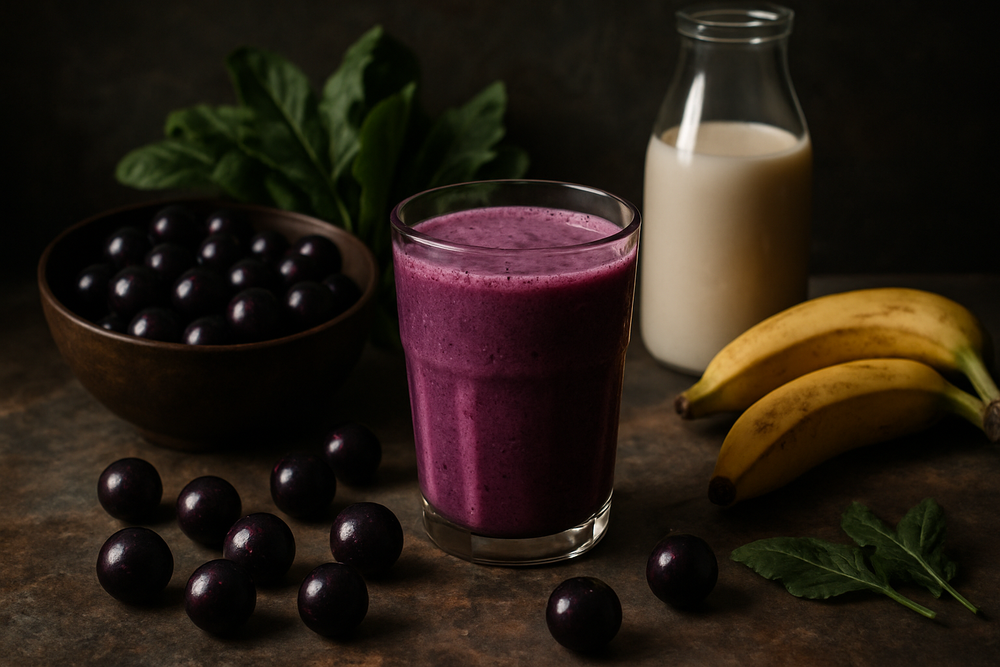
Blend into a smoothie. Add a handful of fresh or frozen jabuticaba to a blender with leafy greens, a banana, and plant-based milk. The pulp blends smoothly and the skin contributes color and polyphenols.
Stir into overnight oats or yogurt. Halved jabuticaba add a burst of sweetness and a pop of purple color. Their natural tartness pairs well with creamy bases.
Make a simple compote without added sugar. Simmer fresh berries with a splash of water and a strip of orange peel until they burst and thicken. Use it over whole grain pancakes or stir into savory sauces for grilled vegetables.
Common pairings and why they work:
- Jabuticaba + dark chocolate — Both are rich in polyphenols. A small square of 70%+ cocoa chocolate alongside fresh berries creates a layered antioxidant experience without added sugar.
- Jabuticaba + Brazil nuts — Pairing the berry with Brazil nuts (a selenium powerhouse) creates a locally inspired, nutrient-diverse Brazilian snack.
- Jabuticaba + leafy greens in a salad — The natural fruit acids in jabuticaba act like a mild dressing and the anthocyanins pair well with vitamin K from greens, supporting overall micronutrient diversity.
Bottom line
Jabuticaba is a genuinely interesting whole fruit with a strong phytochemical profile, particularly from its anthocyanin- and tannin-rich skin. The early human evidence — mostly small, short-term trials — suggests it may help modestly blunt post-meal blood sugar spikes, reduce acute inflammatory markers, and possibly support cognitive performance. Fiber content and emerging prebiotic signals add to the case for including it in a varied plant-based diet.
That said, the evidence is still young. Long-term clinical trials in humans are largely missing, and many of the more dramatic claims circulating online draw on animal studies or mechanistic research. Jabuticaba is best thought of as a nutritious, antioxidant-rich berry worth adding to your fruit rotation — not a cure or treatment for any disease. Fresh, whole fruit is the best form. Moderation with the tannin-heavy skin is sensible. And if you manage diabetes, take blood sugar medications, or have a sensitive gut, a brief word with your healthcare provider before leaning heavily on peel products is a smart move.
Looking for more ways to build an anti-inflammatory, antioxidant-rich diet? Browse our goals guides for practical eating patterns built around real food.
How Jabuticaba Compares
| Compared with | What's different |
|---|---|
| Jabuticaba vs. Muscadine Grape | Jabuticaba grows directly on the tree trunk and has a thicker, more astringent skin. |
| Jabuticaba vs. Lychee | Jabuticaba is higher in tannins and anthocyanins; lychee has a more floral, thin skin. |
Health Benefits
Things to Know
Digestive sensitivity: The tannin-rich skin can cause mouth dryness, a feeling of astringency, or mild stomach upset if eaten in large amounts. Start with a small handful and see how you feel.
Blood sugar medications: Because jabuticaba peel may modestly lower postprandial glucose and insulin, combining concentrated peel products (powder, extract) with antidiabetic medications like metformin, insulin, or sulfonylureas could have additive effects. Talk to your prescriber.
Iron absorption: High-tannin foods, when consumed in large amounts close to iron-rich meals or iron supplements, can reduce how much iron you absorb. Space them apart if iron deficiency is a concern.
Diabetes and high-sugar forms: Fresh fruit is low-GI and generally fine in moderate portions. Juices, jellies, and wines made from jabuticaba can be high in sugar or alcohol and need to be factored into overall carbohydrate or calorie goals.
Myrtaceae allergy: Jabuticaba belongs to the same plant family as guava, feijoa, and allspice. If you have a known allergy to any Myrtaceae family plant, introduce jabuticaba cautiously.
Pregnancy and breastfeeding: Fresh fruit in normal amounts is not flagged as a concern, but high-dose peel extracts or supplements have not been studied in pregnant or breastfeeding people. Stick to whole fruit.
Long-term supplement safety: Concentrated peel extracts are used mainly in research settings. There is very little data on long-term safety in humans at high doses. Whole food is the safer default.
Prep Ideas
- — Jabuticaba + dark chocolate — Both are rich in polyphenols. A small square of 70%+ cocoa chocolate alongside fresh berries creates a layered antioxidant experience without added sugar.
- — Jabuticaba + Brazil nuts — Pairing the berry with Brazil nuts (a selenium powerhouse) creates a locally inspired, nutrient-diverse Brazilian snack.
- — Jabuticaba + leafy greens in a salad — The natural fruit acids in jabuticaba act like a mild dressing and the anthocyanins pair well with vitamin K from greens, supporting overall micronutrient diversity.
Glossary
Shop This Ingredient
Stock your pantry with quality jabuticaba.
Buy on AmazonAs an Amazon Associate, Plantopedia earns from qualifying purchases. This costs you nothing extra and helps us keep the encyclopedia free.
Frequently Asked Questions
Heart and circulation There are no long-term human trials directly measuring jabuticaba intake and cardiovascular events, blood pressure, or blood lipids. What exists are short-term human studies showing that consuming jabuticaba peel powder or juice alongside a test meal can modestly reduce acute inflammatory markers and oxidative stress — both of which are linked to heart disease risk. Animal studies suggest potential benefits for lipid metabolism, but those findings have not yet been replicated in large human trials. By analogy with other anthocyanin-rich berries, regular whole-fruit consumption may support endothelial (blood vessel lining) health, but jabuticaba-specific cardiovascular benefits remain preliminary. Digestive health and microbiome Fresh jabuticaba with skin provides around 2 g of dietary fiber per 100 g, contributing to daily fiber intake and bowel regularity as part of a varied diet. More interesting is what happens at the microbial level: a published study in a research model found that jabuticaba peel fiber and polyphenols shifted gut microbiota composition — the community of bacteria living in your intestines — toward patterns associated with better metabolic health. Direct clinical trials in people with specific digestive conditions have not been done, so these microbiome effects are promising but not yet proven in humans. Worth noting: the tannin-heavy peel can cause mouth dryness or mild stomach discomfort if eaten in large quantities, especially for people with sensitive digestion. Blood sugar and metabolism This is where the most interesting short-term human data exist. A small number of acute clinical trials — meaning participants ate jabuticaba or its peel alongside a test meal and were measured for a few hours afterward — found lower postprandial (after-meal) blood glucose and insulin levels compared with control meals. Whole jabuticaba also has a low glycemic index of around 53, meaning it raises blood sugar more slowly than many other carbohydrate sources. Research suggests these effects are driven primarily by the anthocyanins and fiber in the skin. However, no published trials have tested jabuticaba in people with diabetes over weeks or months, so it cannot be described as a treatment for blood sugar conditions. Inflammation and recovery A randomized crossover trial — a study design where participants experience both the treatment and the control, improving reliability — found that jabuticaba peel intake improved antioxidant-related markers and inflammatory response in healthy adults after a single intake session. Animal and laboratory studies consistently show anti-inflammatory activity from jabuticaba polyphenols. This is encouraging, but the human evidence is still limited to healthy adults in short experiments. Whether daily jabuticaba reduces chronic inflammation over time has not been tested. Cognitive performance (emerging finding) In the same crossover trial mentioned above, participants who consumed jabuticaba peel also performed better on cognitive tests compared with the control condition. This is a very early-stage finding in a small, healthy adult sample, but it aligns with what we know about anthocyanin-rich foods and brain health more broadly. Treat this with cautious optimism rather than firm expectation.
Fresh whole fruit is the most nutritious form. When you eat the whole berry — skin and all — you get the full package of fiber, vitamin C, anthocyanins, and tannins. The fiber slows sugar absorption and feeds your gut bacteria. The skin compounds deliver the most studied benefits. Juice made by pressing or macerating whole fruits retains a good share of polyphenols if the skins are included, but strips out much of the fiber and concentrates the natural sugars. Drink in small amounts. Jellies and jams are cooked with added sugar, which raises calorie and sugar content considerably. They carry some polyphenols from the fruit but are best treated as occasional condiments rather than daily health foods. Wine and fermented beverages extract polyphenols from the skin during fermentation, but introduce alcohol. The potential benefits of the polyphenols do not outweigh the well-documented risks of regular alcohol intake. Peel powder — dried and milled jabuticaba skin — is the form used in clinical research and delivers concentrated fiber and phytochemicals. It is not yet widely available to consumers, and optimal dosing has not been established outside short research trials. The takeaway: Fresh fruit wins. Juices are acceptable in modest servings. Jellies and wines are treats, not supplements.
The antioxidant-focused eater Already eating a variety of colorful berries but curious about expanding that repertoire Interested in the skin-heavy anthocyanin profile that sets jabuticaba apart from common berries Comfortable sourcing specialty tropical fruits from Brazilian or specialty markets The fiber-first gut health supporter Looking for whole fruit sources that pair fiber with polyphenols Interested in early research suggesting gut microbiome modulation Does not have a sensitive GI tract or known issues with tannin-rich foods
There is no established official daily limit for jabuticaba as a food. In research, acute studies have used single servings of jabuticaba peel powder or juice alongside test meals. For whole fresh fruit, most sources and traditional use point to a handful to a small bowl — roughly 50 to 150 g (about 10 to 30 berries) — as a reasonable portion size per serving, similar to how you might eat fresh blueberries or grapes. A few practical guides: Start low if you have never tried it. The tannins in the skin are stronger than most common berries. Eat 8 to 10 berries the first time and see how your mouth and stomach respond. Whole fruit daily is fine for most people. Eating a moderate portion of fresh jabuticaba as part of a varied diet is consistent with general fruit intake recommendations (MyPlate recommends 1.5–2 cups of fruit per day for most adults, and jabuticaba can be one of those fruits). Concentrated peel products need more caution. Peel powders and extracts are much more potent than whole fruit and lack established dosing guidelines outside of research protocols. High-sugar products count toward your total sugar and calorie intake. If you enjoy jabuticaba jelly or wine, account for that in your overall daily pattern. If you take medications that affect blood sugar or are managing a metabolic condition, it is worth mentioning jabuticaba to your healthcare provider — especially if you plan to use peel powder or concentrated products.
Quick Answers
Common questions, answered in a line.
The healthiest way to eat jabuticaba is fresh and whole, including the skin if you want the maximum fiber and antioxidant benefits. While the traditional way is to squeeze the pulp out and discard the skin, the skin contains the highest concentration of anthocyanins and polyphenols.
Jabuticaba skin is very high in anthocyanins, which are water-soluble purple pigments that act as potent antioxidants. These compounds, along with other polyphenols in the peel, may support vascular function, help regulate glucose, and offer anti-inflammatory properties.
Jabuticaba may support blood sugar management because its fiber and phytochemicals can help modestly blunt post-meal blood sugar spikes. Early human trials suggest the fruit may help regulate insulin and glucose, though long-term clinical research is still needed.
Yes, the tannins in jabuticaba skin can sometimes cause mild stomach upset or a dry, astringent feeling in the mouth if consumed in large amounts. It is recommended to start with a small handful to see how your digestive system reacts to the high tannin content.
If you take diabetes medications like metformin or insulin, you should consult your doctor before consuming concentrated jabuticaba peel products. The fruit's ability to lower glucose and insulin could have an additive effect when combined with these medications.
Jabuticaba contains tannins, which are astringent compounds that can reduce the absorption of iron if consumed in large amounts close to iron-rich meals. If iron deficiency is a concern, it is best to space out the consumption of this fruit and your iron supplements.
Jabuticaba is a good source of vitamin C, dietary fiber, and various polyphenols like ellagic acid and anthocyanins. The pulp provides immune-supporting vitamin C, while the skin provides prebiotic fiber that feeds beneficial gut bacteria.
For Readers in the USA
Local context — sourcing, seasonality, and regional notes.
In the United States, jabuticaba is primarily grown in USDA hardiness zones 9b through 11, specifically in Southern Florida, Hawaii, and parts of Southern California. These regions provide the subtropical environment and frost protection necessary for the tree to thrive and produce fruit throughout the year.
Fresh jabuticaba is rarely found in standard US supermarkets like Kroger or Safeway; instead, look for it at Florida farmers markets, specialty tropical fruit nurseries, or online retailers specializing in rare produce. Because the fruit has a very short shelf life of 2 to 3 days, it is most commonly sold as frozen pulp or shelf-stable jams in Brazilian grocery stores.
In the US, jabuticaba is often referred to as the Brazilian Grape Tree due to its appearance and growth habit, though it is a member of the Myrtaceae (myrtle) family rather than a true grape. While several varieties exist, the Sabará is the most popular cultivar grown by American enthusiasts for its sweet flavor and thin skin.
AI Clinical Review
- Clearly explains that the peel concentrates anthocyanins, polyphenols, and tannins, so eating the whole berry delivers most of the bioactives.
- Accurately frames human evidence as early and short‑term (e.g., modest blunting of post‑meal glucose/insulin and improvements in oxidative/inflammatory markers), avoiding disease‑treatment claims.
- Sensibly prioritizes fresh whole fruit over juice, jelly, wine, and unstandardized peel powders, noting how processing changes sugar, fiber, and alcohol exposure.
- Provides a realistic nutrition snapshot and positions jabuticaba as a flavorful addition to an overall produce‑rich pattern rather than a “superfood” cure.
- There are no long‑term randomized trials linking jabuticaba intake to hard outcomes (blood pressure, lipids over months, cardiovascular events, diabetes control), so benefits remain provisional.
- Microbiome and metabolic findings come largely from animal or in‑vitro models; translation to consistent human effects is unproven.
- Cognitive and appetite effects are based on small, short crossover studies and should be viewed as hypothesis‑generating.
- Reported glycemic index and phytochemical levels can vary by species, ripeness, growing conditions, and processing; consumer products may not match research materials.
- Practical food portion: about 50–150 g (10–30 berries). Start smaller if you’re new to the astringent peel; chewing/swallowing the skin increases exposure to both fiber and tannins.
- Tannin‑rich skins can cause mouth dryness or GI upset in some people and may reduce non‑heme iron absorption; consider spacing from iron‑rich meals or supplements if iron‑deficient.
- If you use diabetes medications or have glucose regulation concerns, be cautious with concentrated peel powders/extracts; fresh whole fruit in moderate portions generally fits balanced meal plans.
- During pregnancy or breastfeeding, stick to food amounts and avoid high‑dose extracts due to limited safety data. Use caution if you have Myrtaceae family allergies. Processed forms (jelly, wine) add sugar or alcohol and should be occasional.
Skins are astringent and high in tannins; usually eaten in moderation.
References
- USDA FoodData Central — general fruit nutrition reference (fdc.nal.usda.gov)
- Brazilian Food Composition Table (TBCA) — jabuticaba nutrient data (tbca.net.br)
- MyPlate — USDA fruit intake recommendations (myplate.gov)
- Randomized crossover trial: jabuticaba peel improved cognitive performance, inflammatory response, and appetite in healthy adults (pubmed.ncbi.nlm.nih.gov)
- PMC review: gut microbiota modulation by jabuticaba peel and effects on metabolic parameters (pmc.ncbi.nlm.nih.gov)
- Inada 2021, Food Research International — comprehensive review of jabuticaba phytochemistry and bioactivities (digital.csic.es)
- Narrative review: jabuticaba effects on lipid and glucose metabolism, anti-obesity and anti-inflammatory activity (acervomais.com.br)
- LogiFoodCoach — jabuticaba glycemic index data (~53, low) (logifoodcoach.com)
- Eat The Weeds — jabuticaba botanical and traditional use overview (eattheweeds.com)
- Fruitspedia — jabuticaba antioxidant profile and nutrition summary (fruitspedia.com)
Know Your Numbers
Eating healthy is a start. Now get to know your biomarkers.
Food changes bloodwork — inflammation, lipids, blood sugar and nutrient status all respond to what you eat. 59 markers from $59.
- Results in 7–10 days at 2,000+ Quest sites
- Licensed provider reviews every result
- One flat price, no membership, HSA/FSA eligible
Educational information only, not medical advice. Panels are ordered and reviewed through our licensed partner; Plantopedia may earn a commission.