Concord Grape — health benefits and uses
An heirloom North American grape long tied to juice and preserve traditions.
The Short Answer
Concord grapes are a deep-purple fruit famous for their 'slip-skin' texture and high concentration of anthocyanin antioxidants, which support heart health and cognitive function. One cup provides 104 calories and is a good source of Vitamin K and manganese.
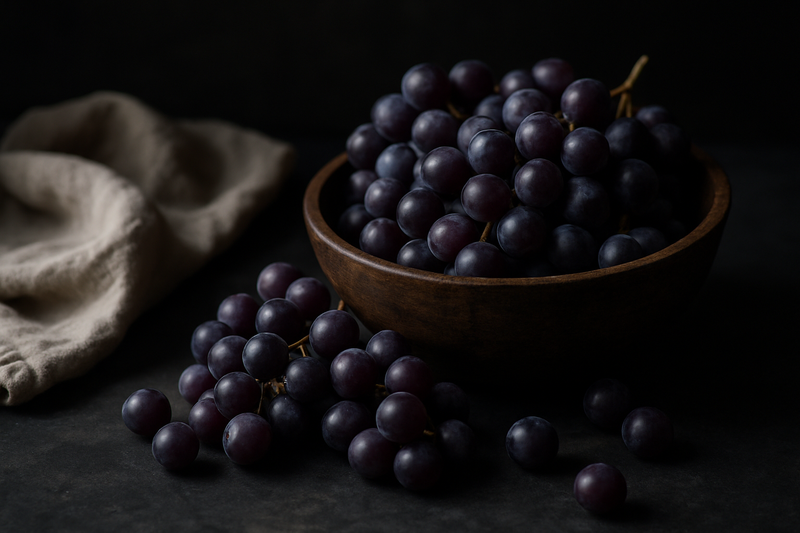
Concord Grape · Photograph
Discover the science-backed Concord grape health benefits and nutrition facts — from heart health and memory support to blood sugar considerations and safety tips for kids. Learn whether whole grapes or juice is better for you, and how to fit this deep-purple powerhouse into a whole food plant-based diet.
Key Nutrients
% Daily Value based on 2,000 cal diet
Key active compounds in Concord grapes
The health-relevant chemistry of Concord grapes goes well beyond simple vitamins and minerals. These polyphenols are the reason most of the clinical research was done in the first place.
- Anthocyanins — Water-soluble flavonoid pigments responsible for the deep purple color. They act as potent antioxidants and are thought to be the primary drivers of the vascular and cognitive benefits seen in juice studies.
- Flavanols (catechins and proanthocyanidins) — A class of polyphenol found especially in the grape skins and seeds. They may support vascular function and reduce oxidative stress (cellular damage from unstable molecules called free radicals).
- Resveratrol — A stilbene polyphenol in the skin at modest levels, widely studied for cardiovascular and neuroprotective effects in preclinical (cell and animal) research.
- Quercetin — A flavonol antioxidant that may contribute to anti-inflammatory and immune-supporting actions, complementing anthocyanins.
- Total phenolic compounds — The aggregate of all these antioxidants. Concord grape juice's high total phenolic content is linked to the vascular and memory improvements seen in human trials.
Prep and pairing ideas
Concord grapes have a short season (typically late August through October in the northern US), making them a special late-summer ingredient. Here's how to make the most of them.
Eat them fresh: Rinse and eat as a snack. The slip-skin texture is unique — you can pop the pulp out of the skin, though eating the whole grape gives you more polyphenols.
Freeze them: Frozen Concord grapes make a naturally sweet, slush-like frozen treat that's especially good on hot days. Freezing concentrates the sweetness. Important: still cut them for young children before freezing.
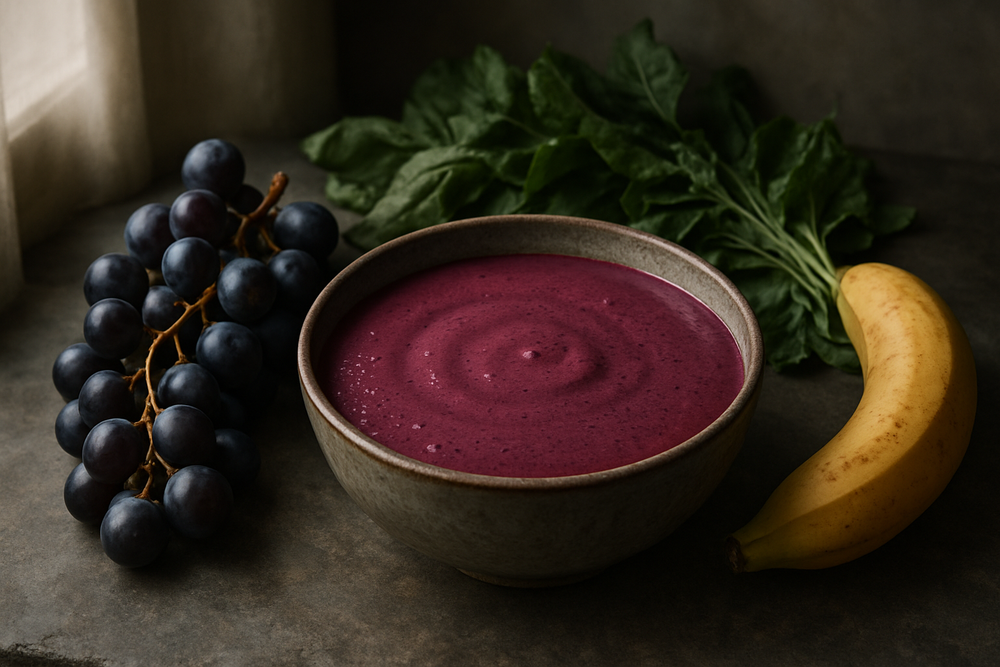
Blend into smoothies: A handful of fresh or frozen Concord grapes blended with leafy greens, a banana, and unsweetened plant milk delivers a polyphenol boost in a fiber-rich whole-food form — a better option than juice for blood sugar management.
Common pairings and why they work
1. Concord grapes + walnuts Walnuts supply omega-3 fatty acids and additional polyphenols; together with Concord grapes they create a heart-supportive snack combination backed by independent research on both foods. A small handful of each makes a satisfying pairing of fat, fiber, and antioxidants.
2. Concord grapes + oats (overnight oats or porridge) Oats provide beta-glucan (a soluble fiber that helps blunt blood sugar spikes), which pairs well with grape's natural sugars. Adding halved Concord grapes to a bowl of oats gives you fiber from two sources, plus polyphenols from the grape skins.
3. Concord grapes + arugula and balsamic (in a salad) The peppery bite of arugula contrasts beautifully with the sweetness of Concord grapes. A light balsamic drizzle (itself made from grapes) ties the flavors together. Adding a plant protein like white beans or hemp seeds rounds out the meal.
Buying guide: fresh vs frozen vs juice vs supplements
Selecting the right form of Concord grape matters for both nutrition and safety.
Fresh Concord grapes (seasonal) Look for firm, plump grapes with a deep, uniform purple color and a silver-white powdery coating called "bloom" — a natural protective layer that indicates freshness. Avoid grapes that are shriveled, sticky, or leaking. Store unwashed in a perforated bag in the refrigerator for up to a week. Rinse just before eating.
Frozen Concord grapes A convenient off-season option. Freezing preserves polyphenols well. Look for bags with no added sugar or syrup. Cut or mash for young children before serving.
100% Concord grape juice Read the label carefully: look for "100% juice" with no added sugars. "Grape drink" or "grape cocktail" products contain added sweeteners and are not equivalent to 100% juice used in research. A short ingredient list (just grapes, or grape juice and ascorbic acid) is a good sign.
Jams, jellies, and spreads These are enjoyable foods but not health-equivalent to whole grapes or 100% juice. They typically list sugar as the first or second ingredient. Treat them as a condiment, not a health food.
Grape polyphenol supplements Most grape seed or skin extract supplements on the market are not specifically Concord-grape-derived, and dosing, purity, and composition vary widely. Concord-specific supplement trials are limited. Whole food forms are preferable when possible.
Bottom line
Concord grapes are a genuinely nutritious whole food with one of the most distinctive polyphenol profiles among commonly eaten fruits. The research on 100% Concord grape juice — covering vascular health, blood pressure, memory in older adults with mild cognitive impairment, and mood — is encouraging, though most studies are small and short-term. Whole fresh Concord grapes deliver those same plant compounds plus fiber, making them the better daily choice for most people, especially those watching blood sugar.
The key practical points: eat the whole grape when you can, cut or mash for young children, be mindful of juice portion sizes, and keep your intake consistent if you take warfarin. Concord grapes fit naturally into a whole food plant-based diet as a seasonal, antioxidant-rich fruit that tastes great and comes with a meaningful amount of evidence behind it.
Curious about how Concord grapes fit into your specific health goals? Explore our goal-based guides at Plantopedia to find fruit combinations tailored to what you're working toward.
How Concord Grape Compares
| Compared with | What's different |
|---|---|
| Concord Grape vs. Red Seedless Grapes | Thinner, edible skin and crisp texture compared to the Concord's thick 'slip-skin' and seeds. |
| Concord Grape vs. Concord Grapes vs. Blueberries | Stronger, 'foxy' musk-like aroma and higher concentration of anthocyanin antioxidants. |
Health Benefits
Things to Know
Young children (under 4): Whole grapes — seeded or seedless — are a leading choking hazard. Always cut grapes into quarters lengthwise or mash them before serving. Seeds add additional risk.
Diabetes and prediabetes: Both whole grapes and juice raise blood glucose due to natural sugar content. Portion matters; favor whole grapes over juice and integrate into mixed meals.
Warfarin and other vitamin K–sensitive anticoagulants: Concord grapes provide about 10% of the Daily Value for vitamin K per cup. Sudden large changes in grape consumption could theoretically affect anticoagulation control. Keep intake consistent and inform your prescriber.
Antihypertensive medications: Concord grape juice has shown modest blood-pressure-lowering effects in some trials. If you already take blood pressure medication, combining it with regular large amounts of juice could theoretically push blood pressure too low. Monitor with your provider.
Antidiabetic medications (insulin, sulfonylureas, GLP-1 agonists): The natural sugar load in juice may require dose adjustment or carbohydrate counting. Check with your healthcare team.
Kidney disease: Concord grapes provide potassium. If you are on a potassium-restricted diet due to chronic kidney disease, account for grapes in your total daily potassium budget.
Grape allergy or oral allergy syndrome: Rare but possible. Symptoms range from mild oral tingling to more significant allergic reactions.
Pregnancy: No specific safety concerns have been identified for moderate whole-fruit consumption, but juice in large amounts adds significant sugar. Standard dietary guidance for fruit applies.
Shop This Ingredient
Stock your pantry with quality concord grape.
Buy on AmazonAs an Amazon Associate, Plantopedia earns from qualifying purchases. This costs you nothing extra and helps us keep the encyclopedia free.
Frequently Asked Questions
Heart health and blood pressure This is the most studied area. Several small human intervention trials using 100% Concord grape juice (typically 8–12 oz per day for 12–16 weeks) in adults with cardiovascular risk have reported improvements in vascular function (how well blood vessels relax and expand) and modest reductions in blood pressure. The proposed mechanism involves anthocyanins and flavanols supporting the production of nitric oxide — a molecule that helps blood vessels stay relaxed and flexible. The important caveat: most of this data comes from juice, not whole grapes. Juice delivers a concentrated polyphenol hit but also significantly more sugar per serving and virtually no fiber. Evidence is promising but comes from small studies; large, long-term randomized trials are still needed before strong recommendations can be made about Concord grape products specifically for heart health. Memory, mood, and brain function This is one of the more surprising areas of research. A 12-to-16-week randomized controlled trial (the gold standard of human research) in older adults with mild cognitive impairment (early, noticeable memory problems that don't yet meet the threshold for dementia) found that daily Concord grape juice supplementation improved certain memory tasks and increased task-related brain activation compared with placebo. A separate acute (single-serving) crossover trial in young healthy adults found that one serving of Concord grape juice increased calmness and improved the speed of attention processing. Are Concord grapes good for brain and memory? The early evidence is genuinely interesting — but studies are small and almost entirely juice-based, so translating results to real-world everyday eating requires caution. Digestive health and fiber Whole Concord grapes contribute about 0.9 g of dietary fiber per cup — modest but meaningful when combined with the rest of your day's food. The skins and seeds (in seeded varieties) add insoluble fiber, which helps keep digestive transit moving. Juice, by contrast, provides negligible fiber, so it contributes little to gut bulk or regularity. Some animal and test-tube research suggests grape polyphenols may influence the gut microbiome (the community of bacteria in your digestive system), but human digestive-specific trials on Concord grapes specifically are limited. Blood sugar and metabolism Concord grapes contain about 15–16 g of natural sugar per cup of fresh grapes, which is moderate for a fruit. Are Concord grapes good for diabetes and blood sugar? The fiber in whole grapes can modestly slow digestion and blunt the blood sugar rise after eating compared with juice. One study found that regular Concord grape juice consumption did not cause significant weight gain and was associated with a modest reduction in waist circumference over the study period — which is reassuring but not a license to drink unlimited juice. People managing diabetes or prediabetes should count grape carbohydrates as part of their overall meal plan, favor whole grapes over juice, and monitor blood glucose responses individually. Inflammation and recovery Concord grape polyphenols show anti-inflammatory activity in cell and animal studies, and some human cardiovascular trials have noted reductions in inflammatory markers alongside vascular improvements. However, Concord-specific human research has not directly tested outcomes like arthritis pain or post-exercise muscle soreness in controlled trials. The anti-inflammatory signals are biologically plausible but need more direct human evidence to translate into practical recommendations.
This is a genuinely useful question, and the honest answer is: it depends on your goal. Whole Concord grapes are generally the better everyday choice for most people because they: Retain fiber, which slows sugar absorption and supports digestion Deliver fewer calories and less concentrated sugar per serving Provide the full food matrix of skins, seeds (in seeded varieties), and pulp 100% Concord grape juice is where most of the clinical research lives, so if you're specifically interested in the studied vascular or cognitive effects, the data comes from juice. But juice also concentrates calories and sugar — 8 oz of 100% grape juice typically provides around 150–160 calories and 36 g of sugar with minimal fiber. Concord grape seeds and skins: are they worth eating? Yes, when you eat the whole grape. The skins are the richest source of anthocyanins and resveratrol. The seeds, while bitter, contain high concentrations of flavanols. Both are safe for adults and older children. However, seeds are a significant choking and aspiration hazard — do not give whole seeded grapes to children under 4 or anyone with swallowing difficulties. Jellies and jams provide some polyphenols but are typically high in added sugar and low in fiber; they are not equivalent to whole grapes or 100% juice for the benefits studied in clinical research.
Whole fresh grapes: Most dietary guidelines count about ½ to 1 cup (roughly a small-to-medium handful) as one fruit serving. For most healthy adults, 1–2 servings of fruit per day from grapes fits comfortably into a balanced diet. 100% Concord grape juice: Clinical studies that found cardiovascular and cognitive benefits used approximately 8–12 oz (240–360 mL) of 100% Concord grape juice per day for 12–16 weeks. The American Academy of Pediatrics recommends no more than 4 oz of 100% fruit juice per day for children ages 1–3, and 4–6 oz for ages 4–6. For adults, if you drink juice, treating 4–8 oz as a portion and counting it as part of your daily fruit intake is a sensible starting point. Start low: If you are not used to eating grapes regularly, add one small serving at a time and observe your body's response — particularly blood glucose if you monitor it, and digestive comfort. The fiber in whole grapes is modest, so GI issues from grapes specifically are uncommon in healthy adults. A note on juice for cognitive and heart benefits: The studies used juice daily under controlled research conditions. Replicating those exact benefits in everyday life is uncertain. Whole grapes remain the more nutritionally complete everyday choice; juice is better thought of as an occasional option unless a clinician advises otherwise.
Quick Answers
Common questions, answered in a line.
Concord grapes contain a unique profile of polyphenols, including anthocyanins, flavanols like catechins and procyanidins, resveratrol, and quercetin. These compounds are responsible for the fruit's deep purple color and are linked to vascular and cognitive health benefits in clinical research.
Whole grapes are a significant choking hazard for children under four, so they must always be cut into quarters lengthwise or mashed before serving. Parents should also be aware that seeds in Concord grapes pose an additional risk for young children.
To pick the best fresh Concord grapes, look for firm, plump fruit with a uniform deep purple color and a silver-white powdery coating known as "bloom." This natural layer is a key indicator of freshness; you should avoid any grapes that appear shriveled, sticky, or leaking.
Because Concord grapes contain vitamin K, people taking warfarin should keep their grape consumption consistent to avoid affecting anticoagulation control. Additionally, those on blood pressure or diabetes medications should consult their provider, as the grapes may have modest blood-pressure-lowering effects or impact blood sugar.
Freezing Concord grapes creates a sweet, slush-like treat that concentrates their natural sweetness and preserves their beneficial polyphenols. It is an excellent way to enjoy the fruit off-season, though you should still cut or mash them for young children after thawing or before freezing.
Concord grapes pair well with walnuts for a heart-supportive snack, or with oats to help blunt blood sugar spikes through added fiber. For a savory option, they can be added to an arugula salad with balsamic vinegar to contrast the peppery greens with the grapes' sweetness.
For Readers in the USA
Local context — sourcing, seasonality, and regional notes.
Fresh Concord grapes are primarily grown in the northeastern United States, particularly in New York, Pennsylvania, and Michigan, as well as in Washington state. These regions provide the cooler temperate climates necessary for the grapes to develop their signature deep-purple color and sweet-tart flavor profile.
You can typically find fresh Concord grapes at major U.S. grocery chains like Whole Foods, Trader Joe's, and Wegmans, or at local farmers markets during their short fall window. Because of their fragile "slip-skin" nature, they are less common in standard supermarkets than hardy table grapes, making them a prized find in September and October.
When buying Concord grape products in the U.S., look for the USDA Organic seal to ensure the fruit was grown without synthetic pesticides. Additionally, check the ingredient list on 100% juice bottles to ensure there are no "added sugars," a distinction regulated by the FDA to help consumers identify natural vs. supplemental sweeteners.
AI Clinical Review
- Clearly distinguishes whole Concord grapes from 100% juice: whole fruit offers fiber and a gentler glycemic impact, while juice concentrates polyphenols and sugar.
- Accurately summarizes small human trials showing improved vascular function and modest blood‑pressure effects with daily Concord grape juice (~8–12 oz for 12–16 weeks).
- Appropriately describes early cognitive findings (memory support in older adults with mild cognitive impairment and acute attention/mood effects in young adults) while noting the evidence comes mainly from juice.
- Nutrition snapshot aligns with major databases and flags vitamin K and manganese, which are clinically relevant.
- Most trials are short, small, and often focus on intermediate markers (e.g., endothelial function) rather than hard outcomes like heart attacks or dementia; results need replication in larger, longer studies.
- Benefits shown with juice don’t automatically translate to whole grapes or to non‑Concord grape products; polyphenol content and bioavailability vary by variety and processing.
- Cognitive and immune findings are promising but limited in scope; dosing, durability of effect, and real‑world impact remain uncertain.
- Portions: If aiming to mirror study doses, 8–12 oz/day of 100% Concord grape juice delivers roughly 36–54 g of sugar; many adults may prefer 4–8 oz occasionally and emphasize whole grapes (½–1 cup as a fruit serving).
- Blood sugar and weight: People with diabetes or prediabetes should count grape/juice carbohydrates and favor whole grapes; consider checking post‑meal glucose when adding juice.
- Medications and conditions: Keep vitamin K intake consistent if on warfarin; those on antihypertensives should be mindful of potential additive BP‑lowering; individuals with chronic kidney disease may need to track potassium.
- Safety: Whole grapes (especially seeded) are a major choking hazard for children under 4—serve cut or mashed; allergies are uncommon but possible.
Contains seeds in many strains; whole grapes are a choking hazard for young children.
References
- USDA FoodData Central — Concord grapes nutrition data (fdc.nal.usda.gov)
- MyPlate fruit guidance — serving sizes and daily fruit recommendations (myplate.gov)
- Human trial: Daily purple grape juice and immune function in healthy middle-aged adults (pubmed.ncbi.nlm.nih.gov)
- Human trial: Acute Concord grape juice and mood/attention in young healthy adults (RCT) (cambridge.org)
- Human trial: Concord grape juice supplementation and memory in older adults with MCI (cambridge.org)
- Human trial: Concord grape juice supplementation and neurocognitive function in aging (ACS J. Ag. Food Chem.) (pubs.acs.org)
- Human trial: Effects of Concord grape juice on appetite, body weight, and waist circumference (pubmed.ncbi.nlm.nih.gov)
- Science.gov topic summary — Concord grape juice clinical research overview (science.gov)
- Concord Grape Association health research summary — vascular and weight outcomes (concordgrape.org)
- US News Health — 8 surprising facts about Concord grapes (general overview) (health.usnews.com)
Know Your Numbers
Eating healthy is a start. Now get to know your biomarkers.
Food changes bloodwork — inflammation, lipids, blood sugar and nutrient status all respond to what you eat. 59 markers from $59.
- Results in 7–10 days at 2,000+ Quest sites
- Licensed provider reviews every result
- One flat price, no membership, HSA/FSA eligible
Educational information only, not medical advice. Panels are ordered and reviewed through our licensed partner; Plantopedia may earn a commission.