Grape Seeds — health benefits and uses
Long a wine-making byproduct now valued in folk practice for vascular antioxidants.
The Short Answer
Grape seeds are edible sources of powerful proanthocyanidin antioxidants and Vitamin E, most commonly consumed as a cold-pressed oil or a finely ground flour.
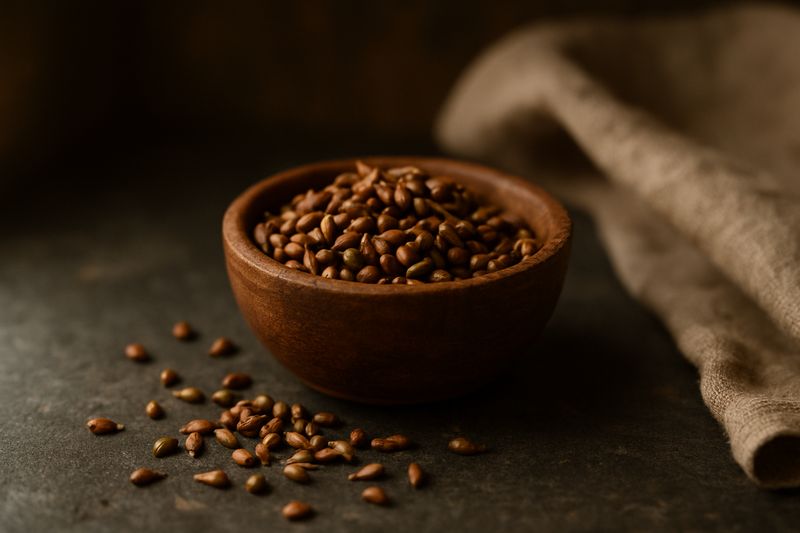
Grape Seeds · Photograph
Discover the real grape seed extract benefits and side effects, backed by human trials. Learn how grape seed oil, flour, and supplements compare for heart health, blood pressure, blood sugar, and more — plus safe dosage ranges and who should use caution.
Key Nutrients
% Daily Value based on 2,000 cal diet
Key active compounds in grape seeds
- Proanthocyanidins (also called oligomeric proanthocyanidins or OPCs): The headline compounds. These are chains of flavanol units — think of them as long, tangled antioxidant molecules — that give grape seed extract its deep, astringent character and most of its studied health effects.
- Catechins and related flavanols: Smaller, individual flavanol units (monomers) that work alongside proanthocyanidins to support blood vessel function and reduce oxidative stress (cellular damage from unstable molecules called free radicals).
- Phenolic acids and minor polyphenols: A broader family of plant defence chemicals that contribute to overall antioxidant activity and may enhance the effects of proanthocyanidins.
- Linoleic acid (in grape seed oil): An omega-6 polyunsaturated fatty acid — an essential fat the body cannot make itself — that makes up roughly 70% of the fat in grape seed oil. It may support heart health when it replaces saturated fats in the diet.
- Vitamin E (in grape seed oil): A fat-soluble antioxidant that helps protect cell membranes and supports immune function.
Buying guide: how to choose grape seed products
Extract supplements:
- Choose products that list "standardized to X% proanthocyanidins" (typically 95%) rather than just "grape seed extract."
- Third-party tested products (look for NSF, USP, or Informed Sport seals) give more confidence in what is actually in the capsule.
- Avoid proprietary blends where the grape seed dose is not disclosed.
Grape seed oil:
- Look for "cold-pressed" or "expeller-pressed" on the label — these methods preserve more of the oil's natural compounds.
- A clear, pale golden color is normal. Avoid bottles with a rancid or off smell.
- Store in a cool, dark place or the refrigerator after opening; high linoleic acid content makes it more susceptible to oxidation than more saturated oils.
Grape seed flour/meal:
- Check that it is made from the seeds specifically, not just grape marc (the skin-and-seed mixture left after winemaking).
- A fine grind blends more smoothly into recipes.
- Store in an airtight container away from heat and light.
Prep and pairing ideas
Grape seed oil and ground grape seeds are the most practical ways to bring this ingredient into daily cooking.
Grape seed oil in cooking:
- Use as a neutral high-heat cooking oil for sautéing vegetables or stir-fries.
- Whisk into vinaigrette: its light flavor pairs well with balsamic vinegar, Dijon mustard, and a little garlic.
- Drizzle over roasted root vegetables as an alternative to olive oil.
Ground grape seeds (flour/meal) in baking and blending:
- Add 1–2 teaspoons to a morning smoothie alongside berries, oats, and plant milk — the mild bitterness blends into background flavor.
- Replace 10–20% of the flour in whole grain muffins, banana bread, or energy balls with grape seed flour to boost fiber and polyphenol content.
- Stir into overnight oats or yogurt bowls with walnuts and dark berries.
Three practical pairings and why:
- Grape seed oil + dark leafy greens: The unsaturated fat in grape seed oil helps your body absorb fat-soluble vitamins (like K and A) from greens like kale or spinach.
- Ground grape seeds + oats: Fiber from both sources supports slower digestion and more gradual blood sugar rises — a practical combination for breakfast.
- Grape seed extract supplement + a main meal: Taking polyphenol-rich supplements with food may reduce the chance of mild GI discomfort and may improve absorption.
Bottom line
Grape seeds — whether as a standardized supplement, pressed oil, or ground flour — bring a genuinely interesting nutritional profile to the table. The strongest evidence supports modest reductions in blood pressure and heart rate from grape seed extract, particularly in people with elevated cardiovascular risk. There is promising but still limited evidence for benefits to cholesterol, insulin resistance, liver enzymes, and inflammatory markers.
Grape seed oil is a solid culinary fat but should not be confused with grape seed extract for health purposes. Ground grape seeds offer a whole-food route to polyphenols and fiber, but lack the clinical evidence base that extract supplements have.
If you are otherwise healthy and looking to diversify your cooking fats or add more plant polyphenols to your diet, grape seed oil and ground seeds are low-risk, practical additions. If you are interested in supplemental extract for a specific health concern, a conversation with your doctor — especially about medication interactions — is a worthwhile first step.
Explore how grape seeds fit into a heart-health focused eating plan: /goals
How Grape Seeds Compares
| Compared with | What's different |
|---|---|
| Grape Seeds vs. Flaxseeds | Milder flavor and higher smoke point for cooking, whereas grape seeds are typically ground or extracted. |
| Grape Seeds vs. Whole Grapes | Contains higher concentrations of proanthocyanidin antioxidants compared to the flesh. |
Health Benefits
Things to Know
Blood pressure medications: Grape seed extract can modestly lower blood pressure and heart rate. If you already take ACE inhibitors, ARBs, beta-blockers, or calcium channel blockers, combining them with extract may lower blood pressure further than intended. Let your doctor know.
Blood thinners and antiplatelet drugs: The vasoprotective and antithrombotic (clot-inhibiting) properties of polyphenols raise a theoretical concern about additive effects with warfarin, aspirin, or clopidogrel. Bleeding risk, while not confirmed in trials, warrants medical review before combining.
Diabetes medications: If you take metformin, sulfonylureas, or insulin, grape seed extract's potential to improve insulin sensitivity could affect blood glucose control — monitor levels and inform your care team.
Pregnancy and breastfeeding: Safety data for concentrated extracts are absent. Avoid supplemental doses unless advised by a healthcare provider. Grape seed oil used in normal culinary amounts is generally considered safe.
Grape allergy: Anyone with a known allergy to grapes or grape products should avoid grape seed products.
Children and adolescents: No well-designed trials have evaluated extract safety in younger people; supplementation is not recommended without medical guidance.
Surgery: Grape seed extract has been studied perioperatively (around the time of surgery), but its effects on bleeding and drug interactions mean you should disclose its use to your surgical team at least two weeks before any procedure.
Long-term safety: Most trials last 4 to 12 weeks. Long-term safety data are limited.

Prep Ideas
- — Use as a neutral high-heat cooking oil for sautéing vegetables or stir-fries.
- — Whisk into vinaigrette: its light flavor pairs well with balsamic vinegar, Dijon mustard, and a little garlic.
- — Drizzle over roasted root vegetables as an alternative to olive oil.
- — Add 1–2 teaspoons to a morning smoothie alongside berries, oats, and plant milk — the mild bitterness blends into background flavor.
- — Replace 10–20% of the flour in whole grain muffins, banana bread, or energy balls with grape seed flour to boost fiber and polyphenol content.
- — Stir into overnight oats or yogurt bowls with walnuts and dark berries.
- — **Grape seed oil + dark leafy greens:** The unsaturated fat in grape seed oil helps your body absorb fat-soluble vitamins (like K and A) from greens like kale or spinach.
- — **Ground grape seeds + oats:** Fiber from both sources supports slower digestion and more gradual blood sugar rises — a practical combination for breakfast.
- — **Grape seed extract supplement + a main meal:** Taking polyphenol-rich supplements with food may reduce the chance of mild GI discomfort and may improve absorption.
Glossary
Shop This Ingredient
Stock your pantry with quality grape seeds.
Buy on AmazonAs an Amazon Associate, Plantopedia earns from qualifying purchases. This costs you nothing extra and helps us keep the encyclopedia free.
Frequently Asked Questions
Heart and circulation This is the most studied area, and the results are genuinely encouraging — with some important caveats. A 2011 meta-analysis (a study that pools results from multiple trials) covering nine randomized controlled trials found that grape seed extract modestly lowered systolic blood pressure (the top number in a reading) by about 1.5 mmHg and heart rate by roughly 1.4 beats per minute. A 2022 meta-analysis focused on diastolic blood pressure (the bottom number) and found a reduction of about 2.2 mmHg, along with a lower heart rate. Neither meta-analysis found consistent effects on LDL cholesterol or the inflammatory marker C-reactive protein across all studies. A 12-week trial in middle-aged Japanese adults with prehypertension (blood pressure slightly above normal but not yet classified as high) found that high-dose grape seed proanthocyanidin extract significantly reduced both systolic and diastolic blood pressure and improved vascular elasticity — a measure of how flexible and resilient arteries are. In overweight or obese adults on a calorie-restricted diet, grape seed extract improved HDL ("good") cholesterol, lowered LDL ("bad") cholesterol, and reduced atherogenic indices (a measure of cardiovascular risk based on the ratio of harmful to protective blood fats). In people with non-alcoholic fatty liver disease (NAFLD) — a condition where excess fat builds up in the liver, often alongside metabolic syndrome — two months of grape seed extract supplementation improved total cholesterol, triglycerides, LDL, HDL, and blood pressure markers together. Bottom line for heart health: Benefits look most consistent in people with pre-existing cardiovascular risk factors. Changes are modest. Grape seed extract should complement, not replace, other heart health strategies. Digestive health and microbiome This is an area where the evidence is more theoretical than proven. Whole and ground grape seeds contain dietary fiber, and their polyphenols can survive digestion and reach the large intestine, where gut bacteria may convert them into smaller active compounds. In animal studies, grape seed polyphenols appear to support a more diverse, beneficial gut microbiome — but rigorous human trials on gut health outcomes are largely absent. The clearest human digestive data come from NAFLD trials, where grape seed extract reduced ALT and AST (liver enzymes that signal liver inflammation when elevated) and improved liver fat scores. This suggests a benefit for liver-related metabolism, but it is not the same as evidence for general digestive comfort or gut flora. Blood sugar and metabolism In the NAFLD trial mentioned above, two months of grape seed extract significantly reduced fasting insulin and improved HOMA-IR (a standard measure of insulin resistance — how poorly cells respond to insulin) and QUICKI (a related measure of insulin sensitivity). In a separate double-blind crossover trial of obese adults with type 2 diabetes at high cardiovascular risk, 600 mg of grape seed extract per day for four weeks improved markers of inflammation, blood sugar, and oxidative stress. These results are promising, but human evidence is still limited to a few short-term trials in people who already have metabolic disease. There are no large, long-duration studies confirming hard diabetes outcomes like reduced HbA1c (a three-month blood sugar average) or fewer diabetic complications. Inflammation and recovery In the type 2 diabetes trial above, grape seed extract reduced biomarkers of both inflammation and oxidative stress — a consistent finding across the polyphenol literature. In a surgical trial, patients receiving grape seed extract before coronary artery bypass surgery showed reduced oxidative stress and reperfusion injury (the tissue damage that can occur when blood flow is restored after a blockage) during the procedure, with no noted adverse effects. Most human studies measure inflammatory biomarkers rather than clinical outcomes like joint pain, flare frequency, or hospitalizations, so the practical impact on chronic inflammatory conditions is still unclear. Hormones and cycle health There is currently no robust human trial evidence that grape seed-derived compounds meaningfully influence sex hormones or reproductive health. Animal and cell studies suggest proanthocyanidins interact with insulin signaling pathways related to metabolic health, but this has not translated to proven hormonal benefits in humans. Any claims in this area should be treated as speculative.
This depends heavily on your goal: Standardized extract (capsules or tablets): Used in virtually all clinical trials. Doses typically range from 150 to 600 mg per day, standardized to a set percentage of proanthocyanidins. This is the form with the most direct human evidence for blood pressure, lipid, and blood sugar support. If you are considering supplementation, look for products that state the proanthocyanidin percentage on the label. Grape seed oil: A versatile, neutral-flavored cooking oil with a relatively high smoke point. Rich in linoleic acid and vitamin E, but not a meaningful source of proanthocyanidins. Good as a substitute for less healthy cooking fats, but do not expect the cardiovascular effects seen in extract trials. Whole or ground grape seeds (flour/meal): Bitterest in taste; grinding softens the texture and makes polyphenols more accessible. A practical way to add fiber and polyphenols to smoothies, bread, or muffins. Evidence specific to this form is limited, but the fiber and polyphenol content make it an appealing whole-food option.
For extract supplements: Most human trials have used doses between 150 and 600 mg per day, with the most common range being 200–400 mg. Blood pressure trials most often use around 150–300 mg; the type 2 diabetes trial used 600 mg daily. Duration in trials is typically 4 to 12 weeks. Start low: If you are new to grape seed extract, starting at the lower end of the studied range (150 mg) lets you assess tolerance before increasing. GI discomfort and headache, while uncommon, are the most frequently reported mild side effects. For grape seed oil: No specific therapeutic dose has been established. One to two tablespoons per day is typical in culinary use. For ground grape seeds: No standardized dose exists. One to two teaspoons of grape seed meal in food daily is a reasonable, practical starting point consistent with whole-food eating patterns. Important: Dose ranges here reflect what clinical research has tested, not a personal recommendation. Always check with a healthcare provider about what is appropriate for your situation.
Quick Answers
Common questions, answered in a line.
Grape seed extract contains proanthocyanidins (OPCs), catechins, and phenolic acids that reduce oxidative stress and support blood vessel function. These antioxidant compounds help protect cells from damage caused by free radicals and give the extract its astringent character.
Grape seed oil is a neutral, high-heat cooking oil ideal for sautéing, stir-frying, or whisking into vinaigrettes. Because it contains linoleic acid, it is a healthy alternative to saturated fats and can be drizzled over roasted root vegetables.
You can add ground grape seeds to your diet by mixing 1–2 teaspoons into smoothies or replacing 10–20% of the flour in baking recipes like muffins or energy balls. This is a practical way to boost fiber and polyphenol content in whole-food meals.
Grape seed extract can modestly lower blood pressure and heart rate, which may cause complications if you already take ACE inhibitors, beta-blockers, or calcium channel blockers. Combining the supplement with these medications could lower blood pressure further than intended.
Look for grape seed extract supplements that are standardized to a specific percentage of proanthocyanidins (typically 95%) and have undergone third-party testing. Avoid "proprietary blends" that do not disclose the exact dose of the grape seed ingredient.
Grape seed extract may improve insulin sensitivity, so individuals taking metformin, insulin, or sulfonylureas should monitor their blood glucose levels closely. It is important to inform your healthcare team before combining these supplements with diabetes treatments.
Because grape seed oil has a high linoleic acid content, it is susceptible to oxidation and should be stored in a cool, dark place or the refrigerator. To ensure quality, choose "cold-pressed" or "expeller-pressed" varieties and avoid bottles with a rancid smell.
For Readers in the USA
Local context — sourcing, seasonality, and regional notes.
Most grape seed products in the U.S. originate from California, which produces nearly 90% of the country's wine grapes. The seeds are typically harvested during the "crush" season from August through November, though supplements and oils are available year-round due to their long shelf life.
You can find grape seed oil at major retailers like Kroger, Whole Foods Market, and Walmart, while standardized extracts are sold at pharmacies like CVS or specialty stores like GNC. Ground grape seed flour is less common but is frequently stocked at natural food cooperatives and online health retailers.
Look for the USDA Organic seal to ensure seeds were grown without synthetic pesticides, and check for the USP or NSF Verified marks on supplements. Because the FDA regulates supplements as food rather than drugs, these third-party certifications are the best way for U.S. consumers to verify purity and potency.
In the U.S., grape seed oil is a popular choice for high-heat cooking because its smoke point is approximately 420°F, which is higher than many extra virgin olive oils. This makes it a versatile pantry staple for American home cooks who sear, sauté, or bake at high temperatures.
AI Clinical Review
- Clearly distinguishes forms: extract (polyphenol-focused), oil (fat/vitamin E), and ground seeds (fiber + polyphenols), and notes that oil is not a substitute for extract.
- Accurately reflects human research showing small but meaningful reductions in blood pressure and heart rate with standardized grape seed extract, especially in people with elevated cardiometabolic risk.
- Appropriately frames metabolic and liver findings (lipids, insulin resistance, NAFLD markers) as modest and short-term.
- Gives practical dose ranges used in trials (about 150–600 mg/day of standardized extract) and emphasizes looking for stated proanthocyanidin content (the main antioxidant compounds).
- Addresses safety and potential drug interactions without overstating risks.
- Long‑term safety and durability of benefits beyond 4–12 weeks are unclear; hard outcomes (e.g., fewer cardiovascular events or lower HbA1c) haven’t been shown.
- Gut microbiome and general digestive benefits are promising but largely based on animal/mechanistic work; rigorous human data are limited.
- Results may not generalize to healthy, normotensive adults, since many trials enroll people with prehypertension or metabolic conditions.
- Product heterogeneity matters: extracts can vary in proanthocyanidin composition and degree of polymerization, which may influence effects but isn’t consistently reported.
- Talk with a clinician first if you use anticoagulants/antiplatelets, blood pressure medications, or diabetes drugs—grape seed extract can modestly lower BP and improve insulin sensitivity.
- Avoid concentrated extracts during pregnancy/breastfeeding and disclose use before surgery; people with grape allergy should avoid all grape seed products.
- If supplementing, start low (around 150 mg/day of a standardized extract) with food to gauge tolerance; mild GI upset or headache can occur.
- Choose third‑party tested products that disclose % proanthocyanidins; use grape seed oil as a neutral cooking fat, and view ground seeds as a fiber/polyphenol add‑in with less clinical evidence than extract.
Bitter and fibrous whole; most people consume as oil, flour, or extract.
References
- USDA FoodData Central — grape seed oil nutrition data (fdc.nal.usda.gov)
- 2011 meta-analysis of 9 RCTs on grape seed extract and cardiovascular risk markers (pubmed.ncbi.nlm.nih.gov)
- 2022 meta-analysis on grape seed extract and blood pressure, heart rate, and endothelial function (pubmed.ncbi.nlm.nih.gov)
- RCT: grape seed extract improved cardiovascular and liver parameters in NAFLD patients (pmc.ncbi.nlm.nih.gov)
- RCT: grape seed proanthocyanidin extract reduced blood pressure and improved vascular elasticity in prehypertensive adults (pmc.ncbi.nlm.nih.gov)
- RCT: grape seed extract improved inflammation, glycaemia, and oxidative stress in type 2 diabetes patients (onlinelibrary.wiley.com)
- RCT: grape seed extract with calorie restriction improved lipid profile in overweight adults (onlinelibrary.wiley.com)
- Surgical RCT: grape seed extract reduced oxidative stress during coronary artery bypass surgery (journals.lww.com)
- Systematic review: proanthocyanidins and skeletal muscle health — limited human evidence (pubmed.ncbi.nlm.nih.gov)
- MyPlate guidance on protein foods including plant-based seeds and nuts (myplate.gov)
Know Your Numbers
Eating healthy is a start. Now get to know your biomarkers.
Food changes bloodwork — inflammation, lipids, blood sugar and nutrient status all respond to what you eat. 59 markers from $59.
- Results in 7–10 days at 2,000+ Quest sites
- Licensed provider reviews every result
- One flat price, no membership, HSA/FSA eligible
Educational information only, not medical advice. Panels are ordered and reviewed through our licensed partner; Plantopedia may earn a commission.