Marionberry — health benefits and uses
A Pacific Northwest bred berry celebrated for deep flavor and color.
The Short Answer
Marionberries are a nutrient-dense blackberry cultivar providing 7 grams of fiber and 30 mg of vitamin C per cup. They are prized for their high concentration of anthocyanin antioxidants and their complex, sweet-tart flavor profile.
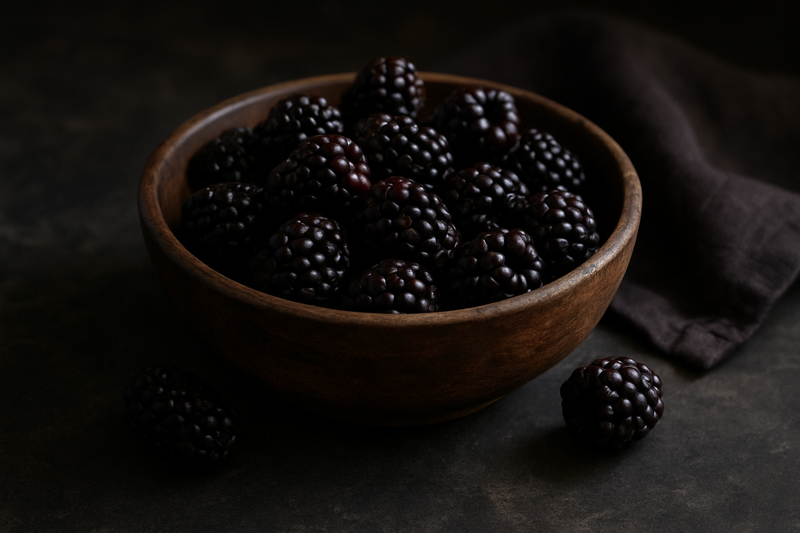
Marionberry · Photograph
Discover marionberry health benefits and nutrition facts, including antioxidants, fiber, vitamin C, and how this Oregon blackberry cultivar supports heart health, digestion, and blood sugar. Plus: fresh vs frozen, safety tips, and how much to eat.
Key Nutrients
% Daily Value based on 2,000 cal diet
Key active compounds
- Anthocyanins (e.g., cyanidin-3-glucoside): Water-soluble flavonoid pigments that create the berry's deep purple-black color. They are powerful free-radical scavengers and may help modulate inflammatory and vascular pathways.
- Total polyphenols (phenolic acids, flavonoids, tannins): A broad class of plant compounds at 4.95–9.8 mg/g in marionberries, linked in broader research to cardiometabolic and neuroprotective effects.
- Ellagic acid and ellagitannins: Polyphenols found in blackberries and raspberries; they show antioxidant and potential DNA-protective activity in experimental models.
- Carotenoids: Fat-soluble pigments that act as antioxidants and contribute to the provitamin A activity in marionberries, supporting eye health and immune function.
- Dietary fiber (soluble and insoluble): Not a phytochemical in the strict sense, but a key functional component — roughly 7 g per cup — that feeds beneficial gut bacteria and supports digestive regularity.
Prep and pairing ideas
Marionberries shine in both raw and cooked applications. Their robust flavor holds up well to heat, which is why Oregon bakers reach for them first.
Raw:
- Stir into plain Greek yogurt with a drizzle of honey and a handful of walnuts — the fat from the walnuts aids carotenoid absorption
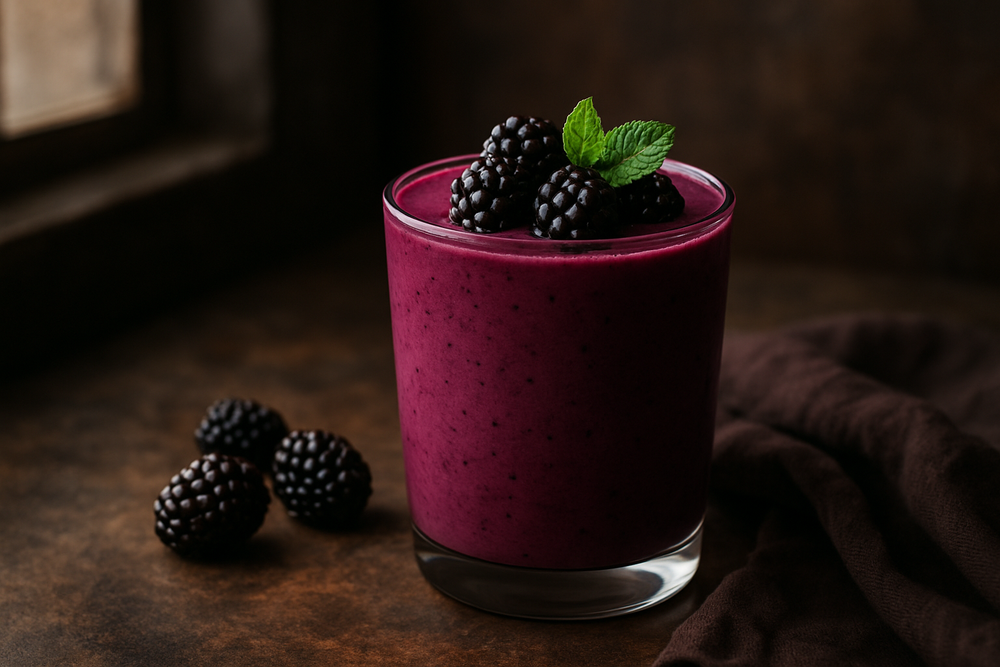
- Blend into smoothies with spinach, banana, and ground flaxseed for a fiber-and-antioxidant powerhouse
- Scatter over oatmeal with cinnamon for a blood-sugar-friendly breakfast
Cooked or baked:
- The classic Oregon marionberry pie — deep filling, buttery crust, and a flavor that tastes like blackberry dialed to eleven
- Marionberry cobbler or crisp (oat topping adds more fiber)
- Reduced to a sauce for roasted poultry or pork — the tartness balances rich proteins beautifully
- Swirled into chia pudding after cooking for a polyphenol-rich dessert
Common pairings and why they work:
- Marionberry + dark chocolate: Both are rich in flavonoids (a type of polyphenol). Together they create a synergistic antioxidant profile, and the combination is genuinely delicious in energy balls or bark.
- Marionberry + lemon: The citric acid and added vitamin C from lemon help preserve anthocyanins and brighten the berry's flavor in jams and dressings.
- Marionberry + oats: Oats contribute beta-glucan (a soluble fiber shown to lower LDL cholesterol), complementing the berry's insoluble fiber for a gut-supportive combination. Ideal in crumbles, overnight oats, or granola bars.
Bottom line
Marionberries are one of the most nutrient-dense blackberry cultivars available, standing out for their exceptional anthocyanin content, high dietary fiber, solid vitamin C, and a phytochemical profile that tracks closely with the most-studied health benefits of dark berries. While marionberry-specific human clinical trials are few, the compositional and indirect evidence is strong: this is a whole fruit that earns its place in a health-conscious diet.
As a food — not a supplement — marionberries are very safe for most people. The main practical points are: prefer unsweetened frozen or fresh over jams and syrups when nutrition is the goal, introduce them gradually if you are fiber-sensitive, and check with your provider if you are on warfarin or managing diabetes with medication. Beyond that, enjoy them freely — in a bowl, a smoothie, a cobbler, or straight from the bag from the freezer.
Looking to add more antioxidant-rich whole foods to your routine? Explore how marionberries and other dark berries can fit into your health goals at Plantopedia /goals.
How Marionberry Compares
| Compared with | What's different |
|---|---|
| Marionberry vs. Blackberry | Marionberries are sweeter and juicier with a more complex, earthy profile than common blackberries. |
| Marionberry vs. Raspberry | Marionberries have smaller, softer seeds and a much tartness than sweet-tart raspberries. |
| Marionberry vs. Boysenberry | Marionberries are a specific blackberry hybrid from Oregon known for higher anthocyanin levels. |
Health Benefits
Things to Know
Digestive adjustment: If you are not used to eating much fiber, adding a full cup of marionberries daily can cause temporary bloating or gas. Start with ½ cup and build up over a week or two.
Vitamin K and blood thinners: Marionberries contain vitamin K, which plays a role in blood clotting. If you take a vitamin K–antagonist anticoagulant such as warfarin (brand name Coumadin), sudden large changes in vitamin K–rich foods can affect your medication's effectiveness. The goal is consistency, not elimination — but check with your prescriber.
Diabetes and blood sugar medications: Whole marionberries are generally well tolerated in diabetes meal plans when carbohydrates are counted appropriately. However, jams, syrups, and sweetened pies can raise blood sugar quickly and may require medication or insulin adjustments.
Berry allergies: Rare but possible. If you have experienced oral itching, hives, or throat tightening with other berries, consult an allergist before trying marionberries.
Small seeds: Marionberries contain small seeds inside each drupelet. These are safe for most people. If you have been specifically advised by a clinician to avoid small seeds (historically associated with diverticulitis, though current evidence largely supports their safety), speak with your provider.
Pregnancy: Marionberries are a safe, nutritious food during pregnancy. Their folate (vitamin B9) content supports early fetal development, though amounts are modest and should be part of a broader prenatal nutrition plan.
Polyphenol-medication spacing: As a general precaution, if you take medications that require careful absorption timing, consider not eating a large quantity of polyphenol-rich foods at exactly the same time as your medication. No specific documented interaction exists for marionberries, but this is standard cautious practice.
Prep Ideas
- — Stir into plain Greek yogurt with a drizzle of honey and a handful of walnuts — the fat from the walnuts aids carotenoid absorption
- — Blend into smoothies with spinach, banana, and ground flaxseed for a fiber-and-antioxidant powerhouse
- — Scatter over oatmeal with cinnamon for a blood-sugar-friendly breakfast
- — The classic Oregon marionberry pie — deep filling, buttery crust, and a flavor that tastes like blackberry dialed to eleven
- — Marionberry cobbler or crisp (oat topping adds more fiber)
- — Reduced to a sauce for roasted poultry or pork — the tartness balances rich proteins beautifully
- — Swirled into chia pudding after cooking for a polyphenol-rich dessert
- — Marionberry + dark chocolate: Both are rich in flavonoids (a type of polyphenol). Together they create a synergistic antioxidant profile, and the combination is genuinely delicious in energy balls or bark.
- — Marionberry + lemon: The citric acid and added vitamin C from lemon help preserve anthocyanins and brighten the berry's flavor in jams and dressings.
- — Marionberry + oats: Oats contribute beta-glucan (a soluble fiber shown to lower LDL cholesterol), complementing the berry's insoluble fiber for a gut-supportive combination. Ideal in crumbles, overnight oats, or granola bars.
Shop This Ingredient
Stock your pantry with quality marionberry.
Buy on AmazonAs an Amazon Associate, Plantopedia earns from qualifying purchases. This costs you nothing extra and helps us keep the encyclopedia free.
Frequently Asked Questions
It is worth being upfront: no large-scale human clinical trial has fed people marionberries and measured disease outcomes. What we have is strong compositional data (what is in them), solid human evidence for the nutrients and phytochemical classes they contain, and an emerging body of berry research that likely extends to marionberries given their similar or superior nutritional profile. The picture is promising but should be read as "supports health" rather than "treats disease." Heart and circulation Marionberries bring several factors to the table that broader human research links with cardiovascular health. Their 7 g of fiber per cup, in particular, has well-established associations with lower LDL ("bad") cholesterol and improved vascular function in human studies. Their anthocyanins and polyphenols, studied in other dark berries, appear in observational and some intervention research to be associated with lower risk of heart disease, better endothelial function (the responsiveness of blood vessel walls), and modest reductions in blood pressure. The marionberry's ORAC value among the highest for any commercial berry is consistent with this profile. No direct evidence yet ties marionberry consumption to specific cardiovascular outcomes, but as part of a berry-rich, plant-forward diet, the case for inclusion is sound. Digestive health and microbiome This is where the evidence for marionberries feels most concrete, because the mechanism — dietary fiber — is well understood. At 7–8 g of fiber per cup, a single serving provides about a quarter of the daily fiber target that most adults fall well short of. Fiber adds bulk to stool, promotes regular bowel movements, and — critically — acts as a prebiotic, meaning it feeds the beneficial bacteria (gut microbiota) that colonize the large intestine. Human research on fiber from fruit and berries consistently shows improvements in constipation, stool frequency, and markers of gut microbiome diversity. Marionberries simply deliver this in a high-fiber, flavorful package. Blood sugar and metabolism Despite their natural sweetness, marionberries are a relatively low-glycemic fruit. Their fiber slows digestion and blunts the rate at which sugar from the berry enters the bloodstream, helping to avoid sharp post-meal glucose spikes. Human trials using mixed berries and other dark berries have shown modest improvements in insulin sensitivity (how well the body's cells respond to insulin) and post-meal blood glucose. Marionberry-specific glycemic studies do not yet exist, but the macronutrient profile — moderate natural sugars, high fiber, low fat, low calorie — is consistent with whole fruits generally recommended in diabetes meal plans. The key caveat: processed forms like jams, syrups, and sweetened pie fillings add significant sugar and are a different proposition entirely. Inflammation and recovery Chronic low-grade inflammation is implicated in a wide range of health conditions, from heart disease to joint pain. Marionberries' dense concentration of anthocyanins and polyphenols makes them a strong candidate for supporting antioxidant and anti-inflammatory defense. In cell and animal studies, the compounds present in marionberries scavenge free radicals, reduce markers of oxidative stress (cellular damage from unstable molecules), and suppress pro-inflammatory signaling pathways. Human intervention studies with other anthocyanin-rich berries show reductions in blood markers of inflammation and oxidative stress. The evidence is mechanistic and indirect for marionberries specifically, but the phytochemical argument is compelling.
This is one of the most common questions about marionberries, and the good news is that both forms are genuinely nutritious. Fresh marionberries Available primarily in the Pacific Northwest in July–August; rare outside Oregon Ripe berries (deepest color) have the highest anthocyanin and antioxidant content Best consumed within 2–3 days of purchase; they are delicate and mold quickly Look for uniformly deep purple-black berries with no red or green drupelets (the individual round segments that make up the berry) Unsweetened frozen marionberries The most practical form for people outside Oregon; widely available year-round Frozen at peak ripeness, so anthocyanin and phenolic retention is excellent — compositional analyses show similar antioxidant capacity to fresh fruit Fiber and mineral content are essentially unchanged by freezing Vitamin C may decrease slightly during storage but remains meaningful Check the label: the only ingredient should be marionberries (or marionberries + ascorbic acid as a preservative) Jams, syrups, and preserves Antioxidant compounds survive heat processing better than vitamin C does, so some phytochemical benefit remains However, high added sugar content changes the nutritional equation significantly; these are occasional treats, not daily health foods If buying jam for flavor and some polyphenol benefit, look for "no added sugar" or "reduced sugar" varieties Tip: Frozen marionberries are the most evidence-aligned everyday choice for most people — consistent quality, year-round availability, and near-equivalent nutrition to fresh at lower cost.
There is no established clinical dose for marionberries — they are a whole food, not a supplement. However, based on their nutritional profile and general fruit intake guidance, here is a practical framework: General healthy adults: ½ to 1 cup (70–140 g) per day is a well-supported, practical target. One cup contributes meaningfully to your daily fiber goal, provides one-third of your vitamin C target, and delivers a significant antioxidant load relative to most other fruits. For digestive support: Start with ½ cup daily if you are not fiber-adapted. Build to 1 cup over 1–2 weeks to minimize GI discomfort. For blood sugar management: Whole marionberries (fresh or frozen, unsweetened) at ½–1 cup per meal are generally appropriate within a carbohydrate-counted meal plan. Avoid relying on jams, syrups, or sweetened pie filling for nutritional benefit. Larger amounts (e.g., baking a full pie): Occasional higher intake from whole food sources is fine for most people. The fiber content means very large portions may cause GI discomfort in some individuals. In context: The USDA MyPlate recommends that adults aim for 1.5–2 cups of fruit per day. Marionberries can count toward this goal alongside other fruits. Variety across fruits and vegetables is well supported over relying on a single food, however nutritious.
Quick Answers
Common questions, answered in a line.
Marionberries are rich in anthocyanins, dietary fiber, vitamin C, and polyphenols like ellagic acid. These compounds support heart health, digestion, and immune function through their antioxidant and anti-inflammatory properties.
Marionberries are a high-fiber food, providing roughly 7 grams of soluble and insoluble fiber per cup. This fiber content helps support digestive regularity and feeds beneficial gut bacteria for better digestive health.
If you are not used to a high-fiber diet, you should start with ½ cup of marionberries daily and gradually increase the amount over two weeks. This helps prevent temporary digestive issues like gas or bloating caused by the berry's high fiber content.
People taking vitamin K-antagonist anticoagulants like warfarin should maintain a consistent intake of marionberries and consult their doctor. Because the berries contain vitamin K, sudden large changes in consumption can interfere with blood-thinning medications.
Marionberries are generally well-tolerated in diabetes meal plans, but it is best to choose fresh or unsweetened frozen berries over jams and syrups. While whole berries support blood sugar, sweetened versions can cause rapid spikes and may require medication adjustments.
Yes, marionberries are a safe and nutritious food choice during pregnancy. They provide fiber and contain folate (vitamin B9), which is important for early fetal development as part of a balanced prenatal nutrition plan.
To boost carotenoid absorption, you should pair marionberries with a source of healthy fat, such as walnuts or Greek yogurt. You can also pair them with oats to combine beta-glucan with the berry's fiber for heart and gut health.
For Readers in the USA
Local context — sourcing, seasonality, and regional notes.
Marionberries are exclusively grown in Oregon's Willamette Valley, with the peak fresh season typically running from July through August. Because they are highly perishable and do not ship well fresh, they are rarely found in grocery stores outside of the Pacific Northwest during the summer months.
Outside of Oregon, you are most likely to find marionberries in the frozen fruit aisle of major retailers like Whole Foods, Trader Joe's, or Kroger-brand stores. In the Pacific Northwest, they are a staple at local farmers markets and specialty shops under the "Oregon Marionberry" branding.
The marionberry is a specific blackberry cultivar developed at Oregon State University in 1956, prized for its complex, earthy-sweet flavor and higher antioxidant levels compared to standard blackberries. While often called the "King of Blackberries" in the US, it is technically a cross between the Chehalem and Olallie blackberries.
Look for the USDA Organic seal to ensure the berries were grown without synthetic pesticides, though many Oregon marionberry growers follow Integrated Pest Management (IPM) practices. When buying frozen, ensure the package is labeled "Unsweetened" to avoid the added sugars common in American fruit preserves and pie fillings.
AI Clinical Review
- Marionberries are a fiber-rich, nutrient-dense blackberry cultivar; ~1 cup supplying about 7 g fiber and meaningful vitamin C aligns with standard blackberry data.
- The piece appropriately frames benefits as supported by composition and broader dark-berry research (anthocyanins, polyphenols) without claiming disease treatment.
- Practical guidance on forms is sound: unsweetened frozen berries retain most fiber and polyphenols; jams/syrups are not nutritional equivalents due to added sugars.
- Safety notes are balanced and useful (gradual fiber increase, vitamin K consistency for warfarin users, diabetes considerations).
- Human clinical trials using marionberries specifically are limited; most health inferences come from studies of other dark berries or mixed-berry interventions.
- ORAC is a laboratory antioxidant assay and doesn’t directly predict health outcomes; whole-diet patterns matter more than any single score.
- Reported vitamin A/provitamin A values for blackberries vary by database and are generally modest; the stated 40% Daily Value per cup may be an overestimate and should be viewed as approximate.
- Effects on insulin sensitivity, blood pressure, and inflammatory markers differ by dose and food form; whole berries are more likely to deliver documented benefits than sweetened products or juices.
- A practical intake for most adults is ½–1 cup daily of whole fresh or unsweetened frozen marionberries; increase gradually if you’re not used to higher-fiber foods.
- If you take warfarin (Coumadin), keep vitamin K–containing foods consistent and discuss notable dietary changes with your clinician.
- For diabetes, count the carbohydrates in whole berries, prioritize unsweetened forms, and be cautious with jams/syrups that can spike glucose.
- Berry allergies are uncommon but possible; seeds are safe for most people, but if you’ve been told to avoid small seeds or have significant GI conditions, check in with your healthcare provider.
Generally very safe; small seeds in the drupelets.
References
- USDA FoodData Central — blackberry and berry nutrient data (fdc.nal.usda.gov)
- USDA MyPlate — fruit group guidance (myplate.gov)
- Moyer et al. (2002), USDA ARS — anthocyanins, phenolics, and antioxidant capacity in diverse small fruits (ars.usda.gov)
- Wada & Ou (2002), Journal of Agricultural and Food Chemistry — antioxidant activity and phenolic content of Oregon caneberries including marionberry (pubs.acs.org)
- Siriwoharn & Wrolstad (2004), Journal of Agricultural and Food Chemistry — influence of cultivar, maturity, and sampling on blackberry anthocyanins and antioxidant properties (pubs.acs.org)
- Oregon State University thesis — effects of cold storage and processing on bioactive compounds and antioxidant capacity of marionberry and evergreen blackberries (ir.library.oregonstate.edu)
- Oregon Raspberry & Blackberry Commission — marionberry variety overview (oregon-berries.com)
- Berry Health Benefits Symposium — marionberry fact sheet (berryhealth.org)
- NIH National Library of Medicine — dietary fiber and human gut health (general reference) (ncbi.nlm.nih.gov)
- MyFoodData — marionberry nutrition facts (tools.myfooddata.com)
Know Your Numbers
Eating healthy is a start. Now get to know your biomarkers.
Food changes bloodwork — inflammation, lipids, blood sugar and nutrient status all respond to what you eat. 59 markers from $59.
- Results in 7–10 days at 2,000+ Quest sites
- Licensed provider reviews every result
- One flat price, no membership, HSA/FSA eligible
Educational information only, not medical advice. Panels are ordered and reviewed through our licensed partner; Plantopedia may earn a commission.