Passion Fruit — health benefits and uses
Fiber + phytonutrients; use as a whole-food sweet, snack, or smoothie base
The Short Answer
Passion fruit is a high-fiber powerhouse providing 25g of fiber and 30mg of Vitamin C per 100g serving. Its tart, aromatic pulp is rich in antioxidants like carotenoids and polyphenols that support digestive health and immune function.

Passion Fruit · Photograph
Passion fruit is one of those fruits that looks almost too dramatic to be practical — a tough, wrinkled shell concealing a bright, intensely aromatic pulp packed with edible seeds. But beneath the exotic appearance, Passiflora edulis is a quietly impressive everyday fruit: rich in fiber, loaded with antioxidants, and surprisingly versatile in a plant-based kitchen.
Key Nutrients
% Daily Value based on 2,000 cal diet
Key active compounds
Passion fruit's benefits trace back to a handful of well-studied compounds:
- Dietary fiber (soluble and insoluble fractions): Non-digestible carbohydrates from the pulp, seeds, and rind that support bowel regularity, feed beneficial gut bacteria, and help moderate blood sugar and cholesterol responses after meals.
- Carotenoids (including beta-carotene and beta-cryptoxanthin): Fat-soluble pigments that act as precursors to vitamin A and function as antioxidants in tissues. The fruit's yellow-orange pulp signals carotenoid richness.
- Flavonoid polyphenols: A broad family of plant compounds with antioxidant properties that may support vascular health and modulate inflammatory pathways.
- Piceatannol: A stilbene polyphenol — structurally similar to the better-known resveratrol — found in passion fruit seeds. Early research has investigated its potential role in insulin sensitivity and oxidative stress, though human data are still limited.
- Vitamin C (ascorbic acid): A water-soluble antioxidant vitamin that supports immune function, collagen synthesis, and protection against oxidative damage.
Prep and pairing ideas
Passion fruit is one of the easiest fruits to prepare: slice it in half and scoop out the pulp and seeds with a spoon. No peeling, no chopping.
Common pairings worth trying:
- Passion fruit + oats: Stir fresh pulp and seeds through oatmeal or overnight oats. The tartness cuts through the creaminess, and the fiber from both the oats and the seeds makes this a genuinely gut-friendly breakfast combination. Oats bring beta-glucan fiber (a soluble fiber especially linked to cholesterol management), and passion fruit adds vitamin C and antioxidants.
- Passion fruit + yogurt or plant-based yogurt: Spoon over plain, unsweetened yogurt as a topping. The acidity brightens the flavor, the live cultures in the yogurt and the fiber in the fruit both support the gut microbiome from different angles, and the combination makes a naturally sweet dessert without added sugar.
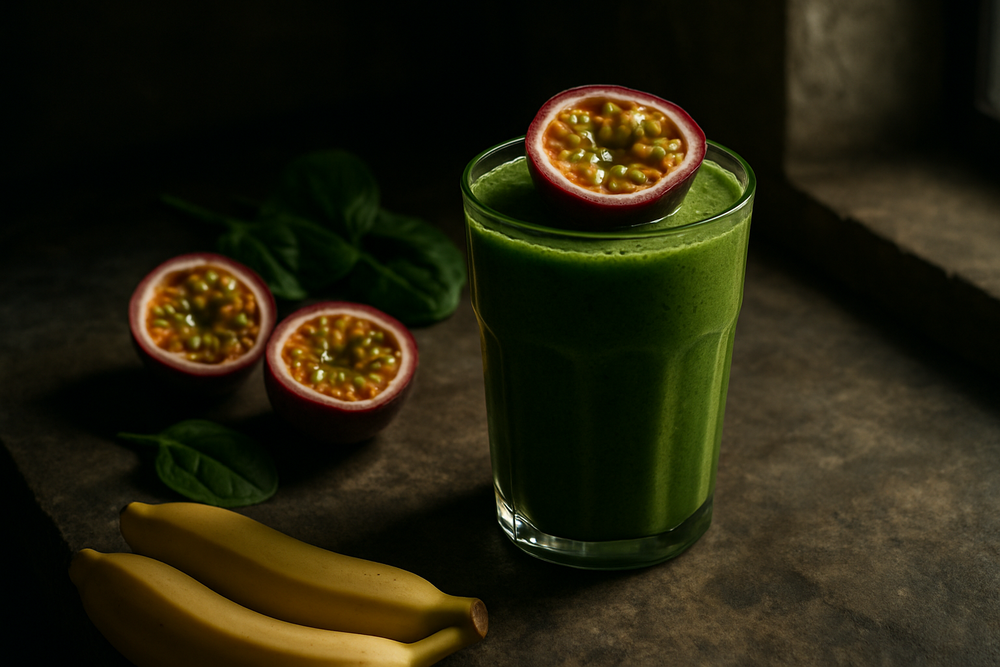
- Passion fruit + leafy green smoothie: Blend the pulp and seeds into a smoothie with spinach, banana, and a splash of water or plant-based milk. The aromatic intensity of passion fruit masks any bitterness from the greens, and pairing it with a source of fat (e.g., a few cashews or hemp seeds) helps the body absorb the fat-soluble carotenoids more effectively.
Bottom line
Passion fruit is a genuinely nutritious whole fruit that earns its place in a varied, plant-based diet. Its standout quality is fiber — particularly impressive for its size — which supports digestion, gut microbiome health, blood sugar balance, and heart health. Its antioxidants (carotenoids, flavonoids, piceatannol), vitamin C, and potassium add further nutritional weight.
The evidence is strongest for digestive and fiber-related benefits, moderately supportive for heart health through its nutrient profile, and emerging for blood sugar and anti-inflammatory effects — particularly from concentrated extracts not typically eaten as food.
For most people, 2–4 fresh fruits a day, eaten pulp and seeds together, is a
How Passion Fruit Compares
| Compared with | What's different |
|---|---|
| Passion Fruit vs. Mango | Tarter and more aromatic with edible crunchy seeds, whereas mango is sweet and fleshy. |
| Passion Fruit vs. Dragon Fruit | Higher in fiber and Vitamin C than dragon fruit, with a much more intense, acidic flavor. |
Health Benefits
Things to Know
Latex allergy: Passion fruit contains proteins similar to those in latex rubber. People with a known latex allergy can experience cross-reactive allergic reactions — symptoms may include itching, hives, or swelling. Introduce cautiously and stop if you notice a reaction.
Oral allergy syndrome: Those who react to other tropical fruits (kiwi, banana, mango) may be more likely to react to passion fruit as well. Trial a small amount first.
Diabetes and blood sugar medications: Whole fruit is generally compatible with diabetes diets, but account for the carbohydrate content — especially if eating larger portions or drinking juice — when managing insulin or other glucose-lowering medications. Discuss with your healthcare provider.
Kidney disease: If you are on a potassium-restricted diet (as is sometimes necessary in advanced kidney disease), track passion fruit as you would any fruit that contributes potassium to your daily total.
IBS and sensitive digestion: The seeds and high fiber content can cause discomfort if introduced too quickly. Start with one or two fruits and increase gradually.
Passionflower supplements vs. passion fruit food: Herbal passionflower extracts (from the leaves and flowers of Passiflora species) are sometimes marketed for calming and sleep and may interact with sedative medications. The culinary fruit is not the same thing and is not known to have sedative effects. Do not conflate the two.
Pregnancy: Passion fruit in food amounts is generally considered safe during pregnancy. Supplements or concentrated extracts are a different matter — check with your midwife or doctor.
Prep Ideas
- — Passion fruit + oats: Stir fresh pulp and seeds through oatmeal or overnight oats. The tartness cuts through the creaminess, and the fiber from both the oats and the seeds makes this a genuinely gut-friendly breakfast combination. Oats bring beta-glucan fiber (a soluble fiber especially linked to cholesterol management), and passion fruit adds vitamin C and antioxidants.
- — Passion fruit + yogurt or plant-based yogurt: Spoon over plain, unsweetened yogurt as a topping. The acidity brightens the flavor, the live cultures in the yogurt and the fiber in the fruit both support the gut microbiome from different angles, and the combination makes a naturally sweet dessert without added sugar.
- — Passion fruit + leafy green smoothie: Blend the pulp and seeds into a smoothie with spinach, banana, and a splash of water or plant-based milk. The aromatic intensity of passion fruit masks any bitterness from the greens, and pairing it with a source of fat (e.g., a few cashews or hemp seeds) helps the body absorb the fat-soluble carotenoids more effectively.
Shop This Ingredient
Stock your pantry with quality passion fruit.
Buy on AmazonAs an Amazon Associate, Plantopedia earns from qualifying purchases. This costs you nothing extra and helps us keep the encyclopedia free.
Frequently Asked Questions
The research landscape is a mix of well-supported nutrient science, plausible but emerging human data, and some early-stage work on concentrated extracts that go beyond everyday food use. Here is what is known area by area. Digestive health and microbiome This is where passion fruit's evidence is strongest, and the mechanism is straightforward: fiber. Dietary fiber regulates bowel movements, supports the growth of beneficial gut bacteria (a process called prebiotics — feeding the microbes you want to keep), and helps prevent constipation and related bowel disorders. Passion fruit fits squarely into major dietary guidance that recommends fiber-rich fruits for gut health. Eating the pulp with the crunchy seeds intact maximizes fiber intake. People with sensitive digestion — for example, those with irritable bowel syndrome (IBS) or diverticular disease — may want to introduce the seeds gradually and monitor their tolerance. Heart health and circulation Passion fruit is low in sodium and provides potassium, fiber, and antioxidant polyphenols — three nutritional features consistently linked to heart and circulatory health in the broader evidence base. Potassium helps regulate blood pressure by counteracting some of the effects of sodium and supporting healthy vessel tone. Soluble fiber can bind cholesterol in the digestive tract and help reduce the amount recirculated in the blood. Some published reviews of passion fruit by-products link the fruit's polyphenols and fiber to improvements in lipid profiles, and secondary sources note a 2019 study in which passion fruit juice supplementation showed potential cardiovascular benefits. The honest caveat: direct, large-scale human trials using whole passion fruit are limited. Most detailed data come from studies using concentrated peel flour, extracts, or juice — not standard everyday portions of fresh fruit. Whole passion fruit is a heart-supportive food choice within an overall healthy pattern, not a treatment for cardiovascular disease. Blood sugar and metabolism Passion fruit has a low glycemic index (GI) — a measure of how quickly a food raises blood sugar after eating. Low-GI foods cause a slower, more gradual blood glucose rise, which is relevant for people managing diabetes or trying to avoid energy crashes. Its fiber content reinforces this effect by slowing digestion and glucose absorption. Early research, including work on piceatannol from the seeds, suggests possible improvements in insulin sensitivity, but these findings come primarily from small studies or work on isolated seed compounds rather than large clinical trials. Whole passion fruit fits comfortably within fruit guidance for people with diabetes. Passion fruit juice — especially sweetened commercial varieties — is a different story, as it removes most fiber and concentrates the sugars, causing faster blood sugar rises. Inflammation and antioxidant activity Passion fruit's polyphenols, flavonoids, and carotenoids are capable of neutralizing free radicals — unstable molecules that can damage cells and contribute to chronic disease over time. Reducing this oxidative stress is thought to be one pathway through which antioxidant-rich diets support long-term health. Emerging research on passion fruit by-products links these compounds to markers of lower inflammation, though most of this work uses concentrated preparations rather than fresh fruit. The evidence is sufficient to support passion fruit as an antioxidant-rich addition to a plant-based diet, but insufficient to position it as an anti-inflammatory treatment. Immune function, skin, and general wellbeing Vitamin C and provitamin A are both well-established nutrients for immune defense, skin integrity, and vision. Passion fruit provides meaningful amounts of both per serving. The fruit's magnesium content is modest but real; magnesium has been associated with reduced stress and better sleep quality in broader nutrition research, though this link is not passion-fruit-specific.
Buying guide Fresh whole passion fruit is the gold standard for nutrition. A ripe fruit will have a slightly wrinkled, fragrant rind — counterintuitively, the more it looks like it has seen better days, the riper and sweeter it tends to be. Smooth, shiny skin usually means it is not yet ripe. Look for heavy fruits with no mold or cracked skin. Frozen pulp (unsweetened purée) is an excellent practical alternative. Nutrient content is broadly similar to fresh, and fiber is preserved if the seeds are included in the purée. Check the label: ideally the only ingredient is passion fruit. Juice provides vitamins and some antioxidants but loses most of the fiber when strained, and many commercial juices contain added sugar. If you want a drink, blending the whole pulp and seeds into a smoothie is a better option. Peel flour and fiber concentrates are emerging research ingredients — very high in fiber and polyphenols — but they are not standard home foods. They may appear in specialized functional food products. Seed oil and seed extracts are mainly used in research or niche beauty products. For everyday nutritional purposes, the whole fruit is the most straightforward and evidence-backed choice. Label tip: For any packaged passion fruit product, check the ingredient list for added sugars, syrups, or preservatives. "Passion fruit purée" or "passion fruit pulp" with nothing else listed is the cleanest option.
There is no single "therapeutic dose" for passion fruit as a food. The most practical framing is to fit it within general fruit guidance. For most adults: The USDA MyPlate guidelines recommend 1.5 to 2 cups of fruit per day depending on calorie needs. A practical portion of passion fruit is 2–4 fresh fruits (approximately 40–80 g of pulp and seeds) — enough to contribute meaningfully to fiber and micronutrient intake without excessive sugar. If you are new to passion fruit or high-fiber foods: Start with 1–2 fruits and build up over a week or two. This gives your digestive system time to adapt and helps you identify any sensitivity to the seeds. Research context: Human studies exploring passion fruit's cardiometabolic effects typically use daily servings of juice or concentrated peel preparations — formats that are more intensive than everyday food use. These should be viewed as experimental research contexts, not personal dosing targets.
Quick Answers
Common questions, answered in a line.
Passion fruit is a nutritional powerhouse containing high levels of dietary fiber, vitamin C, carotenoids, and flavonoid polyphenols. It also contains piceatannol, a specific polyphenol found in the seeds that is currently being researched for its role in insulin sensitivity.
Yes, you should eat the seeds, as they are a rich source of dietary fiber and contain piceatannol, a polyphenol that may support cardiovascular health. Because both the pulp and seeds are edible and nutritious, they should be consumed together for the greatest health benefit.
Passion fruit supports digestive health through its high content of both soluble and insoluble dietary fiber, which promotes bowel regularity and feeds beneficial gut bacteria. The fiber fractions from the pulp, seeds, and rind help maintain a healthy gut microbiome.
Passion fruit can trigger allergic reactions in people with latex allergies because it contains proteins similar to those found in latex rubber. Symptoms of this cross-reactive response may include itching, hives, or swelling.
No, the culinary passion fruit is not known to have sedative effects, unlike herbal passionflower supplements made from the plant's leaves and flowers. You should not conflate the fresh fruit with concentrated herbal extracts often marketed for sleep.
To prepare a passion fruit, simply slice the tough outer shell in half and use a spoon to scoop out the aromatic pulp and edible seeds. There is no need for peeling or complex chopping, making it one of the easiest fruits to prepare.
Passion fruit contains fiber that helps moderate blood sugar responses after meals, though individuals with diabetes should still monitor their overall carbohydrate intake. High fiber content is particularly beneficial for blood sugar balance when the whole fruit is eaten.
For Readers in the USA
Local context — sourcing, seasonality, and regional notes.
In the United States, passion fruit is primarily grown commercially in Florida, California, and Hawaii due to their frost-free climates. Most mainland production occurs in Southern California and South Florida, though you may find backyard varieties in other warm USDA zones like 9 and 10.
While availability varies by region, you can typically find fresh passion fruit at specialty grocers like Whole Foods Market, Asian or Hispanic supermarkets, and local farmers markets in warm states. During the peak seasons, major national chains like Kroger or Safeway may also carry them in their exotic produce sections.
The US passion fruit season generally peaks twice a year, typically from mid-to-late summer (July/August) and again in mid-winter (December/January). Hawaii-grown fruit may be available year-round, while California and Florida crops are more strictly seasonal depending on recent weather patterns.
Look for the USDA Organic seal to ensure the fruit was grown without synthetic pesticides or fertilizers according to federal standards. You can also check for "Product of USA" labels to support domestic growers in Florida, California, or Hawaii.
AI Clinical Review
- Emphasizes passion fruit as a fiber‑dense food for its size; eating the pulp with seeds supports regularity, gut health, and steadier post‑meal blood sugars.
- Accurately notes antioxidant nutrients (vitamin C, carotenoids) and polyphenols (including piceatannol) that help counter oxidative stress.
- Distinguishes forms well: fresh fruit and unsweetened frozen purée retain fiber, while strained or sweetened juices remove fiber and raise glycemic impact.
- Offers practical portion guidance (about 2–4 fruits) that fits within general fruit recommendations and suggests gradual introduction for sensitive digestion.
- Cardiometabolic and anti‑inflammatory findings largely come from passion fruit peel flour, extracts, or juice; evidence from everyday portions of whole fruit in large human trials is limited.
- Piceatannol’s effects on insulin sensitivity are promising but based on small or early studies; confirmatory human data are needed.
- Microbiome benefits are plausible via fiber, but passion fruit–specific trials showing changes in gut bacteria or metabolites are sparse.
- Nutrient levels can vary by cultivar, ripeness, and processing, so single-value estimates are best viewed as ranges rather than absolutes.
- Typical intake: 2–4 fruits (about 40–80 g pulp plus seeds) per day is reasonable; if you’re new to high‑fiber foods, start with 1–2 and increase over 1–2 weeks. Pairing with a little dietary fat can enhance carotenoid absorption.
- Allergy caution: latex–fruit cross‑reactivity and oral allergy syndrome (seen with kiwi/banana/mango) can occur. Introduce small amounts first and stop if itching, hives, or swelling develop.
- Blood sugar and medications: whole fruit is low glycemic (slower blood sugar rise), but carbs still count. If you use insulin or sulfonylureas, monitor glucose when adding passion fruit; avoid sweetened juices that remove fiber.
- Special populations: those on potassium‑restricted diets (e.g., advanced kidney disease) should track portions. In pregnancy, culinary amounts are generally fine, but don’t confuse the fruit with passionflower herbal supplements, which have different effects and interactions.
Frame as food education, not disease treatment.
References
- PubMed — Purple passion fruit (Passiflora edulis f. edulis): A comprehensive review on the nutritional value, phytochemical profile and associated health effects (pubmed.ncbi.nlm.nih.gov)
- PubMed — Brazilian native passion fruit (Passiflora tenuifila Killip) is a rich source of proanthocyanidins, carotenoids, and dietary fiber (pubmed.ncbi.nlm.nih.gov)
- PMC, National Library of Medicine — Nutritional, Pharmacological and Industrial Applications of Mangosteen and Passion Fruit: A Review (pmc.ncbi.nlm.nih.gov)
- PMC, National Library of Medicine — Passion fruit (Passiflora edulis Sims) by-products as a source of bioactive compounds for non-communicable disease prevention: extraction methods and mechanisms of action: a systematic revie (pmc.ncbi.nlm.nih.gov)
- PubMed — Phytochemistry, nutritional composition, health benefits and future prospects of Passiflora: A review (pubmed.ncbi.nlm.nih.gov)
- Springer — Client Challenge (link.springer.com)
- Wiley Online Library — Fsn3.70574 (onlinelibrary.wiley.com)
Know Your Numbers
Eating healthy is a start. Now get to know your biomarkers.
Food changes bloodwork — inflammation, lipids, blood sugar and nutrient status all respond to what you eat. 59 markers from $59.
- Results in 7–10 days at 2,000+ Quest sites
- Licensed provider reviews every result
- One flat price, no membership, HSA/FSA eligible
Educational information only, not medical advice. Panels are ordered and reviewed through our licensed partner; Plantopedia may earn a commission.