Purple Sweet Potato — health benefits and uses
An Okinawan longevity staple rich in anthocyanin pigments.
The Short Answer
Purple sweet potatoes are nutrient-dense root vegetables packed with anthocyanins, providing 140 calories and 2.5 grams of fiber per medium potato. They support heart health and blood sugar management through their high antioxidant content and complex
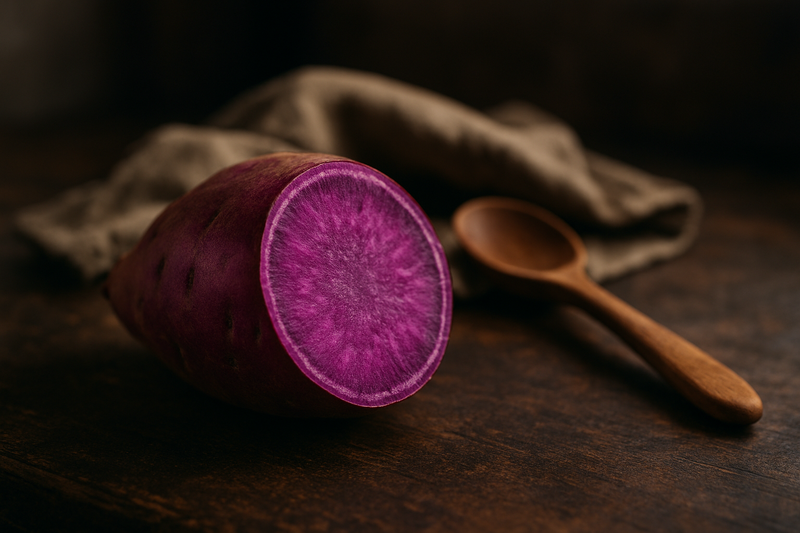
Purple Sweet Potato · Photograph
Discover the science-backed purple sweet potato health benefits — from antioxidant-rich anthocyanins to heart and blood sugar support. Includes nutrition facts, cooking tips, safety notes, and evidence sources.
Key Nutrients
% Daily Value based on 2,000 cal diet
Key active compounds
- Anthocyanins (cyanidin and peonidin derivatives): Water-soluble flavonoid (a class of plant polyphenol) pigments responsible for the purple-violet color. These are the most studied compounds in purple sweet potato and are linked to antioxidant, anti-inflammatory, and vascular-protective effects. They work partly by activating a cellular defense pathway called Nrf2 and suppressing an inflammatory signaling molecule called NF-κB.
- Phenolic acids (including chlorogenic acid): Plant polyphenols found in both the flesh and leaves. They add to the overall antioxidant capacity and may contribute to cardiovascular and metabolic support.
- Carotenoids (beta-carotene and lutein): Fat-soluble pigments that support vision, immune function, and cellular antioxidant defenses. Beta-carotene is a provitamin A compound — meaning the body can convert it into vitamin A as needed.
- Dietary fiber: A mix of soluble and insoluble fiber supporting digestive regularity and potentially acting as a prebiotic (food for beneficial gut bacteria).
- Complex carbohydrates: Slowly digested starches that provide sustained energy and a more gradual rise in blood sugar compared with refined starches.
Prep and pairing ideas
Purple sweet potato is remarkably versatile and keeps its vivid color through most cooking methods.
Roast simply: Slice into wedges, toss with a little olive oil, salt, and smoked paprika, and roast at 200°C (400°F) for 25–30 minutes. The edges caramelize while the interior stays creamy and sweet.
Steam and mash: Steam whole or halved until fork-tender, then mash with coconut milk and a pinch of salt. The result is a naturally violet, lightly sweet mash that pairs well with grilled fish or tempeh.
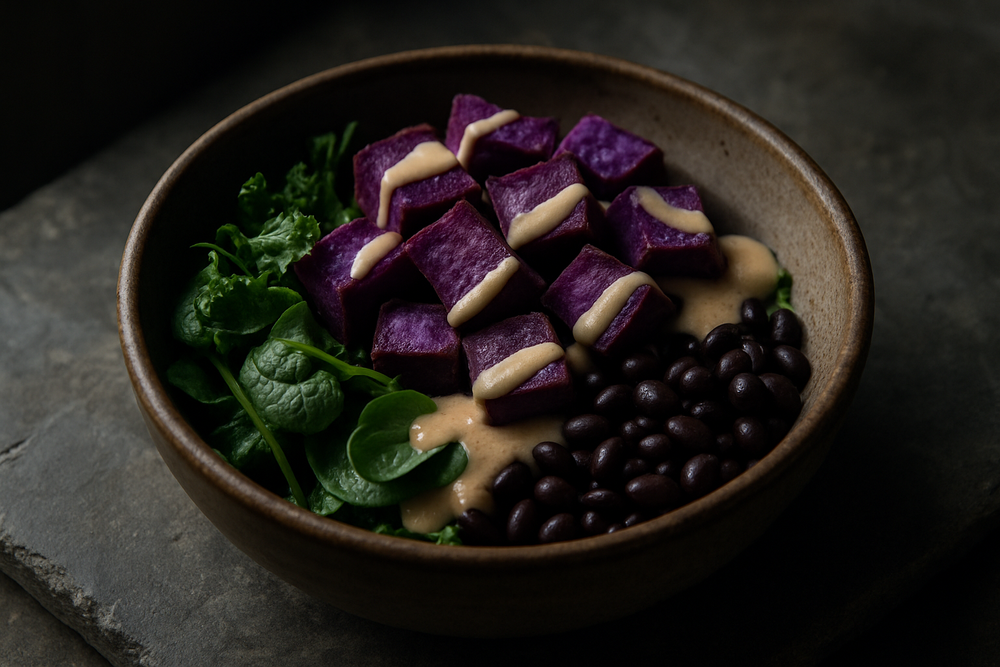
Add to grain bowls: Cube and roast, then layer over cooked farro, quinoa, or brown rice with leafy greens, pickled red onion, and a tahini drizzle. The color contrast alone makes the bowl more appealing.
Blend into soups: Purple sweet potato makes a visually striking, subtly sweet soup base. Blend with vegetable stock, ginger, and a squeeze of lime. Note that adding acidic ingredients (like lemon juice) can brighten the purple to magenta; alkaline ingredients can shift it toward blue — this is normal anthocyanin color chemistry, not spoilage.
Common pairings and why they work:
- Ginger and lime — Ginger's anti-inflammatory gingerols complement the anthocyanins, and lime's acidity brightens both flavor and color.
- Black beans — Together they create a complete protein profile with complementary fiber types, making for a more satiating, blood-sugar-friendly meal.
- Leafy greens (kale or spinach) — The magnesium and folate in dark greens pair well with purple sweet potato's potassium and B6, supporting cardiovascular health from multiple angles.
Bottom line
Purple sweet potato earns its place on the plate for two reasons: it's a genuinely nutritious whole food (fiber, potassium, complex carbohydrates, B vitamins), and it delivers one of the highest concentrations of anthocyanins available in a mainstream root vegetable. Small human trials support modest benefits for blood pressure and liver enzyme markers, and the broader body of research on anthocyanins is consistently encouraging for cardiovascular and metabolic health.
The vivid purple color is entirely natural, safe, and actually a signal of nutritional value — the deeper the color, the higher the anthocyanin content. Roast it, steam it, mash it, or blend it into a soup. The evidence suggests that eating it regularly as part of a varied, plant-rich diet is a sound, low-risk way to add more color and antioxidant diversity to your meals.
Is purple sweet potato a superfood cure-all? No. Is it a delicious, evidence-aligned addition to a health-conscious diet? Absolutely.
How Purple Sweet Potato Compares
| Compared with | What's different |
|---|---|
| Purple Sweet Potato vs. Orange Sweet Potato | Orange varieties are higher in beta-carotene, while purple tubers have higher anthocyanin antioxidants. |
| Purple Sweet Potato vs. Ube (Yam) | Starchier and drier texture than sweet potatoes; white flesh with brown, bark-like skin. |
| Purple Sweet Potato vs. Russet Potato | Higher in starch and calories with a lower glycemic index than standard white potatoes. |
Health Benefits
Things to Know
People with diabetes or insulin resistance: should treat purple sweet potato as a moderate-carbohydrate food and factor it into their total daily carbohydrate budget. Anthocyanin extracts may enhance glycemic control at high doses, which could theoretically interact with antidiabetic medication.
People with chronic kidney disease (CKD): should be mindful of the natural potassium content, particularly if eating purple sweet potato frequently or in large portions. Consult a dietitian or nephrologist for personalized guidance.
People prone to oxalate-related kidney stones: may want to moderate intake of root vegetables generally; specific oxalate data for purple sweet potato are limited.
Blood pressure medications: Anthocyanin-rich purple sweet potato beverages have shown modest blood-pressure-lowering effects in trials. There is a theoretical risk of additive hypotensive (blood-pressure-lowering) effect if combined with antihypertensive drugs.
Anticoagulants and antiplatelet drugs (e.g., warfarin, aspirin therapy): Flavonoids and anthocyanins can influence platelet activity in laboratory studies. No clinically significant interactions have been documented for purple sweet potato specifically, but high-dose concentrated extracts warrant caution.
Diuretics and potassium-sparing medications: Frequent large servings of purple sweet potato contribute dietary potassium, which may be relevant for patients on medications that affect potassium balance, especially with impaired kidney function.
Mild GI symptoms: such as bloating or stool discoloration (the anthocyanins can temporarily tint stool purple or reddish) may occur and are generally transient and harmless.
Pregnancy and breastfeeding: Purple sweet potato eaten as a whole food is considered safe in culinary amounts. High-dose anthocyanin supplements have not been studied in pregnant or breastfeeding women and are best avoided without medical guidance.
Prep Ideas
- — **Ginger and lime** — Ginger's anti-inflammatory gingerols complement the anthocyanins, and lime's acidity brightens both flavor and color.
- — **Black beans** — Together they create a complete protein profile with complementary fiber types, making for a more satiating, blood-sugar-friendly meal.
- — **Leafy greens (kale or spinach)** — The magnesium and folate in dark greens pair well with purple sweet potato's potassium and B6, supporting cardiovascular health from multiple angles.
Glossary
Shop This Ingredient
Stock your pantry with quality purple sweet potato.
Buy on AmazonAs an Amazon Associate, Plantopedia earns from qualifying purchases. This costs you nothing extra and helps us keep the encyclopedia free.
Frequently Asked Questions
Heart and circulation This is the area with the most human data. An open-label clinical trial in Caucasian adults with elevated blood pressure found that drinking a standardized purple sweet potato beverage daily for four weeks led to a meaningful drop in systolic blood pressure (the top number in a blood pressure reading). Blood pressure began to creep back up after participants stopped drinking it — a pattern that suggests an ongoing dietary effect rather than a one-time fix. A separate review of the research on purple sweet potato and hypertension (high blood pressure) concludes that anthocyanins and phenolic acids exert antioxidant and vasoprotective (blood vessel-protecting) effects that can contribute to lower systemic blood pressure. Mechanistic studies show improvements in endothelial function — the ability of the inner lining of blood vessels to relax and dilate properly. The beverage trials used concentrated anthocyanin doses that you'd be unlikely to reach from a single meal portion. Even so, the direction of the evidence supports including purple sweet potato as part of a heart-healthy diet pattern. Digestive health and microbiome Purple sweet potatoes provide around 2.5 g of fiber per 100 g cooked, contributing to the daily fiber intake most adults fall short of. Fiber promotes regular bowel movements, feeds beneficial gut bacteria, and helps maintain a healthy gut microbiome (the community of microorganisms living in the digestive tract). Animal and laboratory studies suggest that anthocyanins may also have prebiotic-like effects — selectively encouraging the growth of beneficial bacteria — but this has not yet been confirmed in human clinical trials specific to purple sweet potato. Blood sugar and metabolism The evidence here is promising but still emerging. Reviews of clinical data report that anthocyanin-rich purple sweet potato extracts improved fasting blood glucose and insulin tolerance in people with metabolic disturbances. One reviewed protocol used roughly 200 mg of anthocyanins twice daily for eight weeks and found improvements in hepatic insulin resistance (the liver's reduced response to insulin, a key driver of type 2 diabetes risk). As a whole food, purple sweet potato also provides complex carbohydrates and fiber that support a more gradual rise in blood sugar after eating — what researchers call a more favorable postprandial glucose response — compared with refined starches or white bread. However, people with diabetes still need to account for total carbohydrate content and should monitor their individual blood glucose response. Inflammation and recovery Human trials in people with elevated liver enzymes — a marker of liver stress or early damage — show that daily intake of purple sweet potato juice over four to eight weeks significantly reduces markers like gamma-glutamyl transferase (GGT), an enzyme that rises when the liver is inflamed or under oxidative stress. In one study, 120 mL of purple sweet potato juice consumed daily for 44 days led to an average 20% decrease in liver function indexes, with no significant safety concerns noted. In preclinical (animal) models, purple sweet potato reduced visceral fat accumulation and dampened inflammation in fat tissue, while also activating the Nrf2 pathway — a master switch for the body's own antioxidant defenses. Large, long-term human trials measuring systemic inflammatory markers are still lacking.
Whole roasted or steamed tuber is the best fit for a whole-food, plant-based approach. It preserves the fiber, complex carbohydrates, potassium, and the full spectrum of anthocyanins, while delivering a naturally sweet, satisfying flavor. Roasting at moderate heat (around 200°C / 400°F) caramelizes the natural sugars without meaningfully destroying the anthocyanins. Boiling with the skin on is the next best option. Boiling without the skin causes some anthocyanins and water-soluble nutrients to leach into the cooking water — so if you do boil, keep the skin on or use that cooking water in a soup or sauce. Juice or beverage is what most clinical trials have used to deliver consistent, measurable anthocyanin doses. These are useful in research but are more processed than whole tubers and lack the fiber benefit. Powder and dried concentrate are used as natural colorants in breads, noodles, and baked goods. They retain anthocyanins but provide variable fiber levels and inconsistent dosing compared with whole tubers. Supplements (capsules or liquid extracts) are not necessary for most people eating a varied diet. If you're considering a supplement for a specific health goal, check with a healthcare provider first.
People looking to add more color and antioxidant variety to a plant-based diet Purple sweet potatoes are one of the most anthocyanin-dense root vegetables available in mainstream supermarkets. They slot easily into existing meals as a swap for orange sweet potato, white potato, or other starchy sides. The whole food form provides fiber, potassium, and complex carbohydrates alongside the antioxidants. People with borderline high blood pressure or elevated liver enzymes This is the group with the most directly relevant human trial data. Small trials show meaningful reductions in systolic blood pressure and liver enzyme markers with regular anthocyanin-rich intake. Purple sweet potato should complement, not replace, medical management of these conditions.
For general nutrition and antioxidant variety, a culinary portion of 100–150 g cooked (roughly one small to medium tuber) eaten several times a week is a practical, evidence-consistent target. This fits comfortably into a balanced plate without displacing other vegetables or food groups. Human clinical trials investigating specific health effects have typically used concentrated purple sweet potato beverages delivering 117–200 mg of anthocyanins per serving, taken once or twice daily for four to eight weeks. That anthocyanin dose is higher than what you'd typically get from a single whole-food serving, which means the benefits observed in those trials may be more pronounced than what most people experience from everyday cooking portions. Start low if you're new to higher-fiber foods: If your current diet is low in fiber, introduce purple sweet potato gradually to minimize bloating or digestive discomfort. Drink plenty of water alongside. There is no established "optimal dose" for purple sweet potato as a whole food. Eating it regularly as part of a colorful, varied, plant-rich diet is the most practical and sustainable approach. If you're looking to support a specific health goal — like blood pressure or blood sugar management — browse the Plantopedia goals library to see how purple sweet potato fits alongside other evidence-backed foods.
Quick Answers
Common questions, answered in a line.
Purple sweet potatoes are rich in anthocyanins, phenolic acids, carotenoids like beta-carotene, dietary fiber, and complex carbohydrates. These compounds work together to provide antioxidant, anti-inflammatory, and vascular-protective effects while supporting vision and digestive health.
Purple sweet potatoes can be roasted in wedges, steamed and mashed with coconut milk, added to grain bowls, or blended into vibrant soups. Their natural purple color is heat-stable, though adding acidic ingredients like lime can shift the hue toward magenta.
Individuals with diabetes, chronic kidney disease, or those prone to oxalate-related kidney stones should exercise caution with purple sweet potato. Because they contain moderate carbohydrates and high potassium, they may require portion monitoring or consultation with a healthcare provider.
Purple sweet potato may interact with blood pressure medications, antidiabetic drugs, and certain diuretics due to its potassium content and anthocyanin levels. There is a theoretical risk of additive effects, so those on these medications should monitor their intake.
Eating purple sweet potatoes may cause harmless, transient stool discoloration, turning it purple or reddish due to the high concentration of anthocyanins. Some individuals may also experience mild gastrointestinal symptoms like bloating.
Purple sweet potato pairs excellently with ginger and lime for flavor brightness, black beans for a complete protein profile, and leafy greens to complement its potassium and B6 content. These combinations enhance both the nutritional density and the flavor profile of the meal.
Purple sweet potatoes contain anthocyanins that activate the Nrf2 cellular defense pathway and suppress the inflammatory signaling molecule NF-κB. This molecular activity contributes to the vegetable's overall anti-inflammatory and antioxidant benefits.
For Readers in the USA
Local context — sourcing, seasonality, and regional notes.
In the U.S., you can find Stokes Purple sweet potatoes at stores like Whole Foods and Sprouts, while Okinawan varieties are common at Asian grocers like H-Mart. Many local farmers markets also carry them during the fall harvest season across the southern United States.
The Stokes Purple variety is primarily grown in California, while the Okinawan variety is a staple crop in Hawaii. North Carolina, the top U.S. sweet potato producer, also grows several purple-fleshed cultivars that hit peak seasonality from late summer through early winter.
Stokes Purple sweet potatoes are a non-GMO variety originally developed in North Carolina and are now a popular U.S. trademarked brand. While they are not genetically engineered, look for the USDA Organic seal if you want to ensure they were grown without synthetic pesticides.
Purple sweet potatoes are a centerpiece of Native Hawaiian cuisine and are frequently featured in Southern U.S. holiday meals as a colorful twist on traditional yams. They are also popular in California’s farm-to-table scene for their striking visual appeal in salads and toasts.
AI Clinical Review
- Clearly explains that the purple color comes from anthocyanins and links these pigments to antioxidant and vascular benefits seen in small human trials.
- Accurately frames the strongest human data around modest blood‑pressure support and improved liver enzyme markers from anthocyanin‑rich beverages.
- Emphasizes whole‑food strengths (fiber, potassium, B6, complex carbs) and cooking methods that better preserve water‑soluble pigments.
- Offers a practical intake range (about 100–150 g cooked, several times per week) that fits typical eating patterns without promising cures.
- Most clinical findings come from short studies using concentrated juices/extracts; the effect size from everyday portions of roasted or steamed tubers is uncertain.
- Glycemic and insulin‑sensitivity benefits are promising but rely largely on extract trials; larger, longer randomized studies in people with diabetes are needed.
- Mechanisms (e.g., Nrf2 activation, NF‑κB suppression) are supported mainly by preclinical work; their real‑world clinical impact is not fully defined.
- Anthocyanin content varies by cultivar, growing conditions, storage, and preparation, and is not listed in standard nutrient databases—so “dose” from whole foods can differ widely.
- Carbohydrates count: people with diabetes or using CGMs should monitor portions and pair with protein/healthy fats to blunt post‑meal glucose rises.
- Potassium is moderate; those with chronic kidney disease or on potassium‑sparing/ACE‑inhibitor/ARB diuretics should discuss regular large servings with a clinician.
- Anthocyanin‑rich beverages used in trials typically delivered about 120–200 mg anthocyanins per serving once or twice daily—higher than a single culinary portion; supplements aren’t routinely necessary.
- Possible, usually harmless effects include transient bloating when increasing fiber quickly and purple‑tinged stool; high‑dose extracts warrant caution with antihypertensives or anticoagulants, and are best avoided in pregnancy/breastfeeding without medical guidance.
Very safe; color is natural and intense.
References
- USDA FoodData Central — sweet potato, cooked, boiled, without skin (nutrition data) (fdc.nal.usda.gov)
- Human trial: purple sweet potato beverage, blood pressure and safety in Caucasian adults (pmc.ncbi.nlm.nih.gov)
- Review: research advances of purple sweet potato anthocyanins — cardiovascular, metabolic, and liver effects (pmc.ncbi.nlm.nih.gov)
- Review: proximate composition, health benefits, and food applications of purple-fleshed sweet potato (pubmed.ncbi.nlm.nih.gov)
- Review: purple sweet potato anthocyanins, lipid metabolism, liver fat, and insulin resistance (Semantic Scholar) (pdfs.semanticscholar.org)
- Review: antihypertensive potential of purple sweet potato anthocyanins and phenolics (ir.uitm.edu.my)
- Animal study: purple sweet potato reduces visceral obesity and adipose inflammation in high-fat diet mice (pmc.ncbi.nlm.nih.gov)
- Registered clinical trial: anthocyanin intake from purple sweet potato in cerebral small vessel disease (ClinicalTrials.gov NCT06380465) (clinicaltrials.gov)
- USDA Nutritive Value of Foods — reference tables for vegetables including sweet potatoes (ars.usda.gov)
- MyPlate vegetable guidance — U.S. Department of Agriculture (myplate.gov)
Know Your Numbers
Eating healthy is a start. Now get to know your biomarkers.
Food changes bloodwork — inflammation, lipids, blood sugar and nutrient status all respond to what you eat. 59 markers from $59.
- Results in 7–10 days at 2,000+ Quest sites
- Licensed provider reviews every result
- One flat price, no membership, HSA/FSA eligible
Educational information only, not medical advice. Panels are ordered and reviewed through our licensed partner; Plantopedia may earn a commission.