Tongues of Fire Beans — health benefits and uses
An Italian heirloom shell bean grown for fresh late-summer eating.
The Short Answer
Tongues of Fire beans are an Italian heirloom variety known for their creamy texture and 7 grams of protein and fiber per cup. These beans are best prepared by simmering with aromatics like garlic and sage or added to stews where they absorb surrounding
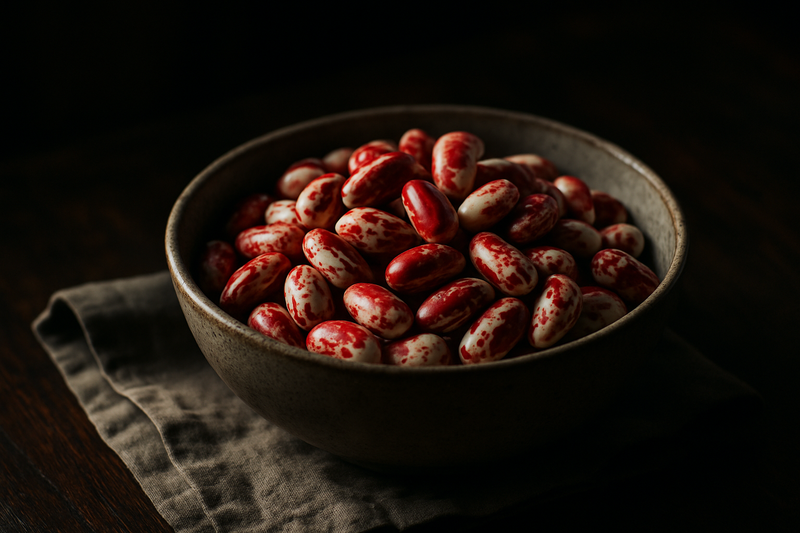
Tongues of Fire Beans · Photograph
Discover tongue of fire beans nutrition and health benefits — from heart health and blood sugar support to digestive wellness. Learn how to cook these creamy Italian heirloom shelling beans safely, plus who should take caution and how much to eat per day.
Key Nutrients
% Daily Value based on 2,000 cal diet
Key active compounds
These are the naturally occurring compounds in Tongue of Fire beans that researchers think drive most of their health effects:
- Resistant starch — A portion of starch that escapes digestion in the small intestine and is fermented by gut bacteria in the colon, producing short-chain fatty acids like butyrate that support colon health and improve insulin sensitivity.
- Oligosaccharides (raffinose and stachyose) — Short-chain carbohydrates that act as prebiotics (food for beneficial gut bacteria), but are also the main culprit behind post-bean gas and bloating.
- Polyphenols (flavonoids and phenolic acids) — Antioxidant plant compounds concentrated in the seed coat that may support vascular function and help dampen inflammation.
- Saponins — Bioactive glycosides (sugar-linked compounds) studied for cholesterol-lowering and immune-modulating properties, though most evidence is still from cell and animal studies.
- Phytosterols — Plant-derived compounds structurally similar to cholesterol that compete for absorption in the gut, modestly reducing circulating cholesterol levels.
- Phytic acid (inositol hexaphosphate) — A phosphorus storage compound that can slightly reduce absorption of minerals like iron and zinc, but also acts as an antioxidant. Soaking and cooking reduce its levels.
Prep and pairing ideas
Tongue of Fire beans are forgiving in the kitchen. Their creamy, mild flavor takes on whatever you cook them with.
Classic Italian simmer: Add shelled fresh beans (or soaked dried beans) to a pot with a halved head of garlic, a sprig of fresh sage, a drizzle of olive oil, and enough water or low-sodium broth to cover by two inches. Simmer until tender, season with salt at the end. Serve as a side or over crusty whole-grain bread.
Tomato and kale stew: Sauté diced onion, celery, and carrot. Add cooked (or canned and rinsed) cranberry beans, crushed tomatoes, torn kale, and vegetable broth. Simmer 20 minutes. The tomatoes add vitamin C, which improves absorption of the beans' non-heme iron.
Room-temperature salad: Toss cooked and cooled beans with diced cucumber, roasted red pepper, fresh parsley, a squeeze of lemon, and a small amount of extra-virgin olive oil. Cooling cooked beans increases their resistant starch content — a bonus for gut health.
Common pairings and why they work
- Tongue of Fire beans + tomato or lemon: Vitamin C from both dramatically improves iron absorption from the non-heme iron in beans — a practical tip for anyone relying on plant-based iron sources.
- Tongue of Fire beans + whole grains (farro, brown rice, or barley): Creates a complete amino-acid profile (providing all essential amino acids across the meal) and combines the fiber types for a prolonged fullness effect.
- Tongue of Fire beans + leafy greens (kale, chard, or spinach): Stacks folate and magnesium content in one dish, and the slight bitterness of greens complements the mild sweetness of the beans.
Bottom line
Tongue of Fire beans are a nutritional workhorse dressed in a beautiful, fire-streaked package. Their combination of high fiber, plant protein, folate, and a rich array of phytochemicals puts them firmly in the upper tier of whole-food legumes. The evidence base — drawn from common beans and mixed-pulse research — consistently points to benefits for LDL cholesterol, blood sugar control, digestive health, and potentially inflammation. They fit naturally into whole-food, plant-based, Mediterranean, and general healthy eating patterns.
The key rule: cook them fully every time. Raw or undercooked beans are genuinely dangerous due to lectins. Beyond that, the main challenge is managing the transition if you are new to beans — start slowly, soak dried beans, and let your gut microbiome catch up. For most people, Tongue of Fire beans are one of the most practical and pleasurable ways to eat more legumes.
How Tongues of Fire Beans Compares
| Compared with | What's different |
|---|---|
| Tongues of Fire Beans vs. Cranberry Bean (Borlotti) | Borlotti are smaller and starchier, while Tongues of Fire are larger and noticeably creamier. |
| Tongues of Fire Beans vs. Kidney Bean | Kidney beans have a thicker skin and firmer bite, whereas Tongues of Fire have a thin, tender skin. |
Health Benefits
Things to Know
Always cook thoroughly.: Raw and undercooked beans contain phytohaemagglutinin (PHA), a lectin that can cause rapid-onset nausea, vomiting, and diarrhea — even a small amount of undercooked beans can cause illness. Boil dried beans vigorously in fresh water (not soaking water) for at least 10 minutes before reducing the heat to finish cooking. Slow cookers that do not reach a full boil may not fully inactivate lectins; bring beans to a boil on the stovetop first if using a slow cooker.
Start low if you are new to beans.: Begin with ¼ cup cooked and gradually increase over two to three weeks to allow your gut microbiome to adjust and minimize gas and bloating.
IBS and FODMAP sensitivity.: Oligosaccharides in beans are high-FODMAP (fermentable carbohydrates that trigger symptoms in some people with irritable bowel syndrome). Smaller portions, thorough soaking, and rinsing may help; consult a dietitian if symptoms are severe.
Kidney disease.: People with advanced chronic kidney disease (CKD stage 4–5) may need to limit potassium and phosphorus intake; discuss appropriate bean portions with a renal dietitian.
Medication interactions to monitor:
Glucose-lowering drugs (insulin, sulfonylureas, GLP-1 agonists): Increased bean intake can improve glycemic control and may increase hypoglycemia (low blood sugar) risk if doses are not adjusted.
Antihypertensive medications: The blood-pressure-lowering effect of beans is usually beneficial but may require medication review if pressure drops significantly.
Potassium-sparing diuretics / ACE inhibitors / ARBs: In those with reduced kidney function, the potassium in beans could contribute to hyperkalemia (elevated blood potassium).
Iron supplements: Phytic acid in beans can reduce non-heme iron absorption; separate high-dose iron supplements from phytate-rich meals when possible.
Pregnancy.: Fully cooked beans are an excellent folate source and are generally safe and encouraged during pregnancy. Avoid raw or undercooked beans.
Children and older adults.: Ensure beans are soft enough to avoid choking; mash or blend if needed.
Pets.: Raw common beans contain lectins that are toxic to dogs and cats. Fully cooked plain beans are much less concerning, but always check with your vet before sharing.

Prep Ideas
- — Tongue of Fire beans + tomato or lemon: Vitamin C from both dramatically improves iron absorption from the non-heme iron in beans — a practical tip for anyone relying on plant-based iron sources.
- — Tongue of Fire beans + whole grains (farro, brown rice, or barley): Creates a complete amino-acid profile (providing all essential amino acids across the meal) and combines the fiber types for a prolonged fullness effect.
- — Tongue of Fire beans + leafy greens (kale, chard, or spinach): Stacks folate and magnesium content in one dish, and the slight bitterness of greens complements the mild sweetness of the beans.
Glossary
Shop This Ingredient
Stock your pantry with quality tongues of fire beans.
Buy on AmazonAs an Amazon Associate, Plantopedia earns from qualifying purchases. This costs you nothing extra and helps us keep the encyclopedia free.
Frequently Asked Questions
Heart and circulation Multiple randomized controlled trials (studies where participants are randomly assigned to a treatment or control group) and meta-analyses (pooled analyses of many studies) on pulses show that eating about one serving of cooked beans per day can reduce LDL cholesterol — often called "bad" cholesterol — by roughly 5–10% compared with control diets. Large observational studies also link higher legume intake with lower rates of coronary heart disease and cardiovascular death. The likely mechanisms include soluble fiber slowing cholesterol absorption, phytosterols competing with dietary cholesterol in the gut, and the simple swap effect: beans replacing saturated-fat-heavy protein sources. Tongue of Fire beans share the same fiber-and-phytosterol profile as other common beans, so these effects are reasonably expected, though no trials have tested this specific variety. Digestive health and microbiome The fiber story here works on two levels. Insoluble fiber adds bulk and speeds transit time through the colon, reducing constipation and the pressure that contributes to diverticular disease (small pouches that can form in the colon wall). Resistant starch and oligosaccharides go further, acting as prebiotics that selectively feed beneficial bacteria like Bifidobacterium and Lactobacillus, which in turn produce short-chain fatty acids that protect the colon lining. The trade-off, especially when you first increase bean intake, is gas and bloating from fermentation. Observational data link higher fiber and legume intake with lower rates of colorectal cancer, though the research is associational (showing correlation, not proving cause). Evidence is strong for dietary fiber overall; moderate and consistent specifically for beans. Blood sugar and metabolism Common beans have a low glycemic index, meaning they raise blood sugar slowly compared with white rice or bread. One well-known randomized trial by Jenkins and colleagues found that adults with type 2 diabetes who ate about one cup of cooked beans per day as part of a low glycemic-index diet improved their HbA1c (a three-month average blood sugar marker) more than a matched group eating a high-fiber whole-grain diet. Broader meta-analyses of pulses confirm modest improvements in fasting glucose and insulin sensitivity. These benefits likely apply to Tongue of Fire beans given their similar fiber, resistant starch, and protein content — all of which slow carbohydrate digestion and improve the body's response to insulin. If you take glucose-lowering medication, discuss any significant dietary changes with your prescriber, as improved blood sugar control could shift your medication needs. Inflammation and recovery Some human intervention trials with daily pulse consumption have found modest reductions in C-reactive protein (CRP), a blood marker of systemic inflammation, particularly in people with overweight, metabolic syndrome, or type 2 diabetes. Results are not fully consistent across studies, and sample sizes are often small, so this is best categorized as emerging evidence. The polyphenols, magnesium, and fiber in beans all influence inflammatory pathways in the body, giving a plausible mechanism even while larger confirmatory trials are still needed.
Fresh shell beans vs dried vs canned Fresh shell beans (picked when the pods are plump and colorful, shelled, and simmered immediately) have a creamier texture, slightly sweeter flavor, and a shorter cook time — roughly 20–35 minutes of gentle simmering without pre-soaking. They are seasonal and perishable, best used within a few days of harvest. Nutritionally, they are outstanding: lower in phytic acid than dried and at peak mineral and vitamin content. Dried Tongues of Fire beans are shelf-stable and widely available online. A quarter cup dry (about 35 g) yields roughly ½–¾ cup cooked. Soak dried beans in cold water for 8–12 hours, discard the soaking water, and simmer in fresh water at a rolling boil for at least 10 minutes before reducing to a gentle cook — this step is important for inactivating lectins (see safety section). Total cook time is typically 60–90 minutes. Canned cranberry or borlotti beans are the most practical substitute when fresh or dried Tongues of Fire are unavailable. Canning fully cooks the beans at high temperature, so lectins are already inactivated. Rinse canned beans well to reduce added sodium by around 40%. Nutritionally, canned is comparable to home-cooked; the main trade-off is slightly softer texture and sodium content. Purees and spreads made from any fully cooked form are another great option — blending maximizes the surface area of starch available to gut bacteria and adds creaminess to soups and dips without the extra fat of cream.
Human studies on beans and pulses most commonly test portions of ½ to 1½ cups (roughly 100–190 g) of cooked beans per day, or three to seven servings per week. The U.S. Dietary Guidelines recommend 1.5 cups of pulses per week as a minimum for most adults; many nutrition researchers consider this a floor rather than a ceiling. For practical day-to-day use: Starting out: ¼ cup cooked (roughly 50 g) two to three times per week, increasing slowly over two to four weeks. Maintenance for health benefits: ½–1 cup cooked per day, or at minimum three to five times per week, consistent with the majority of beneficial clinical trials. No hard upper limit has been established for healthy adults, but very large daily amounts (more than 2–3 cups) can increase gas or affect mineral balance for some people. There is no supplement form of Tongue of Fire beans, so the whole food (fresh, dried, or canned) is the only practical way to access their full benefit package — fiber, resistant starch, protein, and polyphenols together. Explore more on Plantopedia: Looking for meal-level strategies around fiber and blood sugar? Visit our /goals section for practical dietary goal guides that pair with ingredients like this one.
Quick Answers
Common questions, answered in a line.
You should always boil dried beans vigorously for at least 10 minutes in fresh water before lowering the heat to finish cooking. This process is essential to inactivate phytohaemagglutinin (PHA), a toxic lectin found in raw or undercooked beans that can cause severe nausea and vomiting.
Tongue of Fire beans contain several active compounds including resistant starch, prebiotic oligosaccharides, antioxidant polyphenols, cholesterol-lowering phytosterols, and saponins. These naturally occurring substances work together to support colon health, improve insulin sensitivity, and dampen inflammation.
Pairing Tongue of Fire beans with foods high in vitamin C, such as tomatoes, lemon, or leafy greens, dramatically improves the absorption of the beans' non-heme iron. For a complete protein profile, you should combine them with whole grains like farro, brown rice, or barley.
If you are new to eating beans, start with just 1/4 cup cooked and gradually increase your intake over two to three weeks. This allows your gut microbiome to adjust to the oligosaccharides, which are the main carbohydrates responsible for gas and bloating.
People with advanced chronic kidney disease (CKD stage 4–5) should consult a renal dietitian before eating these beans due to their potassium and phosphorus content. Additionally, those taking glucose-lowering drugs or blood pressure medications should monitor their levels closely as bean intake may require medication adjustments.
Yes, fully cooked Tongue of Fire beans are an excellent source of folate and are generally encouraged during pregnancy. However, you must strictly avoid raw or undercooked beans, as they contain harmful lectins that can cause food poisoning.
Cooling cooked beans before serving them in a salad increases their resistant starch content, which is a significant bonus for gut health. Resistant starch escapes digestion in the small intestine to feed beneficial bacteria in the colon, producing health-promoting fatty acids like butyrate.
For Readers in the USA
Local context — sourcing, seasonality, and regional notes.
In the United States, Tongue of Fire beans are typically in season from mid-summer through early autumn, primarily appearing at farmers markets in August and September. While dried versions are available year-round, fresh pods are a seasonal delicacy most common in USDA Hardiness Zones 4 through 7.
You can find dried Tongue of Fire beans at specialty grocers like Whole Foods Market or through heirloom seed and grain suppliers like Rancho Gordo. Because they are a specific Borlotto variety, they are less common in standard supermarkets than pinto or black beans, though they are a staple at regional Italian-American markets.
Tongue of Fire beans (also known as Borlotto or Cranberry beans) are widely grown by home gardeners and small-scale organic farms across the Pacific Northwest and the Northeast. They thrive in the cooler summer climates of states like Oregon, Washington, and Vermont, where they are prized for their high yields and resistance to local pests.
While Tongue of Fire is the specific heirloom name, you will often see them labeled as Cranberry beans or Borlotti beans in US grocery stores and recipes. They are part of the common bean family (Phaseolus vulgaris) and are culinary cousins to the more ubiquitous pinto bean, though they offer a creamier texture.
AI Clinical Review
- Solid nutrition snapshot based on cranberry/borlotti bean data; the protein, fiber, and folate figures per ½ cup are realistic for Phaseolus vulgaris.
- Health outcomes are framed appropriately: RCTs and meta-analyses on pulses show modest LDL reduction and better glycemic control, which likely applies to this variety.
- Clear explanation of resistant starch and fermentable fibers as prebiotics, with practical tips (soaking, rinsing canned, vitamin C pairing) to improve tolerance and iron absorption.
- Safety around lectins is emphasized correctly, including the need for a vigorous boil and the slow-cooker caveat.
- Most claims are extrapolated from studies on mixed pulses or other common beans; Tongue of Fire–specific human trials are lacking.
- Microbiome and colon health benefits are biologically plausible but rely heavily on mechanistic and observational data rather than long-term disease outcomes.
- Anti-inflammatory effects (e.g., CRP lowering) and roles of polyphenols/saponins in humans remain inconsistent or early-stage.
- Typical research doses are about ½–1½ cups cooked beans per day; if you’re new to beans, start with ~¼ cup and increase gradually to limit gas and bloating.
- Safety first: fully cook dried beans (rapid boil before simmering); canned versions are already safe—rinsing reduces sodium substantially.
- Check in with a clinician if you use glucose‑lowering medications (hypoglycemia risk as control improves), have advanced kidney disease, or take potassium‑sparing drugs/ACE inhibitors/ARBs.
- High‑phytate meals can impair iron supplement absorption—separate timing when possible; in pregnancy, fully cooked beans are a folate‑rich, generally safe option; mash/soften for young children or older adults to reduce choking risk.
Cook fully before eating.
References
- USDA FoodData Central — cooked cranberry/common beans (primary nutrient reference) (fdc.nal.usda.gov)
- Harvard T.H. Chan School of Public Health — The Nutrition Source: Legumes and Pulses (overview of legume health evidence) (nutritionsource.hsph.harvard.edu)
- Ha V et al. — Systematic review and meta-analysis of pulses on cardiovascular risk factors (RCTs, LDL cholesterol and blood pressure outcomes) (cmaj.ca)
- Jenkins DJA et al. — Legumes as part of a low-GI diet in type 2 diabetes, randomized controlled trial (HbA1c improvement vs. high-fiber whole grains) (jamanetwork.com)
- Sievenpiper JL et al. — Meta-analysis of pulses on glycemic control and cardiovascular risk in type 2 diabetes (pmc.ncbi.nlm.nih.gov)
- Hong Kong Centre for Food Safety — Phytohaemagglutinin poisoning: lectin toxicity and safe cooking of beans (cfs.gov.hk)
- Finnish Food Authority — Beans: instructions for use and warnings (soaking and boiling guidance) (ruokavirasto.fi)
- U.S. Dietary Guidelines for Americans 2020–2025 — recommendations for weekly legume intake (dietaryguidelines.gov)
- NorthBay Trading Co. — Tongues of Fire Beans product nutrition facts (per-serving data, dry weight) (northbaytrading.com)
- Specialty Produce — Tongue of Fire Shelling Beans (copper, zinc, iron, calcium, fiber content description) (specialtyproduce.com)
Know Your Numbers
Eating healthy is a start. Now get to know your biomarkers.
Food changes bloodwork — inflammation, lipids, blood sugar and nutrient status all respond to what you eat. 59 markers from $59.
- Results in 7–10 days at 2,000+ Quest sites
- Licensed provider reviews every result
- One flat price, no membership, HSA/FSA eligible
Educational information only, not medical advice. Panels are ordered and reviewed through our licensed partner; Plantopedia may earn a commission.