Yellow Lentils — health benefits and uses
Protein + fiber leverage; batch-cook, meal-prep, and satiety angle
The Short Answer
Yellow lentils are high-protein legumes that cook in 15–25 minutes without soaking, providing 18g of protein and 90% of your daily folate per cooked cup. They are prized for their soft, creamy texture in dals and soups.
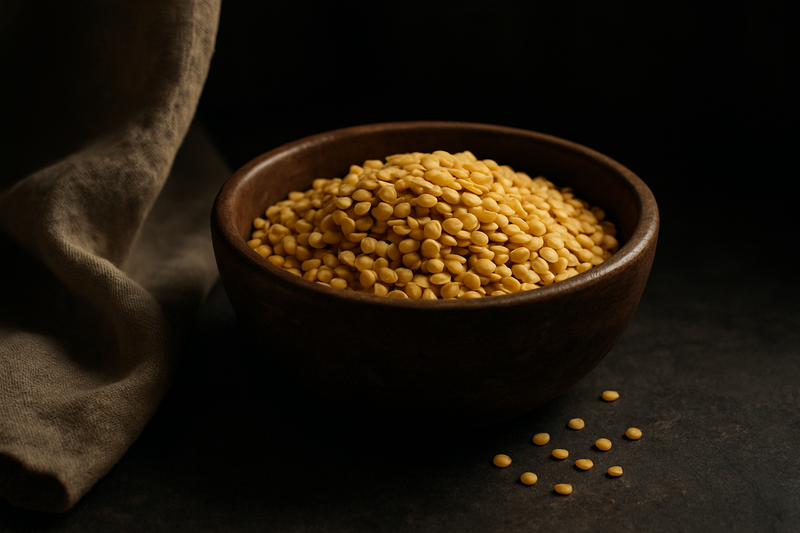
Yellow Lentils · Photograph
Yellow lentils (Lens culinaris) are a type of pulse — the dried, edible seed of a legume plant — most often sold in their split form and cooked into the creamy, golden dals eaten across South Asia, the Middle East, and increasingly in Western kitchens. They cook faster than almost any other legume, require no soaking, and dissolve into a silky texture that makes them ideal for soups, stews, and one-pot meals.
Key Nutrients
% Daily Value based on 2,000 cal diet
Key Active Compounds in Yellow Lentils
Yellow lentils owe their health-supporting properties to several overlapping families of bioactive compounds:
- Polyphenols — A broad class of plant compounds with antioxidant and anti-inflammatory effects, including phenolic acids, flavonoids, and tannins. In lentils, polyphenols are linked to reduced oxidative stress and lower risk of cardiometabolic disease.
- Flavonoids — A polyphenol subgroup that may help modulate inflammation and support healthy blood vessel function.
- Lectins (heat-sensitive proteins) — Carbohydrate-binding proteins naturally present in raw legumes. In raw or undercooked form, lectins can cause serious gastrointestinal distress. Thorough cooking inactivates them completely, and cooked lectins may actually have beneficial immune-modulating and anticancer properties under study.
- Resistant starch — A form of starch that bypasses digestion in the small intestine and is fermented by bacteria in the colon (the large intestine). It acts as a prebiotic — food for beneficial gut microbes — and produces short-chain fatty acids that support colon health and insulin sensitivity.
- Prebiotic fibers — Fermentable fibers that selectively feed beneficial gut bacteria, supporting microbiome diversity and metabolic health.
Prep and Pairing Ideas
Yellow lentils are one of the easiest legumes to cook. Here is a simple baseline method:
- Sort and rinse — Spread dry lentils on a plate, remove any debris, then rinse under cold running water.
- Optional soak — Cover with cold water for 30 minutes, drain, and rinse again if you want faster cooking or better gas tolerance.
- Cook — Combine 1 cup dry split yellow lentils with 2.5–3 cups water or low-sodium broth. Bring to a boil, reduce to a simmer, and cook 15–25 minutes until completely soft and starting to break down.
- Season after cooking — Adding salt or acid (lemon juice, tomatoes) early can toughen the lentils and extend cooking time.
Common pairings and why they work
1. Yellow lentils + spinach or kale Iron in lentils is non-heme iron (the plant-based form), which is less readily absorbed than iron from meat. Vitamin C in dark
How Yellow Lentils Compares
| Compared with | What's different |
|---|---|
| Yellow Lentils vs. Red Lentils | Red lentils cook faster and turn soft-orange, while yellow lentils hold a slightly firmer shape. |
| Yellow Lentils vs. Yellow Split Peas | Yellow split peas take longer to cook and have a starchier, earthier flavor than yellow lentils. |
Health Benefits
Things to Know
Always cook yellow lentils thoroughly.: Raw or undercooked lentils contain active lectins that can cause nausea, vomiting, and cramping. Boiling or simmering until fully tender inactivates them completely.
Build up gradually.: Adding large amounts of lentils quickly to a low-fiber diet commonly causes gas, bloating, and cramping. Start with ¼ cup cooked and increase over 2–3 weeks.
Rinse well before cooking.: This removes surface debris, dust, and some gas-producing compounds.
Soaking is optional but helpful for sensitive digestions.: Soak for 30 minutes to a few hours, discard the soak water, and cook in fresh water.
Kidney disease: Lentils are relatively high in potassium. People with advanced kidney disease or those advised to limit dietary potassium should discuss appropriate portion sizes with their clinician.
Medication interactions: High-fiber meals can slow gastric emptying and may affect absorption timing for some oral medications, including levothyroxine (thyroid medication) and certain antibiotics. Standard advice is to take these medications separately from large high-fiber meals — ask your pharmacist or doctor.
Diabetes medication: If you take glucose-lowering drugs or insulin, increasing low-GI, high-fiber foods like lentils may alter post-meal blood sugar patterns. Monitor accordingly and coordinate with your healthcare provider.
Legume allergy: People with a confirmed legume or lentil allergy should avoid lentils entirely. Cross-reactivity with other legumes is possible.
IBS and inflammatory bowel conditions: Fermentable fibers in lentils can aggravate symptoms in some people with irritable bowel syndrome (IBS) or active inflammatory bowel disease (IBD). Well-cooked, pureed lentil preparations (like a smooth dal or soup) are generally better tolerated than firmer, whole-lentil dishes.
Pregnancy: Lentils are a beneficial source of folate and iron during pregnancy, but they are not a substitute for a prenatal supplement. Confirm your micronutrient needs with your midwife or OB.

Prep Ideas
- — Sort and rinse — Spread dry lentils on a plate, remove any debris, then rinse under cold running water.
- — Optional soak — Cover with cold water for 30 minutes, drain, and rinse again if you want faster cooking or better gas tolerance.
- — Cook — Combine 1 cup dry split yellow lentils with 2.5–3 cups water or low-sodium broth. Bring to a boil, reduce to a simmer, and cook 15–25 minutes until completely soft and starting to break down.
- — Season after cooking — Adding salt or acid (lemon juice, tomatoes) early can toughen the lentils and extend cooking time.
Shop This Ingredient
Stock your pantry with quality yellow lentils.
Buy on AmazonAs an Amazon Associate, Plantopedia earns from qualifying purchases. This costs you nothing extra and helps us keep the encyclopedia free.
Frequently Asked Questions
The evidence base for lentils comes primarily from studies on mixed-legume diets (beans, chickpeas, lentils, peas combined) rather than yellow lentils in isolation. However, yellow lentils share the same core nutrient and phytochemical profile as other lentil varieties, so the findings are broadly applicable. Here is what the research suggests. Heart health and circulation Multiple meta-analyses (studies that pool results from many individual trials) find that regularly eating cooked legumes is associated with lower cardiovascular (heart disease) risk. Specific findings relevant to lentils: A review of eight clinical trials found that eating roughly one cup of cooked legumes daily for around ten weeks was associated with reductions in blood pressure. An analysis of 26 randomized controlled trials — the gold standard of research design — found that legume-rich diets reduced LDL cholesterol (often called "bad" cholesterol) compared to control diets. Yellow lentils are naturally very low in saturated fat and sodium, and high in potassium, soluble fiber, and polyphenols — all of which independently support heart health markers. Evidence level: Moderate. Most trials use mixed legumes, not yellow lentils exclusively, and effects depend on replacing less healthy foods in the diet rather than simply adding lentils on top of an unchanged diet. Digestive health and the gut microbiome Lentils' fiber profile is one of their most consistent selling points. One cooked cup provides approximately 16 grams of dietary fiber — more than half of the recommended daily intake for most adults — in both soluble and insoluble forms. Insoluble fiber adds bulk to stools and helps prevent constipation. Soluble fiber and resistant starch are fermented by gut bacteria into short-chain fatty acids like butyrate, which help maintain the colon lining and may reduce inflammation. Scientific reviews note that high-fiber lentils can support bowel regularity and promote a more diverse gut microbiome (the community of microorganisms living in your digestive tract). Evidence level: Strong for fiber's role in bowel health and gut microbiome support. Most evidence comes from fiber research broadly, with consistent findings in lentil-specific studies. Blood sugar and metabolism Yellow lentils have a low glycemic index (GI) — a measure of how quickly a food raises blood sugar after eating. Their slow-digesting fiber and resistant starch blunt post-meal blood sugar spikes. Reviews cited by WebMD and a 2024 scientific review note that regular lentil and legume intake can improve blood sugar control and lipid metabolism (how the body processes fats) in people with and without type 2 diabetes. Replacing higher-GI starchy foods (white rice, white bread) with lentils in meals is associated with better glycemic control in clinical studies. Evidence level: Moderate. Most trials use whole cooked legumes at 0.5–1 cup per day incorporated into meals, not isolated lentil supplements or extracts. Hormones, folate, and cycle health This benefit area is less direct but still relevant, particularly for people who menstruate or are planning a pregnancy: Lentils are an excellent source of folate, a B vitamin critical for DNA synthesis and, in early pregnancy, for preventing neural tube defects in the developing fetus. Some epidemiological (large population) data suggest higher legume intake is associated with reduced risk of certain hormone-related cancers such as breast cancer, possibly because dietary fiber affects how the body metabolizes and clears estrogen. Yellow lentils can meaningfully help plant-based eaters meet folate and iron needs that support menstrual health. Evidence level: Emerging. Hormone-related data are largely indirect — driven by folate and fiber content rather than lentil-specific human trials. Inflammation and recovery Lentils' polyphenol content gives them antioxidant properties (the ability to neutralize cell-damaging molecules called free radicals), and a 2024 scientific review highlighted anti-inflammatory effects in mechanistic research. Legume-rich dietary patterns are generally associated with lower markers of systemic inflammation (body-wide low-grade inflammatory activity linked to chronic disease). Most detailed mechanistic data are from cell and animal studies; large human trials specifically measuring inflammatory markers from lentil interventions are limited. Evidence level: Emerging. Benefits are inferred from polyphenol content and legume-rich diet patterns rather than large lentil-only clinical trials.
Buying guide: fresh, dry, canned, or flour? Dry split yellow lentils (the most common form) The gold standard for nutrition and versatility. Look for lentils that are uniform in color, free of visible debris, and stored in sealed packaging. No soaking is required, but a 30-minute soak followed by draining can reduce cooking time and may decrease gas-producing compounds — useful if you have a sensitive gut. Always cook until completely soft. Canned cooked lentils Offer comparable fiber and protein with significant time savings. Rinse canned lentils under cold water before using to remove excess sodium (if salt-added). Most research is based on home-cooked legumes, but minimally processed canned lentils should deliver similar nutritional value. Lentil flour and pasta Used in baked goods, flatbreads, and pasta to boost protein and fiber. Clinical data on lentil flour alone are limited, but these products can help increase overall lentil intake. Always cook or bake thoroughly. Label tip: For dry lentils, "split" indicates the seed coat has been removed and the lentil halved — this is the standard form used in dal. "Whole" lentils take longer to cook and hold their shape better in salads or grain bowls. Organic labeling does not meaningfully change the nutritional profile.
Quick Answers
Common questions, answered in a line.
Yellow lentils are a type of pulse—the dried, edible seed of a legume plant—typically sold in split form and valued for their creamy texture when cooked. They are distinct for cooking faster than most other legumes and dissolving into a silky consistency ideal for soups, stews, and dals.
You should cook split yellow lentils for 15 to 25 minutes until they are soft and beginning to break down. To prepare them, combine one cup of dry lentils with 2.5 to 3 cups of water or broth, bring to a boil, and then simmer until tender.
No, you should never eat raw yellow lentils because they contain active lectins that can cause severe gastrointestinal distress, including nausea and vomiting. Thoroughly boiling or simmering the lentils until they are fully tender inactivates these heat-sensitive proteins completely.
You should add salt or acidic ingredients like lemon juice and tomatoes only after the lentils have finished cooking. Adding these ingredients too early can toughen the lentils and significantly extend the required cooking time.
Yellow lentils contain resistant starch and prebiotic fibers that serve as food for beneficial gut microbes. These compounds are fermented in the colon to produce short-chain fatty acids, which support overall microbiome diversity and colon health.
To improve iron absorption, you should pair yellow lentils with vitamin C-rich foods like spinach or kale. These lentils contain non-heme iron, which is absorbed more efficiently by the body when consumed alongside vitamin C.
Yellow lentils offer heart-health benefits through polyphenols and flavonoids that help reduce oxidative stress and support healthy blood vessel function. Their high fiber content also contributes to the reduction of cardiometabolic disease risk.
For Readers in the USA
Local context — sourcing, seasonality, and regional notes.
Yellow lentils are grown primarily in the Northern Plains of the United States, specifically in North Dakota and Montana, which account for the majority of U.S. pulse production. These regions provide the cool, dry climate necessary for high-quality crops, which are typically harvested in late summer.
Yellow lentils are widely available at major U.S. supermarkets like Whole Foods Market, Kroger, and Safeway, as well as specialty grocers like H-Mart and Patel Brothers. You can typically find them in the dry bean aisle or the international food section labeled as "Moong Dal" or "Yellow Split Peas."
Yellow lentils sold in the USA are regulated by the FDA as a food product, and consumers should look for the USDA Organic seal if they wish to ensure the crop was produced without synthetic pesticides. The U.S. Department of Agriculture also provides grading standards to ensure uniformity and quality in dried pulses.
In American kitchens, yellow lentils are frequently used as a plant-based protein substitute in vegan "golden" soups, stews, and gluten-free flour blends. While traditionally used in South Asian dals, they have become a staple in the U.S. health food scene due to their quick cooking time compared to other dried beans.
AI Clinical Review
- Clearly explains what yellow lentils are and why they’re practical: fast-cooking, no soaking required, and budget‑friendly for meal prep.
- Nutrient profile is accurate: a cooked cup is high in protein and fiber with meaningful folate, iron, potassium, and B vitamins, while low in fat and sodium.
- Summarizes human research well: legume‑rich diets can lower LDL cholesterol and blood pressure and improve post‑meal blood sugars, especially when legumes replace refined starches.
- Gut health benefits are well framed: soluble/insoluble fiber and resistant starch support regularity, short‑chain fatty acid production, and a more diverse microbiome.
- Most clinical trials evaluate mixed legumes rather than yellow lentils alone, so estimates of benefit are generalized; effect sizes vary with the rest of the diet and total fiber intake.
- Anti‑inflammatory and anticancer discussions (including potential beneficial effects of cooked lectins) come largely from mechanistic or animal data; robust lentil‑specific human trials are limited.
- Evidence for lentil flour or lentil‑based pasta delivering the same glycemic or lipid effects as intact cooked lentils is not yet strong.
- Typical research portions are roughly 1/2–1 cup cooked lentils per day over 8–12 weeks; increase gradually to reduce gas and bloating.
- Cook thoroughly to inactivate lectins; rinsing and optional short soaking can improve tolerance. Form matters: split yellow (often labeled red/masoor dal) cooks to a puree; whole lentils hold their shape; canned is convenient—rinse to lower sodium; flours/pastas vary by brand and add‑ins.
- People with chronic kidney disease or potassium restrictions, IBS/IBD, or legume allergies should individualize portions and consider checking with a clinician first.
- If you take levothyroxine, certain antibiotics, or glucose‑lowering medications, separate dosing from very high‑fiber meals and monitor glucose when increasing lentils; pairing with vitamin‑C‑rich foods can enhance non‑heme iron absorption.
Mention soaking/cooking tolerance tips where relevant; avoid raw legume prep errors.
References
- PMC, National Library of Medicine — Polyphenol-Rich Lentils and Their Health Promoting Effects (pmc.ncbi.nlm.nih.gov)
- PMC, National Library of Medicine — Health-promoting benefits of lentils: Anti-inflammatory and anti-microbial effects (pmc.ncbi.nlm.nih.gov)
- PubMed — Screening of the Nutritional Properties, Bioactive Components, and Antioxidant Properties in Legumes (pubmed.ncbi.nlm.nih.gov)
- USDA FoodData Central — USDA FoodData Central (fdc.nal.usda.gov)
- Springer — Client Challenge (link.springer.com)
- PMC, National Library of Medicine — Twelve Weeks of Daily Lentil Consumption Improves Fasting Cholesterol and Postprandial Glucose and Inflammatory Responses-A Randomized Clinical Trial (pmc.ncbi.nlm.nih.gov)
- ScienceDirect — S2665944124000087 (sciencedirect.com)
Know Your Numbers
Eating healthy is a start. Now get to know your biomarkers.
Food changes bloodwork — inflammation, lipids, blood sugar and nutrient status all respond to what you eat. 59 markers from $59.
- Results in 7–10 days at 2,000+ Quest sites
- Licensed provider reviews every result
- One flat price, no membership, HSA/FSA eligible
Educational information only, not medical advice. Panels are ordered and reviewed through our licensed partner; Plantopedia may earn a commission.