Belgian Endive — health benefits and uses
A blanched chicory traditionally eaten as a gentle bitter digestive.
The Short Answer
Belgian endive is a nutrient-dense leafy vegetable providing over 200% of the daily value for Vitamin K and 142 mcg of folate per 100g serving. Its unique bitter compounds, like sesquiterpene lactones, help stimulate digestion while its firm leaves serve as a

Belgian Endive · Photograph
Discover the science-backed Belgian endive health benefits, from gut-friendly fiber and heart-supportive potassium to standout vitamin K content. Learn how to eat it raw, braised, or as edible boats, plus who should watch their intake and how much to aim for each day.
Key Nutrients
% Daily Value based on 2,000 cal diet
Key active compounds and phytochemicals
Belgian endive's benefits come from a combination of vitamins, minerals, and plant-specific compounds called phytochemicals.
- Sesquiterpene lactones — Bitter-tasting terpenoid compounds (a class of naturally occurring plant chemicals) responsible for endive's mild bite. Early research suggests they may have antioxidant and digestive-stimulating properties, though human studies on endive specifically are limited.
- Flavonoids (quercetin, kaempferol) — Polyphenolic plant pigments widely associated with vascular and anti-inflammatory support in broader research. Belgian endive contains these in modest amounts.
- Phenolic acids (chlorogenic acid, caffeic acid) — A type of plant polyphenol known to scavenge free radicals (unstable molecules that can damage cells). Evidence is largely from related chicory species.
- Carotenoids — Pigments including beta-carotene that the body can convert to vitamin A. They contribute to endive's small but real vitamin A activity.
- Inulin-type fructans — Soluble prebiotic fibers (food for beneficial gut bacteria) found in chicory-family plants. Present in small amounts in endive, they may contribute to microbiome support.
Prep and pairing ideas
Belgian endive is one of the easiest vegetables to prepare — no peeling, no blanching, minimal chopping required.
Three go-to pairings:
- Endive leaves + walnut + blue cheese or cashew cream — The mild bitterness of endive balances the richness of nuts and cheese beautifully. Walnuts add omega-3 fatty acids and additional fiber; together they make a nutritionally layered appetizer boat in under five minutes.
- Braised endive + lemon + olive oil — A classic French preparation. The acid from lemon brightens the caramelized sweetness that develops during braising. Olive oil adds monounsaturated fat that helps absorb fat-soluble vitamins K and A from the endive.
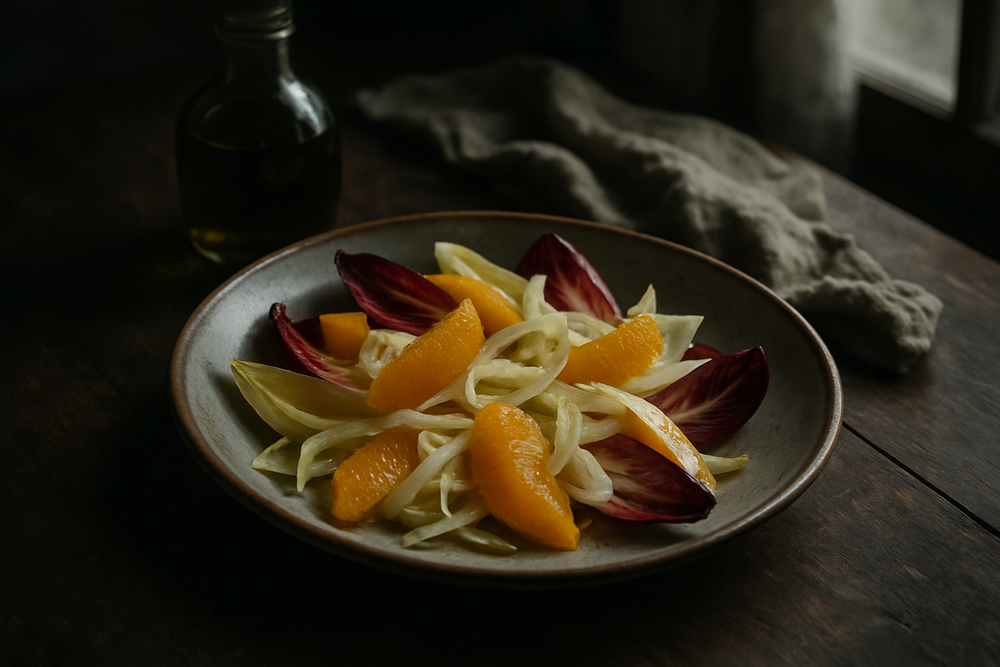
- Thinly sliced raw endive + orange segments + fennel — A winter salad combination that pairs the bitterness of endive with sweet citrus and anise-flavored fennel. Orange segments add vitamin C, which may enhance absorption of non-heme iron from plant sources in the same meal.
Storage tip: Wrap unwashed heads in a damp paper towel inside a sealed bag or container and refrigerate. Use within five to seven days. Keep away from light sources — even brief exposure to light increases bitterness noticeably.
Bottom line
Belgian endive is a quiet nutritional overachiever: barely 17 calories per 100 g, yet packed with vitamin K, folate, fiber, and a suite of antioxidant compounds. Research on the broader category of leafy greens and high-fiber vegetables supports its role in digestive health, cardiovascular support, blood sugar management, and anti-inflammatory eating patterns — though endive-specific clinical trials are limited.
It's also one of the most practical vegetables in the kitchen. The leaves need no cooking, form their own serving vessels, and take well to braising, roasting, or a quick sear when you want something warm. The main caution is its high vitamin K content, which is worth discussing with a prescriber if you take blood thinners.
If you're looking for a low-calorie, high-nutrient leafy green to rotate into your weekly meals, Belgian endive is one of the most underused options available at most grocery stores — and one of the most elegant.
Looking to build more vegetable-forward habits? Browse Plantopedia's ingredient guides by health goal to find the best whole foods for your specific needs.
How Belgian Endive Compares
| Compared with | What's different |
|---|---|
| Belgian Endive vs. Curly Endive (Frisée) | Broader, loose green leaves with a much more intense, frizzy bitter flavor profile. |
| Belgian Endive vs. Radicchio | Slightly sweeter with a peppery bite, lacking the firm, scoop-like structure of endive. |
| Belgian Endive vs. Romaine Lettuce | Darker green, leafier, and significantly higher in vitamins A and C but lacks the crunch. |
Health Benefits
Things to Know
Vitamin K and anticoagulants: Belgian endive contains approximately 231 mcg of vitamin K per 100 g — nearly double the daily value. If you take warfarin or another vitamin K-antagonist anticoagulant (blood thinner), consistent (not necessarily limited) vitamin K intake is key. Sudden large increases or decreases in vitamin K-rich foods can shift your INR (a measure of clotting time). Talk to your prescriber before dramatically changing your endive intake.
Chicory allergy: Belgian endive belongs to the Asteraceae (daisy) family. People with known allergies to chicory, ragweed, chrysanthemum, or related plants should approach endive cautiously and consult an allergist if unsure.
Digestive sensitivity: The fiber and bitter compounds may cause mild gas or bloating when introduced quickly. Start with smaller amounts and increase gradually.
Low-potassium diets: Endive provides moderate potassium (314 mg per 100 g). If your doctor has prescribed a strict low-potassium diet (usually for certain kidney conditions), count it within your daily limit.
Pregnancy: Folate in endive is genuinely beneficial during early pregnancy, but always confirm dietary choices with your midwife or ob-gyn, especially regarding food safety practices (washing produce thoroughly).
No known drug interactions: beyond the vitamin K/warfarin relationship have been documented for typical culinary use.
Prep Ideas
- — Endive leaves + walnut + blue cheese or cashew cream — The mild bitterness of endive balances the richness of nuts and cheese beautifully. Walnuts add omega-3 fatty acids and additional fiber; together they make a nutritionally layered appetizer boat in under five minutes.
- — Braised endive + lemon + olive oil — A classic French preparation. The acid from lemon brightens the caramelized sweetness that develops during braising. Olive oil adds monounsaturated fat that helps absorb fat-soluble vitamins K and A from the endive.
- — Thinly sliced raw endive + orange segments + fennel — A winter salad combination that pairs the bitterness of endive with sweet citrus and anise-flavored fennel. Orange segments add vitamin C, which may enhance absorption of non-heme iron from plant sources in the same meal.
Glossary
Shop This Ingredient
Stock your pantry with quality belgian endive.
Buy on AmazonAs an Amazon Associate, Plantopedia earns from qualifying purchases. This costs you nothing extra and helps us keep the encyclopedia free.
Frequently Asked Questions
Health benefits linked to Belgian endive come primarily from its nutrient profile and the broader body of research on leafy green vegetables. No large clinical trials have tested Belgian endive in isolation, so claims are evidence-informed rather than proven. Here is what the research suggests, area by area. Heart and circulation Belgian endive is naturally low in sodium and saturated fat, and provides three nutrients with well-established roles in cardiovascular health: potassium, folate, and fiber. Potassium (314 mg per 100 g) is associated with healthier blood pressure in population studies — it helps counterbalance sodium's effect on fluid balance. Folate supports the conversion of homocysteine (an amino acid linked to arterial stiffness at high levels) into safer compounds. Fiber (3.1 g per 100 g) is consistently associated with improved LDL cholesterol ("bad" cholesterol) and reduced cardiovascular risk across large observational studies of high-fiber vegetable diets. Research suggests these benefits arise from the whole nutrient package and the dietary pattern it sits within, not from endive alone. Digestive health and microbiome Belgian endive is a useful fiber source for such a low-calorie food. Its 3.1 g per 100 g includes both insoluble fiber — which adds bulk to stool and supports regularity — and small amounts of soluble fiber that feeds beneficial gut bacteria (a process called fermentation by the microbiome). Traditional food knowledge also holds that bitter compounds in chicory-family vegetables can stimulate saliva and gastric juice production, which may prime the digestive system before a meal. This is mechanistically plausible but has not been confirmed in controlled human trials specific to Belgian endive. Blood sugar and metabolism With only 3.4 g of total carbohydrate per 100 g and meaningful fiber, Belgian endive has a very low glycemic impact — meaning it is unlikely to cause a rapid spike in blood sugar. Research on high-fiber vegetable diets consistently shows improvements in postprandial (after-meal) glucose levels and insulin sensitivity over time. Replacing higher-carbohydrate side dishes with endive is one practical way to reduce a meal's overall glycemic load (a measure of how much a specific food raises blood sugar relative to portion size). Evidence here is indirect and pattern-based rather than endive-specific. Inflammation and recovery Vitamin A, vitamin C, folate, and the flavonoids in Belgian endive all contribute to the body's antioxidant defenses — systems that help neutralize free radicals before they can damage tissues. Regular consumption of antioxidant-rich vegetables is associated with lower markers of systemic inflammation in population research. No clinical trials have used Belgian endive as a standalone anti-inflammatory intervention. The effect, if any, comes from consistent dietary patterns rich in diverse leafy greens. Hormones and cycle health Folate and B vitamins in endive participate in methylation — a biochemical process essential for producing neurotransmitters (brain-signaling chemicals) and regulating gene expression, which intersects with hormonal balance. Folate is especially well-studied for its role in reproductive health and fetal neural tube development during early pregnancy. Vitamin K may also influence bone density, which is relevant across the hormonal changes of perimenopause and menopause. Again, these are nutrient-level effects supported by broader research, not endive-specific outcomes.
Both forms have advantages, and choosing between them often comes down to taste preference rather than dramatic nutritional differences. Raw leaves preserve heat-sensitive nutrients like vitamin C and certain phytochemicals. The crisp leaves separate naturally into elegant, edible boats — perfect for holding fillings — or slice thinly for salads. Keep raw endive away from direct light until serving; light exposure triggers further bitterness by activating bitter compounds in the leaves. Braised or roasted endive is a different experience altogether. Gentle heat mellows the bitterness and caramelizes the natural sugars, creating a sweeter, silkier texture. Vitamin C drops somewhat during cooking, but fat-soluble nutrients like vitamin K and carotenoids remain stable and may even become slightly more bioavailable (easier to absorb) when cooked with a small amount of olive oil. Lightly sautéed or seared endive takes about five minutes in a hot pan and makes an easy, impressive side dish. Mayo Clinic's healthy recipe collection includes a seared endive recipe as a low-calorie, fiber-rich option. For most people, the best form is whichever one you'll actually eat regularly.
The fiber-focused eater Wants more digestive fiber without dramatically increasing calories Struggles to enjoy strongly flavored greens like kale or arugula Finds endive boats a practical, low-effort appetizer or snack vehicle The heart-health focused adult Looking for low-sodium, potassium-rich vegetables to support blood pressure goals Already eating a variety of leafy greens but wants to diversify beyond spinach and romaine Interested in folate-rich foods to support healthy homocysteine metabolism
There is no established therapeutic dose for Belgian endive because it is a food, not a supplement. General vegetable intake guidelines from MyPlate recommend 2–3 cups of vegetables daily for most adults, and endive can contribute meaningfully to that target. Practical range: ½ cup (about 25 g): A single large leaf used as a boat — a low-commitment starting point, especially if you're new to bitter flavors. 1 cup (about 50 g): A generous side salad portion or three to four braised half-heads. This provides roughly 1.5 g fiber and about 115 mcg vitamin K. 2 cups (about 100 g): A full 100 g serving delivers the nutrient amounts listed in the nutrition snapshot above and is reasonable as a regular part of a varied diet. Start low if you're fiber-sensitive — adding 100 g of any high-fiber vegetable suddenly can cause bloating. Increase gradually over one to two weeks. If you take warfarin, consistency matters more than quantity — pick a portion size you can maintain week to week and discuss it with your healthcare provider.
Quick Answers
Common questions, answered in a line.
Belgian endive contains approximately 231 mcg of vitamin K per 100 g, which is nearly double the daily value. This high concentration is essential for bone health, though individuals on blood thinners should maintain consistent intake to avoid affecting medication efficacy.
Belgian endive contains sesquiterpene lactones, which are bitter-tasting plant chemicals that may stimulate digestion and provide antioxidant properties. It also features inulin-type fructans, a prebiotic fiber that supports a healthy gut microbiome.
You should avoid light when storing Belgian endive because even brief exposure can noticeably increase its bitterness. For best results, wrap unwashed heads in a damp paper towel and keep them in a sealed container in the refrigerator for five to seven days.
If you take warfarin or other vitamin K-antagonist anticoagulants, you must consult your doctor before significantly changing your Belgian endive intake. Because it is very high in vitamin K, sudden changes in consumption can alter your blood's clotting time (INR).
Belgian endive is a low-calorie vegetable, containing only about 17 calories per 100 grams. Despite its low calorie count, it is nutrient-dense, providing significant amounts of fiber, folate, and potassium.
People with allergies to the Asteraceae (daisy) family, which includes ragweed, chrysanthemums, and chicory, should approach Belgian endive with caution. The vegetable may cause an allergic reaction in sensitive individuals.
Pairing Belgian endive with olive oil helps your body absorb fat-soluble nutrients like vitamin K and vitamin A. Using lemon or orange segments provides vitamin C, which can enhance the absorption of non-heme iron present in the meal.
For Readers in the USA
Local context — sourcing, seasonality, and regional notes.
In the U.S., Belgian endive is most widely available during its peak season from late fall through early spring, typically September to May. While indoor hydroponic farming allows for year-round availability in many regions, the quality and price are often best during the cooler months.
Belgian endive is commonly sold in the produce section of major U.S. grocery chains like Whole Foods, Trader Joe’s, and Safeway, often packaged in three-count sleeves to protect them from light. You can also find them at specialty markets and upscale farmers markets, particularly in California and the Northeast where domestic production is concentrated.
Domestic Belgian endive is primarily grown in California, which provides the controlled, dark environment necessary for the plant's unique second growth phase. While they can be grown in home gardens across USDA hardiness zones 3-9, the complex "forcing" process makes commercial production more common in these temperate regions.
The USDA Organic seal on Belgian endive ensures it was grown without synthetic pesticides or fertilizers, which is a popular choice for those eating the leaves raw. Because endive is grown in a highly controlled, soil-free or indoor environment to keep it white, it generally has lower exposure to outdoor environmental contaminants than other leafy greens.
AI Clinical Review
- Clearly explains that Belgian endive is very low in calories yet rich in vitamin K, folate, and fiber, and gives practical ways to eat it raw or cooked.
- Appropriately frames heart, blood sugar, and digestive benefits as diet-pattern effects of fiber- and vegetable-rich eating, not as endive-specific cures.
- Correctly highlights the vitamin K–warfarin interaction and the importance of consistent intake rather than avoidance.
- Notes endive’s low glycemic impact and plausible microbiome support from fiber, which align with broader evidence on leafy vegetables.
- Human studies that isolate Belgian endive’s unique compounds (sesquiterpene lactones, specific flavonoids) are limited; most data come from related chicory species or general leafy-green research.
- “Bitter” compounds stimulating digestion is mechanistically plausible but not well confirmed in controlled trials specific to endive.
- Microbiome effects from endive’s small amounts of inulin-type fructans haven’t been quantified; benefits are likely modest compared with higher-inulin foods (e.g., chicory root).
- Anti-inflammatory or “detox/liver support” claims are largely extrapolated from observational data or non-endive preparations and should be viewed as supportive, not definitive.
- Vitamin K: If you take warfarin or another vitamin K–antagonist, keep your intake of endive steady and coordinate with your clinician; sudden changes can shift your INR.
- Digestive sensitivity: The fiber and bitter compounds can cause gas/bloating if you ramp up quickly—those with IBS or fructan sensitivity may do better increasing portions gradually.
- Potassium: Endive contributes moderate potassium; people on clinician-directed low‑potassium diets (e.g., certain kidney conditions) should count it toward daily limits.
- Practical use: A typical food range of about ½–2 cups (≈25–100 g) per day fits most vegetable goals. Raw preserves vitamin C; cooking with a little oil can improve absorption of fat‑soluble nutrients (e.g., vitamin K). Pregnant individuals should follow routine produce-washing practices; folate from foods complements prenatal supplementation.
Very safe; keep out of light to preserve mildness.
References
- USDA FoodData Central — Endive, raw (nutrition data): (fdc.nal.usda.gov)
- MyPlate — Vegetables food group guidance (general vegetable intake recommendations): (myplate.gov)
- Mayo Clinic — Seared Belgian endive healthy recipe: (mayoclinic.org)
- Precision Nutrition food encyclopedia — Endive (nutrient profile and culinary overview): (precisionnutrition.com)
- Nutrition-and-You — Endive nutrition facts and health benefits: (nutrition-and-you.com)
- Nutrivore — Endive nutrients breakdown: (nutrivore.com)
- PMC / NIH — Review on chicory and related compounds, antioxidant and metabolic properties (broader chicory family evidence): (pmc.ncbi.nlm.nih.gov)
- Gourmetpedia — All about endive or witloof (culinary and nutritional overview): (gourmetpedia.net)
- Culinum — Endive nutrition spotlight (per-100-g breakdown): (culinum.com)
- Specialty Produce — Belgian endive information and facts: (specialtyproduce.com)
Know Your Numbers
Eating healthy is a start. Now get to know your biomarkers.
Food changes bloodwork — inflammation, lipids, blood sugar and nutrient status all respond to what you eat. 59 markers from $59.
- Results in 7–10 days at 2,000+ Quest sites
- Licensed provider reviews every result
- One flat price, no membership, HSA/FSA eligible
Educational information only, not medical advice. Panels are ordered and reviewed through our licensed partner; Plantopedia may earn a commission.