Candlenut — health benefits and uses
Used across Southeast Asia both as food and, traditionally, as a lamp fuel and mild laxative.
The Short Answer
Candlenuts must be cooked before consumption to neutralize toxic saponins; they are primarily used as a thickening agent in Southeast Asian curries and sambals.
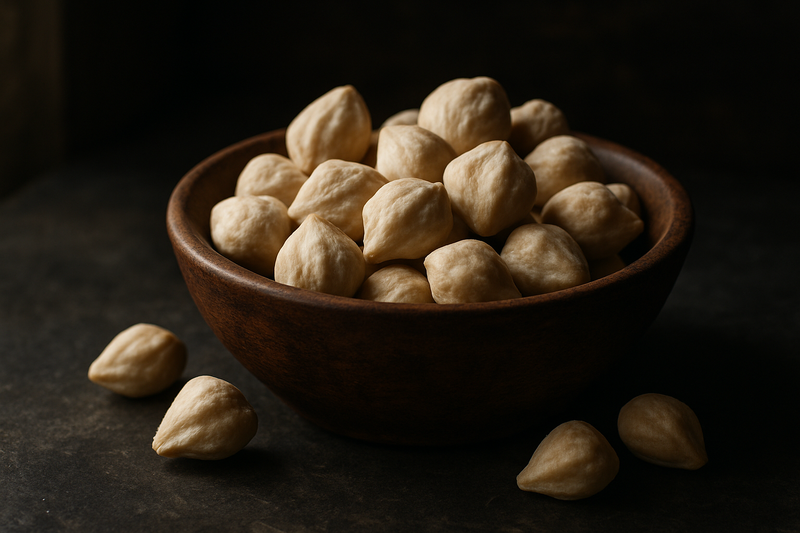
Candlenut · Photograph
Discover candlenut health benefits and how to use it safely in Indonesian and Malaysian cooking. Learn candlenut nutrition facts, why raw candlenuts are toxic, how to cook them properly, and what the early research says about candlenut oil for heart health, inflammation, and skin.
Key Nutrients
% Daily Value based on 2,000 cal diet
Key active compounds in candlenut
- Polyunsaturated fatty acids (PUFAs) — Candlenut seed oil is rich in linoleic acid (an omega-6 fatty acid) and linolenic acid (an omega-3 fatty acid). These fats with multiple double bonds are linked to cell membrane health and anti-inflammatory signaling when they replace saturated fats in the diet.
- Monounsaturated fatty acids (MUFAs) — Including oleic acid (the main fat in olive oil), MUFAs are associated with improved blood lipid profiles in broader nut research.
- Phenolic compounds — Plant molecules with antioxidant (protecting cells from oxidative damage) and anti-inflammatory properties. Laboratory studies on candlenut extracts show antimicrobial and antioxidant activity.
- Tocopherols — Vitamin E–type antioxidants thought to contribute to candlenut oil's skin-protective reputation and possible lipid-modulating effects, though detailed profiling of candlenut's tocopherol content is still ongoing.
- Phytosterols — Plant-derived sterols structurally similar to cholesterol. Found in many nuts and seeds, they may modestly support healthy cholesterol metabolism, though candlenut-specific data are limited.
Prep and pairing ideas
The core technique: dry roast then grind. Place whole candlenuts in a dry skillet over medium-low heat. Stir frequently for 3–5 minutes until the surface turns golden and fragrant. Allow to cool, then crush with a mortar and pestle or blitz in a small blender with your other paste ingredients. This step is essential — it deactivates the irritant compounds and releases the oils that do the thickening work.
Common pairings
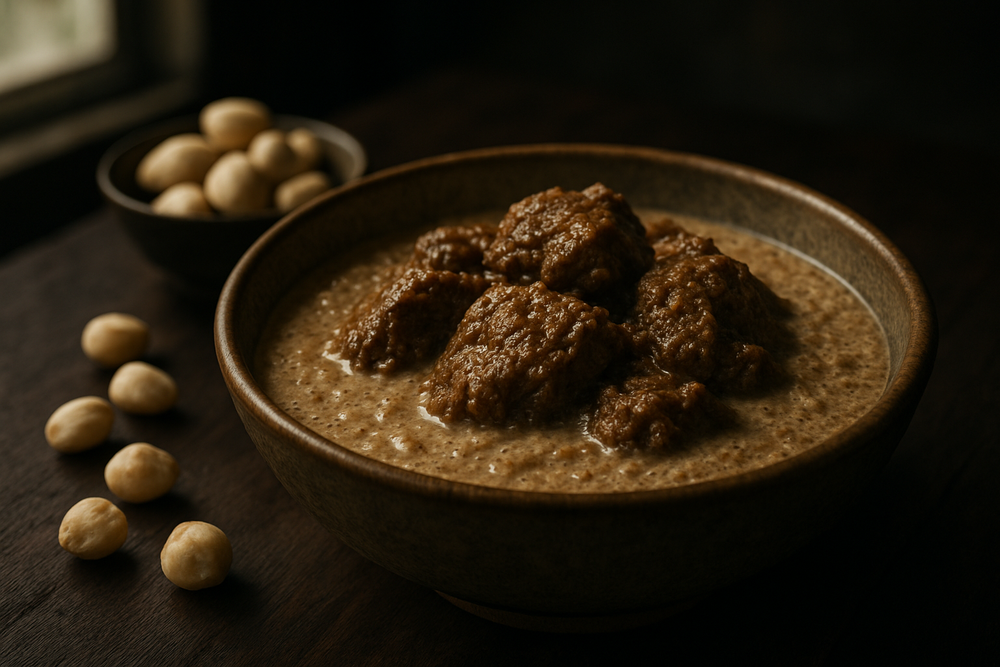
1. Candlenut + lemongrass + galangal (Indonesian rendang base) This is the classic Southeast Asian combination. Lemongrass's citrusy brightness and galangal's (a ginger-family root) peppery warmth are balanced by candlenut's creamy, neutral richness. Together they form the aromatic foundation of rendang and many Malaysian curries.
2. Candlenut + chili + shallot (sambal kemiri) In this popular Indonesian condiment, roasted candlenuts are ground with fresh or dried chilies and shallots into a thick, fiery paste. The candlenut cuts the raw edge of the chili and adds body that keeps the sambal clinging to rice or grilled vegetables rather than pooling on the plate.
3. Candlenut + turmeric + coconut milk (Malay-style fish or tofu curry) Candlenut pairs naturally with turmeric's earthy bitterness and coconut milk's sweetness. In vegetable or tofu curries, it helps the sauce coat each piece evenly, while turmeric adds its own emerging anti-inflammatory credentials to the bowl.
Bottom line
Candlenut is a fascinating ingredient that earns its place in the world of food-as-medicine conversations — not because it is a superfood to eat by the handful, but because it is a perfect example of how traditional food wisdom (always cook it, use it sparingly) aligns with what modern nutrition science is starting to confirm. Its unusual combination of high unsaturated fat, notable magnesium, remarkable copper content, and high thiamine makes it nutritionally interesting even in small culinary doses. Early research on its oil is genuinely promising for cardiovascular and inflammatory pathways, but it remains early.
For most people, the practical takeaway is simple: if you are cooking Indonesian or Malaysian food and a recipe calls for kemiri, use it properly — roasted, ground, in small amounts — and enjoy both the flavour and whatever nutritional value comes along with it. Do not eat it raw, do not take large amounts, and do not rely on supplements without medical guidance.
If you want to explore more whole-food ingredients that support heart health and anti-inflammatory eating patterns, the Plantopedia goals guide is a good next step.
How Candlenut Compares
| Compared with | What's different |
|---|---|
| Candlenut vs. Macadamia Nut | Macadamias are safe to eat raw, whereas candlenuts are mildly toxic unless roasted first. |
| Candlenut vs. Cashew | Cashews are sweeter and softer; candlenuts have a higher oil content and are used to thicken sauces. |
Health Benefits
Things to Know
Never eat candlenuts raw.: Raw candlenuts contain irritant compounds that are strongly purgative (causing diarrhea and cramping) and mildly toxic. Thorough roasting or cooking inactivates these compounds.
Use small culinary amounts.: Traditional recipes call for 1–3 nuts per dish serving multiple people. This is not a nut you eat by the handful.
Gastrointestinal sensitivity: People with IBS, IBD, or chronic diarrhea should be especially cautious, as even cooked candlenut's high fat content and residual irritants may aggravate symptoms.
Children: More sensitive to the purgative and toxic effects of under-cooked or excess candlenut. Keep raw nuts out of reach.
Pregnancy and breastfeeding: Safety data for medicinal doses or candlenut oil supplements during pregnancy are absent. Culinary amounts in a cooked dish are considered low risk by traditional practice, but supplements should be avoided without medical guidance.
Nut and seed allergies: Potential cross-reactivity with other tree nuts exists. If you have a known tree nut allergy, introduce cautiously and consult a doctor first.
Liver or kidney disease: Limited data on how candlenut bioactives are metabolized at supplemental doses. Stay within small culinary amounts.
Medications: No well-documented interactions for culinary amounts. If you take anticoagulants (blood thinners) or antiplatelet drugs, use high-dose candlenut oil supplements cautiously, extrapolating from general guidance on high-PUFA and vitamin E–rich oils. If you take glucose-lowering medication, do not use candlenut oil products marketed for metabolic support without discussing with your doctor.
Glossary
Shop This Ingredient
Stock your pantry with quality candlenut.
Buy on AmazonAs an Amazon Associate, Plantopedia earns from qualifying purchases. This costs you nothing extra and helps us keep the encyclopedia free.
Frequently Asked Questions
Heart and circulation Candlenut's fatty acid profile — heavy on PUFAs and MUFAs, low on saturated fat — is in line with the broader evidence showing that nuts and seeds rich in unsaturated fats can support healthier blood lipid levels. A small clinical study on candlenut seed oil supplementation (Sulistyo Emantoko et al.) observed changes in fatty acid profiles and aspects of lipid metabolism in participants, but the trial was limited in scale and design. Minerals like magnesium and potassium, present in meaningful amounts per serving, are consistently linked to blood pressure regulation and vascular health in population studies. The honest summary: there is no large randomized trial proving that eating candlenut reduces heart attacks or stroke. What we can say is that its nutrient profile is consistent with heart-supportive dietary patterns, and early oil studies show promise worth following. Digestive health and microbiome Traditional descriptions of candlenut across Indonesian, Malaysian, and Hawaiian cultures consistently flag its laxative and purgative effect — especially raw. Modern clinical trials specifically testing candlenut on gut health (constipation, IBS, microbiome diversity) do not yet exist. The fiber content of candlenut is modest at around 1 g per serving, similar to other nuts. The key digestive message: cooked candlenut in small culinary amounts is generally well tolerated by healthy adults. Raw or excess candlenut is not, and it should never be used as a self-directed laxative remedy. Blood sugar and metabolism Candlenut is very low in carbohydrates, which means it has a minimal direct effect on blood glucose (blood sugar) compared with starchy thickeners. Some diabetes nutrition guides classify it as suitable for low-carbohydrate eating patterns for this reason. However, no randomized controlled trial has tested candlenut specifically for glycemic control or insulin sensitivity. Any benefit for blood sugar is likely general — replacing higher-carbohydrate ingredients with a small amount of fat-rich candlenut in a dish — rather than anything specific to candlenut itself. Inflammation and recovery Laboratory and early clinical research on candlenut oil points to anti-inflammatory activity, likely driven by its PUFA content and phenolic compounds. A therapeutic review of candlenut oil applications noted preliminary clinical observations around wound healing and changes in inflammatory markers, while stressing that the body of evidence is currently small. In vitro (in a lab dish) results look interesting, but they do not automatically translate to human benefits at culinary doses. Skin and topical use (candlenut oil) Topical (applied to skin) use of candlenut (kukui) oil has a long tradition in Hawaiian culture for skin hydration, soothing minor irritation, and supporting the skin barrier. Laboratory studies confirm antimicrobial and anti-inflammatory properties consistent with these uses. This is one area where the traditional evidence and early scientific data align reasonably well, though formal clinical trials are still limited.
Buying guide: fresh, dried, or oil? Whole dried candlenuts are the standard culinary form and the most widely available outside Southeast Asia. Look for them in Asian grocery stores and online specialty retailers. Good quality nuts are cream to pale yellow, firm, and smell faintly oily — not rancid. Avoid any that smell stale or look shriveled. Pre-ground kemiri paste or spice blends are a convenient shortcut and are sold in small jars or sachets at Asian supermarkets. Check the label: the best versions contain only candlenut (and sometimes salt), without unnecessary fillers or excessive added oil. Macadamia nuts are the most commonly recommended substitute in recipes when candlenut is unavailable — they share a similar creamy, high-fat profile and are easier to find in Western supermarkets. Candlenut seed oil is available both as a food-grade culinary oil and as a cosmetic oil for skin and hair. For topical use, look for cold-pressed versions without added fragrances. For internal or supplemental use, there is currently insufficient evidence to recommend a therapeutic dose, so approach with caution and discuss with a healthcare provider.
There is no established official daily intake recommendation for candlenut as there is for, say, vitamin C. What traditional culinary practice and available safety guidance suggest is a practical range: 1–3 whole nuts per recipe serving is the standard culinary amount across Indonesian and Malaysian cooking traditions. This typically works out to roughly 5–10 g of nut per person after the dish is portioned. Starting point: If you are new to candlenut, begin with one nut per dish to see how your digestive system responds to the richness and fat content. Upper boundary: There is no formal "maximum safe dose" in the research literature, but going well beyond culinary amounts — especially with raw or under-cooked nuts — is where toxicity risk rises sharply. Use it as a spice, not a snack. Candlenut oil supplements: No standardized therapeutic dose has been established. The early clinical studies used measurable oil doses, but these were experimental settings, not general-use recommendations. Consult a healthcare provider before using supplements. The bottom-line dose philosophy for candlenut: think like a spice, not a serving.
Quick Answers
Common questions, answered in a line.
You should never eat candlenuts raw because they contain irritant compounds that are mildly toxic and act as a strong purgative. These compounds cause symptoms like diarrhea and stomach cramping, but they are deactivated during the roasting or cooking process.
To cook candlenuts properly, dry roast them in a skillet over medium-low heat for 3–5 minutes until golden and fragrant before grinding them. This essential step deactivates toxic irritants and releases the oils needed to thicken sauces and curries.
Candlenuts are rich in polyunsaturated fatty acids like omega-6 and omega-3, as well as monounsaturated fats like oleic acid. They also contain phenolic compounds, tocopherols (Vitamin E), and phytosterols, which contribute to their antioxidant and anti-inflammatory properties.
Candlenut oil shows promise for heart health because it is rich in unsaturated fats and tocopherols that may help modulate lipids and support anti-inflammatory signaling. These healthy fats are linked to improved blood lipid profiles when they replace saturated fats in the diet.
Candlenuts are traditionally used as a thickening agent in Southeast Asian cuisine to add a creamy, neutral richness to sauces and pastes. They are a staple ingredient in Indonesian rendang, sambal kemiri, and various Malaysian fish or tofu curries.
People with nut allergies, IBS, or chronic diarrhea should be cautious with candlenuts, as the high fat content and residual irritants can aggravate symptoms. Additionally, those on blood thinners or glucose-lowering medication should consult a doctor before using candlenut oil supplements.
For Readers in the USA
Local context — sourcing, seasonality, and regional notes.
In the United States, candlenuts are most easily found at Indonesian, Malaysian, or pan-Asian grocery stores, often labeled as "kemiri." Larger international chains like H Mart or 99 Ranch Market frequently stock them in the spice or dried goods aisle, and they are increasingly available through specialized online spice retailers.
While the tropical candlenut tree is not native to the mainland US, it is widely grown in Hawaii, where it is known as the Kukui nut and serves as the official state tree. Some small-scale cultivation exists in the frost-free regions of Southern Florida and Puerto Rico, but most culinary candlenuts sold in the US are imported from Southeast Asia.
The FDA does not have a specific "Generally Recognized as Safe" (GRAS) listing for raw candlenuts because they contain saponins and phorbol esters that cause gastric distress. US consumers should ensure they only purchase candlenuts intended for culinary use and must follow traditional roasting methods to ensure the product is safe to ingest.
In the US, candlenuts are often sold under their Indonesian name, "kemiri," or occasionally as "Kukui nuts" when marketed for Hawaiian skincare or traditional uses. Some specialty shops may also refer to them as "Indian walnuts" or "magical nuts," though "candlenut" remains the standard culinary term in English-language recipes.
AI Clinical Review
- Clearly explains candlenut’s role as a culinary thickener used in small amounts and emphasizes that raw nuts are purgative/toxic and must be cooked.
- Appropriately characterizes its nutrition profile (high in unsaturated fats; notable magnesium, phosphorus, copper, and thiamine) and places it within heart‑supportive dietary patterns without overstating benefits.
- Accurately frames research on candlenut seed oil as preliminary, noting the absence of large randomized trials.
- Offers practical, safety‑aligned preparation guidance (dry‑roast then grind) that reflects traditional use.
- Sensibly distinguishes culinary uses from topical kukui oil, acknowledging traditional skin benefits with limited clinical data.
- Human trials on candlenut (seed or oil) for cardiovascular, metabolic, or inflammatory outcomes are small or lacking; most claims are extrapolated from broader nut/oil research.
- Gastrointestinal and microbiome effects have not been tested in controlled studies; traditional reports of laxative action don’t translate to therapeutic guidance.
- Nutrient values vary by source and preparation, and typical recipe portions per person are far below 1 oz, so real‑world nutrient contributions are modest.
- Safety, effective dosing, and drug–nut interactions for oral candlenut oil supplements are not established; current cautions are largely theoretical.
- Dose: treat it like a spice—about 1–3 nuts per multi‑serving dish; always roast or cook thoroughly and avoid raw consumption.
- Populations to be cautious: individuals with IBS/IBD or sensitive GI tracts, children, those who are pregnant or breastfeeding, and anyone with tree‑nut allergies (possible cross‑reactivity).
- Medications: people on anticoagulants/antiplatelets or glucose‑lowering drugs should avoid concentrated oils/supplements unless cleared by a clinician.
- Form matters: if ingesting oil, use food‑grade only; high‑PUFA oils oxidize—buy small amounts and store in a cool, dark place; cosmetic kukui oil is for skin use only.
Mildly toxic and purgative when raw; always cook thoroughly before eating.
References
- USDA FoodData Central — nuts and seeds reference data (fdc.nal.usda.gov)
- Malaysian Ministry of Health Food Composition Database — candlenut (buah keras) (myfcd.moh.gov.my-;-aleurites-moluccana.html)
- MyPlate protein foods guidance — nuts and seeds (myplate.gov)
- Kinome — candlenut complete nutrition facts and analysis (kinome.app)
- OnlyFoods — candlenut nutritional facts overview (onlyfoods.net)
- Sulistyo Emantoko et al. — Effects of candlenut seed oil supplementation on fatty acid profiles (university clinical study) (repository.ubaya.ac.id)
- Therapeutic Applications of Candlenut Oil — review report (scribd.com)
- Anti-inflammatory characteristics of candlenut — institutional research (repository.i3l.ac.id)
- My Kitchen Gallery — can you eat candlenuts raw? Safety overview (mykitchengallery.com)
- Singaporean Malaysian Recipes — what are candlenuts (kukui nuts)? (singaporeanmalaysianrecipes.com)
Know Your Numbers
Eating healthy is a start. Now get to know your biomarkers.
Food changes bloodwork — inflammation, lipids, blood sugar and nutrient status all respond to what you eat. 59 markers from $59.
- Results in 7–10 days at 2,000+ Quest sites
- Licensed provider reviews every result
- One flat price, no membership, HSA/FSA eligible
Educational information only, not medical advice. Panels are ordered and reviewed through our licensed partner; Plantopedia may earn a commission.