Bunya Nuts — health benefits and uses
A ceremonial Aboriginal Australian food gathered at communal bunya festivals.
The Short Answer
Bunya nuts are a starchy, low-fat Australian bush food that provides 6g of complete protein and 40g of complex carbohydrates per 100g serving. They function nutritionally more like a potato or chestnut than a typical high-fat nut.
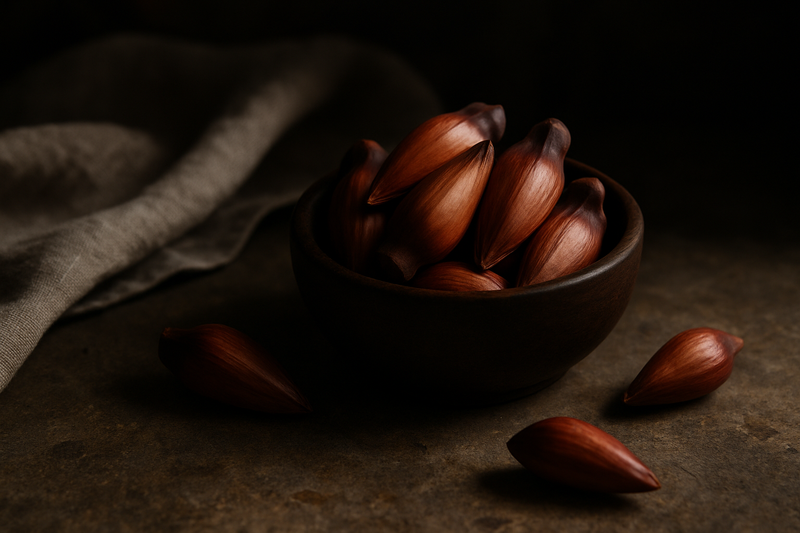
Bunya Nuts · Photograph
Discover bunya nuts health benefits and nutrition facts — a starchy, low-fat Australian bush food rich in complex carbs, complete protein, and fiber. Learn how to cook them safely, who should be cautious, and how to use bunya nut flour in gluten-free baking.
Key Nutrients
% Daily Value based on 2,000 cal diet
Key active compounds
- Complex starch — The dominant macronutrient. Provides slow, sustained energy and acts as substrate for fermentation by beneficial gut bacteria (known as resistant starch when cooked and cooled).
- Complete protein — Contains all nine essential amino acids (the building blocks your body cannot make on its own), which is relatively uncommon for a plant seed.
- Dietary fiber — Supports bowel regularity and feeds the gut microbiome (the community of bacteria living in your digestive tract).
- Polyunsaturated fatty acids — Including omega-3 and omega-6 fats; the fat content is low overall, but what is present skews toward these healthier unsaturated forms.
- Catechin — A flavonoid (a plant pigment with antioxidant properties) concentrated in the husk and inner skin of the nut. Antioxidants help protect cells from damage caused by unstable molecules called free radicals.
- Phenolic compounds — A broader class of plant chemicals with antioxidant and potential anti-inflammatory properties, found mainly in the outer layers of the nut.
- Folate — A B vitamin essential for DNA synthesis, cell division, and fetal neural tube development.
- Minerals — Including magnesium, iron, copper, manganese, potassium, and phosphorus, each playing distinct roles in body function outlined below.
Prep and pairing ideas
Bunya nuts pair well with flavors that complement their mild, slightly sweet, starchy character. Think of them the way you would think of chestnuts or waxy potatoes.
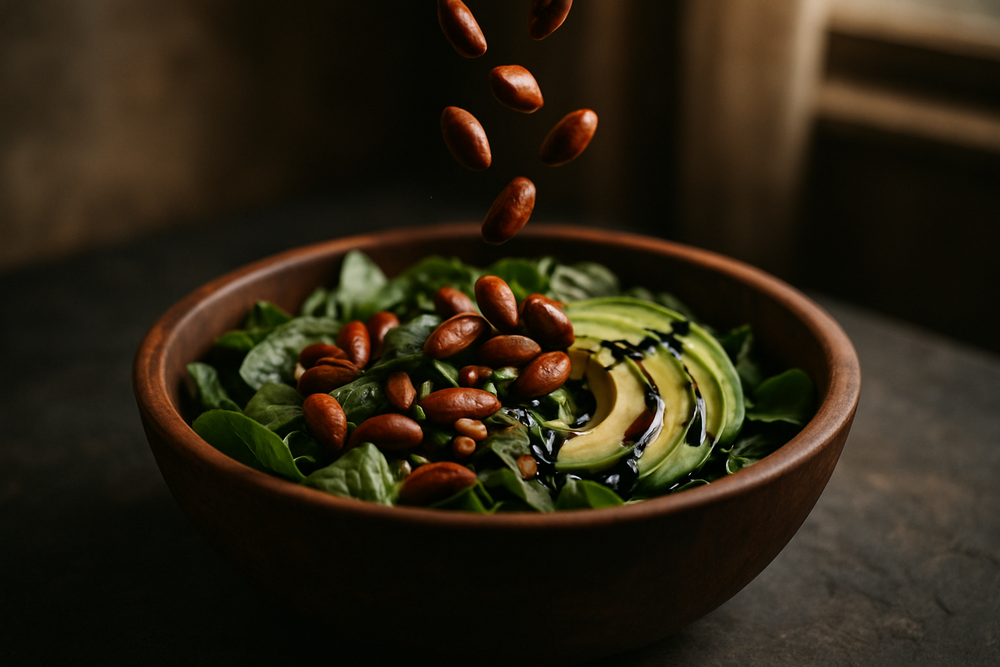
Savory bowl with roasted bunya nuts, greens, and miso dressing — Boiled or roasted kernels pair beautifully with bitter greens like kale or radicchio, balanced by a miso-lemon dressing. The umami depth of miso echoes the nuttiness of the bunya kernel, and the greens add folate and vitamin C that enhance iron absorption from the nuts.
Bunya nut flatbread with hummus and herbs — Blend bunya nut flour (20–30%) with a gluten-free flour blend to make a hearty flatbread. Serve with hummus for complementary protein, and top with fresh herbs. The combination provides a more complete amino acid balance than either food alone.
Bunya nut and root vegetable soup — Roughly chopped cooked bunya nuts added to a sweet potato or carrot soup act like dumplings or croutons — thickening the broth slightly and adding protein and fiber. A warming, satisfying meal with a good range of beta-carotene, complex carbs, and minerals.
Bottom line
Bunya nuts are a nutritionally distinctive whole food — starchy, low-fat, fiber-rich, and surprisingly protein-complete for a seed. They have sustained human populations for millennia and are now attracting well-deserved scientific and culinary attention. Their nutrient profile aligns with many of the characteristics of a health-supportive whole food: complex carbohydrates, dietary fiber, minerals, and minimal saturated fat.
The honest caveat is that bunya-specific human trials are essentially absent. Most of the health benefits discussed here are grounded in their nutrient composition and extrapolated from broader research on low-GI, high-fiber, plant-based foods — not from studies that fed people bunya nuts and measured outcomes. That gap does not diminish their value as a food, but it does mean the claims should be held with appropriate humility.
If you live in or can source from Australia, bunya nuts are worth exploring — whether you boil them like chestnuts, blend them into a gluten-free flatbread, or fold them into a warm winter soup. They are also an opportunity to support First Nations food traditions and a more diverse, sustainable food system.
If you are looking to explore more whole-food plant-based options beyond bunya nuts, browse our ingredient guides by health goal at /goals.
How Bunya Nuts Compares
| Compared with | What's different |
|---|---|
| Bunya Nuts vs. Chestnuts | Bunya nuts are much lower in fat (2g vs 22g) and higher in complex carbohydrates. |
| Bunya Nuts vs. Macadamia Nuts | Bunya nuts are a starchy, low-fat seed, whereas macadamias are oil-rich and calorie-dense. |
Health Benefits
Things to Know
Always cook first.: Raw bunya nuts are hard, indigestible, and may cause gastrointestinal discomfort or pose a choking risk. This applies to all ages.
Tree nut allergy: If you have a known tree nut or seed allergy, approach bunya nuts with caution. Specific allergenicity data is very limited, so discuss with your allergist before trying them.
Diabetes or prediabetes: Bunya nuts are a meaningful carbohydrate source (~40 g per 100 g). While their low-GI profile is favorable, they should be factored into carbohydrate counting or meal planning. Monitor blood glucose response as you would with any new starchy food.
Kidney disease / potassium restriction: Bunya nuts contain potassium. If you have chronic kidney disease or your doctor has advised limiting potassium, speak with your renal dietitian before using them regularly.
Digestive sensitivity: The fiber and resistant starch content is a genuine asset for most people, but if you have irritable bowel syndrome (IBS) or a sensitive gut, introduce bunya nuts gradually to avoid bloating or discomfort.
Medication interactions: No specific drug interactions are documented for bunya nuts. However:
If you take glucose-lowering medication (e.g., metformin, insulin), account for the carbohydrate content in your meal planning and speak to your healthcare team.
If you take blood pressure medication and are advised to restrict potassium or magnesium, check with your clinician.
As with any high-fiber food, a sudden large increase in intake could theoretically affect absorption timing for some medications — spacing meals and medication doses is a sensible general practice.
Pregnancy: One consumer health source considers cooked bunya nuts safe in moderation during pregnancy, primarily as a nutrient-dense energy and protein source. Discuss any major dietary changes with your midwife or doctor, particularly regarding portion sizes.
Young children and older adults with swallowing difficulties: The dense texture of whole cooked bunya nuts can pose a choking risk. Mash, puree, or grind into flour for these groups.
Best Forms
(seasonal): Found at farmers' markets in Queensland and northern New South Wales during the harvest season. Look for cones or individual nuts with firm, intact shells and no mold. Use within 2–3 weeks refrigerated, or freeze kernels after cooking.
Increasingly available from specialty bush food suppliers online. A practical year-round option; nutritional quality is well preserved. Look for unseasoned, additive-free packs.
Available from Australian native food retailers and online. Check that the product specifies "bunya nut" rather than a generic label. Store in an airtight container in a cool, dark place and use within the date on the pack.
and none is needed; the whole food is the point.
Shop This Ingredient
Stock your pantry with quality bunya nuts.
Buy on AmazonAs an Amazon Associate, Plantopedia earns from qualifying purchases. This costs you nothing extra and helps us keep the encyclopedia free.
Frequently Asked Questions
The evidence for specific health benefits is currently at an "emerging" level — meaning it comes from nutrient composition studies, traditional use, and extrapolation from broader dietary research rather than from clinical trials testing bunya nuts directly. Here is what we know, and what remains speculative. Heart and circulation Bunya nuts are very low in saturated fat (the type of fat most consistently linked to raised LDL cholesterol, sometimes called "bad" cholesterol). What little fat they contain is predominantly polyunsaturated, including omega-3 and omega-6 fatty acids, which are associated with healthier blood lipid profiles in broader nutritional research. Their fiber content may also contribute to modest LDL reduction, consistent with evidence on dietary fiber from other plant foods. Potassium and magnesium — both present in bunya nuts — are well-established nutrients for blood pressure regulation, though the specific contribution of bunya nut intake to blood pressure has not been measured. No randomized controlled trials (studies where participants are randomly assigned to treatment and control groups) have assessed bunya nut intake and cardiovascular outcomes, so any heart-health benefit remains theoretical at this stage. Digestive health and microbiome Bunya nuts provide dietary fiber and resistant starch — a form of starch that escapes digestion in the small intestine and reaches the colon, where it feeds beneficial bacteria. This prebiotic effect (supporting the growth of beneficial microorganisms) is well-documented for resistant starch in general, and plausible for bunya nuts given their composition, but no microbiome studies using bunya nuts specifically have been published. Traditional use across many generations suggests bunya nuts are well tolerated as a staple food when properly cooked. Their dense texture means they should be chewed thoroughly. Introducing them gradually is sensible if your digestive system is not accustomed to high-fiber or starchy whole foods. Blood sugar and metabolism The starch in bunya nuts is predominantly complex (long-chain carbohydrate molecules that take longer to break down) and appears to have a relatively low glycemic index (GI) — meaning they are less likely to cause sharp spikes in blood sugar compared to refined carbohydrate foods like white bread or rice crackers. This is based on compositional analysis and analogy to similar foods, not a formal GI measurement study for bunya nuts. For people managing blood sugar, the key point is that bunya nuts are still a significant source of carbohydrate — about 40 g per 100 g serving — and should be counted in meal planning accordingly. Their fiber and protein content further slows glucose absorption, which is generally favorable for metabolic health. Inflammation and recovery The husk and inner skin of bunya nuts are rich in catechin and other phenolic compounds. These have demonstrated antioxidant and anti-inflammatory activity in laboratory (in vitro) studies, but it is important to note that lab results do not automatically translate to the same effects in the human body. The edible kernel itself contains lower but still meaningful levels of these compounds. No human studies have measured inflammation markers (such as C-reactive protein) after bunya nut consumption. The theoretical benefit is reasonable but unconfirmed for this specific food.
The adventurous gluten-free eater Seeking variety beyond rice flour and almond flour in gluten-free baking Wants a whole-food flour option with more protein and fiber than most GF staples Interested in lower-fat baked goods without sacrificing satiety The whole-food plant-based meal planner Looking for complex-carb staples that also contribute meaningful protein Wants to explore sustainable, culturally significant food systems Needs a chestnut-like ingredient for savory dishes, soups, and grain bowls outside of autumn
Always cook bunya nuts before eating. Raw bunya nuts are extremely hard, starchy, and difficult for the body to digest. Cooking softens the seed and makes its nutrients more bioavailable (easier for the body to absorb and use). There is no established safety concern with properly cooked bunya nuts in typical serving sizes, but raw consumption is not recommended. Boiled whole kernels — The most traditional method. Score or split the outer shell, boil for 20–40 minutes until tender (similar to boiling a small potato), then peel and eat. Boiling produces the mildest flavor and softest texture, closest to a waxy potato or chestnut. Roasted kernels — Roasting in the oven or over coals creates a firmer, slightly nutty texture and a more complex flavor. Moisture is lower and the starch takes on a mild sweetness. Nutritionally similar to boiling, with slightly altered moisture content. Bunya nut flour (gluten-free) — Cooked and thoroughly dried kernels can be milled into flour or a coarse meal. This is the most versatile form for kitchen use. Bunya nut flour can replace a portion of regular or gluten-free flour in breads, flatbreads, pasta, pancakes, and muffins. Because it lacks gluten (the protein network that gives wheat dough its elasticity), it usually works best blended with another flour rather than used 100% on its own — typically 20–40% substitution is a good starting point. Mashed or pureed — Cooked bunya nuts mash smoothly and can be used in gnocchi-style dumplings, spreads, or as a base for savory sauces. This form is particularly easy to digest and good for those new to the ingredient. Buying guide Bunya nuts have a very short fresh season — typically January to March in Australia, corresponding to summer/early autumn in the Southern Hemisphere. Here is how to source them: Fresh in-shell (seasonal): Found at farmers' markets in Queensland and northern New South Wales during the harvest season. Look for cones or individual nuts with firm, intact shells and no mold. Use within 2–3 weeks refrigerated, or freeze kernels after cooking. Frozen kernels: Increasingly available from specialty bush food suppliers online. A practical year-round option; nutritional quality is well preserved. Look for unseasoned, additive-free packs. Dried / flour / meal: Available from Australian native food retailers and online. Check that the product specifies "bunya nut" rather than a generic label. Store in an airtight container in a cool, dark place and use within the date on the pack. No supplement form currently available — and none is needed; the whole food is the point.
There is no officially established recommended daily intake for bunya nuts. Traditional use during the seasonal harvest involved large quantities consumed over a short period, but for everyday contemporary use, modest portions are more practical and better supported. General guidance from available sources: A sensible starting serving is 5–10 cooked kernels (approximately 30–60 g) for someone new to bunya nuts, particularly if you are not accustomed to high-fiber or resistant-starch foods. Up to 10–20 cooked nuts (approximately 60–120 g) per sitting appears to be typical in culinary and traditional contexts for adults with no relevant health conditions. One pregnancy-focused source suggests a practical upper limit of around 20 nuts per day when well cooked and tolerated — though this is conservative guidance rather than a clinical recommendation. Start low and increase gradually — particularly if your diet is currently low in fiber. Adding too much resistant starch too quickly is the most common reason for digestive discomfort with bunya nuts. If you experience bloating or gas in the first week or two, reduce your portion size and build up more slowly. There is no published evidence of toxicity from bunya nut overconsumption in healthy adults when the nuts are properly cooked. The primary practical constraint is caloric intake (each 100 g serving provides approximately 200 calories, mostly from carbohydrate) and digestive tolerance.
Quick Answers
Common questions, answered in a line.
Bunya nuts are a rare plant source of complete protein, meaning they contain all nine essential amino acids that the body cannot produce on its own. This makes them a nutritionally distinctive seed, especially for those seeking plant-based protein sources to support muscle and cell function.
You must always cook bunya nuts before eating them, as raw kernels are hard, indigestible, and can cause gastrointestinal discomfort. Boiling or roasting them until soft makes them safe to consume and improves their texture, similar to a chestnut or waxy potato.
Bunya nuts contain complex starch and dietary fiber, which act as a substrate for beneficial gut bacteria and support bowel regularity. When cooked and then cooled, the starch becomes resistant starch, which is particularly effective at feeding the gut microbiome.
People with diabetes should factor bunya nuts into their carbohydrate counting, as they contain approximately 40g of carbohydrates per 100g. While they have a favorable low-GI profile that provides sustained energy, it is important to monitor blood glucose responses when introducing them.
Bunya nuts are rich in antioxidants like catechins and phenolic compounds, which are concentrated in the husk and inner skin. These plant pigments help protect your body's cells from damage caused by unstable molecules known as free radicals.
Bunya nut flour can be used in gluten-free baking by blending it at a 20–30% ratio with other gluten-free flour blends. This addition is excellent for making hearty flatbreads, providing a boost of fiber and a more complete amino acid profile.
If you have a known tree nut or seed allergy, you should approach bunya nuts with caution and consult an allergist first. While specific allergenicity data for this bush food is limited, it is essential to prioritize safety due to its classification as a nut/seed.
Bunya nuts provide essential minerals including magnesium, iron, copper, manganese, potassium, and phosphorus. They also contain Folate (Vitamin B9), which is necessary for DNA synthesis, cell division, and healthy fetal development.
For Readers in the USA
Local context — sourcing, seasonality, and regional notes.
In the U.S., Bunya pines (Araucaria bidwillii) are primarily grown as ornamental trees in USDA hardiness zones 9 through 11, which include parts of California, Florida, and the Gulf Coast. While they are not native, these trees can produce massive cones containing edible nuts.
Fresh bunya nuts are rarely found in major U.S. grocery chains like Kroger or Whole Foods; they are typically sourced through specialty online foragers or local farmers markets in Southern California and Florida. Because the nuts are highly seasonal, most U.S. consumers buy them as shelf-stable flour.
Bunya nuts are not subject to specific FDA identity standards, but like all imported or commercially sold seeds in the U.S., they must comply with general food safety regulations regarding labeling and contaminants. If buying bunya nut flour, look for the USDA Organic seal to ensure it meets federal organic standards.
In the United States, bunya nuts are often prepared similarly to the American Chestnut, frequently boiled or roasted and served as a seasonal fall or winter delicacy. Their starchy texture makes them a popular gluten-free substitute in American-style pancakes or muffins when ground into flour.
AI Clinical Review
- Clearly explains that bunya nuts are a starchy, low‑fat seed that behaves more like chestnuts or grains than oily nuts, and that they should be cooked for digestibility.
- Accurately frames potential benefits (satiety, gut support, heart‑healthy profile) around fiber, resistant starch, and low saturated fat—consistent with broader nutrition research.
- Notes that nutrient figures are approximate and that bunya nuts are not fully represented in major databases, which sets realistic expectations.
- Provides practical, gluten‑free uses (especially blending the flour) that align with how non‑gluten flours perform in baking.
- Glycemic index and direct effects on blood glucose have not been formally measured for bunya nuts; current statements are inferred from composition and analog foods.
- “Complete protein” likely means all essential amino acids are present, but overall protein quality scores (e.g., PDCAAS/DIAAS) and real‑world serving sizes needed to meet protein needs remain unclear.
- Antioxidant/anti‑inflammatory claims rely largely on lab studies and on compounds concentrated in the husk/skin; relevance to peeled, cooked kernels and to human outcomes is uncertain.
- Allergenicity data are limited, and potential cross‑reactivity with other tree nuts or seeds has not been well characterized.
- Practical intake: starting with about 5–10 cooked kernels (≈30–60 g) and, if tolerated, 10–20 kernels (≈60–120 g) per sitting is reasonable; for diabetes or prediabetes, count this as a carbohydrate serving and monitor personal response.
- Safety: always cook thoroughly; the dense texture can pose a choking risk—opt for mashed or puréed forms for young children, older adults, or anyone with swallowing difficulties.
- Medical cautions: those with chronic kidney disease or on potassium‑restricted diets should check with a clinician; individuals with IBS or sensitive digestion may need a gradual introduction due to resistant starch.
- Allergy and gluten: naturally gluten‑free but cross‑contact can occur during processing; anyone with known tree nut/seed allergies should consult an allergist before trying bunya nuts.
Must be cooked; raw bunya nuts are hard and indigestible.
References
- USDA MyPlate — protein foods and plant-based protein guidance (myplate.gov)
- USDA FoodData Central — nutritional data reference for plant foods (fdc.nal.usda.gov)
- Chemical composition of bunya nuts (Araucaria bidwillii) — peer-reviewed compositional analysis, PubMed PMID 36596180 (pubmed.ncbi.nlm.nih.gov)
- Sensory properties of Australian bunya nuts — NIH PMC compositional and sensory study (pmc.ncbi.nlm.nih.gov)
- Queensland Alliance for Agriculture and Food Innovation (QAAFI) — bunya nut research overview (qaafi.uq.edu.au)
- Slow Food Foundation Ark of Taste — bunya nut cultural and nutritional profile (fondazioneslowfood.com)
- Australian Geographic — "Bunya nut boom," nutrition and culinary overview (australiangeographic.com.au)
- Warndu First Nations food guide — bunya pine and traditional food use (warndu.com)
- BumpBites Health — bunya nut safety and nutrition in pregnancy (bumpbites.health)
- Agrownet — bunya nut nutritional value per 100 g summary (agrownet.com)
Know Your Numbers
Eating healthy is a start. Now get to know your biomarkers.
Food changes bloodwork — inflammation, lipids, blood sugar and nutrient status all respond to what you eat. 59 markers from $59.
- Results in 7–10 days at 2,000+ Quest sites
- Licensed provider reviews every result
- One flat price, no membership, HSA/FSA eligible
Educational information only, not medical advice. Panels are ordered and reviewed through our licensed partner; Plantopedia may earn a commission.