Caraway Seeds — health benefits and uses
Flavor-first apothecary angle; use food amounts rather than supplement claims
The Short Answer
Caraway seeds are pungent, aromatic dried fruits used for their warm, anise-like flavor and digestive benefits. They are a staple in European baking and braised vegetable dishes, particularly rye bread and sauerkraut.
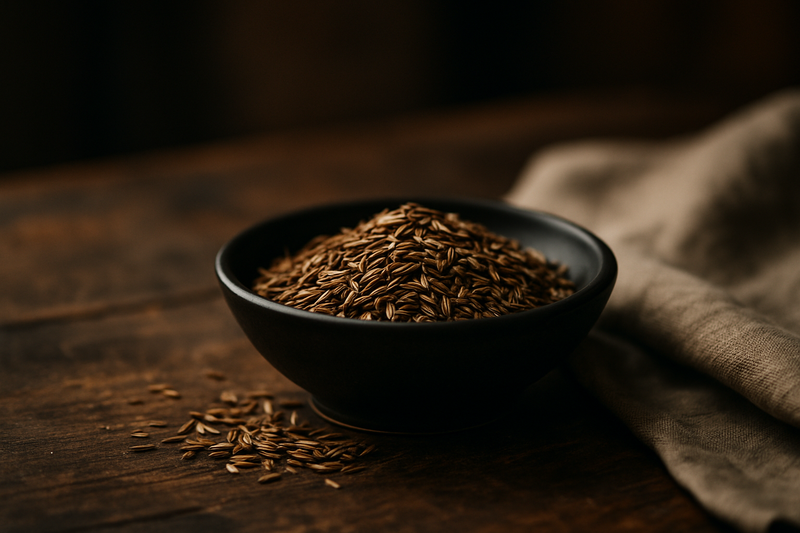
Caraway Seeds · Photograph
Caraway seeds are one of the oldest cultivated spices in Europe, and yet they remain quietly underappreciated in modern kitchens. You have almost certainly eaten them — tucked into a dense rye loaf, scattered through braised red cabbage, or hiding in a wedge of caraway-spiced cheese — even if you never noticed they were there.
Key Nutrients
% Daily Value based on 2,000 cal diet
Key active compounds (phytochemicals)
- Carvone — The star of caraway's aroma. A monoterpene ketone (a type of aromatic plant chemical) responsible for that warm, anise-like scent. Studied for smooth-muscle-relaxing (spasmolytic) and antimicrobial properties, which may partly explain the spice's traditional digestive reputation.
- Limonene — A citrus-scented monoterpene also found in citrus peel and other aromatic herbs. Shows antioxidant and mild anti-inflammatory activity in laboratory models.
- Flavonoids (e.g., quercetin, luteolin glycosides) — Polyphenolic compounds (plant-based antioxidants) that may influence vascular and immune signaling. Consistent with the broader benefits of plant-rich diets.
- Phenolic acids (e.g., caffeic and ferulic acids) — Common antioxidant compounds found in seeds and whole grains. Help protect cells from oxidative damage in experimental systems.
- Tannins and other polyphenols — Contribute to caraway's slightly bitter, complex flavor edge and may offer antimicrobial and antioxidant activity.
Myths vs. facts
Myth: Caraway and cumin are interchangeable. Fact: They look alike — both are small, curved, and brownish — but they taste completely different. Caraway (Carum carvi) is warm and anise-like, rooted in European baking traditions. Cumin (Cuminum cyminum) is earthier and smokier, anchoring South Asian, Mexican, and Middle Eastern cooking. Swapping them will significantly change a dish's character.
Myth: Eating caraway seeds in food is the same as taking a caraway supplement. Fact: Clinical trials have used highly concentrated, standardized caraway essential oil preparations delivering doses far beyond what any realistic cooking amount would provide. The seeds in your kitchen offer a much gentler, food-level intake of the same compounds. Neither is a substitute for the other — they are simply different forms with different use cases.
Myth: Caraway is only for rye bread. Fact: Caraway is remarkably versatile. It works in roasted root vegetables, lentil soups, spiced flatbreads, coleslaw, cream cheese spreads, lamb rubs, and even some cocktail bitters. Its warming, aromatic quality bridges savory and slightly sweet applications with ease.
Prep and pairing ideas
Three pairings that make caraway shine — and explain why they work:
1. Caraway + cabbage (or sauerkraut) The classic for good reason. Cabbage produces sulfurous compounds during cooking and fermentation that can contribute to gas and bloating. Caraway's carvone and limonene are traditionally believed to ease this effect, and the flavor contrast — earthy-sweet cabbage against warm, anise-like caraway — is deeply satisfying. Add 1 teaspoon of seeds to braised red cabbage, colcannon, or homemade sauerkraut brine.
2. Caraway + rye or whole grain bread Rye flour has a naturally earthy, slightly sour flavor that caraway amplifies beautifully. The seeds also complement rye's dense, chewy texture. Beyond flavor: the fiber from rye and the aromatic compounds in caraway together support the kind of slow-digesting, gut-friendly eating that plant-forward diets are built on.
3. Caraway + lentils or chickpeas Legumes are among the most nutrient-dense foods on the planet and also among the most gas-producing for some people. Caraway, cumin, and other aromatic spices have long been
How Caraway Seeds Compares
| Compared with | What's different |
|---|---|
| Caraway Seeds vs. Cumin | Smokier and earthier, whereas caraway is sweet and anise-like with a cooling finish. |
| Caraway Seeds vs. Fennel seeds | Licorice-forward and sweeter; caraway has a more savory, sharp, and peppery undertone. |
Health Benefits
Things to Know
Apiaceae family allergy: If you have a known allergy to other Apiaceae plants — celery, carrot, parsley, fennel, coriander, or anise — approach caraway with caution. Cross-reactivity is possible.
Pregnancy: Normal food-level use is generally considered acceptable, but concentrated caraway oil and high-dose medicinal preparations are typically not recommended due to limited safety data and traditional concerns about uterine stimulation. Check with your provider if uncertain.
Breastfeeding: Traditional use as a galactagogue exists; food-level use is generally acceptable. Concentrated extracts lack robust safety data — seek professional advice.
Gallbladder disease or significant acid reflux (GERD): Highly aromatic essential oils may aggravate symptoms at medicinal doses. Culinary use is usually well tolerated.
Liver disease: High-dose essential oils are metabolized by the liver; food-level use is considered low risk, but medicinal preparations should only be used under medical supervision.
Seizure disorders: Very high doses of some essential oils are pro-convulsant in animal models. Not a concern at culinary amounts; caution with concentrated products.
Diabetes medications: Caraway extracts may theoretically add to the glucose-lowering effects of antidiabetic drugs — relevant only at supplement doses, not kitchen quantities. Flag with your pharmacologist or prescriber if you use concentrated forms.
Cytochrome P450 enzyme interactions: In vitro studies suggest caraway essential oil may affect drug-metabolizing enzymes. Clinical significance at dietary intakes is unknown but worth noting for anyone on narrow-therapeutic-index medications (e.g., warfarin, certain anti-seizure drugs). Again, food use is considered safe; medicinal products deserve more scrutiny.

Shop This Ingredient
Stock your pantry with quality caraway seeds.
Buy on AmazonAs an Amazon Associate, Plantopedia earns from qualifying purchases. This costs you nothing extra and helps us keep the encyclopedia free.
Frequently Asked Questions
A note on evidence levels before diving in: most human research on caraway has used concentrated essential oils or standardized extracts — not the seeds you buy at the grocery store. Laboratory and animal studies offer biological plausibility but cannot be directly applied to people. Where human trials exist, they are often small. The honest framing for caraway is: promising traditional use + emerging science + solid culinary logic. Digestive health and microbiome This is where caraway has the most history and the most research direction. Traditional cuisines across Europe and the Middle East have paired caraway with notoriously heavy, gas-producing foods — think sauerkraut, rye bread, roasted cabbage, and fatty meats — not just for flavor but because the spice was believed to ease the aftermath of those meals. Modern clinical studies have mostly tested enteric-coated (specially coated to survive stomach acid) peppermint–caraway oil capsules in adults with functional dyspepsia (recurrent upper abdominal discomfort without a clear structural cause) and irritable bowel-type symptoms. Several randomized, placebo-controlled trials report modest improvements in upper abdominal pain, bloating, and overall digestive discomfort compared to placebo. Side effects were generally mild. However, those products contain standardized, high-concentration doses and also include peppermint oil — so the specific contribution of caraway alone remains uncertain. For everyday cooking: using caraway in meals may support digestive comfort and enjoyment of heavier dishes. That aligns with tradition and with the general direction of current research — but the seeds in your bread tin are not equivalent to a pharmaceutical-grade oil capsule. Heart and circulation Emerging evidence from a small randomized trial in overweight adults testing concentrated caraway extract reported favorable shifts in some lipid markers (e.g., total cholesterol, LDL cholesterol — the type often called "bad" cholesterol because high levels are associated with cardiovascular risk). In vitro (laboratory cell-based) and animal studies also point to antioxidant and possible vasodilatory (blood-vessel-widening) effects from caraway's essential oil and phenolic compounds. There are currently no large, long-term human trials establishing direct cardiovascular outcome benefits from culinary caraway use. The accurate framing: caraway brings aromatic, antioxidant-rich plant compounds to your meals, which fits well within a heart-supportive dietary pattern — but it should not be positioned as a heart treatment. Blood sugar and metabolism Animal and early mechanistic (mechanism-exploring) studies have looked at caraway extracts in the context of glucose metabolism and insulin sensitivity. Some favorable signals have emerged, often alongside weight loss or dietary changes in the study designs. Human evidence is limited and cannot yet be extended to caraway used as a kitchen spice. The smarter framing here: caraway is a flavorful partner for whole grains, legumes, and vegetables — foods with well-established benefits for blood sugar management. The spice enhances the enjoyment of those foods, which matters for dietary consistency. Inflammation and recovery Caraway's monoterpenes (carvone, limonene) and polyphenols show antioxidant and anti-inflammatory activity in vitro and in animal models, including reduced lipid peroxidation (a marker of oxidative cell damage) and modulation of inflammatory signaling pathways. Well-controlled human trials directly measuring systemic inflammatory markers after caraway consumption are not yet available. Hormones and cycle health Traditional medicine systems have used caraway as a galactagogue (a substance believed to support breast milk production) and to ease menstrual discomfort. High-quality randomized trials specifically testing hormonal or reproductive outcomes with caraway alone are very limited. These uses are best understood as folkloric tradition rather than established evidence, and caution is warranted with concentrated preparations in pregnancy and breastfeeding (see safety section below).
Both forms have a place, and the choice mostly comes down to the dish. Whole seeds are the classic culinary form. Add them to bread doughs, cabbage braises, potato dishes, pickles, or cheese crusts. Toasting lightly in a dry pan for 1–2 minutes before use intensifies the aroma and can make them easier on digestion. Whole seeds keep their flavor far longer than ground. Crushed or coarsely ground seeds give more immediate, even flavor distribution in spice rubs, dough, or sauces. The flavor is brighter on first use but fades faster — grind in small batches. A mortar and pestle or a spice grinder works well. Caraway tea (infusion) is prepared by lightly crushing about 1 teaspoon of seeds and steeping in a cup of just-boiled water for 8–10 minutes. Traditionally sipped after meals as a digestif. Strength varies with steep time and seed amount. Caraway essential oil in enteric-coated capsules — this is what most clinical trials have used. It is a medicinal product, not a culinary ingredient, and delivers far higher concentrations than any kitchen use. Plantopedia does not guide dosing for medicinal products; always consult a healthcare provider before using concentrated herbal supplements.
Quick Answers
Common questions, answered in a line.
Caraway seeds and cumin are not interchangeable because they have entirely different flavor profiles. While caraway is warm and anise-like, cumin is earthier and smokier; swapping them will significantly alter the character of your dish.
Caraway seeds contain several active antioxidant compounds, including carvone, limonene, flavonoids like quercetin, and phenolic acids like caffeic and ferulic acids. These phytochemicals help protect cells from oxidative damage and may influence immune and vascular signaling.
Caraway seeds are traditionally paired with cabbage and legumes because their compounds, such as carvone and limonene, are believed to ease gas and bloating. These aromatic seeds provide a flavor contrast to sulfurous vegetables and nutrient-dense pulses.
You should use caraway seeds with caution if you have a known allergy to other Apiaceae family plants, such as celery, carrots, parsley, fennel, or anise. Due to the potential for cross-reactivity, these individuals should approach caraway carefully.
Cooking with caraway seeds provides a gentle, food-level intake of plant compounds, whereas caraway supplements use highly concentrated essential oils at much higher doses. Neither is a direct substitute for the other as they serve different use cases.
Pregnant individuals should stick to normal food-level amounts of caraway and avoid concentrated caraway oil or high-dose medicinal preparations. There is limited safety data for high doses, and there are traditional concerns regarding uterine stimulation.
Caraway is highly versatile and works well in roasted root vegetables, lentil soups, spiced flatbreads, coleslaw, and even cocktail bitters. It can also be used in cream cheese spreads, lamb rubs, and traditional rye or whole grain breads.
For Readers in the USA
Local context — sourcing, seasonality, and regional notes.
In the United States, you can find whole and ground caraway seeds in the spice aisle of major grocery stores like Kroger, Safeway, and Whole Foods, or in the bulk bins of local natural food cooperatives. For the freshest options, many home cooks visit European-style bakeries or specialty spice shops like Penzeys.
While most caraway seeds sold in the U.S. are imported from Europe, the plant grows well in USDA Hardiness Zones 3 through 7, including regions like the Pacific Northwest and the Upper Midwest. It is a biennial herb, meaning it typically produces its signature seeds in the second year of growth.
In the U.S., caraway is most famously associated with Jewish rye bread and German-American cuisine, particularly in the Midwest and Northeast. Beyond baking, it is a staple in American preparations of coleslaw, potato salad, and braised pork dishes common in Pennsylvania Dutch cooking.
AI Clinical Review
- Clearly explains that caraway’s hallmark compounds (especially carvone and limonene) align with its traditional “digestive” use and emerging lab data.
- Accurately distinguishes culinary seed use from concentrated essential-oil extracts used in most human studies (often paired with peppermint), preventing overclaims.
- Provides a realistic nutrition snapshot: small portions, modest calories, and a meaningful bit of fiber and minerals that can add up with regular use.
- Offers practical culinary guidance (whole vs. ground, light toasting, tea) that matches how most people actually use the spice.
- Digestive benefits seen in trials largely involve enteric‑coated peppermint–caraway oil; effects can’t be assumed for seeds or simple teas, and the specific contribution of caraway alone remains uncertain.
- Cardiometabolic signals (lipids, vascular effects) come from small studies and preclinical work; there are no large, long‑term outcome trials yet.
- Blood sugar, anti‑inflammatory, and antioxidant findings are mostly from animal or cell studies; human data are limited and not directly translatable to kitchen doses.
- Traditional uses for lactation support and menstrual comfort lack robust randomized human evidence.
- Culinary amounts (about 1 teaspoon to 1 tablespoon in a recipe) are generally well tolerated; essential‑oil capsules deliver far higher doses and should be treated as supplements, not spices.
- Use caution with concentrated preparations in pregnancy or breastfeeding; discuss any non-culinary use with a clinician.
- People with Apiaceae family allergies (celery, carrot, fennel, coriander, anise) should be cautious; essential oils may aggravate reflux or gallbladder symptoms, and high doses can be problematic in liver disease or seizure disorders.
- At supplement doses, caraway could interact with medications (e.g., diabetes drugs, anticoagulants, certain anti‑seizure agents) via metabolic enzyme effects—check with your healthcare team before using concentrated forms.
Use culinary framing; avoid treatment claims or supplement-dose guidance.
References
- PubMed — Caraway (pubmed.ncbi.nlm.nih.gov)
- PMC, National Library of Medicine — Detailed Phytochemical Composition, Cyto-/Hepatotoxicity, and Antioxidant/Anti-Inflammatory Profile of Moroccan Spices: A Study on Coriander, Caraway, and Mystical Cumin (pmc.ncbi.nlm.nih.gov)
- PMC, National Library of Medicine — Caraway as Important Medicinal Plants in Management of Diseases (pmc.ncbi.nlm.nih.gov)
- NCBI, National Library of Medicine — Caraway - Drugs and Lactation Database (LactMed®) - NCBI Bookshelf (ncbi.nlm.nih.gov)
- PubMed — Assessment of black cumin (Nigella sativa L.) as a food ingredient and putative therapeutic agent (pubmed.ncbi.nlm.nih.gov)
- USDA FoodData Central — USDA FoodData Central (fdc.nal.usda.gov)
- NCBI, National Library of Medicine — Black Cumin Seed - LiverTox - NCBI Bookshelf (ncbi.nlm.nih.gov)
- PubMed — Preliminary safety evaluation and biochemical efficacy of a Carum carvi extract: results from a randomized, triple-blind, and placebo-controlled clinical trial (pubmed.ncbi.nlm.nih.gov)
Know Your Numbers
Eating healthy is a start. Now get to know your biomarkers.
Food changes bloodwork — inflammation, lipids, blood sugar and nutrient status all respond to what you eat. 59 markers from $59.
- Results in 7–10 days at 2,000+ Quest sites
- Licensed provider reviews every result
- One flat price, no membership, HSA/FSA eligible
Educational information only, not medical advice. Panels are ordered and reviewed through our licensed partner; Plantopedia may earn a commission.