Tarragon — health benefits and uses
Flavor-first apothecary angle; use food amounts rather than supplement claims
The Short Answer
Tarragon is an aromatic herb prized for its bittersweet, anise-like flavor and its high concentration of manganese, providing 6% of the Daily Value in just one tablespoon. It is best used fresh in egg dishes, poultry, and classic French sauces like Béarnaise.

Tarragon · Photograph
Tarragon (Artemisia dracunculus) is a slender, aromatic perennial herb in the Asteraceae family — the same plant family as sunflowers and chamomile. Native to central Asia and naturalized across Europe and North America, it has been a pillar of French cuisine for centuries and a staple of the apothecary-style kitchen long before that. Its signature fragrance — softly sweet, anise-like, faintly grassy — comes from a cocktail of volatile essential oil compounds that also give it a modest but interesting nutritional story.
Key Nutrients
% Daily Value based on 2,000 cal diet
Key active compounds
Understanding what tarragon actually contains helps explain both its culinary character and its health story.
- Estragole (methyl chavicol) — A phenylpropanoid (a type of aromatic compound built on a simple six-carbon ring) that gives tarragon its characteristic anise scent. It is the dominant component of tarragon essential oil. At very high doses in rodent studies, it has been linked to liver tumors and developmental harm, which is why concentrated tarragon essential oil and strong extracts are flagged as a caution. At the trace levels present in culinary leaf use, regulators generally consider the risk negligible.
- Methyl eugenol — Another aromatic phenylpropanoid in the essential oil fraction. Shares some of the same toxicological concerns as estragole at concentrated doses; contributes to aroma and has shown antimicrobial and mild anesthetic properties in laboratory studies.
- Flavonoids: quercetin, rutin, patuletin — Polyphenols (plant compounds with antioxidant and anti-inflammatory activity in experimental systems) that vary by tarragon variety. Mexican tarragon tends to be particularly rich in these. They are well studied in other foods (onions, capers) and are considered generally beneficial as part of a varied diet.
- Other polyphenols and phenolic acids — Contribute to the herb's relatively high antioxidant capacity compared with many common vegetables and spices.
- Essential oil blend (terpenoids and phenylpropanoids) — The full volatile fraction responsible for flavor, traditional medicinal uses, and most of the safety considerations around concentrated products.
Prep and pairing ideas
Tarragon's flavor vocabulary is elegant and specific, so it works best when it is the featured herb rather than one of ten. Here is how to use it well:
Classic pairings:
- Tarragon + egg — The traditional French combination. Stir chopped fresh tarragon into scrambled eggs, omelets, or quiche. The anise note cuts through the richness beautifully and reduces the need for extra salt.
- Tarragon + lemon + white wine vinegar — The flavor base of Béarnaise sauce and many lighter vinaigrettes. This combination also makes an excellent quick dressing for green beans, asparagus, or roasted new potatoes.
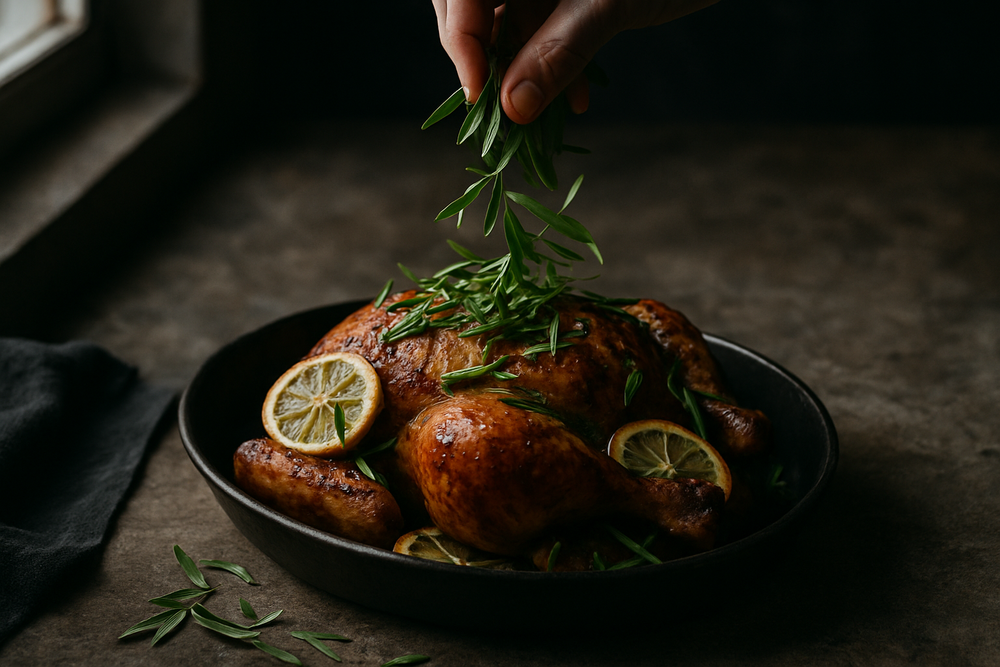
- Tarragon + chicken or white fish — Add a few sprigs inside a roasting chicken before cooking, or stir chopped leaves into a pan sauce after removing the protein. The herb brightens mild proteins in a way that garlic or thyme does not.
Apothecary-style tarragon vinegar: Fill a clean glass jar loosely with fresh tarragon sprigs, cover with white wine vinegar, seal, and leave for 2–3 weeks in a cool dark spot. Strain and bottle. Use this in dressings, as a quick marinade, or drizzled on roasted vegetables — a beautifully simple way to capture the herb's flavor and aromatics without any cooking.
As a salt substitute: Tarragon's intensity means a small amount adds a lot of perceived complexity and depth, allowing you to reduce salt in sauces and dressings without the dish tasting flat.
How Tarragon Compares
| Compared with | What's different |
|---|---|
| Tarragon vs. French Tarragon | Commonly known as French tarragon, it has a distinct licorice-like anise flavor and slender leaves. |
| Tarragon vs. Mexican Tarragon (Texas Tarragon) | A marigold relative with a similar anise flavor that thrives in hot climates where French tarragon fails. |
| Tarragon vs. Fennel | Possesses a similar anise aroma but with a sweeter, more intense licorice flavor and feathery fronds. |
Health Benefits
Things to Know
Estragole safety: The main aromatic compound in tarragon essential oil caused liver tumors and developmental toxicity in rodents at high doses. This concern applies to concentrated essential oil and strong supplements, not to typical leaf seasoning. European food safety bodies have noted that culinary tarragon leaf use is very unlikely to reach problematic exposure levels. Avoid internal use of tarragon essential oil.
Asteraceae family allergy: If you are allergic to ragweed, chamomile, marigold, chrysanthemum, or related plants, you may also react to tarragon. Introduce it cautiously if you have known Asteraceae sensitivity.
Anticoagulants and antiplatelet drugs: (e.g., warfarin, apixaban, aspirin, clopidogrel): Laboratory evidence suggests tarragon polyphenols may have mild antiplatelet effects. Culinary amounts are unlikely to matter, but concentrated extracts or supplements could theoretically affect bleeding risk.
Blood sugar medications: (insulin, metformin, sulfonylureas, GLP-1 agonists): Russian tarragon extracts have been studied for modest glucose-lowering effects. Culinary use is too small to cause hypoglycemia (dangerously low blood sugar), but supplemental forms should be discussed with a prescriber.
Sedative medications: (benzodiazepines, sedating antihistamines): Tarragon has traditional uses as a mild relaxant; at supplemental doses there is a theoretical additive effect with CNS (central nervous system) depressants. Normal cooking use is not a concern.
Liver conditions: Because estragole is metabolized in the liver, people with significant liver disease should be cautious about any concentrated tarragon product.
Pregnancy: Culinary seasoning amounts are generally considered acceptable; avoid concentrated essential oil and extracts due to estragole's teratogenicity (capacity to harm fetal development) in animal studies. Ask your midwife or doctor if in doubt.
Breastfeeding: Culinary use is typically considered acceptable; concentrated forms are best avoided.
Children: Small culinary amounts in family food are usually fine; keep concentrated forms away from children.
Prep Ideas
- — Tarragon + egg — The traditional French combination. Stir chopped fresh tarragon into scrambled eggs, omelets, or quiche. The anise note cuts through the richness beautifully and reduces the need for extra salt.
- — Tarragon + lemon + white wine vinegar — The flavor base of Béarnaise sauce and many lighter vinaigrettes. This combination also makes an excellent quick dressing for green beans, asparagus, or roasted new potatoes.
- — Tarragon + chicken or white fish — Add a few sprigs inside a roasting chicken before cooking, or stir chopped leaves into a pan sauce after removing the protein. The herb brightens mild proteins in a way that garlic or thyme does not.
Shop This Ingredient
Stock your pantry with quality tarragon.
Buy on AmazonAs an Amazon Associate, Plantopedia earns from qualifying purchases. This costs you nothing extra and helps us keep the encyclopedia free.
Frequently Asked Questions
A quick honesty note first: tarragon is a culinary herb used in small amounts, not a supplement. Almost all research on tarragon's health effects uses concentrated Russian tarragon extracts at doses you would never get from cooking. Where human trials exist at all, they are small and sometimes show mixed results. The sections below reflect the state of the science accurately. Heart and circulation Tarragon contains polyphenols and essential oil constituents that have shown antiplatelet (preventing blood cell clumping) and antioxidant effects in laboratory studies. Its mineral profile — potassium, magnesium — supports dietary quality associated with heart health. However, there are no controlled human trials testing tarragon consumption for blood pressure, cholesterol, or cardiovascular outcomes. It fits naturally into a plant-forward, herb-rich diet that is associated with heart health, but tarragon itself is not a heart treatment. Digestive health and microbiome Tarragon has one of its strongest traditional use cases here. In European folk medicine and apothecary traditions, it was used to stimulate appetite, relieve mild gas, and ease sluggish digestion. Aromatic herbs in general are thought to increase digestive secretions and gut motility (the rhythmic contractions that move food through the digestive tract), though this has not been rigorously tested for tarragon at culinary doses in modern trials. Anecdotally, many cooks notice that aromatic herb-rich dishes feel lighter and easier to eat — which is worth something even if randomized controlled trials are absent. Blood sugar and metabolism This is where most of the modern research on tarragon sits — and where the framing matters most. Studies have investigated standardized Russian tarragon extracts (hundreds of milligrams to a few grams per day in capsule form) for modest effects on blood sugar and insulin sensitivity (the body's ability to respond to insulin and regulate glucose levels). Some reported small improvements; others found no significant benefit. These are concentrated preparations, not the culinary herb. Culinary tarragon should not be used as a blood sugar management strategy, and it should never replace medical advice or medication. Inflammation and recovery Tarragon's flavonoids and polyphenols act as antioxidants — neutralizing free radicals (unstable molecules that can damage cells) — in laboratory models. Some of its essential oil components have also shown anti-inflammatory effects in cell studies. No dedicated human trials have tested whether eating tarragon reduces inflammatory markers like CRP (C-reactive protein, a blood marker of inflammation) or improves inflammatory conditions. It belongs in the broader picture of a plant-rich, antioxidant-dense diet rather than being singled out as an anti-inflammatory agent. Hormones and cycle health Tarragon appears in some traditional women's health remedies, but there is no convincing modern clinical evidence that culinary tarragon has meaningful effects on sex hormones or menstrual cycles. The main safety conversation around its hormonal connection is actually the opposite direction: estragole (its key aroma compound) has shown developmental toxicity in high-dose animal studies, which is why concentrated forms are not recommended during pregnancy. Culinary leaf use is generally considered acceptable in moderation.
Both fresh and dried tarragon are good culinary choices; the best form depends on what you are cooking and what you have on hand. Fresh tarragon: Softer, more complex flavor with a gentle anise note and subtle grassiness Higher in volatile aromatic compounds, which diminish with drying Best added at the end of cooking or raw (in salads, dressings) to preserve flavor Use 1–2 fresh sprigs or 1–2 teaspoons of chopped leaves per serving Wilts and yellows within 5–7 days refrigerated, even when wrapped and stored well Dried tarragon: More concentrated but one-dimensional — the anise note can become quite sharp Convenient pantry staple with a shelf life of 1–2 years if stored airtight and away from heat Use roughly one third the amount you would use fresh, because the flavor is more intense Add it earlier in cooking (in braises, slow-cooked sauces, marinades) so the flavor has time to bloom Loses potency quickly once opened; check for fragrance before adding — if it smells of dust rather than licorice, it is past its prime Nutritionally, the differences are modest. Fresh tarragon retains slightly more volatile compounds and vitamin C, which are partly lost during drying. For day-to-day culinary use, the form that you will actually use consistently is the best one.
There is no clinical recommended dose for
Quick Answers
Common questions, answered in a line.
Tarragon is a slender, aromatic perennial herb that belongs to the Asteraceae family, which also includes sunflowers, chamomile, and marigolds. It is native to central Asia but has become naturalized across Europe and North America, serving as a staple in French cuisine.
Tarragon features a signature fragrance that is softly sweet, anise-like, and faintly grassy due to its volatile essential oil compounds. Its flavor profile is considered elegant and specific, often used to brighten mild proteins or cut through the richness of eggs.
The primary aromatic compound in tarragon is estragole, also known as methyl chavicol, which provides its characteristic anise scent. The herb also contains methyl eugenol, various polyphenols like flavonoids (quercetin, rutin, and patuletin), and phenolic acids that contribute to its antioxidant capacity.
You can use tarragon as a salt substitute because its intense flavor adds complexity and depth to dishes, reducing the need for sodium. It pairs exceptionally well with eggs, lemon, white wine vinegar, chicken, and white fish to enhance flavor without making a dish taste flat.
Concentrated tarragon essential oil or strong extracts may be unsafe due to high levels of estragole, which caused liver tumors and developmental harm in rodent studies. While culinary use of the leaves is generally considered safe, internal use of the concentrated oil should be avoided.
People with allergies to the Asteraceae family—including ragweed, chamomile, marigolds, or chrysanthemums—should use tarragon with caution. Because it is a member of the same plant family, it may trigger similar allergic reactions in sensitive individuals.
Pregnant women should avoid concentrated tarragon extracts and essential oils because estragole has shown the potential to harm fetal development in animal studies. While normal culinary seasoning is generally considered acceptable, supplemental forms should be avoided during pregnancy and breastfeeding.
Tarragon may interact with anticoagulants, blood sugar medications like insulin or metformin, and sedative medications such as benzodiazepines. While culinary amounts are unlikely to cause issues, concentrated supplements might increase bleeding risk, lower blood sugar, or have an additive sedative effect.
For Readers in the USA
Local context — sourcing, seasonality, and regional notes.
French tarragon grows best in USDA plant hardiness zones 4 through 8, thriving in the cooler spring and early summer months across the Northern and Central United States. It typically goes dormant during the winter, though it can be grown year-round in temperature-controlled indoor herb gardens or as an annual in hotter Southern climates.
Fresh tarragon is widely available at major U.S. grocery chains like Whole Foods Market, Kroger, and Safeway, usually sold in clear plastic clamshells in the produce department. For the best quality, look for it at local farmers markets from May through August, especially in the Pacific Northwest and Northeast.
In American supermarkets, "French Tarragon" is the culinary standard due to its sweet anise flavor, whereas "Russian Tarragon" is more vigorous but often considered too bitter or flavorless for cooking. You may also find "Mexican Tarragon" in the Southwest, which is a different species (Tagetes lucida) but offers a similar flavor profile.
The FDA classifies tarragon as "Generally Recognized as Safe" (GRAS) for its intended use as a spice, natural seasoning, or flavoring. When shopping, the USDA Organic seal ensures the herb was produced without synthetic pesticides, which is a common preference for consumers using raw tarragon in infusions and vinegars.
AI Clinical Review
- Frames tarragon appropriately as a culinary herb used in small amounts; its main contribution is making healthy food more enjoyable, which can support overall dietary patterns.
- Clearly distinguishes kitchen use of leaves from concentrated essential oils/extracts and explains the estragole/methyl eugenol safety context.
- Accurately notes that most human research focuses on standardized Russian tarragon extracts for blood sugar with mixed findings—results that don’t translate to typical cooking.
- Offers practical guidance on fresh vs dried forms, when to add them in cooking, and how tarragon can help reduce reliance on salt.
- Cardiovascular, anti-inflammatory, and digestive benefits at culinary doses lack robust human trials; most data come from lab or animal models.
- Microbiome and gut-motility effects are plausible for aromatic herbs in general but remain untested specifically for culinary amounts of tarragon.
- Chemistry varies by type: French vs Russian tarragon (both Artemisia dracunculus) and “Mexican tarragon” (Tagetes lucida) differ, so findings from one may not apply to another.
- Safety: avoid ingesting tarragon essential oil or high‑dose extracts, especially during pregnancy or breastfeeding and in significant liver disease; culinary leaf use is generally considered safe.
- Medications: theoretical interactions with anticoagulants/antiplatelets and glucose‑lowering drugs are more relevant to supplements than to seasoning‑level use—check with your clinician before using concentrated products.
- Allergy: tarragon is in the Asteraceae family; those with ragweed/chamomile allergies should introduce it cautiously.
- Practical use: there is no established “daily dose”; typical cooking amounts range from a few fresh sprigs to about 0.5–1 teaspoon dried per serving, based on taste and tolerance.
Use culinary framing; avoid treatment claims or supplement-dose guidance.
References
- PMC, National Library of Medicine — Artemisia dracunculus (Tarragon): A Review of Its Traditional Uses, Phytochemistry and Pharmacology (pmc.ncbi.nlm.nih.gov)
- PubMed — Artemisia dracunculus L. (tarragon): a critical review of its traditional use, chemical composition, pharmacology, and safety (pubmed.ncbi.nlm.nih.gov)
- PubMed — An Extract of Russian Tarragon Prevents Obesity-Related Ectopic Lipid Accumulation (pubmed.ncbi.nlm.nih.gov)
- PubMed — FEMA GRAS assessment of derivatives of basil, nutmeg, parsley, tarragon and related allylalkoxybenzene-containing natural flavor complexes (pubmed.ncbi.nlm.nih.gov)
- Frontiers — Frontiers | Artemisia dracunculus (Tarragon): A Review of Its Traditional Uses, Phytochemistry and Pharmacology (frontiersin.org)
- PMC, National Library of Medicine — Effects of short-term ingestion of Russian tarragon prior to creatine monohydrate supplementation on anaerobic sprint capacity: a preliminary investigation (pmc.ncbi.nlm.nih.gov)
- PMC, National Library of Medicine — Potential application of Russian Tarragon (Artemisia dracunculus L.) in health and sports (pmc.ncbi.nlm.nih.gov)
- USDA FoodData Central — USDA FoodData Central (fdc.nal.usda.gov)
- MDPI — 1422 0067 (mdpi.com)
Know Your Numbers
Eating healthy is a start. Now get to know your biomarkers.
Food changes bloodwork — inflammation, lipids, blood sugar and nutrient status all respond to what you eat. 59 markers from $59.
- Results in 7–10 days at 2,000+ Quest sites
- Licensed provider reviews every result
- One flat price, no membership, HSA/FSA eligible
Educational information only, not medical advice. Panels are ordered and reviewed through our licensed partner; Plantopedia may earn a commission.