Cardamom — health benefits and uses
Flavor-first apothecary angle; use food amounts rather than supplement claims
The Short Answer
Cardamom is a highly aromatic spice containing potent volatile oils like 1,8-cineole and limonene, which provide antioxidant and anti-inflammatory properties. To maximize flavor and health benefits, use whole green pods rather than pre-ground powder.

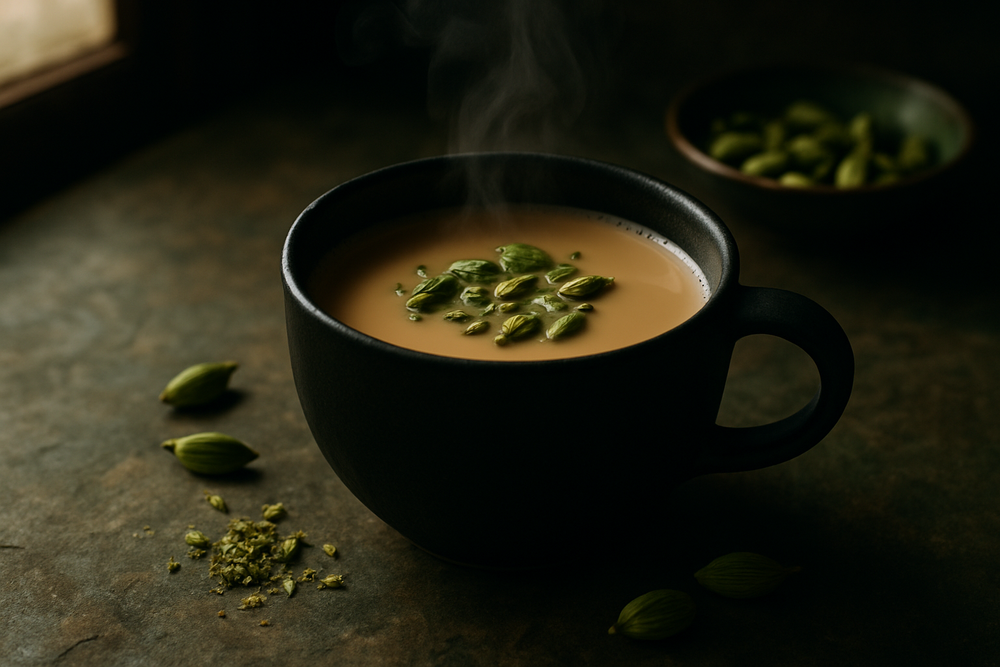
Cardamom · Photograph
Cardamom is one of the world's oldest and most aromatic spices — a small green pod with seeds so fragrant that it has been called the "queen of spices" across South Asian and Middle Eastern food traditions. Inside each pod sit tiny dark seeds loaded with volatile oils, polyphenols, and trace minerals that researchers are now beginning to examine more closely.
Key Nutrients
% Daily Value based on 2,000 cal diet
Key active compounds in cardamom
Cardamom seeds and pods contain several groups of plant chemicals that researchers believe underlie its observed effects:
- 1,8-Cineole (Eucalyptol): The dominant component of cardamom's essential oil (the concentrated aromatic liquid extracted from the plant). Associated with antioxidant, anti-inflammatory, and smooth-muscle-relaxing effects in experimental studies.
- α-Terpinyl acetate: A fragrant ester (a type of aromatic organic compound) responsible for cardamom's sweet, floral notes. Shows antioxidant and possible antispasmodic (muscle-relaxing) properties in preclinical research.
- Limonene: A citrus-scented monoterpene (a class of plant aromatic compounds) also found in lemon peel. Linked to antioxidant and mild anti-inflammatory effects.
- Linalool: A floral terpene alcohol found in many culinary herbs. Associated with calming and anti-inflammatory effects in animal and aroma studies.
- Flavonoids and phenolic acids: Polyphenolic compounds (a broad family of antioxidant plant chemicals) including quercetin and kaempferol. May modulate inflammatory pathways and support vascular function; evidence is mainly from cell and animal studies.
Buying guide: choosing quality cardamom
Whole pods vs. ground:
- Whole green pods are the gold standard for flavour and freshness. Look for plump, uniformly green pods with no yellowing or cracking. Pale or beige pods have lost much of their essential oil.
- Pre-ground is convenient but loses aroma fast. Buy in small quantities from a supplier with high turnover. Avoid bulk bins where cardamom may have sat for months.
Label tips:
- Look for "green cardamom" or "Elettaria cardamomum" — not just "cardamom spice," which may include inferior varieties or adulterants.
- Single-origin spices from Guatemala or Kerala, India tend to have distinctive aroma profiles worth exploring.
- Organic certification reduces pesticide exposure, relevant if you use cardamom frequently.
Avoid:
- Cardamom "flavouring" or "cardamom essence" in processed foods — these are synthetic approximations with none of the phytochemical value.
Prep and pairing ideas
Cardamom is one of the most versatile aromatic spices in the kitchen. Here are practical ways to bring it in:
Morning:
- Stir ¼ tsp ground cardamom into porridge or overnight oats with a pinch of cinnamon.
- Add 2 crushed pods to your coffee grounds before brewing (a nod to Arabic-style qahwa coffee).
- Blend a pod's worth of seeds into a banana-date smoothie with a small piece of ginger.
Main meals:
- Drop 3–4 whole crushed pods into the pot when cooking basmati rice or lentil dal — remove before serving.
- Add ½ tsp ground cardamom to a sweet potato and chickpea curry alongside cumin and turmeric.
Drinks and desserts:
- Simmer 3–4 crushed
How Cardamom Compares
| Compared with | What's different |
|---|---|
| Cardamom vs. Black Cardamom | Black cardamom has a smoky, camphor-like flavor, whereas green cardamom is sweet and floral. |
| Cardamom vs. Coriander Seed | Coriander seeds provide a citrusy, nutty profile without the intense menthol heat of cardamom. |
Health Benefits
Things to Know
Culinary amounts are generally safe: for most healthy adults and are not associated with significant side effects.
Supplemental doses (capsules, high-dose powders): are experimental and should not be self-prescribed. Consult a healthcare professional.
Pregnancy: Everyday use in food is widely practised and generally considered acceptable. High-dose supplements and cardamom essential oil are not well studied in pregnancy — avoid without medical guidance.
Breastfeeding: Same principle as pregnancy — normal food use appears fine; concentrated forms lack robust safety data.
GERD and peptic ulcers: Aromatic spices may aggravate symptoms in sensitive individuals. Monitor your own response and adjust accordingly.
Gallstones: Strong spices can occasionally trigger biliary symptoms (pain linked to the gallbladder). Those with known gallbladder disease should observe their tolerance.
Allergy: True allergy to cardamom or related plants in the ginger family is uncommon but possible. Symptoms can include skin reactions, respiratory symptoms, or gastrointestinal distress.
Antihypertensive medications: Research-dose cardamom has shown small blood-pressure-lowering effects; if you take blood pressure medication, do not self-supplement without speaking to your doctor.
Glucose-lowering medications: Theoretical risk of additive effect at supplemental doses; do not adjust prescribed medication based on cardamom use.
Anticoagulants (blood thinners such as warfarin): Robust data are lacking, but as a precaution, inform your prescriber if you use concentrated cardamom supplements alongside anticoagulant or antiplatelet therapy.
Children: Small culinary amounts in family meals are common in many cultures and generally well tolerated; concentrated supplements or essential oils are not appropriate without paediatric guidance.
Prep Ideas
- — Stir ¼ tsp ground cardamom into porridge or overnight oats with a pinch of cinnamon.
- — Add 2 crushed pods to your coffee grounds before brewing (a nod to Arabic-style qahwa coffee).
- — Blend a pod's worth of seeds into a banana-date smoothie with a small piece of ginger.
- — Drop 3–4 whole crushed pods into the pot when cooking basmati rice or lentil dal — remove before serving.
- — Add ½ tsp ground cardamom to a sweet potato and chickpea curry alongside cumin and turmeric.
- — Simmer 3–4 crushed
Shop This Ingredient
Stock your pantry with quality cardamom.
Buy on AmazonAs an Amazon Associate, Plantopedia earns from qualifying purchases. This costs you nothing extra and helps us keep the encyclopedia free.
Frequently Asked Questions
Heart health and circulation Several small human studies suggest that cardamom powder — typically at 1.5–3 g per day over 8–12 weeks — may support cardiovascular risk markers. In one study of adults with stage 1 hypertension (mildly elevated blood pressure), 3 g/day was associated with reductions in both systolic and diastolic blood pressure (the upper and lower numbers in a blood pressure reading) and improvements in antioxidant status, including higher levels of glutathione (the body's main internal antioxidant). Other pilot trials in people with metabolic syndrome (a cluster of conditions including elevated blood sugar, blood pressure, and cholesterol) or non-alcoholic fatty liver disease suggest possible modest improvements in triglycerides and LDL cholesterol ("bad" cholesterol). Results are not consistent across studies, sample sizes are small, and many trials combine cardamom with broader dietary changes. Key context: These trials used amounts higher than a typical culinary pinch. At kitchen quantities, cardamom is best framed as one flavorful component of a heart-supportive whole-food eating pattern — not a replacement for established diet strategies. Digestive health and microbiome Cardamom's traditional role as a carminative (a substance used to ease gas and digestive discomfort) is well established across Ayurveda, Unani medicine, and traditional Chinese medicine. Modern human trials specifically testing cardamom alone for functional digestive symptoms are limited. Some herbal blends containing cardamom alongside ginger, fennel, or peppermint have shown benefits for upper-digestive symptoms, but isolating cardamom's specific contribution is difficult. Mechanistically, the aromatic oils in cardamom may help relax smooth muscle in the gut, stimulate digestive secretion, and reduce gas formation — effects inferred mainly from traditional use, in vitro (lab-based) research, and animal studies. In everyday cooking, cardamom often appears alongside fibre-rich ingredients (lentils, whole grains, seeds) that collectively support a healthy gut environment. Blood sugar and metabolism At supplemental doses of 1.5–3 g/day, some trials report modest improvements in fasting glucose (blood sugar measured after an overnight fast), insulin resistance indices (measures of how effectively the body uses insulin), and adiponectin (a hormone-like protein involved in glucose regulation). Other trials show no significant change. Study populations vary, sample sizes are small, and co-interventions (like calorie-restricted diets) make it hard to isolate cardamom's effect. Important note: People using insulin or blood-sugar-lowering medications should not adjust their prescriptions based on cardamom use and should consult a clinician before experimenting with supplemental doses. Inflammation and recovery Several small randomised or controlled trials in people with metabolic syndrome, obesity, or non-alcoholic fatty liver disease report that cardamom powder (around 1.5–3 g/day) can reduce circulating inflammatory markers such as high-sensitivity C-reactive protein (hs-CRP — a blood marker for general inflammation), TNF-α, and certain interleukins (signalling proteins involved in immune responses). These reductions sometimes occur alongside improvements in liver enzymes and lipid profiles. Evidence is consistent enough to be interesting, but all trials remain small and short-term. Hormones and cycle health Human data specifically linking cardamom to hormonal outcomes are sparse. Some metabolic trials have noted changes in adipokines — hormone-like proteins such as adiponectin and leptin involved in appetite and insulin sensitivity — but results are inconsistent. There are no robust human trials showing clear effects on sex hormones, thyroid function, or stress hormones at culinary doses. Cardamom fits well within Mediterranean- and South Asian–inspired whole-food eating patterns that are broadly associated with healthy metabolic and endocrine (hormonal) function, but it should not be promoted as a hormone-balancing spice in its own right.
The "best" form depends entirely on what you are cooking and the intensity of flavour you want: | Form | Best for | Flavour intensity | |---|---|---| | Whole green pods (lightly crushed) | Rice, stews, chai, infusions | Gentle, aromatic | | Seeds only (removed from pod) | Grinding fresh for baking, spice blends | Bright, concentrated | | Pre-ground cardamom | Baking, porridge, sauces | Convenient, fades faster | | Spice blend (e.g., garam masala, chai masala) | Everyday cooking | Varies by blend | | Encapsulated powder | Research settings only | Not for casual use | Freshness tip: Cardamom loses its volatile oils quickly once ground. Whole pods stored in a sealed jar in a cool, dark place retain flavour for up to a year. If you buy pre-ground, use it within 3–4 months for best aroma. Green vs. black: Green cardamom has a bright, floral, slightly citrusy warmth. Black cardamom (dried over fire) is smoky, earthy, and camphor-like — suited to biryanis and robust meat or lentil dishes. Most health research is on green cardamom.
Quick Answers
Common questions, answered in a line.
Whole green pods are the gold standard for quality because they retain flavor, freshness, and essential oils better than pre-ground versions. When shopping, look for plump, uniformly green pods without yellowing or cracking, as pale pods have likely lost their potency.
Cardamom contains several active plant chemicals, most notably 1,8-cineole (eucalyptol), which accounts for the majority of its essential oil. Other key compounds include α-terpinyl acetate, limonene, linalool, and various polyphenols like quercetin and kaempferol.
Cardamom is a versatile spice that can be stirred into morning porridge, blended into smoothies, or crushed into coffee grounds before brewing. For savory dishes, you can drop whole crushed pods into rice or lentil dal, or add ground cardamom to sweet potato curries.
While culinary amounts are generally safe, individuals with gallstones or gastrointestinal issues like GERD and peptic ulcers should use cardamom with caution. Aromatic spices can occasionally aggravate symptoms or trigger gallbladder pain in sensitive individuals.
If you take antihypertensive or glucose-lowering medications, you should consult a doctor before using high-dose cardamom supplements. Research suggests cardamom may have mild blood-pressure-lowering effects that could theoretically interact with your prescribed treatment.
Cardamom is generally safe to consume in normal food amounts during pregnancy and breastfeeding, as this is a widely practiced culinary tradition. However, you should avoid high-dose supplements or cardamom essential oils, as these concentrated forms lack robust safety data for pregnant or nursing women.
For Readers in the USA
Local context — sourcing, seasonality, and regional notes.
In the U.S., you can find high-quality green cardamom at major retailers like Whole Foods Market, Sprouts Farmers Market, and specialized ethnic grocers such as Indian or Middle Eastern markets. Many American consumers also prefer purchasing from premium spice brands like McCormick Gourmet, Morton & Bassett, or direct-trade suppliers like Burlap & Barrel to ensure freshness.
While most cardamom is imported from Guatemala or India, it can be grown in the U.S. only in tropical climates such as USDA Hardiness Zones 10 through 12, primarily in parts of Hawaii, Southern Florida, and Puerto Rico. Most American home gardeners in cooler regions treat cardamom as a container plant that must be moved indoors during the winter to survive freezing temperatures.
When buying cardamom in the U.S., look for the USDA Organic seal to ensure it was produced without synthetic pesticides, and check the FDA-mandated ingredient list to verify "Elettaria cardamomum." In the American market, "Black Cardamom" is a distinct, smokier variety (Amomum subulatum) that is not a direct substitute for the sweet green cardamom described in many recipes.
Cardamom is a staple in American "Chai" tea blends and artisanal coffee shops, and it is increasingly popular in Pacific Northwest and Scandinavian-inspired bakeries for spiced breads. Beyond traditional South Asian dishes, you will often find it used in the U.S. to flavor seasonal pumpkin-spice alternatives, craft cocktails, and sophisticated fruit preserves.
AI Clinical Review
- Presents cardamom as a food-first, culinary spice with pleasant flavor and modest contributions of bioactive compounds rather than a “pill,” which matches current evidence.
- Accurately notes that small human trials (often 1.5–3 g/day for 8–12 weeks) report modest improvements in blood pressure, some lipids, and inflammatory markers, while emphasizing sample-size and duration limits.
- Distinguishes green from black cardamom and correctly focuses health research on green cardamom; practical guidance on pods vs. ground and freshness is sound.
- Clarifies that trace minerals are present but that typical culinary amounts are not major nutrient sources.
- Digestive benefits are supported by tradition and mechanistic data, but well-controlled trials of cardamom alone for common GI symptoms are scarce.
- Metabolic outcomes (fasting glucose, insulin resistance, adipokines) are inconsistent across small studies and often confounded by co-interventions; long-term data are lacking.
- Anti-inflammatory signals in short trials are intriguing but need replication in larger, diverse populations with clinical endpoints.
- Hormone-related effects (beyond adipokines) and microbiome-specific impacts have not been established in robust human studies.
- Typical kitchen use is a pinch to 1/2 tsp ground or a few pods; research doses are higher (about 1.5–3 g/day). Avoid self-supplementing at these doses without clinical guidance.
- If you take blood-pressure or glucose-lowering medications—or anticoagulants—discuss concentrated cardamom supplements with a clinician due to potential additive effects.
- Culinary amounts are generally well tolerated; those with GERD/ulcers or gallbladder disease may notice symptom flares and should monitor tolerance. True allergy is uncommon but possible.
- Pregnancy and breastfeeding: food-level use is common; avoid high-dose supplements and essential oils because safety data are limited. Essential oil is not equivalent to the spice and carries higher risk if ingested.
Use culinary framing; avoid treatment claims or supplement-dose guidance.
References
- PMC, National Library of Medicine — The effect of Elettaria cardamomum (cardamom) on the metabolic syndrome: Narrative review (pmc.ncbi.nlm.nih.gov)
- PubMed — Effect of cardamom consumption on inflammation and blood pressure in adults: A systematic review and meta-analysis of randomized clinical trials (pubmed.ncbi.nlm.nih.gov)
- PubMed — The favorable impacts of cardamom on related complications of diabetes: A comprehensive literature systematic review (pubmed.ncbi.nlm.nih.gov)
- PubMed — Cardamom consumption may improve cardiovascular metabolic biomarkers in adults: A systematic review and meta-analysis of randomized controlled trials (pubmed.ncbi.nlm.nih.gov)
- PMC, National Library of Medicine — Green and Black Cardamom in a Diet-Induced Rat Model of Metabolic Syndrome (pmc.ncbi.nlm.nih.gov)
- Wiley Online Library — Ptr.7648 (onlinelibrary.wiley.com)
- Wiley Online Library — Ptr.7648 (onlinelibrary.wiley.com)
Know Your Numbers
Eating healthy is a start. Now get to know your biomarkers.
Food changes bloodwork — inflammation, lipids, blood sugar and nutrient status all respond to what you eat. 59 markers from $59.
- Results in 7–10 days at 2,000+ Quest sites
- Licensed provider reviews every result
- One flat price, no membership, HSA/FSA eligible
Educational information only, not medical advice. Panels are ordered and reviewed through our licensed partner; Plantopedia may earn a commission.