Cashew Yogurt — health benefits and uses
Fermentation and gut-culture angle; explain live-culture, sodium, and heat-treatment differences
The Short Answer
Cashew yogurt is a dairy-free fermented food made from blended cashews and water, providing 5g of protein and 185mg of calcium per 150g serving. It is valued for its creamy texture and live probiotic cultures that support gut health.
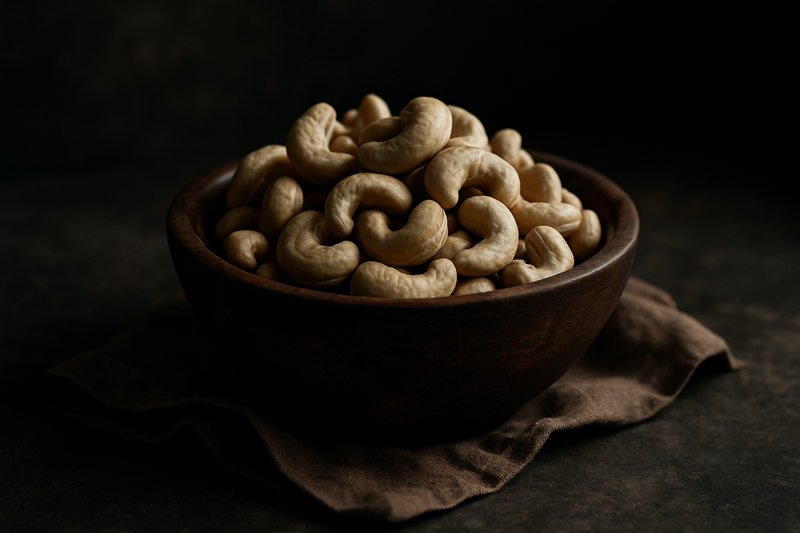
Cashew Yogurt · Photograph
Cashew yogurt is a creamy, tangy, dairy-free food made by blending soaked raw cashews (Anacardium occidentale) with water and fermenting the mixture with live bacterial cultures. It has become one of the most popular plant-based yogurt alternatives, valued both for its rich texture and for the gut-health promise that comes with any fermented food.
Key Nutrients
% Daily Value based on 2,000 cal diet
Key active compounds in cashew yogurt
- Monounsaturated fatty acids (primarily oleic acid): The main fat in cashews, similar in structure to the fat in olive oil. Associated with improved blood lipid profiles when they replace saturated fats from animal products.
- Phytosterols (e.g., beta-sitosterol): Plant compounds structurally similar to cholesterol that compete with it for absorption in the gut, potentially helping to modestly lower LDL (low-density lipoprotein, the "bad" cholesterol) as part of a plant-rich diet.
- Phenolic compounds and flavonoids: Antioxidant molecules found naturally in cashews. The 2021 lab study mentioned above found that fermentation increased the total phenolic content and free-radical-neutralizing activity of cashew milk yogurt.
- Lactic acid and fermentation metabolites: Organic acids produced by lactic acid–producing bacteria (LAB) during fermentation. They lower the pH of the yogurt (making it tangy), thicken the texture, and may help inhibit spoilage organisms.
- Live probiotic cultures (when present): Strains such as Lactobacillus acidophilus, Lactobacillus bulgaricus, and Bifidobacterium species, which may support gut microbiome health when consumed in sufficient quantities in living form.
Buying guide: how to choose a healthy cashew yogurt
Optional module selected because label literacy is the single most practical skill for this ingredient.
What to look for:
- "Live and active cultures" label — This phrase, especially when combined with named strains (e.g., L. acidophilus, B. lactis), confirms viable probiotics. Avoid products that only say "made with cultures" without confirming viability.
- Added sugars under 5 g per serving — Plain varieties are best. If you choose flavored, compare brands; some contain 10–15 g added sugar per serving, which shifts this food closer to dessert than to a gut-health staple.
- Fortified with calcium, vitamin D, and B12 — Especially important if cashew yogurt is replacing dairy in your diet. Many brands do fortify; check the % Daily Value on the panel.
- Short ingredient list — Cashews (or cashew milk), water, live cultures, and perhaps a natural thickener like tapioca starch or pectin. Long lists of gums, sweeteners, and flavor extracts suggest heavy processing.
- Coconut content — A small amount of coconut milk adds richness without dramatically raising saturated fat. A product where coconut cream is the second ingredient may have saturated fat levels comparable to dairy yogurt.
- Sodium — Most plain cashew yogurts are low in sodium (under 100 mg per serving). Savory or flavored versions may add salt. Check if you are managing blood pressure.
Fresh vs. shelf-stable:
Refrigerated products are more likely to contain viable live cultures than shelf-stable ones. If a cashew yogurt does not need refrigeration and the label does not specify live cultures, assume it has been heat-treated and has limited probiotic activity.
How Cashew Yogurt Compares
| Compared with | What's different |
|---|---|
| Cashew Yogurt vs. Greek Yogurt | Significantly higher in protein and lower in fat, but contains lactose and animal-derived saturated fat. |
| Cashew Yogurt vs. Coconut Yogurt | Contains significantly more saturated fat and a thinner texture unless thickened with gums or starch. |
| Cashew Yogurt vs. Soy Yogurt | Higher in protein but often has a bean-like aftertaste and a less creamy mouthfeel than cashew. |
Health Benefits
Things to Know
Tree nut allergy: Cashew yogurt contains cashews, a common tree nut allergen. People with cashew or tree nut allergy must avoid it entirely. Reactions can range from mild oral symptoms to anaphylaxis (a severe, potentially life-threatening allergic response).
IBS and FODMAP sensitivity: Cashews contain moderate-to-high levels of FODMAPs. Fermentation may reduce these, but large servings can still cause gas or bloating. Start with 2–4 tablespoons and increase slowly if tolerated.
Kidney stones (calcium-oxalate type): Cashews are moderately high in oxalates — naturally occurring compounds that can contribute to certain kidney stones. Typical yogurt servings are more diluted than whole nuts, but people with a history of calcium-oxalate stones may want to moderate intake.
Immunocompromised individuals: Regularly eating probiotic foods like yogurt is generally considered safe for most people. However, people receiving chemotherapy, living with advanced immunodeficiency, or on high-dose immunosuppressant medications (e.g

Shop This Ingredient
Stock your pantry with quality cashew yogurt.
Buy on AmazonAs an Amazon Associate, Plantopedia earns from qualifying purchases. This costs you nothing extra and helps us keep the encyclopedia free.
Frequently Asked Questions
Digestive health and the microbiome The most direct gut-health benefit of cashew yogurt is as a potential probiotic carrier. When a product genuinely contains live and active cultures in meaningful quantities — and has not been pasteurized after fermentation — regular consumption can contribute to the diversity and abundance of beneficial bacteria in the gut. Broader research on probiotic-containing foods (mostly dairy-based yogurt) links them to: Reduced duration and severity of antibiotic-associated diarrhea in some populations Modest improvements in constipation symptoms in certain groups Support for gut barrier function and microbiome diversity However, no controlled human trials have tested cashew yogurt specifically for these digestive outcomes. The benefits above are extrapolated from broader probiotic and fermented-food research, not proven directly for cashew yogurt. Fermentation also partially breaks down carbohydrates in cashew milk, which may improve tolerability for some people. But cashews are moderately high in FODMAPs (fermentable oligosaccharides, disaccharides, monosaccharides, and polyols — types of carbohydrates that can ferment rapidly in the gut and cause gas and bloating in sensitive individuals). Large portions may still trigger symptoms in people with irritable bowel syndrome (IBS), even after fermentation. Heart health and circulation Cashew yogurt provides mainly unsaturated fats — the type associated with improved blood lipid profiles when they replace saturated fat. Human trials on whole tree nuts (including cashews) link nut-rich diets to lower LDL cholesterol and reduced cardiovascular risk, likely due to their monounsaturated fats, fiber, and phytosterols. Cashew yogurt is not the same as eating whole cashews, but it carries some of the same fatty acid profile. The caveat: Cashew–coconut blended yogurts can be significantly higher in saturated fat than pure cashew yogurts, which may blunt or reverse the cardiovascular advantage. And flavored or sweetened products can carry enough added sugar to offset cardiometabolic benefits. The heart-health angle applies most clearly to plain, unsweetened, low-coconut versions. Evidence for cashew yogurt specifically on heart-health outcomes: indirect and emerging. No cashew yogurt trials on lipid profiles or cardiac endpoints exist at time of writing. Blood sugar and metabolism Plain unsweetened cashew yogurt tends to be lower in carbohydrates and added sugars than most sweetened plant yogurts, suggesting a relatively modest glycemic impact. Glycemic load refers to how much and how quickly a food raises blood sugar; foods lower in added sugars and higher in fat and fiber tend to have a lower glycemic load. There are no human intervention trials on cashew yogurt and blood glucose. Any blood sugar benefit is inferred from its macronutrient profile and from the general principle that replacing high-sugar snacks with lower-sugar, higher-fat options can blunt blood sugar spikes. People with diabetes should always check labels for total and added sugar content, as flavored cashew yogurts can vary widely. Inflammation and recovery The same 2021 lab study that measured probiotic viability in cashew yogurt also found increased antioxidant activity after fermentation, suggesting that the fermentation process enhances the phenolic content of cashew milk. Antioxidants are molecules that neutralize free radicals — unstable molecules that, in excess, can contribute to tissue damage and chronic inflammation. This is a promising early signal, but it is a laboratory finding, not a human clinical result. Any anti-inflammatory effect of regularly eating cashew yogurt in humans remains speculative and would likely be modest, especially compared with the impact of overall diet quality. A pattern built around whole plants, fiber, and minimal ultra-processed food will do more for inflammation than any single ingredient.
The short answer: plain, unsweetened, with a "live and active cultures" label and named strains. | Form | Gut benefit potential | Notes | |---|---|---| | Plain unsweetened commercial (with live cultures labeled) | Best | Look for named strains; check fortification | | Flavored or sweetened commercial | Moderate to low | Added sugars may reduce benefits; not all are probiotic | | Cashew–coconut blended | Moderate | Higher saturated fat; still probiotic if labeled | | Homemade (fermented with starter or probiotic capsule) | Potentially high | Probiotic strains are known; no added sugars; requires clean technique | | Cashew yogurt used in cooking (heated) | None for probiotics | Heat kills live cultures; still contributes flavor and fats | Homemade cashew yogurt, when prepared with proper hygiene and a verified probiotic starter, can deliver known strains in meaningful amounts. The process involves soaking raw cashews, blending them smooth with filtered water, adding a probiotic capsule or yogurt starter, and incubating at 40–43°C (104–109°F) for 6–24 hours. Longer fermentation produces a tangier, thicker result.
Quick Answers
Common questions, answered in a line.
Cashew yogurt is heart-healthy because it contains monounsaturated fatty acids like oleic acid and phytosterols such as beta-sitosterol. These plant compounds compete with cholesterol for absorption in the gut. Replacing saturated animal fats with these plant-based fats can help improve blood lipid profiles.
People with tree nut allergies must avoid cashew yogurt entirely as it can cause reactions ranging from mild oral symptoms to life-threatening anaphylaxis. Additionally, individuals prone to calcium-oxalate kidney stones or those with high FODMAP sensitivity should moderate their intake.
When buying cashew yogurt, look for a "live and active cultures" label, less than 5 grams of added sugar, and a short ingredient list. Choosing brands fortified with calcium, vitamin D, and B12 is also recommended if you are using it to replace dairy.
Cashew yogurt provides antioxidant benefits through naturally occurring phenolic compounds and flavonoids found in the nuts. Research indicates that the fermentation process actually increases the total phenolic content and the free-radical-neutralizing activity of the yogurt.
Cashew yogurt is made by blending soaked raw cashews with water and then fermenting the mixture with live bacterial cultures. This process creates a creamy, tangy, dairy-free alternative to traditional yogurt that is rich in organic acids.
Cashew yogurt may cause gas or bloating in people with IBS because cashews contain moderate-to-high levels of FODMAPs. While fermentation may reduce these compounds, it is best to start with a small serving of 2–4 tablespoons to test your tolerance.
For Readers in the USA
Local context — sourcing, seasonality, and regional notes.
You can find cashew yogurt at major US national retailers like Whole Foods Market, Sprouts Farmers Market, and Trader Joe's, as well as many Kroger and Target locations. Popular American brands such as Forager Project and Silk are widely distributed in the refrigerated dairy alternative aisle.
Look for the USDA Organic seal on cashew yogurt packaging to ensure the cashews were grown without synthetic pesticides and the product contains no GMOs. Many US-based plant-based brands prioritize organic certification to appeal to health-conscious consumers and meet federal standards for sustainable farming.
While cashews are grown in tropical climates like Brazil or Vietnam, the finished yogurt is produced year-round by US manufacturers and remains consistently available in every season. Because it is a processed fermented product rather than raw produce, there is no specific "peak season" for purchase in American grocery stores.
AI Clinical Review
- Clearly distinguishes “fermented” from “probiotic,” emphasizing the need for live and active cultures (ideally with named strains) for gut benefits.
- Accurately notes that cashew yogurt is typically low in protein and that fortification (calcium, vitamin D, B12) varies by brand—important if it replaces dairy.
- Appropriately frames heart-health implications around fat quality, cautioning that coconut blends raise saturated fat and that added sugars can dilute benefits.
- Reflects current lab evidence that fermentation can increase antioxidant activity, while being careful not to overclaim clinical effects.
- Human trials specifically testing cashew yogurt on digestion, microbiome changes, lipids, blood sugar, or inflammation are lacking; most benefits are extrapolated from dairy yogurt or general probiotic research.
- Probiotic effects are strain- and dose-dependent, and viability can decline over shelf life or be eliminated by post-fermentation heat treatment.
- The degree to which fermentation lowers cashew FODMAPs (fermentable carbs that can cause GI symptoms) is uncertain and likely varies by recipe and method.
- Safety: avoid entirely with cashew/tree-nut allergy. People who are immunocompromised (e.g., on chemotherapy or high-dose immunosuppressants) should discuss routine probiotic foods with their clinician.
- IBS/FODMAP sensitivity: some may tolerate small amounts better; consider starting with a few tablespoons and increase based on comfort.
- Kidney stones: cashews are moderately high in oxalates; those with a history of calcium‑oxalate stones may want to moderate intake.
- Product and use matter: choose plain, low‑sugar options with live cultures (and, when available, labeled strains/CFU counts, ideally guaranteed through shelf life); look for calcium/vitamin D/B12 fortification if replacing dairy; heating cashew yogurt in recipes will inactivate probiotic cultures.
Fermented does not always mean probiotic; note sodium and live/active culture differences.
References
- PubMed — Microbiological, Physicochemical, and Immunological Analysis of a Commercial Cashew Nut-Based Yogurt (pubmed.ncbi.nlm.nih.gov)
- PMC, National Library of Medicine — Nutritional health aspects and functional properties of nut yogurt: Future perspectives (pmc.ncbi.nlm.nih.gov)
- PMC, National Library of Medicine — Nutritional Content and Health Profile of Non-Dairy Plant-Based Yogurt Alternatives (pmc.ncbi.nlm.nih.gov)
- Frontiers — Frontiers | A comparison of the nutritional profile and nutrient density of commercially available plant-based and dairy yogurts in the United States (frontiersin.org)
- PMC, National Library of Medicine — Antioxidant activity of labneh made from cashew milk and its combination with cow or camel milk using different starter cultures (pmc.ncbi.nlm.nih.gov)
- USDA FoodData Central — USDA FoodData Central (fdc.nal.usda.gov)
- ScienceDirect — S0023643821016352 (sciencedirect.com)
Know Your Numbers
Eating healthy is a start. Now get to know your biomarkers.
Food changes bloodwork — inflammation, lipids, blood sugar and nutrient status all respond to what you eat. 59 markers from $59.
- Results in 7–10 days at 2,000+ Quest sites
- Licensed provider reviews every result
- One flat price, no membership, HSA/FSA eligible
Educational information only, not medical advice. Panels are ordered and reviewed through our licensed partner; Plantopedia may earn a commission.