Celtuce — health benefits and uses
A Chinese lettuce variety valued for its juicy, crunchy stalk.
The Short Answer
Celtuce, also known as stem lettuce, is a crisp vegetable prized for its edible stalk that tastes like a cross between cucumber and mild celery. It is low in calories but rich in Vitamin A, providing roughly 3,500 IU per 100g serving.

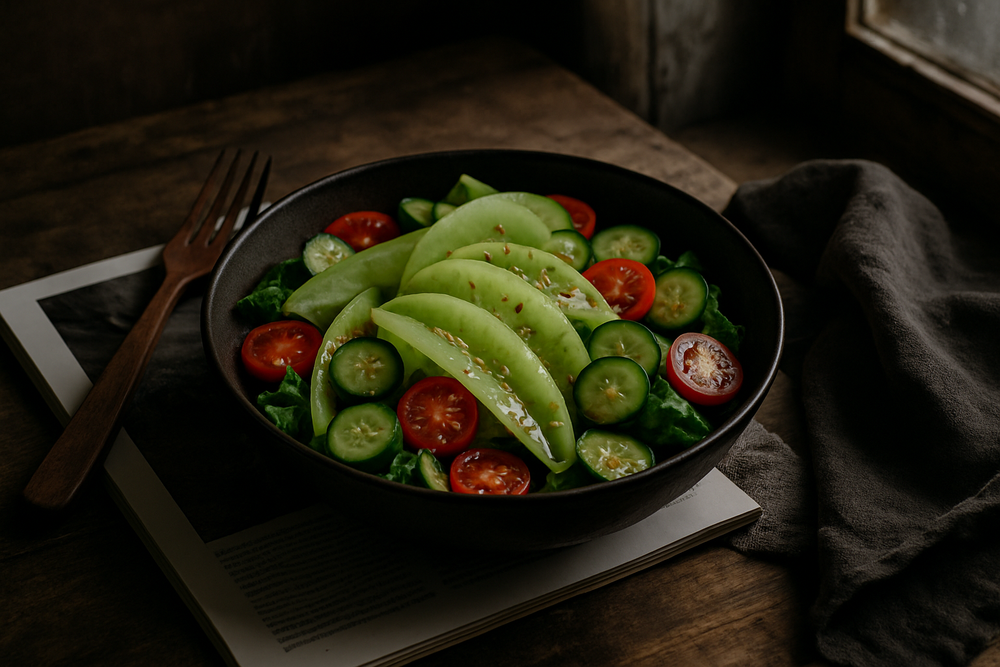
Celtuce · Photograph
Discover celtuce nutrition and health benefits in this evidence-based guide. Learn how this crisp stem vegetable supports digestion, weight management, and immune health — plus how to peel, prep, and cook it.
Key Nutrients
% Daily Value based on 2,000 cal diet
Key active compounds in celtuce
- Provitamin A carotenoids (including beta-carotene): Plant pigments that your body can convert to vitamin A. They also act as antioxidants, helping to neutralize free radicals — unstable molecules that can damage cells.
- Vitamin C (ascorbic acid): A water-soluble antioxidant vitamin that supports immune function and helps the body make collagen, the structural protein in skin and connective tissue.
- Folate (vitamin B9): A B vitamin needed for DNA synthesis — the process of copying genetic material — and for healthy cell division. Particularly important during pregnancy.
- Potassium: An electrolyte (a mineral that carries an electrical charge in body fluids) essential for fluid balance, normal nerve and muscle function, and blood pressure regulation.
- Manganese: A trace mineral that acts as a cofactor — a helper molecule — for several antioxidant enzymes and metabolic pathways.
- Phenolic antioxidants: A broad class of plant compounds found in lettuces that can donate electrons to neutralize reactive oxygen species. Specific phenolics in celtuce have not been well characterized in the literature, but their presence is inferred from celtuce's classification as a lettuce-type vegetable.
- Dietary fiber: The indigestible portion of plant foods that adds bulk to stool, feeds beneficial gut bacteria, and slows the absorption of sugars into the bloodstream.
Prep and pairing ideas
Prepping celtuce is easier than it looks. Hold the stem upright and use a vegetable peeler or a sharp paring knife to remove the bumpy, darker green outer skin from top to bottom, rotating as you go. What's left is a smooth, pale green cylinder. Slice it into coins, matchsticks, or thin half-moons depending on your dish.
Common pairings
Celtuce + sesame oil + ginger (quick stir-fry): Sesame oil and ginger are traditional Chinese pairings with celtuce that highlight its mild flavor without overwhelming it. The sesame oil adds healthy monounsaturated fats that help your body absorb fat-soluble carotenoids from the celtuce.
Celtuce + rice vinegar + cucumber (crunchy salad): Both celtuce and cucumber are high in water and very low in calories, creating a light salad that's satisfying from volume rather than calories. Rice vinegar keeps sodium low while adding brightness.
Celtuce + tofu + garlic (protein-forward bowl): Pairing celtuce with tofu adds plant protein and calcium to complement celtuce's potassium and folate, making for a more nutritionally complete bowl with minimal prep.
Buying guide
Where to find it: Celtuce is most reliably found at Asian grocery stores and Chinese supermarkets year-round. It also appears at specialty farmers markets in spring and fall. Some online produce delivery services carry it seasonally.
What to look for: Choose stems that are firm and heavy for their size with smooth, unblemished skin. Avoid stems that feel hollow when tapped or show cracks and browning at the cut ends, which indicate age. A fresh stem should feel dense and solid — similar to a dense cucumber.
Storage: Wrap unwashed celtuce loosely in a damp paper towel and store in the crisper drawer of your refrigerator. Whole stems keep for 5 to 7 days. Once peeled and cut, store in an airtight container submerged in cold water and use within 2 to 3 days.
Supplements: Celtuce is not available as a dietary supplement, nor would a supplement capture its fiber, water content, or culinary enjoyment. Eat it as a whole food.
Frozen or canned: Celtuce is rarely sold frozen or canned in Western markets. If you find canned or jarred celtuce (sometimes pickled), check the sodium content — pickled versions can be significantly higher in sodium than fresh.
Bottom line
Celtuce is an underused, highly nutritious vegetable that earns its place in a health-focused diet through sheer nutrient density relative to its calorie count. It is not a superfood with dramatic clinical trial evidence behind it — it is something arguably more practical: a versatile, affordable, low-calorie whole food that delivers vitamin C, provitamin A, folate, potassium, and manganese alongside fiber and water in every crisp bite.
If you want to add more vegetable variety, support digestive regularity, or simply find a lighter ingredient for stir-fries and salads, celtuce is worth the minor effort of peeling and slicing. It is safe for most people, pairs well with common pantry ingredients, and works equally well raw or lightly cooked.
Explore more ways to eat for your health goals at Plantopedia's Goals page.
How Celtuce Compares
| Compared with | What's different |
|---|---|
| Celtuce vs. Celery | Celtuce is grown for its thick, crisp edible stalk, whereas celery is a leaf petiole. |
| Celtuce vs. Romaine Lettuce | Celtuce has a nutty, smoky flavor compared to the peppery, watery crunch of Romaine. |
Health Benefits
Things to Know
Allergy risk: Celtuce belongs to the Asteraceae (daisy) plant family, the same family as ragweed, chrysanthemums, and other lettuces. If you have a known allergy to other lettuces or to plants in this family, use caution and check with your doctor before adding celtuce.
Kidney disease: Celtuce contributes about 330 mg of potassium per 100 g serving. People with advanced kidney disease who need to restrict dietary potassium should account for this and speak with their nephrologist or dietitian.
Digestive sensitivity: People with irritable bowel syndrome (IBS) or other conditions affecting gut sensitivity may find large amounts of raw celtuce uncomfortable. Start with smaller cooked portions to assess tolerance. If you have been advised to follow a low-fiber diet (for example, during an active flare of inflammatory bowel disease), limit raw stem vegetables until your care team advises otherwise.
Blood-thinning medications: Celtuce is not a major documented source of vitamin K, but any significant change in overall leafy green intake can affect the consistency of anticoagulant medications like warfarin. Keep your total leafy vegetable intake consistent and inform your prescriber of dietary changes.
Potassium-related medications: If you take potassium-sparing diuretics, ACE inhibitors, or angiotensin receptor blockers, discuss your total dietary potassium intake — including vegetables like celtuce — with your prescriber.
Medication absorption: Rapidly increasing fiber intake from any source can theoretically affect how quickly some oral medications are absorbed. A general precaution is to take medications with water separately from very high-fiber meals.
Pregnancy: Celtuce's folate content is a positive — folate is essential for fetal neural tube development. Wash celtuce thoroughly before eating, as with all raw vegetables, to reduce the risk of foodborne illness.
Shop This Ingredient
Stock your pantry with quality celtuce.
Buy on AmazonAs an Amazon Associate, Plantopedia earns from qualifying purchases. This costs you nothing extra and helps us keep the encyclopedia free.
Frequently Asked Questions
It is important to be upfront: there are currently no human clinical trials studying celtuce directly. The evidence for its benefits is extrapolated from its nutrient content and from a large, well-established body of research on vegetables with similar nutritional profiles. Think of celtuce as benefiting from the "vegetables are good for you" evidence base, with a few specific nutrients that research has studied in their own right. Heart and circulation Celtuce provides about 330 mg of potassium and only around 11 mg of sodium per 100 g. This favorable potassium-to-sodium ratio is consistent with eating patterns that support healthy blood pressure. Research on dietary potassium consistently shows associations with lower blood pressure, and major guidelines — including those from the American Heart Association — recommend increasing vegetable intake as a practical strategy to raise dietary potassium. Celtuce fits that goal while adding almost no calories or sodium. Digestive health and microbiome Celtuce benefits for digestion come primarily from its fiber (1.7 g per 100 g) and its very high water content. Fiber adds bulk to stool and feeds the beneficial bacteria that live in your colon — your gut microbiome (the community of microorganisms living in your digestive tract). The water content helps keep stool soft enough to move comfortably. No studies have tested celtuce specifically for digestive outcomes, but these characteristics are shared by the non-starchy vegetables that general dietary guidance consistently links to bowel regularity and gut health. Blood sugar and metabolism Celtuce is a non-starchy vegetable, meaning it has very few carbohydrates that would raise blood glucose — about 3.7 g total carbohydrate and 1.7 g fiber per 100 g. This gives it a low glycemic load (a measure of how much a food raises blood sugar when eaten in realistic portions). Substituting celtuce for higher-starch components in a meal — say, using it in place of some noodles in a stir-fry — can lower the overall glycemic impact of that dish. Evidence here is inferred from general research on low-glycemic vegetables, not celtuce-specific trials. Inflammation and immune support Celtuce's vitamin C and provitamin A carotenoids both contribute to antioxidant defenses. Vitamin C is well documented to support several immune functions, including the activity of white blood cells, and to help regenerate other antioxidants in the body. Provitamin A carotenoids support the integrity of mucosal surfaces — the thin linings of the respiratory tract, gut, and other organs — which act as a first barrier against pathogens. Any anti-inflammatory effect of celtuce is inferred from studies on these nutrients, not from celtuce-specific research. Evidence is emerging rather than established.
Both work well, and the best form depends on your preference and digestion. Raw peeled stem delivers the crispest texture and preserves heat-sensitive nutrients like vitamin C. Slice or shave it thinly and use it in salads, slaws, or crudité platters. Always peel the tough, fibrous outer skin first — the pale green interior is what you eat. Stir-fried or sautéed stem softens the texture while retaining most of the vegetable's nutrients thanks to short cooking times. High-heat, quick cooking (as in a wok stir-fry) is the traditional method. Thin, matchstick-cut pieces cook in 2 to 3 minutes. Pickled stem is used in some Chinese cuisines. Pickling changes the sodium content depending on the brine, so check labels or make your own with a light vinegar brine to keep sodium low. Leaves can be used exactly like other lettuce greens — torn into salads or used as wraps. Nutritional data for the leaves differ from the stem; most data cited here refer to the peeled stem.
There is no established therapeutic dose for celtuce because it is a food, not a supplement, and no clinical trials have set a target intake. General dietary guidance — including MyPlate from the U.S. Department of Agriculture — recommends that adults fill roughly half their plate with vegetables and fruits at each meal, aiming for 2½ to 3 cups of vegetables per day for most adults. A practical starting point is 50 to 150 g of peeled celtuce stem per serving (roughly half a cup to a full cup sliced), used as part of a varied vegetable intake rather than as the sole vegetable in your diet. If you are new to celtuce or have a sensitive digestive system, start with smaller cooked portions — around 50 g — and increase gradually over 1 to 2 weeks to let your gut microbiome adjust to the added fiber. Because celtuce is so low in calories and well tolerated by most people, eating it daily as part of a varied diet is reasonable and safe for healthy adults.
Quick Answers
Common questions, answered in a line.
Celtuce provides vitamin C, provitamin A carotenoids, folate, potassium, manganese, and dietary fiber. These compounds support immune function, DNA synthesis, and fluid balance while acting as antioxidants to protect your cells from damage.
Yes, celtuce can support weight management because it is high in water and fiber while being very low in calories. Its high volume helps you feel satisfied without consuming excessive calories, making it a useful addition to a light diet.
To prep celtuce, hold the stem upright and use a vegetable peeler or paring knife to remove the thick, bumpy, dark green outer skin. Once you reach the smooth, pale green inner cylinder, you can slice it into coins, matchsticks, or half-moons.
Look for celtuce stems that feel firm, heavy for their size, and dense like a cucumber. Avoid any stems that feel hollow when you tap them or show signs of browning and cracking at the ends, as these are signs of age.
Store unwashed celtuce stems wrapped loosely in a damp paper towel in your refrigerator's vegetable drawer for up to 7 days. If the celtuce is already peeled and cut, keep it submerged in cold water in an airtight container for 2 to 3 days.
Individuals with advanced kidney disease or those taking potassium-sparing medications should be cautious, as celtuce contains approximately 330 mg of potassium per 100g. Those with ragweed or daisy family allergies should also consult a doctor before eating it.
Celtuce is an excellent source of folate (vitamin B9), which is a critical nutrient for healthy fetal neural tube development. Pregnant women should ensure they wash the vegetable thoroughly before consumption to reduce the risk of foodborne illness.
For Readers in the USA
Local context — sourcing, seasonality, and regional notes.
In the United States, you can most reliably find celtuce at Asian supermarket chains like H-Mart, 99 Ranch Market, and Mitsuwa Marketplace. While it is rarely found in conventional grocers like Kroger or Safeway, it has become a trendy seasonal item at high-end farmers markets in California and New York.
Celtuce is primarily grown in California and the Pacific Northwest, appearing in US markets during its peak seasons of late spring and early fall. Because it thrives in cool weather, domestic production mirrors the seasonality of traditional head lettuce, though imported stems from China may be available year-round in specialty shops.
Celtuce is most commonly known as "stem lettuce" or "Chinese lettuce" in American grocery stores, and it is occasionally referred to as "woju" or "asparagus lettuce." Identifying it by these regional names can help you locate it in produce sections where it may not be labeled by its botanical name.
When buying celtuce in the US, look for the USDA Organic seal if you want to ensure it was grown without synthetic pesticides or fertilizers. Like other leafy greens and stem vegetables, fresh celtuce is regulated by the FDA to ensure food safety standards are met during harvesting and distribution.
AI Clinical Review
- Clearly explains what celtuce is and how to prepare it (peeling the outer skin is key), with practical raw vs. cooked guidance that preserves nutrients like vitamin C.
- Accurately frames celtuce as very low in calories and high in water and fiber—features that support fullness and digestive regularity without adding much energy (low energy density).
- Appropriately links the vegetable’s potassium/low-sodium profile to blood-pressure–supportive eating patterns and notes that benefits are inferred from broader vegetable research, not celtuce-specific trials.
- Sensibly positions celtuce as part of overall vegetable intake (e.g., MyPlate-style goals) rather than a treatment for disease.
- There are no human clinical trials on celtuce; statements about immunity, inflammation, glycemia, or microbiome effects are extrapolated from its nutrients and from research on similar non-starchy vegetables.
- Reported micronutrient values (e.g., vitamin A from carotenoids, manganese) can vary by cultivar, growing conditions, handling, and whether you analyze stem vs. leaves; percent Daily Values are estimates, not guarantees.
- Antioxidant/phenolic profiles specific to celtuce are not well characterized, so any unique “antioxidant” claims should be viewed as provisional.
- The practical impact on weight management and glycemic load (how much a food raises blood sugar in a typical portion) stems from overall diet patterns and substitutions, not evidence that celtuce alone changes outcomes.
- Potassium: About 330 mg per 100 g is modest but relevant for people with advanced kidney disease or those on potassium-sparing diuretics, ACE inhibitors, or ARBs—check with your clinician if this applies to you.
- Blood thinners: While the stem isn’t a major vitamin K source, large swings in total leafy green intake (including celtuce leaves) can affect warfarin dosing; aim for consistency.
- Digestive sensitivity: Raw, fibrous vegetables can bother sensitive guts (e.g., IBS). Start with smaller, cooked portions and increase gradually to let your system adjust.
- Sodium caveat: Fresh celtuce is naturally low in sodium, but pickled/jarred versions can be high—read labels if you’re watching blood pressure.
- Absorption tip: Carotenoids are fat-soluble; pairing celtuce with a small amount of healthy fat (e.g., sesame or olive oil) can aid uptake without adding many calories.
Very safe; peel the fibrous outer layer.
References
- USDA FoodData Central — Celtuce, raw: Authoritative nutrient composition data for celtuce including macros, vitamins, and minerals. (fdc.nal.usda.gov)
- MyPlate — Vegetables group: U.S. dietary guidance on vegetable intake recommendations and health benefits of non-starchy vegetables. (myplate.gov)
- Nutrition-and-you.com — Celtuce nutrition facts and health benefits: Detailed nutrient profile and culinary overview of celtuce stem and leaves. (nutrition-and-you.com)
- Health Benefits Times — Celtuce: Overview of celtuce's nutritional composition and potential health properties with nutrient breakdowns. (healthbenefitstimes.com)
- Moleq Food Information — Celtuce: Micronutrient and macronutrient data for celtuce consistent with USDA reference values. (moleq.com)
- Women's Health Magazine — What is celtuce?: Consumer-facing overview of celtuce's culinary uses, taste, and general nutrition. (womenshealthmag.com)
- Wikipedia — Celtuce: Botanical and historical background on Lactuca sativa var. augustana, including cultivation origins and culinary traditions. (en.wikipedia.org)
- NutritionGlance — Celtuce food profile: Nutrient breakdown per 100 g for celtuce, consistent with USDA data. (nutritionglance.com)
- University Hospitals Nutrition Facts — Celtuce, raw: Institutional nutrition fact summary for celtuce leaf and stem. (uhhospitals.org)
Know Your Numbers
Eating healthy is a start. Now get to know your biomarkers.
Food changes bloodwork — inflammation, lipids, blood sugar and nutrient status all respond to what you eat. 59 markers from $59.
- Results in 7–10 days at 2,000+ Quest sites
- Licensed provider reviews every result
- One flat price, no membership, HSA/FSA eligible
Educational information only, not medical advice. Panels are ordered and reviewed through our licensed partner; Plantopedia may earn a commission.