Enoki Mushrooms — health benefits and uses
A staple East Asian mushroom valued as a light, immune-supporting food.
The Short Answer
Enoki mushrooms are a low-calorie fungus prized for their crunchy, noodle-like texture and high B-vitamin content. They must be cooked for 1 to 3 minutes in broths or stir-fries to ensure food safety and optimal digestion.
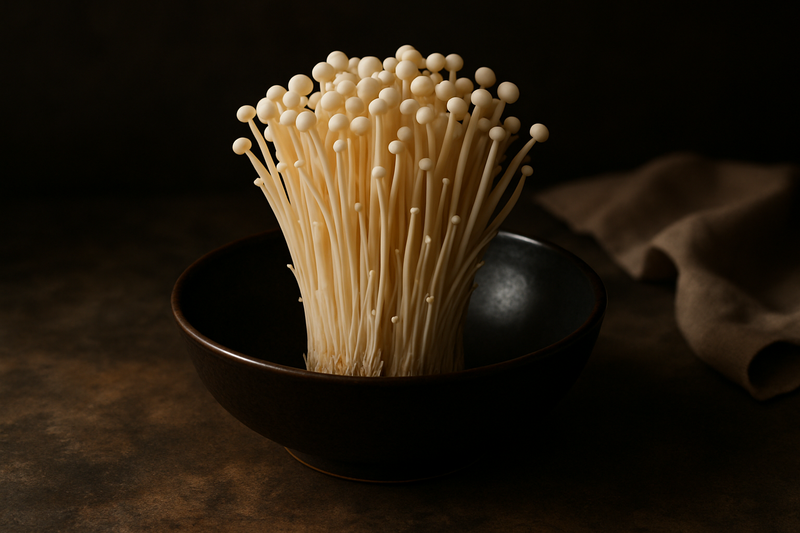
Enoki Mushrooms · Photograph
Discover the evidence-based enoki mushroom health benefits and how to cook them safely. This guide covers nutrition facts, active compounds, immune and digestive support, food safety warnings, and practical cooking tips for these slender Japanese mushrooms.
Key Nutrients
% Daily Value based on 2,000 cal diet
Key active compounds
- Beta-glucans (polysaccharides): Complex carbohydrate chains in the mushroom cell wall. Research suggests they may stimulate immune cells and act as prebiotics (food for beneficial gut bacteria), though most data come from lab studies.
- Ergothioneine: A unique sulfur-containing amino acid found in high concentrations in many mushrooms. It acts as a cellular antioxidant and may help protect mitochondria (the energy-producing structures inside cells) from oxidative damage.
- Phenolic compounds: Plant molecules that neutralize free radicals (unstable molecules that can damage cells). Enoki contains flavonoids and related antioxidants in this category.
- Flammulin and other bioactive proteins: Proteins isolated from enoki that show immune-modulating and anti-tumor activity in laboratory models. Whether culinary amounts deliver the same effects in humans is not yet established.
- B vitamins (niacin, pantothenic acid, thiamin, riboflavin, folate): Not phytochemicals but nutritionally significant; these water-soluble vitamins support energy metabolism and nervous system function.
Prep and pairing ideas
Enoki's delicate texture means it needs very little cooking — usually just 1 to 3 minutes in hot liquid. Here are three practical ways to use it:
Miso soup and Asian broths: Trim the base of the cluster, separate the stems, and drop them into simmering miso or dashi broth for the last 2 minutes. They soak up the umami without going mushy.
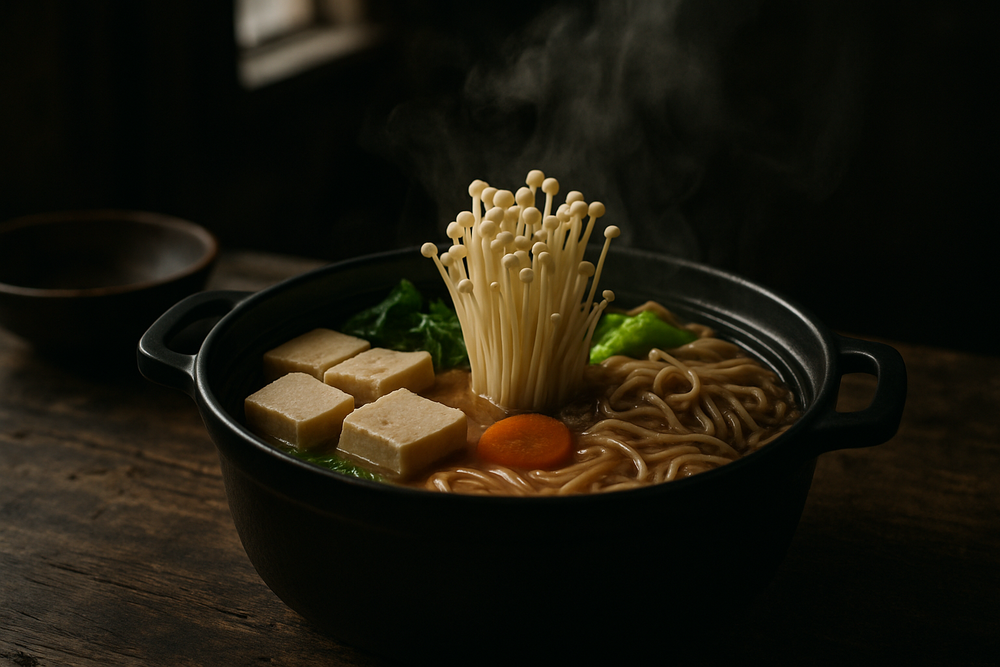
Hot pot and shabu-shabu: Drop whole clusters into a communal simmering pot alongside tofu, thin-sliced vegetables, and noodles. The crunch is a welcome contrast to softer ingredients. This is the most traditional and safest preparation — the boiling broth ensures thorough cooking.
Stir-fries with garlic and sesame: Toss separated enoki stems with minced garlic in a lightly oiled pan over high heat for 2–3 minutes. Finish with a few drops of toasted sesame oil and a splash of low-sodium soy sauce. The pairing works because garlic's sulfur compounds and enoki's ergothioneine both support antioxidant pathways, and sesame oil adds heart-healthy unsaturated fats.
Storage tip: Keep fresh enoki in the refrigerator, loosely wrapped, and use within 3–5 days of purchase. Once the base turns slimy or the color yellows noticeably, discard the bunch.
Bottom line
Enoki mushrooms are a nutrient-dense, very low-calorie vegetable with a genuinely impressive B-vitamin profile and a growing body of preclinical research behind their antioxidant, immune-supportive, and gut-health potential. The human clinical evidence is still thin — the most rigorous trial to date showed improved skin hydration in healthy women, and broader claims about immune function, heart health, and blood sugar are largely extrapolated from lab and animal studies. That said, enoki fits naturally and safely into a whole-food, plant-based diet when cooked thoroughly. The most important safety rule with enoki is simple: always cook it. Raw enoki carries a documented Listeria risk, particularly for pregnant people, older adults, and anyone with a weakened immune system. Beyond that precaution, a cluster of enoki simmered into your next soup or hot pot is an easy, flavorful way to diversify your vegetable intake.
How Enoki Mushrooms Compares
| Compared with | What's different |
|---|---|
| Enoki Mushrooms vs. Shimeji Mushrooms | Enoki are crunchy and noodle-like, while Shimeji have a firmer, nutty cap and thicker stalks. |
| Enoki Mushrooms vs. Oyster Mushrooms | Enoki are mild and stringy, whereas Oyster mushrooms are savory, fleshy, and velvety. |
Health Benefits
Things to Know
Always cook enoki thoroughly.: Raw enoki has been linked to serious Listeria monocytogenes outbreaks causing severe illness and deaths. A brief wilt in hot liquid is not enough — cook until the mushrooms are fully heated through.
Pregnant people: Listeriosis poses a particularly severe risk during pregnancy, including miscarriage, stillbirth, and neonatal illness. Avoid all raw enoki; ensure cooked enoki reaches a safe temperature.
Older adults (65+) and immunocompromised individuals: (cancer treatment, HIV, transplant medications, high-dose steroids): higher risk of serious complications from foodborne illness; thorough cooking is non-negotiable.
Young children and infants: are also more vulnerable to foodborne illness. Follow standard food-safety guidelines for high-risk foods.
Mushroom allergy: Rare, but if you react to other mushrooms (shiitake, oyster, button), introduce enoki cautiously.
GI sensitivity: Increasing fiber intake quickly can cause gas or bloating. Start with a smaller serving and build up gradually.
Immunosuppressant drugs: Concentrated mushroom extracts or supplements may theoretically interact with immunosuppressants due to their immune-modulating polysaccharides. Human interaction data are lacking; check with your prescriber before using enoki supplements (culinary amounts are generally considered safe).
No documented drug interactions: have been identified for typical culinary amounts of cooked enoki in major pharmacological references.
Shop This Ingredient
Stock your pantry with quality enoki mushrooms.
Buy on AmazonAs an Amazon Associate, Plantopedia earns from qualifying purchases. This costs you nothing extra and helps us keep the encyclopedia free.
Frequently Asked Questions
Heart and circulation Enoki's heart-health case rests mainly on its nutritional profile: very low in sodium, essentially zero saturated fat, and a decent source of potassium, which helps regulate blood pressure. Preclinical studies suggest enoki polysaccharides may favorably influence blood lipids and vascular oxidative stress, but these are cell and animal findings that have not yet been confirmed in well-controlled human trials. Think of enoki as one piece of a heart-supportive, vegetable-rich dietary pattern rather than a stand-alone remedy for cardiovascular risk. Digestive health and gut microbiome The roughly 2–3 g of dietary fiber per 100 g contributes to stool bulk and feeds beneficial gut bacteria. Laboratory and animal studies indicate enoki polysaccharides may act as prebiotics — compounds that selectively nourish helpful microbes in the colon and prompt production of short-chain fatty acids (SCFAs), which support the gut lining. No specific human clinical trials have tested enoki for defined microbiome endpoints or conditions like irritable bowel syndrome, so the gut-health angle is promising but still emerging. Blood sugar and metabolism Enoki is a low-glycemic, high-fiber vegetable, and that basic profile makes it a sensible swap for refined carbohydrates in a meal. Animal and cell studies show enoki extracts can improve insulin sensitivity and modulate glucose metabolism, but these results haven't translated into clear human clinical guidance. At normal culinary amounts, enoki fits well into a blood-sugar-conscious eating pattern without being positioned as a targeted diabetes therapy. Inflammation and antioxidant activity In vitro (test-tube) and animal experiments consistently show that enoki's ergothioneine, phenolics, and polysaccharides can scavenge free radicals and down-regulate pro-inflammatory signaling pathways. Large-scale human trials isolating enoki's effect on inflammatory markers such as C-reactive protein (CRP) don't yet exist. The current evidence is best summarized as: enoki is one of many antioxidant-rich plant foods, and eating more of them correlates with lower overall oxidative stress — but enoki alone is not a proven anti-inflammatory intervention. Skin hydration — the strongest human signal The most controlled human evidence for enoki comes from a randomized, double-blind, placebo-controlled trial (the gold standard study design) in healthy adult women. Four weeks of daily oral Flammulina velutipes intake significantly increased skin hydration compared with placebo (p = 0.033). The trial also assessed general mental and physical wellbeing. This is an encouraging finding, but it was conducted in a specific population using a defined supplement form — culinary enoki in soup may not deliver the same effect, and larger, longer studies are needed. Enoki mushroom benefits for immune system Enoki's beta-glucans and bioactive proteins show immunomodulatory (immune-system-modulating) activity in lab models, stimulating natural killer cells and macrophages (white blood cells that attack pathogens). No large human trial has demonstrated that eating enoki reduces infection rates or significantly boosts clinical measures of immune function. Current evidence supports framing enoki as an immune-supportive food within a plant-rich diet, not as a standalone immune remedy.
Who benefits most The home soup and hot pot cook Wants a low-effort, low-calorie vegetable that adds texture without overpowering flavor. Can add a 50–100 g cluster of fresh enoki in the last 1–2 minutes of simmering for best results. Benefits from the full range of B vitamins and fiber with minimal prep. The plant-based eater tracking nutrient density Looking for vegetables that punch above their calorie weight on B vitamins and minerals. Enoki's niacin content (44% DV per 100 g) is notably high for a vegetable and supports energy metabolism. Can rotate enoki with shiitake, oyster, and other mushrooms for a broader phytochemical spread. Fresh cooked enoki is the easiest and most widely available form. Look for firm, white clusters with no sliminess or discoloration — yellow or slimy stems signal age. Dried enoki works well rehydrated in broths; drying extends shelf life but does not eliminate the need to cook thoroughly. Supplement powders and extracts exist and were used in the skin-hydration trial, but there are no consensus dosing guidelines and quality varies widely across products. Raw enoki: Multiple multinational listeriosis outbreaks have been traced to imported raw or minimally processed enoki mushrooms contaminated with Listeria monocytogenes. The FDA has issued specific import alerts and a prevention strategy in response. Do not eat enoki raw.
There is no established recommended daily dose for enoki mushrooms as a functional food. General dietary guidance from USDA MyPlate encourages adults to include a variety of vegetables — including mushrooms — throughout the week, aiming for roughly 2.5 cups of vegetables per day for a 2,000-calorie diet. In practice, a 50–100 g cooked serving (roughly a small to medium cluster) several times per week fits comfortably within that framework and delivers a meaningful hit of B vitamins and fiber without risk of excess. The skin-hydration trial used a defined daily supplement over four weeks, but no standard supplemental dose has been established for other health goals. Start low if you are new to higher-fiber vegetables. A 30–50 g portion in soup is a gentle starting point. Increase gradually over a week or two to minimize digestive adjustment symptoms. If you are considering concentrated enoki supplements, consult a healthcare provider for guidance on dose and safety, especially if you take medications or have an underlying health condition. Looking for more ways to eat for specific health goals? Explore Plantopedia's goals guides to see how enoki and other whole plant foods can fit into your eating pattern.
Quick Answers
Common questions, answered in a line.
You should always cook enoki mushrooms thoroughly to eliminate the risk of Listeria monocytogenes, a bacteria that can cause severe illness or death. Raw enoki has been linked to documented outbreaks, making thorough heating non-negotiable for food safety.
Enoki mushrooms provide significant amounts of B vitamins, including niacin, pantothenic acid, thiamin, riboflavin, and folate, which support energy metabolism and nervous system function. They also contain bioactive compounds like beta-glucans, ergothioneine, and phenolic antioxidants.
Pregnant people should avoid raw enoki mushrooms due to the high risk of Listeriosis, which can lead to miscarriage, stillbirth, or neonatal illness. If consuming enoki, it must be cooked until fully heated through to ensure it reaches a safe temperature.
Enoki mushrooms are best prepared by simmering them in broths like miso soup, adding them to hot pots, or quickly stir-frying them with garlic and sesame oil. Because of their delicate texture, they typically only require 1 to 3 minutes of cooking in hot liquid to be ready.
Enoki mushrooms may support digestive health by providing beta-glucans, which act as prebiotics to feed beneficial gut bacteria. These complex carbohydrate chains are found in the mushroom's cell walls and are currently being studied for their potential immune-stimulating effects.
Fresh enoki mushrooms should be stored loosely wrapped in the refrigerator and used within 3 to 5 days of purchase. You should discard the bunch if the base becomes slimy or if the stems develop a noticeable yellow color.
Enoki mushrooms contain ergothioneine, a sulfur-containing amino acid that acts as a cellular antioxidant and may protect mitochondria from oxidative damage. They also provide phenolic compounds and flavonoids that help neutralize free radicals in the body.
For Readers in the USA
Local context — sourcing, seasonality, and regional notes.
You can find fresh enoki mushrooms at major U.S. grocery chains like Whole Foods, H Mart, and Wegmans, as well as local Asian supermarkets. They are typically sold in vacuum-sealed plastic bags in the refrigerated produce section alongside other specialty mushrooms.
While available year-round due to indoor cultivation, domestic enoki mushrooms are most abundant during their natural North American season from late fall through early spring. Most enoki sold in the U.S. is grown in climate-controlled facilities, ensuring a steady supply regardless of the weather.
The FDA and CDC have issued several safety alerts regarding imported enoki mushrooms due to potential Listeria monocytogenes contamination. Consumers are advised to check for recall notices and ensure all enoki mushrooms—whether domestic or imported—are cooked to an internal temperature of 165°F.
To ensure enoki mushrooms meet U.S. organic standards, look for the USDA Organic Seal on the packaging, which verifies the fungi were grown without synthetic pesticides or fertilizers. Many specialty mushroom growers in states like California and Pennsylvania prioritize these certifications for retail sale.
AI Clinical Review
- Clearly explains enoki’s strong nutrient profile (very low calories, notable B vitamins, fiber, potassium) and positions it as part of a varied, plant‑rich diet rather than a cure‑all.
- Accurately summarizes the current science: most benefits are based on lab/animal data, with one small randomized human trial suggesting improved skin hydration.
- Sensibly highlights key bioactives (beta‑glucans, ergothioneine, phenolics) and distinguishes mechanistic findings from proven human outcomes.
- Emphasizes a critical safety point: raw enoki has been linked to Listeria outbreaks; thorough cooking is important, especially for people at higher risk.
- Cardiometabolic and gut‑microbiome benefits are biologically plausible but lack robust human trials at culinary doses; results from extracts may not translate to everyday eating.
- The skin‑hydration study was short, small, and used a defined supplement in healthy women, so generalizability and long‑term relevance are uncertain.
- Claims around immune “boosting” come mainly from in vitro/animal work; clinical endpoints such as infection rates or inflammatory markers in diverse populations haven’t been established.
- Safety first: avoid raw enoki and cook until heated through; this is especially important if you are pregnant, over 65, immunocompromised, or preparing food for young children.
- Amounts: there’s no established “dose.” A practical culinary range is about 50–100 g cooked per serving, a few times per week; increase gradually if you’re sensitive to fiber.
- Form matters: fresh and dried enoki used as food are not equivalent to concentrated powders/extracts. Supplement quality varies, and people on immunosuppressant therapy should check with their clinician before using mushroom extracts.
- Allergies and tolerance: mushroom allergy is uncommon but possible; introduce new varieties cautiously. Some people may experience gas/bloating when increasing mushroom intake quickly.
Cook thoroughly; raw enoki has been linked to foodborne illness.
References
- USDA FoodData Central — enoki mushroom nutrient data (fdc.nal.usda.gov)
- FDA strategy to prevent listeriosis linked to imported enoki mushrooms (fda.gov)
- FDA Import Alert 25-21: Enoki mushrooms and Listeria monocytogenes (accessdata.fda.gov)
- Randomized, double-blind, placebo-controlled trial: oral Flammulina velutipes and skin hydration in healthy adult women (kyushu-u.elsevierpure.com)
- Overview of listeriosis outbreak investigations in the United States (PMC review) (pmc.ncbi.nlm.nih.gov)
- Healthline: 7 unique health benefits of enoki mushrooms (healthline.com)
- WebMD: health benefits of enoki mushrooms (webmd.com)
- Nutrition-and-you: enoki mushroom nutrition facts (nutrition-and-you.com)
- USDA MyPlate: vegetables food group (myplate.gov)
- FatSecret / USDA: enoki mushrooms per 100 g (foods.fatsecret.com)
Know Your Numbers
Eating healthy is a start. Now get to know your biomarkers.
Food changes bloodwork — inflammation, lipids, blood sugar and nutrient status all respond to what you eat. 59 markers from $59.
- Results in 7–10 days at 2,000+ Quest sites
- Licensed provider reviews every result
- One flat price, no membership, HSA/FSA eligible
Educational information only, not medical advice. Panels are ordered and reviewed through our licensed partner; Plantopedia may earn a commission.