Chervil — health benefits and uses
Historically taken as a spring cleansing tonic in French herbalism.
The Short Answer
Chervil is a delicate culinary herb with a mild anise flavor, providing 87 mg of potassium and 102 IU of Vitamin A per 20g serving. It is best used fresh at the end of cooking to preserve its volatile oils and subtle licorice-like aroma.

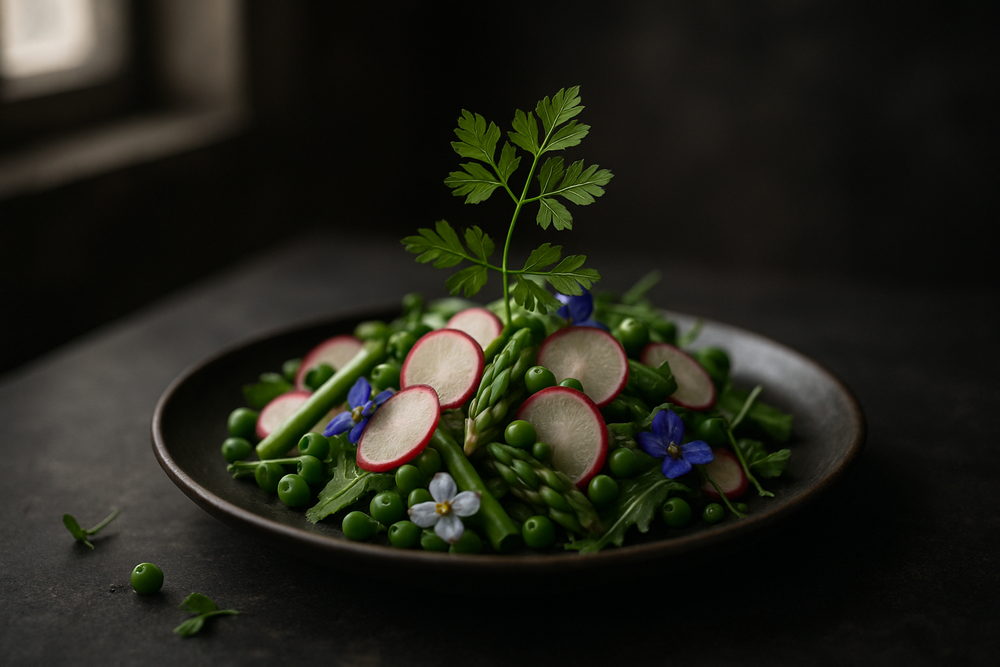
Chervil · Photograph
Discover chervil health benefits, nutrition facts per tablespoon, and how to use this delicate French fines herbes herb in dressings, spring soups, and egg-free scrambles. Learn what the evidence says, who should use caution, and why chervil belongs in a whole food plant-based kitchen.
Key Nutrients
% Daily Value based on 2,000 cal diet
Key active compounds
- Anethole and related volatile oils — Aromatic compounds responsible for chervil's signature anise-like scent. These are also found in fennel and star anise. They may have mild carminative (gas-relieving) and antioxidant properties, though direct human data on chervil's volatile oils are limited.
- Flavonoids and phenolic acids — A broad family of polyphenolic plant compounds (plant chemicals with antioxidant and cell-signaling functions). Found in most leafy herbs, they contribute to overall antioxidant capacity in lab studies, though clinical benefits specific to chervil have not been confirmed in humans.
- Chlorophyll and carotenoids — The pigments that give chervil its deep green color. Carotenoids (orange-yellow plant pigments the body converts to vitamin A) support eye health and immune function as part of a diet rich in greens.
- Calcium, iron, and potassium — Minerals present in concentrations that are high relative to most culinary herbs, particularly in the dried form.
Prep and pairing ideas
Chervil's mellow anise note pairs best with ingredients that do not overpower it. Here are three practical combinations and the reason they work:
1. Chervil + lemon + white beans The herb's delicate flavor lifts a simple white bean salad without competing with the citrus. Stir a small handful of fresh chervil into the finished salad for color and a faint anise freshness that makes the dish feel spring-ready.
2. Chervil + silken tofu scramble Silken tofu takes on flavor from whatever surrounds it. A teaspoon of dried chervil (or a generous pinch of fresh) stirred in at the end gives an egg-free scramble the soft, herby character that fines herbes brings to a French omelette.
3. Chervil + asparagus + light vegetable broth This is a classic spring pairing. Add fresh chervil to a finished asparagus soup just before ladling — never during the simmer — to keep the color vivid and the aroma intact.
Buying guide
Fresh chervil
- Look for bunches with bright, deeply green, feathery leaves and no yellowing or wilting.
- Availability is seasonal (peak: early spring). Farmers' markets and specialty grocers are your best bet.
- Store loosely wrapped in a damp paper towel inside a bag in the fridge; use within 3–5 days.
- Avoid washing until just before use.
Dried chervil
- Choose a brand that lists a recent harvest or "best by" date — flavor and volatile oils degrade over time.
- A good dried chervil should still have a faint anise scent; if it smells like hay or nothing, it is past its prime.
- Store in a sealed glass jar away from heat and light; use within 12 months of opening.
Supplements and extracts
- Concentrated chervil supplements have not been well studied for safety or efficacy. Major health references advise against using them without professional guidance. For everyday nutrition goals, the culinary forms are the evidence-supported choice.
Bottom line
Chervil is one of those quiet kitchen workhorses that earns its place on both culinary and nutritional grounds. It is genuinely low in calories, free of sodium, and unusually rich in minerals for an herb — particularly calcium, iron, and potassium in the dried form. Its traditional reputation as a gentle digestive herb and antioxidant-containing green aligns with its composition, even if clinical trials specific to chervil are thin on the ground.
The best way to think about chervil is as a flavor amplifier that also happens to add micronutrient density. Use it to make plant-forward dishes taste more interesting, and you will naturally get more of what a whole-food diet can offer — no supplements required.
Curious how herbs like chervil fit into specific health goals? Browse our ingredient-by-goal guides at Plantopedia to see which plants the evidence supports for your priorities.
How Chervil Compares
| Compared with | What's different |
|---|---|
| Chervil vs. Fennel | Stronger anise flavor and a distinctive bulb; chervil is leafier and more delicate. |
| Chervil vs. Parsley | Flat leaves look similar, but chervil has a subtle licorice note that parsley lacks. |
| Chervil vs. Tarragon | A hardier herb with a distinct peppery, minty flavor compared to chervil's mild sweetness. |
Health Benefits
Things to Know
Apiaceae allergy: Chervil belongs to the parsley family (Apiaceae). If you have a known allergy to parsley, celery, carrot, or coriander, use chervil cautiously and discontinue if you notice any itching, swelling, or GI upset.
Pregnancy and breastfeeding: Culinary amounts are considered safe. Medicinal doses or concentrated teas are not well-studied; stick to normal cooking quantities.
Kidney disease: Dried chervil is relatively high in potassium per gram. Typical culinary amounts (1–2 g) are unlikely to be significant, but people on a potassium-restricted diet should factor it in.
Warfarin and anticoagulants: Like most green herbs, chervil contains some vitamin K. If you take warfarin or another vitamin K-sensitive blood thinner, the key is consistency — maintain a steady intake of green herbs rather than suddenly eating large quantities.
Potassium-sparing diuretics or ACE inhibitors: Theoretical caution if consuming very large amounts of potassium-rich herbs, though typical culinary portions are unlikely to be clinically significant.
No established therapeutic dose: There is no clinically validated dosing for chervil as a supplement or herbal remedy. Major health references note insufficient data on safety and effectiveness beyond food amounts.
Glossary
Shop This Ingredient
Stock your pantry with quality chervil.
Buy on AmazonAs an Amazon Associate, Plantopedia earns from qualifying purchases. This costs you nothing extra and helps us keep the encyclopedia free.
Frequently Asked Questions
Heart and circulation Dried chervil is a meaningful source of potassium relative to its calorie count, and potassium intake is consistently associated with healthy blood pressure in large population studies. It also provides modest amounts of calcium and magnesium — two minerals that play supporting roles in vascular health. However, there are no human clinical trials that have tested chervil directly for cardiovascular outcomes. Any heart-health framing should be placed in the context of a broader plant-forward dietary pattern rather than attributed to chervil alone. Digestive health and microbiome Chervil has a long history in European herbal medicine as a gentle carminative herb — meaning it was traditionally used to ease mild bloating and gas after meals. Its aromatic volatile compounds, particularly anethole, may theoretically support this effect. That said, these uses are grounded in historical practice rather than controlled human studies. No modern clinical trials have evaluated chervil for conditions like bloating, dyspepsia (indigestion), or irritable bowel syndrome. Adding fresh chervil to meals is a low-risk way to explore its digestive reputation, but it should not replace evidence-based care for digestive conditions. Blood sugar and metabolism There are no human trials linking chervil to improved fasting glucose, insulin sensitivity, or diabetes management. Chervil's fiber content is minimal at typical serving sizes. The better framing here is indirect: using herbs like chervil to season food generously makes it easier to prepare satisfying, whole-food meals that naturally displace more calorie-dense, processed ingredients — and that overall dietary pattern supports metabolic health. Inflammation and recovery Chervil contains flavonoids, carotenoids, and vitamin C — all of which have antioxidant activity in laboratory settings. A 2012 review in the Asian Journal of Plant Sciences described chervil as a "multifunctional nutritional herb" partly on this basis. However, no human trials have measured inflammatory markers after regular chervil intake. Chervil is best understood as one of many antioxidant-rich herbs that, used consistently across a plant-forward diet, may contribute to an overall anti-inflammatory eating pattern.
Both forms have a place depending on what you are making. Fresh chervil is prized for flavor. Its delicate anethole compounds are volatile — meaning they evaporate with heat — so fresh chervil should always be added in the last 30 seconds of cooking, or stirred directly into a finished dish. Fresh leaves also retain heat-sensitive nutrients like vitamin C and folate better than dried. Dried chervil is more convenient and far more concentrated in minerals per gram because the water has been removed. One tablespoon of dried chervil delivers more calcium and iron than the same volume of fresh. The flavor is milder and slightly more hay-like than fresh, but it integrates well into spice rubs, dressings, and soups where it has time to rehydrate. Rule of thumb: Use 1 teaspoon of dried chervil to replace 1 tablespoon of fresh. When flavor is the point (finishing a soup, topping a salad), reach for fresh. When mineral density and convenience matter, dried works just as well.
The whole-food, plant-based cook Looking to add flavor complexity without salt, sugar, or fat Wants herbs that contribute real micronutrients, not just color Builds dishes around seasonal spring vegetables where chervil is a traditional pairing The sodium-conscious eater Chervil adds aromatic depth to dressings and soups, making it easier to reduce added salt Dried chervil is naturally very low in sodium while delivering noticeable potassium Works well in herb blends that replace store-bought seasoning packets
There is no officially established daily dose for chervil as a therapeutic herb. For culinary use, amounts in the range of 0.5–2 teaspoons of dried chervil (roughly 0.5–2 g) or a small handful of fresh leaves per serving are entirely typical and well within food-safe ranges for healthy adults. If you are new to chervil, start with half a teaspoon of dried or a small pinch of fresh to understand the flavor before adding more. Because the flavor is heat-sensitive, adding it at the end of cooking lets you gauge intensity without it disappearing into the dish. For people with any of the caution flags listed above (allergy history, kidney disease, anticoagulant therapy), speak with a healthcare provider before using chervil in amounts significantly beyond an occasional garnish.
Quick Answers
Common questions, answered in a line.
Chervil has a delicate, mellow flavor with a signature anise-like scent similar to fennel or star anise. This aromatic profile comes from volatile oils like anethole, which may offer mild gas-relieving and antioxidant properties.
Fresh chervil should be stored loosely wrapped in a damp paper towel inside a bag in the refrigerator. It is best to use the herb within three to five days and avoid washing the leaves until just before you are ready to use them.
Chervil contains active compounds like anethole, flavonoids, phenolic acids, chlorophyll, and carotenoids. These provide antioxidant capacity and support eye health and immune function as part of a nutrient-dense diet.
People with an allergy to the Apiaceae family—including parsley, celery, carrot, or coriander—should use chervil cautiously. Additionally, those on potassium-restricted diets or vitamin K-sensitive blood thinners like warfarin should monitor their intake.
You should add fresh chervil to soups or warm dishes just before serving rather than during the simmering process. Adding it at the very end ensures the herb's vivid green color stays intact and the delicate aroma does not dissipate from the heat.
Culinary amounts of chervil are considered safe during pregnancy and breastfeeding. However, medicinal doses or concentrated chervil teas are not well-studied and should be avoided in favor of normal cooking quantities.
Chervil pairs exceptionally well with lemon and white beans, silken tofu scrambles, and spring vegetables like asparagus. Because of its mellow flavor, it works best with ingredients that do not overpower its subtle anise notes.
For Readers in the USA
Local context — sourcing, seasonality, and regional notes.
In the United States, fresh chervil is typically found at upscale grocers like Whole Foods Market or at local farmers' markets during the spring months. Because it wilts quickly, many standard supermarkets carry it only in dried form in the spice aisle alongside other French herbs.
Chervil thrives in the cooler climates of the Pacific Northwest and the Northeast, where it is often planted in early spring or late fall to avoid the summer heat. In warmer USDA zones like the South, it is usually grown as a winter annual because it quickly goes to seed once temperatures rise.
When buying dried chervil in the U.S., look for the USDA Organic seal to ensure the herb was grown without synthetic pesticides or irradiation. Most domestic brands follow FDA labeling guidelines, but "organic" certification provides an extra layer of verification for soil quality and processing standards.
AI Clinical Review
- Clearly explains chervil’s delicate, anise‑like flavor and why adding it at the end of cooking preserves aroma and heat‑sensitive nutrients.
- Uses reputable food‑composition data to show that dried chervil contributes small but meaningful amounts of minerals with very few calories.
- Appropriately frames health claims: human trials on chervil are limited, so it’s best viewed as a flavorful addition to a plant‑forward diet rather than a treatment.
- Offers practical ways to use herbs to enhance flavor while easing up on added sodium.
- Antioxidant and anti‑inflammatory effects are based mainly on lab and compositional data; clinical outcomes in people haven’t been demonstrated.
- Digestive support (carminative effects) is traditional and plausible but not confirmed by modern randomized trials specific to chervil.
- Cardiometabolic benefits (blood pressure, glucose, lipids) have not been tested directly with chervil; any impact is likely indirect via overall diet quality.
- “Detox” claims aren’t supported for single herbs; the body’s detoxification relies on healthy liver and kidney function within a balanced diet.
- Typical culinary amounts are small: about 0.5–2 teaspoons dried (≈0.5–2 g) or a small handful fresh per serving; there’s no established therapeutic dose.
- Allergies/foraging: Those with Apiaceae (parsley/celery/carrot) allergies should be cautious. Avoid foraging unless you’re trained—toxic look‑alikes (e.g., poison hemlock) exist.
- Medications/conditions: If you use warfarin, keep vitamin K intake consistent. People with kidney disease or on ACE inhibitors/potassium‑sparing diuretics should be mindful of cumulative potassium—culinary amounts are usually small, but check with your clinician if unsure.
- Pregnancy and breastfeeding: Culinary use is considered safe; avoid concentrated teas or supplements due to limited safety data.
Safe in culinary amounts.
References
- USDA FoodData Central — Spices, chervil, dried (primary nutrition reference) (fdc.nal.usda.gov)
- Nutrition-and-you.com — Chervil nutrition facts and health benefits (nutrition-and-you.com)
- Aprifel — Chervil: calories and nutritional value (aprifel.com)
- University of Rochester / USDA — Spices, chervil, dried nutrition facts (urmc.rochester.edu)
- WebMD Vitamins & Supplements — Chervil: uses, side effects, and more (public health safety reference) (webmd.com)
- FoodContents.com — Dried chervil nutrition (FoodData Central-derived) (foodcontents.com)
- Pande et al. (2012) — "Chervil: A Multifunctional Miraculous Nutritional Herb" Asian Journal of Plant Sciences (compositional review) (scialert.net)
- Dr. Axe — What is chervil? Benefits, uses, and recipes (draxe.com)
- WisdomLib — Chervil: traditional uses and culinary overview (wisdomlib.org)
- FitAudit — Chervil nutrition data (USDA-aligned) (fitaudit.com)
Know Your Numbers
Eating healthy is a start. Now get to know your biomarkers.
Food changes bloodwork — inflammation, lipids, blood sugar and nutrient status all respond to what you eat. 59 markers from $59.
- Results in 7–10 days at 2,000+ Quest sites
- Licensed provider reviews every result
- One flat price, no membership, HSA/FSA eligible
Educational information only, not medical advice. Panels are ordered and reviewed through our licensed partner; Plantopedia may earn a commission.