Daikon Radish — health benefits and uses
In Japanese and Ayurvedic tradition, eaten to aid digestion of oily meals.
The Short Answer
Daikon radish is a low-calorie cruciferous vegetable providing 25.5 mg of vitamin C and 263 mg of potassium per cup. It is prized for its mild flavor and digestive enzymes, often eaten raw, pickled, or simmered in soups.
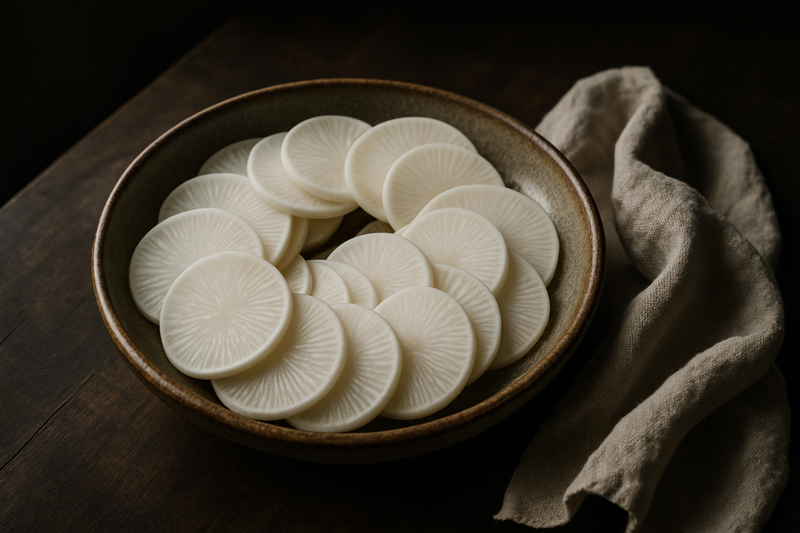
Daikon Radish · Photograph
Discover the daikon radish health benefits backed by research — from digestive support and vitamin C to heart-friendly compounds. Get nutrition facts, safe daily amounts, and easy prep ideas for this mild, versatile cruciferous root vegetable.
Key Nutrients
% Daily Value based on 2,000 cal diet
Key active compounds in daikon radish
- Glucosinolates — Sulfur-containing compounds stored in plant cells. When the tissue is cut or chewed, an enzyme called myrosinase breaks them down into bioactive molecules. They are the defining phytochemicals (beneficial plant chemicals) of cruciferous vegetables.
- Isothiocyanates — The main breakdown products of glucosinolates. In radishes, these include derivatives such as raphasatin. Research in cell and animal models shows they can activate the body's own detoxification enzymes and reduce markers of oxidative stress (cellular damage from unstable molecules called free radicals). Human evidence is still growing.
- Trigonelline — A naturally occurring alkaloid also found in coffee and some legumes. A small human trial found elevated blood trigonelline after daily daikon consumption alongside improved blood vessel function, though this research is very preliminary.
- Phenolic compounds — A broad class of antioxidant plant molecules, including flavonoids and phenolic acids, that contribute to daikon's overall antioxidant capacity. Most supporting evidence is from laboratory studies or mixed-vegetable interventions.
- Vitamin C — A water-soluble antioxidant vitamin present in notable amounts; also helps regenerate other antioxidants in the body.
Prep and pairing ideas
Daikon is one of the more versatile root vegetables in the kitchen. Here are ideas across cooking styles:
- Grate it raw as a classic Japanese garnish (daikon oroshi) alongside grilled fish, dumplings, or noodles. A small pile adds fresh brightness and activates those glucosinolate compounds.
- Simmer cubed daikon in vegetable or miso broth with tofu, mushrooms, and greens for a warming, low-calorie soup. It absorbs surrounding flavors beautifully.
- Shred and quick-pickle with rice vinegar, a pinch of salt, and a little sugar for a tangy condiment that pairs with tacos, banh mi sandwiches, or grain bowls.
- Cut into sticks and serve raw with hummus or a tahini dip as a crunchy, low-calorie snack with extra protein and fat from the dip.
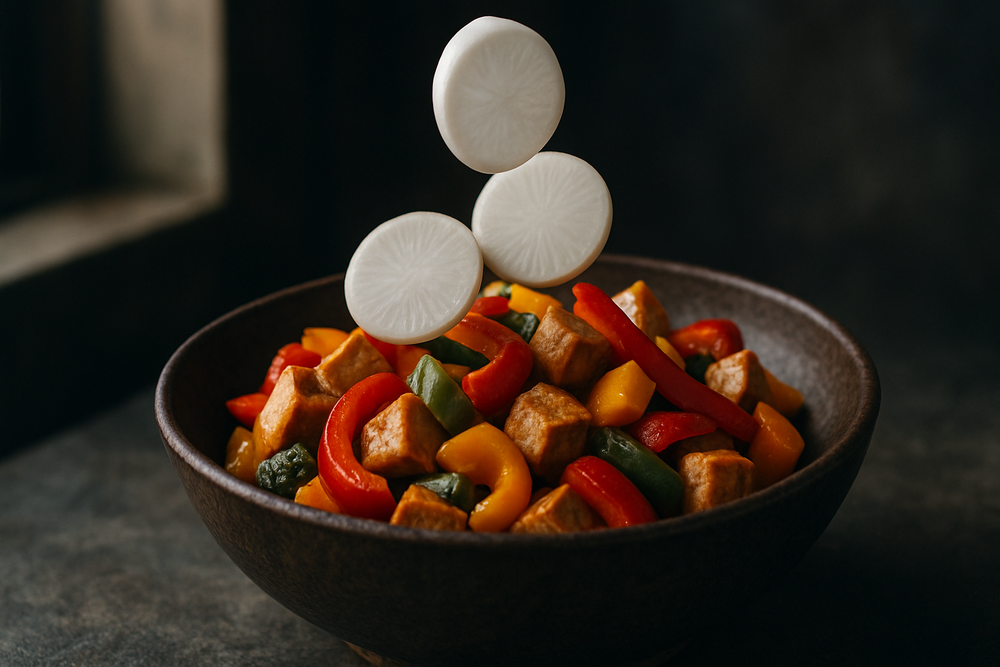
- Stir-fry thinly sliced daikon with garlic, ginger, and a splash of tamari for a simple side dish that takes less than 10 minutes.
Who benefits most from daikon radish?
The high-volume eater trying to manage weight
- Looking for satisfying, filling foods without a high calorie cost
- Daikon's roughly 21 calories per cup and high water content make it excellent for adding meal volume
- Works well as a lower-calorie substitute for starchier vegetables in soups, stews, and stir-fries
The plant-based eater building micronutrient variety
- Wants a rotating cast of vegetables to cover vitamin C, folate, potassium, and trace minerals
- Daikon's copper content (11% DV per cup) is often overlooked and supports antioxidant enzyme function
- The cruciferous phytochemical profile adds a phytochemical category not covered by leafy greens alone
Bottom line
Daikon radish is a nutrient-dense, low-calorie root vegetable that earns its place in a whole-food, plant-based eating pattern. It delivers a notable hit of vitamin C, solid fiber content, and a meaningful spectrum of minerals for very few calories. As a cruciferous vegetable, it contributes glucosinolates and isothiocyanates — compounds with genuine biological activity, primarily studied in the context of the broader cruciferous family rather than daikon alone. The most direct human evidence is a small but intriguing trial showing improved blood vessel function after 10 days of daily daikon consumption.
It is not a superfood cure-all. But eaten regularly — grated raw, simmered in soups, or lightly pickled — it is an inexpensive, versatile, and genuinely useful vegetable that adds variety, texture, and plant-compound diversity to the diet. Most people tolerate it well when introduced gradually, and the main practical cautions (gas in large raw amounts, sodium in pickled forms, consistency for thyroid or warfarin concerns) are straightforward to manage.
Looking to explore more vegetables that support digestive and cardiovascular wellness? Browse the Plantopedia health goals guide for ingredient ideas organized by what you're working toward.
How Daikon Radish Compares
| Compared with | What's different |
|---|---|
| Daikon Radish vs. Red Radish | Daikon is larger, milder, and juicier, whereas red radishes are peppery, small, and crisp. |
| Daikon Radish vs. Jicama | Daikon is a water-rich root, while jicama is starchier, sweeter, and holds its crunch better when cooked. |
| Daikon Radish vs. Turnip | Daikon contains significantly more water and fewer calories than the dense, earthy turnip. |
Health Benefits
Things to Know
Gas and bloating: Large raw servings can cause gas, bloating, or abdominal discomfort, especially if you are not used to eating cruciferous vegetables. Start with small amounts and increase gradually.
Reflux (GERD): The pungency of raw daikon may worsen heartburn or acid reflux in people with gastroesophageal reflux disease (GERD). Cooking usually reduces this effect.
Thyroid conditions: Daikon contains goitrogenic glucosinolates — compounds that can, in very large quantities and in the context of iodine deficiency, theoretically interfere with thyroid hormone production. Typical culinary amounts (½–1½ cups per day) are considered safe for most people, including those with well-managed hypothyroidism. However, anyone with a thyroid condition should aim for consistent intake rather than sudden large increases, and should discuss concerns with their doctor.
Chronic kidney disease (CKD): Daikon provides moderate potassium. People with CKD who are on potassium-restricted diets should count daikon's contribution toward their total daily allowance.
Low-sodium diets: Pickled daikon can be high in sodium. Check labels if sodium intake is medically restricted.
Warfarin (blood thinner): Daikon itself is not high in vitamin K, but dramatic changes in overall cruciferous vegetable intake (especially from daikon greens or large mixed-vegetable shifts) can alter vitamin K levels and affect warfarin dosing. Keep intake consistent and inform your prescriber of dietary changes.
Oral medications and fiber: Large increases in dietary fiber from any source may alter the absorption timing of some oral medications. Space high-fiber meals away from medications when advised, and introduce dietary changes gradually.
Pregnancy: Daikon is a nutritious whole food and generally safe to eat during pregnancy. The folate content is a bonus. Avoid raw daikon that may have been improperly stored, and ensure all produce is thoroughly washed.
Prep Ideas
- — **Grate it raw** as a classic Japanese garnish (*daikon oroshi*) alongside grilled fish, dumplings, or noodles. A small pile adds fresh brightness and activates those glucosinolate compounds.
- — **Simmer cubed daikon** in vegetable or miso broth with tofu, mushrooms, and greens for a warming, low-calorie soup. It absorbs surrounding flavors beautifully.
- — **Shred and quick-pickle** with rice vinegar, a pinch of salt, and a little sugar for a tangy condiment that pairs with tacos, banh mi sandwiches, or grain bowls.
- — **Cut into sticks** and serve raw with hummus or a tahini dip as a crunchy, low-calorie snack with extra protein and fat from the dip.
- — **Stir-fry thinly sliced daikon** with garlic, ginger, and a splash of tamari for a simple side dish that takes less than 10 minutes.
- — Looking for satisfying, filling foods without a high calorie cost
- — Daikon's roughly 21 calories per cup and high water content make it excellent for adding meal volume
- — Works well as a lower-calorie substitute for starchier vegetables in soups, stews, and stir-fries
- — Wants a rotating cast of vegetables to cover vitamin C, folate, potassium, and trace minerals
- — Daikon's copper content (11% DV per cup) is often overlooked and supports antioxidant enzyme function
- — The cruciferous phytochemical profile adds a phytochemical category not covered by leafy greens alone
Glossary
Shop This Ingredient
Stock your pantry with quality daikon radish.
Buy on AmazonAs an Amazon Associate, Plantopedia earns from qualifying purchases. This costs you nothing extra and helps us keep the encyclopedia free.
Frequently Asked Questions
Heart and circulation Daikon is low in saturated fat and sodium and provides potassium — a pattern consistently linked to cardiovascular health in population studies. The most intriguing daikon-specific finding comes from a small first-in-human trial: adults who consumed 170 g per day of Sakurajima daikon (a large Japanese variety) for 10 days showed increased blood trigonelline levels and significantly improved brachial artery flow-mediated dilation — a measure of how well the inner lining of blood vessels (the endothelium) expands in response to blood flow. Healthy endothelial function is an early marker of cardiovascular wellness. This is promising, but the trial was small and short, and it has not yet been replicated in larger or more diverse populations. For now, daikon is best viewed as one heart-friendly vegetable within a broader dietary pattern that emphasizes a variety of fruits, vegetables, whole grains, and legumes. Digestive health and microbiome One cup of raw daikon provides about 1.9 g of dietary fiber, which adds bulk to stool and feeds beneficial gut bacteria. Daikon's high water content also helps keep things moving. Human research consistently links higher intakes of fiber-rich vegetables with improved stool frequency and overall gut health, though daikon has not been isolated in a dedicated clinical trial. A practical note: grated or raw daikon can cause gas or mild bloating in people with sensitive digestion, especially in large amounts. This is a normal response to the fiber and sulfur-containing compounds in cruciferous vegetables. Lightly cooking daikon — simmering in soups or stews — typically improves digestibility, though some vitamin C is lost in the process. Blood sugar and metabolism Daikon is a non-starchy vegetable with a very low glycemic load (a measure of how much a food raises blood sugar per serving). At roughly 4.8 g of carbohydrate and 1.9 g of fiber per cup, it contributes minimally to postprandial (after-meal) blood sugar rises. Diets that emphasize non-starchy vegetables over refined carbohydrates are well-established in research for supporting glycemic control and reducing type 2 diabetes risk. No dedicated blood sugar trials exist for daikon specifically, but substituting it for higher-calorie, higher-glycemic side dishes is a straightforward, evidence-consistent strategy. For daikon radish and blood sugar control, the low-carb profile is genuinely useful. Inflammation and recovery Cruciferous vegetables as a group have shown modest anti-inflammatory effects in human studies, primarily measured through reductions in oxidative stress markers and inflammatory signaling molecules. Daikon's glucosinolates and their isothiocyanate metabolites are thought to work partly by activating phase II detoxification enzymes — proteins that help the body neutralize and remove potentially harmful compounds. Vitamin C also plays a supporting role by directly neutralizing free radicals. To be clear, no human trial has measured daikon's effect on systemic inflammation markers in isolation. The anti-inflammatory benefits are inferred from daikon's phytochemical profile and from research on other cruciferous vegetables. Immune support Vitamin C is daikon's most reliably "immune-relevant" nutrient. At 28% of the Daily Value per cup, daikon is a meaningful low-calorie source. Human trials of vitamin C from diet and supplements show it supports normal immune cell function and may modestly reduce the duration of common colds. These trials use dietary patterns rich in vitamin C foods overall — not daikon specifically — but regularly including daikon alongside other vitamin C-rich produce (bell peppers, broccoli, citrus) is a sensible strategy for meeting daily needs.
The short answer: each form has genuine advantages, and the best choice depends on your digestive tolerance, sodium intake, and cooking goals. Raw (grated or sliced) — Preserves the most vitamin C and keeps the enzyme myrosinase active, which means glucosinolates are more readily converted to isothiocyanates. This is the form most likely to deliver the full phytochemical complement. However, raw daikon in large amounts is the most likely to cause gas or reflux in sensitive individuals. Cooked (simmered, stewed, braised, stir-fried) — Heat deactivates myrosinase and reduces vitamin C content, but fiber and most minerals remain. Cooked daikon is significantly gentler on the digestive tract and is a comforting, versatile addition to soups and stews. Some isothiocyanates can still form via gut bacteria-derived myrosinase activity even after cooking. Pickled daikon — Retains fiber and some micronutrients, but commercial pickled products often contain substantial added salt. If you enjoy pickled daikon, look for lower-sodium versions or make your own with rice vinegar and minimal salt. People on medically prescribed low-sodium diets should check labels carefully. Daikon greens and sprouts — Edible and worth using. Cruciferous leaves and sprouts typically contain concentrated glucosinolates and micronutrients comparable to or higher than the root itself. Juices, powders, or extracts — Human data are lacking. Treat these like supplements rather than food: start with small amounts and proceed with caution.
There is no single evidence-based "optimal dose" for daikon radish as a medicine. As a food, culinary norms and the research context together suggest a practical range: Typical culinary intake: ½ to 1½ cups (about 60–170 g) per day as part of a varied meal Trial reference: The only published human vascular trial used 170 g (roughly 1½ cups) per day for 10 days; this is on the higher end of typical use General guidance: Most nutrition authorities recommend aiming for 2½ cups of vegetables per day total, with variety across types; daikon can reasonably make up a third to a half of that on days you eat it Start low if you're new to it: Begin with ¼ to ½ cup raw and increase gradually to assess digestive tolerance before moving to larger servings Supplements and extracts: No standardized dosing exists; avoid treating concentrated daikon products as equivalent to whole food unless directed by a healthcare provider If you eat daikon daily, vary how you prepare it (raw some days, cooked others) to balance phytochemical activation with digestive comfort.
Quick Answers
Common questions, answered in a line.
Daikon radish is an excellent choice for weight management because it is very low in calories, providing only about 21 calories per cup. Its high water content and volume help you feel full, making it a satisfying substitute for starchier vegetables in soups and stews.
Daikon radish contains several bioactive compounds including glucosinolates, isothiocyanates like raphasatin, trigonelline, and various phenolic antioxidants. These sulfur-containing phytochemicals help activate the body's detoxification enzymes and reduce markers of oxidative stress.
Daikon radish may support heart health by improving blood vessel function and providing antioxidants like vitamin C and phenolic compounds. A small human trial found that daily consumption elevated blood levels of trigonelline, which was associated with improved vascular performance.
Daikon radish contains moderate levels of potassium, which must be monitored by individuals with chronic kidney disease (CKD) on a potassium-restricted diet. Additionally, those on low-sodium diets should be cautious with pickled daikon, as it can be high in salt.
Daikon radish contains goitrogenic compounds that could theoretically interfere with thyroid hormone production if consumed in very large quantities alongside an iodine deficiency. Typical culinary amounts (1/2 to 1 1/2 cups daily) are generally safe, but those with thyroid conditions should maintain consistent intake.
Daikon radish is a versatile root that can be grated raw as a garnish, simmered in miso soup, quick-pickled with rice vinegar, or stir-fried with garlic and ginger. It can also be cut into sticks and served with hummus or tahini dip for a crunchy, low-calorie snack.
While daikon is generally safe during pregnancy and provides beneficial folate, it may cause gas, bloating, or worsen acid reflux (GERD) in some individuals. Large raw servings are more likely to cause digestive discomfort, so it is best to introduce it gradually or eat it cooked.
For Readers in the USA
Local context — sourcing, seasonality, and regional notes.
Daikon radish is primarily grown in California and the Pacific Northwest, with the peak harvest season occurring from late fall through early spring. While California provides a year-round supply due to its varied climate, the vegetable is most flavorful and abundant in U.S. markets between October and March.
You can find daikon radish at major U.S. grocery chains like Whole Foods, Sprouts, and H-Mart, as well as at local farmers markets in USDA Hardiness Zones 2 through 11. Most conventional supermarkets stock them in the refrigerated produce section near other root vegetables like carrots or specialty radishes.
In the U.S., daikon radish is widely used as a crunchy topper for burgers, a base for slaw at BBQ cookouts, or a key ingredient in "quick pickles" for sandwiches. It has also gained popularity in the Pacific Northwest and Hawaii as a staple in regional fusion cuisine and farm-to-table salads.
AI Clinical Review
- Clearly portrays daikon as very low‑calorie yet nutrient‑dense, contributing vitamin C, fiber, potassium, and helpful trace minerals.
- Accurately explains cruciferous phytochemicals (glucosinolates → isothiocyanates) and why preparation matters, noting the role of myrosinase (the enzyme that activates these compounds).
- Appropriately contextualizes heart‑health findings from a small human study and frames daikon as one piece of an overall healthy pattern.
- Offers practical guidance on raw vs cooked vs pickled forms, including realistic trade‑offs and common tolerability issues (gas, reflux).
- Sensibly positions daikon as a non‑starchy, low‑glycemic vegetable that can replace higher‑calorie sides to support blood‑sugar management.
- Much of the health narrative extrapolates from broader cruciferous‑vegetable research; daikon‑specific randomized trials on inflammation, glycemic control, microbiome outcomes, or long‑term clinical endpoints are limited.
- The vascular/trigonelline study cited used a single variety (Sakurajima), a 10‑day protocol, and a small sample, so durability and generalizability remain uncertain.
- While heat inactivates plant myrosinase, the real‑world impact of raw vs cooked intake on human health (given some gut‑bacteria conversion) hasn’t been well quantified.
- Evidence for concentrated forms (juices, powders, extracts) is sparse; bioavailability and appropriate dosing are not established.
- A practical intake range is about 1/2–1 1/2 cups (60–170 g) per day; if you have a sensitive gut, start smaller and increase gradually.
- Pickled daikon can be high in sodium—important if you manage blood pressure, heart disease, or kidney disease.
- People with GERD or IBS‑type symptoms, those with chronic kidney disease (potassium limits), and anyone on warfarin (if cruciferous greens intake changes) should check with a clinician.
- Thyroid considerations: typical culinary amounts are fine with adequate iodine; keep intake consistent, and note that cooking generally lowers goitrogen activity.
Generally safe; may cause gas or reflux in large raw amounts.
References
- USDA FoodData Central — Daikon (Oriental Radish) nutrition data (fdc.nal.usda.gov)
- MyFoodData — Raw daikon nutrition facts per serving (tools.myfooddata.com)
- SNAP-Ed Connection — Radishes Seasonal Produce Guide (USDA) (snaped.fns.usda.gov)
- Pubmed — First human trial of Sakurajima daikon trigonelline and vascular function (Kubota et al., 2020) (pubmed.ncbi.nlm.nih.gov)
- PMC — Cruciferous vegetables and their bioactive metabolites: review of mechanisms and evidence (pmc.ncbi.nlm.nih.gov)
- PMC — Cruciferous vegetables and human cancer risk: epidemiological evidence (pmc.ncbi.nlm.nih.gov)
- PMC — Cruciferous vegetables, bioactive metabolites, and breast cancer (2024 review) (pmc.ncbi.nlm.nih.gov)
- Linus Pauling Institute (Oregon State University) — Cruciferous vegetables overview (lpi.oregonstate.edu)
- National Cancer Institute — Cruciferous vegetables and cancer prevention fact sheet (cancer.gov)
- USDA MyPlate — Vegetables eating guidance (myplate.gov)
Know Your Numbers
Eating healthy is a start. Now get to know your biomarkers.
Food changes bloodwork — inflammation, lipids, blood sugar and nutrient status all respond to what you eat. 59 markers from $59.
- Results in 7–10 days at 2,000+ Quest sites
- Licensed provider reviews every result
- One flat price, no membership, HSA/FSA eligible
Educational information only, not medical advice. Panels are ordered and reviewed through our licensed partner; Plantopedia may earn a commission.