Einkorn — health benefits and uses
One of the first domesticated grains, cultivated in the Fertile Crescent over 10,000 years ago.
The Short Answer
Einkorn is an ancient diploid wheat containing 15.1g of protein and 8.9g of fiber per serving, offering higher levels of lutein, zinc, and iron than modern wheat.
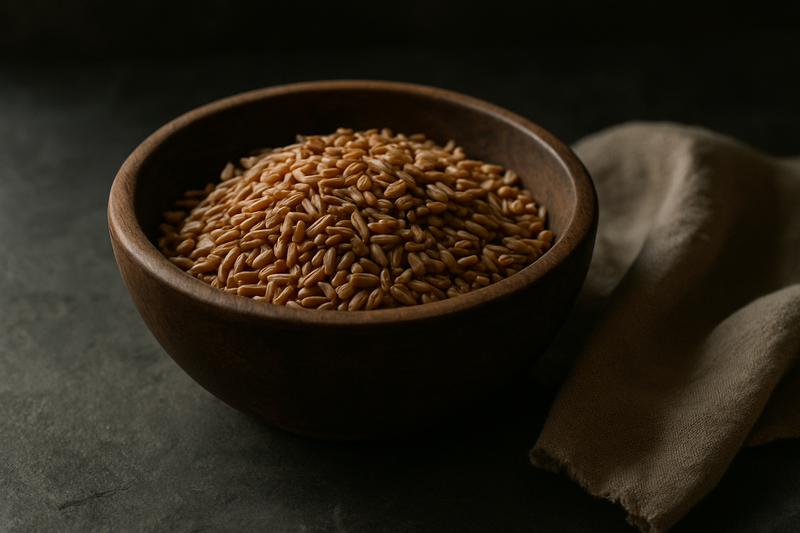
Einkorn · Photograph
Explore einkorn wheat health benefits and side effects in plain English. Learn how this ancient diploid grain compares to modern wheat in nutrition, protein, antioxidants, and digestibility — plus who should avoid it and how to cook it.
Key Nutrients
% Daily Value based on 2,000 cal diet
Key active compounds in einkorn
- Carotenoids — lutein and beta-carotene: The pigments that give einkorn its golden hue. Act as antioxidants, support macular (eye) health, and may help protect blood vessels from oxidative damage. Einkorn contains far more than modern bread wheat.
- Tocols (tocopherols and tocotrienols): Fat-soluble vitamin E compounds concentrated in the grain's germ and bran. Protect fats from oxidation and support cardiovascular and immune health.
- Fructans: Fermentable oligosaccharides (short chains of fructose sugar) that function as prebiotic fiber, feeding beneficial gut bacteria and promoting short-chain fatty acid production.
- Alkylresorcinols: Phenolic lipids found in the outer bran layers. Serve as markers of whole-grain intake and may exert antioxidant and cholesterol-modulating effects.
- Phytosterols: Plant-based compounds structurally similar to cholesterol that can reduce cholesterol absorption in the gut.
- Polyunsaturated fatty acids (PUFAs): Unsaturated fats including omega-6 and omega-3 species present in the germ. Einkorn has a higher proportion of unsaturated fats than modern bread wheat.
Prep and pairing ideas
Einkorn is versatile. Here are three practical ways to use it, plus why each combination works:
1. Einkorn berry porridge with citrus and walnuts Soak whole einkorn berries overnight, then simmer until tender (45–60 min). Top with orange segments and crushed walnuts. The vitamin C in citrus enhances non-heme iron absorption from the grain; the walnuts add complementary omega-3 fatty acids and a satisfying texture contrast.
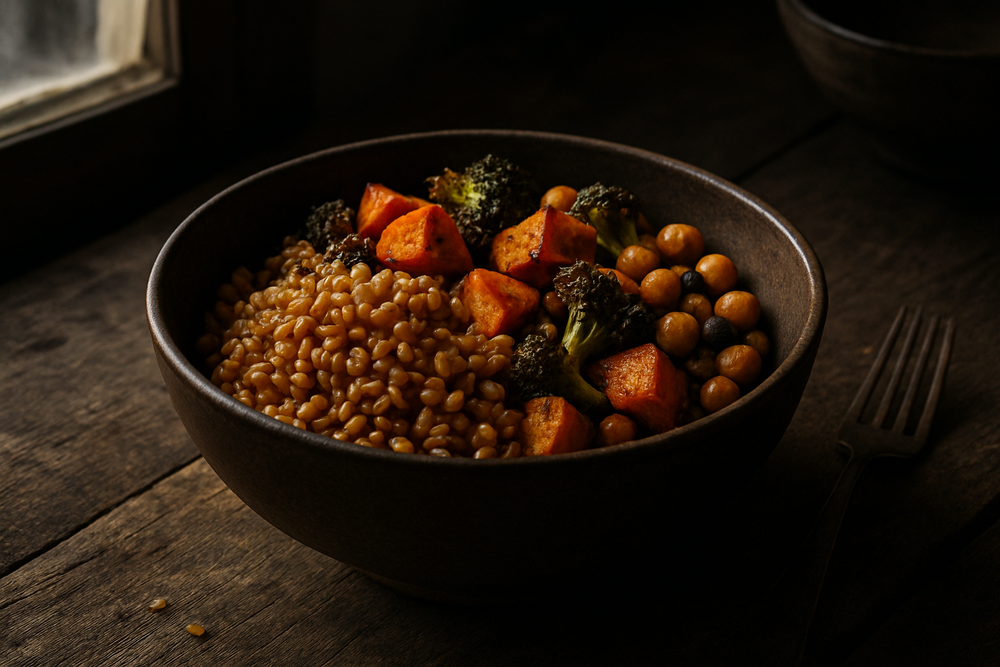
2. Einkorn pilaf with roasted vegetables and legumes Cook einkorn berries like you would farro in a savory broth, then toss with roasted root vegetables and cooked chickpeas or lentils. Combining einkorn with legumes creates a complete amino acid profile (a full set of essential building blocks for protein) and adds extra fiber and folate.
3. Wholemeal einkorn sourdough bread with avocado Bake a simple sourdough loaf using 100% wholemeal einkorn flour. The long fermentation can improve digestibility; avocado adds healthy fats that help absorb einkorn's fat-soluble carotenoids (lutein, beta-carotene) significantly better than eating the bread plain.
Storage tip: Store whole einkorn berries in an airtight container in a cool, dry place for up to 12 months. Wholemeal flour contains oily germ and can go rancid — refrigerate or freeze and use within 3–4 months.
Bottom line
Einkorn is a genuinely nutrient-dense ancient grain with a nutritional profile that outpaces modern bread wheat in several key areas — protein, zinc, iron, magnesium, and especially carotenoid antioxidants. Early human research suggests potential benefits for heart-health markers, blood sugar response, gut health, and inflammation, but the evidence base is still small and largely indirect. It is not a miracle grain, and it absolutely contains gluten.
For healthy adults who tolerate gluten and want to diversify their grain intake, einkorn is a flavorful, nutritionally interesting choice worth exploring — especially in its whole-berry or wholemeal flour forms. For anyone with celiac disease, wheat allergy, or FODMAP-sensitive IBS, it is not an appropriate substitution for safer alternatives.
Looking for more ways to build a grain-based, plant-forward eating pattern? Browse evidence-led goal pages at Plantopedia's goals hub.
How Einkorn Compares
| Compared with | What's different |
|---|---|
| Einkorn vs. Spelt | Einkorn is a diploid grain with a simpler chromosome structure and higher lutein content than Spelt. |
| Einkorn vs. Modern Wheat | Einkorn has significantly higher protein, iron, and antioxidants than standard modern wheat. |
| Einkorn vs. Emmer (Farro) | Einkorn has a nuttier, sweeter flavor and smaller berries compared to the chewy, larger Emmer. |
Health Benefits
Things to Know
Celiac disease and wheat allergy: Einkorn contains gluten and immunogenic (immune-triggering) peptides. It is not safe for people with celiac disease, wheat allergy, dermatitis herpetiformis, or gluten ataxia. Marketing claims suggesting einkorn is "safe" for these conditions are not supported by science.
Non-celiac gluten sensitivity: Tolerance to einkorn should not be assumed. If you have reproducible symptoms with modern wheat, do not try einkorn without medical supervision.
IBS and FODMAP intolerance: Einkorn's higher fructan content may worsen bloating, gas, and altered bowel habits if you follow a low-FODMAP diet or are fructan-sensitive. Start with small servings and monitor symptoms.
Diabetes and blood sugar management: Einkorn is starch-rich. Count carbohydrates the same way you would for any whole grain. Discuss portion sizing with your dietitian if you are on glucose-lowering medications (insulin, sulfonylureas, GLP-1 agonists, metformin, SGLT2 inhibitors).
Anticoagulant medications (e.g., warfarin): Einkorn is not unusually high in vitamin K, but any significant dietary shift — from refined wheat to high-whole-grain einkorn — can affect drug metabolism patterns. Inform your prescriber if you make major changes.
GI medications: Large fiber-rich meals from any whole grain can modestly slow absorption of some oral medications. If you take time-sensitive drugs, space them away from high-fiber grain servings.
Pregnancy: Einkorn is a nutritious whole grain and is not contraindicated in healthy pregnancy, but the standard advice to choose fortified grains for folate still applies. Consult your midwife or OB if uncertain.
Energy-restricted diets: Einkorn is calorie-dense at ~369 kcal per 100 g dry. Portion control matters for weight management.
Shop This Ingredient
Stock your pantry with quality einkorn.
Buy on AmazonAs an Amazon Associate, Plantopedia earns from qualifying purchases. This costs you nothing extra and helps us keep the encyclopedia free.
Frequently Asked Questions
Human trials specifically on einkorn are still limited in number and size. Most evidence comes from small clinical studies, compositional analyses comparing einkorn to modern wheat, and broader ancient-wheat intervention trials that include other heritage grains like emmer and Khorasan alongside einkorn. Treat the findings below as promising early signals, not established medical facts. Heart and circulation Einkorn's nutrient profile — rich in antioxidants, phytosterols, unsaturated fatty acids, and tocols — supports a plausible cardioprotective (heart-protecting) effect. A published evaluation of einkorn-based breads found their composition potentially favorable for lipid health (blood fat levels), partly because einkorn has lower lipoxygenase activity (an enzyme that can promote fat oxidation) than modern wheat. Broader ancient-wheat literature — reviewed in a Journal of Nutritional Biochemistry narrative review — reports improvements in total cholesterol, LDL ("bad") cholesterol, and triglycerides in small human trials where participants replaced modern wheat products with ancient wheat alternatives. However, most of those trials focused on Khorasan wheat or mixed ancient-wheat blends rather than einkorn alone, and sample sizes were modest. Bottom line on heart health: Early evidence is encouraging, but we need dedicated einkorn cardiovascular trials before drawing firm conclusions. Digestive health and microbiome Einkorn's fructan content is higher than standard bread wheat, making it a reasonable prebiotic (a type of fiber that feeds beneficial gut bacteria). A pilot clinical trial testing an einkorn-enriched planetary health diet reported modest improvements in participants' perceived digestive comfort over three months, along with favorable shifts in interdental (between-teeth) microbiota. That said, the trial was uncontrolled (no comparison group) and involved multiple dietary changes simultaneously, so attributing results to einkorn alone is not possible. The fructan content also creates a real caution: people following a low-FODMAP diet for IBS (irritable bowel syndrome) may find einkorn triggers gas, bloating, or altered bowel habits. FODMAPs are fermentable carbohydrates that some individuals digest poorly. Blood sugar and metabolism Einkorn's distinct starch structure, higher protein, and lower amylase (starch-digesting enzyme) activity compared with modern wheat may slow starch digestion and produce a more moderate postprandial (after-meal) blood glucose rise. Sourdough fermentation of einkorn flour may enhance this effect further. The ancient-wheat literature broadly reports glycaemic improvements when heritage grains replace refined modern wheat, but robust, einkorn-specific glycaemic trials in humans are still scarce. For people managing blood sugar, this is an area to watch — but einkorn is still a starch-rich grain and should be counted accordingly. Inflammation and recovery Small human intervention studies using ancient wheat varieties (not einkorn alone) have documented reductions in circulating inflammatory markers and improved antioxidant capacity. Einkorn's above-average levels of carotenoids, tocols, and alkylresorcinols provide a plausible mechanistic basis for anti-inflammatory effects, but current evidence for einkorn specifically is largely compositional rather than from clinical outcome trials. Eye health and other benefits Einkorn's exceptionally high lutein content is worth highlighting on its own. Lutein accumulates in the macula of the eye and is associated with reduced risk of age-related macular degeneration (a leading cause of vision loss in older adults) in epidemiological research. This doesn't mean eating einkorn will prevent eye disease, but as a dietary source of lutein it meaningfully outperforms standard wheat.
Choosing the right form of einkorn depends on how you plan to use it and how much nutritional density you want to preserve. Whole einkorn berries (whole grain): The most nutritionally complete form — bran, germ, and endosperm all intact. Best for porridges, pilafs, grain salads, and grain bowls. Cook like farro or spelt: soak overnight, then simmer 45–60 minutes. Carotenoids are best preserved in these minimally processed preparations. Wholemeal einkorn flour: Stone-ground flour retaining bran and germ. Use for rustic breads, flatbreads, pancakes, and baked goods. Higher in protein, minerals, and carotenoids than refined einkorn flour. Bakes more densely than modern all-purpose flour — expect a heartier texture. Refined einkorn flour ("all-purpose" einkorn): Bran and germ partially removed for a lighter crumb. Still richer in some micronutrients and carotenoids than refined modern wheat flour, but fiber and phytochemical content are reduced compared with wholemeal. Good for cakes, cookies, and pasta dough where texture matters. Einkorn sourdough bread: Long fermentation with wild yeast and bacteria may improve digestibility and help moderate the glycaemic response by altering starch structure and increasing organic acids. This is not a substitute for gluten avoidance in celiac disease. Einkorn pasta and noodles: Retains most of the grain's protein and micronutrients. A practical everyday alternative to standard wheat pasta. If nutritional value is your priority, whole berries or wholemeal flour are the best choices. If you're new to einkorn, starting with wholemeal einkorn flour in recipes you already know — pancakes, muffins, flatbreads — is the easiest entry point.
The curious whole-food eater upgrading their grain rotation Already eating a mostly plant-based or Mediterranean-style diet and looking for more variety Interested in higher-antioxidant, higher-protein grains without turning to supplements Enjoys cooking from scratch and doesn't mind slightly longer grain prep times Not diagnosed with celiac disease or wheat allergy The active person paying attention to micronutrients Wants to meet zinc and iron needs through food rather than supplementation Appreciates the protein density of einkorn relative to most other grains Uses whole einkorn berries in batch-cooked grain bowls or post-workout pilafs Tolerates gluten and does not have IBS triggered by FODMAPs
There are no official daily dose recommendations specific to einkorn. The guidance below is drawn from dietary guidelines for whole grains and the protocols used in early human studies. Typical serving sizes: Cooked whole berries: 40–60 g dry grain (roughly ½–¾ cup dry), which yields approximately 1–1.5 cups cooked Wholemeal einkorn bread: 1–2 slices per meal (roughly 30–60 g flour equivalent) Einkorn pasta: A standard 80 g dry serving, as you would for any pasta General guidance: Start low: If you're new to high-fiber or fructan-rich whole grains, begin with one small serving (½ cup cooked berries or one slice of bread) and increase gradually over 1–2 weeks to let your digestive system adapt. Aim for variety: The USDA's MyPlate recommends that at least half of all grains consumed daily be whole grains. Einkorn can be one part of that variety alongside oats, brown rice, and other whole grains. Human studies: The pilot clinical trials on einkorn have typically asked participants to replace their usual wheat products with einkorn-based alternatives across multiple meals daily, but gram totals were not standardized across protocols. No upper safe limit has been established for einkorn specifically. Common sense portion control applies, as with any calorie- and carbohydrate-dense food.
Quick Answers
Common questions, answered in a line.
No, einkorn is not safe for people with celiac disease because it contains gluten and immune-triggering peptides. Scientific evidence does not support marketing claims that this ancient grain is a safe alternative for those with celiac disease, wheat allergies, or gluten ataxia.
Einkorn contains high levels of carotenoids like lutein and beta-carotene, which act as antioxidants and support eye health. These pigments give the grain its golden color and help protect blood vessels from oxidative damage, providing significantly more than modern bread wheat.
To store einkorn, keep whole berries in an airtight container in a cool, dry place for up to 12 months. Because wholemeal einkorn flour contains oily germ that can go rancid, it should be refrigerated or frozen and used within three to four months.
Einkorn may not be suitable for IBS sufferers because it has a higher fructan content than some other grains, which can trigger bloating and gas. People following a low-FODMAP diet or those with fructan sensitivity should start with small servings to monitor their symptoms.
Combining einkorn with legumes like chickpeas or lentils creates a complete amino acid profile, providing all the essential building blocks for protein. This pairing also increases the total fiber and folate content of the meal.
Einkorn contains several heart-healthy compounds, including tocols (vitamin E) and phytosterols that can reduce cholesterol absorption in the gut. It also features a higher proportion of polyunsaturated fatty acids, such as omega-3 and omega-6, compared to modern bread wheat.
You can prepare einkorn by soaking whole berries overnight and simmering them for 45 to 60 minutes until tender. It is highly versatile and can be used in breakfast porridges, savory pilafs, or baked into 100% wholemeal sourdough bread.
For Readers in the USA
Local context — sourcing, seasonality, and regional notes.
You can find einkorn products at major natural food chains like Whole Foods Market and Sprouts, or through specialty retailers like Jovial Foods and Thrive Market. While rarely stocked in conventional supermarkets, it is increasingly available at local farmers markets in regions like the Pacific Northwest and Upper Midwest.
In the United States, einkorn is primarily grown in the Northern Plains and Pacific Northwest, particularly in states like Idaho, Montana, and Washington. These regions provide the cool, temperate climate and specific soil conditions required for this ancient grain to thrive during its summer harvest season.
Look for the USDA Organic seal to ensure your einkorn is grown without synthetic pesticides, and check the Whole Grains Council's "100% Whole Grain" stamp for maximum nutritional value. Because einkorn is a non-GMO ancient grain by nature, the USDA Organic certification is the most reliable way to verify sustainable domestic farming practices.
While modern wheat is often fortified with folic acid and iron per FDA standards, whole-grain einkorn is typically sold unfortified because it naturally contains higher levels of these nutrients. This makes it a popular choice in the US for consumers looking for "clean label" ingredients that haven't been processed or synthetically enriched.
AI Clinical Review
- Accurately describes einkorn as an ancient, diploid wheat with a higher protein and mineral density than typical modern bread wheat, and notably richer in carotenoid antioxidants (like lutein) that support eye health.
- Clearly states the gluten reality: einkorn contains immunogenic gluten peptides and is not safe for people with celiac disease, wheat allergy, dermatitis herpetiformis, or gluten ataxia.
- Appropriately highlights fructans (a FODMAP prebiotic fiber) as a double‑edged sword—potentially helpful for the microbiome but a trigger for some with IBS.
- Offers practical guidance on forms and preparation (whole berries, wholemeal flour, sourdough), with the sensible note that fermentation may aid tolerance without making it safe for celiac disease.
- Most human data specific to einkorn are small or pilot in nature; many health inferences come from broader “ancient wheat” studies rather than einkorn‑only randomized trials.
- Cardiometabolic benefits (cholesterol, triglycerides, inflammation) are plausible given einkorn’s phytochemical profile, but require larger, well‑controlled trials using standardized einkorn products.
- Glycemic effects likely depend on processing and matrix (whole berry vs refined flour, bread vs pasta, fermentation), and individual responses vary—more postprandial studies are needed.
- Dosing: treat it like any whole grain. Practical ranges are about 40–60 g dry berries (yields ~1–1.5 cups cooked), 1–2 slices of wholemeal bread, or a standard 80 g dry pasta serving. Increase gradually if you’re new to higher fiber.
- IBS/FODMAP: because einkorn is relatively high in fructans, those with known fructan sensitivity or on a low‑FODMAP phase should be cautious or wait until guided reintroduction.
- Blood sugar management: einkorn is still carbohydrate‑dense. Count carbs as usual, favor wholegrain or pasta forms for a potentially steadier response, and monitor if you use glucose‑lowering medications.
- Medications and special populations: large shifts toward higher‑fiber whole grains can modestly affect absorption of time‑sensitive drugs; separate dosing when advised. Warfarin users should inform their clinician of major dietary changes. In pregnancy, einkorn is fine as part of a balanced diet, but include folate‑fortified grains as recommended.
Contains gluten; not safe for celiac or wheat-allergic individuals.
References
- USDA FoodData Central — einkorn grain, nutrition database (fdc.nal.usda.gov)
- USDA MyPlate — guidance on whole grain intake (myplate.gov)
- Nutrients (MDPI) — Integrated evaluation of einkorn-based breads and potential health benefits (mdpi.com)
- PMC5707704 — Peer-reviewed evaluation of einkorn bread nutrition and health-related properties (pmc.ncbi.nlm.nih.gov)
- PMC12888355 — Pilot clinical trial: einkorn-enriched planetary health diet, oral microbiota and quality of life (pmc.ncbi.nlm.nih.gov)
- Journal of Nutritional Biochemistry — Narrative review: ancient wheat species and human health outcomes (flore.unifi.it)
- PMC10001257 — Metabolic profile comparison of einkorn, spelt, and emmer ancient wheats (pmc.ncbi.nlm.nih.gov)
- Nutrients (Barone et al., 2018) — Nutritional properties of einkorn wheat, Triticum monococcum L. (cris.unibo.it)
- Einkorn.com — Einkorn nutritional facts (producer reference data) (einkorn.com)
- AncientGrains.org — Einkorn vs modern wheat compositional comparison (ancientgrains.org)
Know Your Numbers
Eating healthy is a start. Now get to know your biomarkers.
Food changes bloodwork — inflammation, lipids, blood sugar and nutrient status all respond to what you eat. 59 markers from $59.
- Results in 7–10 days at 2,000+ Quest sites
- Licensed provider reviews every result
- One flat price, no membership, HSA/FSA eligible
Educational information only, not medical advice. Panels are ordered and reviewed through our licensed partner; Plantopedia may earn a commission.