Fenugreek Sprouts — health benefits and uses
An Ayurvedic and Middle Eastern seed sprouted for digestive and blood-sugar support.
The Short Answer
Fenugreek sprouts are nutrient-dense legumes known for their bitter flavor and ability to help regulate blood sugar through galactomannan fiber and 4-hydroxyisoleucine. They contain 1.1g of protein and 3.2mg of Vitamin C per 100g serving.
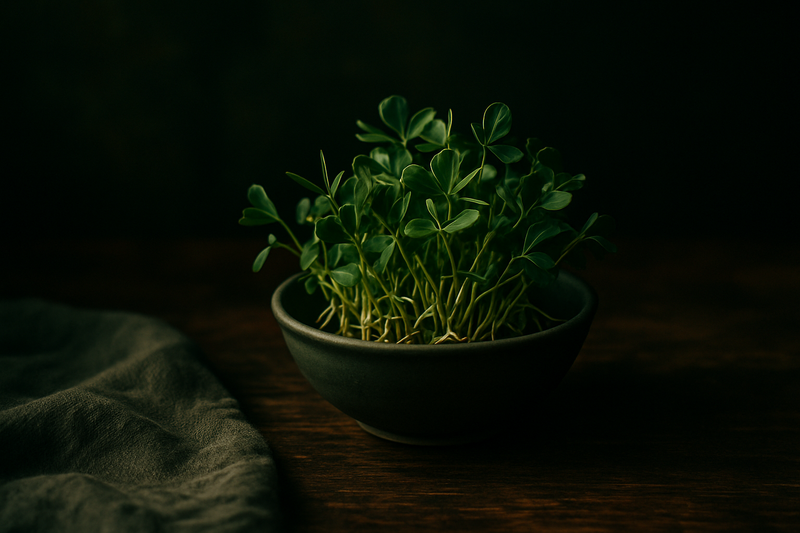
Fenugreek Sprouts · Photograph
Discover the science-backed health benefits of fenugreek sprouts — from blood sugar and cholesterol support to digestion and antioxidant power. Learn nutrition facts, safe daily amounts, who should cook them first, and the best ways to add methi sprouts to your meals.
Key Nutrients
% Daily Value based on 2,000 cal diet
Key active compounds in fenugreek sprouts
- Galactomannan soluble fiber — A viscous (gel-forming), soluble fiber made of galactose and mannose sugar units. It slows how quickly food leaves the stomach and how fast carbohydrates enter the bloodstream — two mechanisms linked to lower blood-sugar spikes and better cholesterol clearance.
- 4-hydroxyisoleucine — An unusual amino acid (protein building block) that, in laboratory and animal studies, prompts the pancreas to release more insulin in response to glucose. Human seed trials support the glucose-lowering effect, though isolating its contribution from sprouted food is difficult.
- Steroidal saponins (diosgenin, protodioscin) — Glycosides (sugar-linked molecules) with a steroid-like chemical backbone. Studied for potential cholesterol-lowering, blood-sugar, and hormone-related effects; most evidence comes from extracts at doses higher than typical food use.
- Polyphenols and flavonoids (vitexin, orientin, isovitexin) — Plant pigments and signaling compounds that act as antioxidants. Sprouting significantly raises these compared with dry seeds.
- Trigonelline and other alkaloids — Nitrogen-containing plant compounds present in fenugreek. Trigonelline has shown antidiabetic and neuroprotective signals in cell and animal models; its dietary impact from sprouts is still being defined.
- Vitamin C — Created during germination; helps the body absorb iron from plant foods and acts as an antioxidant.
Prep and pairing ideas
Fenugreek sprouts are one of the more forgiving kitchen sprouts once you get used to their bitterness. Here are the most practical ways to use them:
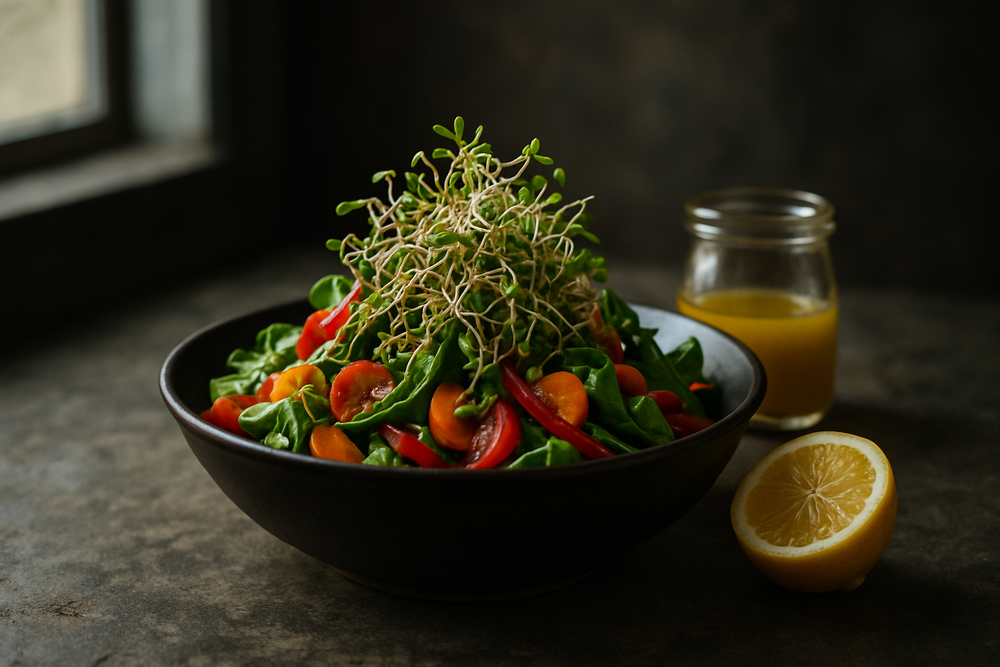
Raw in salads and bowls Rinse thoroughly and toss a small handful (about ¼ cup) into a green salad or grain bowl. Their slight bitterness pairs well with sweet elements like pomegranate seeds or a lemon-honey dressing. The crunch holds up well alongside cucumber and shredded carrot.
Blanched into curries and dal Bring a small pot of water to boil, add the sprouts for 60–90 seconds, drain, and add to your curry or dal in the last two minutes of cooking. Blanching takes the raw edge off the bitterness and eliminates most bacterial risk — making this the safer option for anyone in a caution group.
Mixed into egg dishes or savory pancakes Fold rinsed sprouts into a scrambled egg or an Indian-style besan chilla (chickpea-flour savory pancake) batter. The heat from cooking acts as a safety step and the sprouts add a pleasant bite.
Common pairings and why they work
- Fenugreek sprouts + lemon juice — Vitamin C in lemon juice enhances absorption of the non-heme (plant-based) iron in fenugreek sprouts, making this a nutritionally strategic pairing for plant-based eaters.
- Fenugreek sprouts + mung bean sprouts — Classic mixed-sprout combination used across South and Southeast Asian cuisines. Mung bean sprouts are milder and crunchier, balancing fenugreek's bitterness while doubling the protein and fiber in the bowl.
- Fenugreek sprouts + tomato and turmeric — A traditional pairing in Indian cooking. Turmeric's curcumin and tomato's lycopene are both anti-inflammatory compounds; combined with fenugreek's phenolics, this trio makes for a genuinely phytonutrient-dense base for a vegetable sabzi (dry stir-fry).
Bottom line
Fenugreek sprouts are a nutritionally interesting, low-calorie whole food with a stronger phytochemical profile than their parent seeds — particularly for phenolics and antioxidant activity. The best evidence for meaningful health effects (blood sugar, lipids, metabolic markers) comes from trials using fenugreek seeds and standardized extracts; small clinical studies on sprouted fenugreek seeds point in the same direction and are encouraging. Eating a small daily serving of sprouts as part of a varied, plant-rich diet is a practical, low-risk way to add these compounds to your plate.
They are not a cure or replacement for any medication. If you have diabetes, take blood-thinning medications, are pregnant, or have a hormone-sensitive condition, read the safety section carefully and loop in your healthcare provider before making sprouts a daily habit.
Looking to build a whole dietary pattern around blood sugar support or metabolic health? → Explore our goals guides at Plantopedia
How Fenugreek Sprouts Compares
| Compared with | What's different |
|---|---|
| Fenugreek Sprouts vs. Mung Bean Sprouts | Has a much more bitter, maple-like flavor compared to the mild, nutty taste of mung beans. |
| Fenugreek Sprouts vs. Alfalfa Sprouts | Significantly more bitter and contains galactomannan fiber, whereas alfalfa is mild and grassy. |
| Fenugreek Sprouts vs. Clover Sprouts | Fenugreek is used for blood sugar support; clover is milder and higher in calcium. |
Health Benefits
Things to Know
Raw sprout safety: All raw sprouts — fenugreek included — can harbor bacteria such as Salmonella or E. coli if seeds or sprouting equipment are not kept clean. Rinse thoroughly under running water before eating. Pregnant people, adults over 65, children under five, and anyone who is immunocompromised should eat sprouts only after cooking them.
Diabetes medication: Fenugreek can lower blood glucose. If you take insulin, metformin, sulfonylureas, or any other antidiabetic drug, adding meaningful amounts of sprouts regularly may amplify the glucose-lowering effect. Monitor your blood sugar and discuss with your doctor.
Blood pressure medications: Some fenugreek sprout studies show modest blood-pressure reductions. If you take antihypertensive (blood-pressure-lowering) drugs, watch for added dizziness or lightheadedness.
Anticoagulants (blood thinners): Theoretical interactions exist between fenugreek bioactives and drugs like warfarin. Clinical evidence is limited, but routine monitoring is advisable if you take a blood thinner.
Thyroid medication (e.g., levothyroxine): Like other high-fiber foods, large amounts eaten close to this medication may slightly reduce absorption. Separate your medication and a high-fiber meal by at least an hour.
Allergy: Fenugreek is a legume. Cross-reactivity with chickpeas, peanuts, and other legumes has been reported. If you have a legume allergy, start cautiously and stop if you notice any reaction.
Pregnancy: Traditional use and some mechanistic data raise theoretical concerns about high-dose fenugreek — particularly uterotonic (uterus-stimulating) effects. Modest amounts of cooked sprouts used as food are generally considered safer than supplements during pregnancy, but discuss with your midwife or OB first.
Hormone-sensitive conditions: If you have or have had a hormone-sensitive cancer (certain breast, ovarian, or prostate cancers) or are on hormone therapy, speak with your oncologist or specialist before adding fenugreek regularly to your diet.
GI sensitivity: Start with a small amount (a few tablespoons) and increase gradually. Sudden high fiber intake can cause gas or loose stools.
Prep Ideas
- — Fenugreek sprouts + lemon juice — Vitamin C in lemon juice enhances absorption of the non-heme (plant-based) iron in fenugreek sprouts, making this a nutritionally strategic pairing for plant-based eaters.
- — Fenugreek sprouts + mung bean sprouts — Classic mixed-sprout combination used across South and Southeast Asian cuisines. Mung bean sprouts are milder and crunchier, balancing fenugreek's bitterness while doubling the protein and fiber in the bowl.
- — Fenugreek sprouts + tomato and turmeric — A traditional pairing in Indian cooking. Turmeric's curcumin and tomato's lycopene are both anti-inflammatory compounds; combined with fenugreek's phenolics, this trio makes for a genuinely phytonutrient-dense base for a vegetable sabzi (dry stir-fry).
Shop This Ingredient
Stock your pantry with quality fenugreek sprouts.
Buy on AmazonAs an Amazon Associate, Plantopedia earns from qualifying purchases. This costs you nothing extra and helps us keep the encyclopedia free.
Frequently Asked Questions
Blood sugar and metabolism This is where the evidence for fenugreek — across seeds, extracts, and sprouts — is strongest. Meta-analyses (pooled analyses of multiple clinical trials) covering more than 700 participants with type 2 diabetes or prediabetes consistently find that fenugreek supplementation reduces fasting blood glucose by roughly 0.9 mmol/L, two-hour post-meal glucose by about 2.2 mmol/L, and HbA1c (a three-month blood-sugar average) by around 0.8 percentage points compared with control groups. Specific to sprouts: small clinical studies using approximately 25 g per day of fresh sprouted fenugreek seeds as an add-on to standard diet and lifestyle advice in people with type 2 diabetes report fasting blood glucose reductions of 20–30% and improvements in postprandial (after-meal) glucose over 8–12 weeks. One prospective add-on trial in people with type 2 diabetes and obesity found that the sprout group also lost more body weight and had lower BMI, blood pressure, and pulse rate than the lifestyle-advice-only group. These sprout-specific studies are small and not all double-blinded, so the numbers should be taken as directional rather than definitive. Still, the mechanisms are well-established: galactomannan slows carbohydrate digestion, 4-hydroxyisoleucine may nudge insulin secretion, and higher phenolics may improve insulin sensitivity. Bottom line for this area: fenugreek sprouts may help support blood sugar balance, especially as part of a low-glycemic dietary pattern — but they're not a substitute for prescribed medication. Heart and circulation In trials of fenugreek seed powders and extracts in people with type 2 diabetes and dyslipidemia (abnormal blood fat levels), fenugreek has been associated with reductions in total cholesterol, triglycerides (blood fats), and LDL ("bad") cholesterol, alongside modest rises in HDL ("good") cholesterol. Studies using 25 g/day of sprouted fenugreek seeds specifically in men with non-insulin-dependent diabetes reported roughly 10% lower total cholesterol, 23% lower triglycerides, 12% lower LDL, and small reductions in both systolic and diastolic blood pressure compared with baseline. These are intermediate risk markers, not hard outcomes like heart attacks — no large, long-term cardiovascular outcome trials on fenugreek sprouts exist yet. Digestive health and gut health Fenugreek's galactomannan fiber can bulk stool, slow gastric emptying, and feed beneficial gut bacteria (a prebiotic effect). Sprouting appears to break down some of the oligosaccharides (short carbohydrate chains) that cause gas in sensitive people, potentially making sprouts more digestible than whole seeds for some individuals. Clinical sprout studies generally report good gastrointestinal tolerance at 25 g/day, with only occasional mild gas or loose stools. That said, controlled human trials specifically targeting constipation, IBS, or microbiome composition with fenugreek sprouts are limited. If you have irritable bowel syndrome or are sensitive to high-fiber foods, introduce sprouts gradually. Inflammation and antioxidant defense The most consistent finding in fenugreek sprout research is compositional: germination increases total phenolic content and antioxidant (free-radical-neutralizing) activity two and a half to three times versus dry seeds. Cell and animal studies show anti-inflammatory signaling, but translating high-concentration lab results to dietary amounts eaten by humans requires caution. Human trials with fenugreek seed extracts in type 2 diabetes do show improvements in oxidative-stress markers (measurements of the body's balance between harmful free radicals and protective antioxidants), which is encouraging — but the evidence for sprouts specifically, in otherwise healthy people, is thin. Hormones and cycle health Most hormonal data come from standardized fenugreek seed extracts at pharmacological (supplement-level) doses, not from eating whole sprouts. Trials with proprietary extracts in men have reported increases in free testosterone and improvements in sperm parameters; a randomized trial in women with low sexual desire found higher free testosterone and estradiol alongside improved libido compared with placebo. Fenugreek is also widely used as a galactagogue (a substance thought to increase breast-milk production), though the clinical evidence is mixed and most data involve herbal blends rather than pure fenugreek. Whether culinary amounts of fresh sprouts meaningfully shift hormones is unknown. The steroidal saponins present in the plant are the likely candidates, but their concentration per cup of raw sprouts is far below what most extract trials used.
It depends on your goal. Here is a practical comparison: | Form | Phytochemicals | Fiber | Convenience | Evidence base | | --- | --- | --- | --- | --- | | Fresh sprouts (raw) | Highest phenolics | Moderate | Medium | Small sprout trials | | Whole/ground seeds | Good | High | Easy | Largest evidence base | | Standardized extract | Concentrated | Low | Very easy | Strongest for hormones | Sprouts win on antioxidant density — germination concentrates polyphenols. Seeds win on total fiber — dry seeds pack around 25 g of fiber per 100 g, far more than fresh sprouts (which are mostly water). Extracts have the largest clinical evidence base, particularly for blood sugar and hormonal effects, but they are also the form with the greatest potential for interactions and side effects. For most people eating a whole-food, plant-based diet, fresh sprouts are the most versatile and lowest-risk entry point. They add flavor, texture, and phytochemicals without the need to measure or supplement.
The honest answer: there is no universally established daily dose for fenugreek sprouts in generally healthy people, because most research has been done with seeds or standardized extracts in clinical populations. What clinical sprout studies have used: approximately 25 g/day of fresh sprouted fenugreek seeds (roughly a small handful, or a generous salad topping) as an add-on to standard diabetes care over 8–12 weeks. Participants reported mostly good tolerance at this level. What seed/extract trials use: 5–25 g/day of fenugreek seed powder, or about 1 g/day of standardized extract, for glycemic and lipid outcomes in type 2 diabetes. Practical guidance for healthy adults: Starting with 2–4 tablespoons (roughly ¼ cup) of rinsed fresh sprouts a day as part of a varied, whole-food diet is a reasonable, low-risk amount. This is well below the doses used in concentrated supplement trials and unlikely to cause meaningful interactions in most people. A sensible starting approach: Week 1–2: 2 tablespoons in a salad or alongside a meal, 3–4 days per week Week 3 onward: Up to ¼–½ cup daily if tolerance is good If you have diabetes: monitor blood sugar more closely when you increase intake significantly If taking any interacting medication: let your doctor know first
Quick Answers
Common questions, answered in a line.
Fenugreek sprouts are rich in galactomannan soluble fiber, 4-hydroxyisoleucine, steroidal saponins, and antioxidant polyphenols like vitexin. They also contain vitamin C, which is created during the germination process, and the alkaloid trigonelline.
Fenugreek sprouts can lower blood glucose levels, potentially amplifying the effects of medications like insulin or metformin. If you take diabetes medication, you should monitor your blood sugar closely and consult your doctor before making these sprouts a daily habit.
It is safest for pregnant people to eat fenugreek sprouts only after they have been thoroughly cooked to eliminate bacterial risks. While modest food amounts are generally safer than supplements, you should consult your midwife or OB due to theoretical concerns about uterus-stimulating effects.
The safest way to eat fenugreek sprouts is to blanch them in boiling water for 60–90 seconds or cook them into dishes like curries or savory pancakes. This heat treatment eliminates most bacterial risks from Salmonella or E. coli and also helps reduce the sprouts' natural bitterness.
Pairing fenugreek sprouts with lemon juice is highly beneficial because the vitamin C in the lemon helps your body absorb the plant-based (non-heme) iron found in the sprouts. This is a nutritionally strategic combination, especially for those following a plant-based diet.
People with legume allergies, such as those sensitive to peanuts or chickpeas, should exercise caution as cross-reactivity with fenugreek has been reported. Additionally, those with hormone-sensitive conditions or those taking blood thinners should speak with a specialist before regular consumption.
For Readers in the USA
Local context — sourcing, seasonality, and regional notes.
You can find fenugreek seeds for sprouting at major health food stores like Whole Foods Market, Indian grocery stores (labeled as 'methi'), and through specialized online seed retailers. Most standard US supermarkets do not carry the live sprouts, so home sprouting from food-grade seeds is the most common way to consume them fresh.
Fenugreek is primarily grown as a cool-season crop in Southern US states like California, Arizona, and Florida, where it is planted in the fall for a spring harvest. In northern regions, it is typically grown as a summer annual because it cannot survive harsh freezes, making year-round indoor sprouting the most reliable option for most Americans.
The FDA recommends that high-risk groups—including children, the elderly, and those with weakened immune systems—avoid eating raw sprouts due to the risk of foodborne illnesses like Salmonella. To meet safety guidelines, US consumers should cook fenugreek sprouts thoroughly to an internal temperature of 165°F to kill potential bacteria.
In the US, fenugreek sprouts are most frequently used in Indian-American households as a topping for dal or mixed into salads known as 'sprouted methi salad.' They have also gained popularity in the domestic 'functional food' movement, often appearing in artisanal microgreen mixes at local farmers markets.
AI Clinical Review
- Sets realistic expectations: strongest clinical evidence is for fenugreek seeds/extracts, with sprout studies smaller but promising (about 25 g/day used in trials).
- Explains plausible mechanisms clearly (soluble galactomannan fiber, 4‑hydroxyisoleucine, and higher polyphenols/vitamin C after germination) without overclaiming.
- Accurately positions sprouts as very low‑calorie sources of fiber and select micronutrients, and notes vitamin C can boost iron absorption from plant foods.
- Flags key safety points around raw sprout contamination risk and the potential for glucose‑lowering interactions in people with diabetes.
- Sprout‑specific trials are few, short, and not always blinded; reported improvements in glucose and lipids should be viewed as preliminary.
- Cardiometabolic data focus on intermediate markers (glucose, lipids, blood pressure); there are no long‑term outcome studies for sprouts.
- Hormonal findings largely come from standardized seed extracts at supplemental doses; it’s unclear whether culinary amounts of sprouts affect hormones.
- Digestive and microbiome benefits are biologically plausible but under‑studied in controlled human trials using sprouts.
- Practical intake: clinical studies used ~25 g/day of fresh sprouts; for everyday use, 2–4 Tbsp progressing to 1/4–1/2 cup as tolerated is reasonable.
- Safety: raw sprouts can carry pathogens—pregnant individuals, older adults, young children, and immunocompromised people should opt for cooked preparations.
- Medications and conditions: monitor closely if on insulin or oral diabetes meds; use caution with antihypertensives and anticoagulants; separate high‑fiber meals from levothyroxine; consider legume allergies/cross‑reactivity.
- Pregnancy, lactation, and hormone‑sensitive conditions: prefer modest, cooked food amounts and discuss regular use with your clinician before making it a daily habit.
Rinse well; those who are pregnant or immunocompromised should cook sprouts before eating.
References
- USDA FoodData Central — fenugreek seed nutrition data (fdc.nal.usda.gov)
- Harvard T.H. Chan School of Public Health — Legumes and Pulses overview (nutritionsource.hsph.harvard.edu)
- Meta-analysis: fenugreek supplementation on glycemic and lipid outcomes in type 2 diabetes — pooled data from 10+ trials showing significant reductions in fasting glucose, 2-hour glucose, HbA1c, and lipids (pmc.ncbi.nlm.nih.gov)
- Systematic review and meta-analysis: fenugreek in type 2 diabetes and prediabetes — consistent glycemic benefits across randomized controlled trials (pubmed.ncbi.nlm.nih.gov)
- Clinical trial: sprouted fenugreek seeds (25 g/day) on blood glucose, lipid profile, and blood pressure in non-insulin-dependent diabetic men (indianjournals.com)
- Clinical trial: sprouted fenugreek seeds as add-on therapy in diabetes, obesity, and metabolic syndrome (medcraveonline.com)
- Clinical trial: sprouted fenugreek seeds and blood glucose in type 2 diabetes with and without hepatitis C (journals.ekb.eg)
- Review: improving antioxidant and anti-hyperglycemic potential of germinating fenugreek sprouts — documents 2.5–3× increase in phenolics after germination (sciencedirect.com)
- Review: fenugreek sprouts around the world — therapeutic and nutritional benefits (pubmed.ncbi.nlm.nih.gov)
- Randomized trial: fenugreek seed extract on free testosterone and reproductive parameters in men (pmc.ncbi.nlm.nih.gov)
Know Your Numbers
Eating healthy is a start. Now get to know your biomarkers.
Food changes bloodwork — inflammation, lipids, blood sugar and nutrient status all respond to what you eat. 59 markers from $59.
- Results in 7–10 days at 2,000+ Quest sites
- Licensed provider reviews every result
- One flat price, no membership, HSA/FSA eligible
Educational information only, not medical advice. Panels are ordered and reviewed through our licensed partner; Plantopedia may earn a commission.