Fresh Fava Beans — health benefits and uses
An ancient Mediterranean spring legume celebrated at the first warm harvest.
The Short Answer
Fresh fava beans are a nutrient-dense legume providing 13g of protein and 13g of fiber per cup, though they must be avoided by individuals with G6PD deficiency due to the risk of favism.
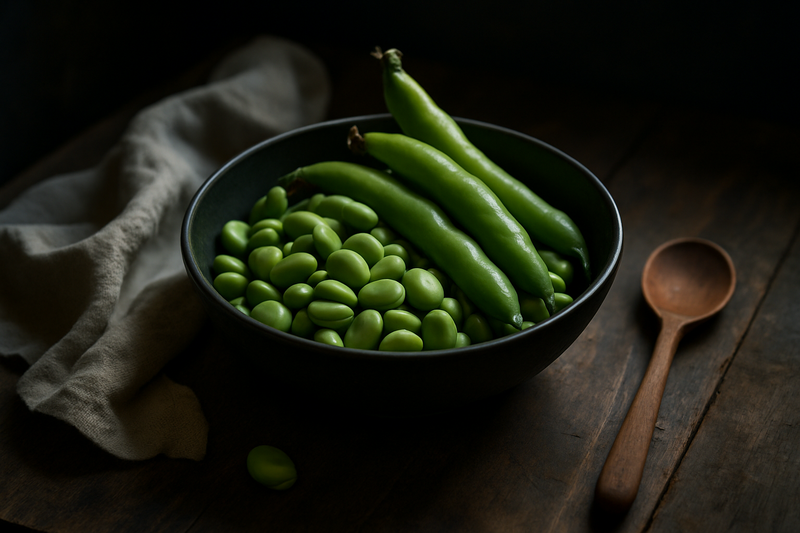
Fresh Fava Beans · Photograph
Discover the full picture of fresh fava beans benefits and side effects — from heart health and blood sugar support to folate, fiber, and the critical G6PD deficiency warning every reader needs to know. Plus: how to blanch and peel young fava beans at home.
Key Nutrients
% Daily Value based on 2,000 cal diet
Key active compounds
- Vicine and convicine — Glycosidic compounds (natural plant chemicals that can release sugars when broken down) found almost exclusively in fava beans. In people with G6PD deficiency, these compounds can trigger oxidative damage to red blood cells and cause favism. They are not a concern for people without this condition.
- L-dopa (levodopa) — A naturally occurring precursor to the neurotransmitter dopamine. Fava beans are one of the few food sources. Small studies have explored whether fava beans could support Parkinson's disease management, but evidence is very preliminary and use alongside dopaminergic medications requires medical supervision.
- Phenolic acids and flavonoids — Plant polyphenols (antioxidant compounds found in plant foods) that exert anti-inflammatory and antioxidant effects in laboratory and animal studies. Their contribution in humans eating fava beans is likely real but not yet firmly quantified.
- Saponins — Amphipathic glycosides (compounds that interact with both water and fats) common in legumes. May modestly influence cholesterol metabolism and gut bacteria, though fava-specific human data are limited.
- Resistant starch — A type of carbohydrate that escapes digestion in the small intestine and feeds beneficial gut bacteria in the large intestine.
Prep and pairing ideas
How to blanch and peel fresh fava beans (the classic method)
- Shell the fava beans from their pods.
- Drop into a pot of boiling salted water for 1–2 minutes.
- Transfer immediately to a bowl of ice water for 1 minute.
- Pinch each bean gently at one end to pop it out of its pale skin — the bright green inner bean slides out easily.
Three practical pairings
- Fava beans + lemon + good olive oil — Classic Italian spring preparation. The acidity of lemon brightens the beans' sweetness and helps the body absorb more of the non-heme iron (the form of iron from plant foods, which is less readily absorbed than iron from meat without an acid or vitamin C boost).
- Fava beans + fresh mint + pecorino or nutritional yeast — A Roman-inspired pairing. Mint's fresh brightness balances the grassy richness of the beans; pecorino (or nutritional yeast for a dairy-free version) adds umami depth and some protein.
- Fava beans + whole grains (farro, freekeh, or brown rice) + roasted vegetables — Combining fava beans with a whole grain creates a more complete amino acid profile in the meal, contributing to a satisfying plant-based main that covers protein, fiber, and multiple micronutrient needs.
Simple storage tip: Once shelled, fresh fava beans start to lose vitamin C within hours. Use them the same day you shell them for best nutrition and flavour. Blanched and peeled beans keep in the fridge for 2–3 days or can be frozen in a single layer and stored for up to 3 months.
Bottom line
Fresh young fava beans are a genuinely nutritious, seasonal whole food that earns its place in a plant-forward diet. The evidence for legumes broadly — and for fava beans specifically where data exist — supports benefits for heart health, blood sugar regulation, digestive function, and healthy weight management. Their exceptional folate and vitamin C content (rare in a dried-legume equivalent) makes them particularly valuable eaten fresh in spring.
The standout safety issue — fava beans and G6PD deficiency — is real, serious, and non-negotiable. If you or anyone in your household has G6PD deficiency or a family history of favism, all forms of fava beans must be avoided completely.
For everyone else, the simple ritual of shelling, blanching, and peeling fresh favas is well worth it: a bright, protein-rich, fiber-packed ingredient that needs little more than good olive oil and a squeeze of lemon to shine.
Explore more ways to build a legume-rich eating pattern in the Plantopedia Goals hub.
How Fresh Fava Beans Compares
| Compared with | What's different |
|---|---|
| Fresh Fava Beans vs. Edamame | Fresh fava beans are starchier and earthier, while edamame is nuttier and buttery. |
| Fresh Fava Beans vs. Lima Beans | Fava beans have a thicker skin that requires blanching and peeling, unlike lima beans. |
| Fresh Fava Beans vs. English Peas | Fava beans contain L-dopa and vicine, which are not found in standard garden peas. |
Health Benefits
Things to Know
G6PD deficiency (favism) — absolute avoidance required.: If you or a family member have confirmed or suspected G6PD deficiency, avoid all fava beans in any form. Symptoms of favism (acute hemolytic anemia — the rapid destruction of red blood cells) include sudden pallor, jaundice (yellowing of skin or eyes), dark or cola-coloured urine, fatigue, and shortness of breath, typically appearing 1–3 days after eating fava beans. This is a medical emergency. Breastfeeding mothers of G6PD-deficient infants should also discuss avoidance with their child's doctor.
Parkinson's disease and dopaminergic medications.: Fava beans contain L-dopa, which can potentially augment or interfere with levodopa/carbidopa and related drugs. Do not use fava beans as a supplement or self-medication without medical supervision.
Chronic kidney disease (CKD) or dialysis.: Fava beans are relatively high in potassium and phosphorus. People managing these minerals due to impaired kidney function should discuss legume intake with their dietitian before adding fava beans regularly.
IBS and sensitive digestion.: Start with small portions (¼ cup cooked) and increase gradually. Gas, bloating, and loose stools are common at first and usually improve within a few weeks.
Legume or bean allergy.: Anyone with a known allergy to legumes should avoid fava beans.
Potassium-affecting medications.: If you take ACE inhibitors, ARBs, or potassium-sparing diuretics and have any kidney impairment, speak to your doctor about high-potassium foods like legumes.
Pregnancy.: Fava beans are generally beneficial during pregnancy due to high folate content, but G6PD testing history for the baby or mother should be considered, particularly in populations where G6PD deficiency is more prevalent (including parts of Africa, the Mediterranean, and Southeast Asia).
Prep Ideas
- — Shell the fava beans from their pods.
- — Drop into a pot of boiling salted water for 1–2 minutes.
- — Transfer immediately to a bowl of ice water for 1 minute.
- — Pinch each bean gently at one end to pop it out of its pale skin — the bright green inner bean slides out easily.
- — **Fava beans + lemon + good olive oil** — Classic Italian spring preparation. The acidity of lemon brightens the beans' sweetness and helps the body absorb more of the non-heme iron (the form of iron from plant foods, which is less readily absorbed than iron from meat without an acid or vitamin C boost).
- — **Fava beans + fresh mint + pecorino or nutritional yeast** — A Roman-inspired pairing. Mint's fresh brightness balances the grassy richness of the beans; pecorino (or nutritional yeast for a dairy-free version) adds umami depth and some protein.
- — **Fava beans + whole grains (farro, freekeh, or brown rice) + roasted vegetables** — Combining fava beans with a whole grain creates a more complete amino acid profile in the meal, contributing to a satisfying plant-based main that covers protein, fiber, and multiple micronutrient needs.
Glossary
Shop This Ingredient
Stock your pantry with quality fresh fava beans.
Buy on AmazonAs an Amazon Associate, Plantopedia earns from qualifying purchases. This costs you nothing extra and helps us keep the encyclopedia free.
Frequently Asked Questions
Most of the benefit evidence for fava beans comes from broad legume and pulse research — large cohort studies and randomised controlled trials that grouped beans, lentils, chickpeas, and fava beans together. There are very few trials that isolate fresh fava beans alone. That context matters: benefits are real but are inferred from fava beans' membership in the legume family rather than fava-specific clinical trials. Heart health and circulation Replacing red meat and refined grains with legumes — including fava beans — is consistently associated with lower LDL cholesterol (often called "bad" cholesterol), better blood pressure, and reduced coronary heart disease risk in large cohort studies and meta-analyses. The mechanisms are well understood: soluble fiber slows cholesterol absorption, plant protein has a more favourable amino acid profile than animal protein for vascular health, and micronutrients such as folate help keep homocysteine (an amino acid linked to cardiovascular risk at high levels) in a healthy range. Fava beans also contribute potassium, which supports healthy blood pressure. Evidence rating: moderate — strong for the legume category; limited fava-specific trials. Digestive health and microbiome Fava beans deliver both soluble fiber (which forms a gel in the gut, slowing digestion) and insoluble fiber (which adds bulk and promotes regularity). Human intervention studies on pulse-rich diets show improved bowel regularity, more diverse gut microbiota, and higher production of short-chain fatty acids — compounds that feed the gut lining and support immune balance. Double-peeling fava beans (removing the pod and the individual seed skin) does reduce fiber slightly compared with eating the whole seed, but the beans remain a high-fiber food. A practical note: legumes cause gas and bloating in many people, especially when introduced quickly. This is normal and usually improves over a few weeks as gut bacteria adapt. People with irritable bowel syndrome (IBS) may need smaller starting portions. Evidence rating: moderate — consistent legume data; limited fava-specific studies. Blood sugar and metabolism Legumes have some of the lowest glycaemic indices (a measure of how quickly a food raises blood glucose) of any carbohydrate-containing food. The combination of fiber, resistant starch, and plant protein slows glucose absorption after meals. Human trials of pulse-rich diets consistently show lower post-meal blood glucose spikes and modest improvements in HbA1c (a three-month average of blood sugar levels) in people with and without type 2 diabetes. Fresh fava beans fit this pattern, though clinical trials using fava beans as the sole dietary intervention are scarce. Evidence rating: moderate — robust for pulses broadly; limited fava-specific data. Inflammation and recovery Some human studies of pulse-rich diets show modest reductions in C-reactive protein (CRP), a marker of systemic inflammation, when legumes replace refined grains or red meat. Phenolic compounds in fava beans have demonstrated antioxidant and anti-inflammatory effects in laboratory studies, but these have not been firmly replicated in human clinical trials using fava beans specifically. Evidence rating: emerging — promising but not yet confirmed in robust human fava-specific trials. Hormones, folate, and reproductive health Fava beans are an outstanding source of folate, a B vitamin essential for DNA synthesis, red blood cell formation, and keeping homocysteine levels healthy. Major health organisations consistently highlight folate-rich legumes as a key dietary strategy before and during pregnancy to reduce the risk of neural tube defects. One cup of fresh fava beans provides roughly 43% of the daily recommended folate intake — comparable to or better than most other legume options. The L-dopa content of fava beans is genuinely unusual among foods and has sparked interest in small Parkinson's disease studies, but results are preliminary. Any intentional use of fava beans to influence dopamine levels should be supervised by a clinician, particularly because L-dopa interacts with dopaminergic medications. Evidence rating: moderate for folate benefits; emerging for L-dopa and dopamine-related effects.
The spring-season whole-food cook Eating seasonal produce is one of the easiest ways to increase dietary variety and nutrient density. Fresh fava beans offer nutrients — especially vitamin C and folate — that dried beans cannot match. The double-peel process is hands-on but quick, making fava beans a mindful cooking ritual as well as a nutritious one. People building a more plant-forward diet A single cup provides roughly 13 g of plant protein, making fava beans a credible meat alternative for a meal. The high fiber content supports satiety, which research links to better weight management over time. Fava beans pair well with grains, greens, and healthy fats — making it easy to build complete, satisfying plant-based meals without supplements.
For young, sweet fava beans, the classic preparation is the right one: shell the pods, blanch the seeds in boiling water for 1–2 minutes, then plunge into ice water and pop each bean from its tough outer skin. What's left is a vivid green, tender bean with a mild, buttery flavour. Fresh, shelled and double-peeled (recommended for most uses) This is the preparation covered on this page. Blanching deactivates enzymes that would cause discolouration and softens the skins for easy removal. Vitamin C and folate are best preserved with short cooking times. Fresh beans cooked whole in stews or braises Cooking with the seed skin on increases fiber per serving and is more common in Mediterranean slow-cooked dishes. The flavour is more robust and starchy. Dried fava beans (whole or split), soaked and cooked More concentrated in calories and protein per gram than fresh, and available year-round. Nutritionally similar to other dried pulses. All G6PD safety warnings apply equally to dried forms. Longer soaking and cooking times are required. Fava bean flour or purée Used in baked goods and thick soups. Retains much of the macronutrient profile and is still contraindicated for G6PD-deficient individuals. A quick tip on vitamin C: Unlike dried legumes which contain essentially no vitamin C, fresh fava beans are a meaningful source — but only if cooked briefly. Long boiling destroys most of it. Blanching for 1–2 minutes is ideal.
Dietary guidelines and legume research generally recommend including legumes 3–5 times per week as part of a varied diet. For most healthy adults, a typical serving of fresh young fava beans is: ½ cup cooked (about 85 g) — A good starting portion if you are new to fava beans or have a sensitive digestive system. 1 cup cooked (about 170 g) — A standard side dish or salad portion, consistent with serving sizes used in legume research. Up to 1½ cups cooked — Seen in some clinical intervention studies replacing a full meat or grain portion. There is no established upper limit for healthy individuals without the conditions mentioned in the caution section. The main practical ceiling is digestive tolerance — most people find that more than 1½ cups in a single sitting increases gas and bloating noticeably. Start low if you are new to beans: Begin with ¼–½ cup, drink adequate water, and increase gradually over 2–4 weeks as your gut microbiome adapts. If you eat fava beans alongside other legumes across the week (lentils, chickpeas, black beans), you do not need to eat large amounts of any single legume — variety within the pulse family is nutritionally advantageous.
Quick Answers
Common questions, answered in a line.
You should avoid fava beans if you have G6PD deficiency, as they contain vicine and convicine which can trigger favism. This condition causes the rapid destruction of red blood cells (acute hemolytic anemia) and is considered a medical emergency requiring absolute avoidance.
To peel fava beans easily, blanch the shelled beans in boiling salted water for 1–2 minutes, then immediately submerge them in an ice bath. Once cooled, you can gently pinch one end of the bean to pop the bright green inner bean out of its pale skin.
Fresh fava beans are unique because they are one of the few food sources of L-dopa (levodopa), a precursor to the neurotransmitter dopamine. While they are being studied for Parkinson's disease management, you should consult a doctor before using them alongside dopaminergic medications.
If you have G6PD deficiency and eat fava beans, you may experience symptoms of favism such as jaundice, dark or cola-colored urine, fatigue, and shortness of breath. These symptoms typically appear 1–3 days after consumption and represent a serious medical emergency.
Pairing fava beans with lemon or other vitamin C sources helps your body better absorb non-heme iron, the form of iron found in plant foods. The acidity of the lemon also helps to brighten the natural sweetness and grassy richness of the beans.
Freshly shelled fava beans should be used the same day for the best nutrition, as they begin to lose vitamin C within hours of shelling. Once blanched and peeled, they can be stored in the refrigerator for 2–3 days or frozen for up to 3 months.
Fava beans provide resistant starch, which escapes digestion in the small intestine to feed beneficial gut bacteria in the large intestine. Additionally, they contain saponins and fiber that support overall digestive function and gut health.
For Readers in the USA
Local context — sourcing, seasonality, and regional notes.
Fresh fava beans are in season in the U.S. from late March through June, appearing first in California and the South before moving to northern climates. In cooler coastal regions like the Pacific Northwest, you may occasionally find a second smaller harvest in the early fall.
You can find fresh fava beans at farmers markets, specialty grocers like Whole Foods Market, and international stores, particularly those specializing in Mediterranean or Middle Eastern foods. While large chains like Kroger or Safeway may stock them seasonally, they are most reliably found at local stands during the peak spring months.
California is the primary commercial producer of fava beans in the U.S., though they are widely grown as a winter cover crop by organic farmers across the country to improve soil nitrogen. Because they are often grown as a specialty crop, many domestically available fava beans meet USDA Organic certification standards.
In the United States, fava beans are also commonly known as broad beans, pigeon beans, or horse beans. The term "broad bean" is particularly common in English-style cooking circles, while "fava" (the Italian name) is the standard label used in most American produce departments.
AI Clinical Review
- Clearly distinguishes fresh fava beans from dried pulses and highlights a rare advantage: meaningful vitamin C when lightly cooked, alongside substantial protein, fiber, folate, and manganese.
- Accurately frames most health benefits as coming from the broader legume evidence base (lipids, glycemic control, satiety, gut health) rather than fava‑specific trials.
- Emphasizes the non‑negotiable safety issue for people with G6PD deficiency and correctly names vicine/convicine as the triggers for favism.
- Offers practical preparation guidance (brief blanching, double‑peeling, quick use) that aligns with preserving vitamin C and palatability, plus sensible starter portions to minimize GI symptoms.
- Fava‑specific randomized trials are scarce; most claims extrapolate from mixed‑legume studies, so the exact magnitude of benefit for fresh favas alone is uncertain.
- Proposed effects of polyphenols, saponins, and resistant starch are biologically plausible but not well quantified in human fava‑focused research.
- The L‑dopa content raises interest for Parkinson’s disease, but small studies, variable L‑dopa levels by cultivar/maturity, and potential drug interactions limit clinical reliability.
- Cardiometabolic improvements likely reflect overall dietary pattern shifts (e.g., replacing red meat/refined grains), not fava beans in isolation.
- Absolute avoidance for anyone with confirmed or suspected G6PD deficiency, including all forms (fresh, frozen, canned, dried, flour). Seek urgent care for post‑ingestion signs of hemolysis (e.g., dark urine, jaundice, sudden fatigue).
- If you take dopaminergic therapy for Parkinson’s disease (e.g., levodopa/carbidopa), discuss fava intake with your clinician; food L‑dopa is variable and can potentiate or interfere with medication effects.
- People with chronic kidney disease or those on ACE inhibitors/ARBs or potassium‑sparing diuretics should review portions due to potassium (and, for CKD, phosphorus) content.
- For sensitive digestion or IBS, start low (¼–½ cup cooked), consider double‑peeling for easier tolerance, and increase gradually; gas and bloating usually ease as the gut adapts.
People with G6PD deficiency (favism) must avoid all fava beans, fresh or dried.
References
- USDA FoodData Central — Fava beans (in pod, raw, FDC ID 168574) — Primary nutrition reference for macronutrients and micronutrients (fdc.nal.usda.gov)
- Harvard T.H. Chan School of Public Health — Legumes and Pulses (The Nutrition Source) — Overview of legume health evidence including heart health, blood sugar, and gut health (nutritionsource.hsph.harvard.edu)
- CPIC Guideline for G6PD Deficiency (2022) — Clinical pharmacogenetics implementation guideline on G6PD deficiency, drug and food triggers (files.cpicpgx.org)
- Nutrition Reviews — Dietary restrictions for people with G6PD deficiency — Peer-reviewed review on foods including fava beans that must be avoided in this population (academic.oup.com)
- American Family Physician — Diagnosis and Management of G6PD Deficiency (2005) — Clinical review of favism triggers, presentation, and management (aafp.org)
- Dubai Health Authority — Food Guide for People with Favism — Public health guidance on fava bean avoidance in G6PD deficiency (dha.gov.ae)
- PMC — What G6PD-deficient individuals should really avoid — Review of foods and chemicals to avoid in G6PD deficiency, including fava beans (pmc.ncbi.nlm.nih.gov)
- Case report — Severe hemolysis and methemoglobinemia following fava bean ingestion — Pediatric case series on favism severity (link.springer.com)
- DaVita — Legumes: A Plant-Based Protein Powerhouse for Kidney Diets — Guidance on legume use for people with chronic kidney disease, including potassium and phosphorus considerations (davita.com)
Know Your Numbers
Eating healthy is a start. Now get to know your biomarkers.
Food changes bloodwork — inflammation, lipids, blood sugar and nutrient status all respond to what you eat. 59 markers from $59.
- Results in 7–10 days at 2,000+ Quest sites
- Licensed provider reviews every result
- One flat price, no membership, HSA/FSA eligible
Educational information only, not medical advice. Panels are ordered and reviewed through our licensed partner; Plantopedia may earn a commission.