Gochujang — health benefits and uses
Fermentation and gut-culture angle; explain live-culture, sodium, and heat-treatment differences
The Short Answer
Gochujang is a savory, sweet, and spicy Korean fermented chili paste made from red chili powder, glutinous rice, fermented soybeans, and salt. It is used as a concentrated base for stews, marinades, and sauces, providing a deep umami flavor and mild heat.

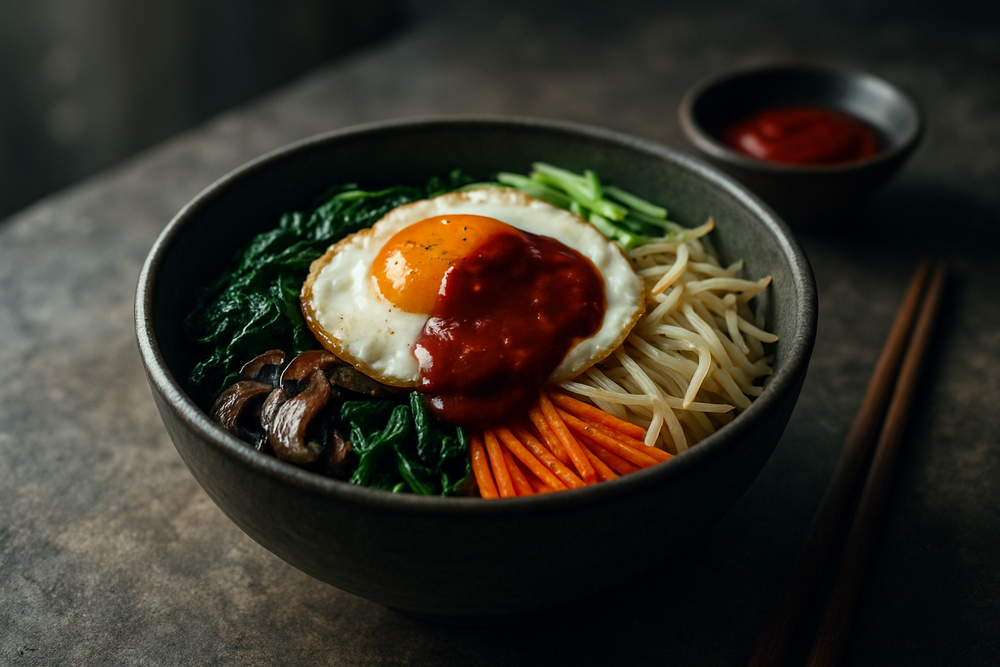
Gochujang · Photograph
Gochujang (Capsicum annuum combined with Glycine max and fermentation cultures) is a thick, deeply flavored Korean chili paste that has been made for centuries by fermenting soybean blocks, grains, red pepper powder, malted barley, and salt in earthenware vessels. The result is something that delivers heat, umami, and mild sweetness all at once — and increasingly, it is landing in Western kitchens as a go-to condiment for everything from grain bowls to roasted vegetables.
Key Nutrients
% Daily Value based on 2,000 cal diet
Key active compounds
- Capsaicin — The alkaloid compound responsible for chili heat. It can increase thermogenesis (the body's heat production and calorie burning) and has been studied for effects on appetite, fat metabolism, and vascular function.
- Capsanthin and capsorubin — Red carotenoid pigments from chili peppers that give gochujang its deep brick-red colour. They act as antioxidants, meaning they help neutralise unstable molecules called free radicals that can damage cells.
- Soy isoflavones (genistein, daidzein) — Polyphenolic compounds naturally found in soy that can weakly interact with oestrogen receptors in the body. They have been studied for effects on cholesterol, bone health, and menopausal symptoms.
- Fermentation-derived peptides — Short protein fragments produced when microbial enzymes break down soy proteins during the months-long fermentation process. Some show ACE-inhibitory activity in lab studies, meaning they may help relax blood vessels in a similar way to a class of blood pressure medications, though evidence in humans at culinary doses is limited.
- Organic acids (lactic acid, acetic acid) — Acids produced by fermenting microbes. They lower pH, preserve the paste, and can influence the gut environment, though their direct impact at condiment-sized servings is unclear.
- Gamma-aminobutyric acid (GABA) — An inhibitory neurotransmitter that some lactic acid bacteria can produce during fermentation. Evidence for GABA-related effects from gochujang specifically is very limited.
Buying guide: how to choose a healthier gochujang
This is one of the optional modules that fits this ingredient especially well — because the quality difference between products is genuinely significant.
What to look for on the label:
- Short ingredient list. Traditional gochujang needs only chili powder, fermented soybean powder (meju), glutinous rice or other grain, barley malt, and salt. If the list is longer than about five to seven ingredients, you are looking at a more processed product.
- Sodium per serving. Aim for products closer to 400 mg per tablespoon or below. Some reduced-sodium options exist. Always note whether the label uses a tablespoon or teaspoon as its serving size — it changes the math considerably.
- Added sugars. Watch for corn syrup, rice syrup, or fructose high in the ingredient list. Some sweetness is traditional (glutinous rice contributes natural sugars during fermentation), but added refined syrups push
How Gochujang Compares
| Compared with | What's different |
|---|---|
| Gochujang vs. Sriracha | Gochujang is thick, sweet, and fermented; Sriracha is a thin, vinegary, unfermented sauce. |
| Gochujang vs. Miso | Gochujang contains fermented soybeans and grains; Miso is soybean-based without the chili heat. |
| Gochujang vs. Doubanjiang | Gochujang is a thick fermented paste; Doubanjiang is saltier and contains chunky broad beans. |
Health Benefits
Things to Know
Sodium is the headline concern.: At 400 to 600 mg per tablespoon, regular or large-portion use can push daily sodium well past recommended limits. People with hypertension, heart failure, or chronic kidney disease need to factor this in carefully.
Soy allergy or intolerance: — gochujang is made with fermented soybeans and is not suitable if you have a soy allergy.
Gluten sensitivity or coeliac disease: — some recipes and commercial products include wheat flour or barley. Always check the ingredient list if you are avoiding gluten.
Histamine sensitivity: — fermented foods including gochujang can contain biogenic amines (histamine and related compounds), which some people react to with headaches, flushing, or digestive symptoms.
Reflux and gut sensitivity: — the spiciness, salt, and fermentation byproducts can aggravate GERD, gastritis, peptic ulcer disease, or IBS in susceptible individuals.
Medications to be aware of:
Antihypertensives (e.g., ACE inhibitors, beta-blockers): large amounts of high-sodium condiments can work against blood pressure control
Diuretics: excess sodium may counteract diuretic effects
Acid suppressants (PPIs, H2 blockers): spicy, salty foods can still worsen reflux symptoms despite medication
Warfarin and anticoagulants: dramatic changes in soy-food intake are worth flagging with your clinician, though modest condiment use is generally low risk
Hypoglycaemic agents: the carbohydrate and sugar content is small at culinary doses but worth noting for tight glucose management
Pregnancy: small culinary amounts are generally acceptable, but sodium and spice tolerance are worth monitoring; check with your provider if you have a high-risk pregnancy or severe reflux.
Shop This Ingredient
Stock your pantry with quality gochujang.
Buy on AmazonAs an Amazon Associate, Plantopedia earns from qualifying purchases. This costs you nothing extra and helps us keep the encyclopedia free.
Frequently Asked Questions
The evidence base is real but narrow. Most human trials on gochujang have been conducted in Korea, in relatively small groups of adults with overweight or elevated blood lipids, and over short periods (8 to 12 weeks). Keep that context in mind. Heart and circulation Several small randomised controlled trials (studies where participants are randomly assigned to a treatment or control group) have tested daily gochujang intake of about 32 to 40 g — roughly two to three tablespoons — against a control condiment. Findings have included: Modest reductions in visceral fat (the fat stored around internal organs, measured by CT scan) Decreases in serum triglycerides (fats in the blood linked to cardiovascular risk) on the order of 10 to 20% Some improvements in total cholesterol and LDL cholesterol in certain trials Modest increases in HDL cholesterol in some studies The likely mechanisms involve capsaicin's effect on fat metabolism, soy isoflavones' effects on lipid handling, and fermentation-derived peptides with possible ACE-inhibitory properties. Important caveat: Gochujang is also high in sodium, which can raise blood pressure and offset cardiovascular benefits, especially in people who are already managing hypertension. These are short trials in specific populations using standardised doses — results may not translate directly to occasional spoonfuls in a mixed diet. Digestive health and microbiome This is where the fermented food hype most often outruns the evidence. Gochujang is a fermented food, but most commercial products are heat-treated or stored in ways that greatly reduce or eliminate live bacteria by the time you eat them. Major nutrition and public health organisations are consistent on this point: fermented does not automatically mean probiotic. That said, you may still derive some benefit from fermentation byproducts — organic acids, bioactive peptides, and metabolites — rather than from live microbes alone. And observational data from Korean dietary patterns suggests that diets rich in traditional fermented condiments coexist with diverse gut microbiomes, though it is impossible to separate gochujang's effect from the rest of the diet. For people with gastritis, GERD (acid reflux), IBS, or other gut sensitivities, the combination of spice, salt, and fermentation byproducts can sometimes aggravate symptoms rather than help them. Blood sugar and metabolism Human trials looking at blood glucose and insulin sensitivity as primary outcomes for gochujang specifically do not yet exist in well-powered form. In obesity and lipid trials where blood glucose was measured, results have been inconsistent — some showed slight improvements, others found no significant difference. Capsaicin and soy isoflavones have separately been studied for insulin sensitivity in humans, and fermentation can modestly lower the glycaemic index (how quickly a food raises blood sugar) of the starches in the paste. However, gochujang also contains carbohydrates and added sugars, so it is not a net neutral food for blood glucose management. At small condiment portions within a fibre-rich meal, the glycaemic impact is likely modest but should not be ignored by people managing diabetes or prediabetes. Inflammation and recovery Some obesity and lipid trials have reported secondary findings of modest reductions in high-sensitivity C-reactive protein (hs-CRP), a marker of systemic inflammation (background-level inflammation throughout the body). These are not primary endpoints and are not consistent across all studies. Lab and animal studies suggest capsaicin and soy isoflavones can modulate inflammatory signalling pathways, but translating that to human outcomes at culinary doses is not straightforward. Hormones and cycle health Gochujang contains soy isoflavones, which are phytoestrogens (plant compounds that weakly mimic oestrogen). Soy-based foods broadly have been studied for effects on hot flashes, bone density, and certain hormone-related cancer risks. However, the isoflavone dose from a typical gochujang serving is substantially lower than from tofu, tempeh, or soy milk, making direct hormonal effects from gochujang condiment use unlikely for most people. Individuals with a history of oestrogen-receptor-positive cancers should follow their oncology team's guidance on soy intake. Current evidence generally supports moderate whole-soy-food consumption, and occasional gochujang is unlikely to be a major hormonal driver.
This question deserves its own section because it comes up constantly and the answer is consistently misunderstood. Traditional unpasteurised gochujang — made from meju (fermented soybean blocks), grains, chili powder, malt, and salt, then aged for months in onggi (earthenware crocks) — may retain some live microbes, especially when sold refrigerated and not heat-treated. However, even in these cases, live bacteria counts and species are rarely standardised, and no traditional gochujang is clinically validated as a probiotic the way some lactobacillus supplements or yoghurt cultures are. Commercial shelf-stable gochujang is almost certainly not a meaningful source of live cultures. Most commercial products also contain refined sweeteners such as corn syrup, preservatives, and flavour enhancers, meaning they are further removed from their traditional fermented origins. Reduced-sodium or clean-label gochujang is available from some brands and uses only chili powder, fermented soybean powder, grains, malt, and salt — closer to the traditional recipe. These are generally the better choice for health-conscious use, but they still should not be treated as probiotic foods. Bottom line on form: If gut microbiome support is your goal, live-culture yoghurt, refrigerated kimchi, kefir, or miso (unheated) are more reliable options. Gochujang earns its place as a flavourful, nutrient-dense condiment — not as a probiotic supplement.
Quick Answers
Common questions, answered in a line.
Gochujang contains capsaicin, an alkaloid that can increase thermogenesis, which is the body's process of producing heat and burning calories. Research suggests this compound may also have positive effects on appetite and fat metabolism.
Gochujang is not suitable for individuals with a soy allergy because it is traditionally made from fermented soybean blocks or fermented soybean powder (meju). Always check labels, as soy is a core ingredient in the fermentation process.
Gochujang contains soy isoflavones and fermentation-derived peptides that may support heart health by influencing cholesterol levels and relaxing blood vessels. However, its high sodium content can counteract these benefits if consumed in large quantities.
People with gluten sensitivity should check labels carefully, as some commercial gochujang products include barley malt, wheat flour, or other gluten-containing grains. While the base involves chili and soy, these thickeners are common in many recipes.
High-quality gochujang should have a short ingredient list, typically containing only chili powder, fermented soybean powder, a grain like glutinous rice, barley malt, and salt. Avoid products that list refined syrups like high fructose corn syrup near the top of the ingredients.
Gochujang is a high-sodium condiment, with many brands containing between 400 mg and 600 mg of sodium per tablespoon. Individuals with hypertension or chronic kidney disease should monitor their intake to avoid exceeding daily limits.
Fermented foods like gochujang contain biogenic amines, such as histamine, which can trigger headaches, flushing, or digestive issues in sensitive individuals. The spice and salt levels can also aggravate conditions like GERD or IBS.
For Readers in the USA
Local context — sourcing, seasonality, and regional notes.
You can find gochujang at major US retailers like Whole Foods, Trader Joe's, Kroger, and H-Mart, as well as through online marketplaces. While traditional Korean grocers offer the widest variety of fermentation levels, most conventional American supermarkets now stock it in the international or Asian foods aisle.
Always look for the USDA Organic seal and check for Non-GMO Project Verified labels if you want to avoid bioengineered soy or corn syrups often found in commercial pastes. Because soy is a major US crop frequently treated with glyphosate, these certifications ensure a higher standard of ingredient sourcing for health-conscious consumers.
While gochujang is available year-round in the US, it is most popular during the colder months as a base for hearty stews like Sundubu-jjigae or as a glaze for summer grilling. Its long shelf life makes it a pantry staple across all US climate zones, though it should be refrigerated after opening to maintain quality in humid regions.
AI Clinical Review
- Fairly explains that gochujang combines three research areas—fermentation, soy, and capsaicin—and summarizes small randomized trials showing modest reductions in triglycerides and visceral fat with daily intake at study doses.
- Appropriately flags sodium as the main nutritional concern (roughly 400–600 mg per tablespoon) and emphasizes portion control.
- Correctly notes that “fermented” does not equal “probiotic”; most shelf‑stable products are unlikely to contain meaningful live cultures.
- Sensibly frames soy isoflavones as present but low per condiment serving, making hormonal effects unlikely for most people.
- Existing human studies are small, short (about 8–12 weeks), and mostly in Korean adults with elevated lipids; it’s unclear how well results translate to occasional culinary use or diverse diets.
- Findings on blood glucose/insulin and inflammatory markers (e.g., hs‑CRP) are inconsistent, and well‑powered trials with metabolic endpoints are lacking.
- Proposed mechanisms (capsaicin‑related thermogenesis, soy isoflavones, fermentation‑derived ACE‑inhibitory peptides) are plausible but not confirmed at typical serving sizes.
- Microbiome benefits from gochujang itself aren’t established; observational data can’t isolate its effect from broader dietary patterns.
- Dose matters: trials often used ~32–40 g (2–3 tablespoons) daily—much higher than the 1–2 teaspoon amounts common in cooking—and that dose markedly increases sodium exposure.
- Product choice varies: look for shorter ingredient lists, lower sodium per tablespoon, and be aware of added sugars; refrigerated/unpasteurized versions may contain some live microbes but are not standardized as probiotics.
- Use caution if you have hypertension, heart failure, chronic kidney disease, GERD/gastritis/IBS, or histamine intolerance; those on diuretics or blood‑pressure medicines should be mindful of the sodium load.
- Check labels if you have soy allergy or need to avoid gluten (some include wheat/barley). If you use warfarin or other anticoagulants, large changes in overall soy intake warrant a clinician check‑in. People managing diabetes should count the small carb/sugar contribution, and in pregnancy, small culinary amounts are generally tolerated based on individual comfort.
Fermented does not always mean probiotic; note sodium and live/active culture differences.
References
- PubMed — Gochujang prepared using rice and wheat koji partially alleviates high-fat diet-induced obesity in rats (pubmed.ncbi.nlm.nih.gov)
- PubMed — Gochujang Consumption Prevents Metabolic Syndrome in a High-Fat Diet Induced Obese Mouse Model (pubmed.ncbi.nlm.nih.gov)
- PubMed — Anti-obesity effects of gochujang products prepared using rice koji and soybean meju in rats (pubmed.ncbi.nlm.nih.gov)
- PMC, National Library of Medicine — A traditional Korean fermented food, Gochujang exerts anti-hypertensive effects, regardless of its high salt content by regulating renin-angiotensin-aldosterone system in SD rats (pmc.ncbi.nlm.nih.gov)
- PMC, National Library of Medicine — Gochujang Ameliorates Hepatic Inflammation by Improving Dysbiosis of Gut Microbiota in High-Fat Diet-Induced Obese Mice (pmc.ncbi.nlm.nih.gov)
- PMC, National Library of Medicine — Physicochemical, Microbial, and Volatile Compound Characteristics of Gochujang, Fermented Red Pepper Paste, Produced by Traditional Cottage Industries (pmc.ncbi.nlm.nih.gov)
- MDPI — 2072 6643 (mdpi.com)
Know Your Numbers
Eating healthy is a start. Now get to know your biomarkers.
Food changes bloodwork — inflammation, lipids, blood sugar and nutrient status all respond to what you eat. 59 markers from $59.
- Results in 7–10 days at 2,000+ Quest sites
- Licensed provider reviews every result
- One flat price, no membership, HSA/FSA eligible
Educational information only, not medical advice. Panels are ordered and reviewed through our licensed partner; Plantopedia may earn a commission.