Horseradish Root — health benefits and uses
Long used in European folk medicine as a decongestant and appetite stimulant.
The Short Answer
Horseradish root is a potent source of allyl isothiocyanate, a compound that provides its signature heat and helps clear respiratory mucus. Just one tablespoon provides 36 mg of Vitamin C, roughly 40% of the Daily Value, alongside bioactive glucosinolates.

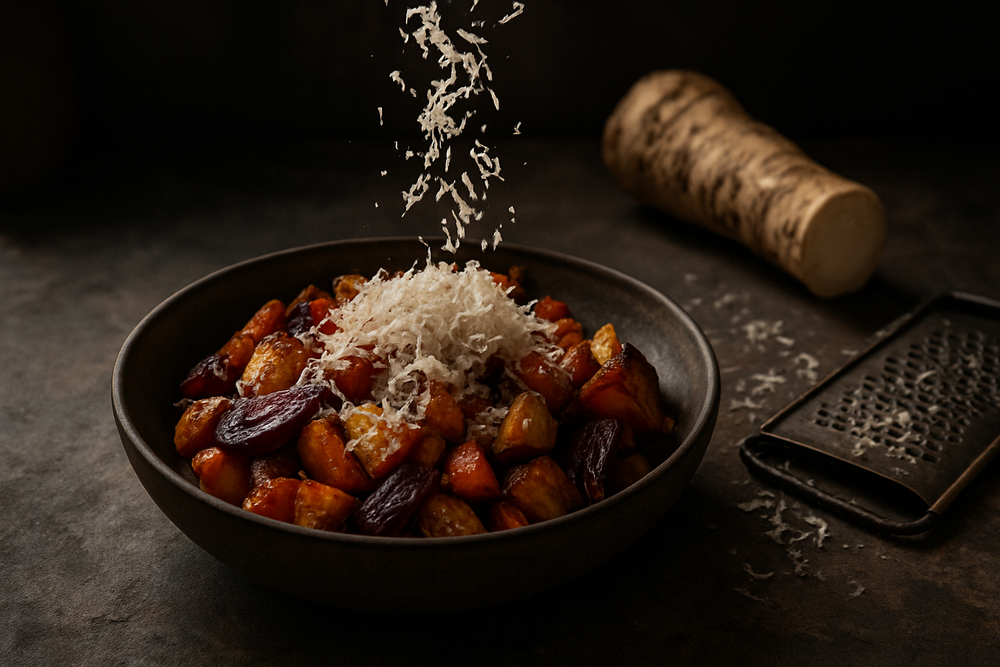
Horseradish Root · Photograph
Discover the real horseradish root health benefits and side effects — from immune and respiratory support to digestion and detox compounds — plus who should avoid it, how much is safe, and how to use it in everyday cooking.
Key Nutrients
% Daily Value based on 2,000 cal diet
Key active compounds
- Sinigrin — the primary glucosinolate in horseradish; converted to allyl isothiocyanate when the root is grated or chewed
- Gluconasturtiin — a second major glucosinolate, also found in watercress, that converts to phenethyl isothiocyanate
- Allyl isothiocyanate (AITC) — the volatile "mustard oil" responsible for the signature heat; shows strong antimicrobial activity in lab studies and may help loosen mucus in the airways
- Phenethyl isothiocyanate — related compound with antiproliferative (cell-growth-inhibiting) properties in laboratory models
- Vitamin C — a water-soluble antioxidant present in notably high amounts (~120 mg per 100 g raw root); supports immune function and collagen production
- Flavonoids (including quercetin and kaempferol derivatives) — polyphenols with antioxidant and anti-inflammatory properties, present in smaller amounts
- Peroxidase enzyme — an enzyme concentrated in horseradish root, used widely in laboratory diagnostics, with some emerging research on its biological role
Prep and pairing ideas
Horseradish is at its most useful when it plays a supporting role — adding a sharp, warming note that makes everything around it more interesting.
Classic cocktail sauce: Stir 1–2 teaspoons of freshly grated or prepared horseradish into tomato sauce with a squeeze of lemon juice. Use as a dip for roasted vegetables or grilled fish.
Horseradish yogurt dressing: Mix a teaspoon of prepared horseradish into plain plant-based yogurt with a pinch of dill and garlic. A bright, creamy counterpoint to roasted beets, shredded carrots, or steamed cabbage.
Grain bowl finisher: A half-teaspoon of fresh grated horseradish stirred into warm lentils or a farro bowl with roasted root vegetables adds depth and heat without any added sodium.
Storage tip: Whole fresh roots keep for weeks in the refrigerator wrapped in a damp cloth. Once cut, wrap the exposed end tightly; the root will begin to dry and lose pungency quickly. Grate only what you need just before serving — heat and air degrade the volatile compounds within minutes.
Bottom line
Horseradish root earns its place in a food-as-medicine pantry as a genuinely bioactive condiment — not a cure-all, but a flavorful, low-calorie source of vitamin C and glucosinolates that may contribute to immune resilience, respiratory defenses, and antioxidant protection when eaten as part of a varied whole-food diet. The most compelling human evidence involves a combination product with nasturtium, and that distinction matters: the root alone, in food amounts, hasn't been studied as rigorously.
The "a little goes a long way" rule is both a culinary truth and a safety principle. Horseradish is one of the few vegetables where eating more does not reliably mean more benefit — in fact, excess can cause real harm for people with sensitive digestive systems, thyroid conditions, or kidney issues.
Used thoughtfully — a sharp, warming spoonful grated fresh into sauces, dressings, and bowls — horseradish is a worthwhile addition to any plant-forward kitchen.
Explore more Plantopedia ingredient guides organized by your health goals: /goals
How Horseradish Root Compares
| Compared with | What's different |
|---|---|
| Horseradish Root vs. Wasabi | Mild, slow-building heat with a nutty, herbal flavor rather than sharp nasal pungency. |
| Horseradish Root vs. Daikon Radish | Milder flavor with a peppery, radish-like bite that does not clear the sinuses as intensely. |
Health Benefits
Things to Know
Stomach and digestive conditions: Avoid beyond minimal food amounts if you have peptic ulcers, gastritis, GERD, esophagitis, or inflammatory bowel disease (Crohn's disease, ulcerative colitis). The mustard oils can worsen mucosal irritation and trigger pain or bleeding.
Kidney disease: Several herbal monographs contraindicate medicinal horseradish in people with kidney disorders or a history of kidney inflammation, as isothiocyanates can irritate the urinary tract.
Thyroid conditions: People with hypothyroidism or anyone taking levothyroxine or other thyroid hormones should avoid medicinal or supplement doses; check with your prescriber.
Pregnancy: Medicinal doses are not considered safe during pregnancy and may theoretically stimulate uterine activity. Many references discourage even food-level use in complicated pregnancies. Ask your midwife or OB.
Breastfeeding: Safety of medicinal doses has not been established; most monographs advise against use while lactating.
Young children: Children under approximately 4 years are more vulnerable to airway irritation and gastrointestinal upset from pungent compounds; keep amounts very small.
Allergy: People with known allergy to mustard, other brassicas, or isothiocyanate-containing plants may have cross-reactive responses.
Drug interactions: Horseradish may theoretically reduce the effect of thyroid hormone medications. It may also compound gastrointestinal irritation when combined with frequent NSAID use (e.g., ibuprofen, aspirin) or other strongly irritating herbs.
Eye and skin contact: Concentrated fresh root or its vapors can cause burning, redness, and even blistering on skin and eyes. Wear gloves when grating large amounts and work in a ventilated space.
Timing: If using a combination herbal product (horseradish + nasturtium tablets) for UTI or respiratory prophylaxis, follow the product label and consult your healthcare provider — these are regulated herbal medicines with specific dosing protocols.
Glossary
Shop This Ingredient
Stock your pantry with quality horseradish root.
Buy on AmazonAs an Amazon Associate, Plantopedia earns from qualifying purchases. This costs you nothing extra and helps us keep the encyclopedia free.
Frequently Asked Questions
Respiratory health and immune support This is the area with the strongest human evidence — but with an important caveat. Most clinical trials have used a standardized combination tablet containing both horseradish root and nasturtium herb (Tropaeolum majus), not horseradish alone. Several randomized, double-blind, placebo-controlled trials found this combination: Reduced the number of new upper respiratory tract infections in adults prone to recurrent episodes, compared to placebo (over up to 84 days of prophylactic use) Improved symptoms of acute bronchitis — including cough, mucus production, and chest pain — more quickly than placebo over about 10 days Laboratory research on the specific horseradish compounds suggests a plausible mechanism: AITC shows antibacterial and antiviral activity in cell studies and may act as a mucolytic (mucus-loosening) agent in the airways. However, because the clinical trials mix two herbs, the exact contribution of horseradish alone is not separable from the evidence. Think of the combination product as the "proven" form, and fresh horseradish as a biologically reasonable dietary companion. Urinary tract infection prevention A large phase III double-blind trial in women with recurrent urinary tract infections (UTIs) found that the nasturtium-horseradish combination tablet reduced the risk of a new UTI by 36% compared to placebo. In vitro data show that horseradish isothiocyanates inhibit several bacteria responsible for UTIs, lending biological plausibility — but again, there are currently no rigorous trials of horseradish root alone for this purpose. Digestive health and gut microbiome Traditional herbalism has long classified horseradish as a "stomachic" — something that stimulates digestive secretions and appetite in small doses. There are no modern controlled human trials specifically evaluating horseradish for digestion, gut motility, or microbiome diversity. What we do know clearly: in large or medicinal amounts, horseradish does the opposite of helping digestion — it can irritate the lining of the mouth, esophagus, stomach, and intestines, causing stomach upset, cramping, diarrhea, or worse. The culinary dose (a teaspoon stirred into a dipping sauce) is where any potential gentle digestive nudge lives; the medicinal dose is where real risk begins. Inflammation and antioxidant activity Horseradish isothiocyanates demonstrate anti-inflammatory and antioxidant effects in cell and animal studies — including activation of phase II detoxification enzymes (enzymes in your liver and gut that help neutralize harmful substances) and suppression of pro-inflammatory signaling molecules. This is consistent with what we see across the brassica family more broadly. However, there are no robust human clinical trials showing that eating horseradish lowers measurable inflammatory markers, relieves joint pain, or reduces chronic disease activity. The anti-inflammatory angle is biologically plausible and a reasonable reason to include horseradish in a varied plant-based diet — but it shouldn't be the only anti-inflammatory strategy you rely on. Blood sugar and metabolism A small but well-designed randomized crossover trial in healthy men tested a single meal containing 8.3 g of shredded horseradish and found no significant effect on energy expenditure, appetite, or subsequent food intake compared to a control meal. One analysis noted a very slight increase in diastolic blood pressure (0.4 mmHg) that was statistically marginal and clinically uncertain. There are no controlled human trials on horseradish for blood glucose control, insulin sensitivity, or lipid levels. Lab evidence suggests isothiocyanates may influence oxidative stress pathways related to metabolism, but this has not translated into clinical data. Horseradish can absolutely fit into a diabetes-friendly eating plan as a low-calorie, flavorful condiment — just not as a glycemic management tool in its own right. Hormones and thyroid health Horseradish contains glucosinolates that are classified as goitrogens — compounds that can theoretically interfere with iodine uptake by the thyroid gland at high intakes. A 2024 review of brassica vegetables and thyroid function found that typical dietary intakes of brassicas do not appear to adversely affect thyroid function in people with adequate iodine status, but no specific data on horseradish were available. Multiple clinical monographs caution people with hypothyroidism (underactive thyroid) or those taking thyroid hormone replacement (e.g., levothyroxine) to avoid medicinal or supplement doses of horseradish. At condiment-level amounts and with normal iodine intake, the risk is likely minimal for most people — but it is prudent for anyone with existing thyroid disease to check with their doctor.
In terms of active compounds, yes — fresh grated root delivers the most intact glucosinolates and the greatest burst of isothiocyanates because the myrosinase enzyme has just been activated. The heat is stronger precisely because more AITC is being formed. Prepared horseradish (grated root suspended in vinegar) is a practical middle ground: the acid stabilizes the product and gradually dampens the volatile compounds, producing a pungent but more predictable condiment. It's still a reasonable whole-food choice, though check labels — sodium content varies significantly by brand, and some products add sugar. Horseradish cream or sauce blends the root with oil, mayo, or dairy, which softens the heat further but adds calories and may not align with a whole-food plant-based pattern. Dried root powder or capsules retain some glucosinolates but lose volatile compounds during drying. Standardized dosing data for isolated horseradish powder supplements are limited, and the combination tablets used in clinical trials are a different, regulated product — not equivalent to taking a big spoonful of fresh root. Bottom line on form: For everyday food use, fresh grated root or a quality prepared horseradish without excessive additives are your best bets. Supplement forms should be approached with more caution and medical guidance.
The plant-forward eater looking for variety Wants new whole-food condiments that don't rely on salt or sugar for flavor impact Already eats a range of brassica vegetables and wants to extend that family Enjoys bold flavors that make plant-based meals feel more satisfying The person prone to winter respiratory infections Is interested in evidence-backed, non-antibiotic supportive strategies Wants to use a combination herbal product (nasturtium + horseradish tablets) with medical guidance during high-risk seasons Has no contraindications (no ulcers, GERD, kidney issues, or thyroid conditions)
There is no official recommended daily intake for horseradish root as a food. What the research and clinical monographs suggest: Culinary amounts (generally well-tolerated for most healthy adults): 1–2 teaspoons (about 5–10 g) of freshly grated or prepared horseradish at a time Up to approximately 20 g spread across the day in food, used as a condiment Start low. If you are new to horseradish or have any digestive sensitivity, start with half a teaspoon mixed into food and see how your body responds before increasing. Combination herbal tablets (horseradish root + nasturtium): Clinical trials used two film-coated tablets three times daily for 10–12 weeks. These are standardized, regulated herbal medicine products — not equivalent to scooping fresh root by the tablespoon. Always follow the product label and consult a healthcare provider before using these for a health condition. The bottom line on dose: At condiment quantities, horseradish is one of the safer pungent roots for healthy adults. The risk profile shifts meaningfully when you move into large daily doses or concentrated supplements — especially if you have any of the conditions listed in the safety section above.
Quick Answers
Common questions, answered in a line.
Horseradish contains sinigrin, which converts to allyl isothiocyanate (AITC) when the root is grated or chewed. This volatile "mustard oil" has demonstrated strong antimicrobial activity in laboratory studies and may help loosen mucus in the respiratory airways.
Horseradish root is a notably high source of Vitamin C, providing approximately 120 mg per 100 g of raw root. This water-soluble antioxidant is essential for supporting immune function and promoting collagen production in the body.
People with hypothyroidism or those taking thyroid hormones like levothyroxine should avoid medicinal doses of horseradish. The plant's compounds may theoretically interfere with thyroid medications, so it is important to consult a healthcare provider before use.
Horseradish should be avoided in more than minimal food amounts by individuals with peptic ulcers, gastritis, GERD, or inflammatory bowel diseases like Crohn’s. The pungent mustard oils in the root can irritate the digestive mucosa, potentially triggering pain or bleeding.
Horseradish is best used as a fresh condiment added to sauces, dressings, or grain bowls just before serving. To preserve its pungency and bioactive compounds, you should only grate what you need immediately, as heat and air cause the flavor to degrade within minutes.
Avoid horseradish in medicinal doses if you have kidney disorders or a history of kidney inflammation. The isothiocyanates found in the root can act as irritants to the urinary tract, which may complicate existing kidney issues.
Fresh horseradish root can be stored for several weeks in the refrigerator when wrapped in a damp cloth. Once the root is cut, the exposed end should be wrapped tightly to prevent it from drying out and losing its signature heat.
For Readers in the USA
Local context — sourcing, seasonality, and regional notes.
Illinois is the primary producer of horseradish in the U.S., accounting for approximately 80% of the nation's supply, largely centered in the Collinsville area. While the roots are harvested in the spring and fall, they are typically available in grocery stores year-round due to their excellent shelf life when refrigerated.
Fresh horseradish root is commonly found in the produce section of major U.S. grocery chains like Whole Foods, Kroger, and Publix, often near other root vegetables like ginger. For the highest quality, many consumers visit local farmers markets in the Midwest or Pacific Northwest during the peak harvest months of April and October.
Horseradish is a staple of American culinary traditions, famously used as a key ingredient in cocktail sauce for seafood and as a traditional bitter herb during Passover Seders across the U.S. It also gained significant popularity as the primary flavoring agent in "Wasabi" pastes sold in American sushi restaurants, which are often dyed horseradish rather than true wasabi.
When buying processed horseradish, look for the USDA Organic seal to ensure no synthetic pesticides were used, and check the FDA-mandated ingredient label for added sugars or high sodium. The FDA classifies horseradish as "Generally Recognized as Safe" (GRAS) when used as a natural seasoning or flavoring.
AI Clinical Review
- Clearly explains horseradish’s key compounds (glucosinolates that convert to isothiocyanates like allyl isothiocyanate) and why fresh grating intensifies activity and heat.
- Accurately distinguishes the best human evidence: benefits for respiratory and recurrent UTI prevention come from a combination product with nasturtium, not horseradish alone.
- Provides practical, food-first dosing guidance (about 1–2 teaspoons at a time) and emphasizes that higher, “medicinal” intakes raise the risk of irritation.
- Sensibly compares forms: fresh > prepared for peak pungency/actives; sauces dilute; dried/supplement forms differ and aren’t equivalent to the standardized combo used in trials.
- Anti-inflammatory, antioxidant, and “detox” enzyme effects are supported mainly by lab/animal data; high-quality human trials of horseradish alone are lacking.
- Digestive and microbiome claims reflect traditional use; modern controlled studies are minimal.
- Metabolic outcomes (blood glucose, lipids, weight) have not been demonstrated in rigorous human studies; one small acute trial found no meaningful effect on energy balance.
- Thyroid considerations: brassica goitrogens are a theoretical issue at high intakes; horseradish-specific human data are limited, and risk appears low with small food amounts and adequate iodine.
- Reasonable culinary range: 5–10 g (1–2 tsp) per serving; many tolerate up to ~20 g/day spread across meals. Start small, as isothiocyanates can irritate mouth, esophagus, stomach, and urinary tract.
- Use extra caution or avoid beyond tiny amounts if you have ulcers, GERD, active GI inflammation, kidney disease, are pregnant or breastfeeding, have hypothyroidism, or are giving to young children; discuss regular use with your clinician.
- Possible interactions: may reduce effectiveness of thyroid hormone if overused; can compound GI irritation with frequent NSAID use; watch for allergy if sensitive to mustard/brassicas.
- Form matters: fresh-grated gives the most “actives”; prepared-in-vinegar is a practical, milder option; supplements are not interchangeable with the standardized nasturtium–horseradish tablets studied for infections—seek guidance before therapeutic use.
Very pungent; irritating to eyes, sinuses, and stomach in large amounts. Avoid with ulcers or thyroid concerns.
References
- USDA FoodData Central — raw horseradish nutrition data (fdc.nal.usda.gov)
- NIH PubMed Central — brassica vegetables and thyroid function (2024 review) (pmc.ncbi.nlm.nih.gov)
- British Journal of Nutrition — randomized crossover trial on horseradish and energy expenditure in healthy men (cambridge.org)
- Phase III randomized trial — nasturtium + horseradish for acute bronchitis treatment (pubmed.ncbi.nlm.nih.gov)
- Phase III randomized trial — nasturtium + horseradish for recurrent UTI prophylaxis (tandfonline.com)
- Phase III randomized trial — nasturtium + horseradish for respiratory infection prophylaxis (pubmed.ncbi.nlm.nih.gov)
- PubMed — phytochemical and biological investigation of horseradish root compounds (pubmed.ncbi.nlm.nih.gov)
- WebMD herbal monograph — horseradish uses, side effects, interactions (webmd.com)
- Health Canada NHPID — horseradish natural health product monograph (PDF) (webprod.hc-sc.gc.ca)
- USDA MyPlate — vegetables group guidance (myplate.gov)
Know Your Numbers
Eating healthy is a start. Now get to know your biomarkers.
Food changes bloodwork — inflammation, lipids, blood sugar and nutrient status all respond to what you eat. 59 markers from $59.
- Results in 7–10 days at 2,000+ Quest sites
- Licensed provider reviews every result
- One flat price, no membership, HSA/FSA eligible
Educational information only, not medical advice. Panels are ordered and reviewed through our licensed partner; Plantopedia may earn a commission.