Kidney Bean Sprouts — health benefits and uses
A sprouted whole bean eaten in South Asian growth-and-vitality traditions.
The Short Answer
Kidney bean sprouts must be thoroughly boiled before eating to neutralize toxic lectins. When cooked, they provide a dense source of plant protein (9.5g) and dietary fibre (9.3g) per cup.

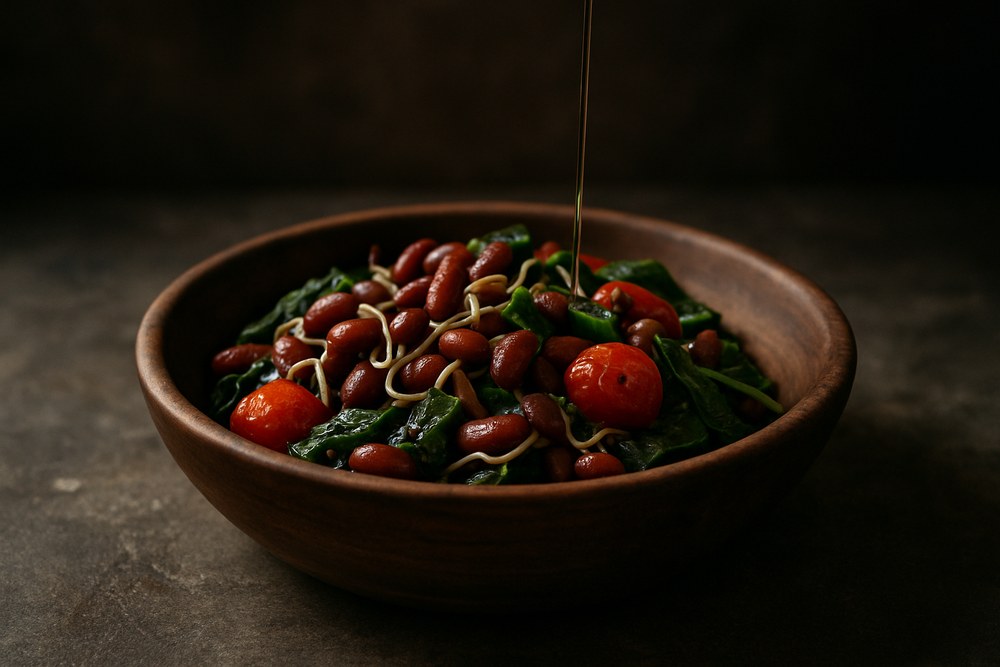
Kidney Bean Sprouts · Photograph
Discover kidney bean sprouts health benefits and how to cook them safely. Learn about nutrition, lectin safety, heart and blood sugar support, and how to use sprouted kidney beans in warm salads and curries.
Key Nutrients
% Daily Value based on 2,000 cal diet
Key active compounds in kidney bean sprouts
- Phytohaemagglutinin (PHA) lectin — A carbohydrate-binding protein naturally concentrated in raw red kidney beans and their sprouts. At high levels it is toxic; thorough boiling destroys it entirely. See the safety section for details.
- Resistant starch — A type of starch that passes through the small intestine undigested and is fermented by bacteria in the colon, supporting gut health and steadier blood sugar.
- Fermentable oligosaccharides — Short-chain carbohydrates that feed beneficial gut bacteria but can also cause gas and bloating, especially when introduced quickly.
- Polyphenols (flavonoids and phenolic acids) — Plant compounds with antioxidant properties linked to reduced oxidative stress and lower cardiovascular risk in population studies.
- Phytic acid — An antinutrient that binds minerals like iron and zinc and reduces how much your body absorbs. Soaking and sprouting partially reduce phytic acid levels compared with unsprouted dried beans.
Prep and pairing ideas
Warm kidney bean sprout salad: Toss a cup of freshly boiled kidney bean sprouts with wilted spinach, roasted cherry tomatoes, a drizzle of olive oil, lemon juice, and cracked black pepper. The beans' earthy flavour pairs naturally with the acidity of lemon.
Kidney bean sprout curry: Add a generous cup of cooked sprouts to a tomato-based curry sauce with cumin, turmeric, and coriander. Serve over brown rice or quinoa for a complete amino acid profile — the grain and legume combination provides all essential amino acids the body cannot make on its own.
Grain bowl base: Layer cooked kidney bean sprouts over farro or bulgur wheat with cucumber, red onion, roasted red pepper, and a tahini dressing. The sprouts add protein and fibre density without heaviness.
Buying and storage tips: If sprouting at home, use whole, undamaged dried red kidney beans from a sealed packet; cracked or split beans may not sprout evenly. After sprouting and boiling, store in an airtight container in the refrigerator for up to four days, or freeze in portions for up to three months. Canned kidney beans are a convenient and safe alternative — they are commercially cooked at high temperatures that fully deactivate lectins; just rinse well to reduce sodium before use.
Bottom line
Sprouted-and-cooked kidney beans are a nutritionally dense, versatile whole food that fits naturally into plant-based and flexitarian diets. They bring meaningful amounts of protein, fibre, folate, iron, and potassium to the plate, and evidence from clinical trials on cooked pulses broadly supports their role in supporting heart health, blood sugar stability, and gut function.
The single non-negotiable rule: always fully cook them. Raw or undercooked kidney bean sprouts are genuinely dangerous due to their lectin content. Follow the soaking, sprouting, and vigorous boiling steps described above, skip the slow cooker as your primary cooking method, and you have a safe, satisfying, and evidence-aligned ingredient for warm salads, curries, grain bowls, and stews.
If you are building a diet around plant foods for a specific health goal, kidney bean sprouts are a practical and delicious starting point.
➡️ Explore more ingredients aligned to your health goals at Plantopedia Goals.
How Kidney Bean Sprouts Compares
| Compared with | What's different |
|---|---|
| Kidney Bean Sprouts vs. Mung Bean Sprouts | Contain significantly more protein and fibre per cup than the smaller mung bean sprout. |
| Kidney Bean Sprouts vs. Alfalfa Sprouts | Must be boiled to destroy toxic lectins, whereas alfalfa can be eaten raw. |
Health Benefits
Things to Know
Kidney disease or potassium/phosphorus restrictions: Cooked kidney beans provide meaningful amounts of both potassium (405 mg/100 g) and phosphorus (142 mg/100 g). If you have been advised to limit these minerals — common in chronic kidney disease — speak with a renal dietitian before adding kidney bean sprouts regularly.
IBS, SIBO, or sensitive digestion: The fermentable carbohydrates (FODMAPs) in beans may trigger gas, bloating, or cramping in people with irritable bowel syndrome or small intestinal bacterial overgrowth. A low-FODMAP elimination approach with a dietitian's guidance is advisable if this applies to you.
Legume allergy: People with a known allergy to beans or other legumes should avoid kidney bean sprouts or seek specialist allergy advice.
Gout or high uric acid: Legumes contain purines, but their contribution to gout risk is generally much smaller than that of red meat and certain seafoods. Current evidence does not strongly support restricting legumes in gout.
Diabetes medications (insulin, sulfonylureas): Legume-rich diets have been shown in trials to modestly lower fasting blood glucose and improve insulin sensitivity. If you take glucose-lowering medication, adding significant quantities of beans to your diet may enhance those effects — worth discussing with your prescriber.
Antihypertensive medications: Regular pulse intake has been associated with small reductions in systolic blood pressure; combining this with blood-pressure-lowering medication may require monitoring.
Warfarin or other vitamin K antagonists: Kidney beans contain modest amounts of vitamin K. Large, abrupt changes in legume intake can affect the consistency of anticoagulant therapy; keeping intake consistent is the practical guidance.
Pregnancy: Kidney beans are an excellent folate source, which is critical in early pregnancy. Ensure they are always thoroughly cooked.
Introduce gradually: If you are not used to high-fibre foods, add cooked kidney bean sprouts slowly — starting with ¼ cup (roughly 60 g) — and drink plenty of water to minimise digestive discomfort.
Shop This Ingredient
Stock your pantry with quality kidney bean sprouts.
Buy on AmazonAs an Amazon Associate, Plantopedia earns from qualifying purchases. This costs you nothing extra and helps us keep the encyclopedia free.
Frequently Asked Questions
Most of the research behind these benefits comes from studies on cooked pulses broadly (beans, lentils, chickpeas). Direct trials on sprouted kidney beans specifically are limited, so the evidence below is reasonably extrapolated — but it is worth keeping that distinction in mind. Heart and circulation Meta-analyses — studies that pool results from many clinical trials — show that eating roughly 130–160 g of cooked pulses per day (about one cup) lowered LDL cholesterol (the "bad" kind) by approximately 6–7 mg/dL compared with similar diets without pulses. A separate pooled analysis found that regular pulse intake was associated with a small but meaningful reduction in systolic blood pressure (the top number) of around 2 mmHg. In people with type 2 diabetes, replacing red meat with legumes in a structured heart-healthy diet improved both LDL cholesterol and triglycerides. The likely drivers are soluble fibre, which slows cholesterol reabsorption in the gut, plus the potassium and magnesium content that support healthy blood pressure. Digestive health and microbiome Cooked kidney beans provide both soluble and insoluble fibre. Soluble fibre dissolves in water and forms a gel that slows digestion; insoluble fibre adds bulk to stool and supports regularity. The resistant starch and fermentable oligosaccharides in kidney beans act as prebiotics — food for the beneficial bacteria in your colon. These bacteria ferment the fibre into short-chain fatty acids, which help maintain the gut lining, support immune function, and may modestly improve insulin sensitivity. Population studies consistently link higher legume intake with lower rates of constipation and better overall digestive health. Blood sugar and metabolism Kidney beans have a low glycaemic index (GI) — meaning they cause a slower, more gradual rise in blood sugar compared with refined carbohydrates like white bread or rice. In a randomised controlled trial in adults with type 2 diabetes, a legume-rich diet significantly reduced fasting blood glucose and fasting insulin levels compared with a legume-free control diet. The mechanisms are well understood: fibre slows gastric emptying (how quickly food leaves the stomach), and resistant starch reduces the speed of glucose absorption. For people managing blood sugar, adding kidney bean sprouts as a carbohydrate source at meals — instead of refined grains — is a practical, evidence-informed swap. Inflammation and recovery Evidence here is more preliminary. Some controlled dietary trials have observed modest reductions in C-reactive protein (a blood marker of systemic inflammation) in people eating legume-rich diets, but results are inconsistent and inflammation is often a secondary rather than primary outcome. Polyphenols and magnesium in kidney beans are associated with lower inflammation in observational research. Overall, kidney bean sprouts are best understood as part of an anti-inflammatory dietary pattern rather than a standalone anti-inflammatory food.
People transitioning to more plant-based eating Looking for a satisfying, protein-dense swap for meat in curries and stews Want to increase fibre intake without relying heavily on supplements Interested in improving cholesterol or blood sugar through diet rather than (or alongside) medication People who find whole dried beans hard to digest The sprouting step reduces some gas-causing oligosaccharides and antinutrients Starting with small portions (¼ cup cooked) and building up over 2–3 weeks can dramatically reduce bloating Pairing with digestive spices like cumin and ginger may further improve tolerance
This is the most important question on this page. Raw kidney bean sprouts are not safe to eat. Red kidney beans contain the highest concentration of phytohaemagglutinin of any common bean — roughly 20,000–70,000 haemagglutinating units in raw form. Eating as few as four or five raw or improperly cooked beans has triggered outbreaks of acute poisoning, with symptoms typically appearing within one to three hours: intense nausea, severe vomiting, and diarrhoea. A 2023 outbreak in France was traced directly to undercooked kidney beans in a prepared dish. How to safely cook kidney bean sprouts: Soak dried kidney beans in plenty of cold water for 8–12 hours (or overnight). Discard the soak water. Rinse, then allow beans to sprout in a clean jar or sprouting tray for 1–2 days until small shoots appear. Discard any sprouting liquid and rinse the sprouts well. Transfer to a pot, cover with fresh cold water, and boil vigorously for at least 10 minutes (most food safety authorities recommend 30 minutes or until the beans are fully soft and tender). Do not use a slow cooker as the only cooking method. Slow cookers may not reach the temperatures needed to destroy phytohaemagglutinin and have been directly implicated in bean poisoning cases. Once fully boiled, the lectin is completely deactivated and the beans are safe for all healthy adults.
Human trials on pulse-related health benefits have typically used roughly 130–160 g per day of cooked legumes (about one to one-and-a-half cups), as part of a mixed, balanced diet. This is a reasonable target range for kidney bean sprouts as well. If you are new to legumes, start lower — around 60–80 g (roughly a ½ cup) — and build up over two to three weeks. This gradual approach gives your gut microbiome time to adapt and typically reduces gas and bloating significantly. There is no established upper limit for healthy adults eating cooked kidney beans, but eating them as one varied source of protein and fibre across the week — rather than every single meal — is consistent with how they are used in the best-studied dietary patterns. Combining them with other legumes (lentils, chickpeas, black beans) adds nutritional diversity and keeps meals interesting.
Quick Answers
Common questions, answered in a line.
You must vigorously boil kidney bean sprouts to destroy phytohaemagglutinin (PHA), a toxic lectin naturally concentrated in the raw beans. Avoid using a slow cooker as the primary cooking method because it may not reach the temperatures required to fully deactivate these toxins.
Yes, kidney bean sprouts are an excellent source of folate, which is a critical nutrient for fetal development during early pregnancy. However, you must ensure they are always thoroughly cooked to avoid the risks associated with raw lectins.
Sprouting and soaking kidney beans helps to partially reduce levels of phytic acid, an antinutrient that can interfere with the absorption of minerals like iron and zinc. This process makes the nutrients in the beans more bioavailable compared to unsprouted dried beans.
You can store cooked kidney bean sprouts in an airtight container in the refrigerator for up to four days or freeze them in portions for up to three months. If you are sprouting at home, ensure you use whole, undamaged dried beans for even results.
Kidney bean sprouts contain resistant starch and fermentable oligosaccharides that feed beneficial gut bacteria and support overall colon health. Because these fibers can cause gas, it is best to introduce them into your diet gradually and drink plenty of water.
Yes, eating kidney bean sprouts with grains like brown rice, farro, or quinoa creates a complete amino acid profile. This combination ensures your body receives all the essential amino acids it cannot produce on its own, making it ideal for plant-based diets.
Individuals with chronic kidney disease should consult a renal dietitian before eating kidney bean sprouts regularly due to their high potassium and phosphorus content. Additionally, those with IBS or SIBO may need to limit intake because the fermentable carbohydrates can trigger bloating.
For Readers in the USA
Local context — sourcing, seasonality, and regional notes.
You can find dried kidney beans for sprouting at major US retailers like Whole Foods Market, Kroger, and Safeway, or through specialty suppliers like True Leaf Market. Look for "sprouting grade" beans in the bulk section or natural foods aisle to ensure high germination rates.
While kidney beans are grown in states like Michigan, Minnesota, and Nebraska, they are harvested in late summer and fall, though dried beans remain available year-round. Because they are shelf-stable, you can sprout them in your kitchen during any season regardless of your USDA hardiness zone.
The FDA recommends that consumers always cook sprouts thoroughly to reduce the risk of foodborne illness, a guideline that is especially critical for kidney bean sprouts due to their lectin content. For the safest results, follow USDA organic labeling to ensure your starting seeds were produced without synthetic pesticides.
Kidney beans are a staple in American food culture, appearing in Southern "red beans and rice," Texas-style chili, and classic three-bean salads found at summer potlucks. Sprouting these beans offers a nutrient-dense twist on these traditional US recipes while maintaining their familiar earthy flavor.
AI Clinical Review
- The safety message is clear and accurate: raw or undercooked kidney beans/sprouts contain high levels of the PHA lectin and must be vigorously boiled; slow cookers alone are not sufficient.
- It correctly positions sprouted-and-cooked kidney beans within the broader pulse evidence base for heart and metabolic health, highlighting fiber, resistant starch, potassium, and magnesium as key drivers.
- Sprouting is framed appropriately—as a prep step that may reduce some antinutrients and improve tolerance, not as a finished, ready-to-eat food.
- Suggested portion ranges (~130–160 g cooked daily in trials; start with ~60–80 g if new to legumes) are reasonable and consumer-friendly.
- Direct human trials on sprouted kidney beans are limited; most benefits are extrapolated from mixed-legume studies, so exact effect sizes for sprouts are uncertain.
- Cardiometabolic outcomes (LDL, blood pressure, glycemia) vary by overall diet and what legumes replace; individual responses can differ.
- Inflammation and microbiome benefits are plausible but not definitive; CRP changes are inconsistent and prebiotic effects depend on dose and tolerance.
- The nutrition panel uses boiled kidney beans as a proxy; sprouted-then-boiled values should be similar but may not be identical.
- Safety first: always boil sprouts thoroughly (at least 10–30 minutes at a rolling boil) and avoid using a slow cooker as the sole method; once fully cooked, leftovers can be stored safely as described.
- Dosing: a practical target is about 1 cup (130–160 g) cooked per day within a varied diet; if you’re new to legumes, begin with ¼ cup (60–80 g) and increase gradually to minimize gas/bloating.
- Who should check in first: people with chronic kidney disease or potassium/phosphorus restrictions, those with IBS or FODMAP sensitivity, and anyone with a known legume allergy.
- Medication considerations: if you use insulin or sulfonylureas (glucose-lowering) or antihypertensives, monitor for modest additive effects; if on warfarin, keep overall vitamin K intake consistent rather than making abrupt changes. Canned kidney beans are a safe, fully cooked alternative if you prefer not to sprout.
Kidney bean sprouts must always be cooked; raw sprouts retain high lectin levels.
References
- USDA FoodData Central — kidney bean nutrition data (fdc.nal.usda.gov)
- Harvard T.H. Chan School of Public Health — Legumes and Pulses overview (nutritionsource.hsph.harvard.edu)
- Linus Pauling Institute, Oregon State University — Legumes review (lpi.oregonstate.edu)
- Meta-analysis: legume consumption and cardiovascular disease risk (doaj.org)
- Randomised controlled trial: legumes and cardiometabolic risk factors (pmc.ncbi.nlm.nih.gov)
- Randomised controlled trial: legumes replacing red meat in type 2 diabetes (pubmed.ncbi.nlm.nih.gov)
- Centre for Food Safety (Hong Kong) — Phytohaemagglutinin poisoning guidance (cfs.gov.hk)
- Finnish Food Authority (Ruokavirasto) — Safety guidance on lectins in beans (ruokavirasto.fi)
- University of Illinois Extension — Kidney beans and slow cooker safety (extension.illinois.edu)
- Food Safety News — 2023 French outbreak from undercooked kidney beans (foodsafetynews.com)
Know Your Numbers
Eating healthy is a start. Now get to know your biomarkers.
Food changes bloodwork — inflammation, lipids, blood sugar and nutrient status all respond to what you eat. 59 markers from $59.
- Results in 7–10 days at 2,000+ Quest sites
- Licensed provider reviews every result
- One flat price, no membership, HSA/FSA eligible
Educational information only, not medical advice. Panels are ordered and reviewed through our licensed partner; Plantopedia may earn a commission.