Muscadine Grape — health benefits and uses
A native Southeastern US grape prized for its extra-thick antioxidant-rich skin.
The Short Answer
Muscadine grapes are high-fiber fruits containing 3.9 grams of fiber and nearly 100% of the daily value for manganese per cup. They are unique for their thick, edible hulls and seeds which contain ellagic acid, an antioxidant absent in most other grape
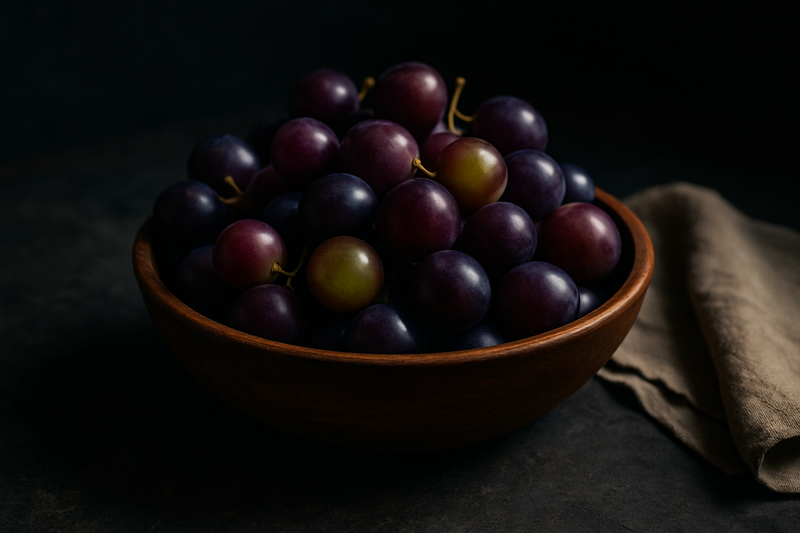
Muscadine Grape · Photograph
Discover the health benefits of muscadine grapes, from their exceptional antioxidant content and fiber to what the research actually says about heart health, blood sugar, and safe daily intake. Includes nutrition facts, how to eat them hull-and-all, and who should take care with supplements.
Key Nutrients
% Daily Value based on 2,000 cal diet
Key active compounds
Muscadine grapes contain a notably diverse polyphenol (plant-derived antioxidant compound) portfolio, particularly concentrated in the hull and seeds:
- Ellagic acid and ellagitannins — Hydrolyzable tannins (a type of polyphenol that breaks down during digestion to release smaller active compounds); abundant in muscadine skins and seeds, and largely absent from European grape varieties. Provide strong antioxidant capacity in laboratory studies.
- Flavan-3-ols (catechin, epicatechin, procyanidins) — A class of flavonoids found prominently in the seeds; linked to vascular function support in experimental models.
- Anthocyanins — The pigments that give dark muscadine varieties their deep red and purple color. Concentrated in the hull; hull-and-all preparations are richer in these compounds than clear juice.
- Flavonols (quercetin, myricetin, kaempferol glycosides) — Polyphenols in the skin associated with antioxidant and anti-inflammatory activity in laboratory research.
- Stilbenes (including resveratrol) — A class of compounds found at low but detectable levels in muscadine wine; resveratrol has been studied extensively in the context of heart health, though human evidence is still developing.
- Phenolic acids (gallic acid, hydroxycinnamates) — Contribute to overall antioxidant capacity.
Prep and pairing ideas
Buying guide
Look for muscadines at farmers' markets and roadside stands across the southeastern US from late July through October. Choose grapes that feel firm and plump with a slight give — a rock-hard muscadine isn't quite ripe; a mushy one is past its prime. Bronze and purple varieties both offer good polyphenol profiles, though darker varieties tend to have higher anthocyanin content.
- Fresh vs. frozen: Fresh is ideal for texture and full polyphenol content. Frozen muscadines (less commonly available) retain most nutrients and work well in smoothies or cooked preparations.
- Juice vs. whole: Whole fruit wins for fiber. If buying juice, look for 100% muscadine juice with no added sugar on the label.
- Supplements: If considering extracts, look for products standardized to total polyphenol or ellagic acid content, made by companies that provide third-party testing certificates. Note that no muscadine supplement has an approved health claim.
Three practical pairings
- Muscadines + Greek yogurt — The tartness of the grapes balances the creaminess of yogurt, while combining fruit fiber with protein slows glucose absorption. Chew the hulls; scoop out seeds before mixing if you prefer.
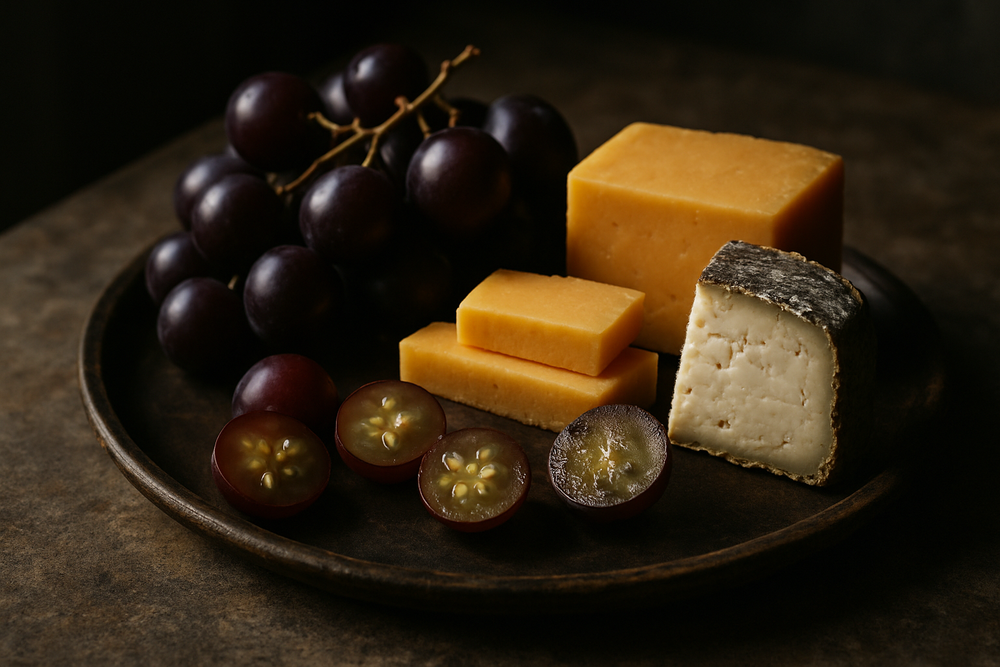
- Muscadines + sharp cheddar or aged goat cheese — A classic Southern combination. The fat and protein in cheese further blunts the glycemic effect of the grape sugars, and the flavor contrast is excellent.
- Muscadines + oatmeal (hull-and-all compote) — Simmer grapes with a splash of water until the hulls soften; spoon over steel-cut oats for a high-fiber, antioxidant-rich breakfast with no added sugar needed.
Bottom line
Muscadine grapes are a genuinely nutritious whole food — high in fiber, exceptionally rich in manganese and riboflavin, and loaded with a polyphenol mix that is distinct from ordinary table grapes. Their thick, edible hulls and seeds are the nutritional powerhouse of the fruit, making hull-and-all preparations more beneficial than filtered juice. Early human research suggests modest improvements in blood sugar control with concentrated muscadine wine forms, and the fruit fits comfortably into every major dietary guideline that encourages whole fruit consumption. Supplement extracts are promising in lab studies but have not yet demonstrated clear clinical benefits beyond safety in the populations studied, and a phase III prostate cancer trial came up negative for its primary endpoint. Eat them fresh when you can, enjoy the seasonal ritual of biting through that thick skin, and think of supplements as an area to watch — not a shortcut to the benefits of the whole fruit.
Explore more about how fruits like muscadines can fit your specific goals at Plantopedia /goals.
How Muscadine Grape Compares
| Compared with | What's different |
|---|---|
| Muscadine Grape vs. Concord Grape | Thick skins and large seeds rich in ellagic acid, unlike the thin skins of table grapes. |
| Muscadine Grape vs. Raisin | Higher fiber and manganese content, but lower in calories than most dried grapes. |
Health Benefits
Things to Know
Choking hazard: Whole muscadines with intact seeds are a known choking risk for toddlers and young children. For children under four, halve the grapes and remove seeds before serving.
Digestive sensitivity: The tough skins and seeds can cause mild GI discomfort (bloating, loose stools) in large quantities, particularly for people with irritable bowel syndrome (IBS) or recovering from a diverticulitis flare. Start with small portions.
Swallowing difficulties: People with esophageal strictures (narrowing of the food pipe) or any swallowing difficulty should be cautious with whole, thick-skinned grapes.
Diabetes and carb counting: Muscadines contain about 14 g of carbohydrate per 100 g. Count them within your meal plan. Muscadine wine introduces both polyphenols and alcohol — discuss with your care team.
Blood thinners (e.g., warfarin, clopidogrel): Concentrated grape seed and skin polyphenols have theoretical antiplatelet effects. Evidence is extrapolated rather than muscadine-specific, but if you take anticoagulant or antiplatelet medication, check with your doctor before adding high-dose supplements.
Antihypertensive medications: High-dose muscadine extracts may have modest vascular effects that could theoretically add to blood pressure-lowering drugs. Whole fruit at typical serving sizes is unlikely to be an issue.
Pregnancy and breastfeeding: Whole fruit is fine in typical amounts. High-dose muscadine extracts have not been studied in pregnant or breastfeeding individuals — avoid supplements in these populations unless directed by a healthcare provider.
Cancer treatments: High-dose muscadine skin and seed extracts have been studied in oncology trials and should only be used under oncologist supervision, as interactions with chemotherapy or hormonal therapies are theoretically possible.
Prep Ideas
- — Fresh vs. frozen: Fresh is ideal for texture and full polyphenol content. Frozen muscadines (less commonly available) retain most nutrients and work well in smoothies or cooked preparations.
- — Juice vs. whole: Whole fruit wins for fiber. If buying juice, look for 100% muscadine juice with no added sugar on the label.
- — Supplements: If considering extracts, look for products standardized to total polyphenol or ellagic acid content, made by companies that provide third-party testing certificates. Note that no muscadine supplement has an approved health claim.
- — Muscadines + Greek yogurt — The tartness of the grapes balances the creaminess of yogurt, while combining fruit fiber with protein slows glucose absorption. Chew the hulls; scoop out seeds before mixing if you prefer.
- — Muscadines + sharp cheddar or aged goat cheese — A classic Southern combination. The fat and protein in cheese further blunts the glycemic effect of the grape sugars, and the flavor contrast is excellent.
- — Muscadines + oatmeal (hull-and-all compote) — Simmer grapes with a splash of water until the hulls soften; spoon over steel-cut oats for a high-fiber, antioxidant-rich breakfast with no added sugar needed.
Glossary
Shop This Ingredient
Stock your pantry with quality muscadine grape.
Buy on AmazonAs an Amazon Associate, Plantopedia earns from qualifying purchases. This costs you nothing extra and helps us keep the encyclopedia free.
Frequently Asked Questions
Muscadine grapes (Vitis rotundifolia) are a separate species from the European table grapes (Vitis vinifera) found in most grocery stores. They are native to the southeastern US, grow in loose clusters rather than tight bunches, and have a noticeably thicker, tougher hull. Their polyphenol profile is also distinct — they contain high levels of ellagic acid and ellagitannins that are largely absent from European varieties, along with higher fiber content per serving.
Yes, the skins (hulls) and seeds are generally safe for most adults. The hulls are edible and nutritious — they contain the majority of the fiber and anthocyanins. Seeds are harder and most people prefer to spit them out, but swallowing them is not harmful for healthy adults. Young children under four and anyone with swallowing difficulties should have seeds removed due to choking risk. People with IBS or other digestive sensitivities may find large quantities of hulls and seeds irritating.
There is some human evidence, but it is specific to certain forms and modest in scale. A 28-day study in people with type 2 diabetes found that daily consumption of muscadine wine or dealcoholized muscadine wine (150 mL with meals) reduced fasting glucose, insulin, and HbA1c compared to muscadine juice or no test drink. The effect appears linked to the concentrated polyphenols in wine rather than the alcohol itself. Fresh whole muscadines were not tested, though their fiber content can help slow glucose absorption. People with diabetes should still account for the carbohydrate content in their meal plan.
For general wellness, aim for ½ to 1 cup of fresh muscadines (roughly 10–25 grapes) as part of your daily 1½ to 2 cups of total fruit recommended by USDA MyPlate. If you are new to eating the hull, start with a smaller amount to let your digestive system adjust. There is no evidence that eating more than one to two cups of whole muscadines per day provides additional benefit, and clinical trial doses of supplements are disease-specific and supervised — not appropriate as general daily targets.
Current evidence does not strongly support taking muscadine supplements for general wellness. A phase III trial of muscadine grape skin extract in men with biochemically recurrent prostate cancer found no significant effect on PSA progression. A small cardiovascular trial showed only modest or neutral effects on vascular function. Phase I cancer trials confirmed safety at tested doses, but not efficacy. Supplements lack the fiber and full nutrient matrix of whole fruit. If you are considering a muscadine supplement for a specific health condition, discuss it with your healthcare provider first.
Absolutely — they are an ideal fit. Muscadines are a whole plant food that delivers fiber, vitamins, minerals, and a broad array of polyphenols with no added ingredients. Eating them fresh with the hull (skin) maximizes fiber and phytochemical intake in line with whole-food, plant-based (WFPB) principles, which emphasize minimally processed plant foods. Hull-and-all preserves made with minimal added sugar are also a reasonable inclusion. Clear juice or wine forms are more processed and lose some of the whole-fruit benefit.
Quick Answers
Common questions, answered in a line.
The best time to buy fresh muscadine grapes is from late July through October. During this window, you can typically find them at farmers' markets and roadside stands throughout the southeastern United States.
To pick the best muscadines, look for grapes that feel firm and plump with a slight give when squeezed. Avoid grapes that are rock-hard, as they are not yet ripe, or those that feel mushy, which indicates they are past their prime.
Muscadine grapes are a nutritional powerhouse, providing high amounts of fiber, manganese, and riboflavin. Their hulls and seeds are particularly rich in a diverse range of polyphenols, such as ellagic acid and anthocyanins, which offer strong antioxidant properties.
Whole muscadine grapes are a choking hazard for toddlers and children under four due to their thick skins and intact seeds. To serve them safely to young children, you should halve the grapes and remove the seeds first.
You should consult your doctor before taking muscadine supplements if you are on blood thinners, antihypertensives, or undergoing cancer treatments. High-dose extracts may interact with anticoagulant medications or chemotherapy, and their safety has not been established for pregnant or breastfeeding individuals.
Whole muscadine grapes are superior to juice because they provide essential dietary fiber and higher concentrations of antioxidants found in the hulls. While 100% juice contains polyphenols, it lacks the fiber and nutrient density of the whole fruit.
The thick skins and seeds of muscadines can cause mild digestive discomfort, such as bloating or loose stools, if eaten in large quantities. This is especially true for individuals with irritable bowel syndrome (IBS) or those recovering from a diverticulitis flare.
For Readers in the USA
Local context — sourcing, seasonality, and regional notes.
Muscadine grapes are native to the Southeastern United States and thrive in USDA Plant Hardiness Zones 7 through 10. While they are most iconic in states like Georgia and North Carolina, they can be grown as far north as Delaware and as far west as East Texas.
During their peak season from August to October, you can find muscadines at major grocery chains like Publix, Kroger, and Whole Foods, as well as local farmers' markets. Outside of the Southeast, they are harder to find fresh and are more commonly sold as juices or jellies in specialty health food stores.
Scuppernong is the most famous variety of muscadine in the US, recognized by its large size and bronze-green color. While all Scuppernongs are muscadines, not all muscadines are Scuppernongs, as the latter refers specifically to the variety first discovered along the Scuppernong River in North Carolina.
Look for the USDA Organic seal to ensure the grapes were grown without synthetic pesticides, though many Southern roadside stands practice "low-spray" methods without formal certification. The FDA regulates muscadine supplements as dietary supplements, meaning they are not approved to treat or prevent diseases like cancer or heart disease.
AI Clinical Review
- Muscadines are a different grape species with thick skins and seeds; most of their fiber and polyphenols live in the hull and seeds, so chewing the skin meaningfully changes what you get from the fruit.
- Whole fruit aligns well with major dietary guidance (e.g., MyPlate) and typically leads to a gentler blood sugar rise than juice because of fiber.
- Early human data suggest muscadine wine and dealcoholized wine may modestly improve glycemic markers versus juice in type 2 diabetes; the likely drivers are concentrated polyphenols rather than alcohol.
- Supplement evidence remains mixed: a cardiovascular seed-extract trial showed modest/neutral effects, and a large prostate cancer trial of skin extract did not slow PSA progression—good reminders not to view extracts as treatments.
- Human trials are few, small, and short; we don’t yet know the long‑term impact of muscadines (in any form) on hard outcomes like heart attacks or diabetes complications.
- The glycemic study tested wine and dealcoholized wine—not fresh whole grapes—so it’s uncertain how much of that effect translates to eating the fruit.
- Reported nutrient levels (especially manganese and riboflavin) can vary by cultivar, ripeness, and database; consider them estimates rather than precise values.
- Microbiome and anti‑inflammatory benefits are biologically plausible due to fiber and polyphenols, but muscadine‑specific clinical data are limited.
- Practical intake: 1/2 to 1 cup of fresh muscadines per day fits most diets; if you count carbs for diabetes, plan for roughly 14 g carbohydrate per 100 g (about 1/2–2/3 cup).
- Form matters: whole fruit or “hull‑and‑all” preparations retain more fiber and pigments; clear juice loses fiber; wine/dealcoholized wine concentrates polyphenols but isn’t appropriate for everyone.
- Safety: whole, seeded grapes are a choking hazard for young children; the tough skins/seeds can bother sensitive GI tracts; use caution if you have swallowing difficulties.
- Supplements: research doses have ranged from ~1,300–4,000 mg/day in trials; if you use extracts, check with your clinician first—especially if pregnant/breastfeeding or taking anticoagulants/antiplatelets or blood‑pressure medicines.
Skins and seeds are tough; generally very safe.
References
- USDA FoodData Central – Muscadine grapes, raw (FDC ID 173040) — primary nutrition data source (fdc.nal.usda.gov)
- NC Cooperative Extension – Nutritional Benefits of Muscadines (Scuppernong) — practical serving and fiber guidance (franklin.ces.ncsu.edu)
- Human trial: muscadine products and blood sugar in type 2 diabetes — 28-day crossover study; wine and dealcoholized wine reduced glucose and HbA1c (pubmed.ncbi.nlm.nih.gov)
- Clinical trial: muscadine grape seed supplement and vascular function — NCT01011517; 50 adults, 1,300 mg/day, 4 weeks; modest/neutral effect on flow-mediated vasodilation (clinicaltrials.gov)
- Phase I trial: muscadine grape extract safety in advanced solid tumors — extract well tolerated; not powered for efficacy outcomes (pmc.ncbi.nlm.nih.gov)
- Phase III RCT: muscadine grape skin extract (MPX) in biochemically recurrent prostate cancer — no significant effect on PSA slope vs. placebo (ascopubs.org)
- Animal/mechanistic study: muscadine extract and diastolic dysfunction — reduced angiotensin II-induced heart stiffness and oxidative stress in mice (pmc.ncbi.nlm.nih.gov)
- Polyphenol profiling: muscadine skins, seeds, and pulp — antioxidant capacity and phenolic compound identification (pubmed.ncbi.nlm.nih.gov)
- Polyphenol profiling: muscadine cultivar comparison — ellagic acid, anthocyanins, flavonols across five cultivars (pubmed.ncbi.nlm.nih.gov)
- USDA MyPlate – Fruits group guidance — whole fruit recommendations for daily intake (myplate.gov)
- WHO ELENA – Fruit and vegetable intake for noncommunicable disease prevention — 400–800 g/day population guidance (who.int)
Know Your Numbers
Eating healthy is a start. Now get to know your biomarkers.
Food changes bloodwork — inflammation, lipids, blood sugar and nutrient status all respond to what you eat. 59 markers from $59.
- Results in 7–10 days at 2,000+ Quest sites
- Licensed provider reviews every result
- One flat price, no membership, HSA/FSA eligible
Educational information only, not medical advice. Panels are ordered and reviewed through our licensed partner; Plantopedia may earn a commission.