Bitter Melon — health benefits and uses
Used across Asian traditional medicine to support healthy blood sugar.
The Short Answer
Bitter melon is a tropical vine fruit used as a vegetable, prized for its intense bitterness and blood sugar-lowering compounds like polypeptide-p. To reduce its sharp flavor, slice the gourd and salt it for 15 minutes to draw out bitter juices before rinsing
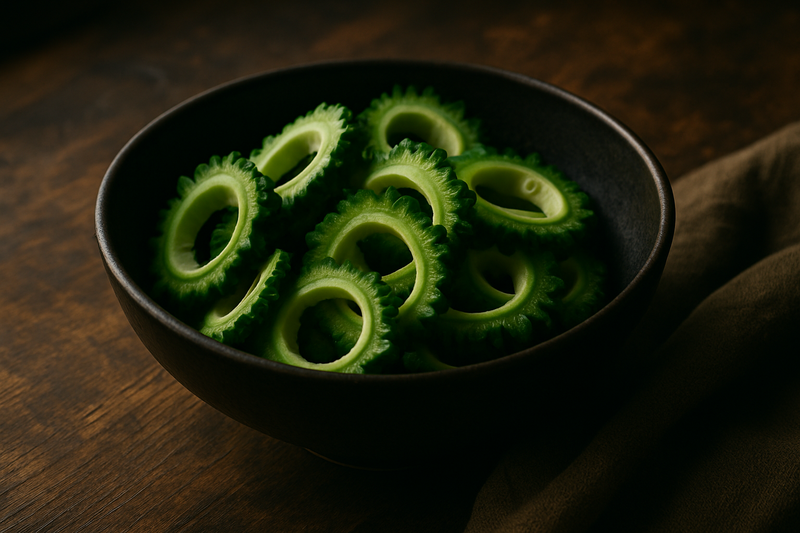
Bitter Melon · Photograph
Discover bitter melon health benefits, side effects, and how to cook it — from blood sugar support and vitamin C to pregnancy safety, daily dose guidance, and easy stir-fry and curry tips.
Key Nutrients
% Daily Value based on 2,000 cal diet
Key active compounds (phytochemicals)
- Polypeptide-p — An insulin-like peptide unique to bitter melon that can bind insulin receptors in laboratory models. Thought to contribute to glucose-lowering effects, though human evidence is still limited.
- Charantin — A mixture of steroidal saponins (plant steroids bound to sugar molecules) that may stimulate insulin secretion and improve insulin sensitivity, based mainly on animal studies.
- Cucurbitane-type triterpenoids (momordicosides) — A large family of bitter-tasting compounds specific to cucurbit plants. They show antidiabetic, antioxidant, and anti-inflammatory activity in lab and animal research; some may act on AMPK (a cellular energy sensor) and PPAR receptors (proteins that regulate fat and glucose metabolism).
- Flavonoids and phenolic acids — Polyphenolic antioxidants that help neutralize free radicals (unstable molecules that can damage cells) and reduce inflammatory signaling in cell studies.
- Saponins and glycosides — Surface-active plant chemicals with diverse effects; at high concentrations or in certain plant parts (seeds, red arils), these are associated with uterine stimulation and potential toxicity.
Prep and pairing ideas
The essential bitterness-taming technique:
- Slice the gourd in half lengthwise. Use a spoon to scoop out and discard all seeds and white pith — and especially any red arils (the vivid red seed coatings visible in very ripe gourds).
- Slice into thin half-moons or strips.
- Toss generously with salt and let sit for 10–15 minutes. The salt draws out bitter juices via osmosis.
- Rinse thoroughly under cold water and pat dry. Your bitter melon is now noticeably milder and ready to cook.
Three practical pairings:
- Bitter melon + egg (stir-fry) — The richness of scrambled or beaten egg binds to the bitter compounds and rounds out the flavor. A Filipino classic. Add garlic, soy sauce, and tomato for a complete dish.
- Bitter melon + coconut milk (curry) — Fat from coconut milk carries fat-soluble phytochemicals and balances the bitterness. Pair with onion, turmeric, cumin, and a protein like chickpeas or tofu for a satisfying curry.
- Bitter melon + black bean sauce (Chinese stir-fry) — Fermented black beans are umami-rich and deeply savory; they are a traditional pairing precisely because their intensity complements rather than fights the bitterness. Add a splash of rice wine and fresh ginger.
Bottom line
Bitter melon is a genuinely interesting whole food that earns its place in a varied, plant-rich diet. Its vitamin C content is exceptional for such a low-calorie vegetable, its fiber supports gut health, and its unique phytochemicals — particularly polypeptide-p and charantin — have been studied more rigorously than most traditional plant remedies for blood sugar support.
The evidence for blood sugar effects is real but mixed: some human trials show modest benefits, others show no significant effect, and no major medical organization currently endorses it as a diabetes treatment. The cooked fruit flesh is safe and delicious when seeds and red arils are removed. Concentrated extracts and juices require more caution, especially for people on glucose-lowering medication, pregnant individuals, breastfeeding parents, and children.
Cook it in stir-fries and curries, use the salt-and-rinse trick, and enjoy it as one nutritious piece of a diverse diet rather than a standalone remedy.
Explore more ingredients studied for blood sugar and metabolic health in the Plantopedia metabolic health section.
How Bitter Melon Compares
| Compared with | What's different |
|---|---|
| Bitter Melon vs. Cucumber | Bitter melon is significantly more bitter and contains insulin-like polypeptide-p. |
| Bitter Melon vs. Zucchini | Bitter melon is warty and bitter, while zucchini is smooth-skinned and mild. |
Health Benefits
Things to Know
Blood sugar medication interactions (high priority): Bitter melon may add to the glucose-lowering effects of insulin, sulfonylureas, metformin, and other antidiabetic drugs, increasing the risk of hypoglycemia (dangerously low blood sugar). If you take any of these, talk to your doctor before using bitter melon beyond normal culinary amounts.
Pregnancy: Multiple sources describe bitter melon — especially its seeds, red arils (the bright red seed coatings), and high-dose preparations — as a potential abortifacient (substance that may cause miscarriage) and uterine stimulant. Most experts advise avoiding medicinal doses or large quantities during pregnancy.
Breastfeeding: Safety data are sparse; some experts recommend caution or avoidance since potentially harmful compounds could pass through breast milk.
Children: Seeds and red arils have been linked to severe hypoglycemia, hemolytic (red blood cell–destroying) reactions, and neurological symptoms in children. Keep these parts away from children entirely.
G6PD deficiency: People with this inherited enzyme deficiency — which makes red blood cells fragile — should be cautious, as case reports and traditional literature mention favism-like hemolytic reactions with certain bitter melon parts.
GI sensitivity: Bitter melon can cause abdominal discomfort, heartburn, diarrhea, or nausea, especially in large amounts or concentrated forms.
Other blood-sugar supplements: Combining bitter melon with fenugreek, gymnema, berberine, or cinnamon may increase hypoglycemia risk — the effect can stack.
Remove seeds and red arils always: Whether for safety or palatability, scoop them out before cooking.
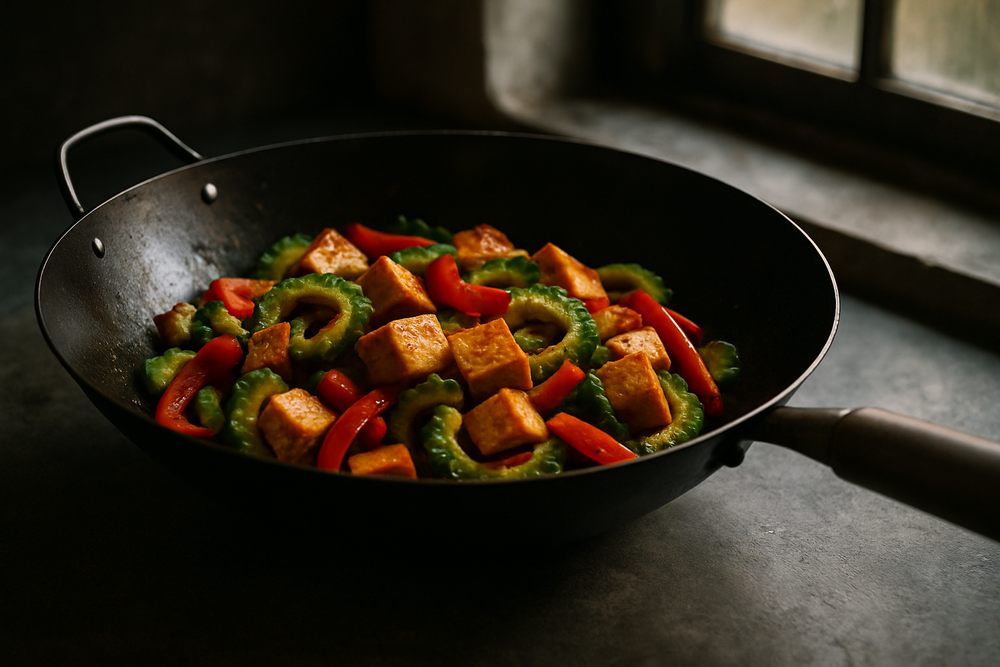
Prep Ideas
- — Slice the gourd in half lengthwise. Use a spoon to scoop out and discard all seeds and white pith — and especially any red arils (the vivid red seed coatings visible in very ripe gourds).
- — Slice into thin half-moons or strips.
- — Toss generously with salt and let sit for 10–15 minutes. The salt draws out bitter juices via osmosis.
- — Rinse thoroughly under cold water and pat dry. Your bitter melon is now noticeably milder and ready to cook.
- — **Bitter melon + egg (stir-fry)** — The richness of scrambled or beaten egg binds to the bitter compounds and rounds out the flavor. A Filipino classic. Add garlic, soy sauce, and tomato for a complete dish.
- — **Bitter melon + coconut milk (curry)** — Fat from coconut milk carries fat-soluble phytochemicals and balances the bitterness. Pair with onion, turmeric, cumin, and a protein like chickpeas or tofu for a satisfying curry.
- — **Bitter melon + black bean sauce (Chinese stir-fry)** — Fermented black beans are umami-rich and deeply savory; they are a traditional pairing precisely because their intensity complements rather than fights the bitterness. Add a splash of rice wine and fresh ginger.
Glossary
Shop This Ingredient
Stock your pantry with quality bitter melon.
Buy on AmazonAs an Amazon Associate, Plantopedia earns from qualifying purchases. This costs you nothing extra and helps us keep the encyclopedia free.
Frequently Asked Questions
Blood sugar and metabolism This is where most of the research lives. Multiple randomized controlled trials (RCTs — studies that randomly assign people to a treatment or placebo group) have tested bitter melon extracts in people with prediabetes or type 2 diabetes, using doses of roughly 2–6 grams per day of dried extract for 4–16 weeks. Some trials report modest reductions in fasting blood glucose (blood sugar measured after an overnight fast) and postprandial glucose (blood sugar after a meal), and a few have noted improvements in HbA1c (glycated hemoglobin — a 2–3 month average of blood sugar levels). However, a systematic review and meta-analysis — a study that pools results from multiple trials — concluded that bitter melon supplementation did not significantly improve HbA1c or fasting plasma glucose compared with placebo overall. A 2024 NIH LiverTox monograph summarizing 10 trials described effects as "modest and inconsistent." The honest summary: some people may benefit, results vary a lot between studies, and bitter melon should not replace prescribed diabetes medication. The proposed mechanisms are interesting: bitter melon compounds may mimic insulin, stimulate the pancreas to release more insulin, slow carbohydrate digestion by inhibiting gut enzymes, activate AMPK, and act as GLP-1 receptor agonists (similar in concept — not in potency — to a class of diabetes drugs). These pathways are well-studied in labs but less cleanly demonstrated in humans. Digestive health and fiber A cup of raw bitter melon provides about 3 g of dietary fiber, contributing to the daily recommended intake of 25–38 g. Fiber feeds beneficial gut bacteria (a concept called the microbiome — the community of microorganisms living in your digestive tract), supports regular bowel movements, and helps you feel full. There are no specific clinical trials testing bitter melon as a treatment for constipation or IBS (irritable bowel syndrome), but its fiber and water content align with general evidence that high-fiber, low-calorie vegetables support gut health. Traditional medicine systems use bitter melon to stimulate digestion and appetite — a plausible effect, since bitter compounds on the tongue trigger digestive secretions — though this has not been rigorously tested in modern trials. Heart and circulation A handful of clinical studies on bitter melon in type 2 diabetes have measured cholesterol and triglycerides (blood fats) as secondary outcomes, but data are inconsistent and not convincingly positive. No large cardiovascular outcome trials exist. Any heart benefit is likely indirect — modest improvements in blood sugar and weight can reduce cardiovascular risk factors — rather than a direct action on the heart or arteries. Inflammation and recovery Bitter melon's cucurbitane triterpenoids, flavonoids, and phenolic acids show meaningful antioxidant and anti-inflammatory activity in cell and animal studies, including free radical scavenging and reduction of inflammatory cytokines (chemical messengers that drive inflammation). But there are no large, well-designed human trials that have tested bitter melon specifically as an anti-inflammatory therapy. Evidence at this stage is preliminary. Immune support and micronutrients Bitter melon's high vitamin C content is its most nutritionally straightforward benefit. Vitamin C is a well-established immune-supporting antioxidant that also drives collagen production (the structural protein in skin, tendons, and blood vessels) and helps the body absorb plant-based iron. These benefits are well proven for vitamin C in general — bitter melon is simply a notably good whole-food source of it.
Fresh cooked fruit flesh is the most WFPB (whole food, plant-based) aligned option and the lowest-risk. Slicing, removing seeds, salting, rinsing, and then stir-frying or simmering in a curry delivers fiber, vitamin C, and phytochemicals with minimal processing. This is the form with the longest history of safe use. Fresh juice (50–100 mL per day, or the juice from one small fruit) is used in some complementary diabetes practices. It concentrates active compounds but removes most of the fiber and carries a higher risk of blood sugar drops, especially if you take diabetes medication. Capsules or standardized extracts (500–2000 mg/day, up to about 6 g/day in trials) allow precise dosing and are the forms used in most clinical research. Products vary enormously in composition and quality. These should only be used under professional guidance if you have diabetes or take glucose-lowering medication. Dried powder and tea are milder but still pharmacologically active — don't assume "tea" means trivial. Bottom line on form: For general wellness and culinary enjoyment, fresh cooked flesh is the place to start. For any therapeutic use (blood sugar management), consult a healthcare provider before choosing a concentrated form.
The adventurous plant-based cook who wants variety and nutrients Looking for a low-calorie vegetable that punches above its weight for vitamin C and fiber Enjoys bold, complex flavors in stir-fries and curries Wants to explore ingredients used in South and Southeast Asian, African, and Caribbean cuisines Someone managing prediabetes who wants to support their diet changes Already working with a healthcare provider on blood sugar management Interested in adding a traditionally studied food alongside (not instead of) medical guidance Willing to monitor how their body responds, since individual reactions to bitter melon vary
There is no single universally agreed "dose" for bitter melon as a food. Here is how to think about it practically: Culinary use (safest starting point): ½ to 1 cup of cooked bitter melon flesh as part of a mixed dish, a few times per week No specific upper limit established for healthy adults eating cooked flesh with seeds removed Start with smaller amounts to assess your tolerance for the bitter flavor and any GI response Juice (higher caution): Traditional guidance often suggests no more than 50–100 mL per day, or the juice of one small fruit Higher amounts increase hypoglycemia and GI upset risk Not recommended if you take glucose-lowering medication without medical supervision Supplements / extracts (research doses): Clinical trials have used 500 mg to 6 g per day in divided doses These doses are not appropriate to self-prescribe; use only under professional guidance if you have diabetes or take related medications General guidance: Start low, observe how your body responds, and increase gradually. If you have diabetes or prediabetes, tell your doctor or pharmacist before adding bitter melon regularly.
Quick Answers
Common questions, answered in a line.
You can make bitter melon less bitter by slicing it, tossing the pieces in salt for 10–15 minutes to draw out juices, and then rinsing them thoroughly under cold water. This osmosis process, combined with removing all seeds and white pith, significantly rounds out the flavor.
Bitter melon contains polypeptide-p, an insulin-like peptide, and charantin, which may help stimulate insulin secretion and improve sensitivity. While laboratory and animal studies show promise for glucose management, human evidence remains mixed and modest.
Pregnant individuals should avoid medicinal doses or large quantities of bitter melon because it may act as a uterine stimulant or abortifacient. Specifically, the seeds and red arils are associated with uterine stimulation and potential toxicity.
Individuals taking glucose-lowering medications like insulin, metformin, or sulfonylureas should consult a doctor before consuming bitter melon. Because it has natural blood sugar-lowering properties, combining it with these drugs can increase the risk of hypoglycemia.
Bitter melon is rich in exceptional amounts of Vitamin C and dietary fiber, which supports immune function and gut health respectively. It also contains various antioxidants, including flavonoids and phenolic acids, that help neutralize cell-damaging free radicals.
People with G6PD deficiency should be cautious with bitter melon as it has been linked to favism-like reactions where red blood cells are destroyed. Additionally, the seeds and red arils should be kept away from children due to risks of severe hypoglycemia and neurological symptoms.
Excellent culinary pairings for bitter melon include eggs to round out the flavor, coconut milk to balance bitterness with fat, and fermented black bean sauce for a savory umami contrast. These ingredients help carry its fat-soluble phytochemicals while making the dish more palatable.
For Readers in the USA
Local context — sourcing, seasonality, and regional notes.
In the United States, you can find bitter melon at major Asian grocery chains like H-Mart and 99 Ranch Market, as well as select Whole Foods and local farmers markets in warm climates. While not standard in every conventional supermarket, its availability is increasing in urban areas with diverse culinary scenes.
Bitter melon is commercially grown in southern U.S. states with hot, humid climates like Florida, Texas, and California, with peak seasonality typically running from late spring through early autumn. While local harvests are seasonal, imported bitter melon is often available year-round in specialty produce sections.
American shoppers will typically encounter two main types of bitter melon: the pale green, bumpy Chinese variety and the smaller, darker, spiky Indian variety (often called Karela). The Chinese version is generally milder, while the Indian variety offers a more intense bitterness and firmer texture favored in curries.
The USDA does not have specific grading standards for bitter melon, but consumers should look for the USDA Organic seal if they wish to avoid synthetic pesticides commonly used in gourd farming. Additionally, the FDA regulates bitter melon supplements as food, not drugs, meaning their health claims are not pre-approved for treating medical conditions.
AI Clinical Review
- Bitter melon is accurately presented as a very low‑calorie vegetable that is unusually rich in vitamin C for its calories, with meaningful fiber and folate.
- The overview of blood‑sugar research is balanced: some RCTs show modest effects, but overall findings are mixed and it should not replace prescribed diabetes therapy.
- Practical guidance favors cooked fruit flesh and explains the salt‑and‑rinse method and classic pairings that help with palatability; removing seeds and red arils is correctly emphasized for safety.
- Safety caveats and potential drug–supplement interactions (especially with insulin and sulfonylureas) are appropriately highlighted.
- Glycemic outcomes are inconsistent across trials due to small sample sizes, heterogeneous extracts/doses, and short durations; effects on HbA1c remain uncertain.
- Anti‑inflammatory and antioxidant claims are based largely on cell and animal data; robust human studies are limited.
- Potential benefits for cholesterol, triglycerides, weight, or appetite/digestion are not well established in clinical trials.
- Standardization of active compounds (e.g., charantin, polypeptide‑p) and how preparation, cultivar, and ripeness affect potency are not yet clear.
- If you use glucose‑lowering medications (insulin, sulfonylureas, metformin), bitter melon can increase hypoglycemia risk—discuss regular use with your clinician and monitor glucose.
- Higher‑risk groups include pregnant or breastfeeding individuals, children, and people with G6PD deficiency; avoid seeds and red arils entirely.
- Practical intake ranges: culinary use of ½–1 cup cooked flesh per serving is a conservative start; traditional juice amounts of about 50–100 mL/day are more concentrated; supplement doses in studies (≈500 mg to 6 g/day) should be clinician‑guided.
- Expect occasional GI side effects (abdominal discomfort, diarrhea, heartburn), especially with juices or extracts; reduce dose or stop if symptoms are significant.
May lower blood sugar; seeds and red arils should be removed and avoided in pregnancy.
References
- USDA FoodData Central — bitter melon nutrition data (tools.myfooddata.com)
- NIH LiverTox monograph: Bitter Melon — safety, efficacy, and trial summary (ncbi.nlm.nih.gov)
- Systematic review and meta-analysis: bitter melon in diabetes patients (ncbi.nlm.nih.gov)
- Meta-analysis: metabolic effects of Momordica charantia cannot be determined from current evidence (pmc.ncbi.nlm.nih.gov)
- Clinical review: bitter melon for reducing glycemic levels in type 2 diabetes (pmc.ncbi.nlm.nih.gov)
- RCT: hypoglycemic efficacy and safety of bitter melon in type 2 diabetes, placebo-controlled (pubmed.ncbi.nlm.nih.gov)
- Double-blind RCT: mcIRBP-19 bitter melon fruit extract for blood glucose regulation (foodandnutritionresearch.net)
- Possible harms of Momordica charantia in humans: systematic review (medrxiv.org)
- MSKCC integrative medicine monograph: Bitter Melon (mskcc.org)
- Review: antidiabetic effects and medicinal applications of Momordica charantia (pmc.ncbi.nlm.nih.gov)
Know Your Numbers
Eating healthy is a start. Now get to know your biomarkers.
Food changes bloodwork — inflammation, lipids, blood sugar and nutrient status all respond to what you eat. 59 markers from $59.
- Results in 7–10 days at 2,000+ Quest sites
- Licensed provider reviews every result
- One flat price, no membership, HSA/FSA eligible
Educational information only, not medical advice. Panels are ordered and reviewed through our licensed partner; Plantopedia may earn a commission.