Feijoa — health benefits and uses
Also called pineapple guava; valued in South America as a fresh vitamin-C food.
The Short Answer
Feijoa is a highly nutritious fruit providing 15.6g of fiber and 80mg of vitamin C per 100g serving. Its flavor is a floral blend of pineapple, guava, and strawberry, and it is most commonly eaten by slicing the fruit in half and scooping out the creamy pulp.
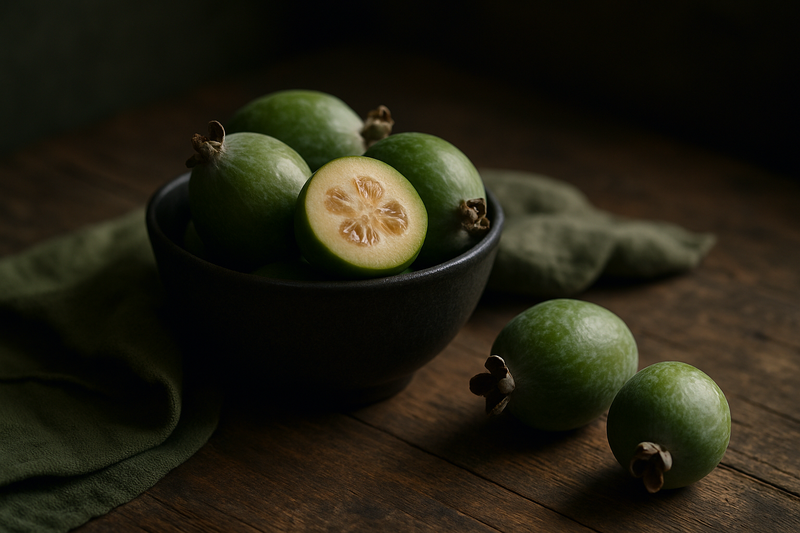
Feijoa · Photograph
Discover feijoa fruit health benefits and how to eat it — from its exceptional vitamin C and fiber content to its antioxidant-rich polyphenols. Learn nutrition facts, safe daily amounts, who should take caution, and simple ways to add this fragrant myrtle-family fruit to your whole food plant-based diet.
Key Nutrients
% Daily Value based on 2,000 cal diet
Key active compounds in feijoa
- Polyphenols (total phenolics): A broad class of plant compounds spanning phenolic acids, flavonoids, and tannins, found in both the peel and pulp. They act as antioxidants — molecules that neutralize unstable "free radicals" — and may modulate inflammatory pathways.
- Flavonoids (flavones, flavonols, flavan-3-ols): Subclasses of polyphenols that include compounds like apigenin, quercetin-like flavonols, catechins, and procyanidins B1 and B2. Linked to vascular protection and anti-inflammatory effects in experimental models.
- Anthocyanins (e.g., cyanidin-3-O-glucoside): Pigmented flavonoids found in feijoa flower and fruit extracts. Research on berry-rich diets suggests these may support vascular and cognitive health.
- Ellagic acid and ellagitannins: A family of polyphenols that show antioxidant and antiproliferative (cell-growth-limiting) activity in cell and animal studies.
- Vitamin C (ascorbic acid): A water-soluble antioxidant that regenerates oxidized polyphenols, supports immune function, collagen production, and iron absorption. Feijoa is notably high in this nutrient.
- Dietary fiber (soluble and insoluble): Contributes to stool bulk, feeds beneficial gut bacteria, and may slow glucose absorption from food.
Prep and pairing ideas
How to eat feijoa (the classic method): Wash the fruit, cut it in half lengthwise, and scoop out the creamy pulp with a teaspoon. The pulp has a soft, slightly grainy texture — think somewhere between a ripe pear and a kiwi — with a floral, tropical flavor. That's it. No peeling required.
Common pairings
- Feijoa + plain Greek yogurt + granola: The tartness and floral aroma of feijoa complement creamy yogurt beautifully. You also get a protein-fiber-probiotic combination that supports both satiety and gut health. Sprinkle on some granola for crunch and you have a balanced breakfast or snack.
- Feijoa + ginger + lemon in a smoothie: Blended feijoa pulp pairs well with fresh ginger and a squeeze of lemon. Ginger contributes its own anti-inflammatory gingerols, lemon adds more vitamin C, and the combination makes a bright, immune-supportive blend. Use whole feijoa (with pulp) rather than juice to keep the fiber intact.
- Feijoa + oats + cinnamon (overnight oats or porridge): The mild sweetness of feijoa works perfectly stirred into oats. Oats provide beta-glucan (a soluble fiber with strong cholesterol-lowering evidence), feijoa adds vitamin C and additional fiber, and cinnamon rounds out the flavor. This pairing layers complementary heart-health nutrients in one simple bowl.
Other ideas: Dice feijoa into a mango-avocado salsa for fish tacos, blend it into a salad dressing with lime and olive oil, or cook the peel down into a jam or chutney to use its polyphenol-rich skin without the raw astringency.
Myths vs facts about feijoa
Myth 1: "Feijoa is just a guava by another name." Fact: Feijoa (Acca sellowiana) and guava (Psidium guajava) are both in the myrtle family, but they're distinct species with different flavors, nutrient profiles, and phytochemical compositions. Feijoa has a notably floral, mintier aroma and a grainier pulp texture. They're botanical cousins, not the same fruit.
Myth 2: "You should throw away the feijoa skin — it's toxic or harmful." Fact: The skin is edible and actually contains more polyphenols and vitamin C than the pulp. It's not harmful; it's just astringent (the dry, mouth-puckering sensation caused by tannins). Most people find it unpleasant to eat raw, but cooking it into jam, chutney, or sauces mellows the astringency significantly.
Myth 3: "Feijoa cures digestive problems and boosts immunity." Fact: Feijoa can support digestive health through its high fiber content, and it can contribute to immune nutrition through its vitamin C — but "cures" and "boosts" overstate what the evidence shows. These are incremental contributions to an overall healthy dietary pattern, not medicinal effects from eating a single fruit.
Bottom line
Feijoa is a genuinely nutritious whole fruit that punches above its obscurity. Its fiber content rivals that of legumes (in serving terms), its vitamin C approaches the full adult daily requirement in a single cup, and its polyphenol profile — especially in the peel — is the subject of growing scientific interest.
The evidence base for feijoa's specific health effects in humans is still developing: most mechanistic research has been done in cells and animals using concentrated extracts, and large clinical trials are lacking. But as part of a whole food, plant-rich diet, feijoa is a low-risk, high-nutrient addition that contributes meaningfully to fiber, vitamin C, potassium, and antioxidant intake — all consistent with general dietary patterns linked to lower chronic disease risk.
Eat it scooped fresh from the skin, blend it into a smoothie, or pair it with oats in the morning. The skin deserves its own mention — if you can tolerate its astringency cooked down into a chutney or jam, you'll access a richer polyphenol dose than the pulp alone provides.
If you're managing a specific health condition, talk to a registered dietitian or your healthcare provider before making feijoa a large part of your diet.
Looking to build a more complete plant-rich eating plan? Browse Plantopedia's health goals guides for evidence-aligned frameworks that go beyond single ingredients.
How Feijoa Compares
| Compared with | What's different |
|---|---|
| Feijoa vs. Guava | Feijoas have a soft, jelly-like center and a tart, floral flavor compared to the sweet, musky guava. |
| Feijoa vs. Kiwi | Feijoas have a gritty, pear-like flesh and edible pulp, whereas kiwis have tiny edible seeds and green flesh. |
Health Benefits
Things to Know
Generally very safe at culinary amounts.: Feijoa is a whole food eaten widely in New Zealand, Australia, and parts of South America with no reported serious adverse effects from normal intake.
High fiber = start gradually.: If your current diet is low in fiber, adding large amounts of feijoa quickly can cause gas, bloating, or loose stools. Increase intake over one to two weeks.
Kidney disease / potassium restriction: People with advanced chronic kidney disease (CKD) or those on potassium-sparing diuretics should account for feijoa's potassium content within their overall diet. Discuss portion sizes with your healthcare team.
Diabetes and carbohydrate management: Feijoa contains natural sugars (roughly 37 g of total carbohydrate per cup). Whole fruit is preferable to juice. Work feijoa into your meal plan rather than treating it as a "free food."
Myrtaceae family allergy: If you have a known allergy to guava or other myrtle-family fruits, introduce feijoa cautiously and watch for allergic symptoms.
Pregnancy: Feijoa provides folate, a B vitamin critical for fetal neural tube development, and vitamin C, which supports iron absorption from plant foods. It's a nutritious choice during pregnancy, but get personalized guidance from your midwife or OB on meeting folate targets (food folate alone rarely replaces a dedicated prenatal supplement).
Medication interactions: No specific drug–feijoa interactions are documented. However: (1) its potassium content is relevant for those on potassium-sparing drugs; (2) its carbohydrates interact with glucose-lowering medications; (3) very high fiber diets can alter absorption timing of certain oral drugs (e.g., levothyroxine, some antidepressants) — if you're significantly increasing dietary fiber, discuss timing with your prescriber.
Antioxidant supplements: Feijoa is rich in vitamin C and polyphenols. If you're taking high-dose antioxidant supplements or enrolled in a clinical trial with dietary restrictions, disclose your feijoa intake to your care team.
Prep Ideas
- — **Feijoa + plain Greek yogurt + granola:** The tartness and floral aroma of feijoa complement creamy yogurt beautifully. You also get a protein-fiber-probiotic combination that supports both satiety and gut health. Sprinkle on some granola for crunch and you have a balanced breakfast or snack.
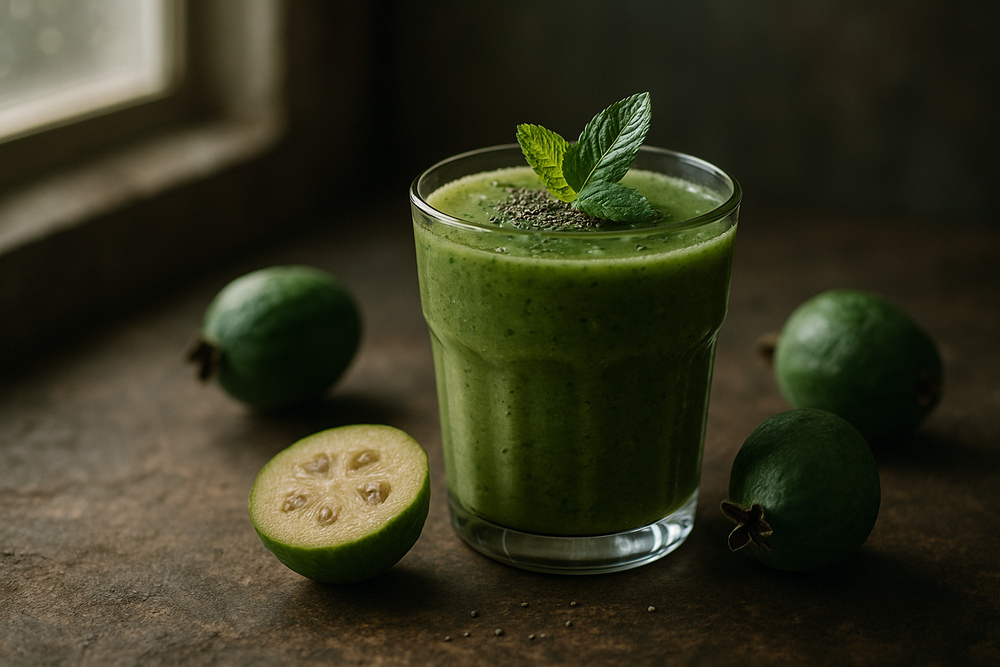
- — **Feijoa + ginger + lemon in a smoothie:** Blended feijoa pulp pairs well with fresh ginger and a squeeze of lemon. Ginger contributes its own anti-inflammatory gingerols, lemon adds more vitamin C, and the combination makes a bright, immune-supportive blend. Use whole feijoa (with pulp) rather than juice to keep the fiber intact.
- — **Feijoa + oats + cinnamon (overnight oats or porridge):** The mild sweetness of feijoa works perfectly stirred into oats. Oats provide beta-glucan (a soluble fiber with strong cholesterol-lowering evidence), feijoa adds vitamin C and additional fiber, and cinnamon rounds out the flavor. This pairing layers complementary heart-health nutrients in one simple bowl.
Shop This Ingredient
Stock your pantry with quality feijoa.
Buy on AmazonAs an Amazon Associate, Plantopedia earns from qualifying purchases. This costs you nothing extra and helps us keep the encyclopedia free.
Frequently Asked Questions
Research on feijoa's direct clinical effects in humans is still limited. The discussion below draws on its established nutrient content alongside available human, animal, and laboratory data — and clearly flags the evidence level for each area. Heart and circulation Feijoa can contribute to heart-healthy eating patterns largely through what it contains: dietary fiber, potassium, and polyphenol antioxidants. High dietary fiber intake is consistently linked in population studies to lower LDL cholesterol (the so-called "bad" cholesterol) and reduced cardiovascular risk. Potassium helps regulate blood pressure by counteracting sodium's effect on blood vessels — and feijoa provides 418 mg per cup, contributing toward the 2,600–3,400 mg daily target that research associates with lower hypertension risk. There are no large controlled human trials specifically testing feijoa intake against cardiovascular outcomes. In vitro (test-tube) studies show that phenol-rich feijoa extracts protect human red blood cells from oxidative stress and mercury-induced cellular damage, suggesting antioxidant effects that could theoretically benefit vascular health — but extracting a "dose" from those experiments and applying it to eating whole fruit isn't straightforward. Cardiovascular benefits for feijoa are currently inferred from its nutrient composition and general fruit-and-vegetable research rather than feijoa-specific outcome trials. Digestive health and microbiome At about 6.4 g of fiber per 100 g (or 15.6 g per cup), feijoa is one of the higher-fiber fruits you can eat. Dietary fiber adds bulk to stool, softens it, and speeds transit through the colon — processes consistently linked in human research to reduced constipation and lower colorectal disease risk. Feijoa contains both soluble fiber (which forms a gel-like substance and feeds gut bacteria) and insoluble fiber (which adds bulk). Early laboratory data also suggest that feijoa's polyphenols may exert prebiotic effects — meaning they could encourage the growth of beneficial gut bacteria while inhibiting certain pathogens. However, these findings come from cell and bacterial culture models, not human gut studies, so clinical relevance is not yet established. People with irritable bowel syndrome (IBS) or sensitive digestion should increase feijoa intake gradually to avoid gas or bloating. Blood sugar and metabolism No controlled human trials have directly evaluated feijoa for blood glucose management. What we do know is that feijoa's high fiber content — particularly its soluble fiber fraction — likely slows glucose absorption compared with lower-fiber, higher-sugar foods, which is consistent with how fiber-rich whole fruits behave in general. Cell-based (in vitro) research found that an aqueous (water-based) feijoa peel extract reduced oxidative stress and inflammatory signaling in endothelial cells (the cells lining blood vessels) exposed to excess glucose, while activating certain protective cellular pathways. These mechanistic findings are interesting but cannot yet be translated into dietary recommendations. For people managing diabetes or prediabetes, feijoa can fit into a carbohydrate-controlled meal plan as a whole fruit — but portion size still matters, since it does contain natural sugars. Inflammation and recovery Feijoa's anti-inflammatory potential is the most pharmacologically studied area to date, though the evidence remains largely pre-clinical. One animal study found that feijoa fruit juice significantly reduced carrageenan-induced paw swelling from the first hour through five hours, a standard model for testing anti-inflammatory activity. The same study showed that feijoa juice reduced superoxide anion generation (a type of damaging free radical) in neutrophils from human whole blood in vitro — suggesting direct antioxidant action on immune cells. Feijoa peel and pulp are rich in ellagitannins, catechins, and flavonols, all of which show anti-inflammatory activity in laboratory systems. These are promising early signals. Long-term human trials examining whether eating feijoa regularly lowers inflammatory biomarkers like C-reactive protein have not yet been conducted.
The freshest, least-processed form of feijoa — the whole scooped fruit — delivers the full package of fiber, vitamin C, polyphenols, and natural sugars in proportions that generally support good health. Here's how the common forms compare: Fresh whole fruit (halved and scooped): The classic approach. You get intact fiber, maximum vitamin C, and all the polyphenols the fruit offers. This is the preferred form for digestive and blood sugar benefits because the fiber structure is undisturbed. Chunks in a fruit salad or oatmeal bowl: Essentially the same nutrition as scooping, just cut differently. A great way to add feijoa to meals without prep complexity. Smoothie or purée: Blending retains fiber but physically breaks down the fruit's cell structure, which may slightly increase the speed at which natural sugars hit the bloodstream compared to eating whole pieces. Still a nutritious option, especially for picky eaters or people who dislike the slightly gritty texture. Juice: Removes most fiber and concentrates sugars. Animal studies have used feijoa juice to demonstrate anti-inflammatory effects, but for everyday health — especially blood sugar management — whole fruit or smoothies with pulp are generally preferable to juice. Dried fruit or powder: More calorie- and sugar-dense per gram. Useful for adding to trail mixes or baked goods, but treat as a concentrated form rather than a direct swap for fresh feijoa. The skin / peel: Technically edible and scientifically impressive — feijoa peel contains substantially higher concentrations of polyphenols and vitamin C than the pulp. However, it's quite astringent (the dry, puckering sensation from tannins), so most people discard it or use it in cooked jams and preserves. If you can tolerate the taste, cooking the peel into a sauce or chutney is a practical way to capture its phytonutrient density.
There is no established clinical dose for feijoa — it's a food, not a pharmaceutical. A practical and nutritionally meaningful intake for most healthy adults is 1 to 3 medium fruits per day (roughly 50–150 g of pulp), or up to about 1 cup (200–250 g) of scooped pulp as part of a varied diet. At 1 cup, you're getting close to the full adult Recommended Dietary Allowance (RDA) for vitamin C in one serving, and roughly half your daily fiber target. That's a substantial nutritional contribution without being excessive in carbohydrates for most people. Start low if feijoa is new to you. Begin with half a fruit or one small fruit per day for the first week, especially if your current fiber intake is low. This gives your digestive system time to adjust and reduces the risk of bloating or loose stools. For people managing diabetes or blood sugar: A serving of one medium feijoa (about 50–75 g) is a reasonable starting point. Prioritize whole fruit over juice, and factor feijoa's carbohydrate content into your overall meal planning rather than treating it as a "free" food. Feijoa season is short (typically autumn in the Southern Hemisphere, or October through December in New Zealand). Fresh feijoa is best eaten within a few days of picking. Store at room temperature if eating soon, or refrigerate for up to a week. Overripe feijoas develop a strong fermented flavor — not harmful, but not pleasant.
Quick Answers
Common questions, answered in a line.
You can eat the feijoa skin, which is safe and contains higher concentrations of polyphenols and vitamin C than the pulp. While edible, the raw skin is often described as astringent or mouth-puckering, so many people prefer to cook it into jams or chutneys to mellow the flavor.
The easiest way to eat a feijoa is to wash the fruit, cut it in half lengthwise, and scoop out the creamy pulp with a teaspoon. The texture of the pulp is described as soft and slightly grainy, similar to a cross between a ripe pear and a kiwi.
No, feijoa and guava are distinct species within the myrtle family, though they are botanical cousins. Feijoa (Acca sellowiana) has a more floral, minty aroma and a grainier pulp texture compared to the common guava (Psidium guajava).
Feijoa is a nutritious choice during pregnancy because it provides folate for fetal neural tube development and vitamin C to help with iron absorption. However, pregnant individuals should still consult a healthcare provider to ensure they meet folate targets through supplements.
People with advanced chronic kidney disease or those taking potassium-sparing diuretics should be cautious with feijoa due to its potassium content. Additionally, those with allergies to the Myrtaceae (myrtle) family or those on a low-fiber diet should introduce it gradually.
Feijoa pairs well with Greek yogurt and granola for a balanced breakfast, or it can be blended into smoothies with ginger and lemon. It is also an excellent addition to oats or porridge, as the mild sweetness complements the fiber-rich beta-glucans in the oats.
Feijoa is an excellent source of vitamin C, dietary fiber, and various polyphenols like flavonoids and ellagic acid. A single cup of the fruit can provide nearly the full daily adult requirement for vitamin C, supporting immune function and collagen production.
For Readers in the USA
Local context — sourcing, seasonality, and regional notes.
Feijoas are primarily grown in California and the Pacific Northwest, with a harvest season typically running from September through January. While they are hardy enough for USDA zones 8 through 11, the most consistent commercial crops come from the mild coastal climates of the West Coast.
In the U.S., you are most likely to find feijoas at West Coast farmers markets, specialty retailers like Whole Foods, or through online nurseries that ship fresh fruit. Because they have a very short shelf life and bruise easily, they are rarely found in standard inland grocery chains like Kroger or Publix.
Feijoa is most commonly referred to as "Pineapple Guava" in American garden centers and nurseries. While it is not a true guava, this name is the standard label used by US growers to describe the fruit's unique tropical fragrance and appearance.
AI Clinical Review
- Feijoa is accurately presented as a fiber- and vitamin C–rich fruit; the cited per-cup amounts align with common nutrition databases and explain why it supports everyday intake gaps.
- The piece fairly describes polyphenol content (especially in the peel) and frames antioxidant/anti‑inflammatory findings as preliminary rather than proven in people.
- Heart and digestive benefits are appropriately tied to known effects of fiber, potassium, and overall fruit-rich eating patterns rather than feijoa-specific clinical claims.
- Practical guidance on forms (whole fruit vs. juice) correctly notes that keeping the pulp/fiber is better for blood sugar and satiety.
- Human trials specifically testing feijoa on cholesterol, blood pressure, inflammatory markers, or glycemia are limited; most data come from cell and animal (preclinical) models or concentrated extracts.
- Proposed prebiotic, antimicrobial, and endothelial-protective actions are mechanistic signals; translation to meaningful clinical outcomes and effective food-based “doses” is not established.
- Polyphenol levels vary by cultivar, ripeness, and whether the peel is eaten or cooked, so real-world intake and effects are likely variable.
- A practical serving is 1–3 medium fruits or up to ~1 cup (200–250 g) pulp per day; if you’re new to high-fiber fruits, increase gradually to minimize gas or bloating.
- For diabetes or carbohydrate-sensitive eating, prioritize whole fruit (or smoothies retaining pulp) over juice, and count feijoa’s carbs toward your meal plan.
- The potassium content is relevant for people with advanced chronic kidney disease or those on potassium‑sparing medications—check in with your clinician about portion sizes.
- Allergy caution for those sensitive to other myrtle-family fruits (e.g., guava). In pregnancy, feijoa can contribute folate and vitamin C but does not replace a prenatal supplement; discuss with your prenatal care team.
Generally very safe; skin is edible but astringent.
References
- USDA FoodData Central — Feijoa, raw (FDC ID 168176), nutrition data (fdc.nal.usda.gov)
- MyPlate fruit group guidance — U.S. dietary recommendations for fruit intake (myplate.gov)
- Nutritional characteristics and antimicrobial activity of Australian-grown feijoa — peer-reviewed study in Antioxidants (PMC, 2019) (pmc.ncbi.nlm.nih.gov)
- Feijoa sellowiana fruit juice: anti-inflammatory effect and activity on superoxide anion generation — Journal of Medicinal Food (PubMed, 2020) (pubmed.ncbi.nlm.nih.gov)
- Phenol-rich feijoa extracts protect human red blood cells from mercury-induced cellular toxicity — antioxidant and cell-protection study (PMC) (pmc.ncbi.nlm.nih.gov)
- Feijoa peel extract under glucose overload — endothelial cell safety and metabolic effects study (PubMed, 2024) (pubmed.ncbi.nlm.nih.gov)
- Fighting multidrug resistance with feijoa fruit extract — anti-cancer and anti-biofilm activities (Applied Sciences, 2020) (mdpi.com)
- Feijoa sellowiana: characteristics and pharmacological properties — narrative review summarizing polyphenolic profile and health activities (pmc.ncbi.nlm.nih.gov)
- WebMD consumer health overview — health benefits of feijoa (general summary) (webmd.com)
- Feijoa sellowiana: an amazing source of bioactive compounds — narrative review on polyphenol content and potential health effects (PMC) (pmc.ncbi.nlm.nih.gov)
Know Your Numbers
Eating healthy is a start. Now get to know your biomarkers.
Food changes bloodwork — inflammation, lipids, blood sugar and nutrient status all respond to what you eat. 59 markers from $59.
- Results in 7–10 days at 2,000+ Quest sites
- Licensed provider reviews every result
- One flat price, no membership, HSA/FSA eligible
Educational information only, not medical advice. Panels are ordered and reviewed through our licensed partner; Plantopedia may earn a commission.