Oat Groats — health benefits and uses
The least-processed form of oats, closest to how the grain grows in the field.
The Short Answer
Oat groats are the whole, minimally processed kernels of the oat plant, containing 5g of protein and 5g of fiber per half-cup serving. They provide a chewy texture and significant amounts of beta-glucan, a soluble fiber that supports heart health and blood
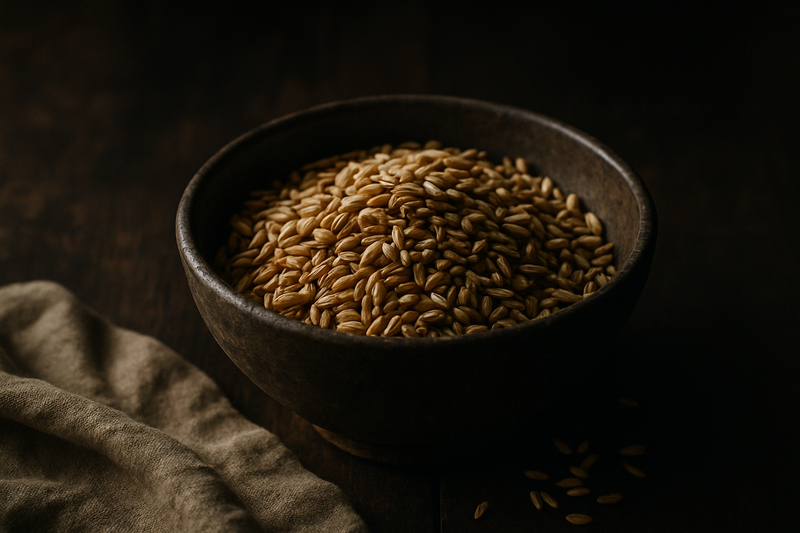
Oat Groats · Photograph
Discover the science-backed oat groats health benefits and how to cook them for the chewiest whole-grain texture. Learn how beta-glucan in intact oat kernels supports heart health, blood sugar, and digestion, plus nutrition facts, safety tips, and easy recipe ideas.
Key Nutrients
% Daily Value based on 2,000 cal diet
Key active compounds in oat groats
- Beta-glucan — A soluble, viscous polysaccharide (a long-chain carbohydrate that dissolves and thickens in liquid) making up roughly 3–8% of dry oat weight. Forms a gel in the gut that slows digestion, binds bile acids (cholesterol-carrying molecules), and feeds beneficial gut bacteria.
- Avenanthramides — Polyphenolic antioxidants (plant pigments with protective properties) found almost exclusively in oats. May reduce oxidative stress and inflammation.
- Phenolic acids — A broader group of antioxidant plant compounds, including ferulic acid, that contribute to oats' anti-inflammatory profile.
- Phytoestrogens — Plant compounds with mild estrogen-like activity. Present in whole oats but their specific clinical role is not yet well established.
- Resistant starch — A portion of oat starch that escapes digestion in the small intestine and ferments in the colon, feeding beneficial gut bacteria.
Prep and pairing ideas
Basic cooking method: Rinse groats under cold water. Combine 1 cup dry groats with 3 cups water or broth in a pot. Bring to a boil, reduce to a low simmer, cover, and cook 45–60 minutes until tender but still chewy. Drain any excess liquid. Yield: approximately 2.5–3 cups cooked.
Overnight soak shortcut: Soak groats in water overnight in the fridge. Drain, then cook in fresh water for 25–35 minutes. Same chewy result, less active time.
Instant Pot / pressure cooker: 1 cup groats + 2.5 cups water, high pressure for 25–30 minutes. Natural release.
3 practical pairings and why they work
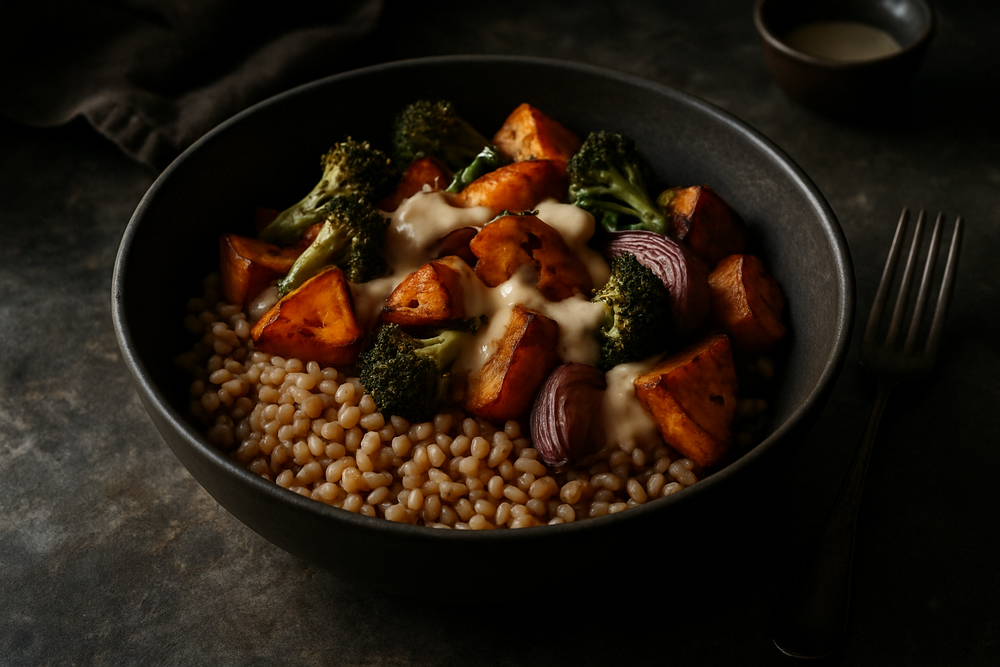
- Oat groats + roasted vegetables + tahini dressing — Groats act as the grain base in a warm bowl. Their neutral, slightly nutty flavour lets roasted cauliflower, sweet potato, or beets take the lead. Tahini adds healthy fats that help absorb fat-soluble vitamins from the vegetables.
- Oat groats + legumes (lentils, chickpeas) + leafy greens — Combining oats (incomplete plant protein) with legumes (complementary amino acid profile) creates a more complete protein meal. The vitamin C in leafy greens helps your body absorb the non-heme iron in oats more efficiently.
- Breakfast groat bowl + berries + ground flaxseed — Cook groats overnight in a slow cooker for a morning porridge. Top with blueberries (additional antioxidants) and ground flaxseed (extra omega-3s and lignans). A heartier, lower-glycemic alternative to instant oats.
Buying guide: choosing the right oat groats
Fresh / bulk bin groats: Look for whole, plump kernels with a golden-tan colour. Bulk bins carry a higher cross-contamination risk for people with celiac disease — avoid them and opt for sealed, labeled bags instead.
Packaged oat groats: Check that "whole oat groats" or "oat berries" is the only ingredient. No additives needed.
Certified gluten-free label: If you have celiac disease or gluten sensitivity, this label is non-negotiable. Look for the Gluten-Free Certification Organization (GFCO) symbol or equivalent third-party certification — not just a brand's own claim.
Organic vs. conventional: Both are nutritionally similar. Choose organic if pesticide residue is a concern for you. Either way, rinsing before cooking is good practice.
Storage: Store dry groats in an airtight container in a cool, dark pantry for up to 12 months, or in the freezer for longer. Cooked groats keep in the fridge for 4–5 days and reheat well with a splash of water.
Bottom line
Oat groats are the whole, intact oat kernel — the most minimally processed form of oats you can eat. They are nutritionally equivalent to other whole oat forms per gram but have a uniquely chewy, satisfying texture that opens up a wider range of culinary uses beyond porridge.
The strongest evidence supports oat groats — via their beta-glucan content — for lowering LDL cholesterol (moderate to strong evidence from multiple meta-analyses) and blunting post-meal blood sugar spikes (moderate evidence from clinical trials). Benefits for digestion, inflammation, and broader metabolic health are supported by plausible mechanisms and broader whole-grain research, though fewer trials have tested groats specifically.
They are not a cure for any condition, and their benefits depend on overall diet quality, portion size, and consistency. But as a whole-food, high-fiber grain that most people can cook, afford, and genuinely enjoy eating, oat groats are one of the better-evidenced additions to a plant-forward eating pattern.
Explore how whole grains fit into your broader health goals at /goals.
How Oat Groats Compares
| Compared with | What's different |
|---|---|
| Oat Groats vs. Steel-Cut Oats | Steeled-cut oats are groats chopped into pieces for a 20-minute cook time instead of 45-60 minutes. |
| Oat Groats vs. Rolled Oats | Rolled oats are steamed and flattened, resulting in a soft texture compared to the chewy, intact kernel of groats. |
Health Benefits
Things to Know
Celiac disease and gluten sensitivity: Oats are naturally gluten-free, but they are very commonly cross-contaminated with wheat, barley, or rye during farming and milling. If you have celiac disease or non-celiac gluten sensitivity, you must choose certified gluten-free oat groats and confirm with your healthcare provider whether oats are appropriate for your situation.
GI adjustment: Rapidly increasing high-fiber whole grains like groats can cause temporary gas, bloating, or looser stools. Start with a smaller portion (2–3 tablespoons dry) and increase gradually over 2–4 weeks. Drink adequate water.
Blood sugar medication: If you take insulin, sulfonylureas, GLP-1 agonists, or other glucose-lowering drugs, significantly increasing oat intake could enhance glycemic control and potentially increase the risk of low blood sugar (hypoglycemia). Monitor your levels and inform your provider.
Cholesterol medication: Regular oat consumption delivering ≥3 g/day of beta-glucan may further reduce LDL cholesterol alongside statins or other lipid-lowering drugs. Your provider may want to monitor lipids and adjust dosing.
Narrow-window medications: High-fiber meals can modestly delay absorption of some drugs. If you take thyroid hormones, certain antibiotics, or other medications with strict timing requirements, spacing them away from high-fiber meals may be advisable — ask your pharmacist.
Inflammatory bowel conditions: People with active inflammatory bowel disease (IBD) or significant gastrointestinal narrowing may need to avoid or limit intact whole grains like groats during flares. Check with your gastroenterologist.
Oat allergy: Rare but possible. If you have multiple cereal grain allergies, introduce oats cautiously.
Pregnancy: Oats are generally considered safe during pregnancy and contribute useful folate and iron. Certified gluten-free versions remain necessary for those with celiac disease.
Prep Ideas
- — Oat groats + roasted vegetables + tahini dressing — Groats act as the grain base in a warm bowl. Their neutral, slightly nutty flavour lets roasted cauliflower, sweet potato, or beets take the lead. Tahini adds healthy fats that help absorb fat-soluble vitamins from the vegetables.
- — Oat groats + legumes (lentils, chickpeas) + leafy greens — Combining oats (incomplete plant protein) with legumes (complementary amino acid profile) creates a more complete protein meal. The vitamin C in leafy greens helps your body absorb the non-heme iron in oats more efficiently.
- — Breakfast groat bowl + berries + ground flaxseed — Cook groats overnight in a slow cooker for a morning porridge. Top with blueberries (additional antioxidants) and ground flaxseed (extra omega-3s and lignans). A heartier, lower-glycemic alternative to instant oats.
Glossary
Shop This Ingredient
Stock your pantry with quality oat groats.
Buy on AmazonAs an Amazon Associate, Plantopedia earns from qualifying purchases. This costs you nothing extra and helps us keep the encyclopedia free.
Frequently Asked Questions
Heart health and cholesterol This is where the evidence for oats is strongest and most consistent. Multiple meta-analyses (studies that pool data from many clinical trials) show that consuming around 3 grams of oat beta-glucan per day — achievable from roughly 60–75 g of whole oats — reduces LDL cholesterol (often called "bad" cholesterol) by approximately 4–10% without lowering HDL ("good") cholesterol. The mechanism is well understood: beta-glucan forms a thick gel in the digestive tract that traps bile acids. Bile acids are made from cholesterol and are normally reabsorbed. When fiber carries them out of the body instead, the liver pulls more cholesterol from the bloodstream to make new bile acids, which lowers circulating LDL. One randomized controlled trial (a study where participants are randomly assigned to different groups) found that adults with borderline-high LDL who drank a beverage providing 3 g of high-molecular-weight beta-glucan daily for four weeks reduced their LDL by about 6% and their estimated cardiovascular disease risk by about 8%. Important nuance: most trials use oat bran, ready-to-eat oat cereals, or beta-glucan concentrates rather than oat groats specifically. However, groats contain the same beta-glucan and can deliver equivalent amounts when eaten in similar quantities. Evidence is robust for lowering lipid risk markers; direct trials measuring heart attack or stroke events are more limited. Digestive health and microbiome Beta-glucan is a fermentable fiber, meaning gut bacteria break it down in the colon, producing short-chain fatty acids (SCFAs) — small molecules that nourish the cells lining the gut, support a balanced microbiome (the community of microorganisms in the digestive tract), and may reduce gut inflammation. National dietary guidelines and major health organizations consistently link adequate whole-grain and fiber intake to better bowel regularity and a reduced risk of constipation. Most of the digestive evidence comes from studies on dietary fiber broadly and fermentable fibers specifically, rather than from trials focused on oat groats alone. Still, the mechanism is solid, and many people notice softer, more regular stools when they add oats to their diet gradually. Blood sugar and metabolism A 2021 meta-analysis of randomized controlled trials found that oat beta-glucan consumed with carbohydrate-containing meals reduced the post-meal blood glucose spike (measured as incremental area under the curve) by roughly 22–28% compared with control meals. Peak blood glucose and insulin levels were also meaningfully lower. Regulatory bodies in several countries now recognize that foods providing at least 4 g of oat or barley beta-glucan per 30 g of available carbohydrates can reduce postprandial (after-meal) glycemic response. The logic: the viscous gel that beta-glucan forms slows the emptying of the stomach and the rate at which sugars are absorbed into the bloodstream. This is a buffering effect, not a cure for any condition. What the evidence doesn't yet fully show: long-term reductions in HbA1c (a three-month average of blood glucose), diabetes medication reduction, or reversal of diabetes. Oat groats may support metabolic health as part of a balanced diet — not as a standalone treatment. Inflammation and recovery Oats' avenanthramides and other phenolic compounds act as antioxidants, mopping up reactive oxygen species (unstable molecules that can damage cells). Observational studies (studies that track people's habits and outcomes without intervention) link higher whole-grain intake to lower levels of inflammatory markers in the blood. Beta-glucan fermentation also produces SCFAs that have anti-inflammatory properties in the gut. This evidence is the weakest of the four areas. Few randomized trials have specifically measured inflammatory biomarkers in response to whole oat groats, so the anti-inflammatory claim should be considered emerging and mechanistically plausible rather than firmly proven. Hormones and metabolism Oats' soluble fiber slows gastric emptying (how fast food leaves your stomach), which influences satiety hormones — the gut-brain signaling chemicals that tell you you're full. Trials measuring glucose and insulin responses also capture part of this picture. However, direct human trials measuring oat groats' effect on hormones like ghrelin, GLP-1, or reproductive hormones are sparse. Any hormone-related benefits are currently inferred from metabolic outcomes and mechanism rather than directly measured in robust clinical trials.
All forms of oats start as the same groat. The difference is how much processing happens afterward: | Form | How it's made | Texture | Beta-glucan per gram | | --- | --- | --- | --- | | Oat groats | Hull removed, nothing else | Chewy, rice-like (45–60 min cook) | Similar to other forms | | Steel-cut oats | Groats cut into 2–4 pieces | Chewy, hearty (20–30 min) | Similar | | Rolled oats | Steamed and flattened | Soft, creamy (5–10 min) | Similar | | Oat bran | Outer bran layer only | Fine, soft | Higher per gram (concentrated) | Per gram of dry weight, beta-glucan content is broadly similar across groats, steel-cut, and rolled oats. Oat bran is the exception — it's concentrated from the bran layer and delivers more beta-glucan per gram, which is why it's used most often in clinical trials. The main difference with groats is texture and cooking time, not nutritional superiority. Their intact structure means digestion may be slightly slower, which could give a modest additional advantage for satiety and glycemic steadiness — but direct head-to-head trials confirming this are limited. If you're choosing between oat forms purely for convenience, any whole oat form will deliver meaningful beta-glucan. If you enjoy the chewy texture and want to use oats like rice or barley, groats are excellent.
Most of the clinical evidence for cardiovascular and glycemic benefits centers on consuming at least 3 grams of oat beta-glucan per day. In practical terms: 60–75 g of dry whole oat groats (roughly ½ cup dry) provides approximately 3 g of beta-glucan. A more modest portion of 40 g dry (¼ cup) provides approximately 1.5–2 g of beta-glucan and still contributes meaningfully to your daily fiber target. Starting point for beginners: 2–3 tablespoons dry groats as part of a mixed meal, increasing gradually. Most national guidelines recommend 25–38 g of total dietary fiber per day for adults (the range varies by age and sex). A serving of oat groats contributes about 5 g, which is a useful chunk but not sufficient on its own — pair with vegetables, fruits, legumes, and other whole grains across the day. There is no established upper limit for whole oat groats in healthy adults, but very high fiber intake without adequate fluid can cause digestive discomfort and may affect medication absorption (see cautions above). Eating oat groats daily is considered safe and appropriate for most healthy adults. If you have a specific health condition, ask your provider for personalized guidance.
Quick Answers
Common questions, answered in a line.
Oat groats are the whole, intact kernels of the oat plant and represent the most minimally processed form of oats available. They contain the cereal germ, endosperm, and fiber-rich bran, offering a uniquely chewy texture compared to rolled or instant varieties.
To cook oat groats, combine 1 cup of rinsed groats with 3 cups of water or broth, bring to a boil, and simmer for 45–60 minutes. The kernels are done when they are tender yet chewy; simply drain any excess liquid before serving.
Oat groats are naturally gluten-free, but they are frequently cross-contaminated with wheat, barley, or rye during farming and processing. Individuals with celiac disease or gluten sensitivity must look for a certified gluten-free label to ensure safety.
Beta-glucan is a soluble, viscous fiber in oats that forms a gel in the gut to slow digestion, bind cholesterol-carrying bile acids, and feed beneficial bacteria. It makes up roughly 3–8% of the dry weight of oat groats and is primary to their heart-health benefits.
You can shorten the cooking time for oat groats by soaking them in water overnight in the refrigerator. After draining the soak water, the groats will only require 25–35 minutes of simmering in fresh water to reach the desired chewy texture.
Oat groats provide a higher-fiber, lower-glycemic alternative to instant oats, which helps blunt post-meal blood sugar spikes. They also contain avenanthramides, which are unique antioxidants that may reduce oxidative stress and inflammation.
Store dry oat groats in an airtight container in a cool, dark pantry for up to 12 months, or place them in the freezer for longer shelf life. Cooked groats can be kept in the refrigerator for 4–5 days and easily reheated with a splash of water.
For Readers in the USA
Local context — sourcing, seasonality, and regional notes.
You can buy oat groats at major U.S. retailers like Whole Foods Market, Sprouts Farmers Market, and Trader Joe's, or in the bulk sections of local food cooperatives. Large chains like Kroger and Wegmans often stock them in the natural foods or specialty grain aisle under brands like Bob's Red Mill.
In the U.S., most oats are grown in the Northern Plains states, including North Dakota, South Dakota, and Minnesota, with the primary harvest occurring in late summer from July through September. Because they are shelf-stable kernels, they remain widely available and "in season" at American markets year-round.
Look for the USDA Organic seal to ensure the oats were grown without synthetic fertilizers or prohibited pesticides like glyphosate. While the FDA regulates general labeling, third-party certifications like the GFCO symbol are the American gold standard for verifying oats are safe for those with celiac disease.
While "oat groats" is the standard term, you may see them sold in U.S. specialty stores as "whole oat berries" or "hulled oats." They are distinct from "steel-cut oats" (also called Irish oatmeal), which are groats that have been chopped into smaller pieces for faster cooking.
AI Clinical Review
- Clearly explains that oat groats are the least processed form of oats and therefore a true whole grain with intact bran, endosperm, and germ.
- Accurately highlights beta-glucan (about 3–8% of oat dry weight) as the key soluble fiber linked to LDL cholesterol reduction; the practical target of ~3 g/day is consistent with clinical trials.
- Appropriately notes that beta-glucan can blunt post-meal blood sugar spikes by slowing digestion and absorption.
- Provides realistic cooking guidance and useful swaps (e.g., as a rice alternative) without overstating nutritional superiority over other whole-oat forms.
- Most intervention trials use oat bran, cereals, or isolated beta-glucan—not whole groats—so benefits for groats are inferred; head-to-head groat trials are limited.
- Strongest data concern lipid markers (LDL) rather than hard outcomes like heart attacks; long-term event data remain sparse.
- Evidence for anti-inflammatory effects and hormone signaling (e.g., GLP-1, ghrelin) is mechanistic or small-scale; robust human trials with groats are limited.
- Microbiome benefits are plausible via fermentable fiber and short-chain fatty acids, but groat-specific human data are still emerging.
- Dose and consistency matter: ~60–75 g dry groats (about 1/2 cup) typically provides ~3 g beta-glucan; smaller daily portions still help fiber intake.
- Gluten concerns: oats are naturally gluten‑free but frequently cross-contaminated—people with celiac disease should choose certified gluten‑free groats, and a small subset may react to avenin.
- Medications: high‑fiber meals can delay absorption of certain drugs (e.g., levothyroxine, some antibiotics); those on glucose‑lowering meds should monitor for improved glycemia, and oat intake may complement LDL‑lowering therapy—discuss timing and monitoring with your clinician or pharmacist.
- GI tolerance: introduce gradually with fluids to minimize gas/bloating; individuals with active IBD or intestinal strictures may need to limit intact grains during flares and personalize intake.
Long cooking time; choose certified gluten-free if celiac.
References
- USDA FoodData Central — whole oats nutrient data (fdc.nal.usda.gov)
- MyPlate Grains Group — whole grain recommendations (myplate.gov)
- Meta-analysis: oat beta-glucan and LDL cholesterol reduction (pubmed.ncbi.nlm.nih.gov)
- Meta-analysis: separate effects of whole oats vs isolated beta-glucan on lipid profile (pubmed.ncbi.nlm.nih.gov)
- Meta-analysis: oat β-glucan on LDL, non-HDL, and apoB (pubmed.ncbi.nlm.nih.gov)
- RCT: oat beta-glucan beverage reduces LDL and cardiovascular risk (pubmed.ncbi.nlm.nih.gov)
- Meta-analysis: oat beta-glucan and postprandial blood glucose and insulin (pubmed.ncbi.nlm.nih.gov)
- Review: oat intake and risk of type 2 diabetes, CVD, and all-cause mortality (boris.unibe.ch)
- Review: beta-glucan content and effective dose from whole oats and oat bran (pmc.ncbi.nlm.nih.gov)
- Harvard Nutrition Source — Oats feature (nutritionsource.hsph.harvard.edu)
- Mayo Clinic — dietary fiber and health (mayoclinic.org)
Know Your Numbers
Eating healthy is a start. Now get to know your biomarkers.
Food changes bloodwork — inflammation, lipids, blood sugar and nutrient status all respond to what you eat. 59 markers from $59.
- Results in 7–10 days at 2,000+ Quest sites
- Licensed provider reviews every result
- One flat price, no membership, HSA/FSA eligible
Educational information only, not medical advice. Panels are ordered and reviewed through our licensed partner; Plantopedia may earn a commission.