Brown Basmati Rice — health benefits and uses
Basmati has been cultivated in the Himalayan foothills for centuries and prized in Ayurvedic cooking.
The Short Answer
Brown basmati rice is a whole-grain aromatic rice that provides 3g of protein and 2g of fiber per cooked cup. It is distinguished by its low-to-medium glycemic index and high concentration of manganese and magnesium.
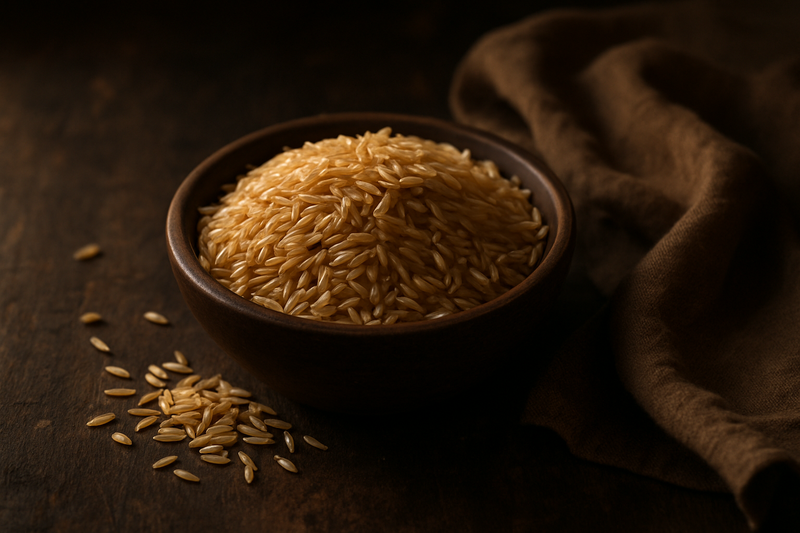
Brown Basmati Rice · Photograph
Discover the brown basmati rice health benefits backed by research — from heart health and blood sugar support to digestion. Includes full nutrition facts, arsenic safety tips, and easy pilaf and biryani ideas.
Key Nutrients
% Daily Value based on 2,000 cal diet
Key active compounds in brown basmati rice
- Dietary fiber — primarily insoluble fiber from the bran, which adds bulk to stools, feeds beneficial gut bacteria, and slows the digestion of starch.
- Phenolic acids (e.g., ferulic acid) — antioxidant compounds concentrated in the bran layer; may help reduce oxidative stress (cellular damage from unstable molecules called free radicals) and modulate inflammatory pathways.
- Gamma-oryzanol — a unique mixture of plant compounds found in rice bran that may influence blood lipid (fat in the blood) levels and vascular health in experimental models.
- Phytosterols — plant-derived compounds structurally similar to cholesterol that compete with cholesterol for absorption in the gut, potentially helping to lower LDL ("bad") cholesterol modestly.
- Lignans — polyphenolic compounds found in small amounts in whole grains; gut bacteria convert them into bioactive forms that may have mild antioxidant and anti-inflammatory effects.
- B vitamins (thiamin, niacin, B6) — partially retained because the bran and germ are intact; support energy metabolism and nervous system function.
- Magnesium and manganese — minerals abundant in whole grains; involved in enzyme activity, energy production, and blood pressure regulation.
Prep and pairing ideas
Brown basmati rice takes slightly longer to cook than white basmati (typically 35–45 minutes stovetop, or 25–30 minutes after a 30-minute soak) and comes out with a pleasantly chewy texture and nutty aroma that makes it a natural base for hearty dishes.
Three practical pairings:
- Brown basmati + lentils (dal) + turmeric — A classic South Asian combination. Lentils add plant protein and folate, and together with the rice they provide a complete amino acid profile (all the essential building blocks of protein your body needs). Turmeric contributes curcumin, an anti-inflammatory compound studied in its own right. This trio forms the foundation of a nutritionally balanced, naturally gluten-free meal.
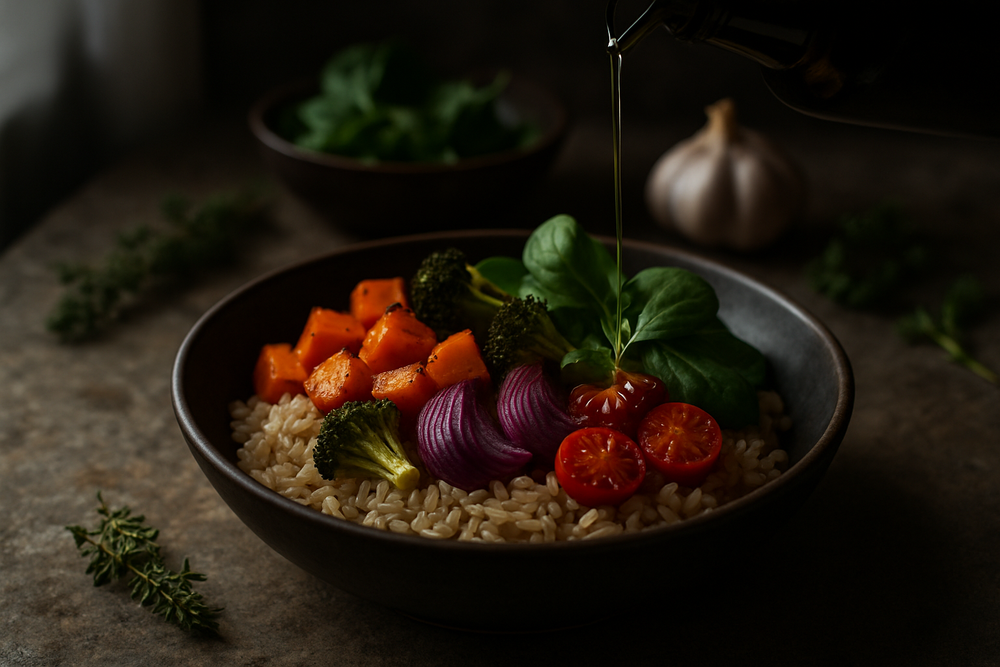
- Brown basmati + roasted vegetables + olive oil herb dressing — Perfect as a grain bowl base. The fiber in the rice plus the polyphenols (plant antioxidants) from colorful vegetables creates a nutrient-dense meal. The small amount of healthy fat from olive oil helps absorb fat-soluble vitamins like vitamin K from the vegetables.
- Brown basmati + chickpeas + warming spices (cumin, coriander, cinnamon) — The combination of a whole grain and a legume in a biryani-style dish slows overall digestion, which may blunt the post-meal blood sugar rise compared with rice alone. Chickpeas also add extra fiber and protein, supporting satiety (the feeling of fullness).
Basic stovetop method: Rinse 1 cup of brown basmati rice under cold running water until water runs mostly clear. Optional: soak in cold water for 30 minutes, then drain. Add to a pot with 2–2½ cups of fresh water and a pinch of salt. Bring to a boil, reduce to a low simmer, cover, and cook for 35–40 minutes until water is absorbed. Rest covered for 5 minutes, then fluff with a fork.
Bottom line
Brown basmati rice is a genuinely useful whole grain — flavorful enough to make healthy eating feel like a pleasure rather than a chore. The bran and germ it retains compared with white basmati rice deliver meaningful amounts of fiber, manganese, magnesium, B vitamins, and a range of plant compounds linked in large human studies to lower risk of heart disease, type 2 diabetes, and early death. The evidence is strongest for whole grains as a dietary category rather than brown basmati rice specifically, and the benefits depend on overall dietary pattern rather than any single food.
The one real caution worth knowing is arsenic. Brown rice carries trace levels of inorganic arsenic in its bran — higher than white rice. For most healthy adults eating varied diets, this is manageable by rinsing well, cooking in excess water, and rotating with other whole grains. For infants, young children, and pregnant individuals, extra care is warranted.
Swap white basmati for brown in your next pilaf or dal, keep portions sensible, vary your whole grains across the week, and you will be making one of the simplest, most evidence-aligned upgrades available in any kitchen.
Explore more whole-food eating strategies at Plantopedia Goals.
How Brown Basmati Rice Compares
| Compared with | What's different |
|---|---|
| Brown Basmati Rice vs. White Basmati Rice | Higher fiber and mineral content with a nuttier, firmer texture than its refined counterpart. |
| Brown Basmati Rice vs. Brown Jasmine Rice | Longer, slimmer grains that remain separate and fluffy rather than clumping like short-grain rice. |
| Brown Basmati Rice vs. Brown Long-Grain Rice | Lower fiber content and a shorter, starchier grain compared to the aromatic, long-grain basmati. |
Health Benefits
Things to Know
Arsenic in brown rice: Brown rice, including brown basmati, can carry slightly higher levels of inorganic arsenic than white rice because arsenic accumulates in the bran layer. The U.S. FDA has issued guidance on limiting rice-based cereals for infants due to arsenic exposure. For adults, the practical advice is to rinse rice thoroughly under running water, cook in a larger volume of water than needed (e.g., a 6:1 water-to-rice ratio) and drain the excess, and rotate brown basmati with other whole grains such as oats, quinoa, millet, and barley.
Infants and toddlers: FDA guidance advises parents to vary grain offerings and not rely heavily on rice-based products as a staple; this is especially important for young children whose smaller body weight means relatively higher exposure per kilogram.
Pregnancy and breastfeeding: Brown basmati is a nutritious choice, but diversifying grains is recommended to minimize cumulative arsenic exposure during these sensitive periods.
Diabetes and metabolic syndrome: Brown basmati is a better choice than white rice, but it is still a carbohydrate-dense food. Coordinate portion sizes and meal timing with a healthcare provider or dietitian.
Chronic kidney disease (CKD): People with CKD may need to manage mineral intake carefully; the phosphorus, potassium, and protein in brown rice can be factors depending on disease stage — personalized guidance is essential.
Inflammatory bowel disease (IBD) flares or low-fiber diets: During active flares of conditions like Crohn's disease or ulcerative colitis, or when a low-fiber diet has been prescribed, lower-fiber grains (including white rice) may be better tolerated temporarily.
Celiac disease: Brown basmati rice is naturally gluten-free. However, cross-contamination can occur during processing; people with celiac disease should look for certified gluten-free labeling.
Medication interactions: Brown basmati's carbohydrate load can influence blood sugar, which may interact with insulin and oral diabetes medications — timing and portion coordination with a clinician is important. High-fiber meals can modestly affect the absorption of some medications (thyroid hormones, certain antibiotics, bisphosphonates); a gap of 1–2 hours between medication and a large whole-grain meal is often recommended.
Prep Ideas
- — Brown basmati + lentils (dal) + turmeric — A classic South Asian combination. Lentils add plant protein and folate, and together with the rice they provide a complete amino acid profile (all the essential building blocks of protein your body needs). Turmeric contributes curcumin, an anti-inflammatory compound studied in its own right. This trio forms the foundation of a nutritionally balanced, naturally gluten-free meal.
- — Brown basmati + roasted vegetables + olive oil herb dressing — Perfect as a grain bowl base. The fiber in the rice plus the polyphenols (plant antioxidants) from colorful vegetables creates a nutrient-dense meal. The small amount of healthy fat from olive oil helps absorb fat-soluble vitamins like vitamin K from the vegetables.
- — Brown basmati + chickpeas + warming spices (cumin, coriander, cinnamon) — The combination of a whole grain and a legume in a biryani-style dish slows overall digestion, which may blunt the post-meal blood sugar rise compared with rice alone. Chickpeas also add extra fiber and protein, supporting satiety (the feeling of fullness).
Glossary
Shop This Ingredient
Stock your pantry with quality brown basmati rice.
Buy on AmazonAs an Amazon Associate, Plantopedia earns from qualifying purchases. This costs you nothing extra and helps us keep the encyclopedia free.
Frequently Asked Questions
The strongest evidence for brown basmati rice comes from research on whole grains as a category. Large-scale human trials using brown basmati rice alone are limited — most studies use a mix of whole-grain foods. With that important caveat in mind, here is what the science suggests. Heart and circulation Multiple large meta-analyses (studies that pool results from many individual studies) find that people who eat the most whole grains have significantly lower rates of coronary heart disease and cardiovascular events than those who eat the least. Dose–response analyses — which look at how outcomes change with different intake levels — suggest roughly 20–30% lower cardiovascular risk at around 90 g of whole grains per day (about three servings), a level where 1–1½ cups of cooked brown basmati rice could contribute meaningfully. When randomized controlled trials (the gold-standard study design) replace refined grains with whole grains including brown rice, participants see modest but consistent improvements in total cholesterol, LDL cholesterol, and triglycerides (blood fats linked to heart disease risk). The phytosterols and gamma-oryzanol in rice bran are thought to contribute to these lipid effects, though the full mechanism is still being studied. Digestive health and microbiome Brown basmati rice provides around 2 g of dietary fiber per half-cup serving — not dramatic on its own, but it adds up when you eat whole grains across the day. Fiber from whole grains is consistently associated in population studies with improved bowel regularity, reduced constipation, and lower risk of certain gastrointestinal conditions. More intriguingly, whole-grain fibers act as prebiotics (food for beneficial gut bacteria), supporting the production of short-chain fatty acids (compounds that nourish the gut lining and may have anti-inflammatory effects). Direct clinical trials isolating brown basmati rice for gut outcomes are limited, but the broader fiber evidence is well established. Blood sugar and metabolism Prospective cohort studies — which follow large groups of people over time — consistently find that higher whole-grain cereal intake is associated with substantially lower risk of developing type 2 diabetes. In randomized trials where refined grains were swapped for whole grains (including whole-grain rice), participants showed improvements in hemoglobin A1c (a blood test that reflects average blood sugar over roughly three months), suggesting better long-term glycemic control. Brown basmati rice may have a modest glycemic advantage over white basmati because the intact bran slows starch digestion. That said, it is still a significant source of carbohydrates, so portion sizes matter — especially for people who already have diabetes or insulin resistance (when the body's cells don't respond normally to the hormone insulin). Inflammation and recovery A systematic review of randomized trials found that replacing refined grains with whole grains, including whole-grain rice, led to small but statistically significant reductions in C-reactive protein (CRP) — a blood marker of systemic (whole-body) inflammation. Elevated CRP is linked to higher long-term risk of heart disease, diabetes, and other chronic conditions. The effect sizes are modest and not seen in every study, but the direction is consistently favorable. Phenolic acids like ferulic acid in the rice bran are thought to contribute to this anti-inflammatory effect, though direct mechanistic evidence in humans is still emerging.
The short answer: yes, brown basmati rice is nutritionally superior to white basmati rice for most health goals, because the whole grain includes the bran and germ that are milled away to make white rice. Here is how the main forms compare: Cooked whole brown basmati rice — the most practical and best-studied form; gives you fiber, minerals, and phytochemicals in a format consistent with the human research on whole grains. Soaked and rinsed brown basmati — traditional in pilaf and biryani preparation; pre-soaking for 30–60 minutes softens the grain, shortens cooking time, and may slightly improve texture. Rinsing and cooking in excess water also modestly reduces arsenic (more on that below). Pressure-cooked brown basmati — faster and very convenient; may affect resistant starch content (a type of starch that behaves more like fiber), though formal human outcome data on this specific preparation are limited. Sprouted (germinated) brown basmati — germination can increase certain nutrients (notably GABA, a calming neurotransmitter) and alter the phytochemical profile; early evidence is interesting but based mainly on small trials and mechanistic studies rather than large human outcomes. White basmati rice — lower in fiber, magnesium, and phytochemicals than brown; has a higher glycemic index (a measure of how quickly a food raises blood sugar) and fewer whole-grain benefits, but easier to digest for people with sensitive guts or those prescribed low-fiber diets. For everyday use, whole cooked brown basmati — rinsed well and cooked until tender — is the pragmatic winner.
Human cohort studies and dose–response meta-analyses suggest that consuming around 90 g of whole grains per day (roughly three servings) is associated with meaningful reductions in cardiovascular and diabetes risk. One serving of cooked brown basmati rice is typically ½ cup (about 113 g cooked), which counts as approximately one whole-grain serving. Practically, this means: 1–1½ cups of cooked brown basmati rice per day can contribute substantially toward your daily whole-grain target when combined with other whole-grain foods. There is no established "upper limit" for whole-grain rice consumption in healthy adults, but eating large quantities of brown rice as your primary grain raises cumulative arsenic exposure, which is why grain variety is recommended. Start low if you're new to whole grains: High-fiber foods can cause transient bloating or gas if introduced too quickly. Increase portions gradually over 1–2 weeks to give your digestive system time to adapt. People managing diabetes or blood sugar: Work with a dietitian to determine portion sizes that fit your individual carbohydrate targets. A half-cup serving contains approximately 27 g of total carbohydrate.
The whole-grain upgrader Currently eats white rice regularly and wants a simple, flavor-forward swap Benefits from improved fiber intake, better glycemic response, and more B vitamins without a dramatic diet overhaul Appreciates that brown basmati fits seamlessly into familiar South Asian, Middle Eastern, and Mediterranean-style dishes The plant-based whole-food eater Relies on whole grains as a caloric anchor in a diet centered on vegetables, legumes, and nuts Values the gluten-free status for versatility and the combination of fiber, minerals, and phytochemicals Benefits from pairing brown basmati with legumes (lentils, chickpeas, edamame) to cover the full range of essential amino acids in a single meal
Quick Answers
Common questions, answered in a line.
Brown basmati rice contains dietary fiber, phenolic acids like ferulic acid, gamma-oryzanol, phytosterols, lignans, B vitamins, and minerals such as magnesium and manganese. These compounds are concentrated in the bran and germ, which are removed during the processing of white rice.
To cook brown basmati rice, rinse 1 cup of grains, optionally soak for 30 minutes, then simmer in 2 to 2.5 cups of water for 35 to 40 minutes until absorbed. Let the rice rest covered for 5 minutes before fluffing with a fork for a chewy texture and nutty aroma.
Brown basmati rice contains higher levels of inorganic arsenic than white rice because the element accumulates in the bran layer. To manage exposure, rinse the rice thoroughly, cook it in a large volume of water (a 6:1 ratio) and drain the excess, and rotate it with other grains.
Combining brown basmati rice with lentils (dal) creates a complete amino acid profile, providing all the essential building blocks of protein your body needs. This classic South Asian pairing is naturally gluten-free and balances plant-based protein with whole-grain fiber.
Brown basmati rice is naturally gluten-free, making it a safe option for those with gluten sensitivities. However, individuals with celiac disease should look for certified gluten-free labeling to ensure there was no cross-contamination during processing.
High-fiber meals like brown basmati rice can modestly affect the absorption of certain medications, including thyroid hormones, some antibiotics, and bisphosphonates. It is often recommended to wait 1 to 2 hours between taking these medications and eating a large whole-grain meal.
Pairing brown basmati rice with legumes like chickpeas and warming spices can slow overall digestion and may blunt the post-meal blood sugar rise. While a better choice than white rice, it remains carbohydrate-dense, so portion sizes should be coordinated with a healthcare provider.
For Readers in the USA
Local context — sourcing, seasonality, and regional notes.
In the U.S., brown basmati rice is predominantly grown in the Grand Prairie region of Arkansas, as well as parts of California, Louisiana, and Texas. While traditionally associated with the foothills of the Himalayas, American farmers have developed long-grain aromatic varieties that thrive in these humid, southern climates.
You can find brown basmati rice at major nationwide retailers like Whole Foods Market, Trader Joe's, Kroger, and Costco, as well as at local South Asian specialty grocers. While white basmati is more ubiquitous, most U.S. supermarkets stock brown versions in the international aisle or the bulk whole-grains section.
Look for the USDA Organic seal and the "100% Whole Grain" stamp from the Whole Grains Council to ensure the rice is minimally processed and meets U.S. organic standards. Buying organic can be particularly helpful for consumers concerned about synthetic pesticide residues, though the FDA notes that arsenic levels are primarily influenced by soil conditions rather than organic vs. conventional farming.
AI Clinical Review
- Clearly explains that brown basmati is a true whole grain (bran and germ intact) and therefore provides more fiber, magnesium, manganese, and B vitamins than white basmati.
- Correctly frames most health benefits within overall whole‑grain eating patterns; large population studies associate roughly three daily whole‑grain servings with lower cardiovascular and diabetes risk.
- Notes that swapping refined grains for whole grains can modestly improve cholesterol, triglycerides, inflammation markers, and post‑meal blood sugar—consistent with clinical trial data.
- Offers practical arsenic‑reduction steps (rinse, cook in excess water, rotate grains) and accurately states that rice is naturally gluten‑free while acknowledging cross‑contamination risks.
- Few studies isolate brown basmati itself; most outcomes are extrapolated from research on mixed whole‑grain diets.
- Brown basmati’s glycemic advantage over white rice varies by portion size, cooking method, and meal composition; glycemic index figures are not one‑size‑fits‑all.
- Early findings on sprouted/germinated brown rice (e.g., higher GABA) are intriguing but based on small or mechanistic studies; clinical relevance remains uncertain.
- A typical serving is 1/2 cup cooked (~1 whole‑grain serving). If rice is your main grain, 1–1.5 cups cooked per day can help meet a ~3‑serving target, but rotate with other grains to limit cumulative arsenic exposure.
- Those who may need tailored guidance: people with diabetes (carb budgeting and medication adjustments), chronic kidney disease (minerals like phosphorus/potassium), pregnant or breastfeeding individuals, infants/toddlers, and anyone with IBD flares or on prescribed low‑fiber diets.
- Medication timing: high‑fiber meals can reduce absorption of thyroid hormone (levothyroxine), certain antibiotics, and bisphosphonates—separate dosing by about 1–2 hours when possible.
- For celiac disease, choose rice products labeled or certified gluten‑free to minimize cross‑contact during processing.
Rinse and cook thoroughly; brown rice can carry trace arsenic, so vary your grains.
References
- USDA FoodData Central — nutrition data for cooked brown rice (fdc.nal.usda.gov)
- U.S. FDA guidance: Inorganic Arsenic in Rice Cereals for Infants — safety limits and preparation advice (fda.gov)
- USDA MyPlate Grains Group — whole-grain intake recommendations (myplate.gov)
- Meta-analysis: whole grain intake and coronary heart disease risk — PubMed (pubmed.ncbi.nlm.nih.gov)
- Systematic review and dose–response meta-analysis: whole grain consumption, cardiovascular disease, cancer, and all-cause mortality — PubMed (pubmed.ncbi.nlm.nih.gov)
- Systematic review and meta-analysis: replacing refined grains with whole grains and cardiovascular risk factors (cholesterol, HbA1c, CRP) — PubMed (pubmed.ncbi.nlm.nih.gov)
- Umbrella review: health benefits of dietary whole grains across multiple meta-analyses — PMC (pmc.ncbi.nlm.nih.gov)
- Review: whole grains, type 2 diabetes, coronary heart disease, and hypertension — PMC (pmc.ncbi.nlm.nih.gov)
- Dose–response meta-analysis: whole grain intake and all-cause, cardiovascular, and cancer mortality — European Journal of Clinical Nutrition (nature.com)
- Systematic review and meta-analysis: consumption of whole vs refined grains and risk of cardiovascular disease events and all-cause mortality — ScienceDirect (sciencedirect.com)
Know Your Numbers
Eating healthy is a start. Now get to know your biomarkers.
Food changes bloodwork — inflammation, lipids, blood sugar and nutrient status all respond to what you eat. 59 markers from $59.
- Results in 7–10 days at 2,000+ Quest sites
- Licensed provider reviews every result
- One flat price, no membership, HSA/FSA eligible
Educational information only, not medical advice. Panels are ordered and reviewed through our licensed partner; Plantopedia may earn a commission.