Go beyond Vitamin C to discover the cardiovascular protection hidden in the orange's albedo and juice. We break down the clinical evidence f
Fiber + phytonutrients; use as a whole-food sweet, snack, or smoothie base
The Short Answer
Oranges are a dense source of vitamin C and hesperidin, a flavonoid found in the white pith that supports blood vessel elasticity and heart health. A medium orange provides 70 mg of vitamin C, meeting nearly 80% of your daily needs.

Orange · Photograph
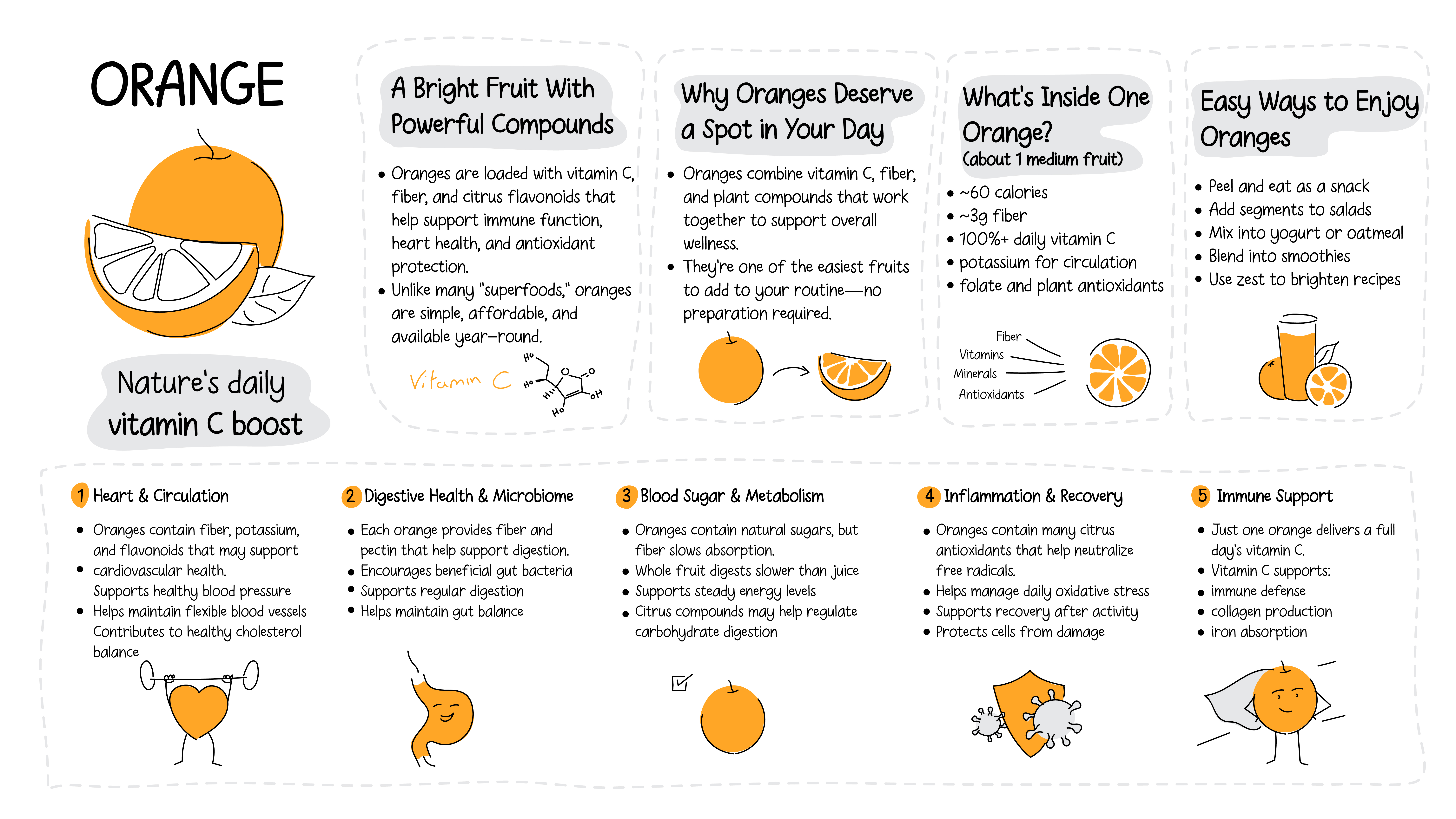
Oranges matter for wellness because they provide a highly accessible, bioavailable source of citrus-specific flavonoids that are difficult to obtain from other food groups. Unlike "exotic" superfoods, oranges deliver research-backed compounds through a simple, affordable whole food available year-round.
Key Nutrients
% Daily Value based on 2,000 cal diet
Why the Health Benefits of Oranges Matter
Oranges matter for wellness because they provide a highly accessible, bioavailable source of citrus-specific flavonoids that are difficult to obtain from other food groups. Unlike "exotic" superfoods, oranges deliver research-backed compounds through a simple, affordable whole food available year-round.
What makes oranges valuable is their unique chemical matrix: a blend of water-soluble Vitamin C, soluble pectin fiber, and flavonoids like hesperidin. This combination creates synergistic effects—where the fiber slows sugar absorption while the Vitamin C enhances the bioavailability of the plant’s antioxidants—that cannot be replicated by isolated supplements or processed "orange-flavored" foods.
Key Active Compounds
The medicinal value of oranges is driven by a diverse array of flavonoids and terpenes that modulate inflammation and protect the vascular system.
- Hesperidin: A powerhouse flavonoid found mainly in the white pith (albedo) that helps regulate blood pressure and improve blood vessel elasticity.
- Eriocitrin: A compound that supports blood sugar control by inhibiting specific digestive enzymes in the small intestine.
- Naringin and Narirutin: Flavonoids that provide antioxidant protection and help regulate enzymes involved in lipid metabolism.
- Limonene: A terpene found in the zest and peel with potent anti-inflammatory and potential antimicrobial properties.
- β-cryptoxanthin: A provitamin A carotenoid that gives oranges their hue and protects DNA from oxidative damage.
- Citric Acid: Enhances the absorption of minerals like iron and may prevent the formation of calcium oxalate kidney stones.
- Pectin: A soluble fiber that supports a healthy gut microbiome and helps lower LDL cholesterol.
Nutrition Snapshot
A single medium orange provides over 100% of the daily Vitamin C requirement while maintaining a low-calorie profile and delivering essential electrolytes, such as potassium. One medium orange (approx. 184g) provides:
- Calories: 60 (0g Fat)
- Vitamin C: 70mg (approx. 100-120% of Daily Value)
- Fiber: 3g (a mix of soluble and insoluble types)
- Potassium: 237mg (approx. 12% DV for heart and muscle function)
- Carbohydrates: 15.4g (including 12g natural sugars balanced by 3g fiber)
- Folate (B9): Essential for DNA synthesis and reducing homocysteine levels.
The fiber content is the most critical "governor" in this snapshot; it physically slows the digestion of natural sugars, preventing the insulin spikes common with fruit juices.
Prep and Pairing Ideas
Pairing oranges with healthy fats and iron-rich greens maximizes the absorption of both the fruit's antioxidants and the nutrients in the accompanying food.
- With Iron-Rich Foods: Squeeze orange juice over a spinach salad to triple the iron absorption from the greens.
- With Healthy Fats: Pair orange segments with walnuts or avocado. Fats help with the absorption of carotenoids, such as β-cryptoxanthin.
- The White Pith: Do not meticulously peel away all the white "stringy" bits; this albedo contains the majority of the heart-healthy hesperidin.
Conclusion
The orange is a nutritional powerhouse that offers science-backed benefits for heart health, immune resilience, and metabolic stability. Its unique combination of Vitamin C and hesperidin makes it a powerful whole-food tool for reducing stroke risk and systemic inflammation. Ultimately, the key to orange health benefits is choosing the whole fruit over the juice.
By incorporating one orange daily—and including some of the nutrient-rich white pith—you can leverage citrus science to support your cardiovascular system and long-term wellness. Ready to build orange into your weekly meal plan? Our meal planner can help you balance oranges with complementary foods for optimal nutrition.
How Orange Compares
| Compared with | What's different |
|---|---|
| Orange vs. Clementine | Smaller and easier to peel with significantly less white pith (albedo) than an orange. |
| Orange vs. Grapefruit | Contains significantly more vitamin A and a more tart, complex flavor profile. |
| Orange vs. Lemon | Higher acidity and lower sugar content, used primarily for zest and juice rather than whole consumption. |
Health Benefits
Things to Know
Medication Interactions: Orange juice can inhibit the absorption of certain medications, such as fexofenadine (an antihistamine) and some blood pressure drugs. Take medication with water.
Dental Health: The acidity in citrus can erode tooth enamel over time. It is best to rinse your mouth with water after eating oranges.
Kidney Considerations: Individuals with advanced chronic kidney disease (CKD) must closely monitor potassium intake.
GERD/Reflux: Citric acid may aggravate symptoms in those with acid reflux or heartburn.

Common Uses
- —Consuming a fresh orange raw, including the white pith, maximizes hesperidin and fiber intake.
- —Squeezing orange juice over spinach or beans triples the absorption of plant-based iron.
- —Using orange zest in cooking provides concentrated doses of the terpene limonene.
- —Eating an orange post-exercise replenishes electrolytes and provides antioxidants to lower systemic inflammation.
- —A whole orange serves as a high-fiber alternative to sweets, especially when paired with walnuts.
- —Consuming oranges increases urinary citrate levels, which helps inhibit calcium oxalate stone formation.
Active Compounds
A powerhouse flavonoid found mainly in the white pith (albedo) that helps regulate blood pressure and improve blood vessel elasticity.
A compound that supports blood sugar control by inhibiting specific digestive enzymes in the small intestine.
Flavonoids that provide antioxidant protection and help regulate enzymes involved in lipid metabolism.
A terpene found in the zest and peel with potent anti-inflammatory and potential antimicrobial properties.
A provitamin A carotenoid that gives oranges their hue and protects DNA from oxidative damage.
Enhances the absorption of minerals like iron and may prevent the formation of calcium oxalate kidney stones.
A soluble fiber that supports a healthy gut microbiome and helps lower LDL cholesterol.
Best Forms
Provide 100% of the fiber and the highest density of flavonoids. Chewing the fruit also increases satiety.
Removes most fiber and concentrates sugars. While it provides Vitamin C, it leads to faster blood sugar spikes.
Contains high concentrations of limonene; a great addition to meals, but should be consumed in small amounts.
Often contain added sugars and lose water-soluble Vitamin C during the drying process.
Prep Ideas
- — With Iron-Rich Foods: Squeeze orange juice over a spinach salad to triple the iron absorption from the greens.
- — With Healthy Fats: Pair orange segments with walnuts or avocado. Fats help with the absorption of carotenoids, such as β-cryptoxanthin.
- — The White Pith: Do not meticulously peel away all the white "stringy" bits; this albedo contains the majority of the heart-healthy hesperidin.
Glossary
Shop This Ingredient
Stock your pantry with quality orange.
Buy on AmazonAs an Amazon Associate, Plantopedia earns from qualifying purchases. This costs you nothing extra and helps us keep the encyclopedia free.
Frequently Asked Questions
Research indicates that oranges support healthy blood pressure through high potassium levels and the flavonoid hesperidin. Potassium helps the body flush excess sodium, while hesperidin improves the flexibility of blood vessels. These combined actions reduce the physical strain on the heart and have been linked to significant improvements in diastolic pressure.
Whole oranges are an excellent choice for a diabetic diet because their fiber content keeps the glycemic index low. While they contain roughly 12 grams of natural sugar, the fiber prevents the rapid spikes associated with processed sweets. Patients should stick to one medium orange and pair it with protein to stabilize blood sugar.
Hesperidin is a bioflavonoid found almost exclusively in citrus fruits, particularly in the white pith. It is medically significant because it acts as a vasodilator, improving blood flow and reducing vascular inflammation. Most people miss this benefit by peeling their oranges too thoroughly or by drinking fiber-free juice that lacks hesperidin.
Oranges boost the immune system by providing a concentrated dose of Vitamin C, which is essential for the production of pathogen-fighting white blood cells. Additionally, the antioxidants in oranges protect these immune cells from oxidative damage, allowing them to function more effectively during a cold or viral infection.
Eating a whole orange is superior for weight management and blood sugar control. Juicing removes the essential structural fiber (pectin), leaving behind concentrated sugar that hits the bloodstream almost instantly. Whole oranges provide more satiety and ensure you consume the heart-healthy flavonoids found in the fibrous parts of the fruit.
Quick Answers
Common questions, answered in a line.
Oranges help prevent calcium oxalate kidney stones by providing citric acid, which increases urinary citrate levels. This natural compound inhibits the formation of stones by binding to calcium in the urine.
The white pith of an orange, known as the albedo, contains the majority of the fruit's heart-healthy hesperidin. Keeping some of these stringy bits while peeling provides significant benefits for blood pressure regulation and blood vessel elasticity.
Oranges contain the terpene limonene, a potent anti-inflammatory and antimicrobial compound found primarily in the zest and peel. Using orange zest in cooking is an effective way to obtain concentrated doses of this specific nutrient.
Eating oranges alongside iron-rich foods, such as spinach or beans, can triple the absorption of plant-based iron. The Vitamin C and citric acid in the fruit act as enhancers to help your body better utilize the minerals found in leafy greens.
A single medium orange provides approximately 70mg of Vitamin C, which covers 100% to 120% of the recommended daily value. In addition to Vitamin C, it delivers 3 grams of fiber and 237mg of potassium for heart and muscle function.
Oranges contain eriocitrin, a flavonoid that supports blood sugar control by inhibiting specific digestive enzymes in the small intestine. Furthermore, the 3 grams of fiber in a whole orange acts as a governor to slow sugar digestion and prevent insulin spikes.
Orange juice can interfere with the absorption of certain medications, including some blood pressure drugs and the antihistamine fexofenadine. To ensure safety and effectiveness, it is recommended to take these medications with water rather than citrus juice.
For Readers in the USA
Local context — sourcing, seasonality, and regional notes.
Domestic oranges are primarily grown in Florida, California, Texas, and Arizona, with peak seasons typically running from November through May. While Florida specializes in juicing varieties like Valencias, California provides the majority of fresh table oranges, such as Navels, which are most abundant during the winter months.
You can buy fresh oranges at major U.S. grocery chains like Kroger, Walmart, and Whole Foods, or at local farmers markets in citrus-producing Sun Belt states. Specialty varieties like Blood Oranges or Cara Caras are frequently found at Trader Joe's and Sprouts Farmers Market during their peak winter windows.
The USDA Organic label on oranges ensures they were grown without synthetic pesticides, though the FDA regulates skin-surface waxes and dyes sometimes used on conventional citrus. If you plan on using the zest or peel for culinary purposes, American health experts often recommend choosing organic to minimize exposure to pesticide residues.
AI Clinical Review
- Hesperidin Significance: Correctly identifies hesperidin in oranges as a primary driver for vascular health and diastolic blood pressure management.
- Fiber as a "Governor": Accurately describes how orange fiber modulates the glycemic response, making the whole fruit superior to juice.
- Albedo Value: Properly emphasizes that the white pith of the orange houses the highest concentration of hesperidin and pectin.
- Iron Synergism: Correctly highlights the clinical benefit of using orange Vitamin C to improve the bioavailability of non-heme iron.
- Stroke Data: Accurately cites the clinical link between orange flavonoids and a 19% reduction in ischemic stroke risk.
- Limonene Efficacy: While orange zest contains limonene, more human trials are needed to define its specific therapeutic anti-inflammatory dosage.
- Cancer Protection: The role of orange β-cryptoxanthin in DNA protection is a promising area of ongoing long-term observation.
- Satiety Mechanisms: The long-term weight management impact of chewing an orange versus drinking juice requires more longitudinal research.
- Enzyme Inhibition: The specific mechanism of orange eriocitrin in inhibiting digestive enzymes is an emerging area of metabolic research.
- Dental Erosion: The citric acid in oranges can weaken enamel; patients should rinse with water after eating.
- Potassium Monitoring: Patients with advanced kidney disease must limit orange intake due to the risk of hyperkalemia.
- Drug Absorption: Oranges (and especially the juice) can interfere with the absorption of medications like fexofenadine.
- GERD Aggravation: The acidic nature of the orange may trigger symptoms in patients with acid reflux or esophagitis.
- Whole Fruit Preference: Clinicians should always recommend the whole orange over juice to ensure the patient receives the necessary fiber.
Frame as food education, not disease treatment.
References
- American Heart Association - Flavonoid Intake and Cardiovascular Risk (Specific study on 19% stroke risk reduction).
- The American Journal of Clinical Nutrition - Hesperidin and Blood Pressure Management (Trial on diastolic blood pressure).
- [suspicious link removed] (Study on cholesterol-lowering effects).
- USDA FoodData Central - Sunkist Orange Nutritional Profile (Raw data source).
- Nature - Citrus Flavonoids and Endothelial Function (Clinical review of blood vessel health).
- National Institutes of Health (NIH) - Vitamin C and Immune Response (Baseline clinical requirements).
Know Your Numbers
Eating healthy is a start. Now get to know your biomarkers.
Food changes bloodwork — inflammation, lipids, blood sugar and nutrient status all respond to what you eat. 59 markers from $59.
- Results in 7–10 days at 2,000+ Quest sites
- Licensed provider reviews every result
- One flat price, no membership, HSA/FSA eligible
Educational information only, not medical advice. Panels are ordered and reviewed through our licensed partner; Plantopedia may earn a commission.