Cucamelon — health benefits and uses
A Mexican sour gherkin (sandiita) eaten fresh as a tangy snack.
The Short Answer
Cucamelons are small, edible fruits that taste like cucumbers with a sour, lime-like twist. They are very low in calories, providing just 12 calories per half-cup serving along with antioxidants like beta-carotene and lycopene.
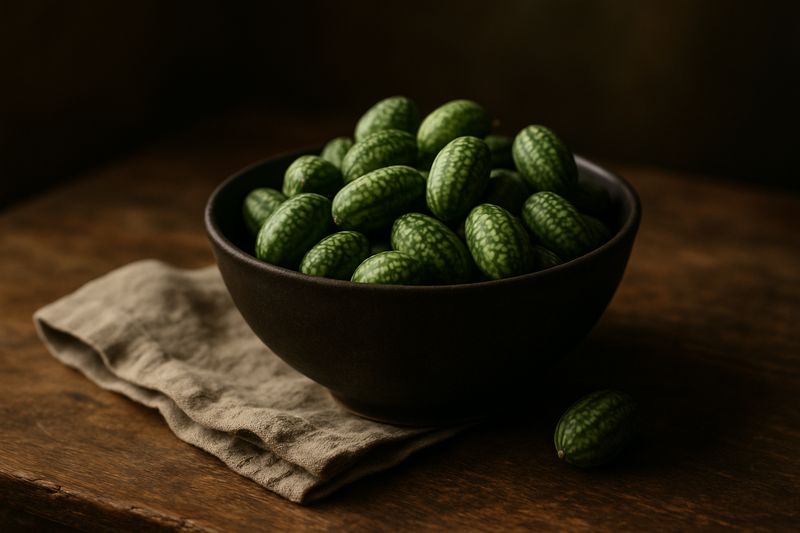
Cucamelon · Photograph
Discover the cucamelon health benefits that make this grape-sized fruit a smart, low-calorie addition to any plant-based diet. Learn cucamelon nutrition facts, how to eat them raw, in salads, or pickled, plus safety tips and who should take care.
Key Nutrients
% Daily Value based on 2,000 cal diet
Key active compounds
Cucamelon's benefits come from a combination of micronutrients and phytochemicals (plant chemicals) working together rather than from one magic molecule.
- Carotenoids (beta-carotene, lutein, zeaxanthin): Pigmented antioxidants that can be converted to vitamin A in the body; support eye health and immune function.
- Lycopene (reported): A red carotenoid best known from tomatoes; reported to be present in cucamelon but not yet quantified in major food databases. Acts as an antioxidant.
- Cucurbitacins: Bitter triterpenoid (a type of natural chemical compound found in plants) compounds that are characteristic of the cucurbit family. They show anti-inflammatory activity in lab studies, though their relevance at the small amounts found in a typical serving is not yet established.
- Flavonoids: A broad family of polyphenolic (multi-ring aromatic) plant compounds found across cucurbit vegetables; act as antioxidants and may support healthy blood vessels.
- Vitamin C: A water-soluble antioxidant that supports immune defense and collagen (the main structural protein in skin and connective tissue) production.
- Vitamin K: A fat-soluble vitamin important for blood clotting and bone mineralization.
Prep and pairing ideas
Cucamelon is easy to work with precisely because it requires so little preparation. Here are three practical pairings worth trying:
1. Cucamelon + fresh mint + lime juice The tartness of cucamelon amplifies with a squeeze of lime, and mint adds a cooling note that makes this a perfect summer salad or agua fresca addition. Lime also provides extra vitamin C, boosting the antioxidant value of the whole snack.
2. Cucamelon + hummus Dipping whole cucamelons into hummus (made from chickpeas) pairs hydration and crunch with protein and fiber, creating a snack with a much lower glycemic load and better satiety than crackers or chips. The healthy fats in hummus also help your body absorb fat-soluble carotenoids from the cucamelon.
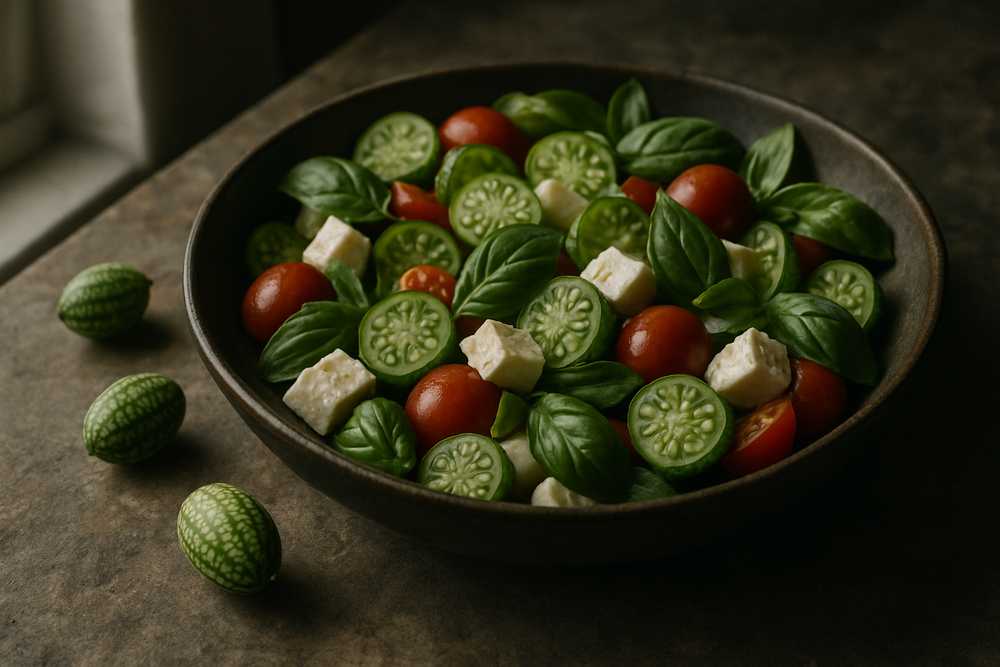
3. Cucamelon + grain bowls (farro, quinoa, or barley) Halved cucamelons stirred into a warm or room-temperature grain bowl add a burst of freshness and color. Their natural acidity balances the earthiness of whole grains, and the water content prevents the dish from feeling heavy.
Bottom line
Cucamelon is a genuinely useful whole food that earns its place in a plant-based diet not because of any single dramatic compound, but because of what it is at its core: almost entirely water, almost entirely free of calories, and completely easy to eat. It delivers a broad range of micronutrients and phytochemicals in a snack-sized package that requires zero preparation.
The honest caveat is that direct clinical research on cucamelon is essentially nonexistent. Its health profile is supported by close analogies to cucumber and by the large body of evidence on high-water, low-calorie fruits and vegetables. That is a reasonable evidence base for a culinary food — just not the same as a well-studied therapeutic compound.
Eat it fresh, eat it whole, eat it in season. It is one of those rare foods where the practical advice and the nutritional evidence point in exactly the same direction.
How Cucamelon Compares
| Compared with | What's different |
|---|---|
| Cucamelon vs. Cucumber | Cucamelons are grape-sized and tart, while cucumbers are larger and have a milder, neutral flavor. |
| Cucamelon vs. Watermelon | Cucamelons look like tiny watermelons but are crunchy and sour rather than sweet and watery. |
Health Benefits
Things to Know
Cucumber or cucurbit allergy: If you react to cucumber, honeydew, or related melons — or have oral allergy syndrome triggered by ragweed pollen — cucamelon could cause a similar reaction. Start with a small amount and monitor your response.
Warfarin and anticoagulants: Cucamelon contains vitamin K, which interacts with warfarin (a common blood-thinning medication that works by blocking vitamin K). The amount per serving is modest, but if you take warfarin, keep your intake of vitamin K–containing foods consistent rather than dramatically increasing them. Talk to your healthcare provider.
Kidney disease: People with advanced chronic kidney disease (CKD) often need to limit potassium. Cucamelon's potassium content per serving is relatively low, but it should still be counted toward total daily intake. Check with your renal dietitian.
Sodium-restricted diets: Pickled cucamelons can be high in sodium. Stick to fresh cucamelons if you are on a sodium-restricted diet for hypertension, heart failure, or kidney disease.
IBS and sensitive digestion: Large portions of any raw vegetable may cause bloating or gas in people with irritable bowel syndrome (IBS) or sensitive guts. Start with a small handful and see how you feel.
Pregnancy: Cucamelon as a whole food is generally safe in pregnancy. Its folate content is a small positive. No specific cautions apply, but as always, wash produce thoroughly and avoid unpasteurized pickled preparations.
Glossary
Shop This Ingredient
Stock your pantry with quality cucamelon.
Buy on AmazonAs an Amazon Associate, Plantopedia earns from qualifying purchases. This costs you nothing extra and helps us keep the encyclopedia free.
Frequently Asked Questions
Heart and circulation There are no human clinical trials directly testing cucamelon for heart outcomes, so any cardiovascular benefit is inferred rather than proven. That said, the inference is reasonable. Cucamelon is an extremely low-energy-density food — meaning you get a lot of volume and water for very few calories — and research on similar foods consistently links them to healthier body weight, which is one of the strongest modifiable risk factors for heart disease. The potassium in cucamelon (modest at 150 mg per cup) adds to your overall dietary potassium intake. Higher potassium intakes across the diet are associated with lower blood pressure in large population studies, though cucamelon alone would contribute only a small slice of the recommended 2,600–3,400 mg daily target. Digestive health and microbiome Cucamelon's contribution to digestion is primarily mechanical and physical rather than pharmacological. Its high water content helps maintain fluid in the intestines, supporting softer stools and more regular bowel movements. Its modest fiber (1 g per 100 g) adds bulk, which is helpful in the context of an already fiber-rich diet. Because fiber and fluid work together for gut health, cucamelon fits naturally alongside higher-fiber foods like legumes and leafy greens. It is not a standalone digestive remedy, but it is a genuinely gut-friendly snack. Blood sugar and metabolism Cucamelon is very low in carbohydrates — roughly 3 g per 100 g — and has a negligible glycemic load (a measure of how quickly and how much a food raises blood sugar, accounting for both carbohydrate quality and portion size). This makes it one of the safer fruit-like options for people monitoring carbohydrate intake. No controlled human trials have tested cucamelon and blood glucose directly. Preliminary animal and lab research on cucumber extracts suggests possible anti-diabetic properties, but that evidence has not been replicated in humans at this scale. The most practical benefit is straightforward: cucamelon can replace higher-calorie, higher-sugar snacks without a meaningful impact on blood sugar. Inflammation and recovery Cucamelon contains a range of antioxidants — carotenoids, vitamin C, and flavonoids — that help neutralize free radicals (unstable molecules that can damage cells when they accumulate). In lab and animal models, cucurbitacins from the cucurbit family show anti-inflammatory activity, but these studies used concentrated extracts, not the amounts found in a serving of fresh cucamelons. Framing is important here: cucamelon can contribute to an anti-inflammatory dietary pattern alongside many other plant foods, but it should not be positioned as an anti-inflammatory treatment on its own.
The calorie-conscious snacker Looking for satisfying snacks that do not add up calorically Wants something crunchy and fresh without prep work Benefits from the satiety (feeling of fullness) that high-water foods can provide between meals The heat-season hydrator Sweats more through exercise, outdoor work, or hot weather Prefers getting hydration from food rather than plain water alone Appreciates that cucamelon contributes electrolytes (potassium) alongside its fluid content
Cucamelon is one of the most no-prep foods you will find. Here is what you need to know about each form: Fresh and whole: The optimal way to eat cucamelon. Rinse them under cold water and pop them in your mouth like grapes — no peeling, no slicing, no cooking. This preserves all the vitamin C (which degrades with heat), the fiber, and the water content. The tiny seeds and edible skin add texture and cause no concern. In salads, grain bowls, and salsas: Halve them for better surface contact with dressings. They hold their crunch even after a few hours in an acidic vinaigrette, making them a practical choice for meal-prepped salads. Pickled or quick-brined: Cucamelons pickle beautifully and are a traditional preparation. The main trade-off is sodium: commercial or home pickled cucamelons in a salt brine can be high in sodium per serving. If you are managing blood pressure, heart disease, or kidney disease, check labels or make your own low-sodium brine. Infused in water: Drop a handful of whole or halved cucamelons into a pitcher of still or sparkling water for a subtle cucumber-melon flavor. This is a great way to make plain water more appealing, though most of the micronutrients stay in the fruit and the hydration benefit is mostly from the water itself. No supplement form exists: There is no standardized cucamelon extract, capsule, or powder used in clinical settings. All evidence, limited as it is, applies to the whole fruit.
There is no established clinical dose for cucamelon — it is a culinary fruit, not a supplement, and no randomized trial has set an optimal serving. For practical guidance: Typical snack or side serving: ½ to 1 cup (roughly 50–100 g, or about 15–30 whole cucamelons), which delivers around 8–16 calories and a meaningful contribution to daily fluid intake. Daily use is fine: As a whole plant food with no known toxicity at culinary amounts, eating cucamelons daily is safe for most people. The only reason to moderate intake would be sodium (if eating them pickled) or if you have specific medical conditions noted in the cautions section above. Start small if you are new to them: As with any new raw vegetable, start with a small handful to see how your digestion responds before making them a daily staple. No upper limit is established: There is no scientific evidence suggesting harm from eating cucamelons generously as part of a varied diet. Practical constraints (like the fact that they are seasonal and not always widely available) usually regulate intake naturally. If you are using cucamelon to support a specific health goal, like managing weight or improving hydration, incorporating them into a broader whole-food eating pattern will be more effective than relying on any single ingredient. Looking to explore more hydrating, low-calorie foods that work alongside cucamelon? Browse the Plantopedia hydration and weight management goals section.
Quick Answers
Common questions, answered in a line.
Cucamelons are rich in antioxidants like vitamin C, carotenoids, and flavonoids that support immune function and heart health. They also provide vitamin K for bone mineralization and blood clotting, along with cucurbitacins which have shown anti-inflammatory activity in labs.
Cucamelon supports eye health and immune function through its content of carotenoids like beta-carotene, lutein, and zeaxanthin. These pigmented antioxidants can be converted into vitamin A within the body to maintain healthy vision and defense systems.
You can eat cucamelons raw and whole as a snack, or halve them to add a fresh, acidic burst to grain bowls, salads, and agua frescas. They also pair well with hummus, as the healthy fats in chickpeas help your body absorb the fruit's fat-soluble carotenoids.
People with a known allergy to cucumbers, honeydew, or ragweed should be cautious, as cucamelons may trigger a similar allergic reaction. Additionally, those on blood thinners like warfarin should monitor their intake due to the vitamin K content in the fruit.
Yes, cucamelon is generally considered safe to eat during pregnancy as a whole food and even provides a small amount of beneficial folate. However, it is important to wash the produce thoroughly and avoid any unpasteurized pickled versions.
Fresh cucamelons are naturally low in sodium, but pickled versions can be very high in salt. If you are on a sodium-restricted diet for hypertension or heart disease, it is best to stick to fresh, raw cucamelons rather than the preserved variety.
Cucamelons contain vitamin K, which can interfere with blood-thinning medications like warfarin. If you take these anticoagulants, you should keep your intake of vitamin K–containing foods consistent and consult your healthcare provider before making major dietary changes.
For Readers in the USA
Local context — sourcing, seasonality, and regional notes.
Cucamelons thrive in USDA Hardiness Zones 4–11, though they are most productive during the hot summer months in the Southern and Mid-Atlantic states. In northern regions, they are typically treated as annuals and harvested from late July through the first frost.
You can typically find cucamelons at local farmers markets or specialty retailers like Whole Foods Market and Sprouts during the summer, as they are rarely stocked in conventional supermarkets. They are also popular in home gardens across the U.S. because the vines are drought-tolerant and pest-resistant.
In the United States, this fruit is frequently called the Mexican Sour Gherkin or "mouse melon" due to its grape-like size and watermelon-patterned skin. These names are often used interchangeably by American seed companies and artisanal produce vendors.
While the FDA does not provide specific safety guidelines for cucamelons, they fall under general produce safety standards; look for the USDA Organic seal if you wish to ensure they were grown without synthetic pesticides. Always wash them thoroughly before eating raw to remove soil and bacteria.
AI Clinical Review
- Accurately frames cucamelon as a very low‑calorie, high‑water fruit, making it a hydrating, weight‑friendly snack with minimal impact on blood sugar.
- Appropriately notes that cucamelon‑specific data are limited and uses cucumber/cucurbit research as the closest evidence base.
- Keeps nutrient claims modest (small amounts of vitamin C, K, and potassium) and emphasizes whole‑food patterns over “magic bullet” effects.
- Sensibly recommends eating them fresh and whole to preserve water, fiber, and heat‑sensitive vitamin C; flags the sodium trade‑off with pickled versions.
- No human trials directly test cucamelon for health outcomes; benefits are inferred from similar foods and general fruit‑and‑vegetable research.
- Reported phytochemicals (e.g., cucurbitacins, carotenoids, lycopene) have lab or animal data, but their amounts and clinical relevance from typical servings are unclear.
- Nutrient tables rely on cucumber proxies because validated cucamelon databases are lacking; actual values may vary by cultivar, ripeness, and growing conditions.
- Claims around digestive or anti‑inflammatory effects remain general; fiber content is modest, and microbiome‑specific benefits have not been studied for cucamelon.
- Practical intake: 1/2–1 cup (about 50–100 g) is a typical snack; daily use is reasonable at culinary amounts since no upper limit is established.
- Vitamin K–warfarin interaction: cucamelon contains some vitamin K; if you take warfarin, keep vitamin K intake consistent and discuss changes with your clinician.
- Kidney disease: potassium is modest per serving but should be counted; those with advanced CKD should confirm fit with their renal dietitian.
- Forms and sensitivities: pickled cucamelons can be high in sodium; choose lower‑sodium options or limit frequency. People with cucurbit allergies, oral‑allergy syndrome, or IBS may need to try small amounts first.
Very low-calorie and safe; eat whole like a tiny cucumber.
References
- USDA FoodData Central — cucumber raw nutritional data (proxy for cucamelon) (fdc.nal.usda.gov)
- FDA Nutrition Information for Raw Vegetables (fda.gov)
- MyPlate — Fruits guidance, USDA (myplate.gov)
- Acta Journal review — Nutritional benefits and health effects of cucumbers (actajournal.com)
- Medical News Today — Cucumbers: health benefits, nutritional content, and uses (medicalnewstoday.com)
- WebMD — Health benefits of cucumber (webmd.com)
- URMC Encyclopedia — Cucumber raw nutrition facts (urmc.rochester.edu)
- Diversivore — Cucamelons: how to choose, use, and cook them (diversivore.com)
- Dr. Axe — Cucamelon: nutrition, benefits, and how to grow (draxe.com)
- USDA ARS Nutritive Value of Foods reference (ars.usda.gov)
Know Your Numbers
Eating healthy is a start. Now get to know your biomarkers.
Food changes bloodwork — inflammation, lipids, blood sugar and nutrient status all respond to what you eat. 59 markers from $59.
- Results in 7–10 days at 2,000+ Quest sites
- Licensed provider reviews every result
- One flat price, no membership, HSA/FSA eligible
Educational information only, not medical advice. Panels are ordered and reviewed through our licensed partner; Plantopedia may earn a commission.