Horned Melon — health benefits and uses
A traditional African desert fruit valued for its hydrating pulp.
The Short Answer
Horned melon (kiwano) is an exotic fruit with a jelly-like green pulp that tastes like a mix of cucumber, lime, and banana. To eat it, simply slice the fruit in half and scoop out the pulp and seeds with a spoon.
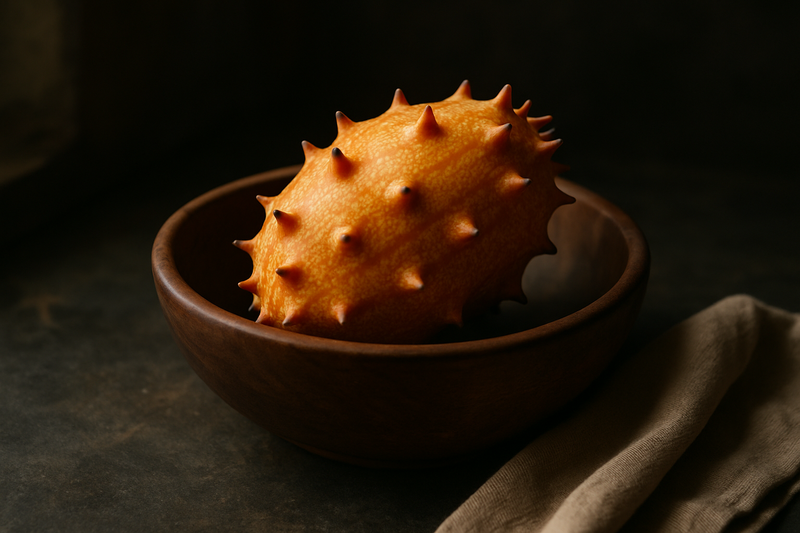
Horned Melon · Photograph
Discover horned melon (kiwano) health benefits, nutrition facts, and how to eat it. Learn about its vitamin C content, hydration benefits, antioxidants, and simple ways to scoop the lime-green pulp into drinks and salads.
Key Nutrients
% Daily Value based on 2,000 cal diet
Key active compounds in horned melon
- Carotenoids (including beta-carotene): Pigmented antioxidants found in both the orange rind and the pulp. The body can convert some carotenoids to vitamin A. They may help protect cells from oxidative stress — the cellular damage caused by unstable molecules called free radicals.
- Phenolic compounds: A broad family of plant polyphenols (including flavonoids) present in the pulp, peel, and seeds. These show antioxidant and potential anti-inflammatory activity in lab studies, though kiwano-specific human data are not yet available.
- Pectin: A soluble dietary fiber (a type of fiber that dissolves in water) found in the peel and pulp. Lab studies using pectin extracted from kiwano peel show it may help modulate gut bacteria and immune responses, though human trials haven't been conducted.
- Seed oils (unsaturated fatty acids): The edible seeds contain small amounts of heart-friendly unsaturated fats and trace tocopherols (a form of vitamin E). Dietary impact from a typical serving is modest.
- Vitamin C: A water-soluble antioxidant that supports immune function and collagen production (the structural protein in skin and connective tissue).
Prep and pairing ideas
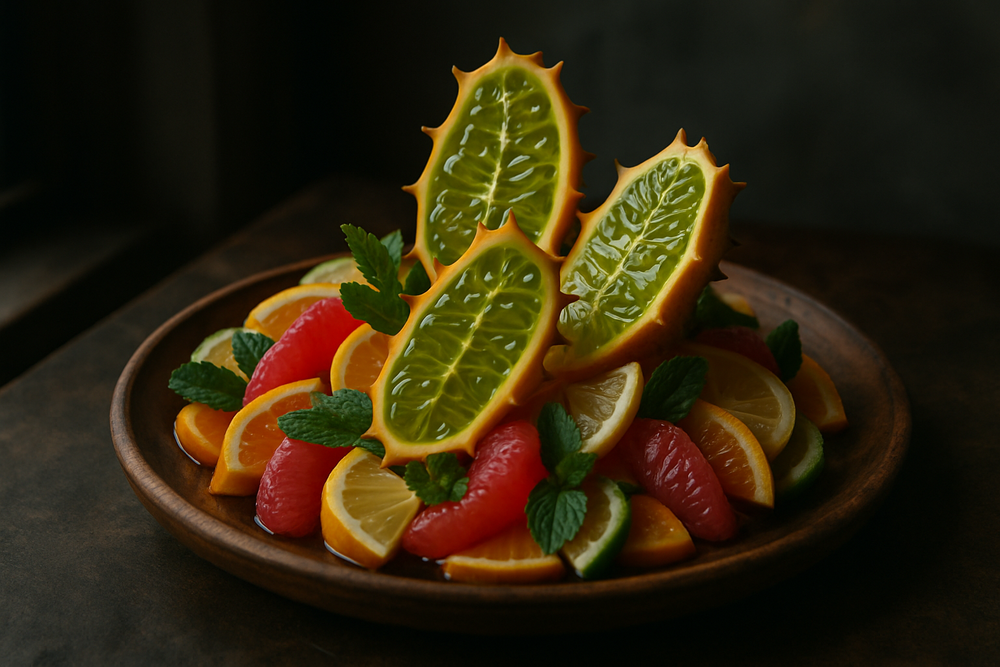
How to open a kiwano: Use a sharp knife and cut lengthwise or crosswise. The rind is thick and firm — take care with the spikes. Once open, scoop the pulp with a spoon.
Lime-green smoothie: Blend kiwano pulp (seeds strained out) with coconut water, frozen mango, and a squeeze of lime. The pulp adds a subtle cucumber-like freshness.
Tropical salad topper: Spoon the unstrained pulp over a salad of arugula, sliced strawberries, and toasted pumpkin seeds. The jelly-like texture acts almost like a dressing.
Yogurt parfait: Stir kiwano pulp into plain Greek yogurt with a drizzle of honey and a pinch of cardamom. The seeds add a pleasant crunch.
Common pairings and why they work:
- Kiwano + citrus (lime, lemon, orange): Both share bright acidity. Citrus amplifies kiwano's mild tang and boosts the overall vitamin C content of the dish.
- Kiwano + cucumber and mint: Fellow Cucurbitaceae family members — the shared vegetal, cool flavor profile means they complement rather than clash, making a refreshing summer drink or salad base.
- Kiwano + coconut water: Both are natural hydrators with electrolytes. Together they make a low-sugar, refreshing post-exercise drink that pairs well with a pinch of sea salt.
Bottom line
Horned melon (kiwano) is a striking, hydrating, low-calorie fruit that earns its place in a varied, plant-forward diet. It delivers a useful spread of micronutrients — vitamin C, magnesium, potassium, and iron — alongside antioxidant carotenoids and phenolic compounds. The evidence base for kiwano-specific health claims is still in its early stages, with no dedicated human clinical trials yet completed. What is well established is that eating a wide variety of fruits, kiwano included, supports overall health. Its greatest practical strengths are hydration, very low calorie density, and culinary versatility — scoop the lime-green pulp into drinks, salads, or yogurt and let the flavor do the rest.
Curious about how kiwano fits into a broader hydration and antioxidant strategy? Explore our fruit and hydration goals guide for ingredient combinations that work together.
How Horned Melon Compares
| Compared with | What's different |
|---|---|
| Horned Melon vs. Dragon Fruit | Sweeter and higher in sugar; kiwano has a milder, cucumber-like tartness. |
| Horned Melon vs. Cucumber | Cucumbers have a firmer texture, whereas kiwano has a jelly-like pulp with edible seeds. |
| Horned Melon vs. Passion Fruit | Passion fruit is more acidic and aromatic; kiwano is milder and more hydrating. |
Health Benefits
Things to Know
Rind is inedible.: The spiky outer skin is tough and should not be eaten. Only the inner pulp and seeds are consumed.
Cucurbit family allergy.: If you're allergic to melons, cucumbers, zucchini, or other members of the cucumber family (Cucurbitaceae), introduce kiwano cautiously. Oral allergy symptoms (tingling, itching in the mouth) are possible.
Digestive sensitivity.: The seeds and fiber content may cause mild bloating or gas in people with irritable bowel syndrome (IBS) or other digestive sensitivities. Start with a small amount and assess tolerance.
Children and seeds.: The numerous small seeds could pose a minor choking risk for very young children. Strain the pulp or supervise closely.
Kidney disease.: Potassium content per serving is modest (123 mg), but people on strict potassium-controlled diets due to advanced kidney disease should count it within their daily allowance and discuss with their dietitian.
Warfarin (blood thinner) users.: Some nutrition data suggest kiwano — particularly the peel — may contain vitamin K, which can affect how warfarin works. Typical pulp servings are unlikely to matter clinically, but maintain a consistent intake pattern and discuss any new exotic fruits with your provider.
Pregnancy.: Horned melon is a food, not a supplement, and reasonable culinary amounts are generally considered safe during pregnancy. However, there is no specific safety research for pregnancy; speak with your midwife or OB if you have concerns.
No established therapeutic dose.: Kiwano has not been studied for treatment of any medical condition. Eat it as a food, not a remedy.
Prep Ideas
- — Kiwano + citrus (lime, lemon, orange): Both share bright acidity. Citrus amplifies kiwano's mild tang and boosts the overall vitamin C content of the dish.
- — Kiwano + cucumber and mint: Fellow Cucurbitaceae family members — the shared vegetal, cool flavor profile means they complement rather than clash, making a refreshing summer drink or salad base.
- — Kiwano + coconut water: Both are natural hydrators with electrolytes. Together they make a low-sugar, refreshing post-exercise drink that pairs well with a pinch of sea salt.
Shop This Ingredient
Stock your pantry with quality horned melon.
Buy on AmazonAs an Amazon Associate, Plantopedia earns from qualifying purchases. This costs you nothing extra and helps us keep the encyclopedia free.
Frequently Asked Questions
It's important to be upfront: no human clinical trials have tested kiwano directly for specific health outcomes. The benefit areas below are based on its nutrient and phytochemical profile, combined with robust general evidence linking fruit consumption to better health. Think of these as reasonable inferences, not proven claims. Heart and circulation Horned melon is low in sodium and provides modest amounts of potassium (123 mg per 100 g) and magnesium (40 mg), two minerals that play important roles in maintaining normal blood pressure. Diets rich in potassium and low in sodium are associated with cardiovascular (heart and blood vessel) health in large population studies. Kiwano's very low calorie and fat profile also means it fits naturally into heart-healthy eating patterns — but no studies have tested it directly for effects on blood pressure, cholesterol, or cardiovascular events. Digestive health and microbiome The pulp provides roughly 4 g of dietary fiber per 100 g — a meaningful amount for a fruit with so few calories. Dietary fiber supports normal bowel regularity by adding bulk to stools and feeding the beneficial bacteria in your large intestine (your gut microbiome). In one preclinical study (conducted in animals, not humans), pectin extracted from kiwano peels showed the ability to shift gut bacteria composition and stimulate immune activity. This is early-stage research, but it hints at prebiotic potential — meaning it may act as food for beneficial gut bacteria. Some people find the seeds cause mild digestive discomfort; if that's you, try straining the pulp through a fine sieve. Blood sugar and metabolism Horned melon is relatively low in total carbohydrates (7.6 g per 100 g) and has a high water content, giving it a low energy density — meaning you get a lot of volume for very few calories. These characteristics are generally favorable for blood sugar and weight management when kiwano replaces more calorie-dense foods. No glycemic index (a measure of how fast a food raises blood sugar) testing has been done specifically on kiwano, so claims about blood sugar are extrapolated from its macronutrient profile rather than direct evidence. People managing diabetes should track their personal blood glucose response. Inflammation and recovery Horned melon contains vitamin C, carotenoids, and phenolic compounds — all with antioxidant properties in laboratory settings. Antioxidants help neutralize free radicals, which are linked to inflammation and cell damage over time. There are no human studies measuring inflammatory markers (like C-reactive protein) after kiwano consumption, so calling it "anti-inflammatory" specifically would be overstating the evidence. That said, eating a variety of antioxidant-rich fruits is a well-supported general strategy for supporting the body's normal inflammatory balance.
The heat-season hydrator Sweating heavily in summer or after exercise? Kiwano is 88–90% water with electrolytes like potassium and magnesium. Its light flavor makes it easy to blend into sports drinks or smoothies without overpowering other ingredients. Low in sugar, so it hydrates without a significant energy spike. The calorie-conscious variety seeker At roughly 44 kcal per 100 g, it's one of the lower-calorie fruit options available. Adds visual drama and interesting texture to meals without adding much to the calorie count. Great for people who get bored eating the same fruits repeatedly and want to try something unusual.
Fresh, whole kiwano is the only widely available form — and it's the best. Here's how the options break down: Fresh pulp (best choice): Cut the fruit in half across the middle and scoop the jelly-like pulp directly. Eat seeds and all, or strain them out for a smoother texture. No nutrients are lost. Blended into drinks: The pulp blends easily into smoothies, cocktails, or agua fresca (water-based fruit drinks). Straining removes seeds while keeping most of the vitamin C and minerals in the liquid. Stirred into salads or yogurt: Folding the pulp into fruit salads, green salads, or plain yogurt adds moisture, a subtle tang, and visual interest. Pairs especially well with citrus-dressed salads. Processed extracts (pectin, seed oil): These are research-grade ingredients, not commercial supplements. There is no standardized kiwano supplement, and none is needed for the dietary benefits described here. Tip: Look for a kiwano that is fully orange (not yellow-green) with firm, intact spikes. A green-tinged rind means underripe; shriveled spikes suggest overripe. At room temperature, a ripe kiwano keeps for one to two weeks — longer than most soft fruits.
There is no established recommended daily amount for kiwano. Most culinary uses involve roughly one small fruit (100–250 g of pulp and seeds) per sitting. Because it's very low in calories and carbohydrates, even eating a whole fruit daily is unlikely to cause any nutritional concern for most healthy adults. Practical starting guidance: If you've never eaten kiwano before, start with about half a fruit (roughly 100 g of pulp) to assess tolerance, especially for digestive comfort. If you're managing blood sugar, count the carbohydrates (approximately 7–8 g per 100 g) within your daily carbohydrate budget. For hydration purposes, kiwano works best as a complement to — not a replacement for — regular water intake. There is no upper limit established in clinical literature. Eating it as part of a varied, whole-food diet is the most sensible approach.
Quick Answers
Common questions, answered in a line.
You can eat the lime-green jelly-like pulp and the small seeds found inside the horned melon. While the seeds are edible and provide a pleasant crunch, the thick, spiky orange rind is tough and should not be eaten.
To open a horned melon, use a sharp knife to carefully cut the fruit either lengthwise or crosswise. Because the rind is thick, firm, and covered in spikes, you should take extra care while cutting before scooping the pulp out with a spoon.
Horned melon has a mild, refreshing flavor profile that is often described as a subtle cucumber-like freshness with a slight tang. Because it belongs to the cucumber family, it pairs well with other cool, vegetal flavors like mint or bright acidic citrus.
Horned melon is a natural hydrator that provides vitamin C, magnesium, potassium, and iron. It also contains antioxidants like carotenoids and phenolic compounds, which help protect cells from oxidative stress caused by free radicals.
Horned melon is generally safe to eat, but the numerous small seeds may pose a minor choking risk for very young children. Parents are advised to strain the pulp or supervise children closely when they are consuming the fruit.
People with advanced kidney disease who are on strict potassium-controlled diets should monitor their intake of horned melon. While the potassium content is modest at 123 mg per serving, it must be counted toward a patient's daily allowance.
Yes, the seeds in a horned melon are edible and contain heart-friendly unsaturated fats and trace amounts of vitamin E. You can eat them along with the pulp for added texture, or strain them out if you prefer a smoother consistency in smoothies.
For Readers in the USA
Local context — sourcing, seasonality, and regional notes.
In the United States, you can typically find horned melons at major grocers like Whole Foods, Sprouts Farmers Market, and Wegmans, as well as specialty international markets. They are often stocked in the specialty or tropical produce section alongside dragon fruit and passion fruit.
Commercial production of horned melon in the U.S. is primarily centered in Southern California and Florida due to their warm, frost-free climates. These regions provide the long growing season required for the fruit to mature and develop its characteristic orange rind.
While imported kiwano may be available year-round, U.S.-grown horned melons are most abundant during the late summer and throughout the fall. Domestic harvests typically peak between August and December, depending on the specific growing region in California or Florida.
When buying kiwano in the U.S., look for the "USDA Organic" seal to ensure it was grown without synthetic pesticides or fertilizers. The FDA monitors imported fruit for safety, but checking for the organic label is the best way to verify domestic production standards.
AI Clinical Review
- Gives a clear, practical overview of kiwano as a very low‑calorie, high‑water fruit with modest amounts of vitamin C, magnesium, potassium, and iron.
- Sets appropriate expectations by noting there are no human clinical trials on kiwano and that benefits are inferred from its nutrient profile and broader fruit‑intake research.
- Accurately distinguishes edible parts (pulp and seeds) from the inedible rind and offers sensible culinary uses that preserve nutrients.
- Frames hydration benefits realistically—helpful as a water‑rich food, but not a substitute for medical‑grade rehydration solutions.
- Cardiometabolic claims (blood pressure, cholesterol, glycemic impact) are based on general nutrition principles; kiwano itself hasn’t been tested in human trials, and no glycemic index data exist.
- Microbiome and immune effects from kiwano peel pectin are preclinical; the relevance of these extracts to typical food portions is uncertain.
- Carotenoid contribution to vitamin A status likely modest and variable; conversion depends on individual factors and overall diet.
- Reported mineral values can vary by ripeness, growing conditions, and database; small differences are unlikely to drive clinical outcomes.
- Allergies: Those with Cucurbitaceae (melon/cucumber) or oral‑allergy syndrome should introduce kiwano cautiously and stop if mouth or throat symptoms occur.
- Anticoagulants: Pulp appears low in vitamin K, but anyone on warfarin should keep vitamin K intake consistent; the peel isn’t eaten and shouldn’t be used as a supplement source.
- Special populations: People with potassium‑restricted diets (advanced kidney disease) should count kiwano’s potassium; those with IBS may find the seeds/fiber gassy; strain if needed. For young children, consider straining due to many small seeds and always wash the rind before cutting to avoid cross‑contamination.
- Use and amount: There’s no therapeutic dose; typical servings are about one small fruit (≈100–250 g pulp). Fresh fruit is the appropriate form—processed extracts or “supplements” aren’t necessary. People with diabetes can include it by counting its relatively low carbs and monitoring personal glucose response.
Spiky rind is inedible; flavor is mild and mostly seeds.
References
- USDA FoodData Central — horned melon nutrient data (fdc.nal.usda.gov)
- MyPlate dietary guidelines — Fruits (myplate.gov)
- Healthline — 6 Benefits of Kiwano (Horned Melon) and How to Eat It (healthline.com)
- MedicineNet — 8 Benefits of Kiwano (Horned Melon) and How to Eat It (medicinenet.com)
- Crops Journal — Horned melon pulp, peel, and seed composition study (cropj.com)
- PubMed — Immunological activity and gut microbiota modulation of pectin from kiwano peels (preclinical study) (pubmed.ncbi.nlm.nih.gov)
- Nutrition-and-You — Horned melon nutrition facts and health benefits (nutrition-and-you.com)
- NutriVerdict — Horned melon (kiwano) nutritional profile (nutriverdict.net)
- Wikipedia — Cucumis metuliferus (botanical overview) (en.wikipedia.org)
- ePainAssist — Horned melon: nutritional profile and health information (epainassist.com)
Know Your Numbers
Eating healthy is a start. Now get to know your biomarkers.
Food changes bloodwork — inflammation, lipids, blood sugar and nutrient status all respond to what you eat. 59 markers from $59.
- Results in 7–10 days at 2,000+ Quest sites
- Licensed provider reviews every result
- One flat price, no membership, HSA/FSA eligible
Educational information only, not medical advice. Panels are ordered and reviewed through our licensed partner; Plantopedia may earn a commission.