Oyster Mushrooms — health benefits and uses
Used in East Asian tradition to support cardiovascular and immune health.
The Short Answer
Oyster mushrooms are edible fungi prized for their mild, savory flavor and meaty texture. They are particularly rich in niacin (B3), providing nearly 5mg per cup, and contain unique compounds like ergothioneine and beta-glucans that support heart health and
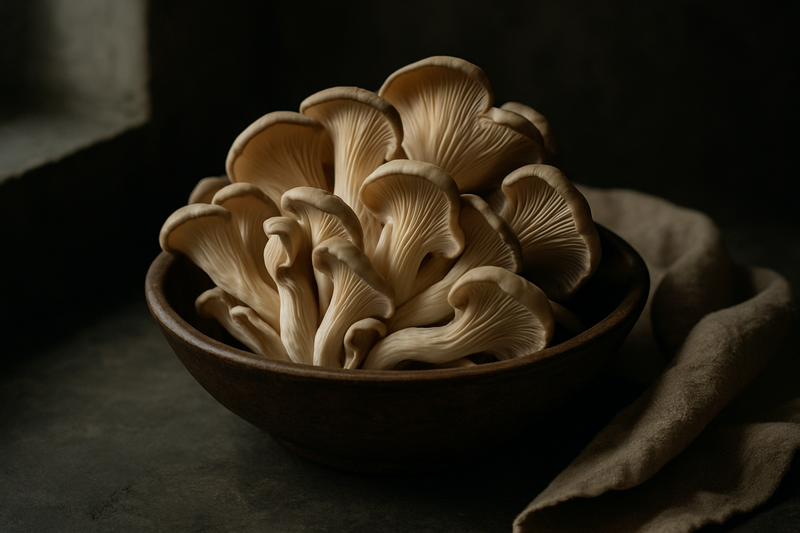
Oyster Mushrooms · Photograph
Discover oyster mushroom health benefits, nutrition facts per 100 grams, and practical tips for cooking them to a satisfying meaty texture. Learn what the evidence says about heart health, blood sugar, and immune support — plus who should take caution.
Key Nutrients
% Daily Value based on 2,000 cal diet
Key active compounds
- Ergothioneine — A sulfur-containing amino acid found almost exclusively in fungi. Acts as a powerful antioxidant, protecting cells from oxidative damage (harm caused by unstable molecules called free radicals). Emerging research links it to cardiovascular and cognitive health.
- Beta-glucans — Soluble polysaccharides (a type of complex carbohydrate) in the fungal cell wall. May support healthy cholesterol levels and help regulate the immune system's response to infection.
- Lovastatin-like compounds (mevinolin) — Natural HMG-CoA reductase inhibitors found in Pleurotus species. These resemble lovastatin, a prescription cholesterol-lowering medication, and are believed to partly explain lipid-lowering signals seen in small human trials.
- Phenolic compounds — Polyphenols with antioxidant and anti-inflammatory activity. Primarily studied in lab and animal models.
- Polysaccharide-protein complexes — Macromolecules formed when mushroom polysaccharides bind to proteins. Associated with immune modulation in preclinical research; human data for oyster mushrooms specifically are limited.
Who benefits most
Active adults focused on heart health
- Small human trials suggest oyster mushrooms may nudge cholesterol and triglyceride numbers in a favorable direction.
- Their natural lovastatin-like compounds and beta-glucans provide a plausible biological basis for cardiometabolic support.
- Easy to add 50–100 g several times a week to stir-fries, grain bowls, or tacos as a regular dietary habit.
People eating plant-based or reducing meat intake
- Oyster mushrooms deliver protein (3.3 g/100 g), iron, zinc, and B vitamins that plant-forward eaters often need to pay attention to.
- When pan-seared, their torn caps mimic the texture and savory depth of pulled meat — making dietary transitions easier and more satisfying.
- Low calorie density means generous portions fit comfortably within most dietary patterns.
Prep and pairing ideas
Tear, don't slice. Pulling oyster mushroom caps into large pieces along the natural grain creates jagged edges that crisp up beautifully in a hot pan and hold sauces better than knife-cut slices.
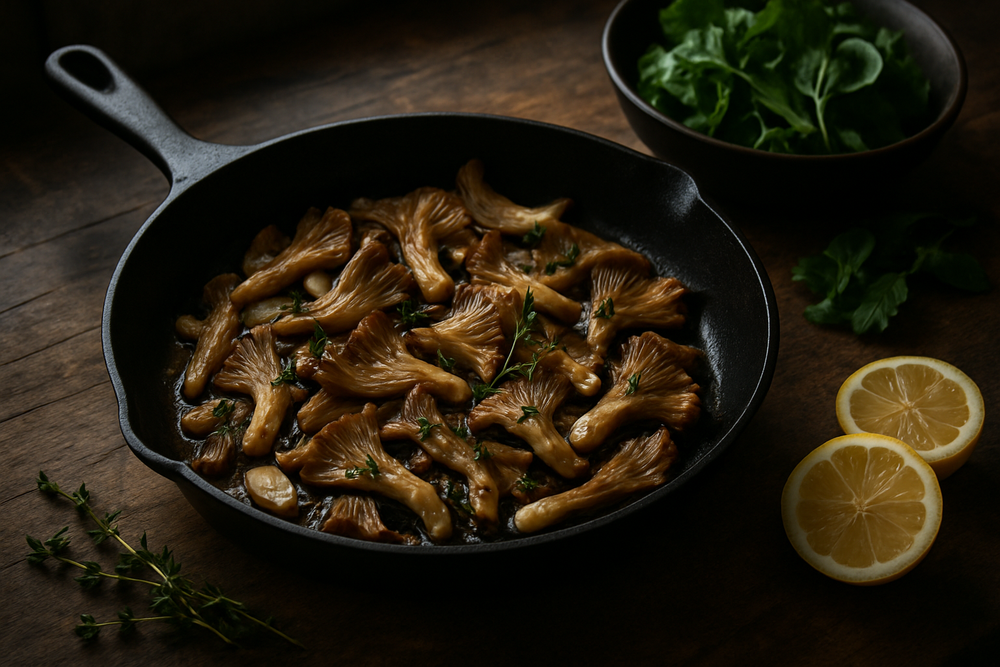
Dry heat first. Heat a cast-iron or stainless pan over medium-high until very hot. Add mushrooms without oil first for 2–3 minutes to drive off moisture, then add a small amount of oil (or a splash of broth for oil-free cooking) and let them sear undisturbed until golden. Resist the urge to stir constantly.
Common pairings:
- Oyster mushrooms + garlic + fresh thyme — A classic savory combination. The sulfur compounds in garlic complement ergothioneine's antioxidant profile, and thyme's earthy, herbal notes balance the mushroom's mild sweetness. Great over whole-grain toast or stirred into risotto.
- Oyster mushrooms + miso + ginger — Fermented miso paste deepens the umami (savory) flavor and adds probiotic benefit. Ginger's anti-inflammatory gingerols layer well with the mushroom's own anti-inflammatory compounds. Use as a quick stir-fry sauce or noodle bowl dressing.
- Oyster mushrooms + lemon + leafy greens — The acidity of lemon juice brightens the mushroom's earthy notes and, importantly, vitamin C from lemon enhances the absorption of the mushrooms' non-heme iron (the form of iron found in plant foods). Toss seared mushrooms over spinach or kale with a lemon-tahini dressing.
Bottom line
Oyster mushrooms are a genuinely impressive whole food: nutrient-dense, low in calories, and rich in bioactive compounds that preliminary human research links to better cholesterol, blood sugar, and possibly immune resilience. They also happen to be one of the most satisfying meat-texture alternatives available — versatile, affordable, and widely accessible.
The evidence is promising but still maturing. Most human trials are small and short-term. Oyster mushrooms are best understood as a regular, enjoyable part of a varied whole-food diet rather than a standalone remedy.
If you are managing a health condition or taking medication, particularly lipid-lowering drugs or glucose-lowering medications, talk to your healthcare provider about how oyster mushrooms fit your plan.
Explore how mushrooms and other functional vegetables fit into your broader health goals at Plantopedia Goals.
How Oyster Mushrooms Compares
| Compared with | What's different |
|---|---|
| Oyster Mushrooms vs. King Oyster Mushroom | King oysters are much larger with a thick, dense stem, while standard oysters have thin, wavy caps. |
| Oyster Mushrooms vs. Shiitake Mushroom | Oyster mushrooms have a milder, slightly anise-like flavor compared to the deeper woodiness of shiitakes. |
| Oyster Mushrooms vs. Button Mushroom | Oyster mushrooms provide more niacin (B3) and iron than the common white button variety. |
Health Benefits
Things to Know
Always cook oyster mushrooms thoroughly.: Raw or undercooked mushrooms are harder to digest and can cause gastrointestinal irritation in some people.
Buy cultivated, not foraged.: Wild oyster mushrooms have toxic look-alikes. Unless you are an expert forager, stick to cultivated mushrooms from a reputable supplier.
Statin users: The natural lovastatin-like compounds in oyster mushrooms could theoretically add to the cholesterol-lowering effect of statin medications. Discuss with your doctor if you take lipid-lowering drugs.
Diabetes medications: Small trials suggest oyster mushrooms may modestly lower blood glucose. If you take insulin, sulfonylureas, metformin, or SGLT2 inhibitors, be aware of a small theoretical risk of enhanced blood sugar lowering (hypoglycemia). Monitor as your healthcare provider advises.
Immunosuppressive therapies: Beta-glucans and other polysaccharides may influence immune activity. People on immunosuppressive drugs should check with their doctor before adding large amounts or concentrated supplements.
Mushroom allergies: Those with known fungal allergies should approach all mushrooms with caution.
Gout and high uric acid: Mushrooms are moderately high in purines (compounds broken down into uric acid). People managing gout or hyperuricemia (high uric acid) should factor this in.
Pregnancy and breastfeeding: Culinary amounts of cooked oyster mushrooms are generally considered safe; concentrated extracts or supplements have limited safety data — caution is advised.
Prep Ideas
- — **Oyster mushrooms + garlic + fresh thyme** — A classic savory combination. The sulfur compounds in garlic complement ergothioneine's antioxidant profile, and thyme's earthy, herbal notes balance the mushroom's mild sweetness. Great over whole-grain toast or stirred into risotto.
- — **Oyster mushrooms + miso + ginger** — Fermented miso paste deepens the umami (savory) flavor and adds probiotic benefit. Ginger's anti-inflammatory gingerols layer well with the mushroom's own anti-inflammatory compounds. Use as a quick stir-fry sauce or noodle bowl dressing.
- — **Oyster mushrooms + lemon + leafy greens** — The acidity of lemon juice brightens the mushroom's earthy notes and, importantly, vitamin C from lemon enhances the absorption of the mushrooms' non-heme iron (the form of iron found in plant foods). Toss seared mushrooms over spinach or kale with a lemon-tahini dressing.
Glossary
Shop This Ingredient
Stock your pantry with quality oyster mushrooms.
Buy on AmazonAs an Amazon Associate, Plantopedia earns from qualifying purchases. This costs you nothing extra and helps us keep the encyclopedia free.
Frequently Asked Questions
Heart and circulation This is where the most human evidence exists for oyster mushrooms. A 2020 systematic review of eight human trials found that regular oyster mushroom intake was consistently associated with reductions in total cholesterol, LDL ("bad") cholesterol, and triglycerides (fats in the blood). Some studies also reported modest blood pressure reductions. Most participants had high cholesterol or type 2 diabetes and ate oyster mushrooms daily over several weeks. The biological story makes sense: beta-glucans can slow cholesterol absorption in the gut, and lovastatin-like compounds may reduce the liver's cholesterol production. That said, the trials were small, short-term, and variable in quality. Current evidence is promising but low-certainty — oyster mushrooms may help support a heart-healthy diet, but they are not a replacement for proven treatments. Digestive health and microbiome Each 100 g serving provides about 2.3 g of dietary fiber, contributing to stool bulk and regularity. Preclinical (lab and animal) research suggests that mushroom polysaccharides may act as prebiotics — essentially food for beneficial gut bacteria — which could positively shift the gut microbiome (the community of microorganisms living in your digestive tract). Direct human trials specifically measuring gut outcomes in oyster mushroom studies are sparse, and participants in cardiometabolic trials generally tolerated daily intake well without notable digestive side effects. Blood sugar and metabolism The same 2020 systematic review reported that all included human trials saw improvements in blood sugar markers — including lower fasting blood glucose and reduced post-meal glucose spikes — in people with impaired glucose tolerance or type 2 diabetes eating oyster mushrooms regularly. Fiber and beta-glucans appear to slow carbohydrate digestion and improve insulin sensitivity (the body's ability to use insulin effectively). Evidence is promising, though limited by small sample sizes and inconsistent study designs. Inflammation and recovery Most anti-inflammatory data come from cell and animal studies showing that oyster mushroom compounds can dial down inflammatory signaling molecules called cytokines. A recent randomized controlled trial in healthy older adults explored acute (short-term) anti-inflammatory and metabolic effects of oyster mushrooms, motivated by ergothioneine's documented antioxidant activity. Early findings are encouraging, but detailed long-term human outcomes are still being investigated. Frame this benefit as emerging rather than established. Immune support Beta-glucans are probably the most studied immune-related compounds in oyster mushrooms. They appear to prime the innate immune system — the body's first-line defense — by interacting with receptors on immune cells. Ergothioneine may add a layer of cellular protection against oxidative stress. Most supporting data come from mechanistic and animal studies; robust human clinical evidence for oyster mushrooms specifically boosting immune outcomes remains limited.
Fresh whole mushrooms (cooked) are the most common and most studied form. Tearing rather than slicing the caps exposes more surface area, which helps achieve a golden, meaty sear. This is the form used in most culinary and many research settings. Dried mushrooms concentrate flavor and nutrients and are convenient for soups, stews, and broths. Rehydrate in warm water for 15–20 minutes and use the soaking liquid as a flavor-rich broth addition. Some human trials have used dried oyster mushrooms prepared as part of meals to assess lipid and glucose outcomes. Powder (culinary or supplemental) ground dried oyster mushrooms can be stirred into sauces, smoothies, or encapsulated as supplements. Small trials have used standardized powders in cardiometabolic research, but dosing is harder to control at home. Concentrated extracts are used in research settings and some supplements focused on ergothioneine or polysaccharide content. Evidence in humans is limited, most data on extracts come from mechanistic or animal studies, and supplement quality varies widely. If you choose a supplement, look for third-party testing certification. Bottom line on form: For most people, fresh or dried cultivated oyster mushrooms eaten as whole food are the best-supported, most accessible option. Always cook thoroughly — raw mushrooms are harder to digest and may cause stomach upset.
There is no officially established daily dose for oyster mushrooms as a supplement or therapeutic food. Here is what the available evidence suggests: Culinary intake: Portions of roughly 50–100 g cooked (about ¾ to 1½ cups), eaten several times per week, are typical in whole-food dietary patterns and consistent with amounts used in human trials. Research protocols: Human cardiometabolic trials have generally used daily servings of fresh or dried oyster mushrooms providing the equivalent of roughly 1–3 g of dried mushroom powder over periods of several weeks. Larger amounts have been used in some studies without serious adverse events. Starting guidance: If you are new to oyster mushrooms, start with a small serving (around 50 g cooked) and assess tolerance before eating larger or daily amounts. Some people experience mild digestive discomfort when first adding substantial quantities of mushrooms. Gradually increasing over one to two weeks helps most people adapt comfortably. Supplements: Standardized dosing for oyster mushroom supplements varies widely by product and lacks strong consensus from human trials. If you use a supplement, follow product labeling and look for third-party quality testing.
Quick Answers
Common questions, answered in a line.
Oyster mushrooms contain natural lovastatin-like compounds, or mevinolin, which act as HMG-CoA reductase inhibitors to potentially lower cholesterol. Small human trials suggest these mushrooms may help improve lipid and triglyceride levels, providing cardiometabolic support.
Oyster mushrooms are a source of ergothioneine, a powerful sulfur-containing amino acid that acts as an antioxidant to protect cells from oxidative damage. This compound is found almost exclusively in fungi and is currently being studied for its potential links to cognitive and cardiovascular health.
For the best meaty texture, you should tear oyster mushroom caps by hand along the natural grain rather than slicing them with a knife. Searing them in a hot, dry pan first to remove moisture before adding oil helps create crispy, savory edges that mimic pulled meat.
People taking statins or glucose-lowering medications for diabetes should consult a doctor, as oyster mushrooms contain natural compounds that may enhance the effects of these drugs. Additionally, those with gout should be cautious due to the mushrooms' moderate purine content.
Oyster mushrooms contain beta-glucans, which are soluble polysaccharides found in the fungal cell wall that may help regulate the immune system's response to infection. They also contain polysaccharide-protein complexes that have shown immune-modulating potential in preclinical research.
Oyster mushrooms are a nutrient-dense choice for plant-based diets, providing 3.3 grams of protein per 100 grams along with essential iron, zinc, and B vitamins. Pairing them with lemon juice can further enhance health benefits, as vitamin C helps the body absorb the mushrooms' non-heme iron.
For Readers in the USA
Local context — sourcing, seasonality, and regional notes.
You can find oyster mushrooms at major US grocery chains like Whole Foods, Trader Joe’s, and Kroger, or at local farmers markets where they are a year-round staple. While specialty stores often carry pink or yellow varieties, standard pearl oysters are widely available in the produce section of most regional supermarkets across the country.
In the United States, oyster mushrooms are cultivated indoors year-round, though they are most abundant at outdoor farmers markets during the cool spring and fall months. Because they are easily grown on agricultural byproducts like straw or sawdust, US-based commercial growers ensure a steady supply regardless of the local climate or season.
Look for the USDA Organic seal to ensure oyster mushrooms were grown without synthetic pesticides and according to strict federal standards. In the US, the FDA regulates mushrooms as produce, but the USDA Organic certification is the primary way for American consumers to verify sustainable and chemical-free growing practices.
Beyond the common Pearl Oyster, American markets frequently feature Blue, Golden (Yellow), and Pink Oyster varieties, which offer varying colors but similar nutritional profiles. While the Pearl Oyster is the most commercially dominant in the US, specialty growers often sell the King Trumpet (King Oyster), known for its thick, meaty stem and popular use in vegan "scallops."
AI Clinical Review
- Clear, accurate nutrition snapshot: oyster mushrooms are low in calories yet provide B vitamins, potassium, copper, and some fiber/protein.
- Balanced take on cardiometabolic benefits: small human studies suggest modest improvements in cholesterol, triglycerides, and blood glucose, with plausible mechanisms (beta‑glucans and lovastatin‑like compounds).
- Appropriate emphasis on ergothioneine and beta‑glucans as distinctive mushroom compounds without overselling them.
- Practical culinary guidance (tear, high‑heat sear, cook thoroughly) that aligns with better digestibility and flavor.
- Most human trials are small, short (weeks), and heterogeneous; dose–response and durability of effects (lipids, glucose, blood pressure) remain uncertain.
- Immune and anti‑inflammatory claims are largely based on mechanistic and animal data; clinically meaningful outcomes in humans are not well established yet.
- Cognitive or mood benefits are preliminary; findings need replication in larger, longer randomized trials.
- The impact of cultivar, growing conditions, and cooking method on bioactive content (e.g., ergothioneine, beta‑glucans) isn’t well standardized across studies.
- Safety/usage: cook thoroughly; raw mushrooms can cause gastrointestinal discomfort. Choose cultivated products unless you’re an experienced forager.
- Amounts seen in studies: commonly ~50–100 g cooked daily or the equivalent of ~1–3 g dried powder for several weeks; for everyday eating, several 50–100 g servings per week is a reasonable, food‑first approach.
- Who should check with a clinician: people on statins (possible additive lipid‑lowering), glucose‑lowering medications (hypoglycemia risk), or immunosuppressants (theoretical immune modulation).
- Special populations: those with gout/hyperuricemia (moderate purine content) and anyone with known mushroom/fungal allergies should use caution. In pregnancy/lactation, stick to culinary amounts; avoid concentrated extracts lacking robust safety data.
Cook thoroughly; buy cultivated to avoid toxic look-alikes when foraging.
References
- USDA FoodData Central — oyster mushroom nutritional data (fdc.nal.usda.gov)
- MyPlate — vegetables food group guidelines (myplate.gov)
- Systematic review of 8 human trials: oyster mushrooms and cardiometabolic parameters (2020) (pmc.ncbi.nlm.nih.gov)
- Randomized controlled trial: cognitive, mood, metabolic and anti-inflammatory effects of oyster mushrooms in healthy older adults (pubmed.ncbi.nlm.nih.gov)
- University of Reading thesis: acute and chronic effects of oyster mushroom intervention (centaur.reading.ac.uk)
- Healthline — 7 impressive benefits of oyster mushrooms (overview with references) (healthline.com)
- WebMD — what are the health benefits of oyster mushrooms? (webmd.com)
- Nutrition-and-you — oyster mushroom nutrition facts and health benefits (nutrition-and-you.com)
- Holland & Barrett — guide to oyster mushrooms: benefits and side effects (hollandandbarrett.com)
- Mycobio — oyster mushroom USDA nutritional value breakdown (mycobio.co.nz)
Know Your Numbers
Eating healthy is a start. Now get to know your biomarkers.
Food changes bloodwork — inflammation, lipids, blood sugar and nutrient status all respond to what you eat. 59 markers from $59.
- Results in 7–10 days at 2,000+ Quest sites
- Licensed provider reviews every result
- One flat price, no membership, HSA/FSA eligible
Educational information only, not medical advice. Panels are ordered and reviewed through our licensed partner; Plantopedia may earn a commission.